


Fast Shipping
Carrier information

20k products
Payment methods

24/7 Support
Unlimited help desk

2-day Delivery
Track or off orders
Precision knife-to-material matching — our configuration process aligns oscillation frequency, blade geometry, and vacuum zoning to your specific fabric or composite before the order is finalized.
Technical Specifications
| Parameter | Value |
|---|---|
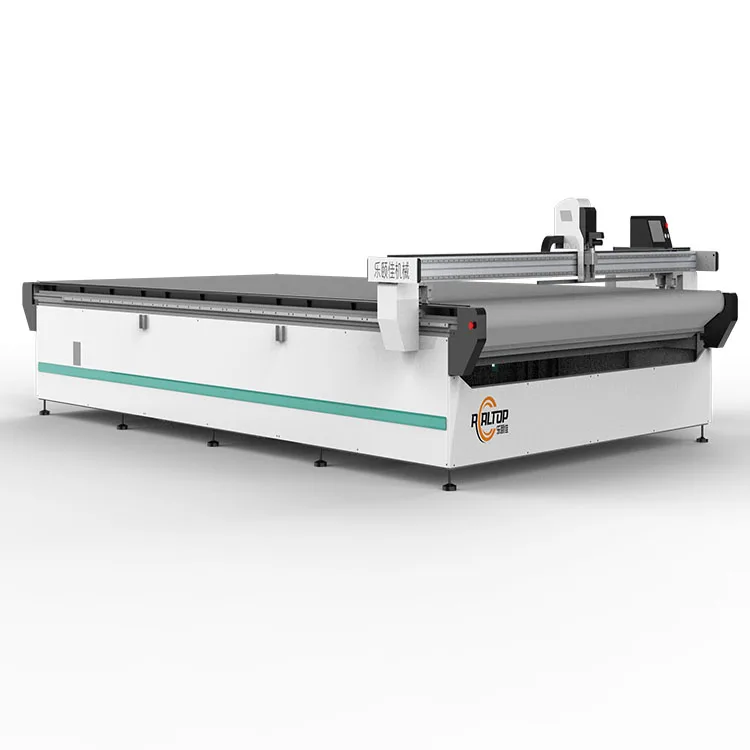
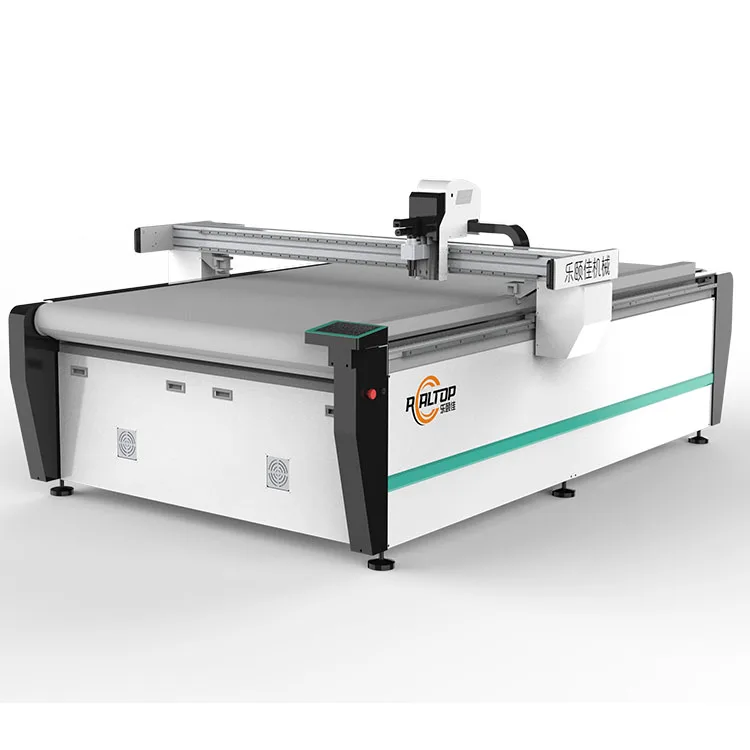
| Model | RT-D2516/RT-S2516 |
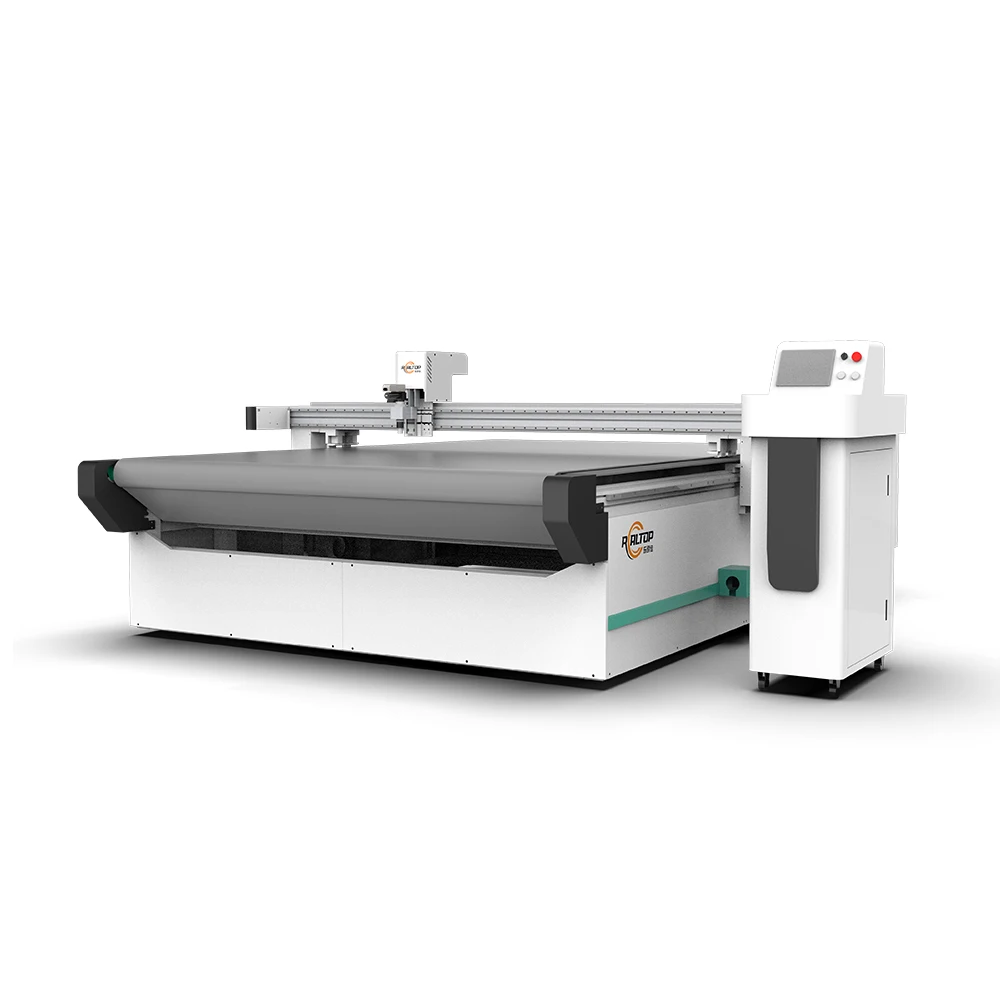
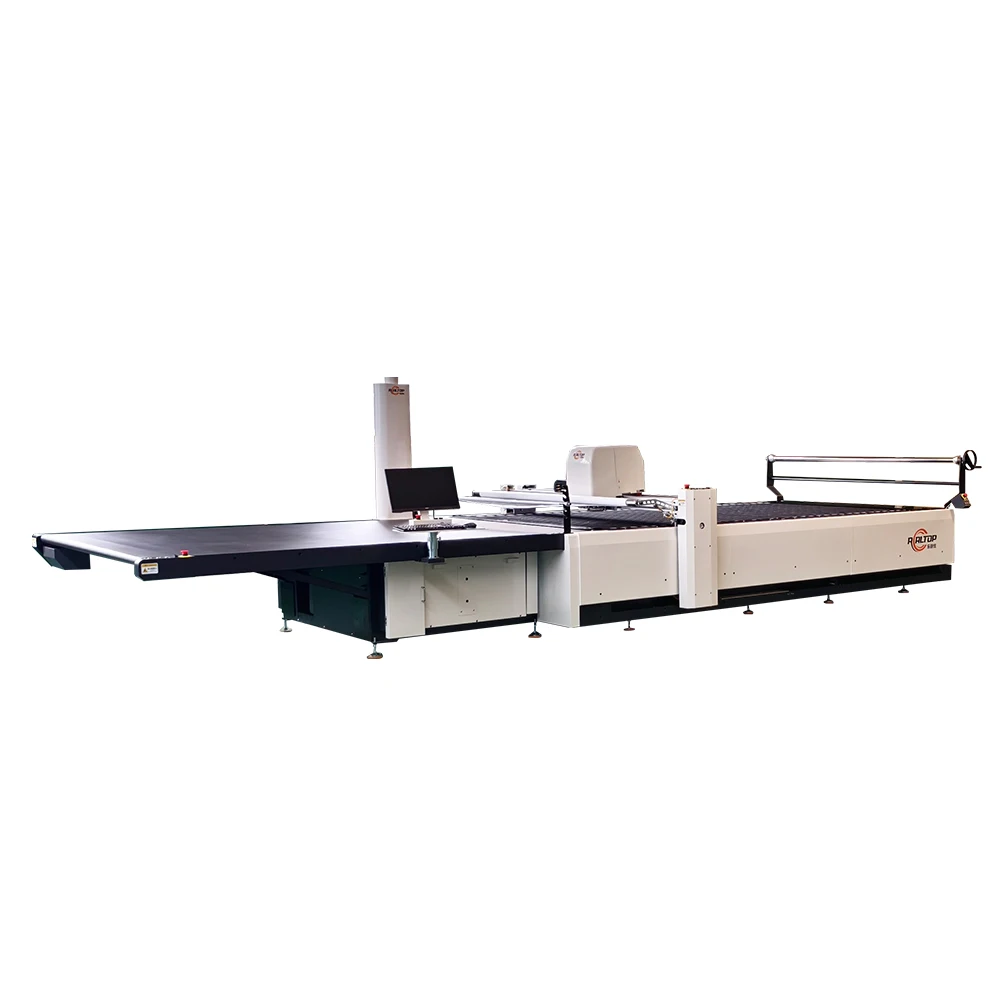
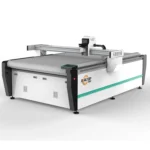
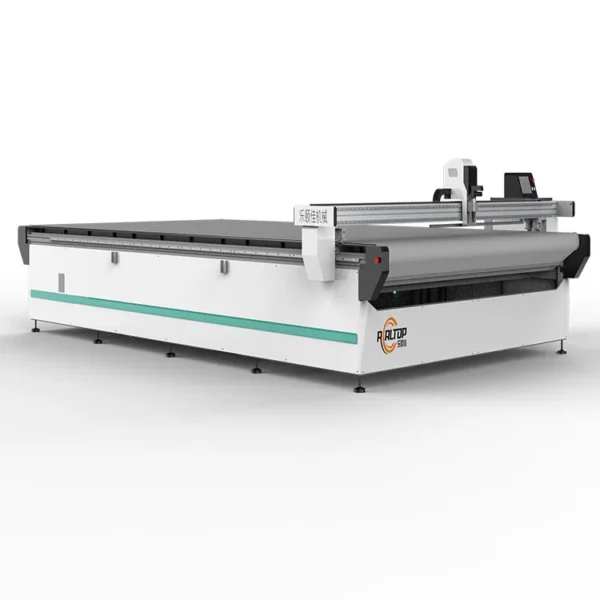
| Product Type | CNC Oscillating Knife Cutting Machine |
| Working Area | 1600 × 2500 mm |
| Machine Dimensions | 3450 × 2300 × 1250 mm |
| Rated Power | 9 kW |
| Cutting Speed | 200–800 mm/s (varies with material) |
| Translational Velocity | 800–2000 mm/s |
| Cutting Thickness | ≤100 mm (varies with material) |
| Repeated Accuracy | ≤0.1 mm |
| Transmission System | Digital servo motor, linear guide, synchronous belt, ball screw (imported components) |
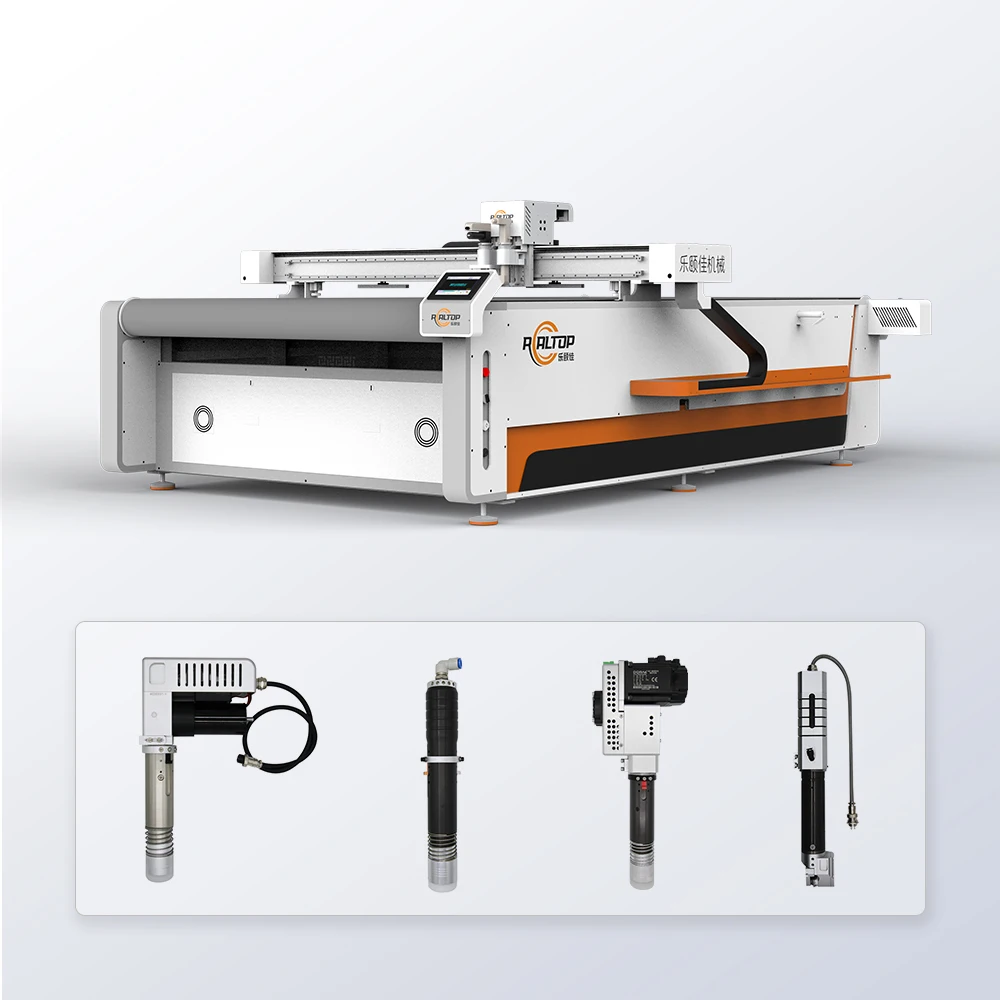
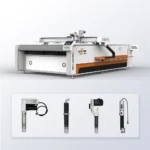
| Tool Head | Swiss imported knife with vibration full cutting, half cutting, and cursor location |
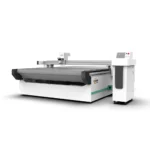
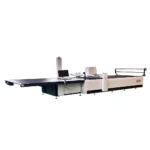
| Table Options | Flat working table or auto feeding table with vacuum adsorption |
| Vacuum Pump | 7.5 kW |
| Conveyor Belt | Germany imported |
| Linear Rail | Taiwan Hiwin |
| Servo Motor | Delta |
| Control Panel | Touch screen, multiple language support |
| Software | Auto typesetting, supports PLT, DXF, AI formats |
| Instruction Format | HP-GL compatible |
| Voltage | 380V ±10% |
| Safety Device | Infrared sensors |
| Language Options | English, Russian, Italian, Chinese (custom languages available) |
| Certification | CE |
Application Suitability
| Application | Material or Output |
|---|---|
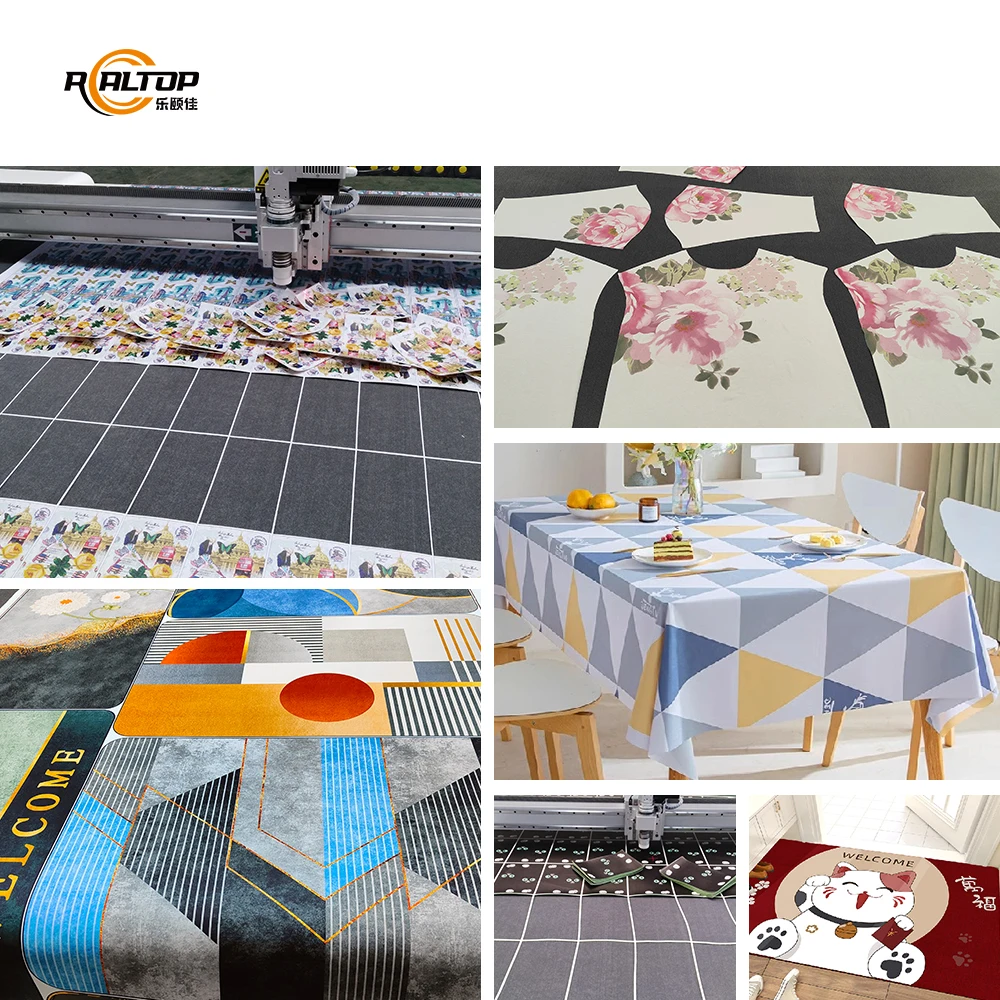
| Garment and footwear production | Multi-layer clothing cloth, shoe material, leather, non-woven fabric |
| Automotive interior trimming | Composite leather, carpet, floor mats, gasket material, sponge |
| Soft furnishing and upholstery | Textile, fabric, PU, EVA, carpet, curtain and cushion materials |
| Packaging and sample making | Corrugated cardboard, cardboard, plastic box, sticker, film |
| Sealing and industrial gaskets | Rubber, PTFE, ETFE, fiberglass, composite gasket sheets |
| Luggage and bag manufacturing | PVC, PP, PE, XPE, luggage material, synthetic leather |
Why Ragged Edges Start at the Quotation Stage
Most edge-quality problems are solved before the machine ships — or they never get solved at all.
When buyers request CNC oscillating knife cutting machine specifications based only on working area, they skip the step that actually determines cut quality: matching the knife profile and oscillation frequency to the exact material stack. I watched a buyer in Karachi run standard garment cloth without issues for a week, then switch to a non-woven-backed composite for an automotive order. The blade that sliced clean through single-layer textile tore through the composite backing, leaving frayed edges across every piece [NEED_CITE: material-specific knife geometry selection for oscillating cutting heads]. The machine was not at fault. The tool head configuration was.
Knife Frequency and Fabric Density
The multifunctional head on the RT-D2516/RT-S2516 carries a Swiss imported blade system that delivers vibration full cutting and half cutting. Oscillation frequency determines how cleanly the blade separates fibers versus pushing through them. High-frequency oscillation works well on tightly woven textile and thin leather, where the blade must slice individual fibers rapidly. Lower frequency with higher stroke amplitude suits thicker foam and composite gasket material where the blade needs deeper penetration per cycle. The CNC oscillating knife cutting machine specifications only become meaningful once you define which material sits on the table.
Vacuum Zoning and Part Size
The 7.5 kW vacuum pump paired with the adsorption table holds material flat during cutting, but suction distribution matters as much as total pump capacity. Large-format fabric sheets cover the entire 1600 × 2500 mm working area and seal well against the table surface. Small gasket parts or narrow textile strips leave significant open table area, allowing air to bleed in and reducing localized hold-down force [NEED_CITE: vacuum table zoning principles for CNC flatbed cutting systems]. Configuring the table into zones and activating only the sections under the workpiece maintains consistent material registration, especially during high-speed translational passes.
Reading the Drive Train Against Your Tolerance Requirements
The imported digital servo motor, linear guide, synchronous belt, and ball screw transmission system delivers a repeated accuracy of ≤0.1 mm. For garment pattern cutting where a 200-piece lay-up must produce identical shapes, this repeatability keeps nested pieces within tolerance across the full cutting speed range of 200–800 mm/s. The Hiwin linear rails maintain straightness over the 2500 mm travel length, preventing the slight drift that accumulates into visible mismatch on long contour cuts. The Delta servo motor closes the position loop digitally, so the cutting head returns to the same coordinate whether you are running the first piece or the five-hundredth.
The Hidden Cost of Skipping a Sample Cut
Buyers who approve specifications on paper and skip sample cutting on their actual material routinely discover problems only after installation. A tool head specified for single-layer PU leather cannot handle the same leather when it arrives laminated to a foam backing. The cutting depth specification of ≤100 mm describes the machine’s mechanical capacity, but real-world edge quality at that depth depends entirely on blade selection, material density, and vacuum hold-down [NEED_CITE: real-world cutting depth versus mechanical stroke capacity in oscillating knife systems]. Without a sample cutting report generated on your exact material, you are accepting a configuration that may require re-tooling before your first production order ships.
What the Configuration Process Actually Covers
Each RT-D2516/RT-S2516 leaves the factory with a tool head and table configuration list that names the specific knife type installed, the vacuum zoning layout, and the CCD camera specification if contour recognition is included. Our in-house design team builds both knife cutting and laser cutting systems, which means the cutting method recommendation comes from comparing processes rather than defending one technology. Voltage, plug type, and control panel language are confirmed before production begins — not discovered when the crate arrives. The auto typesetting software supports PLT, DXF, and AI file formats, and compatibility with your existing nesting workflow is verified before the order proceeds.
Documentation & Verification
- Machine specification sheet listing every configured option and tool head installed
- Electrical schematic with voltage confirmation matching your facility supply
- Sample cutting report generated on your material with edge quality and cycle time data
- Factory test record documenting repeated accuracy and translational velocity verification
- Software licence and file format compatibility note for your nesting workflow
- Spare parts list identifying consumable blades and wear components with part numbers
Installation, Commissioning & Support
- Level foundation required across the 3450 × 2300 mm machine footprint with adequate clearance for auto feeding
- Dedicated 380V ±10% circuit with isolation breaker sized for the 9 kW rated power draw
- Touch screen control panel configured in your selected language before dispatch
- First-run parameter tuning on your material covering cutting speed, oscillation frequency, and vacuum pressure
- Operator training on tool head changeover, blade replacement, and HP-GL file loading
- Scheduled maintenance intervals for linear rail lubrication, belt tension, and vacuum pump filter service
Preparing Your Inquiry
To configure the RT-D2516/RT-S2516 accurately, share the specific material types you cut, including any backing or lamination layers, along with typical sheet dimensions and thickness. Confirm your local voltage and frequency, and let us know which languages your operators need on the touch screen. If you have existing nesting files in PLT, DXF, or AI format, send a sample so we can verify software compatibility and run a cutting test before you commit.
Frequently Asked Questions
Q: How do I choose between vibration full cutting and half cutting for my material?
A: Full cutting penetrates the entire material stack in a single pass, suited for garment cloth, non-woven fabric, and thin leather where clean through-cuts are required. Half cutting scores the surface without cutting through the backing, useful for kiss-cutting stickers, film, or creasing lines on cardboard. The selection depends on your material structure and whether downstream operations need a through-cut or a scored fold line.
Q: Will the vacuum table hold small gasket parts in place during high-speed cutting?
A: The 7.5 kW vacuum pump provides substantial suction, but small parts expose more open table area, allowing air bleed that reduces localized hold-down. Zoning the vacuum table into independently controlled sections concentrates suction only where material is present. This configuration should be specified during ordering so the table plumbing matches your typical part size and layout.
Q: How does CCD contour recognition perform at production cutting speeds?
A: CCD camera positioning reads printed registration marks to align the cutting path with pre-printed textile or composite patterns. At higher translational velocities, mark detection must keep pace without losing accuracy. The system’s recognition speed and minimum mark contrast should be verified against your specific print quality and production throughput during the sample cutting stage before finalizing the order.
Q: Can the auto typesetting software integrate with my existing nesting workflow?
A: The software supports PLT, DXF, and AI file formats with HP-GL compatible instruction output. Integration depends on whether your current design environment exports in these formats and whether the nesting algorithm handles your material utilization targets. Send representative production files so we can confirm compatibility and demonstrate nesting performance on your actual patterns before shipment.


商品评价
Clear filtersThere are no reviews yet.