
Blog
What Should You Check Before Signing Off on Your New Knife Cutting Machine Delivery?

What Should You Check Before Signing Off on Your New Knife Cutting Machine Delivery?
I have handled dozens of acceptance disputes where customers discovered problems weeks after delivery, only to find they had no evidence to support their claims. The moment you sign that delivery receipt, the supplier's responsibility window starts to close[^1]. What you miss during unboxing becomes your problem to fix.
Your acceptance inspection determines who pays for problems. Check packaging integrity first to establish if damage came from shipping or manufacturing. Then verify all components arrived, test actual cutting performance with your materials, and document everything with photos before installers leave. Missing this window means you absorb costs the supplier should cover.
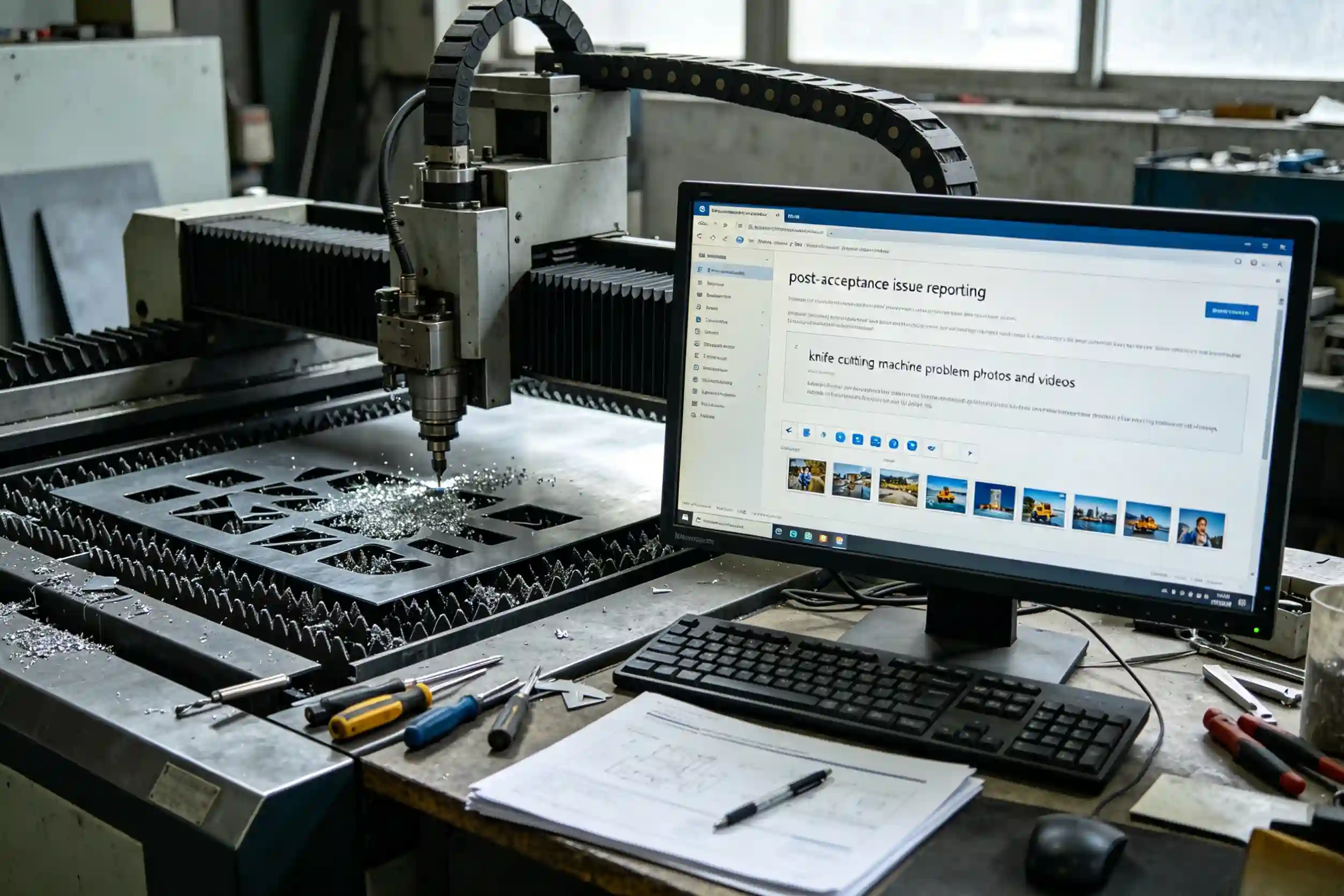
Most buyers treat machine arrival as a routine delivery. They sign quickly to let installers start setup. Two weeks later, they notice the cutting head wobbles or critical accessories are missing. By then, the packaging is gone, and they cannot prove what happened during transit versus after installation.
Why Does Packaging Condition Matter More Than the Machine Itself?
You might think checking the machine's functions is the priority. I learned the opposite after seeing customers lose thousands in dispute claims. The packaging tells you who is responsible for damage[^2] before you even see the equipment.
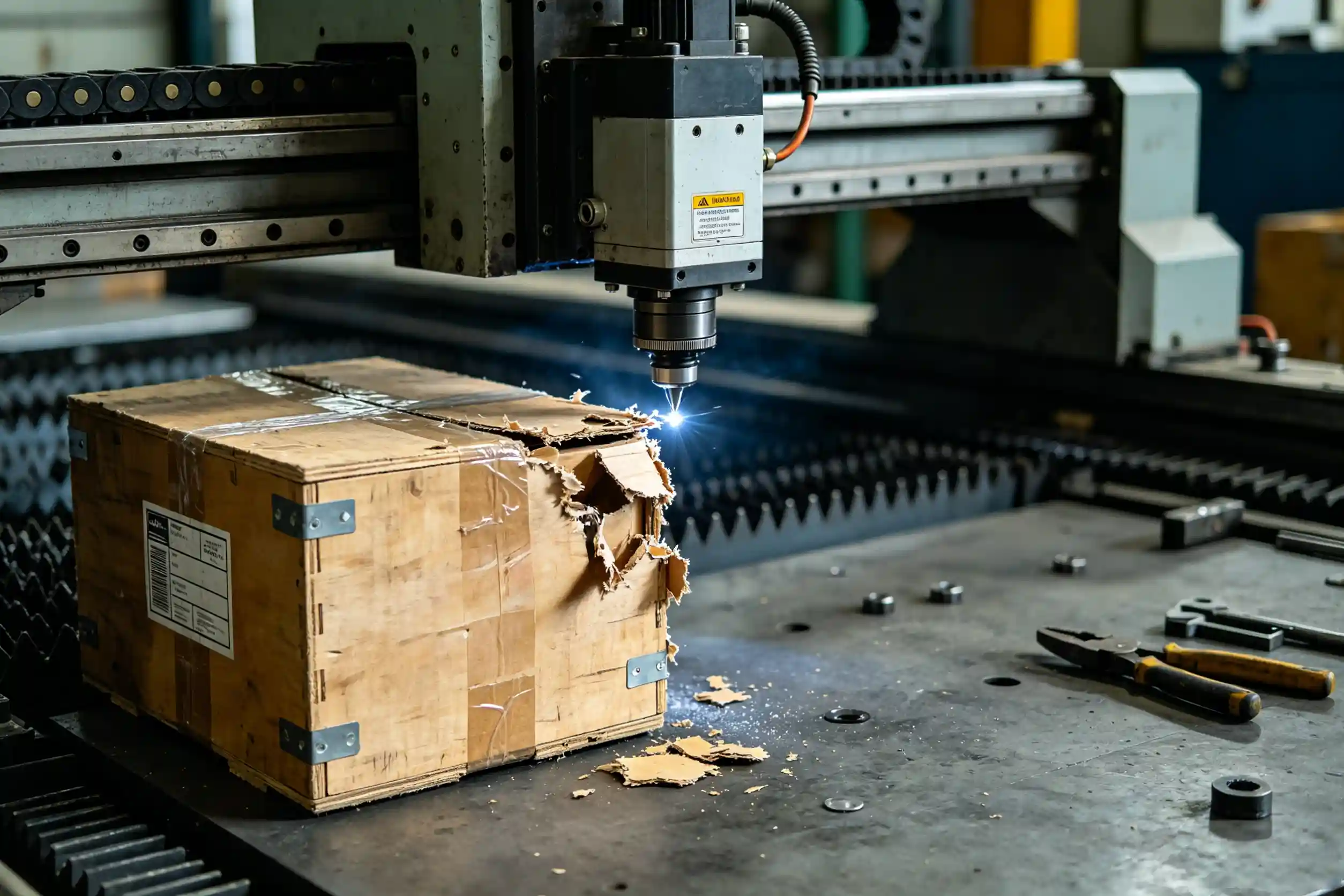
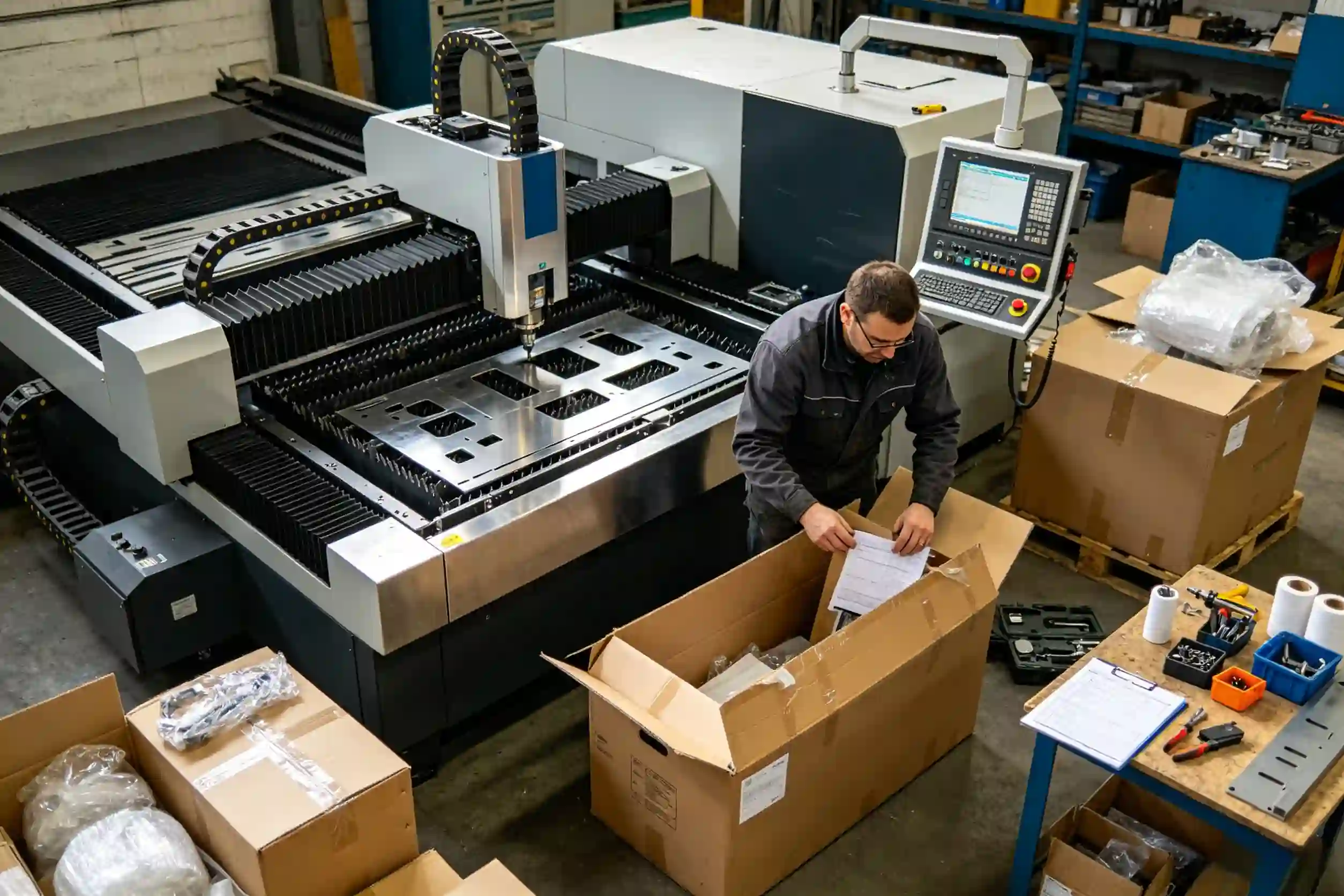
Inspect all crates, pallets, and wrapping materials before unwrapping anything. Take photos of torn corners, crushed edges, water stains, and opened seals from every angle. If you find damage, photograph it with the shipping label visible in frame[^3]. This evidence determines whether the supplier, logistics company, or your receiving team caused the problem.
How Packaging Evidence Protects Your Claim Rights
I worked with a customer who unpacked their machine, found a cracked gantry beam, then called us to report manufacturing defect. We asked for packaging photos. They had none because the forklift operator already disposed the crates. The logistics company refused the claim without proof their handling caused it. The customer paid $2,400 for a replacement beam.
| Inspection Stage | What to Document | Why It Matters | Liability Shifts To |
|---|---|---|---|
| Packaging exterior | Tears, punctures, crushed corners, water damage, opened seals | Proves shipping mishandling occurred before your team touched it | Logistics company or insurance |
| Inner cushioning | Displaced foam, loose strapping, shifted components inside crates | Shows whether interior protection failed during transit | Supplier (if poorly packed) or logistics |
| First visual of machine | Scratches, dents, broken parts before anyone moves it | Locks down condition at delivery moment | Must document before moving forward |
If packaging looks intact, photograph that too. It proves the machine arrived in good condition and shifts responsibility for later-discovered internal issues back to manufacturing quality[^4] rather than shipping damage. You need this baseline.
What Components Must You Count Before Installers Start Setup?
Machines ship with cutting heads, blade holders, vacuum pumps, control tablets, calibration tools, and sometimes material hold-down accessories. I have seen installations stop halfway because a critical power cable or blade holder adapter was missing. The installer leaves, you discover it days later, then wait weeks for the supplier to ship the missing part.
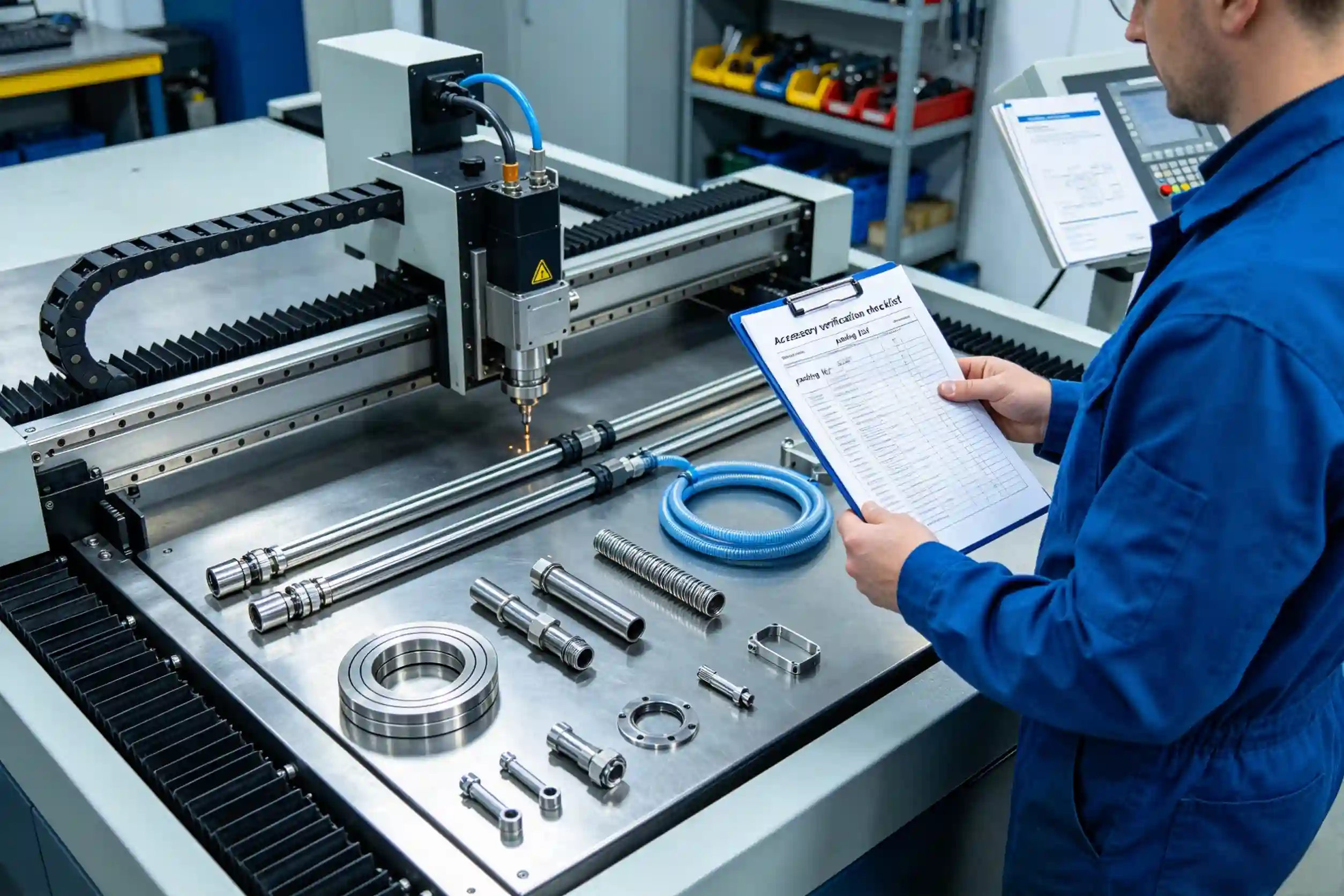
Open every accessory box and match contents against the packing list before installation begins. Check for cutting blades, blade holders, tool kits, calibration gauges, vacuum hoses, power cables, software dongles, and manuals. If anything is missing, document it in writing and get installer signature confirmation before they start work[^5].
Why Missing Parts Cost More Than Their Replacement Value
One buyer accepted delivery, let the installer set up the machine, then found the oscillating blade holder was missing three days later. They assumed it was a $150 part and requested shipment. The real cost was $4,200 in lost production time waiting two weeks for international shipping, plus $800 rush customs clearance fees. They could have refused partial delivery on-site and had the supplier air-ship the part before installation started.
I now tell customers to treat the packing list like a legal contract[^6]. Every line item must be physically present or you document the gap in the acceptance report. This gives you leverage to demand expedited replacement without absorbing the waiting costs.
How Do You Test Cutting Performance When You Have Never Operated This Machine Before?
Many buyers think machine startup proves it works. The installer powers on the system, jogs the cutting head around the table, and declares it functional. You sign off. Then you load your actual material for the first production run and find the blade cuts at wrong angles, the vacuum does not hold thin fabrics, or the corners come out rounded instead of sharp.
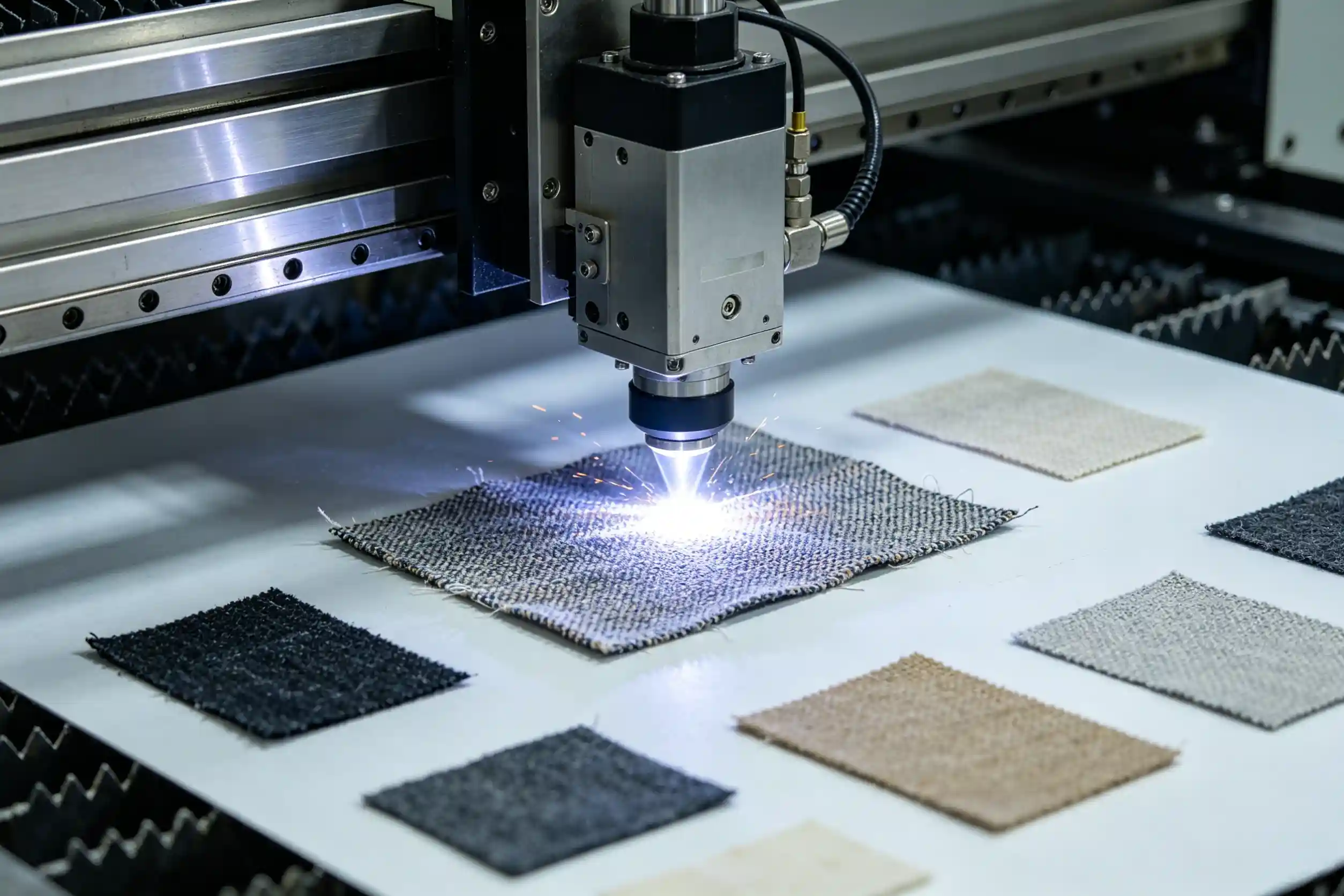
Require on-site test cutting using your actual production materials before signing acceptance. Bring samples of the thinnest, thickest, and most difficult materials you will process. Have the installer cut them at production speed and check dimensional accuracy, edge quality, and corner sharpness. If results do not meet your specifications, document the gaps and refuse acceptance until the supplier corrects them.
What Real-World Cutting Reveals That Idle Testing Cannot
I worked with a packaging manufacturer who accepted their machine after watching the installer cut a test rectangle on paper. When they ran their first job cutting 2mm rubber gaskets, the blade deflected and left wavy edges[^7]. They called for support and we found the blade holder had excessive play. This is normal wear-in for a new machine, but it needed adjustment before production. If they had tested with rubber during acceptance, we would have calibrated it on-site instead of sending a technician back three days later.
| Test Scenario | What It Reveals | What To Document | Acceptance Decision |
|---|---|---|---|
| Thinnest material you process | Vacuum hold-down strength, blade depth control precision | Sample piece with date/time, measurement of any lifting or incomplete cuts | Reject if vacuum cannot hold or blade tears material |
| Thickest material you process | Cutting force adequacy, blade deflection under load | Sample piece showing edge straightness, corner sharpness measurements | Reject if blade bends or cannot complete cut in one pass |
| Fastest production speed | Servo acceleration limits, cutting head vibration, corner rounding | Video of cutting process, sample piece with dimensional check | Reject if machine slows below promised speed or corners exceed tolerance[^8] |
| Complex path with tight curves | Motion control accuracy, blade tracking precision | Sample piece with radius measurements at multiple curve points | Reject if curves show faceting or deviation beyond +/- 0.5mm |
Bring calipers and measure cut samples on-site. Compare dimensions to your CAD file. If deviations exceed your tolerance, write the specific numbers in the acceptance report. "Cut piece measured 101.4mm where design specified 100.0mm +/- 0.3mm" gives you enforceable evidence. "Cutting looks off" does not.
Which Defects Should You Accept and Which Must You Reject?
Not every imperfection justifies refusing delivery. I have seen buyers reject machines for minor paint scratches that have no functional impact, causing weeks of delay and re-shipping costs they eventually absorbed anyway. I have also seen buyers accept machines with cracked structural components that failed catastrophically three months later.
Accept cosmetic defects that do not affect performance: small paint chips, scuff marks on non-critical surfaces, minor packaging wear on the machine frame. Reject structural damage, functional component defects, or precision issues that impact cutting quality. Document accepted defects with photos and written notes to prevent the supplier from claiming they were your fault later.

How to Distinguish Cosmetic Issues from Functional Problems
One customer refused delivery because the machine's side panel had a 3cm paint scratch. They demanded a replacement panel before acceptance. We shipped it, but the delay cost them two weeks of production time. Another customer accepted a machine with a small crack in the vacuum zone seal. They thought it was cosmetic. Three months later, the crack widened and vacuum pressure dropped, ruining $6,000 in wasted material before we diagnosed it.
The difference is whether the defect will worsen or affect operation. Paint scratches stay static. Cracks in structural parts or seals grow under vibration and load[^9]. If you are unsure, ask for technical support input during inspection rather than guessing.
Why Does Your Signature on the Acceptance Report Need Supporting Documentation?
Acceptance reports typically have a signature line and a checklist of items like "machine powers on" and "no visible damage." I have seen dozens of cases where customers signed this generic form, then discovered problems weeks later and tried to claim warranty support. The supplier points to the signed report and says you accepted the machine as functional.
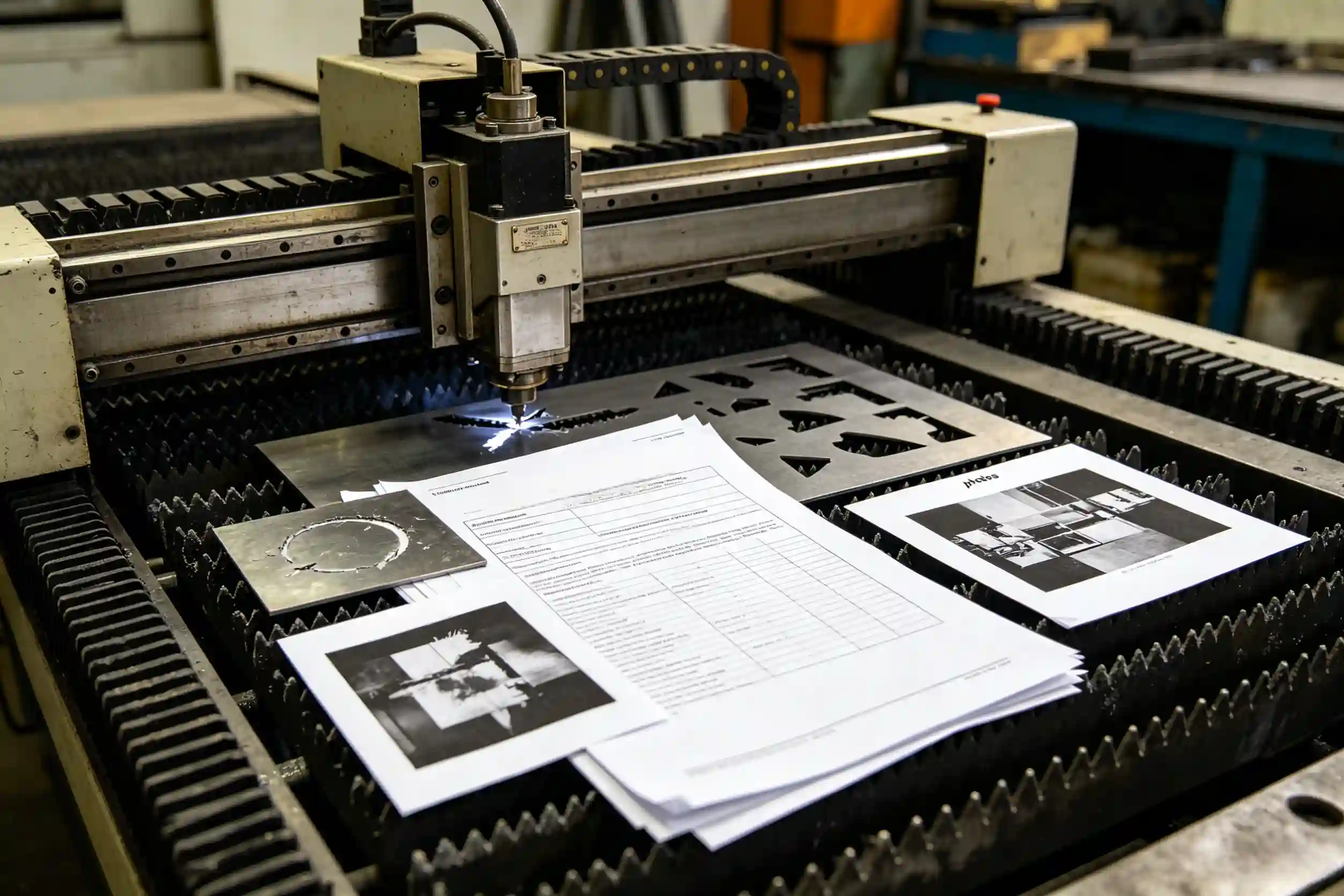
Attach photos, test cut samples, and measurement logs to your acceptance report before signing. Write specific observations in the notes section: "blade holder has 0.2mm play, within acceptable range" or "test cut on 1.5mm cardboard shows +0.3mm dimensional variance at corners." This creates a baseline that protects your warranty rights for problems that develop later.
What Documentation Wins Disputes Two Months After Delivery
I worked with a customer who signed their acceptance report without attachments. Four weeks later, they noticed the cutting head was drifting 1.2mm off path during long cuts. They claimed it was a manufacturing defect. We reviewed their acceptance report and found no baseline measurements. They had no proof the drift developed after acceptance rather than existing from day one. They paid for recalibration service.
Another customer attached test cut samples with dimensional measurements to their acceptance report. Six weeks later, they reported the same drift issue. We compared their current cuts to the acceptance samples and confirmed the drift was new. We provided free warranty service because their documentation proved the problem developed after delivery.
If you do not document the initial state, you cannot prove what changed. That makes warranty claims unenforceable.
What Should You Do If Problems Appear After Installers Leave?
Even with thorough inspection, some issues only surface after extended operation. Servo calibration can drift after thermal cycling[^10]. Software bugs appear under specific file types you did not test during acceptance. Blade wear patterns reveal improper factory setup that was not obvious in short tests.
Contact the supplier immediately when you discover new issues, even if weeks have passed since acceptance. Provide detailed descriptions, photos, videos of the problem occurring, and reference your acceptance documentation. If the issue clearly developed after delivery rather than existing initially, most suppliers will provide support under warranty. Delays in reporting make suppliers question whether you caused the problem through misuse.
How to Maintain Warranty Coverage After Acceptance
I worked with a customer who found their vacuum pump was underperforming three months after installation. They had documented vacuum pressure readings during acceptance showing 85% hold strength, which met specifications. Current readings showed 62% hold. We compared the data and determined a pump seal had degraded[^11]. Because they had baseline evidence, we replaced it under warranty.
If they had not documented initial vacuum performance, we would have assumed it always ran at 62% and blamed their material choices or operating technique. The burden of proof shifts to you after acceptance[^12], so create that proof during inspection.
Conclusion
Acceptance inspection protects your investment by documenting the machine's condition at delivery. Check packaging first, verify components, test with your materials, and photograph everything. What you document during unboxing determines who pays when problems appear later.
[^1]: "Part 46 - Quality Assurance - Acquisition.GOV", https://www.acquisition.gov/far/part-46. Under typical commercial transaction frameworks, delivery acceptance initiates a defined period during which responsibility for defects transitions from seller to buyer, though specific timeframes vary by jurisdiction and contract terms. Evidence role: general_support; source type: education. Supports: General commercial law principles regarding how delivery acceptance affects supplier responsibility periods. Scope note: The exact responsibility window depends on contractual terms, jurisdiction, and product type rather than being universally standardized [^2]: "Freight damage claims FAQs - GSA", https://www.gsa.gov/policy-regulations/policy/transportation-management-policy/freight-damage-claims-faqs. Freight and logistics industry practices recognize packaging condition documentation as primary evidence for establishing whether damage occurred during transit, with carriers typically requiring photographic proof of external packaging damage to process claims. Evidence role: expert_consensus; source type: institution. Supports: Industry standards for using packaging condition as evidence in freight damage liability determination. [^3]: "[PDF] Picture Documentation for Freight Claims White Paper – Part I", https://smartgladiator.com/wp-content/uploads/2024/06/Pictures-for-Freight-Claims-White-Paper-Part-1.pdf. Freight claim processing standards recommend photographing damaged packaging with shipping labels visible to establish chain of custody and link specific shipments to documented damage conditions. Evidence role: expert_consensus; source type: institution. Supports: Best practices for freight damage documentation photography. [^4]: "49 CFR Part 173 -- Shippers—General Requirements for Shipments ...", https://www.ecfr.gov/current/title-49/subtitle-B/chapter-I/subchapter-C/part-173. In commercial disputes, intact external packaging generally supports claims that internal defects originated from manufacturing rather than transit, as it demonstrates the product was not subjected to external impacts during shipping. Evidence role: general_support; source type: other. Supports: How packaging condition affects liability determination between shipping and manufacturing defects. Scope note: This principle applies as a rebuttable presumption rather than absolute proof, as internal damage can occasionally occur despite intact packaging [^5]: "Rule 901. Authenticating or Identifying Evidence - Cornell Law School", https://www.law.cornell.edu/rules/fre/rule_901. Commercial transaction practices recognize third-party witness signatures, including those of installers or delivery personnel, as corroborating evidence for delivery condition documentation, strengthening claims regarding missing or damaged items. Evidence role: general_support; source type: education. Supports: The evidentiary value of third-party signatures in delivery documentation. [^6]: "Packing List - International Trade Administration", https://www.trade.gov/packing-list. While packing lists themselves are not typically contracts, they serve as documentary evidence of the seller's obligations regarding shipment contents and are commonly referenced in sales contracts to define delivery requirements, making discrepancies between packing lists and actual deliveries actionable under breach of contract principles. Evidence role: general_support; source type: education. Supports: The legal status and enforceability of packing lists in commercial transactions. Scope note: The enforceability depends on whether the packing list is incorporated into or referenced by the underlying sales contract [^7]: "Question About The Edge Defects On This Blade – Apprentice Corner", https://www.americanbladesmith.org/community/apprentice-corner/question-about-the-edge-defects-on-this-blade/. In precision cutting operations, blade deflection under lateral cutting forces causes the cutting edge to deviate from the intended path, resulting in wavy or irregular edges, with deflection magnitude increasing with material thickness and decreasing with blade stiffness. Evidence role: mechanism; source type: education. Supports: The mechanical relationship between blade deflection and edge quality in cutting operations. [^8]: "Estimating Manufacturing Accuracy. - Institute for Systems Research", https://isr.umd.edu/Labs/CIM/vm/ama/node19.html. Industrial knife cutting machines typically specify corner accuracy tolerances ranging from ±0.1mm to ±0.5mm depending on machine class and application, with tighter tolerances required for precision applications such as gasket manufacturing and looser tolerances acceptable for textile cutting. Evidence role: general_support; source type: other. Supports: Typical tolerance specifications for corner accuracy in industrial cutting machines. Scope note: Specific tolerance values vary significantly by manufacturer, machine model, and intended application [^9]: "Fatigue crack propagation analysis considering the dynamic ... - PMC", https://pmc.ncbi.nlm.nih.gov/articles/PMC12549852/. Fatigue crack propagation occurs when structural components experience repeated cyclic stresses from vibration or mechanical loading, with each stress cycle causing incremental crack growth at the crack tip, eventually leading to component failure—a well-established mechanism in fracture mechanics. Evidence role: mechanism; source type: education. Supports: The mechanism by which cracks propagate in structural components under cyclic loading. [^10]: "Thermal Positioning Error Modeling of Servo Axis Based on ... - PMC", https://pmc.ncbi.nlm.nih.gov/articles/PMC7919671/. Servo motor positioning accuracy can drift following thermal cycling due to differential thermal expansion of mechanical components, changes in encoder reference positions, and temperature-dependent variations in electronic component characteristics, requiring periodic recalibration in precision applications. Evidence role: mechanism; source type: education. Supports: How thermal cycling affects servo motor calibration accuracy. [^11]: "Mechanical Pump Seal Failure: Causes & Prevention", https://www.csidesigns.com/blog/articles/pump-seal-failure?srsltid=AfmBOoq_HrHYHk9ieQSZjgTplJB9NfzmTZwsU2T3cVok0xc-EWOUpJt4. Vacuum pump seals, typically made from elastomeric materials, degrade through mechanisms including compression set, chemical attack from process fluids, thermal aging, and abrasive wear, resulting in progressive loss of sealing effectiveness and reduced vacuum pressure over time. Evidence role: mechanism; source type: education. Supports: The mechanism by which pump seals degrade and affect vacuum performance. [^12]: "§ 2-607. Effect of Acceptance; Notice of Breach; Burden of ...", https://www.law.cornell.edu/ucc/2/2-607. Under common commercial law principles, delivery acceptance creates a presumption that goods were received in conforming condition, shifting the burden of proof to the buyer to demonstrate that defects existed at delivery or arose from causes within the seller's responsibility, rather than from post-delivery handling or use. Evidence role: general_support; source type: education. Supports: How delivery acceptance affects burden of proof in commercial disputes. Scope note: Specific burden of proof rules vary by jurisdiction and may be modified by contract terms, particularly regarding latent defects


