
Blog
What environmental and noise standards should you expect when bidding for knife cutting equipment?

What environmental and noise standards should you expect when bidding for knife cutting equipment?
You've just received a tender document for CNC knife cutting machines, and the environmental specifications look copied straight from laser cutting equipment requirements. Should you challenge these specs, promise compliance anyway, or withdraw your bid? Most bidding failures don't stem from missing certifications—they happen because buyers write specifications for the wrong equipment type, creating verification traps that surface only during acceptance testing.
When bidding for knife cutting equipment, expect noise standards between 70-85 dB(A) measured at 1 meter during cutting operations, dust emission requirements under 10 mg/m³ for specific materials, and CE/ISO certification for the equipment itself—but not for facility-wide environmental compliance. The critical decision isn't which certificates to obtain, but whether the tender's promised specifications match the actual acceptance test conditions your equipment will face.
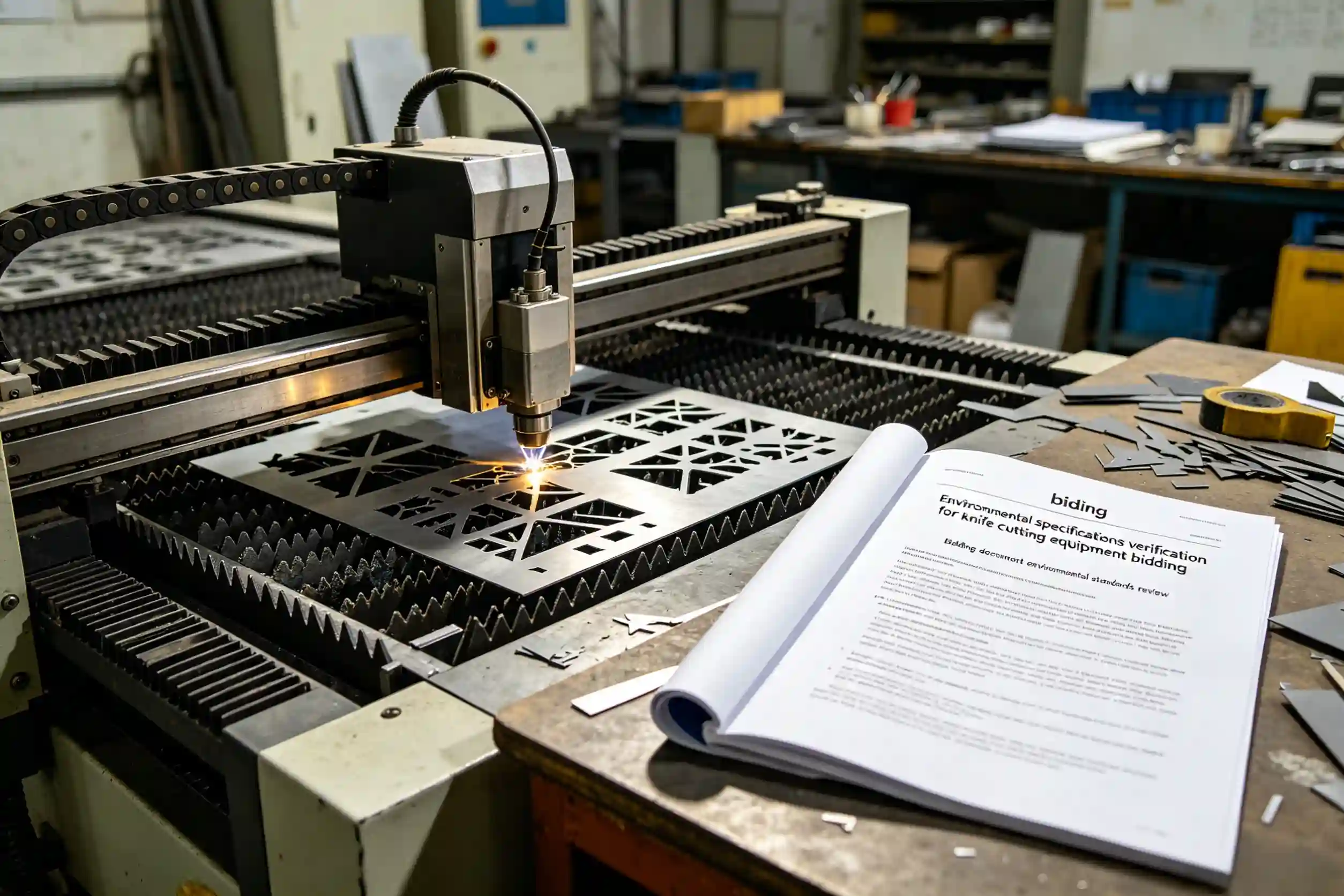
I've spent years handling tender clarifications for government procurement and automotive industry clients at Realtop Machinery, and I've seen the same pattern repeat: buyers copy environmental requirements from laser cutting tenders without understanding that knife cutting technology operates under completely different conditions. Let me walk you through the specification conflicts I've corrected and show you how to match tender requirements to verification reality.
Why do tender documents specify laser cutting environmental standards for knife cutting equipment?
Procurement teams working on knife cutting equipment tenders often lack technical specialists familiar with non-thermal cutting technologies. When drafting environmental and noise specifications, they default to copying requirements from laser cutting, plasma cutting, or waterjet cutting tenders they've handled before, assuming all industrial cutting equipment faces similar environmental control challenges.
This creates unbiddable specifications because knife cutting equipment produces no fumes requiring exhaust gas treatment (unlike laser cutting), generates minimal heat (eliminating thermal emission concerns), but creates material-specific dust that requires different filtration approaches than metal cutting slag. The mismatch surfaces during acceptance testing when inspectors apply verification methods designed for thermal cutting processes.
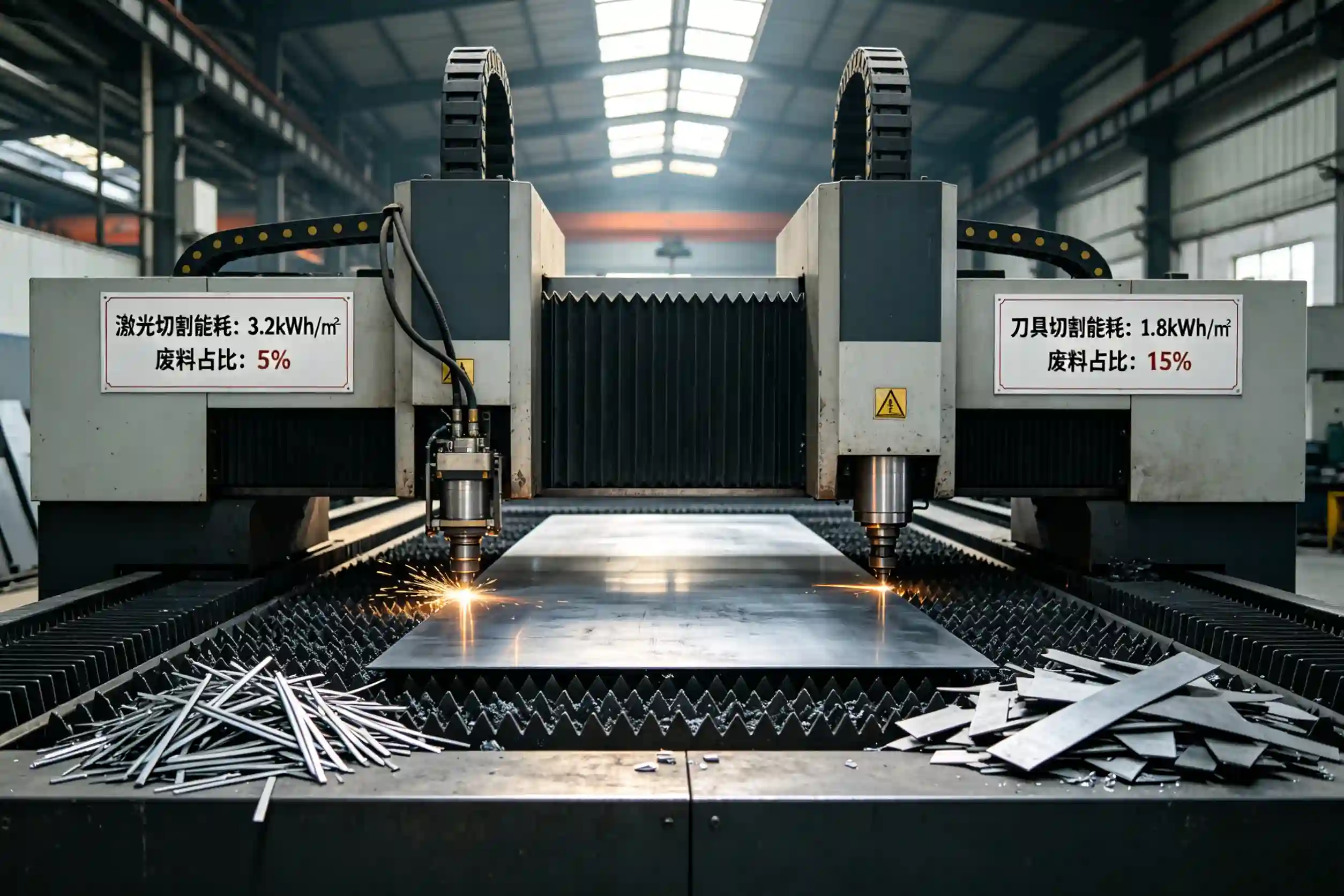
In one government procurement tender I handled, the environmental specifications required "exhaust gas treatment system capable of filtering 99.5% of volatile organic compounds with real-time emission monitoring." This requirement came directly from a sheet metal laser cutting tender. Our knife cutting equipment doesn't produce exhaust gases during fabric cutting—the primary environmental concern is textile fiber dust, not VOCs. When I contacted the procurement officer to clarify, they admitted they'd used a previous laser cutting tender as their template without technical review.
The underlying problem isn't carelessness—it's that procurement teams face pressure to include comprehensive environmental protections without access to technology-specific guidance. They know laser cutting has strict environmental controls, so they assume stricter specifications equal better due diligence. This creates three verification traps:
What happens when you promise laser-standard emissions for knife cutting?
First, you commit to installing emission control equipment your cutting process doesn't need. Exhaust gas scrubbers, VOC monitors, and thermal emission sensors add 15-30% to your quoted system cost without improving cutting performance. During acceptance testing, inspectors may question why promised equipment isn't installed, or worse, demand functional verification tests that don't apply to your cutting method.
Second, you obscure the actual environmental controls your equipment does need. Knife cutting fabric, leather, or composites generates airborne fiber dust, requires static electricity management (especially for synthetic materials), and may need material-specific filtration (carbon filter for odor control when cutting rubber, HEPA filtration for fine textile dust). These requirements don't appear in laser cutting tenders, so buyers don't know to verify them—but your end users will face these issues in production.
Third, you create documentation mismatches. When buyers request CE certification documentation, they expect to see test reports for emission controls listed in the tender. If your CE technical file covers dust collection and static discharge (appropriate for knife cutting) but doesn't address VOC emissions (irrelevant for non-thermal cutting), procurement teams may flag your bid as non-compliant, even though you're offering correct environmental controls for the actual cutting process.
How do I identify copied specifications in tender documents?
Look for these indicators in the environmental requirements section:
| Specification type | Laser cutting language | Knife cutting reality | Verification conflict |
|---|---|---|---|
| Emission standards | "Exhaust gas temperature below 80°C at outlet" | Knife cutting produces no hot exhaust | Acceptance inspector finds no exhaust outlet to measure |
| Filtration requirements | "Metal slag particle filtration efficiency >98%" | Knife cutting doesn't produce metal particles | Filtration specs don't address textile fiber or rubber dust |
| Monitoring systems | "Real-time VOC concentration monitoring with data logging" | Non-thermal cutting doesn't generate VOCs | Equipment lacks monitoring points buyer expects to verify |
| Safety certifications | "Class 4 laser safety certification" | Knife cutting uses mechanical blades, not lasers | Certification requirement physically impossible to meet |
I've seen tenders that require "protective enclosures with laser safety interlocks" for knife cutting equipment. This specification makes sense for laser systems where beam exposure poses eye injury risks, but knife cutting's mechanical hazards (blade contact, material ejection) need guard design verification, not laser safety interlocks. When I've pointed this out in clarification requests, buyers often respond, "We want the highest safety standards"—not realizing they've specified controls for hazards that don't exist while omitting verification of actual mechanical safety risks.
The most reliable way to identify copied specs is comparing the tender's environmental requirements against the cutting technology's physical process. If specifications mention thermal emissions, beam safety, or gas-phase pollutants for knife cutting equipment, you're reading laser cutting requirements applied to the wrong technology.
What noise measurement conditions should tender specifications actually state?
Noise specifications in tender documents typically state a single decibel limit—"Equipment noise shall not exceed 75 dB(A)"—without defining measurement distance, operational load, or background noise correction. This ambiguity creates verification disputes because knife cutting equipment produces different noise levels during idle positioning (servo motors only), cutting operations (blade engagement with material), and rapid traverse movements (accelerating gantry mass).
The verification trap emerges when buyers promise noise levels measured during idle conditions but conduct acceptance testing during full-load cutting operations. I've handled disputes where equipment met the promised 70 dB(A) specification during idle operation, but measured 82 dB(A) when cutting 10mm multilayer composites at maximum feed rate—failing acceptance despite the equipment functioning exactly as designed.
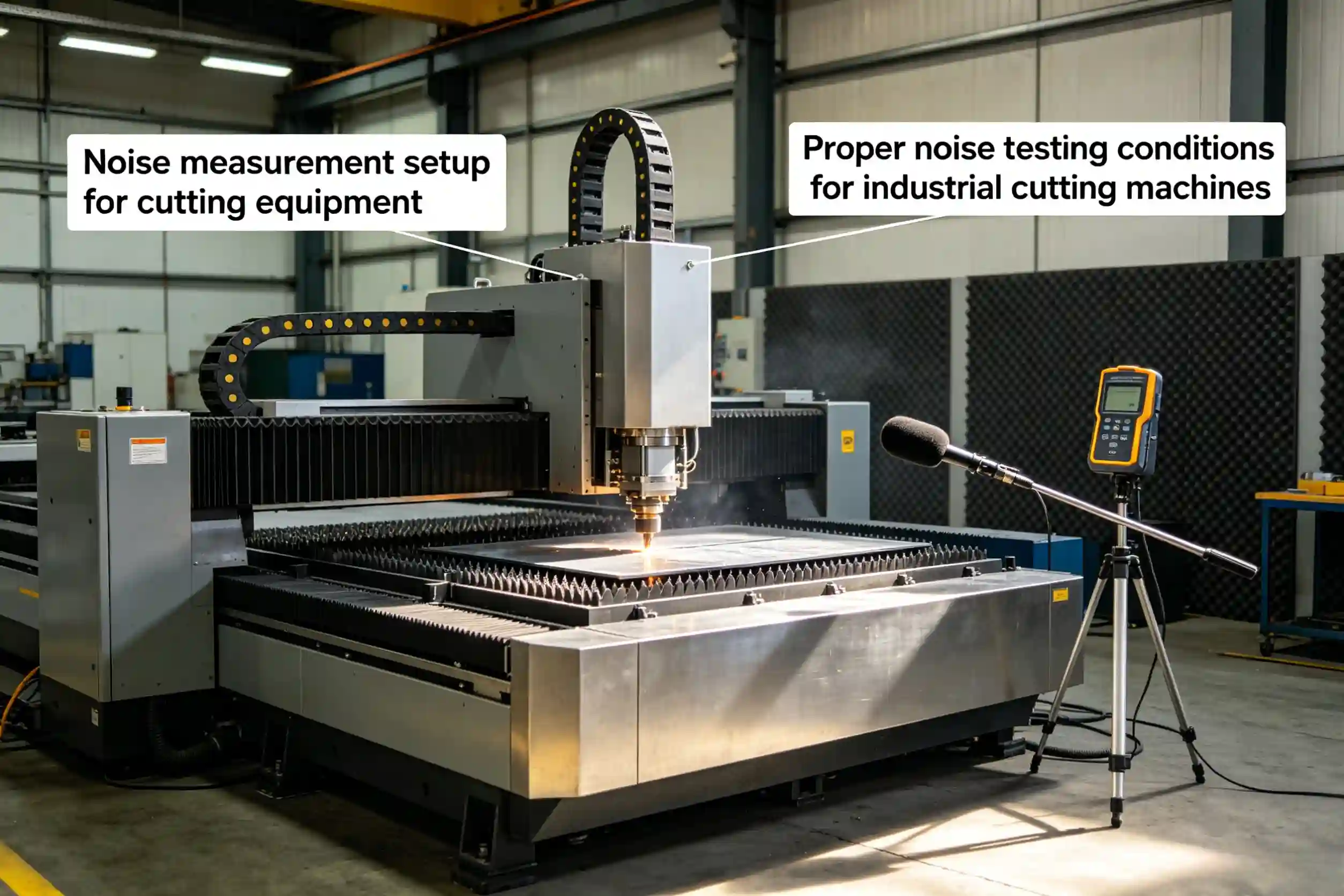
One automotive parts supplier's tender required "noise emission below 75 dB(A) in accordance with ISO 3744" without specifying operational state. During our clarification call, I asked whether they needed measurements during idle, cutting soft materials like fabric, or cutting dense materials like leather. The procurement coordinator said, "Whatever produces the lowest number for our facility permit application." This revealed the actual concern wasn't worker safety (which requires worst-case noise exposure data), but regulatory compliance documentation (which might accept idle measurements if test conditions aren't specified).
We face a strategic choice at this point: Promise the idle noise level (which we can verify), or promise the cutting operation noise level (which reflects actual production conditions). If we promise idle conditions, we risk failing acceptance if the client tests during cutting. If we promise cutting conditions, we might submit a higher number than competitors who promise idle measurements—losing the bid even though our specification is more honest.
Why do buyers rarely specify load conditions in noise requirements?
Procurement teams often pull noise limits from facility environmental permits or occupational health regulations without understanding these limits apply to operator exposure over time, not instantaneous equipment measurements. When they transfer these limits into equipment tenders, they treat noise as a single-value specification like power consumption, not recognizing that cutting equipment noise varies with:
Material resistance: Cutting 2mm leather produces different blade friction noise than cutting 20mm foam. Dense materials increase motor load and generate higher-frequency cutting sounds.
Feed rate: Faster cutting speeds increase servo motor noise and material vibration. The same equipment cutting the same material can vary 8-12 dB(A) between slow precision cutting and fast production cutting.
Blade condition: Fresh blades cut quietly; worn blades chatter and vibrate, increasing noise by 5-10 dB(A). Acceptance testing with new blades may not reflect noise levels after 200 hours of production use.
Background environment: Factory noise standards require background correction—subtracting ambient noise from measured values. A specification stating "75 dB(A)" without background correction methodology becomes unverifiable if the testing room itself has 68 dB(A) ambient noise.
In one government tender I reviewed, specifications required "noise measurement per ISO 3746 at equipment operator position." ISO 3746 actually covers sound power determination in reverberant rooms, not operator position sound pressure—the buyer had cited the wrong ISO standard. When I submitted a clarification request suggesting ISO 11202 (operator position noise measurement) instead, the procurement officer asked if I could "just provide whatever certification matches what's written" rather than correcting the specification. This reveals the core problem: buyers need documentation that matches tender language for audit compliance, even when the tender language is technically incorrect.
What should I request in tender clarifications about noise testing?
Submit these specific questions in your clarification requests:
"Should noise measurements be conducted during idle operation, cutting operation at standard feed rates, or cutting operation at maximum specified feed rates?" This forces the buyer to define the operational state, creating a documented basis for your promised specification.
"What measurement distance from the equipment and measurement height above floor level should be used?" ISO standards typically specify 1 meter distance at operator ear height (1.6m for standing operators, 1.2m for seated), but tender documents rarely state this. Getting written clarification prevents disputes where acceptance testing uses different measurement positions than your factory testing.
"Should noise measurements include background noise correction, and what correction method should be applied?" If the testing environment has ambient noise above 60 dB(A), uncorrected measurements won't isolate equipment contribution. Specifying the correction method in advance prevents disputes about data processing during acceptance.
"What blade condition should be maintained during testing—new blades, or blades after specified operating hours?" This question highlights that noise isn't constant over equipment life. Most buyers haven't considered this; asking the question either gets you favorable clarification (new blade testing) or reveals the buyer needs technical consultation before finalizing specifications.
I've found that submitting these clarifications serves two purposes beyond getting answers: First, it demonstrates technical competence to the evaluation committee. Buyers notice when bidders identify specification gaps versus when they simply promise compliance. Second, if the buyer doesn't provide clear answers, you have documented justification for using industry-standard test methods in your proposal, reducing your risk if acceptance testing becomes disputed.
How does equipment CE certification differ from facility environmental compliance?
CE marking on CNC knife cutting equipment certifies that the machine itself meets EU safety, health, and environmental protection requirements—covering electrical safety, electromagnetic compatibility, and machinery safety directives. This certification evaluates the equipment as a product, testing it in standardized lab conditions. Facility environmental compliance, by contrast, evaluates the entire production installation—including dust extraction systems, noise propagation through building structures, cumulative emissions from multiple machines, and worker exposure over shift durations.
The critical distinction is scope: CE certification verifies your equipment won't create unsafe conditions when operated according to the manufacturer's instructions. Facility compliance verifies your client's complete installation meets local environmental regulations when operating all equipment simultaneously in their actual building. Promising that equipment CE certification will satisfy facility environmental permits creates verification failure because you're certifying a product when the buyer needs a facility-level assessment.
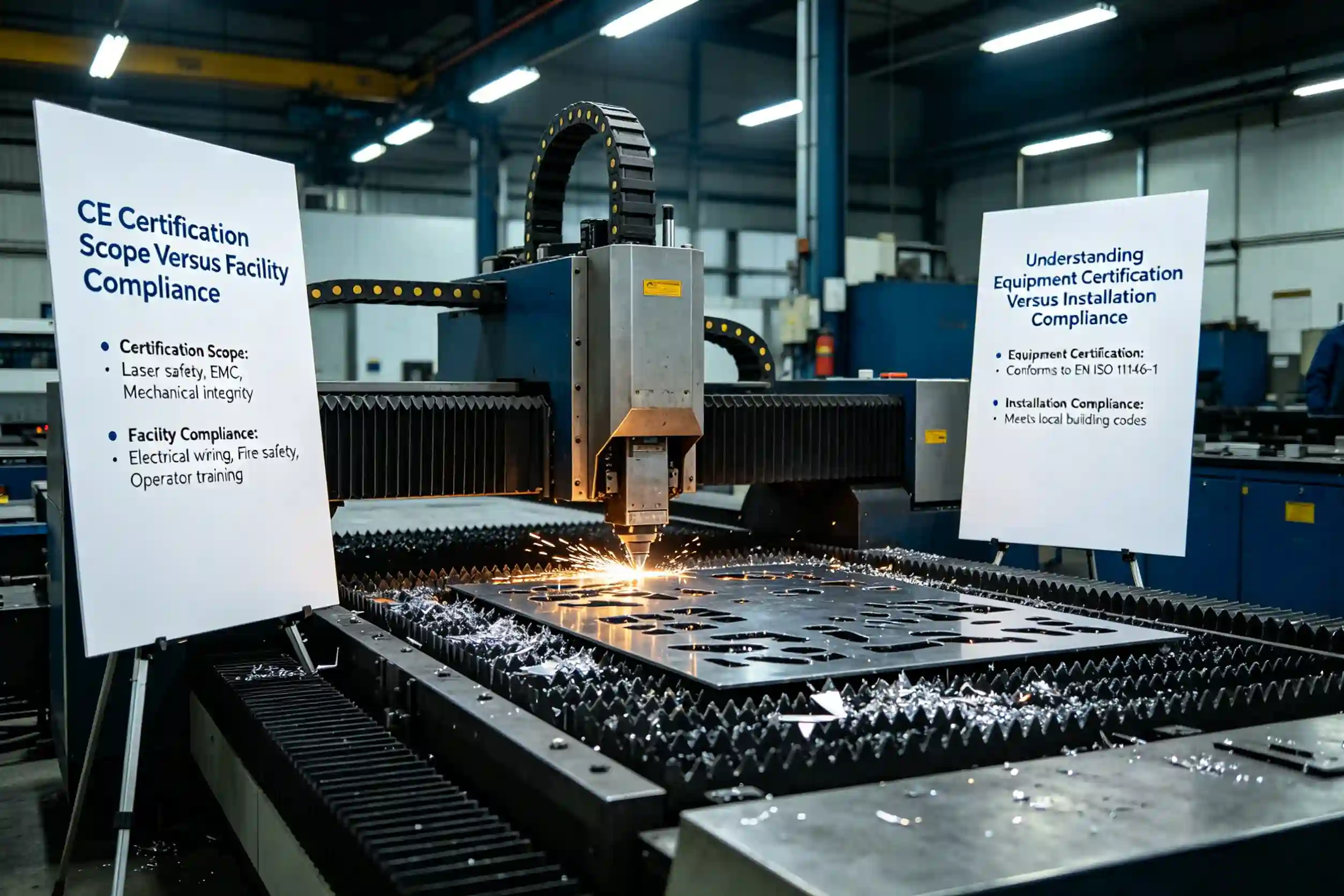
I've encountered this confusion most frequently with dust emission requirements. A tender might specify "dust emission concentration below 10 mg/m³ at extraction point, verified by CE certification." Our equipment's CE technical file includes dust collection system performance data—showing the vacuum system captures 95% of generated dust when tested with the manufacturer's specified filter and airflow rate. This meets the Machinery Directive's requirement to minimize dust exposure. However, achieving 10 mg/m³ at the workshop extraction point depends on factors outside our equipment:
What facility factors affect environmental compliance beyond equipment specs?
Extraction system integration: Our knife cutting machine has a vacuum port designed for 800 m³/h airflow. If the client's central dust collection system only delivers 500 m³/h to that port (because it serves 12 machines through undersized ductwork), actual dust capture drops below our CE test conditions. The equipment still has valid CE marking, but the installation won't meet the 10 mg/m³ specification.
Material variability: CE testing typically uses reference materials with standardized dust generation characteristics. In production, cutting aramid fiber composites generates more airborne particles than cutting cotton fabric. The equipment performs identically in both cases, but facility air quality measurements will differ based on production schedule and material mix—variables unrelated to equipment certification.
Background contamination: Facility environmental testing measures total particulate concentration, including dust from adjacent processes. A tender promising "10 mg/m³ at knife cutting station" might be unachievable if the nearby grinding operation contributes 8 mg/m³ to ambient dust levels. Equipment certification doesn't account for cross-contamination from other facility operations.
Maintenance schedule: CE certification tests equipment with new filters and properly adjusted vacuum systems. In production, filter efficiency degrades between changes, and clients sometimes reduce extraction airflow to save energy. Facility compliance measurements reflect actual operating practices, not the maintained-per-instructions conditions of certification testing.
How do I explain this distinction to buyers who conflate equipment and facility specs?
When I've needed to clarify this in tender responses, I use this framework:
Equipment-level commitments (what we certify): "Our knife cutting equipment meets CE Machinery Directive requirements with integrated dust extraction achieving 95% capture efficiency at manufacturer-specified airflow rates. CE technical file documentation will be provided showing compliance testing results."
Facility-level qualifications (what we can't certify): "Achieving 10 mg/m³ facility air quality requires proper extraction system sizing, regular filter maintenance, and material-appropriate dust management procedures. We provide equipment specifications and installation requirements; final facility compliance depends on complete system integration by qualified installation contractors."
What we offer instead of promising the impossible: "Realtop will provide technical consultation during installation planning, specifying extraction airflow requirements, filter selection guidance, and material-specific dust control recommendations. We can coordinate with your environmental compliance consultant to verify our equipment specifications support facility permit requirements."
This approach avoids two traps: First, it doesn't promise facility compliance we can't control, preventing acceptance disputes about factors outside our equipment. Second, it doesn't simply reject the buyer's specification as impossible, which might disqualify our bid. Instead, it reframes our commitment to what we actually deliver—equipment that meets certified performance standards plus technical support for facility integration.
In one automotive industry tender, the buyer required "ISO 14001-compliant equipment installation." ISO 14001 certifies environmental management systems at the organizational level—it's literally impossible for equipment to be "ISO 14001-compliant." When I pointed this out, the procurement team appreciated the clarification; they actually needed confirmation that our equipment wouldn't prevent their facility from maintaining its existing ISO 14001 certification. By reframing our commitment to "equipment design compatible with ISO 14001 environmental management systems, including documented procedures for waste material handling, energy consumption monitoring, and maintenance scheduling," we addressed their underlying concern without promising organizational-level certification.
What specification mismatches should I verify before promising compliance?
Before committing to any environmental or noise specification in your tender response, map each requirement to your verification method and test conditions. The most common bidding failures I've seen occur when sales teams promise specifications that sound reasonable but require test conditions different from your factory verification setup, or when specifications mix equipment-level and facility-level requirements without distinguishing between them.
Create a requirements verification matrix that lists every environmental and noise specification, identifies the test standard or measurement method needed to verify it, confirms whether you can conduct that test in-house or need third-party testing, and flags any specifications that require facility-level assessment beyond equipment certification. This matrix becomes your risk assessment tool—any specification you can't map to a controlled verification method is a potential acceptance dispute.
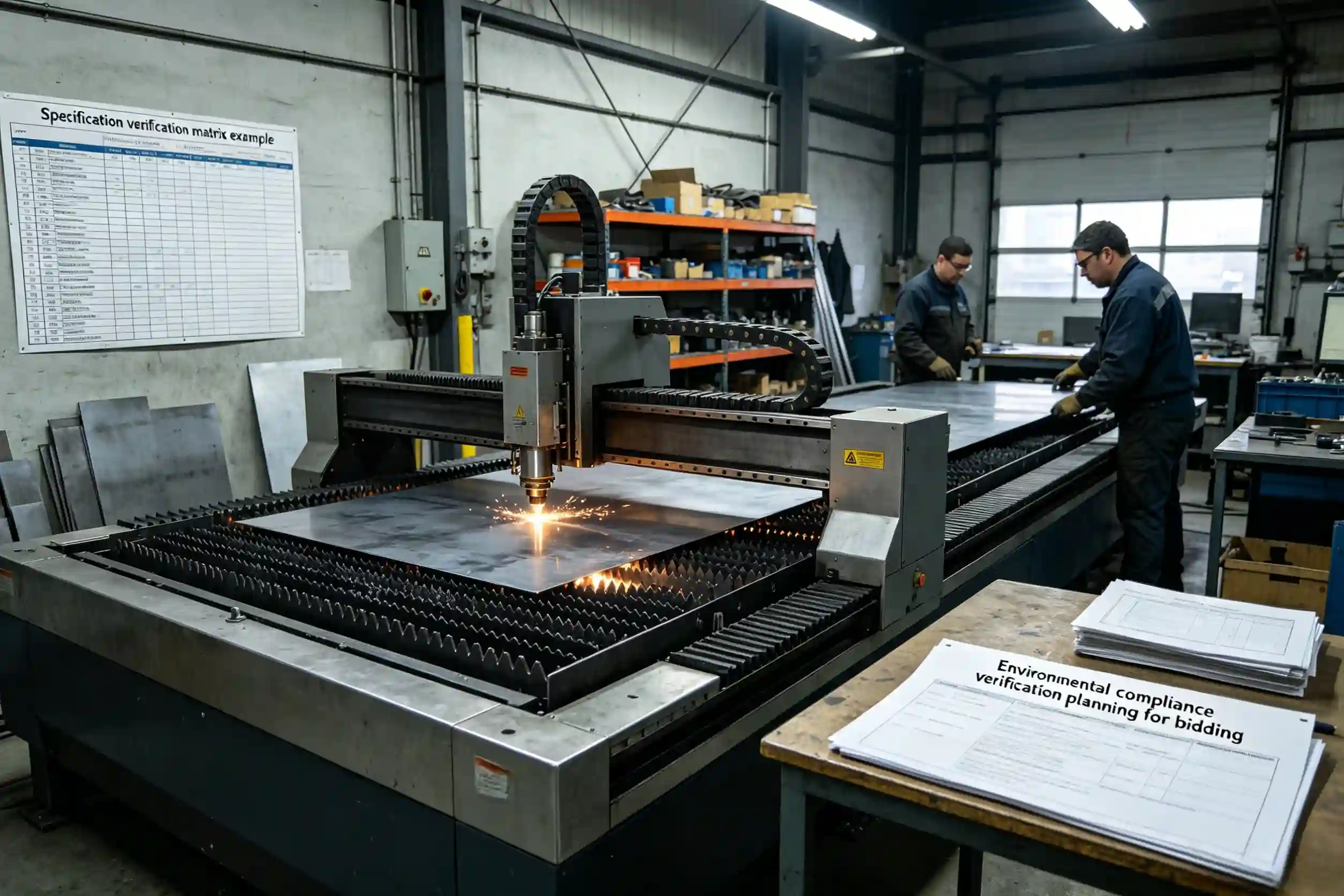
I use this verification approach for every tender Realtop responds to, and it consistently reveals specification traps before we commit to them. Let me walk through the specific checks that have prevented acceptance failures:
How do I verify noise specifications match my test capabilities?
Compare the tender's noise requirement against your factory test setup:
Measurement standard specified? If the tender cites ISO 3744, verify you have the measurement grid and calculation method for that specific standard. If it cites ISO 11202 (operator position measurement), confirm you're measuring at the correct positions. If no standard is cited, document in your proposal which standard you'll use for verification, making it part of your offer.
Measurement environment defined? Some noise standards require semi-anechoic chambers or free-field conditions. If you conduct factory testing in a normal production environment with background noise and reflective surfaces, you cannot verify specifications requiring specialized acoustic environments without third-party testing. Check whether the promised specification is physically testable in your facility.
Operational state matches production use? If the buyer will conduct acceptance testing during actual production cutting (most realistic scenario), verify your promised noise level using the same materials, feed rates, and blade conditions they'll use. Don't promise idle measurements if acceptance uses cutting measurements.
Multiple measurement points required? Some regulations require noise mapping at several operator


