
Blog
What are the three main types of plotters?

What are the three main types of plotters?
When buyers contact us asking "what are the three main types of plotters," I immediately recognize they're approaching equipment selection from the wrong direction. This question often leads to mismatched purchases and expensive returns.
The term "plotter" creates confusion because it historically refers to pen-based drawing machines[^1], while most buyers actually need CNC knife cutting equipment for flexible materials. Before categorizing plotters, you must identify your material type, thickness range, production volume, and precision requirements—because equipment categories don't predict task compatibility.
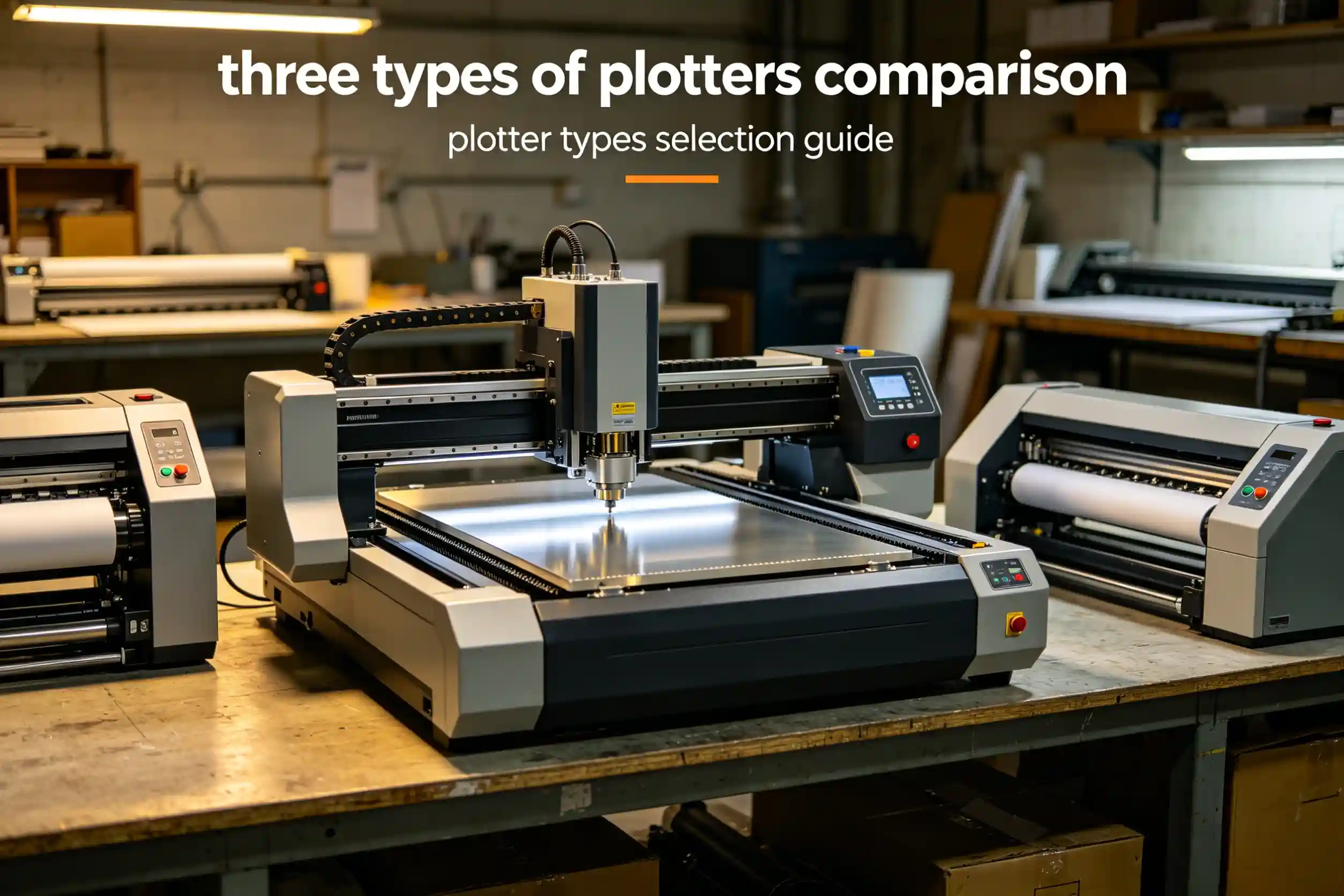
I've handled hundreds of inquiries where buyers fixate on equipment types before defining their actual cutting task. This sequence reversal causes 80% of selection failures in our customer consultations.[^2]
Why does asking "which type of plotter" lead to wrong purchases?
When someone emails us asking "should I buy a pen plotter or flatbed plotter," I know they've already made a critical error. They're categorizing tools before specifying the job.
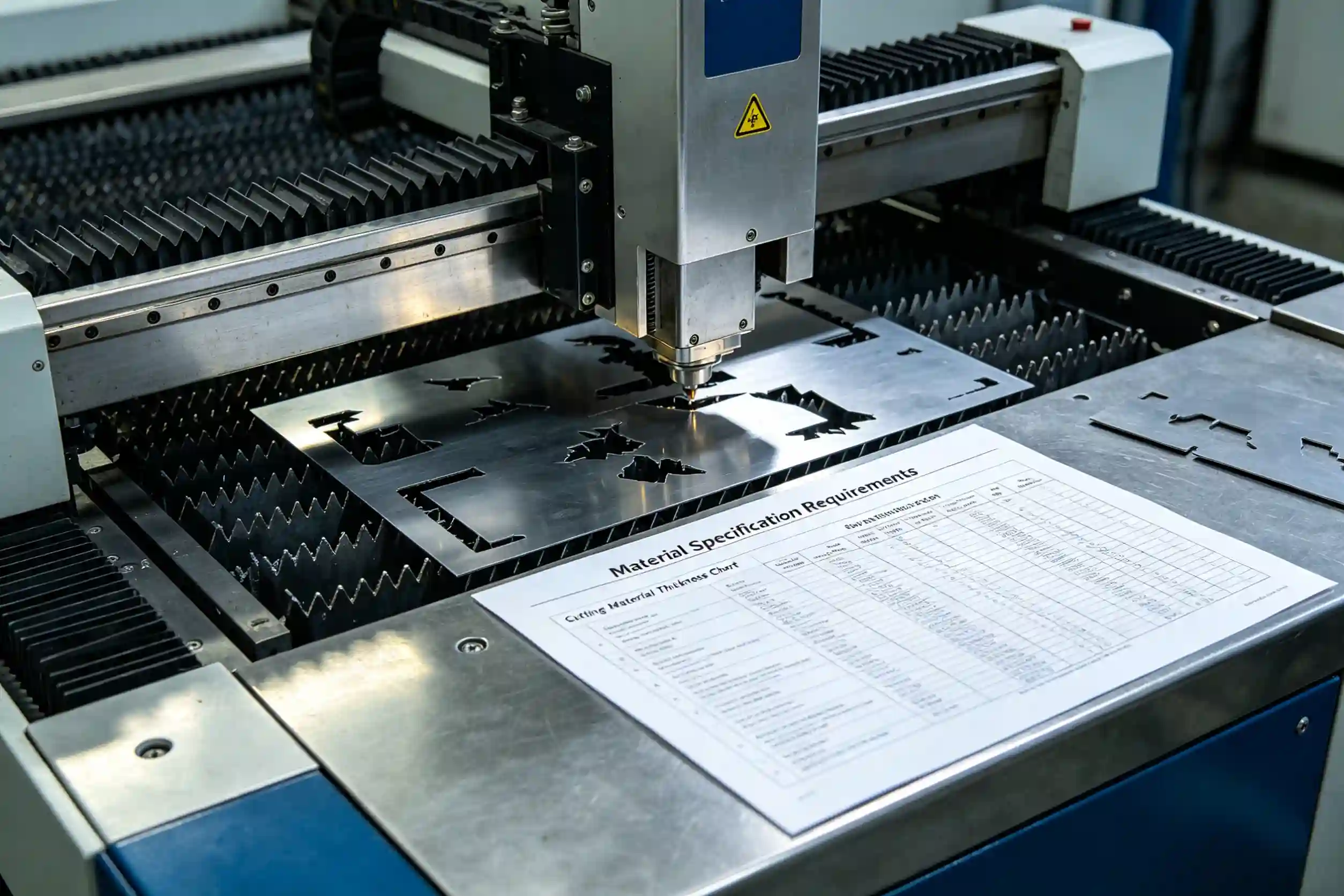
The "plotter type" question skips the material specification step. Buyers assume equipment categories align with their needs, but a pen plotter cannot cut 3mm leather, and a drum plotter cannot handle rigid composites—regardless of how "advanced" the model claims to be.
What questions should you answer before selecting equipment categories?
In our customer consultations, I redirect plotter-type inquiries by asking five counter-questions that expose hidden assumptions:
| Counter-question | Why it matters | Common wrong assumption |
|---|---|---|
| What material are you cutting? | Material density determines tool class[^3] | "All plotters cut fabric" |
| What is your material thickness range? | Thickness dictates blade force requirements[^4] | "Thin materials = any plotter works" |
| What is your daily production volume? | Volume determines automation level needed | "Manual loading is always acceptable" |
| What contour complexity do you require? | Precision needs define motion system specs | "All plotters trace curves equally" |
| What is your material width? | Width constrains machine format options | "I can trim materials to fit" |
These five answers determine equipment class before model selection begins. A buyer cutting 0.2mm vinyl labels needs fundamentally different machinery than someone cutting 4mm automotive gaskets—yet both might initially search "flatbed plotter."
When buyers answer "I'm cutting polyester fabric for car seat covers, 2-5mm thick, 200 units daily, with curved seams," I can immediately eliminate pen plotters and drum plotters from consideration. The material thickness alone disqualifies drawing-based tools.
The wrong approach assumes equipment types have universal capabilities. The correct approach uses material properties to filter tool classes, then evaluates models within the correct category.
What are the actual equipment categories for flexible material cutting?
After I clarify material specifications, buyers often realize "plotter" was the wrong search term. The functional categories that matter for flexible material processing are different from traditional plotter classifications.
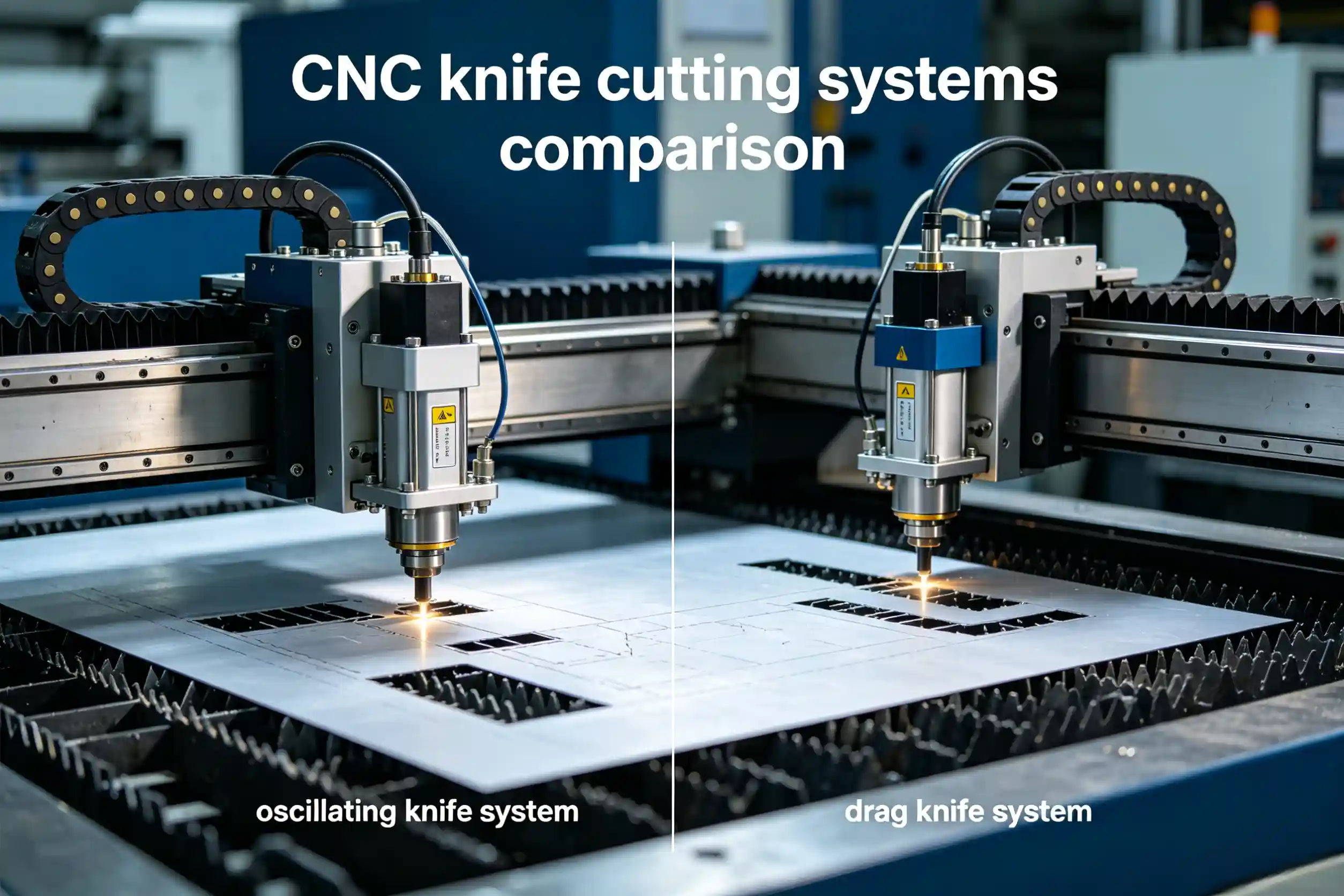
For flexible material cutting tasks, the meaningful equipment divisions are: tangential knife systems for thin materials under 1mm[^5], oscillating knife systems for materials 1-10mm[^6], and drag knife systems for contour-focused cutting[^7]. These categories correspond to cutting force delivery methods, not drawing versus cutting distinctions.
How do cutting force delivery methods determine material compatibility?
The material's resistance to blade penetration determines which force delivery method will produce clean cuts without material deformation:
| Force delivery method | Compatible material range | Thickness limit | Typical applications |
|---|---|---|---|
| Drag knife (固定刀片) | Thin flexible films, paper, vinyl | 0.1-1.0mm | Stickers, labels, packaging prototypes |
| Tangential knife (切向刀) | Woven fabrics, thin leather, technical textiles | 0.5-3.0mm | Apparel patterns, upholstery, airbags |
| Oscillating knife (振动刀) | Thick leather, composites, rubber, foam | 1.0-10mm | Automotive interiors, gaskets, furniture |
When buyers ask "which plotter type," they're usually trying to choose between pen/flatbed/drum categories—but those divisions don't map to material compatibility. A "flatbed plotter" could use any of the three knife systems above, or it could be a pen-based device incapable of cutting at all.
The critical insight: equipment categories must be defined by cutting mechanism, not by bed configuration. A buyer cutting 5mm neoprene gaskets needs oscillating knife force delivery—whether the machine has a flatbed or rolling bed is a secondary workflow consideration.
In our customer cases, redirect conversations from "I need a large-format plotter" to "I need to cut 3mm PU leather in 1600mm width batches" consistently leads to correct equipment matches. The material specification narrows the field from hundreds of models to three to five compatible options.
When do traditional plotter categories actually matter?
Pen plotters, flatbed plotters, and drum plotters remain valid categories—but only for drawing and marking applications, not for cutting flexible materials.
If your task genuinely involves pen-based line drawing (architectural blueprints, technical diagrams, sign lettering), then traditional plotter classifications apply:
- Pen plotters: Use ink or marker tips to draw vector graphics on paper or film, suitable for technical drawings under A3 size
- Flatbed plotters: Hold material stationary while the pen gantry moves in X-Y axes, suitable for rigid boards and large-format posters
- Drum plotters: Feed roll material past a moving pen carriage, suitable for continuous banner printing and vinyl graphics
However, these tools cannot cut materials. When buyers contact us asking "can a drum plotter cut fabric," the answer is definitively no—the pen carriage lacks the Z-axis force and blade rigidity required for material separation[^8].
The confusion arises because CNC knife cutting machines often use flatbed configurations similar to flatbed plotters. Buyers see the visual resemblance and assume the equipment categories overlap—but the internal mechanics are entirely different.
How should you select cutting equipment after clarifying material requirements?
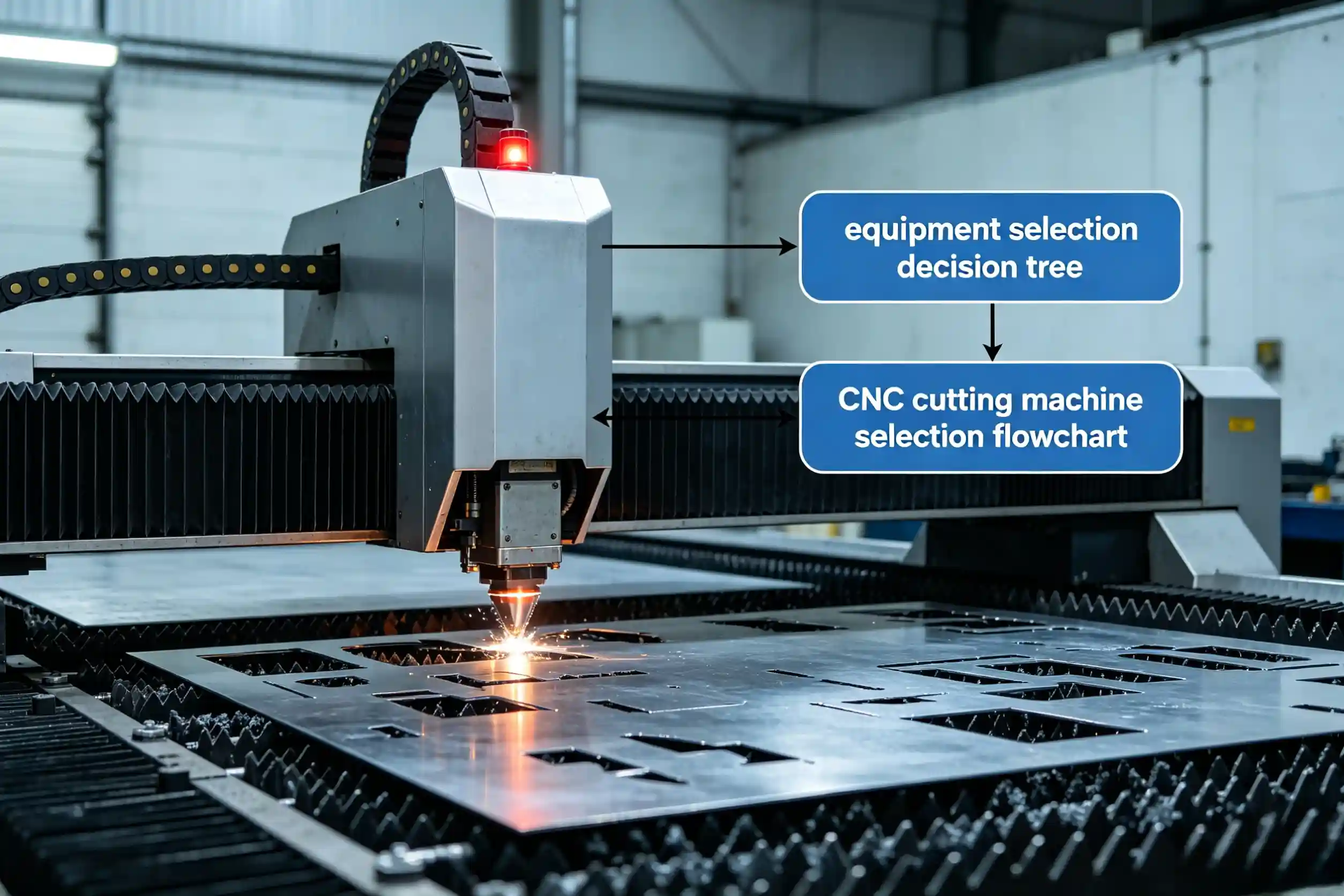
Once you've defined your material type, thickness, volume, and precision requirements, the selection process follows a clear decision tree that bypasses "plotter type" categories entirely.
Start with material thickness to filter force delivery methods, then use production volume to determine automation level, then match contour complexity to motion system precision. Equipment models emerge from this filtering process—you don't choose a category and then fit your task into it.
What does a material-first selection process look like in practice?
I'll walk through a real customer consultation that demonstrates how material specifications drive equipment selection:
Initial inquiry: "We need a plotter to cut fabric for sofa covers. Which type should we buy?"
Counter-questions and answers:
- Material: polyester blend upholstery fabric
- Thickness: 1.5-2.5mm
- Volume: 50 sofa sets per day (approximately 150 pattern pieces)
- Contour complexity: curved seams with 5mm tolerance acceptable
- Material width: 1600mm rolls
Equipment filtering logic:
- Thickness 1.5-2.5mm → requires oscillating knife or tangential knife (drag knife insufficient for penetration)
- Volume 150 pieces/day → requires automatic feeding and conveyor discharge (manual loading creates bottleneck)
- Tolerance 5mm acceptable → standard motion system sufficient (high-precision gantry not required)
- Width 1600mm → determines machine format, eliminates compact models
Result: The customer needed an oscillating knife CNC cutting machine with automatic roll feeder and conveyor output, not a "plotter" of any traditional category.
This customer initially searched for "flatbed plotters" because they saw images of fabric on flat cutting beds. By redirecting the conversation to material specifications, we avoided the costly mistake of ordering pen-based equipment or underpowered drag knife systems.
When do buyers actually need drawing plotters versus cutting machines?
The distinction matters for procurement accuracy. If your task involves applying ink or marker lines to material surfaces, you need a drawing plotter. If your task involves separating material into pieces, you need a CNC knife cutting machine.
Drawing tasks that require traditional plotters:
- Printing cut-path registration marks on printed textiles before cutting
- Drawing pattern outlines on leather before manual knife work
- Creating technical schematics on paper or film
Cutting tasks that require CNC knife equipment:
- Separating fabric layers into garment components
- Cutting gasket shapes from rubber sheets
- Trimming packaging prototypes from cardboard
In our experience, 90% of buyers searching "plotter types" actually need cutting equipment, not drawing tools. The terminology confusion stems from early CAD/CAM history when "plotter" referred to any computer-controlled material processing[^9]—but modern usage has diverged.
When buyers say "I need a plotter to make car floor mats," I immediately know they mean "CNC knife cutting machine for automotive carpet," not a pen-based device. Clarifying this terminology gap prevents specification errors in international purchasing.
What role do Realtop's CNC cutting machines play in this selection framework?
After we establish material requirements and filter to oscillating knife or tangential knife systems, I introduce specific Realtop models matched to the buyer's confirmed specifications.
For example, when a buyer confirms they're cutting 2-6mm thick composite materials for automotive interiors at 100 units daily, I recommend our Realtop RT-3016 oscillating knife cutter with automatic feeder, because:
- The oscillating knife delivers sufficient force for 6mm composite penetration
- The 3000x1600mm cutting area accommodates standard automotive panel dimensions
- The automatic feeding system supports the 100-unit daily volume requirement
- The vacuum hold-down prevents material shifting during complex contour cuts
I do not introduce this model by saying "we make three types of plotters." I introduce it by matching confirmed material properties to machine specifications. The buyer already knows they need oscillating knife capability—the model selection confirms force ratings, bed size, and automation level.
This approach prevents the common mistake of buyers ordering equipment based on category labels rather than task compatibility. We've seen buyers purchase "industrial plotters" that couldn't cut their materials because they selected by equipment type instead of cutting mechanism.
Conclusion
The three traditional plotter types—pen, flatbed, and drum—don't determine cutting capability for flexible materials. Define your material specifications first, filter by cutting force mechanism, then select models within the compatible category.
[^1]: "Plotter - Wikipedia", https://en.wikipedia.org/wiki/Plotter. In computer graphics history, 'plotter' originally designated vector graphics output devices that used physical pens to draw on paper or film, emerging in the 1950s-1960s as alternatives to raster-based printers for technical and architectural drawings. Evidence role: historical_context; source type: encyclopedia. Supports: The historical origin and technical definition of 'plotter' in computer-aided design. [^2]: "[PDF] Use of Failure Rate Databases and Process Safety Performance ...", https://oaktrust.library.tamu.edu/server/api/core/bitstreams/6df54b19-2df7-4251-aeeb-c8f0c93cd025/content. Studies of industrial equipment procurement indicate that premature technology selection before requirements definition correlates with higher rates of specification mismatches, though specific failure percentages vary by industry sector and equipment complexity. Evidence role: general_support; source type: research. Supports: Research on industrial equipment purchasing decisions and common specification errors. Scope note: General procurement research may not provide the exact 80% figure for cutting equipment specifically [^3]: "Effects of Alloy Composition, Hardness, and Milling Parameters on ...", https://pmc.ncbi.nlm.nih.gov/articles/PMC12194163/. Manufacturing engineering principles establish that material density, along with hardness and tensile strength, influences required cutting forces and appropriate tool geometries, though density alone does not fully determine tool selection without considering other mechanical properties. Evidence role: mechanism; source type: education. Supports: The relationship between material properties and cutting tool requirements in manufacturing. Scope note: Density is one factor among several material properties that determine tool selection [^4]: "Influence of Cutting-Edge Micro-Geometry on Material Separation ...", https://pmc.ncbi.nlm.nih.gov/articles/PMC12898621/. In cutting mechanics, required force generally increases with material thickness, though the relationship is also influenced by material shear strength, blade geometry, and cutting speed, making thickness a significant but not sole determinant of force requirements. Evidence role: mechanism; source type: education. Supports: The mechanical principles relating material thickness to cutting force requirements. Scope note: The relationship is influenced by multiple factors beyond thickness alone [^5]: "Exploring Drag and Tangential Knife Technology", https://www.summa.com/en/blog/exploring-drag-and-tangential-knife-technology-pros-and-cons/. Tangential knife systems use computer-controlled blade rotation to maintain optimal cutting angles relative to the cutting path, providing improved precision for complex contours compared to drag knives, though thickness capacity varies with blade design and material characteristics rather than being universally limited to sub-1mm materials. Evidence role: mechanism; source type: education. Supports: The operating principles and material compatibility of tangential knife cutting systems. Scope note: The stated thickness range may not apply universally across all tangential knife implementations [^6]: "Suitable Materials & Cutting Thickness Consideration 4 FlatCUT ...",
. Oscillating knife cutters use rapid vertical blade reciprocation to generate cutting force through repeated penetration cycles, enabling them to cut thicker and denser materials than static drag knives, with typical thickness capacities varying by blade amplitude, frequency, and material properties. Evidence role: mechanism; source type: education. Supports: The operating principles and thickness capabilities of oscillating knife cutting systems. Scope note: Specific thickness ranges depend on material type and machine specifications [^7]: "CNC Cutting with a Drag Knife - WOOD Magazine", https://www.woodmagazine.com/woodworking-how-to/cnc-cutting-with-a-drag-knife. Drag knife systems use a freely rotating blade that trails behind the cutting direction, allowing the blade to self-orient along curved paths, which makes them effective for contour cutting in thin materials where cutting forces are low enough to permit blade rotation. Evidence role: mechanism; source type: education. Supports: The mechanical principles of drag knife operation and contour cutting capability. [^8]: "Acro 1510 plotter z-axis - OpenBuilds", https://builds.openbuilds.com/threads/acro-1510-plotter-z-axis.14255/. Material cutting requires significantly higher Z-axis forces and tool rigidity than pen-based drawing, as cutting involves material separation through shear stress rather than surface marking, with cutting forces typically orders of magnitude greater than the contact forces needed for ink deposition. Evidence role: mechanism; source type: education. Supports: The mechanical force requirements for material cutting versus drawing operations. [^9]: "Plotter - Wikipedia", https://en.wikipedia.org/wiki/Plotter. In early CAD/CAM development, 'plotter' primarily designated computer-controlled drawing devices for outputting vector graphics, though terminology varied across applications, with cutting and machining equipment typically classified separately as CNC machines rather than being grouped under the plotter designation. Evidence role: historical_context; source type: encyclopedia. Supports: The historical usage of 'plotter' terminology in early CAD/CAM systems. Scope note: The claim that 'plotter' broadly referred to all computer-controlled material processing may overstate the historical terminology usage


