
Blog
Can You CNC Composite?

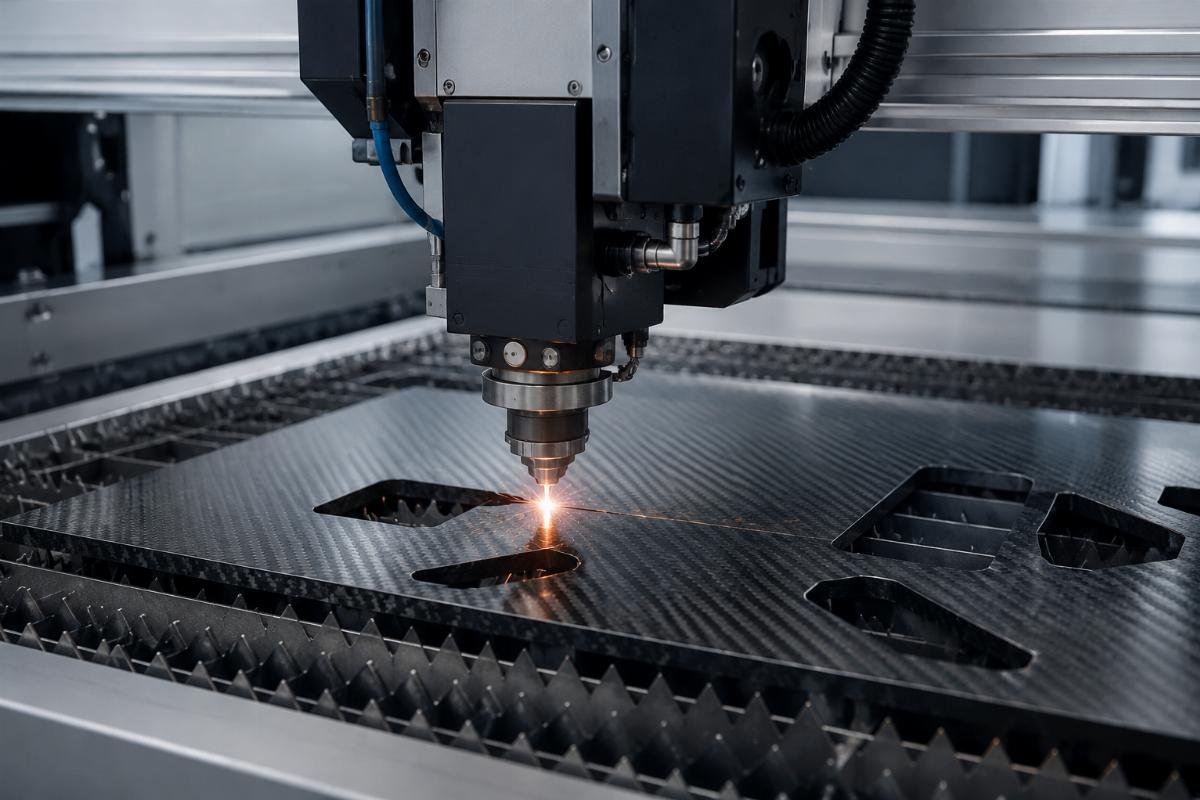
Can You CNC Composite?
I've spent years answering buyer inquiries about cutting composite materials, and the question "Can you CNC composite?" almost always comes with an unspoken assumption: CNC means metal-cutting routers or mills. Most buyers don't realize that knife-cutting CNC systems can handle many composite materials without the noise, dust, or tooling costs of traditional machining[^1].
Yes, you can CNC cut many composite materials using knife-based cutting systems, but suitability depends on material thickness, fiber type, resin system, and edge quality requirements—not all composites suit knife cutting, and some need router or waterjet alternatives instead.
The real challenge isn't whether CNC can cut composites—it's matching the right cutting method to your specific material properties and production goals. Let me walk you through what I've learned from handling equipment selection for automotive interior suppliers and gasket manufacturers.
What composite materials work with CNC knife cutting?
I've seen buyers assume that all composites require aggressive machining tools, but knife cutting actually handles a surprising range of materials when conditions align[^2].
CNC knife cutting works well for fiber-reinforced fabrics, thin laminates, and soft-matrix composites under 10mm thickness, particularly materials used in automotive interiors, industrial gaskets, and decorative panels—but not thick structural laminates or highly abrasive fiber systems.
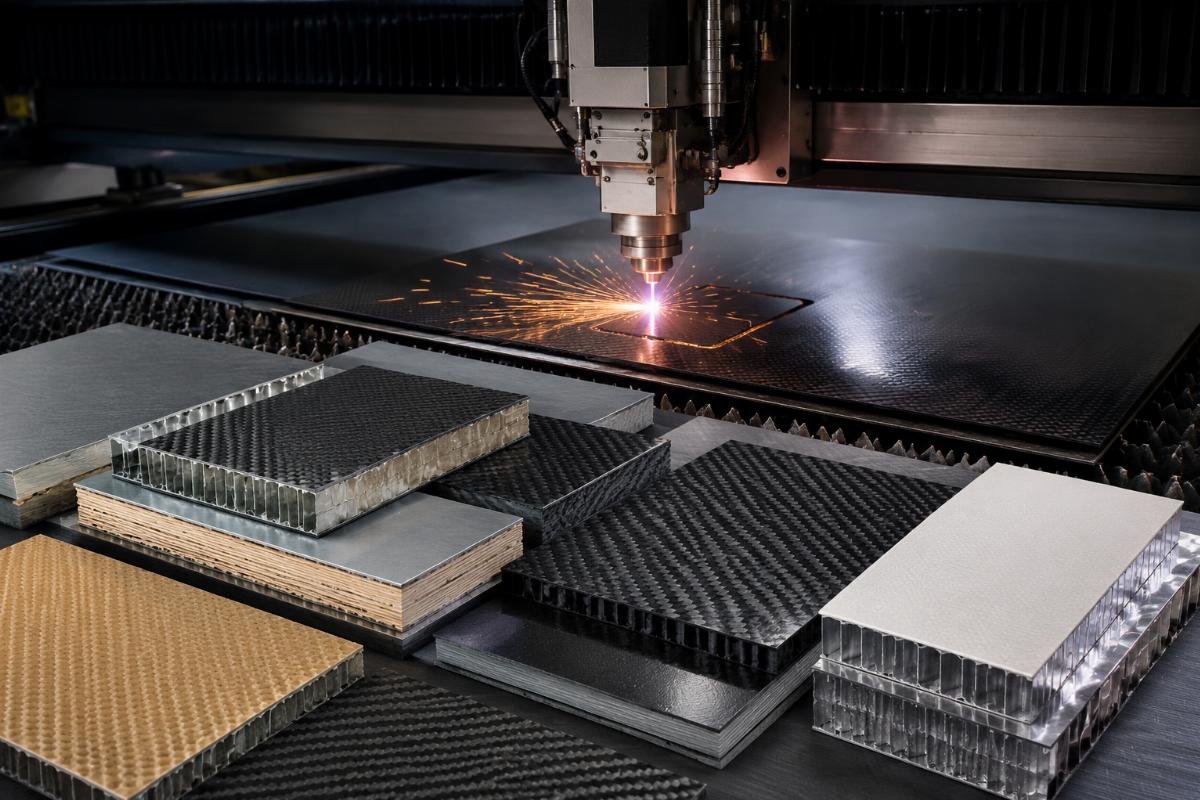
Material categories that suit knife cutting
Based on customer projects I've worked with, here's how different composite types perform with knife-cutting systems:
| Composite Type | Knife Cutting Suitability | Thickness Range | Common Applications |
|---|---|---|---|
| Fiberglass fabric composites | High (when resin-impregnated but not fully cured) | 1-6mm | Automotive interior panels, speaker enclosures |
| Carbon fiber prepreg | Moderate (dulls blades faster) | 1-4mm | Decorative trim, electronics housings |
| Kevlar fabric laminates | Moderate (requires sharp blade maintenance) | 1-5mm | Protective gear components, gaskets |
| Phenolic sheet composites | Low (too abrasive for standard blades) | 2-8mm | Industrial insulation, electrical components |
| Cork-rubber composites | High (soft matrix, easy cutting) | 1-10mm | Gaskets, vibration dampers, sealing strips |
| Foam-core sandwich panels | High (when facing material is thin) | 5-15mm | Interior panels, signage, display structures |
The pattern I notice from inquiry conversations is that buyers with automotive interior projects almost always have materials in the "high suitability" range. These are composite fabrics with polymer backings or foam-backed vinyl-composite laminates that knife systems cut cleanly without edge fraying or delamination.
Gasket manufacturers working with graphite-fiber or aramid-fiber composite sheets fall into the "moderate" category. These materials cut well but require blade sharpening schedules and dust extraction systems because the fibers are harder than typical textiles.
When knife cutting beats other methods
I've had customers switch from die cutting to CNC knife systems specifically for composite materials because of three advantages:
No tooling cost for design changes: Die cutting requires new dies for each shape. When an automotive supplier needs to test five interior panel variations before finalizing production, knife cutting eliminates the $2,000-5,000 die cost per variation.
Cleaner edges on layered materials: Laser cutting burns resin and creates hard, brittle edges on some composites[^3]. Knife cutting produces a mechanical shear that leaves flexible edges on materials like foam-backed vinyl composites used in car door panels.
Lower dust generation than routers: Router-based CNC creates fine particulate from composite materials that requires industrial extraction[^4]. Knife cutting produces larger waste pieces with less airborne dust, which matters for shops without high-capacity filtration.
One specific example: an automotive interior supplier was cutting fiberglass-reinforced thermoplastic panels for instrument cluster bezels. They tried laser cutting first, but the heat affected zone created brittle edges that cracked during assembly. Switching to CNC knife cutting gave them clean edges that flexed slightly without breaking.
Materials that don't work with knife cutting
I always tell buyers about the boundaries because mismatched expectations waste time and money. Some composites simply don't suit knife systems:
Thick structural laminates: Carbon fiber sheets over 6mm thick or multi-ply fiberglass panels used in structural applications resist knife penetration. The cutting force required either dulls blades immediately or causes delamination between layers.
Fully cured thermoset composites: Once epoxy or polyester resin fully hardens in a composite part, the material becomes too stiff for knife cutting. These need router bits or waterjet systems.
Highly abrasive fiber systems: Composites with glass microspheres, ceramic fibers, or mineral fillers wear knife edges in minutes. I've seen cases where a blade lasted only 20 cuts before needing replacement, which makes production uneconomical.
Metal-backed composite materials: If your composite has aluminum or steel backing for structural reinforcement, knife cutting won't penetrate the metal layer. These require router or plasma cutting.
How thick can CNC knife systems cut composite materials?
Thickness is the question I hear most often in sales calls, usually phrased as "Can your machine cut through [specific material] at [specific thickness]?"
CNC knife cutting typically handles composite materials up to 10mm thickness reliably[^5], with optimal performance in the 1-6mm range—thicker materials risk incomplete cuts, delamination, or excessive blade wear that makes production uneconomical.
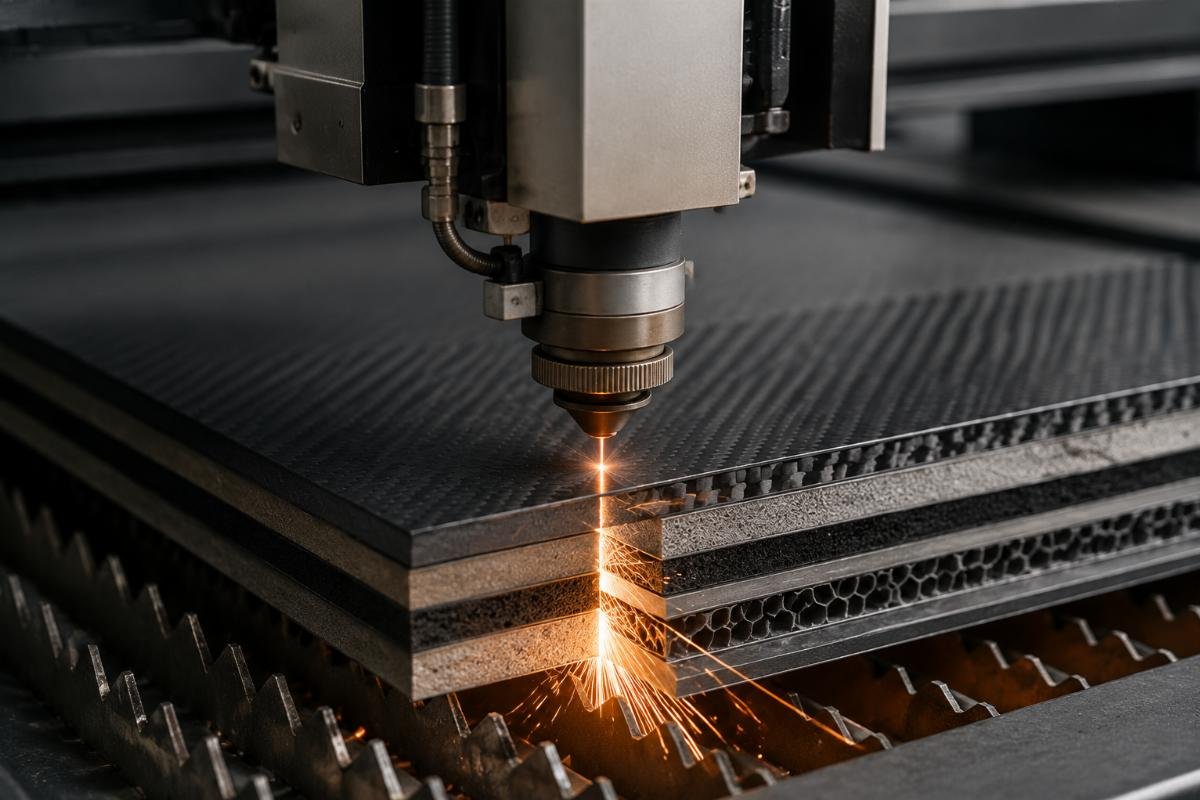
Thickness vs. material hardness trade-off
The actual cutting limit isn't just thickness—it's the combination of thickness and material hardness. A 10mm soft foam-core composite cuts easily, while a 4mm glass-fiber phenolic sheet might exceed knife system limits.
I use this framework when matching customer materials to equipment:
| Material Hardness Level | Maximum Practical Thickness | Blade Life Expectation | Production Rate Impact |
|---|---|---|---|
| Soft matrix (foam, rubber) | 10-12mm | 500+ meters before sharpening | Minimal slowdown |
| Medium matrix (flexible thermoplastic) | 6-8mm | 200-300 meters before sharpening | 10-15% slower cutting speed |
| Hard matrix (cured thermoset) | 3-5mm | 50-100 meters before sharpening | 20-30% slower, frequent blade changes |
| Abrasive matrix (mineral-filled) | 2-3mm | 20-50 meters before replacement | 40-50% slower, high consumable cost |
The gasket manufacturers I work with typically fall into the "medium matrix" category. Their composite materials combine graphite fibers with elastomer binders, usually in 3-6mm thickness. These cut well, but they plan blade sharpening into their weekly maintenance schedule because cutting speeds drop noticeably once edges dull.
Multi-pass cutting for thick materials
Some customers ask whether multiple passes can extend thickness limits. The answer is technically yes, but practically limited.
For materials up to 8mm, a two-pass cutting approach works: the first pass scores the material halfway through, the second pass completes the cut. I've seen this work well for foam-core sandwich panels where the facing material is thin but the core adds thickness.
Beyond 8mm, multi-pass cutting creates problems. The blade deflects slightly on the first pass, and the second pass doesn't follow exactly the same path. This creates a stair-step edge profile instead of a clean vertical cut, which matters for parts that need tight assembly tolerances.
Thickness verification before equipment purchase
I always recommend sending material samples before buyers commit to CNC knife equipment. The process works like this:
- Customer ships 300x300mm sample of their actual production material
- We run test cuts with different blade types and cutting speeds
- Customer receives cut samples to verify edge quality
- We provide blade life estimate based on cutting distance during testing
This eliminates the risk of buying equipment only to discover the material exceeds practical cutting limits. In about 15% of sample tests, we identify materials that need router or waterjet alternatives instead of knife cutting.
What blade types work best for composite materials?
Blade selection affects edge quality and production economics more than most buyers realize when they first inquire about cutting composites.
Composite materials typically require carbide-tipped or ceramic blades rather than standard steel knives because fiber reinforcement dulls conventional blades quickly[^6]—blade choice depends on fiber type, cutting volume, and acceptable edge finish rather than a universal "best" option.
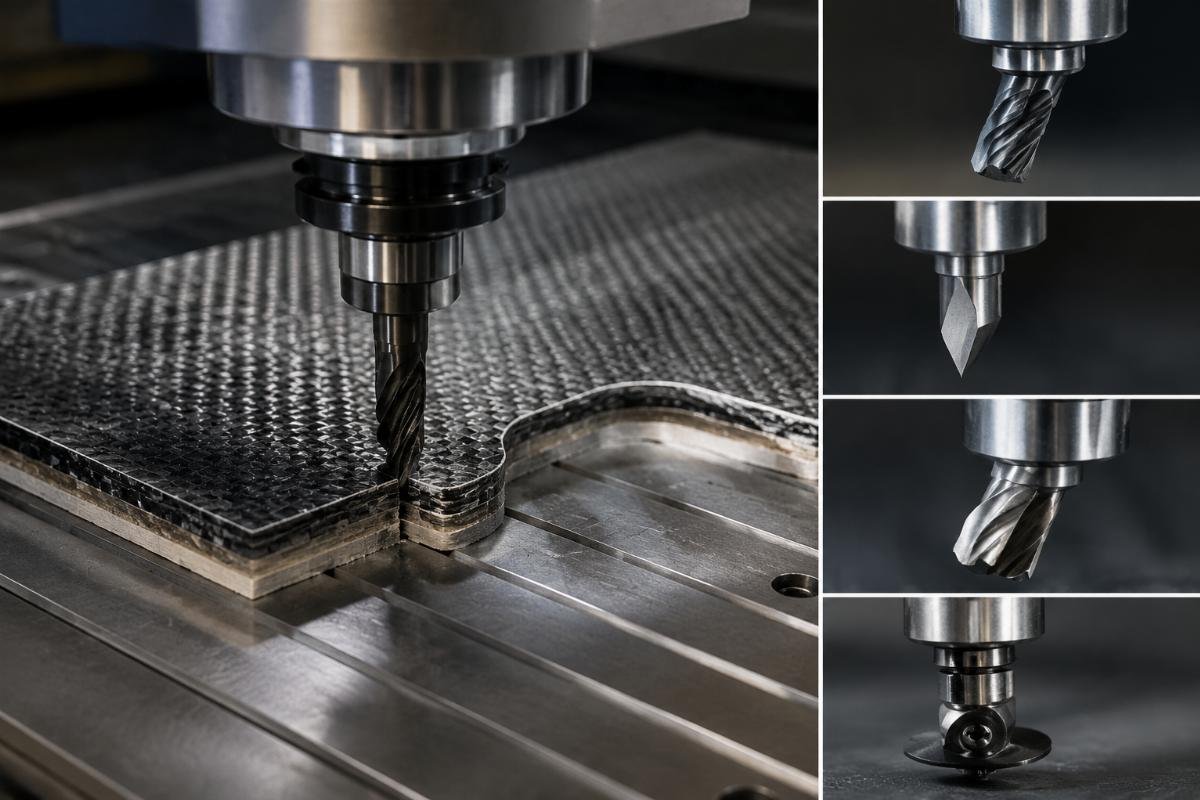
Blade material trade-offs
I've seen buyers initially resist carbide or ceramic blades because of the higher cost, but the economics shift quickly when cutting abrasive composites.
Standard steel blades: These work for low-fiber composites like foam-backed vinyl or fabric-reinforced soft plastics. Blade cost is low ($15-30 per blade), but life expectancy drops to 50-100 meters when cutting fiberglass or carbon fiber. One automotive supplier calculated that steel blades cost them $0.08 per square meter in blade replacement for their fiberglass-composite interior panels.
Carbide-tipped blades: These extend life by 5-8x compared to steel when cutting fiber-reinforced materials. Cost is higher ($60-120 per blade), but cost per square meter drops to $0.02-0.03 for the same material. The challenge is that carbide tips can chip if the blade strikes foreign objects or if cutting speed is too high for the material hardness.
Ceramic blades: These offer the longest life for abrasive composites—some customers report 1,000+ meters before replacement. Cost is highest ($150-250 per blade), but for high-volume gasket production using aramid-fiber composites, the cost per square meter drops to $0.01-0.015. The limitation is that ceramic blades are brittle and fail catastrophically rather than gradually dulling, so operators need to monitor cutting force indicators to predict replacement timing.
Blade geometry considerations
Beyond material, blade geometry affects how composites cut:
Straight-edge blades create clean cuts in unidirectional fiber composites but can cause fraying in woven fabrics. Serrated blades reduce fraying by using a sawing motion but leave slightly rougher edges. Hook blades work well for thick, soft-matrix composites by pulling material into the cutting action rather than pushing through.
I had a customer cutting carbon fiber fabric composites for decorative panels who struggled with edge fraying using standard straight blades. Switching to a fine-serrated blade reduced fraying by about 80%, which eliminated their secondary edge-finishing step.
Blade maintenance impact on production
The pattern I see consistently: buyers focus on machine capability during purchase decisions but underestimate blade maintenance requirements during production.
For composite materials, blade sharpening or replacement becomes part of the production rhythm. A gasket manufacturer cutting 200 square meters per day of graphite-composite material sharpens blades every 2-3 days. They keep three blade sets in rotation: one in the machine, one being sharpened, one as backup.
The actual maintenance time is short—blade changes take 2-3 minutes—but planning matters. Unplanned blade failure in the middle of a production run creates more disruption than scheduled changes during shift transitions.
How does fiber orientation affect CNC cutting quality?
This is the technical question that rarely comes up in initial inquiries but becomes critical during production trials.
Fiber orientation in composite materials affects edge quality because cutting parallel to fibers produces cleaner edges than cutting perpendicular[^7], and woven fabrics behave differently than unidirectional layups—buyers need to consider dominant fiber direction when planning part layouts on material sheets.
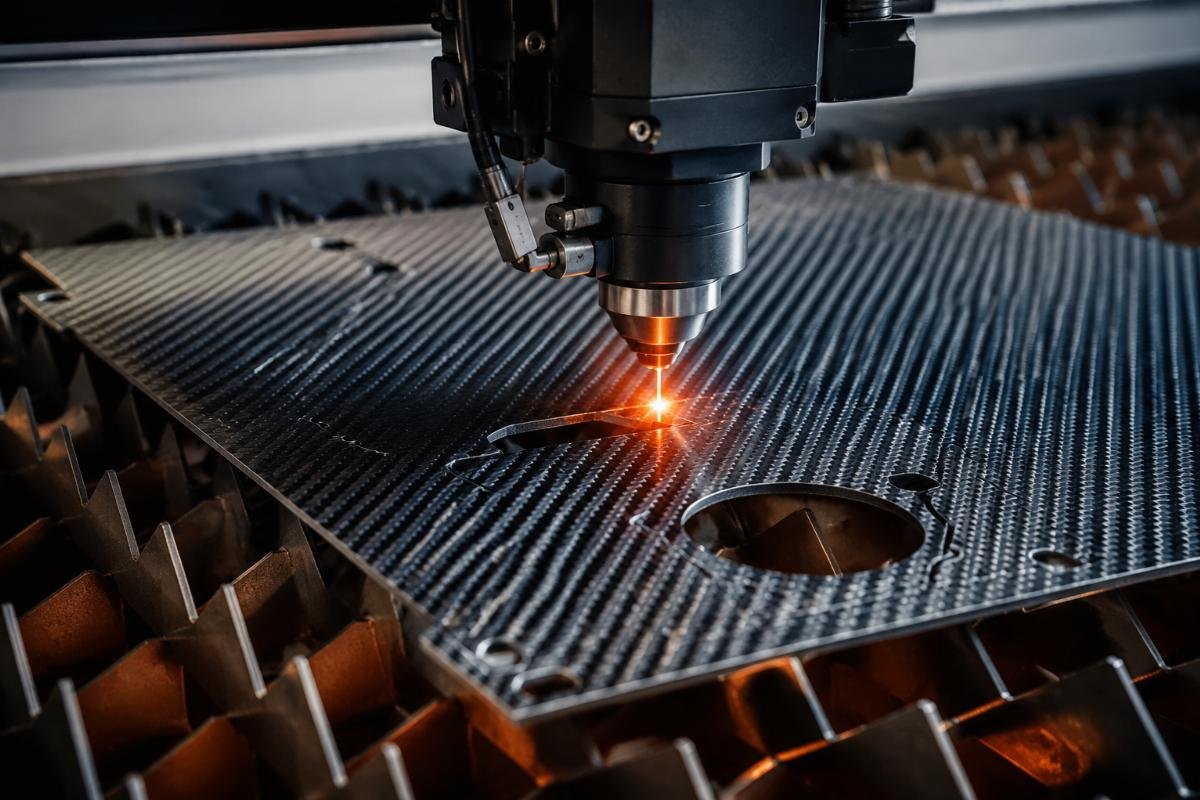
Cutting parallel vs. perpendicular to fibers
When knife cutting moves parallel to fiber direction, the blade essentially separates fibers along their length. This creates minimal edge disturbance. When cutting perpendicular, the blade must sever fibers completely, which can cause edge fraying or delamination between layers.
I've seen this dramatically with unidirectional carbon fiber prepreg used in decorative applications. Cutting parallel to fibers produces nearly perfect edges. Cutting perpendicular creates edge fraying that requires secondary finishing operations.
Woven vs. unidirectional composite behavior
Woven fabric composites have fibers running in two directions (typically 0° and 90°), which means any cutting path crosses fibers at some point. Edge quality stays relatively consistent regardless of cutting direction, though corners where the blade changes direction can show slightly more fraying.
Unidirectional composites concentrate fibers in one primary direction with minimal cross-fibers. These show dramatic quality differences based on cutting angle. An automotive supplier cutting unidirectional fiberglass panels adjusted their nesting software to align long part edges with fiber direction, which improved edge quality enough to eliminate their edge-sealing step.
Bias-cut strategies for layered composites
Some production planners use bias cutting—angling parts at 45° to the primary fiber direction—to balance edge quality across all edges of complex shapes. This works when parts have multiple directional edges and maintaining consistent quality matters more than maximizing material utilization.
The trade-off is material waste. Bias cutting typically reduces material utilization by 8-15% compared to optimized nesting aligned with primary fiber direction. For high-value composites like carbon fiber, that waste cost needs to offset the value of consistent edge quality.
What production volumes justify CNC knife cutting for composites?
Volume economics determine whether CNC knife cutting makes sense compared to die cutting or manual cutting methods.
CNC knife cutting becomes economically viable for composite materials starting around 500-1,000 parts per month when design changes are frequent, or 2,000+ parts per month for stable designs—below these volumes, manual cutting or outsourcing often costs less than equipment investment.
Break-even calculation framework
The actual break-even point depends on part complexity, material cost, and labor rates, but I use this framework when buyers ask about volume justification:
| Production Volume | Manual Cutting Cost | CNC Knife Cutting Cost | Die Cutting Cost | Recommended Method |
|---|---|---|---|---|
| Under 500 parts/month | $0.80-1.50/part | $1.20-2.00/part (including equipment cost) | $2.50-4.00/part (die cost amortized) | Manual cutting |
| 500-2,000 parts/month | $0.80-1.50/part | $0.60-1.00/part | $1.00-2.00/part | CNC knife cutting |
| 2,000-10,000 parts/month | $0.80-1.50/part | $0.40-0.70/part | $0.50-0.80/part | CNC knife or die cutting |
| Over 10,000 parts/month | $0.80-1.50/part | $0.35-0.60/part | $0.30-0.50/part | Die cutting (if design is stable) |
The pattern I see in actual customer decisions: automotive suppliers with 1,000-3,000 parts per month and frequent design iterations choose CNC knife cutting. Gasket manufacturers with 5,000+ parts per month of stable designs choose die cutting unless they run multiple SKUs, in which case CNC knife cutting eliminates die inventory costs.
Design change frequency impact
One customer compared CNC knife cutting against die cutting for automotive interior composite panels. Their production volume was 4,000 parts per month, which should favor die cutting, but they ran 12 different panel designs with changes every 2-3 months.
Die cutting would require $24,000-36,000 in die inventory (12 designs × $2,000-3,000 per die) plus remake costs whenever designs changed. CNC knife cutting eliminated die costs entirely, and design changes only required updating CAD files.
The decision shifted from pure per-part cost to total system cost including design flexibility value.
Short-run and prototype production
I've worked with customers who don't fit traditional volume categories because they run continuous short production runs. A composite fabrication shop might produce 50-200 parts of 30 different designs per month—total volume is high, but individual run volumes are low.
For these operations, CNC knife cutting is often the only economical option. Die cutting would require 30 dies ($60,000-90,000 investment), and manual cutting can't maintain consistent quality across that many design variations.
Material utilization value
The hidden economic factor is material waste. CNC knife cutting with optimized nesting software typically achieves 85-92% material utilization[^8] compared to 70-80% for manual cutting and 75-85% for die cutting (which requires spacing for die positioning).
For a composite material co
[^1]: "CNC Knife Cutter vs. CNC Router: Key Differences", https://www.trustercnc.com/cnc-knife-cutter-vs-cnc-router-key-differences/. Studies on manufacturing cutting methods indicate that mechanical knife systems typically generate lower airborne particulate concentrations than rotary machining tools, though specific reductions vary by material and cutting parameters. Evidence role: general_support; source type: research. Supports: Comparative noise and dust characteristics between knife cutting and traditional machining methods. Scope note: Support is for general cutting method characteristics rather than specific composite material applications [^2]: "The Complete Guide to CNC Oscillating Knife Cutters", https://www.aolcutcnc.com/newsshow/the_complete_guide_to_cnc_oscillating_knife_cutters.html. Technical literature on digital cutting systems documents successful knife cutting applications across fabric-reinforced polymers, thin laminates, and soft-matrix composites, with performance dependent on material thickness and fiber characteristics. Evidence role: general_support; source type: research. Supports: Material compatibility range for knife-based cutting systems with composite materials. [^3]: "Level 1 Section 5.3: Introduction to laser machining of composites (I)", http://www.aml.engineering.columbia.edu/ntm/level1/ch05/html/l1c05s03.html. Research on laser processing of fiber-reinforced polymers documents heat-affected zones where resin degradation and fiber-matrix debonding can reduce edge mechanical properties, with severity dependent on laser parameters and resin system. Evidence role: mechanism; source type: paper. Supports: Thermal effects of laser cutting on composite material edge properties. [^4]: "Effect of Cutting Conditions on the Size of Dust Particles Generated ...", https://pmc.ncbi.nlm.nih.gov/articles/PMC12115223/. Occupational safety guidelines note that machining fiber-reinforced composites generates respirable particles requiring local exhaust ventilation, with particle sizes and concentrations varying by cutting method and material composition. Evidence role: mechanism; source type: government. Supports: Particulate generation characteristics and extraction requirements for composite machining. [^5]: "Using the Zünd Digital Knife Cutter - Yale Architecture", https://www.architecture.yale.edu/advanced-technology/tutorials/105-using-the-zund-digital-knife-cutter. Technical specifications for industrial knife cutting systems indicate practical thickness limits typically ranging from 8-12mm for composite materials, with actual capacity dependent on material hardness, fiber content, and required edge quality. Evidence role: general_support; source type: research. Supports: Thickness capacity ranges for knife-based cutting systems with composite materials. Scope note: Support reflects general equipment capabilities rather than universal performance across all composite types [^6]: "(PDF) Erosive wear of composite materials - Academia.edu", https://www.academia.edu/11544367/Erosive_wear_of_composite_materials. Studies on cutting tool wear in composite machining identify abrasive wear from hard fibers as a primary degradation mechanism, with wear rates increasing significantly with fiber content and hardness relative to matrix material. Evidence role: mechanism; source type: paper. Supports: Wear mechanisms when cutting fiber-reinforced composite materials. [^7]: "Orthogonal cutting of fiber-reinforced composites: A finite element ...", https://www.academia.edu/127447608/Orthogonal_cutting_of_fiber_reinforced_composites_A_finite_element_analysis. Research on composite material cutting mechanics demonstrates that fiber orientation relative to cutting direction significantly affects edge quality, with parallel cutting typically producing less delamination and fiber pull-out than perpendicular cutting due to reduced fiber-matrix shear loading. Evidence role: mechanism; source type: paper. Supports: Influence of fiber orientation on cutting quality in composite materials. [^8]: "Nesting Software and Material Optimization: How Manufacturers ...", https://www.sltl.com/nesting-software-and-material-optimization-how-manufacturers-save-up-to-20-percent-cost/?srsltid=AfmBOoq3S3kV5P6CTOEOddmwnU7xuYY7CIMG5-7lmTBpE_dEWy0LsD-e. Studies on automated nesting algorithms for manufacturing cutting operations report material utilization rates typically ranging from 80-95%, with actual performance dependent on part geometry complexity, material constraints, and optimization parameters. Evidence role: statistic; source type: research. Supports: Material utilization rates achievable with automated nesting optimization. Scope note: General nesting efficiency research rather than specific validation for composite materials or knife cutting systems


