
Blog
Is CNC cutting expensive?

Is CNC cutting expensive?
You see the quote for a CNC cutting machine and your first reaction is sticker shock. The number looks high compared to your current tooling budget. But here's the problem: you're asking the wrong question.
CNC cutting isn't expensive or cheap in isolation—it becomes cost-effective when your order volume, style variety, and equipment utilization align with what the technology does best. The machine price tells you almost nothing about whether it fits your production economics.
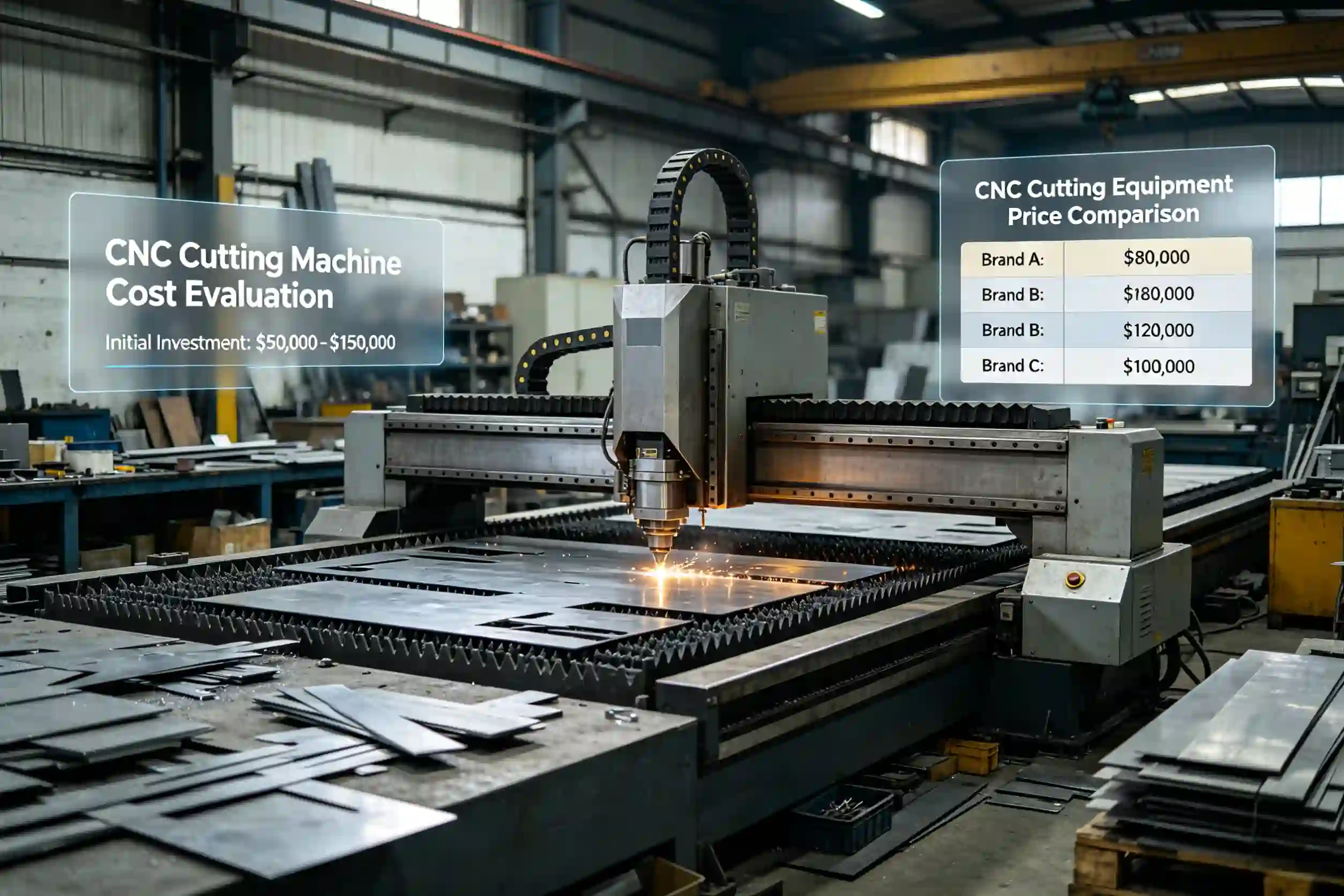
I've walked through this conversation dozens of times with manufacturers evaluating flexible materials cutting equipment. The confusion starts when buyers compare a single machine price against their existing die-cutting setup, ignoring everything else that drives cost per part. Let's unpack what actually matters.
Why does machine price alone mislead your cost comparison?
You're comparing apples to oranges. A die-cutting press might cost less upfront, but that number doesn't include the die library you need to build.
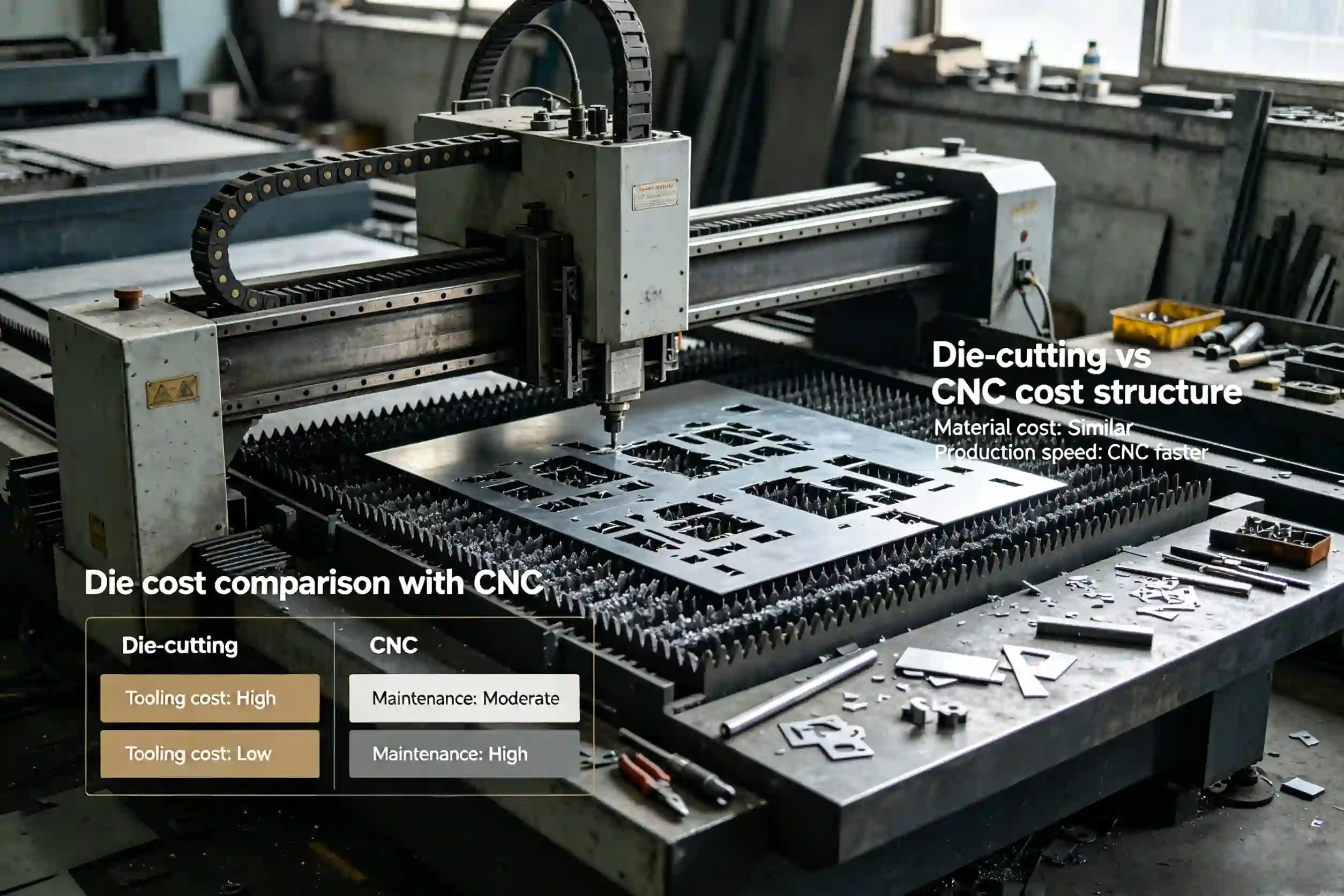
When you run traditional die-cutting, every new style requires a custom die[^1]. If you produce packaging inserts for ten different product SKUs, you need ten dies. Each die costs anywhere from several hundred to several thousand dollars depending on complexity[^2]. CNC cutting eliminates that entire line item—the same machine cuts all ten styles with just a digital file change.
Where is the crossover point?
The cost structure flips based on production characteristics. I break it down like this when talking with manufacturers:
| Production Pattern | Die-Cutting Cost Driver | CNC Cutting Cost Driver | Better Fit |
|---|---|---|---|
| Single style, 10,000+ units/month | Low—die cost spreads thin | High—machine utilization doesn't offset speed gap | Die-cutting |
| 10+ styles, <500 units each | High—die cost per style dominates | Low—no tooling cost, fast changeover | CNC cutting |
| Mixed: 3-4 high-volume + 15-20 low-volume | Medium—some dies amortize, others don't | Medium—utilization stays consistent | Depends on style distribution |
| Prototype or sampling-heavy | Prohibitive—paying for dies you'll use once | Low—no tooling penalty | CNC cutting |
The crossover isn't a fixed number. It shifts based on how often you switch styles and whether batch sizes justify dedicated tooling. A furniture manufacturer running twelve sofa patterns per quarter hits the crossover much faster than a gasket supplier running two high-volume parts for automotive Tier-1s.
What happens to cost when the machine sits idle?
Utilization determines whether the machine price makes sense. I see this pattern repeatedly: a manufacturer justifies CNC based on occasional small-batch work, then runs it two hours per day because they're still routing high-volume jobs to die-cutting.
That's backwards. CNC equipment amortizes through consistent use. If you run the machine six or more hours daily, the hourly cost drops fast. If it waits for the "perfect" low-volume order, you're spreading the investment across too few parts.
Think of it this way. You buy a CNC system for $80,000. Run it one shift, five days per week at 6 hours per shift. That's roughly 1,500 hours per year. Your hourly equipment cost is about $53 in year one (ignoring depreciation schedules). Now run it only when small orders arrive—maybe 500 hours per year. Your hourly cost just jumped to $160.
The machine didn't change. Your production planning did.
Do you actually need the high-end system you're pricing?
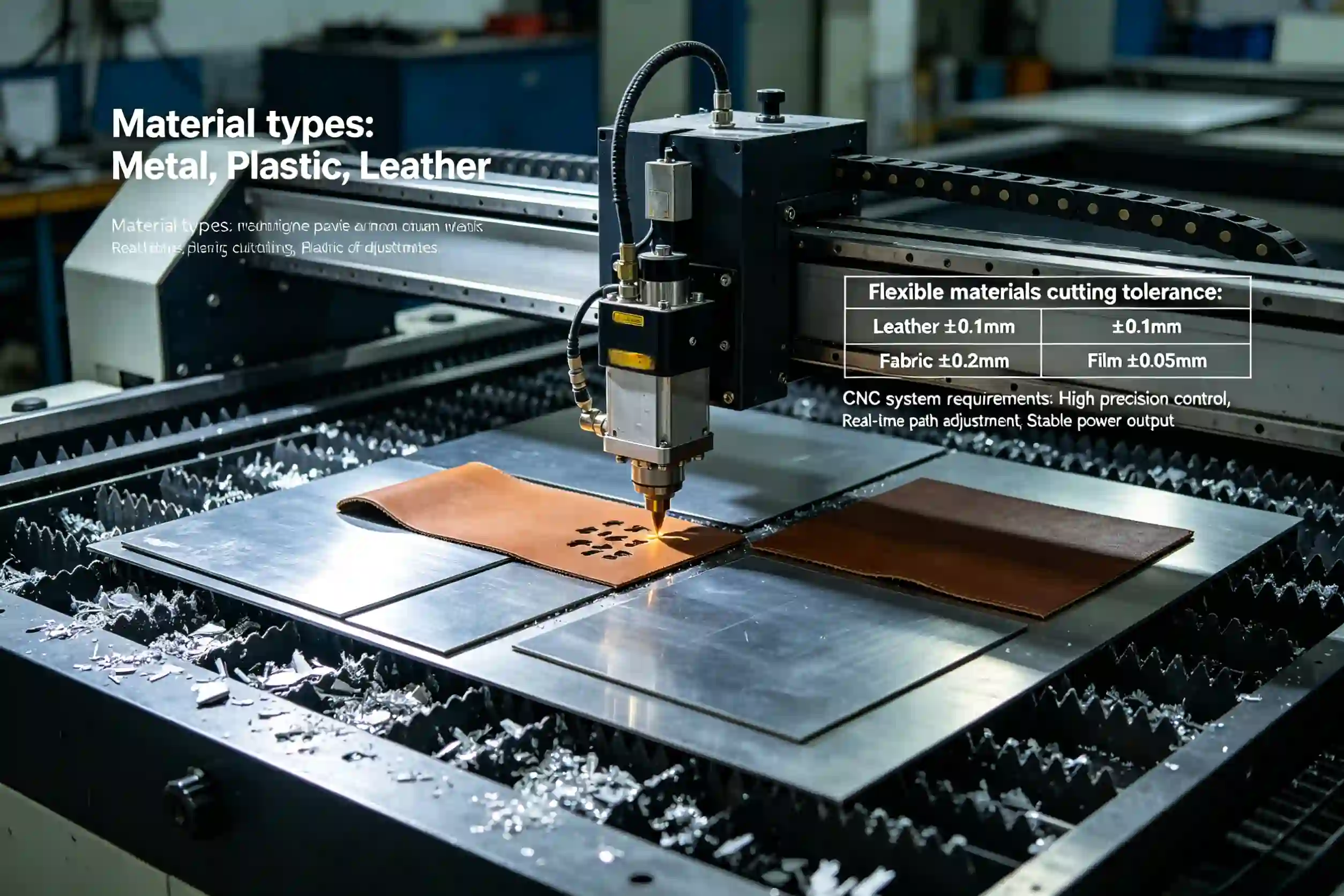
Here's where "too expensive" often just means "wrong specification." Not all flexible materials require the same cutting precision or speed. You don't need a multi-head oscillating knife system[^3] with automatic feeding if you're cutting 3mm EVA foam at ±1mm tolerance.
Material type and tolerance requirements should determine equipment class. Gasket manufacturers cutting 0.5mm rubber seals for industrial machinery need tighter accuracy than packaging converters cutting 2mm corrugated paperboard. The equipment class—and its price—should match the application, not the other way around.
How do material properties affect equipment cost?
Thicker, denser materials require more powerful cutting heads and stronger vacuum hold-down systems[^4]. That drives machine cost up. But if you're cutting thin textiles or non-woven fabrics, you can use lighter-duty equipment at a lower price point.
I walk manufacturers through this with a simple question set:
- What's your thickest material and what's your tolerance requirement for it?
- Do you need to cut multiple layers simultaneously?
- What's your typical sheet size?
- Do you require contour cutting (cutting around printed graphics)[^5]?
The answers define whether you need entry-level, mid-range, or industrial-grade equipment. A leather goods factory cutting 1.5mm chrome-tanned leather[^6] for handbags can use a mid-range single-head system. An automotive interior supplier cutting multi-layer composites[^7] for headliners needs higher force and often multiple cutting heads to maintain throughput.
Overspecifying wastes money. Underspecifying creates quality problems or forces you to reject jobs you should be able to handle.
What about setup labor and material waste?
Total cost structure includes factors that don't show up on a purchase order. Traditional die-cutting requires die storage, die changes, and press setup time. Each changeover takes 15 to 45 minutes depending on die complexity[^8]. CNC cutting changeovers take as little as 30 seconds—just load a new digital file[^9].
That labor savings compounds when you run multiple styles per day. A packaging converter switching between six different insert designs spends hours per week on die changes alone. The CNC system eliminates most of that.
Material waste tells a similar story. Die-cutting requires test cuts to verify die alignment and press settings[^10]. You scrap material until the setup is right. CNC cutting reduces test cuts because the digital file controls the path—you verify on screen, not on material. For expensive materials like automotive-grade leather[^11] or technical textiles, that waste reduction becomes significant.
What's the lead time risk cost?
Lead time carries hidden cost. If you need a new die, you wait one to four weeks depending on die maker capacity and design complexity[^12]. During that time, you either delay production or run alternative products. CNC cutting removes that bottleneck—you can start cutting a new style as soon as the digital file is ready, often within hours.
Manufacturers serving fast-turnaround markets (automotive prototyping, short-run packaging, custom fabrication) can't afford multi-week tooling lead times. The ability to respond quickly has dollar value even if it's hard to quantify on a spreadsheet.
How should you actually evaluate cost?
I guide manufacturers through a decision logic that focuses on production pattern, not machine price. Here's the framework:
Step one: Map your style mix and batch sizes. Count how many distinct styles you cut per month and the average units per style. If you have high style variety and low batch sizes, CNC economics improve.
Step two: Calculate your annual die spend. Add up what you spent on new dies, die rework, and die storage last year. This is the cost CNC eliminates. If it's substantial relative to the machine price, you're in CNC territory.
Step three: Estimate utilization. Be honest. How many hours per day will the machine actually run? If you can't sustain multi-hour shifts, the cost per part goes up.
Step four: Match equipment to material. Don't overspec. Choose the cutting system that handles your thickest material at your required tolerance, not the most impressive machine in the catalog.
Step five: Factor in setup labor and waste. If you run a job shop or high-mix environment, quantify the time spent on changeovers and test cuts. That labor cost is part of the comparison.
This isn't a simple "yes" or "no" answer. It's a profile match. CNC cutting fits certain production patterns extremely well and others not at all.
When does CNC clearly make sense?
I tell manufacturers CNC cutting is a strong fit when they see these conditions:
- You run ten or more styles per month with batch sizes under 500 units each
- Your product mix changes frequently (seasonal packaging, custom orders, prototyping)
- You're cutting expensive materials where waste reduction matters
- You need fast turnaround and can't wait for die lead times
- Your labor cost for setup and changeovers is significant
These patterns make the technology pay for itself faster. The machine price becomes secondary to the operational savings.
When should you stick with traditional tooling?
CNC doesn't win in every scenario. If you run a single product or a few high-volume styles that rarely change, die-cutting remains more cost-effective. The die cost amortizes across thousands of units, and the faster cycle time of a mechanical press offsets CNC's flexibility advantage.
A gasket manufacturer supplying two standard sizes to a long-term automotive contract doesn't gain much from CNC. The volume justifies dedicated tooling and the style variety isn't there to exploit CNC's strength.
What equipment class actually fits your production?
At Realtop, we see manufacturers default to the highest-spec system when they price equipment, then balk at the cost. The conversation shifts when we map equipment class to their actual material and tolerance requirements.
Our product range covers entry-level single-head systems for light materials through industrial multi-head configurations for thick composites and automotive interiors. The price spread is significant. A packaging converter cutting paperboard doesn't need the same cutting force or vacuum system as a composite fabricator cutting multi-layer technical textiles.
How do Realtop's systems align with cost-performance needs?
We segment equipment by application pattern, not by arbitrary "good-better-best" tiers. Our standard single-head CNC cutters handle most packaging, light textile, and thin leather applications. These systems offer the core benefits—no die cost, fast changeover, digital file control—without overbuilding the machine.
For manufacturers cutting thicker materials (3mm+ foam, multi-layer composites, automotive carpeting), we offer higher-force oscillating knife systems with stronger vacuum zones. The price increases, but so does the capability match.
Multi-head configurations suit high-volume environments where throughput matters. If you're running the machine more than eight hours daily and need to maintain productivity while cutting complex paths, the second or third cutting head justifies its cost through reduced cycle time.
The key is matching the equipment class to your material and throughput requirements, not buying the most advanced system because it "future-proofs" the investment.
Should you factor in support and service cost?
Equipment ownership cost includes maintenance, consumables (knife blades, cutting mats), and technical support. These aren't usually deal-breakers, but they add up.
CNC cutting machines require periodic blade changes, cutting mat replacement when the surface degrades, and occasional vacuum pump servicing. Budget a few thousand dollars per year for consumables and maintenance depending on utilization.
Technical support matters more than most buyers realize during evaluation. When you encounter a cutting path issue or material handling problem, responsive support minimizes downtime. We provide remote diagnostics and local service depending on geography, which reduces the cost impact of technical issues.
Don't ignore this. A cheaper machine from a supplier with poor support ends up costing more when you lose production time troubleshooting problems alone.
Conclusion
CNC cutting cost depends on how you use it, not what you pay for it. Match the technology to your production pattern, specify equipment to your material requirements, and plan for utilization that amortizes the investment across enough parts. The machine price is just one input in a much larger cost structure.
[^1]: "What's the Right Tooling for Custom Die Cutting? - ISP", https://www.interstatesp.com/blog/post/whats-the-right-tooling-for-custom-die-cutting/. Die-cutting manufacturing processes require dedicated cutting dies matched to each part geometry, as the die's physical profile determines the cut shape through mechanical force. Evidence role: mechanism; source type: education. Supports: that die-cutting processes require dedicated tooling for each distinct part geometry. Scope note: This describes the general principle; specific tooling requirements vary by die-cutting method and complexity. [^2]: "How Much Does Die Cutting Cost? Tooling, Materials & Labor", https://www.strouse.com/blog/cost-of-a-die-cut. Custom cutting dies constitute a substantial upfront tooling cost in manufacturing, with prices varying based on die complexity, size, material requirements, and precision specifications. Evidence role: statistic; source type: education. Supports: that custom cutting dies represent a significant per-design tooling investment in manufacturing. Scope note: Exact cost ranges fluctuate with material markets, die maker capacity, and regional manufacturing costs. [^3]: "How does Oscillating Knife Cutter Work - YouTube",
. Oscillating knife cutting technology employs a blade that vibrates vertically at high frequency while following a programmed path, enabling the cutting of flexible and compressible materials without the continuous drag of a static blade. Evidence role: mechanism; source type: education. Supports: that oscillating knife cutting uses rapid vertical blade motion to cut materials. Scope note: This describes the general operating principle; specific implementations vary in oscillation frequency, amplitude, and blade geometry. [^4]: "CNC Machining Wall Thickness Guide: Minimums, Charts & Rules", https://www.fsfab.com/cnc-machining-wall-thickness/. Cutting force requirements in manufacturing increase with material thickness and density, as greater material resistance necessitates higher cutting forces and more robust workholding to prevent material movement during cutting. Evidence role: mechanism; source type: education. Supports: that material physical properties determine cutting equipment force and fixturing requirements. Scope note: Specific force requirements depend on additional factors including material composition, cutting speed, blade geometry, and desired edge quality. [^5]: "What Is Contour Cutting and How Does It Work?", https://styrene-uae.com/blog/what-is-contour-cutting-and-how-does-it-work/. Contour cutting in digital manufacturing refers to cutting paths that follow printed graphics or registration marks on materials, requiring vision systems or registration methods to align cutting paths with printed features. Evidence role: definition; source type: education. Supports: that contour cutting describes cutting operations aligned to printed features on materials. Scope note: Implementation methods vary, including optical registration, printed registration marks, and camera-based systems. [^6]: "Tanning (leather) - Wikipedia", https://en.wikipedia.org/wiki/Tanning_(leather). Chrome tanning uses chromium salts to stabilize leather collagen, producing leather with high flexibility, water resistance, and thermal stability, and represents the dominant tanning method in modern leather production. Evidence role: definition; source type: education. Supports: that chrome tanning is a chemical tanning process producing leather with specific characteristics. Scope note: Material properties vary based on specific chrome tanning formulations, leather source, and finishing processes. [^7]: "[PDF] LAMINATED COMPOSITE PLATES - MIT", https://web.mit.edu/course/3/3.11/www/modules/laminates.pdf. Multi-layer composite materials in manufacturing consist of bonded layers of different materials, engineered to provide combined properties such as structural strength, surface finish, acoustic damping, or thermal insulation that individual materials cannot achieve alone. Evidence role: definition; source type: education. Supports: that multi-layer composite materials combine multiple material layers for specific performance properties. Scope note: Specific layer compositions and bonding methods vary widely based on application requirements and manufacturing processes. [^8]: "Single-minute exchange of die - Wikipedia", https://en.wikipedia.org/wiki/Single-minute_exchange_of_die. Die changeover operations in manufacturing presses involve setup activities including die removal, installation, alignment, and test runs, contributing to non-productive time between production runs. Evidence role: statistic; source type: education. Supports: that die changeover operations represent measurable setup time in manufacturing processes. Scope note: Actual changeover duration varies significantly based on press type, die complexity, operator skill, and whether quick-change systems are implemented. [^9]: "Computer numerical control - Wikipedia", https://en.wikipedia.org/wiki/Computer_numerical_control. CNC cutting systems reduce changeover time by eliminating physical tooling changes, as new part geometries are implemented through digital file loading rather than mechanical die replacement. Evidence role: mechanism; source type: education. Supports: that CNC cutting systems enable rapid changeovers through digital file-based operation. Scope note: Actual changeover time includes file loading, material loading, and any necessary calibration; the stated duration represents the file-change component only. [^10]: "Optimizing the die-cutting process", http://www.labelsandlabeling.com/label-academy/article/optimizing-die-cutting-process. Die-cutting setup procedures typically include test cuts to verify die alignment, cutting depth, and press settings, as mechanical systems require physical validation to ensure proper part geometry and quality. Evidence role: mechanism; source type: education. Supports: that die-cutting setup procedures include verification steps before production runs. Scope note: The extent of test cutting varies based on die complexity, material consistency, press type, and operator experience. [^11]: "Automotive Leather Manufacturer Guide", https://www.eco-leather.com/automotive-leather/. Automotive interior leather materials are specified to meet durability, abrasion resistance, UV stability, and safety standards specific to vehicle interior applications, distinguishing them from leather used in other industries. Evidence role: definition; source type: education. Supports: that automotive applications specify leather materials meeting industry performance requirements. Scope note: Specific requirements vary by vehicle manufacturer, market segment, and regulatory jurisdiction. [^12]: "Tool and die maker - Wikipedia", https://en.wikipedia.org/wiki/Tool_and_die_maker. Custom die manufacturing requires design, fabrication, and testing processes that introduce lead time between design finalization and production readiness, with duration dependent on die maker workload and die complexity. Evidence role: general_support; source type: education. Supports: that custom die production involves significant lead time in manufacturing operations. Scope note: Lead times vary considerably based on die type, supplier capacity, geographic location, and whether expedited production is available.


