
Blog
Company Case Study: Leather Cutting Machine Reduces Leather Waste by 18%

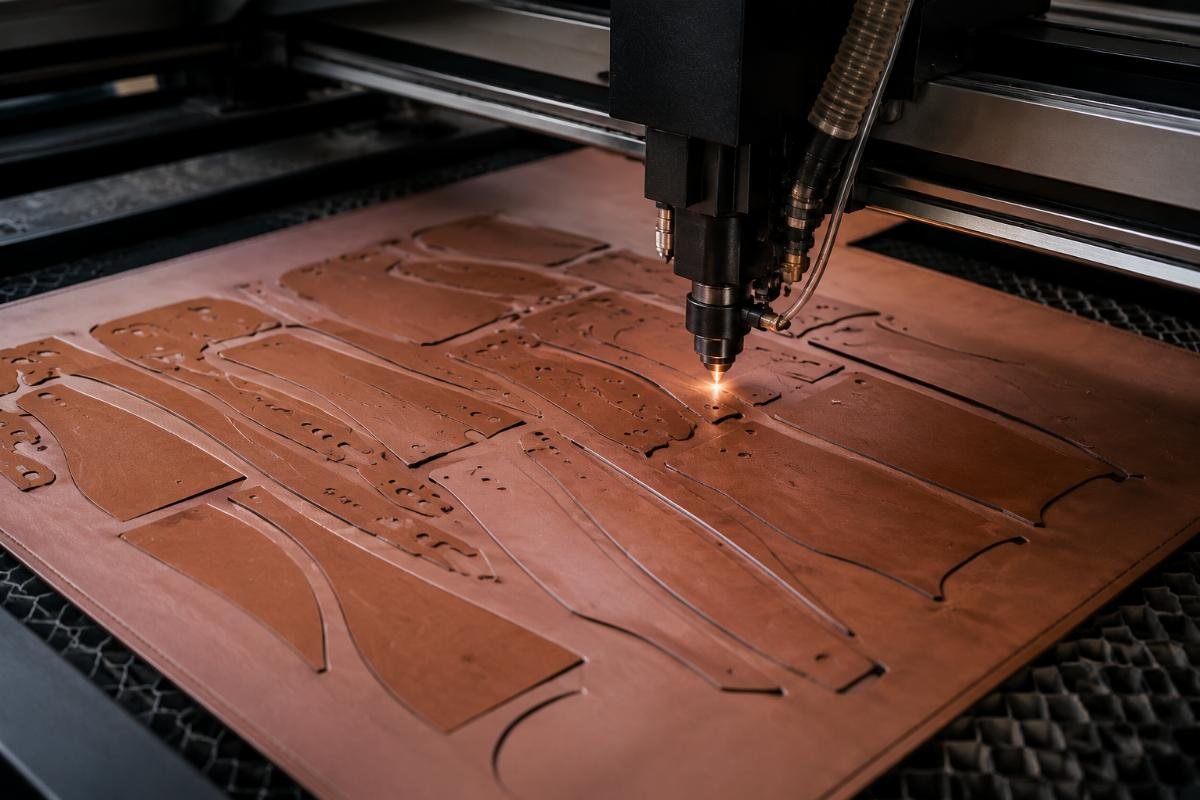
Company Case Study: Leather Cutting Machine Reduces Leather Waste by 18%
I've tracked equipment adoptions at Realtop for years, but one result still stands out to me. A leather goods manufacturer cut their material waste by 18% within the first quarter of switching to CNC knife cutting. This wasn't a lab test or a lucky batch. It was a repeatable outcome we calculated before they even purchased the machine.
The 18% waste reduction came from automated nesting software that eliminated rigid die constraints and human layout errors. We tested this claim using the customer's actual CAD files and historical order mix before installation, proving that small-batch manufacturers can achieve measurable savings when they replace die-cutting with optimized CNC digital cutting systems.
Most manufacturers I work with assume waste reduction comes from blade precision. They believe sharper cuts mean less material loss. That assumption misses the real driver. The layout algorithm matters far more than the blade's kerf width. When we ran the pre-sales test for this customer, we used their existing nesting software and actual production files. The difference wasn't about cutting accuracy. It was about how the software arranged parts on the leather hide.
What baseline did we compare against when calculating the 18% reduction?
Die-cutting forces you to arrange parts in fixed patterns. The die shape doesn't change between batches. If your product mix shifts, you either waste material or pay for new dies.
This customer used die-cutting for their main product lines and manual nesting for custom orders. We compared their historical material usage reports against simulated layouts using their CAD files in optimized nesting software. The 18% figure represents the average improvement across a typical three-month order mix, not a single production run.
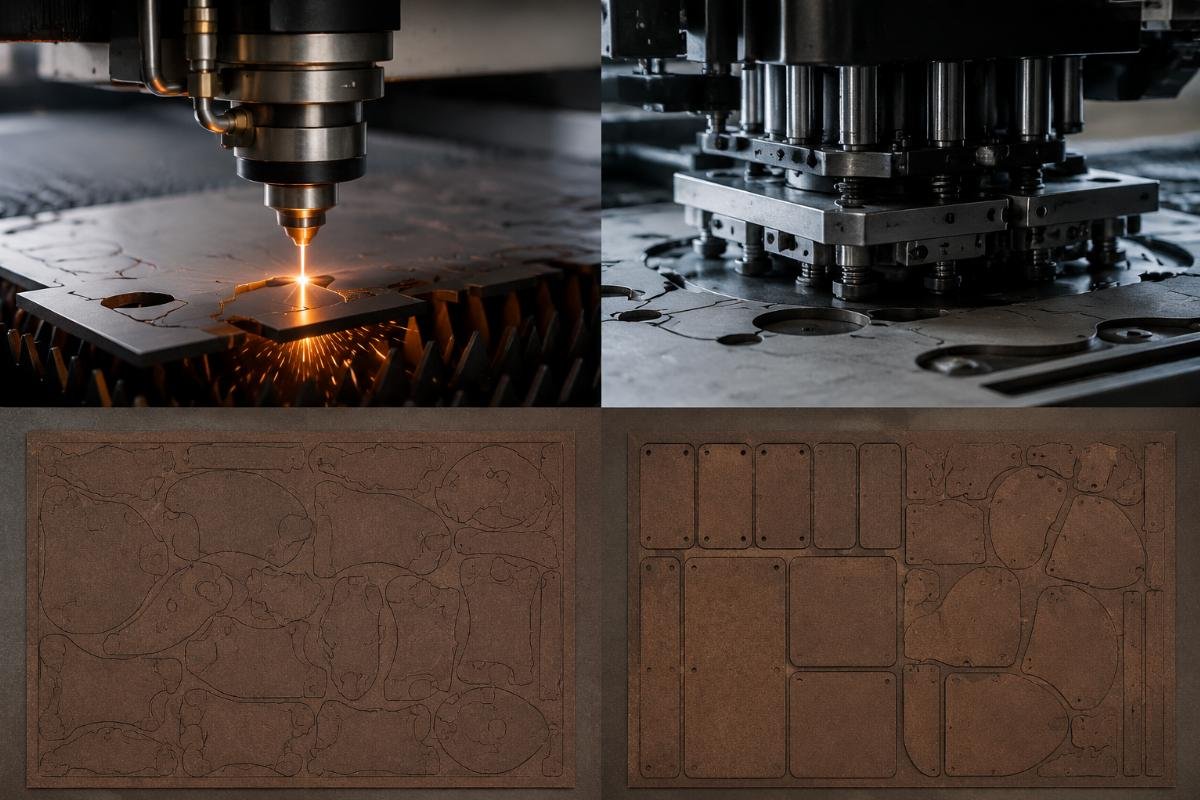
Manual nesting introduces human judgment errors. Even experienced operators leave gaps between parts or fail to rotate pieces for tighter packing. Die layouts lock you into one arrangement regardless of hide size variations. Our pre-sales testing revealed three specific waste sources in their existing workflow.
First, their dies were designed for average hide sizes. Larger hides wasted edge material because the die pattern didn't scale. Smaller hides forced them to discard offcuts that were too small for the fixed die arrangement. CNC nesting software adjusts part placement based on actual hide dimensions measured before cutting.
Second, their product mix included seasonal variations. Summer bags used smaller panels than winter jackets. They maintained separate die sets for each season, but transitioning between product lines meant some dies sat unused for months. When urgent custom orders came in, operators manually nested parts around the standard die layouts, creating inefficient hybrid arrangements. CNC cutting eliminated the need for physical dies entirely.
Third, leather hides contain natural defects and grain variations. Die-cutting can't route around these imperfections without scrapping the entire die area. The customer's operators marked defects with chalk before cutting, but the rigid die pattern often placed parts directly over flawed sections. We tested their defect rate records against simulated nesting that avoided marked areas. The software automatically shifted parts to usable zones without operator intervention.
How did we verify the 18% claim before installation?
| Testing Phase | Data Source | Method | Result |
|---|---|---|---|
| Baseline Analysis | 6 months of material purchase records | Calculated total square footage bought versus finished goods produced | Average waste rate: 31% |
| Pattern Audit | Customer's CAD file library (847 unique parts) | Loaded all production files into nesting software | Confirmed file compatibility |
| Simulated Nesting | Historical order mix from past quarter | Ran automated nesting on typical weekly batch combinations | Projected waste rate: 13% |
| Hide Variation Testing | Customer's actual hide size distribution data | Simulated nesting across their typical size range (45-65 sq ft) | Confirmed 18% average improvement held across size variations |
The customer's main concern during pre-sales discussions wasn't whether CNC could cut leather. They worried about three specific risks.
Could the machine handle their irregular grain patterns without tearing? Leather isn't uniform like fabric. Different sections have different stretch properties. We ran physical cutting tests on their actual leather stock using sample patterns they provided. The machine's knife pressure adjustment system compensated for density variations automatically.
Would the 18% reduction actually happen in production, or was it just theoretical math? This question drove our entire pre-sales testing approach. We didn't use idealized layouts or cherry-picked easy patterns. We took their actual order data from the previous quarter, including rush orders and custom requests. We simulated every job through the nesting software using their real hide size distribution. The math showed 18% average improvement. We documented every assumption and showed them which specific layout changes generated the savings.
How would CNC cutting integrate with their existing workflow? They already used CAD software for pattern design. Their nesting software could export standard file formats. The machine accepted DXF files directly, so no file conversion was needed. The larger workflow question involved their material handling process.
Die-cutting required operators to position leather sheets, clamp the die, press, remove the die, and extract the cut parts. CNC cutting needed operators to load leather onto the vacuum table, align reference points, run the automated cutting sequence, and unload finished parts. The actual cutting time was longer with CNC because the blade traced each part outline instead of stamping multiple parts simultaneously.
But here's what changed their calculation: die changeovers took 15-20 minutes per style switch. CNC style changes took 30 seconds to load a new file. For small batches with frequent style mixing, CNC eliminated more downtime than it added in cutting duration.
Why does automated nesting reduce waste more than manual layout optimization?
Human operators use pattern recognition and experience to arrange parts. Skilled nesting operators develop intuition about which parts fit together efficiently. But this approach has limitations.
Automated nesting algorithms test thousands of part arrangements per second, evaluating rotation angles, spacing gaps, and utilization percentages that humans cannot process quickly enough. The software identifies optimal layouts that experienced operators would never discover through manual trial and error.
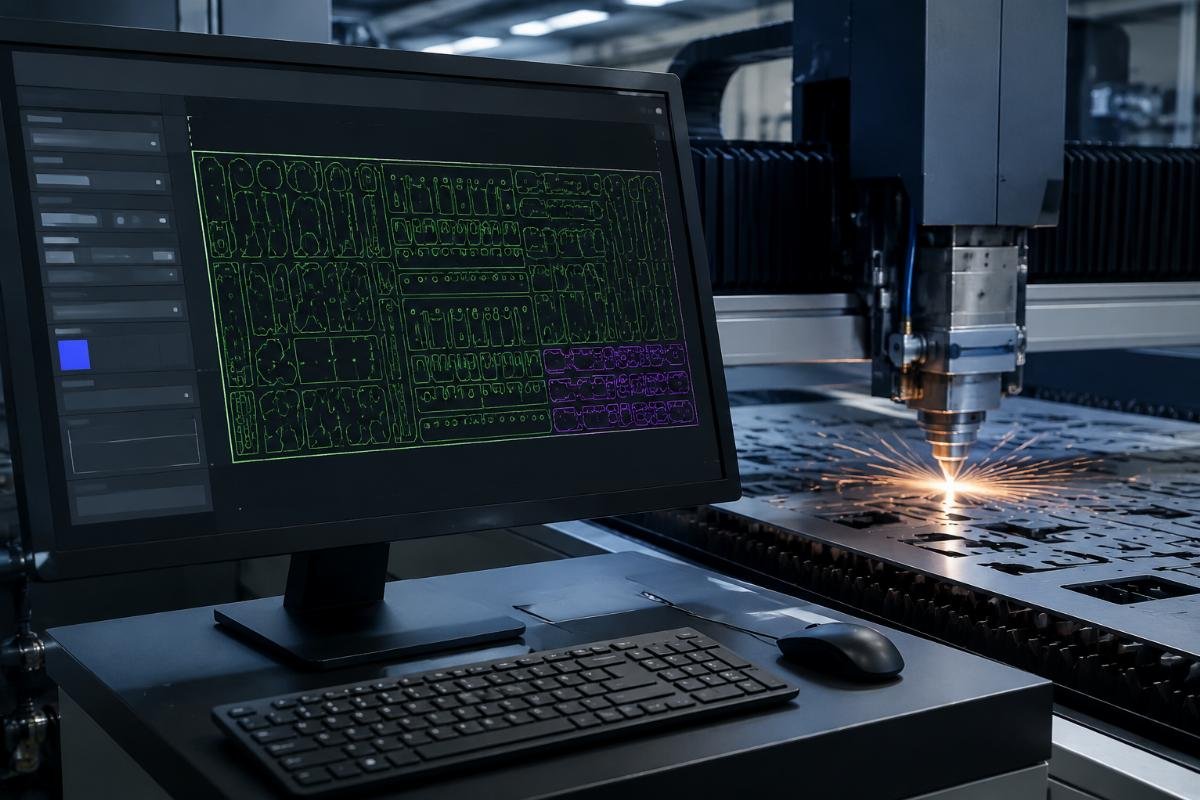
I watched this customer's lead operator work through a typical manual nesting session during our factory visit. He arranged parts on a digital template, rotated pieces to find good fits, and adjusted spacing based on his judgment. The process took about 8 minutes for a batch of 40 parts. His final layout achieved 68% material utilization. We ran the same part set through automated nesting software. It took 12 seconds and achieved 74% utilization.
The difference wasn't that the operator lacked skill. The algorithm simply tested more combinations than any human could evaluate in reasonable time. It rotated parts in 0.5-degree increments, tested every possible starting position, and recalculated spacing for thousands of arrangement variations.
This advantage compounds across production volume. One layout improvement might save half a square foot. But when you nest 200 batches per month, those incremental gains accumulate. The customer's historical records showed they purchased approximately 1,850 square feet of leather per month. An 18% waste reduction meant they saved about 333 square feet monthly. At their material cost of $8 per square foot, that translated to $2,664 in monthly material savings.
The machine's purchase price was $24,500. Installation and training added $1,800. Their payback period based purely on material savings was 9.8 months. This calculation didn't include labor savings from faster style changeovers or quality improvements from consistent cutting precision.
What workflow changes did the customer need to implement?
The transition wasn't just about installing new equipment. Their production process required four specific adjustments.
First, they needed to digitize their remaining non-CAD patterns. About 15% of their product line still used physical paper patterns that operators traced manually. We helped them convert these patterns to DXF files during the training period. This one-time conversion took their design team about two weeks.
Second, they restructured their cutting schedule. Die-cutting favored large batch runs of identical parts to maximize die utilization. CNC cutting performed efficiently with mixed batches because style changes were instant. They shifted from weekly batch planning to daily dynamic scheduling based on actual order priorities.
Third, they modified their material receiving inspection. Previously, operators marked defects with chalk during a quick visual scan. CNC nesting software needed digital defect maps to route around flawed areas. They implemented a systematic scanning process where operators outlined defect zones on a template drawing that the software could import. This added 5 minutes per hide to their receiving process but enabled much better material utilization around imperfections.
Fourth, they trained three operators on the nesting software interface and machine operation. The software learning curve was steeper than we expected. Operators needed to understand nesting parameters like minimum spacing, grain direction constraints, and priority settings. We extended our initial training from two days to four days to ensure operators could troubleshoot common nesting issues independently.
What conditions must other manufacturers meet to replicate similar waste reduction results?
Not every leather processor will see 18% improvement. Several factors determine whether CNC adoption delivers comparable material savings.
Manufacturers with diverse product mixes, frequent style changes, and current die-cutting or manual nesting methods will see the largest waste reduction. Companies running high-volume production of identical parts with optimized dies may not achieve significant material savings because their existing process already maximizes die utilization.
Your baseline waste rate matters most. This customer started at 31% waste, which included edge trim, defect avoidance gaps, and die pattern inefficiencies. If your current waste rate is already below 20% through optimized manual nesting, the improvement potential is smaller.
Your product variety determines nesting optimization potential. The customer produced 47 different bag styles with shared component parts. Many parts appeared across multiple products with different size variations. The nesting software identified common parts and grouped them efficiently across orders. A manufacturer producing only three standard products wouldn't gain the same advantage.
Your hide size consistency affects results. This customer purchased leather from two tanneries with moderately consistent hide sizes. Most hides fell between 48-58 square feet. Nesting software could optimize layouts within this predictable range. If your hides vary dramatically in size and shape, you'll need more sophisticated scanning and dynamic nesting capabilities to achieve similar improvements.
Your production volume influences ROI timing. Material savings of $2,664 per month justified the equipment investment for this customer because they maintained steady production volume. A smaller operation running the machine two days per week would take longer to recover the initial cost through material savings alone.
Your existing CAD and nesting infrastructure matters. The customer already used CAD software and basic nesting tools. Adopting CNC cutting improved their existing process rather than requiring complete workflow reinvention. Manufacturers still using paper patterns and manual layout would need to invest additional time in digitization before realizing material savings.
How does grain direction affect nesting optimization and waste rates?
Leather grain direction creates constraints that complicate automated nesting. Unlike fabric with consistent weave patterns, leather has natural fiber orientations that affect strength and appearance.
The customer manufactured bags where grain direction had to run vertically on main panels for structural integrity. Side panels needed grain running horizontally to prevent stretching. The nesting software needed to respect these directional rules while optimizing part arrangement.
We configured grain direction constraints for each part during the pre-sales testing phase. The software marked allowable rotation angles for every component. Main panels could only be placed in two orientations 180 degrees apart. Decorative elements without structural requirements could rotate freely. This constraint system reduced theoretical maximum utilization but ensured all parts met quality standards.
Manual nesting operators intuitively respected grain direction rules through experience. But they often applied overly conservative constraints to avoid mistakes. The software applied exactly the specified rules without adding safety margins, which recovered some utilization that manual operators sacrificed.
Grain direction constraints reduced the 18% waste improvement by approximately 3% compared to theoretical unconstrained nesting. Without directional rules, the software achieved 21% waste reduction in our testing. But producing parts with incorrect grain orientation would have caused quality problems that exceeded any material savings.
What unexpected challenges emerged during the first three months after installation?
The customer encountered four issues we didn't fully anticipate during pre-sales testing.
Blade wear patterns on thick leather required more frequent replacement than our initial estimates. The customer's leather stock included 5mm saddle leather that dulled blades faster than the 2-3mm upholstery leather we tested during demos. We adjusted maintenance schedules and blade specifications after identifying this material difference.
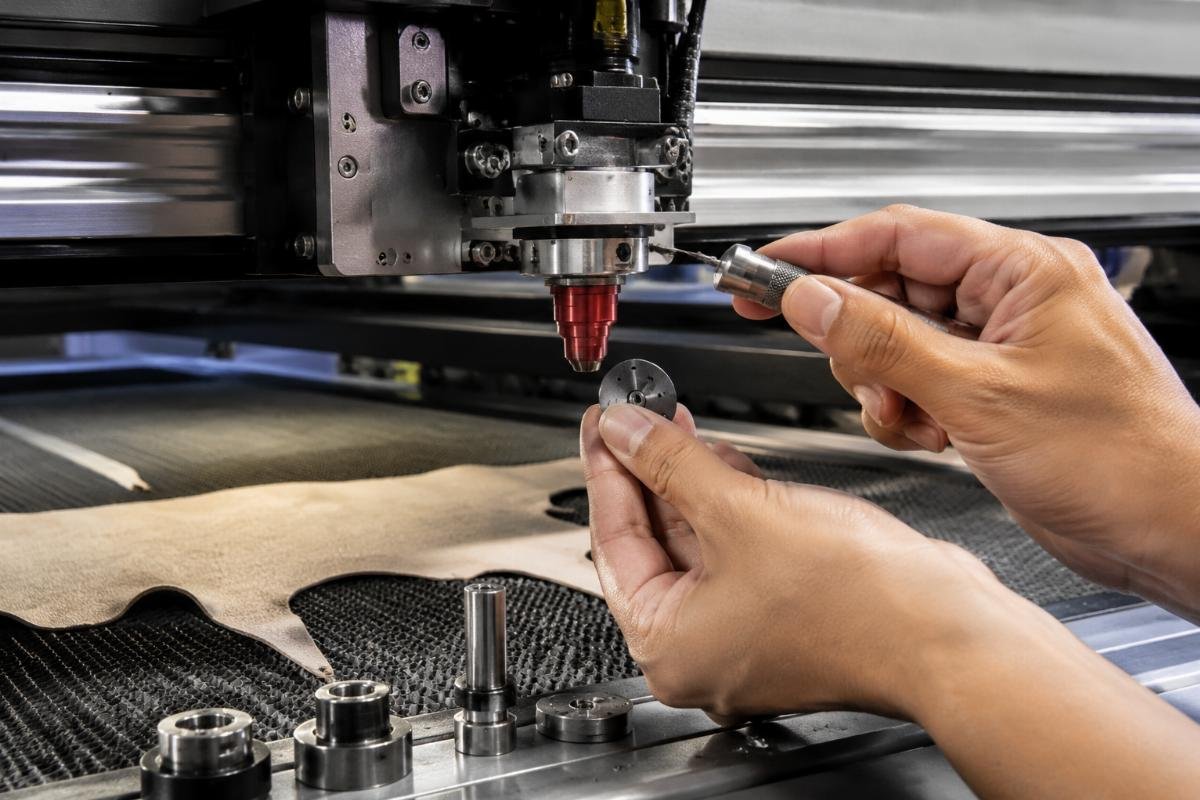
The nesting software's automatic spacing calculations occasionally created parts too close together when leather stretched slightly during cutting. We needed to increase minimum spacing parameters from 2mm to 3.5mm after operators reported difficulty separating tightly nested parts. This adjustment reduced material utilization by 1.2% but eliminated a frustrating manual separation step.
Their vacuum table hold-down pressure wasn't strong enough for lightweight garment leather. Thin, flexible leather lifted slightly during cutting, causing imprecise edges. We added supplemental mechanical hold-down strips around the cutting area perimeter. This modification took one day and solved the lifting problem completely.
The customer's original plan to run mixed batches with frequent style changes created unexpected operator workload spikes. Loading different leather types and colors for each job required constant material handling. After two months, they moved to a hybrid scheduling approach where they grouped similar materials together in daily batches while still maintaining more flexibility than their old die-cutting schedule.
These real-world adjustments didn't invalidate the 18% waste reduction outcome. The customer's quarterly material usage reports confirmed the projected savings held up across normal production conditions. But the implementation wasn't as smooth as simply installing the machine and loading files.
How did cutting precision affect quality metrics beyond just waste reduction?
Material savings drove the initial ROI calculation, but the customer discovered secondary quality improvements they hadn't valued in advance.
Die-cutting pressure sometimes compressed leather edges, creating a visible mark where the die's edge contacted the material. This pressure mark required operators to inspect and sometimes discard parts where edge distortion was visible. The CNC knife created clean cuts without pressure marks because the blade sliced rather than crushed the material.
The customer tracked their rework and rejection rates for three months before CNC installation and three months after. Part rejection rates dropped from 2.8% to 1.1%. The cost savings from reduced rework added approximately $380 per month to their total return on the equipment investment.
Consistent cutting precision enabled tighter assembly tolerances. Their sewn edge alignment improved because parts matched specified dimensions more accurately. Assembly operators reported fewer adjustments needed during sewing, which reduced production time per unit by an average of 90 seconds. Across their monthly volume of approximately 650 finished goods, this saved about 16 hours of assembly labor.
Edge finish quality improved customer perception of their products. The customer sold through both wholesale and direct retail channels. Their retail customers specifically commented on cleaner edge appearance in post-purchase surveys conducted after the cutting method change. This qualitative feedback didn't translate directly to revenue metrics within the three-month period we tracked, but the customer viewed it as a brand value improvement.
What would I tell other manufacturers considering this transition based on this case?
Calculate your actual baseline waste rate first. Gather three months of material purchase records and finished goods production data. Determine your current utilization percentage. If you're already achieving 80%+ utilization through optimized die layouts or expert manual nesting, CNC adoption might not deliver enough material savings to justify the investment based on waste reduction alone.
Request pre-sales testing with your actual production files and material specifications before committing to purchase. Any equipment supplier willing to demonstrate projected savings using your real data shows more confidence than suppliers relying on generic capability claims.
Evaluate your product mix diversity honestly. Count how many different parts you produce monthly and how often your production schedule switches between products. CNC cutting's flexibility advantage only matters if you actually need that flexibility. High-volume producers of standardized parts might get better value from optimized die tooling.
Factor in your labor costs and production scheduling constraints. Material savings represent one ROI component, but changeover time reduction, labor efficiency gains, and quality improvements contribute to total value. The customer in this case study achieved 9.8-month material-savings-only payback, but their total payback period including all factors was closer to seven months.
Test your existing nesting software's compatibility with CNC cutting workflows. Some older nesting programs export file formats that require conversion before machine use. File conversion adds steps and potential error sources. Verify your current tools can integrate cleanly or budget for nesting software upgrades alongside equipment purchase.
Plan for operator training time beyond the basic equipment operation. Learning to optimize nesting parameters, troubleshoot software issues, and maintain blade condition takes longer than learning to load materials and start cutting sequences. The customer allocated four full days for training, and operators still needed occasional support during the first month.
Document your existing production metrics before changing equipment. You'll need baseline data to verify whether projected improvements actually occur. Track material usage, production time per unit, rework rates, and changeover durations. Compare these metrics after three months of CNC operation to validate ROI assumptions.
Conclusion
The 18% waste reduction this customer achieved wasn't magic or marketing exaggeration. We calculated it using their actual files and production data before installation, and their quarterly usage reports confirmed the projection held up in daily operation. Automated nesting eliminated layout inefficiencies that manual methods and rigid dies couldn't avoid.


