
Blog
How to Cut Cardboard Very Easily?

How to Cut Cardboard Very Easily?
You search for "easy cardboard cutting" because your current method causes production delays, inconsistent results, or wasted material. Many manufacturers we work with face the same problem—they have tools that cut cardboard but struggle with speed, precision, or scaling issues.
The easiest cutting method depends on your specific task requirements, not on finding one universal tool. Batch size, precision needs, material thickness, and shape complexity determine which cutting approach works best for your situation. Manual methods work for small volumes, while equipment solutions solve throughput and consistency problems in production environments.
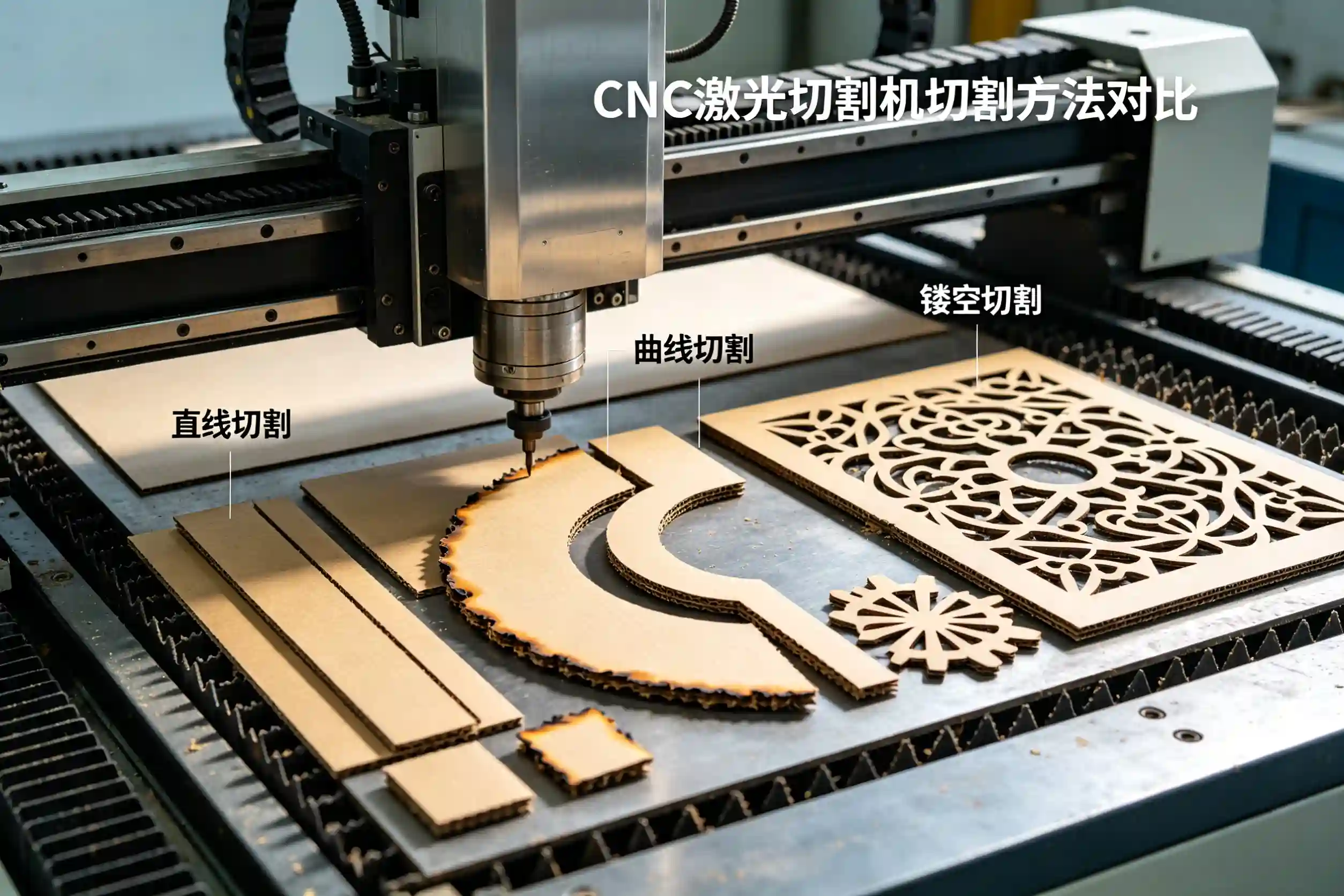
We see this pattern repeatedly in our client projects: manufacturers choose cutting methods based on tool availability rather than task requirements. This causes bottlenecks when production scales. The right question is not "what cuts cardboard easily" but "what cutting method matches my volume, precision, and material specifications."
What Makes Cardboard Cutting Actually Easy?
You think "easy" means less physical effort, but in production environments, easy means matching your cutting method to your task requirements. We delivered cutting solutions to hundreds of packaging and advertising manufacturers, and the common pattern is clear: wrong method selection creates problems that look like cutting difficulty.
Easy cutting means your chosen method handles your daily volume without labor bottlenecks, maintains required precision across all pieces, minimizes material waste, and scales when orders increase. The cutting tool itself matters less than matching method capabilities to your production constraints.
Most manufacturers we work with start with manual cutting because initial volumes seem manageable. The problems appear when order frequency increases or precision requirements tighten. A customer in the packaging industry told us they could hand-cut 20 display boxes daily with acceptable quality, but scaling to 100 pieces created quality inconsistencies and missed deadlines.
How Does Material Type Change Cutting Requirements?
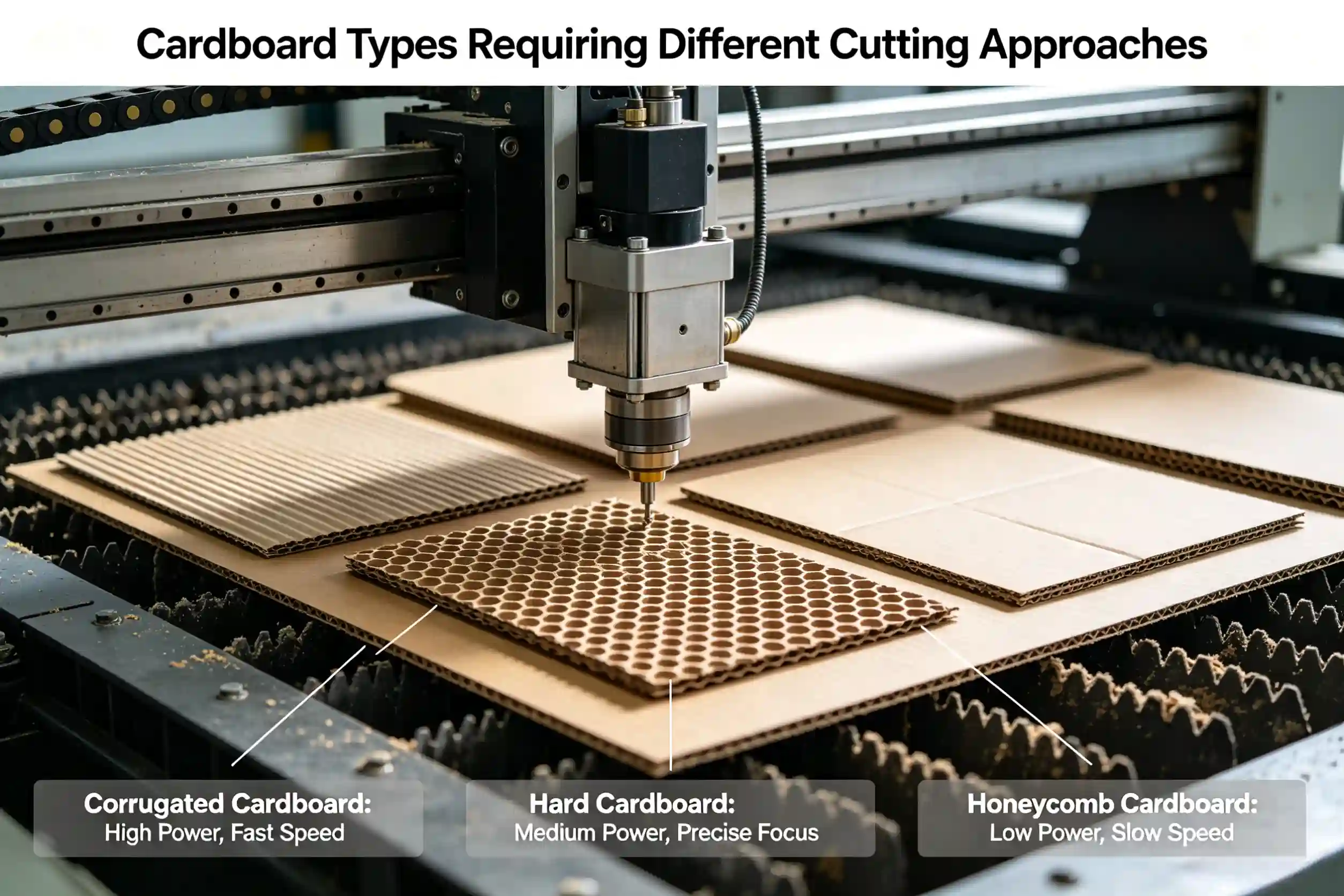
Cardboard is not a single material. The thickness, flute structure, and layer count directly affect which cutting methods work efficiently.
| Cardboard Type | Thickness Range | Cutting Characteristics | Method Limitations |
|---|---|---|---|
| Single-wall corrugated | 3-4mm | Blade compression issues | Hand cutting causes flute damage at curves |
| Double-wall corrugated | 6-8mm | Requires blade depth control | Scissors and rotary cutters jam frequently |
| Thin packaging board | 0.3-1mm | Clean cuts but curls easily | Manual cutting works but speed limits production |
| Industrial multi-layer | 10mm+ | High resistance, blade dulling | Most manual tools cannot penetrate cleanly |
We configured CNC cutting systems for a furniture packaging manufacturer who switched from hand cutting double-wall corrugated board. Their manual method worked for straight cuts but failed on curved protective inserts. The cardboard compressed under blade pressure, creating imprecise edges. The CNC knife system we delivered maintained consistent blade angle and feed speed, eliminating compression issues.
The material structure matters because corrugated cardboard has air gaps between layers. Manual cutting tools often compress these gaps before cutting through, which distorts the final shape. Equipment with controlled downforce and blade angle cuts through without compression. This is not about cutting power but about force application method.
Single-wall corrugated board allows more cutting method flexibility. We see small advertising shops successfully use rotary cutters for moderate volumes. But when the same shops process industrial board for equipment packaging, rotary blades cannot maintain clean cuts. The decision is not about tool quality but material specifications.
When Does Manual Cutting Actually Work?
You can hand-cut cardboard for specific situations, but calling it "easy" depends entirely on your volume and precision requirements. Manual methods work within defined boundaries that most manufacturers underestimate.
Manual cutting works when daily volume stays below 50 pieces, shapes are primarily straight or simple curves, precision tolerance accepts ±2mm variance, and labor cost allows 3-5 minutes per piece. Outside these conditions, manual cutting creates bottlenecks that appear as cutting difficulty.
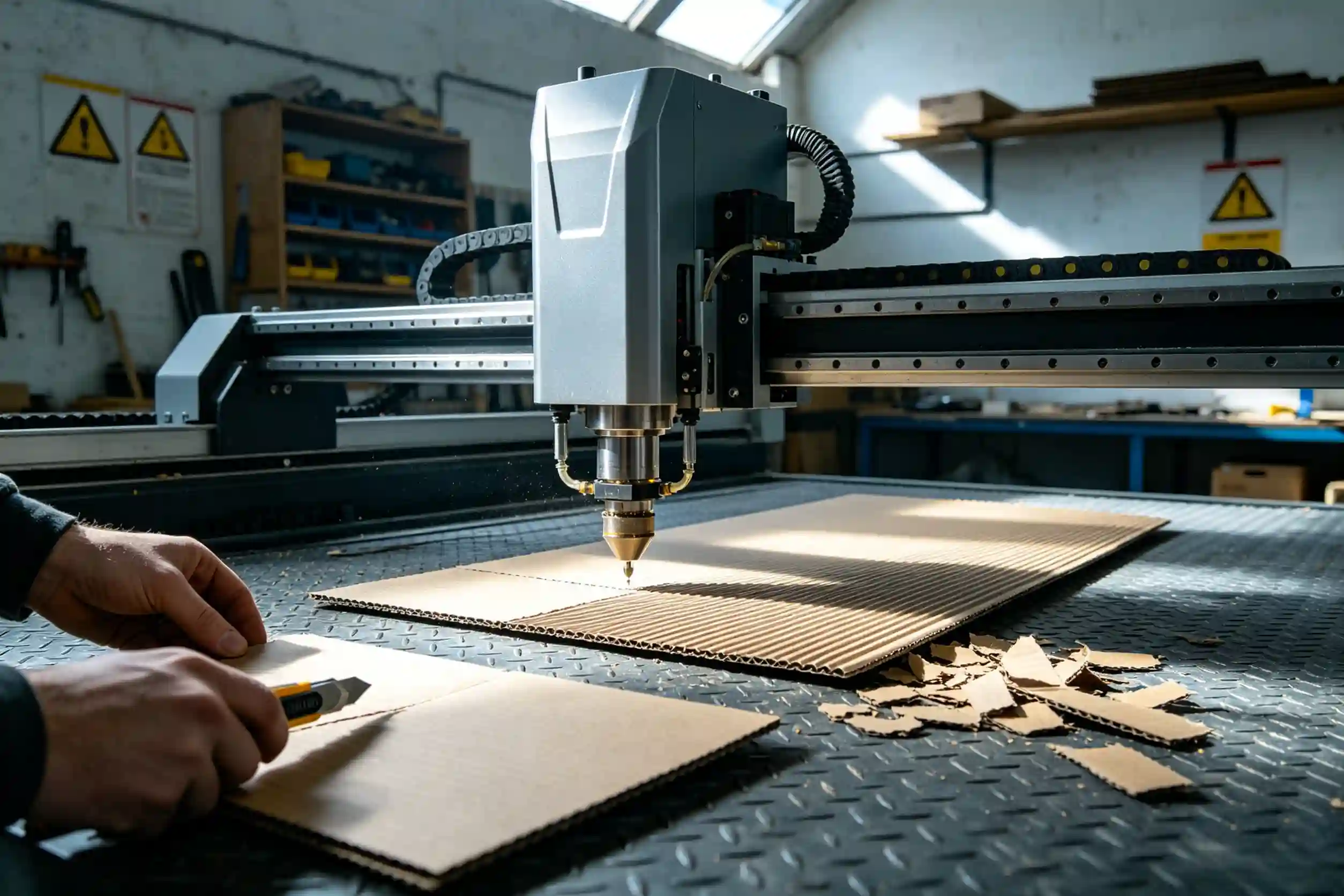
We evaluated cutting workflows for a small advertising producer who hand-cut cardboard signage. Their process worked efficiently at 30 signs daily. When a retail chain ordered 200 signs weekly, the same manual process failed. The issue was not cutting skill but throughput constraints and fatigue-related quality variance.
What Are the Real Limitations of Hand Cutting?
Manual cutting limitations are not about physical difficulty but about production consistency and scaling constraints.
First, cutting speed variance increases with complexity. We measured production times for a client cutting packaging inserts. Straight cuts averaged 45 seconds per piece with consistent quality. Complex curves with multiple direction changes took 4-8 minutes per piece, and quality varied based on operator fatigue.
Second, repeatability degrades across large batches. The first 20 pieces from template tracing show good consistency. After 50 pieces, we see increasing deviation from template dimensions. This is not operator carelessness but inherent limitation of hand-eye coordination over repeated tasks.
Third, material waste increases with manual methods. Our clients report 8-15% waste rates from manual cutting errors on complex shapes. Equipment cutting the same shapes shows 2-3% waste. The difference compounds significantly at production volumes above 100 pieces daily.
Hand tools work for specific cardboard tasks. We recommend manual cutting for prototyping, small custom orders, or situations where setup time for equipment exceeds cutting time savings. A packaging manufacturer we work with uses hand cutting for client approval samples but switches to CNC cutting for production runs. This hybrid approach matches method to task requirements.
Which Hand Tools Match Different Cardboard Tasks?
Tool selection for manual cutting depends on material thickness and cut type, not on tool marketing claims.
| Tool Type | Suitable Thickness | Best Use Case | Limitation |
|---|---|---|---|
| Utility knife | Up to 4mm | Straight cuts, simple shapes | Curved cuts require multiple passes |
| Heavy-duty scissors | Up to 3mm | Moderate curves, small pieces | Blade alignment shifts on long cuts |
| Rotary cutter | Up to 6mm | Continuous curves, fabric-style cutting | Requires cutting mat, limited to push direction |
| Box cutter | Up to 8mm | Breakdown and rough cutting | Too imprecise for finished edges |
We see manufacturers struggle when they use utility knives for all cardboard cutting. Utility knives work well for straight cuts with ruler guides but create rough edges on curves. The blade angle changes as you turn corners, which tears cardboard fibers rather than cutting cleanly.
Rotary cutters handle curves better but require proper cutting surface and technique. A client in the display industry used rotary cutters for curved signage and reported good results up to 40 pieces daily. Beyond that volume, hand fatigue affected cutting accuracy.
When Does Equipment Investment Make Sense?
Equipment cost seems like the barrier to "easy" cutting, but the real calculation is not purchase price versus manual labor. The decision point is when production constraints from manual methods exceed equipment operating costs.
CNC cutting equipment becomes economically rational when daily volume exceeds 100 pieces, shape complexity requires consistent precision below ±1mm, material waste from manual errors costs more than equipment operation, or labor bottlenecks limit order acceptance. These conditions create measurable cost justification beyond simple tool comparison.
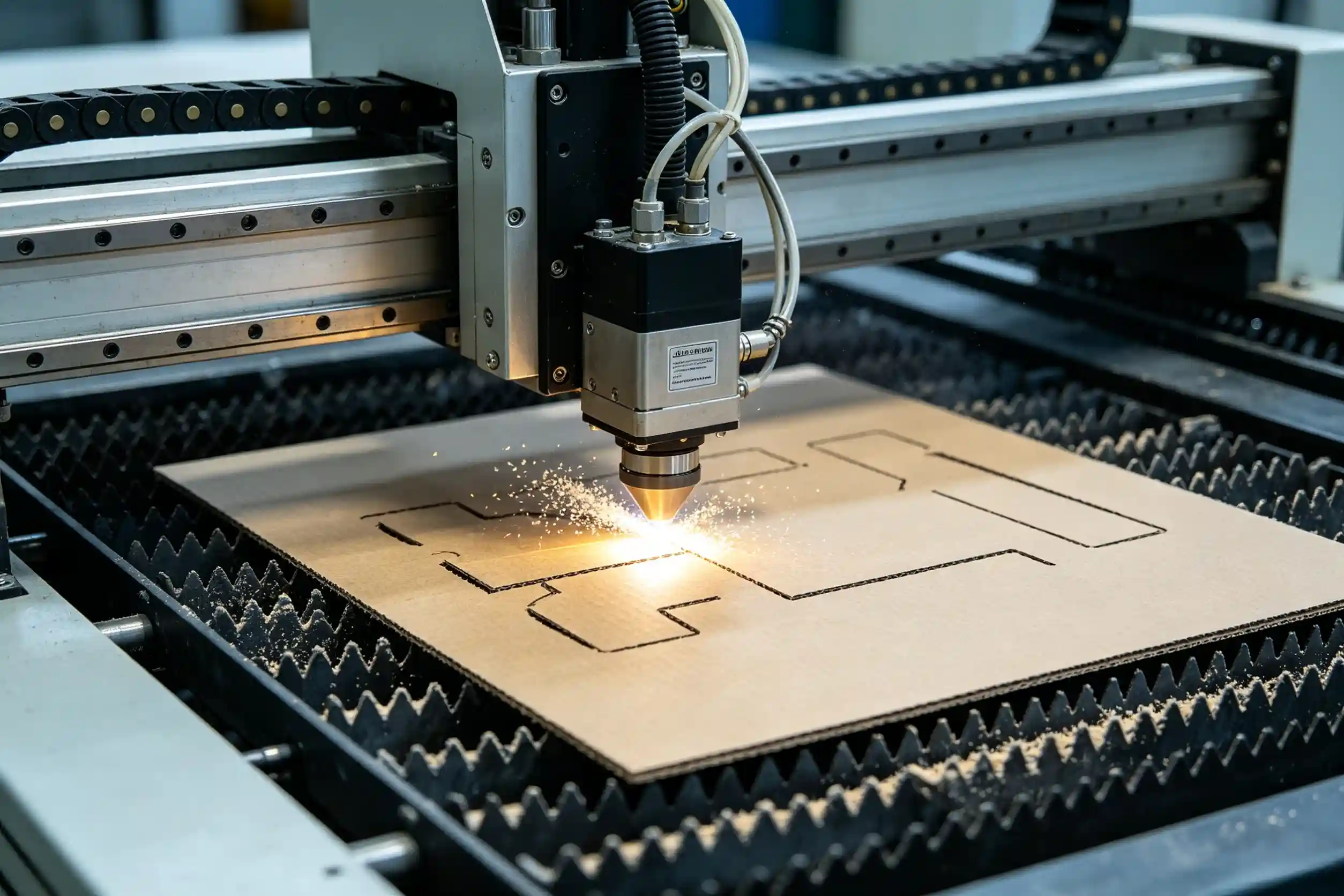
We delivered a CNC knife cutting system to a packaging manufacturer who processed 300 display boxes daily. Their manual cutting workflow required three operators working full shifts. The CNC system reduced labor to one operator monitoring automated cutting, which freed two employees for other production tasks. The equipment cost was recovered in eight months through labor reallocation.
How Do You Calculate Equipment Justification?
Equipment investment is not a technical decision but a production economics calculation. We help clients evaluate this by comparing total production costs, not just tool prices.
The calculation starts with current manual cutting costs. Count labor hours spent cutting, multiply by hourly wage including benefits. Add material waste cost by tracking scrap percentage and material price. Include opportunity cost of declined orders due to capacity constraints.
We worked with an advertising producer who tracked these numbers for three months. Manual cutting consumed 120 labor hours monthly at $15/hour ($1,800). Material waste averaged 12% ($400 monthly at their cardboard costs). They declined orders worth approximately $3,000 monthly due to cutting capacity limits. Total monthly impact: $5,200.
Compare this to equipment operating costs. CNC knife cutting systems require electricity, blade replacement, and maintenance. For the advertising producer, we calculated equipment operating costs at $600 monthly (electricity, consumables, maintenance reserve). Labor dropped to 40 hours monthly for system operation and material handling ($600). Total equipment operation: $1,200 monthly.
The comparison showed $4,000 monthly savings potential, which justified equipment investment at their production volume. But this calculation only works when volume and precision requirements match equipment capabilities.
What Production Patterns Indicate Equipment Need?
Certain production patterns signal that manual cutting has reached its practical limit. We see these patterns repeatedly in client assessments.
| Production Pattern | Manual Method Impact | Equipment Solution |
|---|---|---|
| Order size increasing but piece design stays similar | Labor hours scale linearly, overtime becomes regular | CNC cutting processes similar designs without per-piece time increase |
| Customer precision complaints rising | Rework and replacement costs increase | Equipment maintains consistent precision across all pieces |
| Material waste percentage climbing | Cost per piece increases, profitability drops | Automated nesting and cutting reduces waste to 2-3% |
| Declining new orders due to lead time | Revenue growth stops, capacity maxed | Equipment throughput allows order volume increase |
A furniture packaging client showed all four patterns when they contacted us. Their manual cutting team maxed at 80 protective inserts daily. Quality complaints increased because operator fatigue affected precision after 50 pieces. Material waste reached 14% on complex shapes. They turned away orders requiring more than 100 weekly pieces.
We delivered a CNC cutting solution that processed 200 pieces daily with one operator. Precision stayed consistent across entire production runs. Material waste dropped to 3% through optimized nesting. They accepted previously declined orders and grew revenue 40% in six months.
The equipment investment made sense because their production patterns indicated systematic manual method limitations, not temporary capacity issues.
What Cutting Methods Exist Beyond Manual and CNC?
Cardboard cutting options extend beyond hand tools and CNC systems. The right method depends on your specific production requirements, not on method sophistication or cost.
Die cutting, laser cutting, water jet cutting, and knife plotters each solve different cardboard processing challenges. Die cutting handles ultra-high volumes of identical shapes, laser cutting manages intricate details in thin board, water jet processes thick industrial materials, and knife plotters balance flexibility with moderate volumes. Method selection depends on shape complexity, material specifications, and production volume patterns.
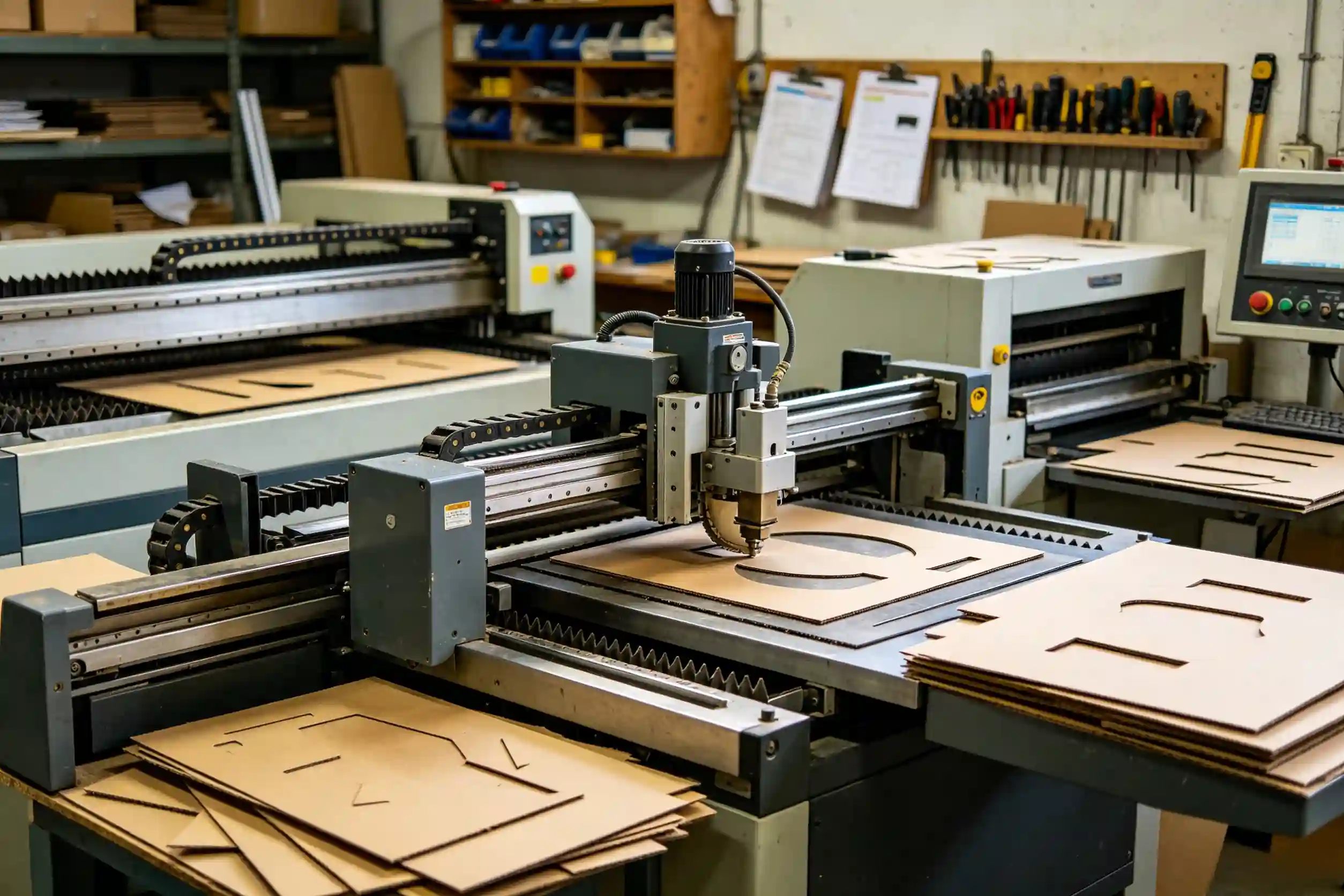
We help clients choose methods by analyzing their actual production patterns. A client asked about laser cutting for corrugated display stands. We evaluated their requirements: 150 pieces daily, double-wall corrugated material, complex curves but no intricate details. Laser cutting would work but offered no advantage over CNC knife cutting for their material and complexity level, while adding higher operating costs.
How Does Die Cutting Compare for High Volume?
Die cutting uses shaped steel rules pressed through cardboard to cut identical shapes. This method dominates when production volume is extremely high and shape design stays constant.
We see die cutting make economic sense above 1,000 pieces of the same design. A packaging manufacturer we work with uses die cutting for standard box sizes produced in batches of 5,000+ pieces. Setup cost for die creation is high ($500-2,000 depending on complexity), but per-piece cost drops dramatically at volume.
Die cutting limitations appear when design flexibility matters. Each shape change requires new die creation. A display manufacturer told us they abandoned die cutting because retail clients requested design modifications every few weeks. Die creation costs and lead times made quick design changes impractical. They switched to CNC knife cutting, which handles design changes through software without tooling costs.
Material thickness also affects die cutting suitability. Standard dies handle up to 8mm cardboard effectively. Thicker industrial board requires heavy-duty dies and higher press force. We generally recommend die cutting for packaging board and single-wall corrugated applications with stable, high-volume production.
When Do Laser Systems Work for Cardboard?
Laser cutting burns through material using focused light energy. For cardboard applications, this method has specific advantages and critical limitations.
Laser cutting excels at intricate details and complex internal cutouts. We configured laser systems for clients producing decorative cardboard elements with detailed patterns. The laser can execute extremely fine details that knife cutting or manual methods cannot achieve. Detail resolution reaches 0.1mm, which matters for artistic or precision display applications.
However, laser cutting has significant constraints for cardboard processing. First, laser heat creates charred edges. Some applications accept or even prefer the darkened edge aesthetic, but packaging and clean display work usually requires edge treatment afterward. Second, corrugated cardboard does not laser cut well. The air gaps between layers cause uneven burning and weak structural integrity along cut edges.
We typically recommend laser cutting only for thin packaging board (under 2mm) when design includes intricate details or fine text cutouts. A client producing premium packaging inserts uses laser cutting for decorative patterns but knife cutting for structural elements. This hybrid approach matches method to specific task requirements.
Operating costs for laser cutting are higher than knife cutting. Laser tube replacement, cooling systems, and fume extraction add to per-piece cost. Unless detail requirements justify this cost, knife cutting provides better economics for most cardboard applications.
How Do You Choose the Right Cutting Method?
Choosing a cutting method is not about comparing tools but about mapping your production requirements to method capabilities. We use a systematic evaluation process with clients to avoid mismatched method selection.
Start with production volume requirements, then assess precision tolerances, evaluate material specifications, analyze shape complexity, calculate per-piece cost targets, and consider design change frequency. Each factor eliminates unsuitable methods until the best match emerges. This decision process produces better results than starting with tool preferences or cost assumptions.
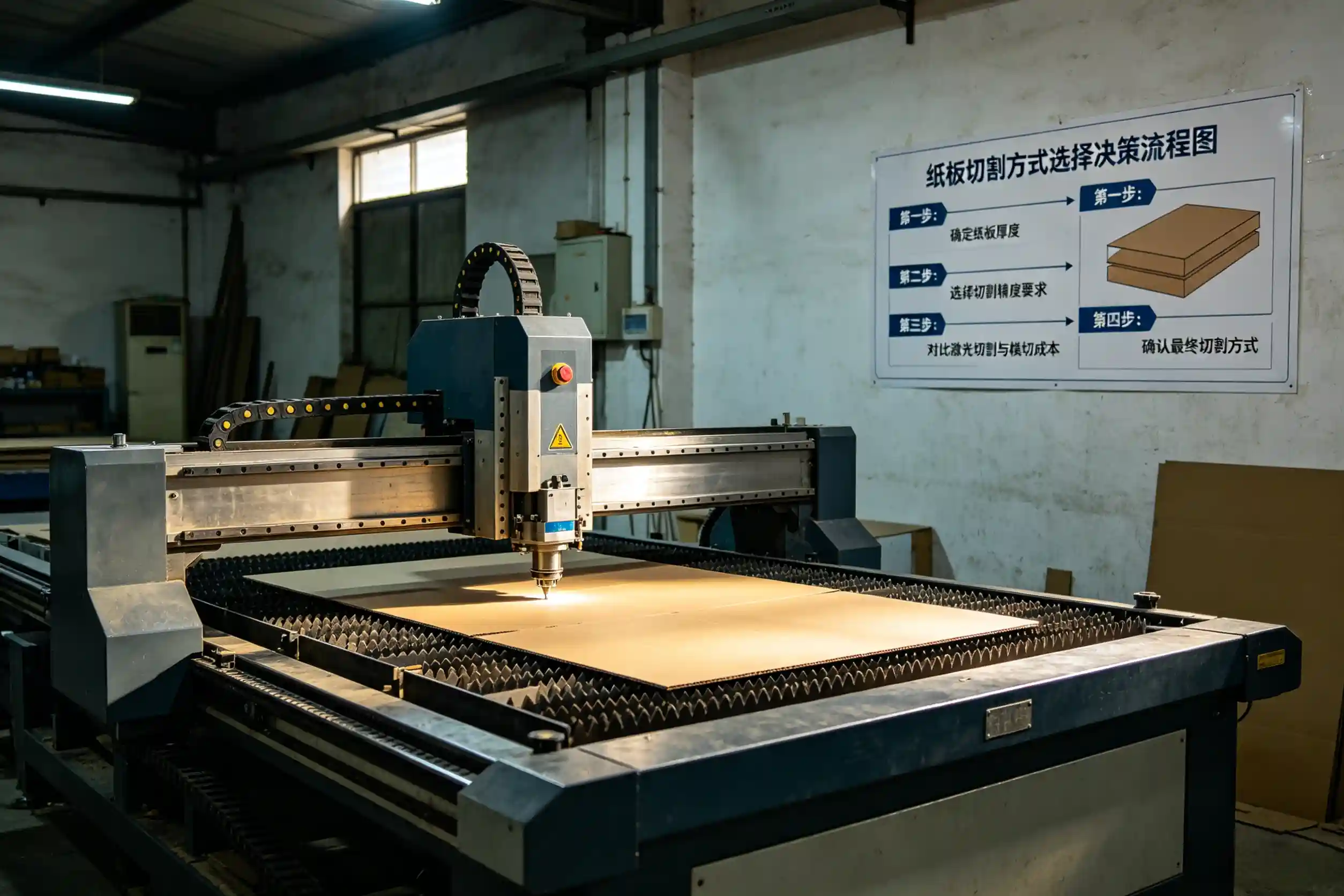
A furniture component manufacturer contacted us asking about the "best cardboard cutting machine." We started by examining their actual requirements rather than recommending equipment. They produced 200 protective inserts daily, precision mattered for assembly fit, designs changed monthly based on furniture line updates, and material was 6mm double-wall corrugated.
What Questions Determine Method Suitability?
We evaluate method fit through specific questions that reveal actual production constraints, not theoretical capabilities.
Volume questions: How many pieces do you cut daily now? What volume would you accept if cutting capacity increased? Do orders come in steady flow or concentrated batches? Volume patterns determine whether manual methods can scale or equipment investment makes sense.
Precision questions: What tolerance does your application require? Do precision requirements vary across the piece or stay uniform? How do customers react to current precision levels? These questions separate applications where manual cutting suffices from those needing equipment consistency.
Material questions: What cardboard thickness and type do you process? Does material vary across orders or stay consistent? Do you process other materials that the cutting method should also handle? Material specifications eliminate unsuitable methods immediately.
Complexity questions: Are shapes primarily straight cuts, simple curves, or complex patterns? Do designs include internal cutouts or only perimeter cutting? How often do shape designs change? Complexity assessment determines whether die cutting, knife cutting, or laser cutting fits best.
Economic questions: What does current cutting process cost per piece including labor, waste, and overhead? What per-piece cost makes orders profitable? What equipment investment can your operation justify? Economic boundaries prevent over-investment in capability you do not need.
We walked the furniture component manufacturer through these questions. Answers revealed that CNC knife cutting matched their requirements: volume justified equipment investment, precision needs exceeded manual capability, material worked well with knife cutting, complexity required flexible software-based pattern changes, and equipment cost fit their profitability model.
What Mistakes Do Manufacturers Make in Method Selection?
We see repeated selection errors that cause cutting problems manufacturers interpret as difficulty or tool quality issues.
First mistake: choosing based on tool cost rather than task requirements. A packaging producer bought a low-cost manual cutting table to "save money" on cutting operations. The table worked but could not handle their daily volume or precision needs. They eventually invested in appropriate equipment but lost time and opportunity cost from the initial wrong choice.
Second mistake: assuming more sophisticated technology is better. A client considered laser cutting because it seemed "more advanced" than knife cutting. Their application was straightforward corrugated box cutting at moderate volume. Laser offered no advantage for their requirements while adding complexity and cost. They succeeded with simpler knife cutting that matched their actual needs.
Third mistake: underestimating design change frequency. Die cutting looks attractive for high-volume production until you factor in design modification needs. We worked with a display manufacturer who invested in die cutting, then discovered retail clients requested design changes every few weeks. Die creation lead times and costs made quick changes impractical. They achieved better results with CNC knife cutting that handled design changes through software.
Fourth mistake: ignoring material specifications. A client wanted to laser cut corrugated cardboard for intricate designs. Corrugated structure does not laser cut well due to air gaps between layers. We helped them understand material limitations and choose knife cutting with design modifications to achieve their goals within material constraints.
Method selection works when you start with production requirements and find the matching method, not when you start with a preferred tool and force requirements to fit.
Conclusion
Easy cardboard cutting means matching your cutting method to your production volume, precision requirements, material specifications, and shape complexity. Manual methods work for low volumes with simple shapes, while equipment investment solves throughput and consistency challenges at production scale


