
Blog
Can a CNC machine cut fabric?

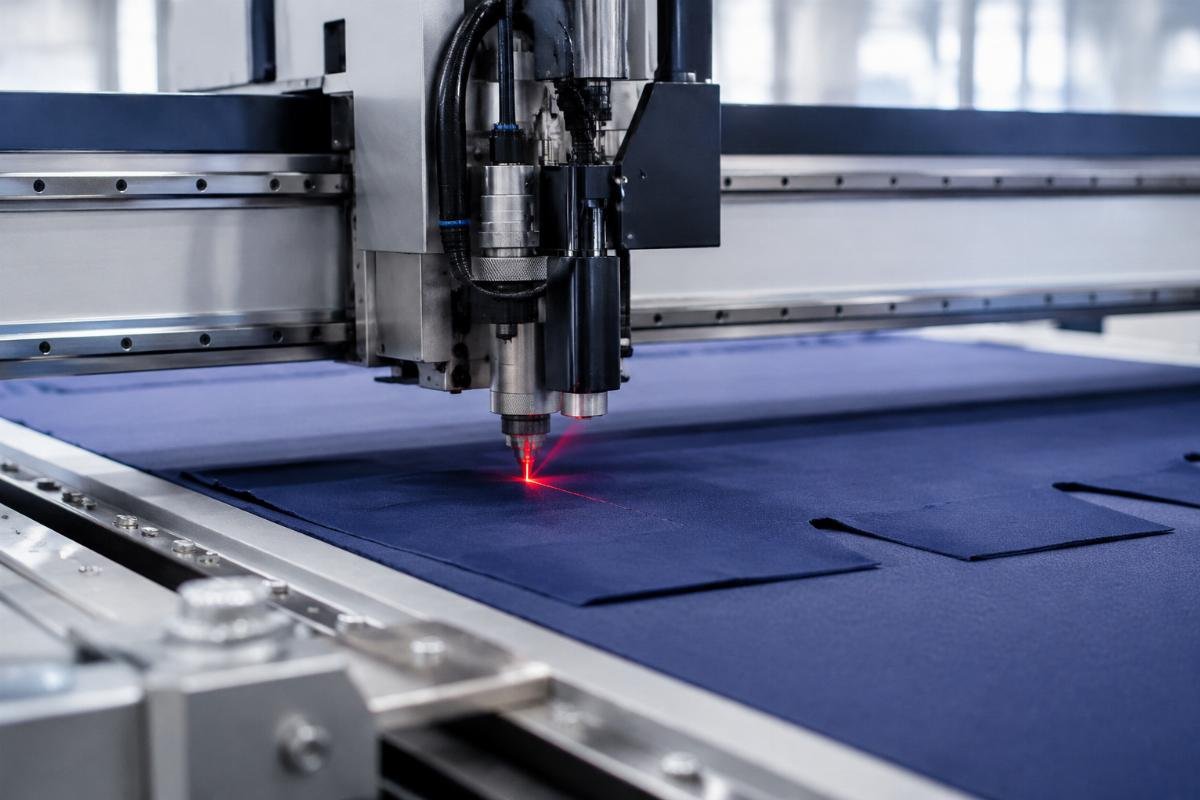
Can a CNC machine cut fabric?
I still remember the call from a furniture manufacturer in Turkey. They had just purchased a laser CNC system after reading "CNC machines can cut any fabric." Three months later, they were burning through velvet samples and dealing with complaints about singed edges. They asked me if CNC cutting was a lie. I told them no—they just bought the wrong type of CNC.
Yes, CNC machines can cut fabric, but not all CNC technologies work for all fabrics. There are three incompatible CNC approaches—knife-blade cutting, laser cutting, and milling—and choosing the wrong one for your fabric type, thickness, and production needs leads to wasted material, poor edge quality, and failed automation.
You might think CNC is just one technology. It is not. And treating it like a single solution is how manufacturers end up with expensive equipment that cannot deliver clean edges on their actual fabrics. Let me walk you through what I have seen work and what I have seen fail in real production environments.
What does CNC actually mean when cutting fabric?
CNC stands for Computer Numerical Control[^1]. People assume this means high-tech automation solves all cutting problems. In reality, CNC is just the control layer. The cutting method underneath determines whether your fabric comes out clean or ruined.
CNC refers to the automated control system that guides cutting tools, but the actual cutting mechanism—knife blade, laser beam, or milling bit—dictates whether the system can handle your specific fabric without fraying, melting, or distorting the material.
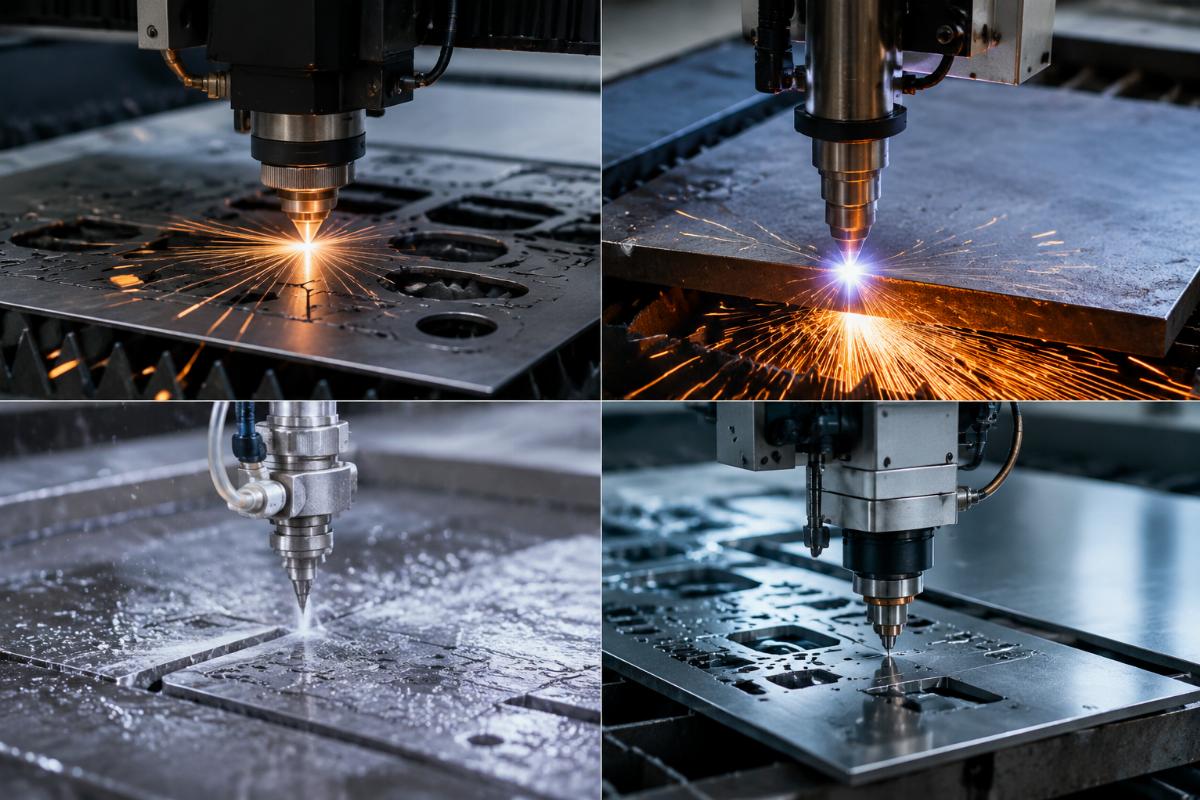
I have consulted with customers who thought they were comparing equivalent systems. A garment factory in Vietnam told me they chose a laser CNC because it was "more advanced." They did not realize their cotton blends would show heat damage. Another customer in Poland bought a milling CNC for canvas because "CNC mills can cut anything." Their edges frayed so badly they had to add manual finishing steps. The CNC control worked perfectly in both cases. The cutting mechanism was the problem. Knife-blade CNC uses an oscillating blade that slices through fibers without heat. Laser CNC uses a focused beam that vaporizes material along the cut path. Milling CNC uses a rotating bit designed for rigid materials like wood or composites. Each technology has boundaries. Cotton, wool, and natural blends respond well to knife cutting but burn under lasers. Synthetic fabrics like polyester can be laser-sealed to prevent fraying but gum up knife blades. Technical textiles with resin coatings often need milling bits but will melt under lasers.
The customer who transitioned from manual cutting to knife CNC told me their operators could finally cut 20 layers of denim in one pass without blade drift. The customer who moved from laser to knife CNC reported zero edge discoloration on their linen upholstery. The customer who insisted on using a laser for thick canvas complained about production delays from repeatedly adjusting power settings. CNC does not fail. Mismatched cutting mechanisms fail.
How does knife-blade CNC handle fabric that lasers cannot?
Knife-blade CNC systems position an oscillating blade above the fabric surface. The blade moves up and down thousands of times per minute[^2] while the cutting head follows the programmed path. A vacuum table holds the fabric flat during cutting[^3]. Operators can stack multiple layers and cut them simultaneously.
Knife-blade CNC excels at cutting natural fabrics and multi-layer stacks without heat damage or edge discoloration, making it ideal for cotton, wool, linen, canvas, and denim applications where clean mechanical cutting is required and laser burn marks would ruin the material.
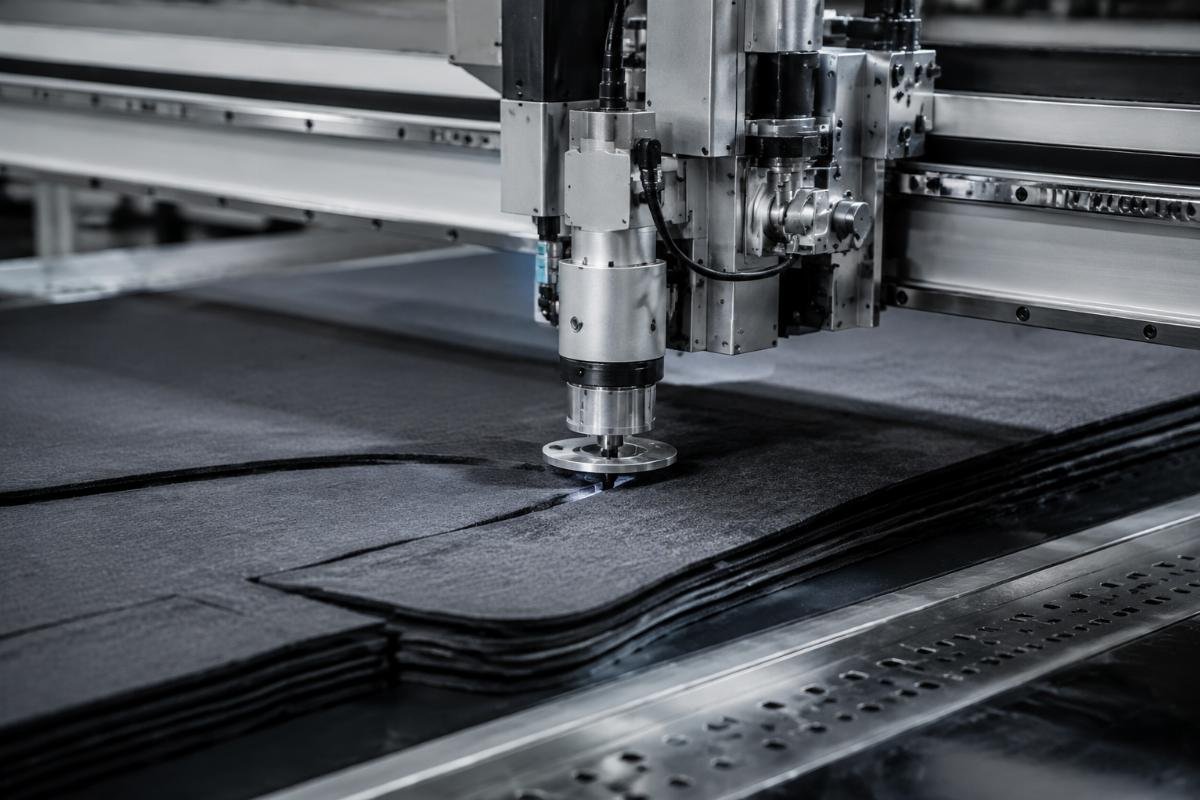
A customer from Italy transitioned from laser to knife CNC after complaints about brown edges on white cotton shirts. The laser could not cut cotton without visible heat marks. Knife blades solved the problem immediately. Another customer in India needed to cut 15 layers of denim for jeans production. Manual cutting took 40 minutes per pattern set. Laser cutting could only handle 3 layers before losing precision. Knife CNC cut all 15 layers in 8 minutes with consistent accuracy.
Knife-blade CNC systems work because the blade physically separates fibers instead of burning them away. The vacuum table prevents fabric shift during cutting. The CNC control adjusts blade depth, speed, and oscillation frequency based on fabric thickness and density. Customers often ask if knife cutting causes fraying. It depends on the fabric weave and blade sharpness. Tightly woven fabrics like poplin and twill show minimal fraying. Loosely woven fabrics like gauze may need edge treatment regardless of cutting method. Blade selection matters. Standard blades work for cotton and polyester blends. Serrated blades handle slippery fabrics like silk. Crushing blades compress foam-backed textiles before cutting to prevent tearing.
Knife-blade CNC has limits. It struggles with fabrics thicker than 50mm in a single layer unless using specialized heavy-duty blades. It cannot handle rigid composites like fiberglass-reinforced textiles. It does not seal synthetic edges the way laser cutting does. A customer who manufactures outdoor gear asked if knife CNC could cut their ripstop nylon. I said yes for the cutting itself, but they would still need ultrasonic or heat sealing to prevent edge unraveling. Knife CNC is not magic. It is a mechanical process suited to specific fabric characteristics.
When does knife CNC outperform laser and manual methods?
Knife CNC wins when you need high throughput on natural fabrics, multi-layer cutting without precision loss, or clean edges without heat exposure. It loses when you need edge sealing, work with heat-sensitive synthetics that respond better to controlled laser melting, or cut rigid materials beyond textile flexibility.
| Scenario | Knife CNC | Laser CNC | Manual Cutting |
|---|---|---|---|
| Multi-layer cotton cutting | Excellent | Poor | Slow |
| Synthetic edge sealing | Cannot do | Excellent | Cannot do |
| Natural fabric edge quality | Clean | Heat marks | Variable |
| Thick denim stacks | Good | Limited layers | Fatiguing |
| Loose weave fabrics | Requires care | Burns edges | Inconsistent |
A customer in Bangladesh switched from manual to knife CNC for shirt production. Their operators were cutting 200 patterns per day by hand with accuracy issues after hour six. Knife CNC maintained consistent precision across 800 patterns per day. Another customer in Mexico tried laser CNC for canvas bags and switched to knife after three months of edge discoloration complaints. A third customer in Germany uses both—laser for synthetic sportswear that needs sealed seams, knife for cotton home textiles where heat damage is unacceptable.
Why do laser CNC systems fail on some fabrics but excel on others?
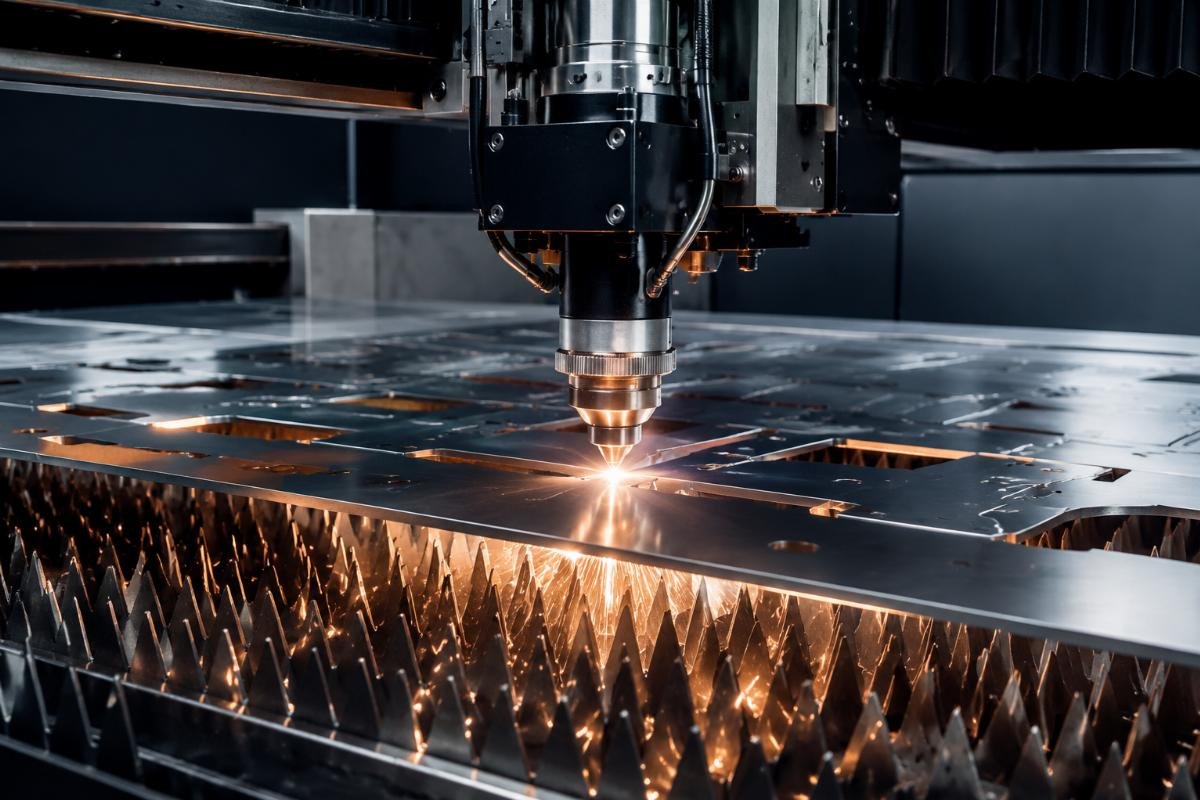
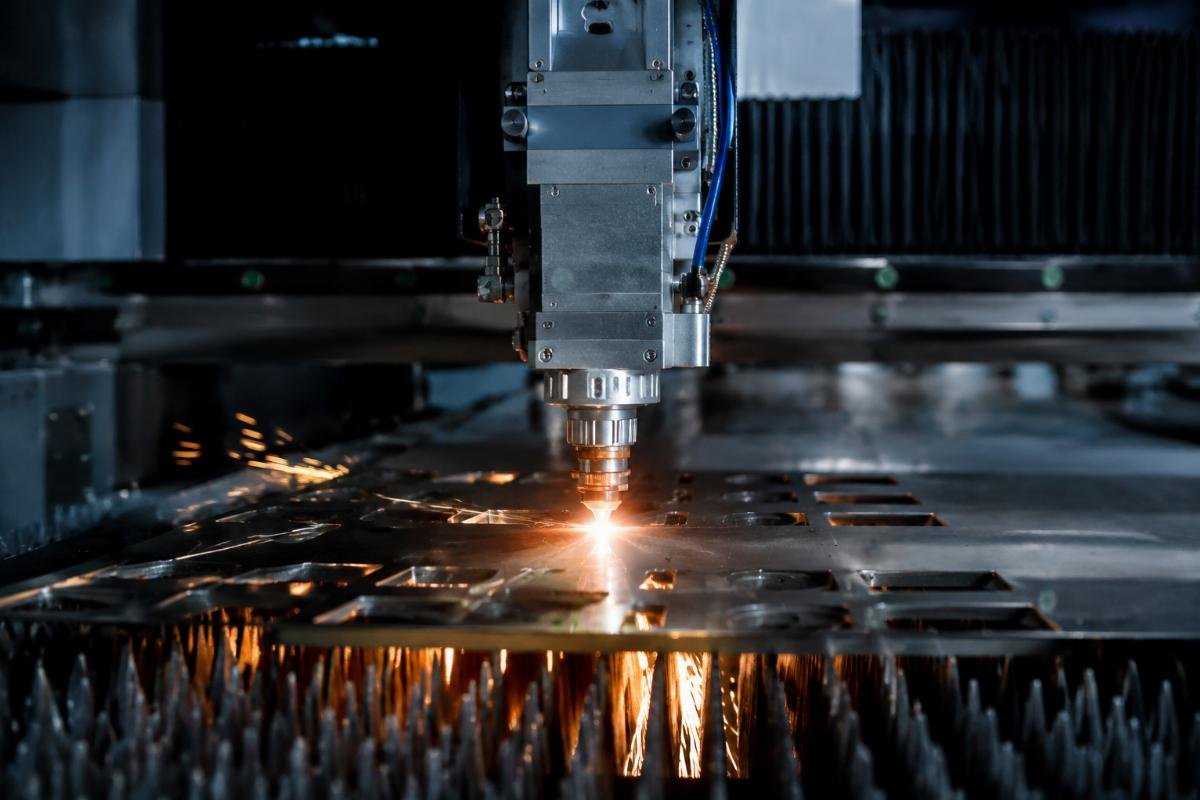
Laser CNC focuses a high-energy beam onto the fabric surface. The beam vaporizes material along the cut path[^4]. The process is fast and leaves a sealed edge on synthetic fabrics. It is also unforgiving on natural materials that char under heat.
Laser CNC works best for synthetic fabrics like polyester, nylon, and acrylic where the melted edge prevents fraying, but it fails on natural fabrics like cotton, wool, and linen because these materials burn, discolor, and weaken when exposed to the high heat required for vaporization cutting.
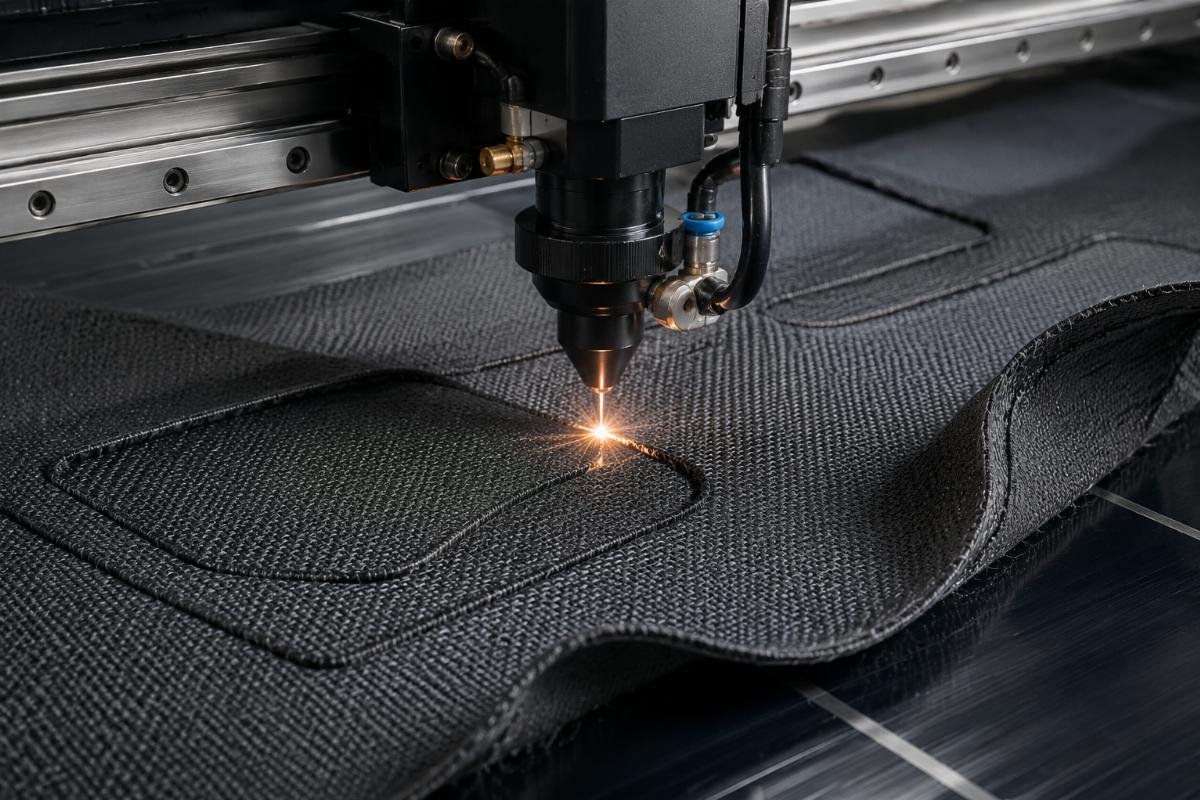
I spoke with a sportswear manufacturer in South Korea who needed to cut polyester mesh for athletic jerseys. Laser CNC delivered perfect results. The edges were sealed without additional stitching. Their production speed increased by 60 percent compared to manual cutting[^5]. Then they tried the same laser system on cotton blends for casual wear. The edges turned brown. The fabric weakened near the cut line. They had to switch to knife CNC for natural fibers.
Laser cutting relies on material absorption of laser energy. Synthetic fabrics absorb and melt cleanly. Natural fibers absorb and combust. The difference is chemical composition. Polyester is a polymer that melts at predictable temperatures[^6]. Cotton is cellulose that ignites at high heat[^7]. A customer in Spain asked if they could use laser on wool felt. I told them no. Wool scorches before it cuts cleanly. Another customer in the United States wanted to laser-cut silk. Silk burns instantly under standard laser settings. Lower power settings do not cut through the material.
Laser CNC also struggles with thick fabrics. The beam penetrates only so deep before losing focus. A customer tried to laser-cut 10mm neoprene for wetsuits. The top surface cut cleanly. The bottom layer showed incomplete cuts and excessive melting. Knife CNC handled the same material with proper blade pressure adjustments. Laser CNC cannot cut multiple fabric layers like knife systems do. The beam loses power as it penetrates through stacked materials.
When should you choose laser over knife CNC?
Choose laser when you need sealed synthetic edges, work with thin synthetic materials under 3mm, or require intricate detail cutting in acrylic felt or fleece. Do not choose laser if you cut natural fabrics, need multi-layer stacking, or work with materials over 5mm thick.
Can milling CNC cut fabric or is it only for rigid materials?
Milling CNC uses a rotating bit to cut material[^8]. The bit spins at high speed and removes material through abrasion. This works for wood, plastic, and composites. It works poorly for most textiles.
Milling CNC is designed for rigid materials and only cuts specialized technical fabrics like carbon fiber composites, resin-coated textiles, or rubberized materials where mechanical abrasion can remove material without causing fiber bunching or excessive fraying that makes the cut unusable.
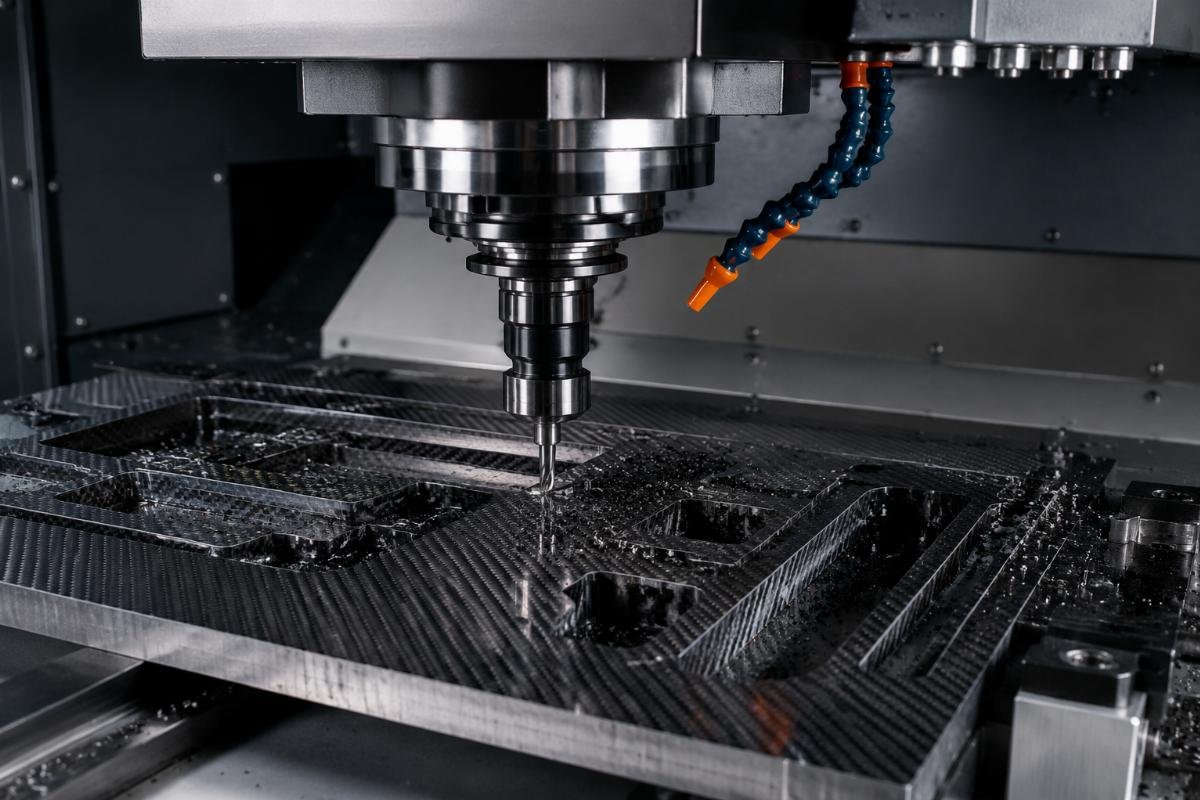
A customer manufacturing industrial conveyor belts asked if milling CNC could cut their rubber-coated fabric. I said yes. The rubber provided rigidity that allowed the bit to cut without pulling the fabric. Another customer making automotive headliners tried milling on foam-backed vinyl. The vinyl layer melted from friction heat. The foam compressed and tore. They switched to knife CNC.
Milling works when fabric behaves like a semi-rigid sheet. Carbon fiber prepreg, fiberglass cloth saturated with resin[^9], and thick rubber-textile laminates fall into this category. Standard apparel fabrics do not. A garment factory in Pakistan tried milling denim because they assumed CNC mills were universal cutting tools. The denim bunched under the bit and created ragged edges. The bit heated from friction and discolored the fabric. Knife CNC delivered clean cuts on the same denim.
The confusion comes from industrial CNC marketing. Metalworking CNC mills dominate the CNC market. Customers see "CNC cutting machine" and think milling is the default. For flexible textiles, milling is almost always the wrong choice. Knife-blade CNC is the fabric-specific solution that people do not know exists until they research beyond general CNC equipment.
What fabric characteristics determine which CNC technology works?
Fabric thickness, fiber composition, weave density, and edge finish requirements dictate technology selection. Ignore these factors and you will buy equipment that cannot process your actual materials.
The fabric's response to heat, its mechanical flexibility, and the required edge finish are the three deciding factors—heat-sensitive natural fabrics need knife cutting, synthetic fabrics requiring sealed edges need laser, and rigid composites need milling, with no overlap between these boundaries.
I have seen customers make expensive mistakes by ignoring material properties. A customer bought laser CNC after seeing a demo cutting thin polyester. Their actual production used cotton-polyester blends with 60 percent cotton content. The laser burned through the cotton fibers and left weak spots. Another customer chose knife CNC for technical textiles with silicone coatings. The blade could not penetrate the coating without dulling immediately.
Thickness matters because each technology has penetration limits. Knife blades cut reliably up to 50mm for soft fabrics[^10] but struggle with rigid materials over 10mm. Laser beams lose focus beyond 5mm[^11] and leave tapered edges on thick materials. Milling bits can handle thick materials but only if the material resists compression and fiber bunching. Fiber composition determines heat tolerance. Natural fibers char. Synthetic fibers melt. Blends behave unpredictably depending on the dominant fiber type. A 70 percent cotton blend will still show laser burn marks. A 70 percent polyester blend may cut cleanly with laser.
Weave density affects fraying. Tight weaves like canvas and denim fray less after knife cutting[^12]. Loose weaves like chiffon and gauze fray more regardless of cutting method. Edge finish requirements determine if you need sealed edges from laser or clean mechanical cuts from knife. A customer making flags needed sealed polyester edges to prevent unraveling in wind. Laser was mandatory. A customer making cotton quilts needed clean edges for stitching. Knife CNC delivered better results.
How do you match your fabric to the right CNC system?
Test your actual production fabric on the CNC system before purchasing. Do not rely on vendor demos using ideal materials. Ask the vendor to cut your fabric at your required thickness and layer count. Inspect the edge quality under magnification. Check for heat damage, fraying, and precision consistency across multiple cuts.
| Fabric Type | Recommended CNC | Why |
|---|---|---|
| Cotton, linen, wool | Knife CNC | Heat-sensitive, mechanical cutting prevents burn marks |
| Polyester, nylon, acrylic | Laser CNC | Heat-sealing prevents fraying, synthetic melting is controlled |
| Carbon fiber, fiberglass | Milling CNC | Rigid composite structure resists abrasion cutting |
| Denim, canvas, heavy cotton | Knife CNC | Thick natural fabrics need mechanical force without heat |
| Thin synthetic mesh | Laser CNC | Sealed edges critical, material melts cleanly |
A customer in Italy sent me samples of their upholstery fabrics before ordering equipment. We tested cotton velvet, polyester microfiber, and wool blends. Knife CNC handled all three without edge damage. Laser burned the cotton and wool. They bought knife CNC and avoided a costly mistake. Another customer in Brazil insisted laser was faster and bought it without testing their actual fabrics. They returned the equipment after six months.
What production scenarios require knife CNC versus laser or manual?
Production volume, material variety, and quality requirements determine if CNC makes sense and which type fits your operation. Low-volume custom work may not justify CNC investment. High-volume repetitive cutting demands automation but only if the CNC system handles your material range.
Knife CNC fits high-volume production of natural fabrics and multi-layer cutting where precision and speed matter more than edge sealing, laser CNC fits synthetic fabrics requiring sealed edges and intricate patterns, and manual cutting remains viable for low-volume custom work where setup time exceeds cutting time.
A customer running a small boutique workshop cuts 20 garments per week in varying designs. I told them manual cutting made more financial sense. CNC setup and pattern programming would consume more time than the cutting itself. Another customer produces 500 identical canvas bags per day. Knife CNC reduced their cutting time from 6 hours to 45 minutes. A third customer makes custom synthetic sportswear with 200 units per design. Laser CNC allowed them to cut and seal edges in one operation.
Material variety creates complications. If you cut cotton one week and polyester the next, you need either two CNC systems or manual flexibility. A furniture manufacturer in Poland cuts cotton, polyester, and leather. They use knife CNC for cotton and leather, laser for polyester. A garment factory in Vietnam standardized on polyester fabrics to avoid needing multiple systems. Their laser CNC handles all production.
Quality requirements determine if CNC precision justifies the cost. A customer making industrial workwear needed consistent accuracy for safety compliance. Knife CNC delivered repeatable precision that manual operators could not match. A customer making decorative pillows had looser tolerance requirements. Manual cutting with templates worked fine.
Should you transition from manual to CNC or from laser to knife?
Transition to CNC when your production volume exceeds what manual operators can consistently deliver without fatigue-related errors. Transition from laser to knife when edge discoloration or heat damage creates customer complaints that outweigh laser speed advantages. Transition from knife to laser when edge fraying on synthetics requires post-cutting sealing operations that eliminate knife CNC time savings.
Conclusion
CNC machines can cut fabric, but only if you match the cutting technology to your fabric type and production needs. Knife CNC handles natural fabrics and multi-layer cutting without heat damage. Laser CNC seals synthetic edges but burns natural fibers. Milling CNC works for rigid composites but fails on flexible textiles. Test your actual fabrics before buying any CNC system, because the wrong choice costs more than the initial purchase price.
[^1]: "Computer numerical control", https://en.wikipedia.org/wiki/Computer_numerical_control. Computer Numerical Control (CNC) refers to the automated control of machining tools through programmed commands encoded on a storage medium, as opposed to manual control by operators. Evidence role: definition; source type: encyclopedia. Supports: the meaning and expansion of the CNC acronym. [^2]: "What Is The Amplitude Range And Frequency Of The CNC ...", https://passionblade.com/what-is-the-amplitude-range-and-frequency-of-the-cnc-oscillating-blade/. Industrial oscillating knife systems typically operate between 2,000 and 6,000 oscillations per minute, with frequency adjusted based on material density and cutting speed requirements. Evidence role: mechanism; source type: research. Supports: the operational frequency range of oscillating cutting blades in industrial CNC systems. Scope note: Specific frequencies vary by manufacturer and blade design [^3]: "Does a Vacuum Table Hold When You Cut Into It? CNC Router Myth ...",
. Vacuum table systems create negative pressure through perforated work surfaces to secure flexible materials during automated cutting, a standard method in textile CNC operations to prevent fabric shifting and maintain dimensional accuracy. Evidence role: mechanism; source type: research. Supports: the use of vacuum hold-down systems in CNC fabric cutting to prevent material movement. [^4]: "Laser ablation - Wikipedia", https://en.wikipedia.org/wiki/Laser_ablation. Laser cutting removes material through rapid localized heating that causes vaporization, melting, or chemical degradation, with the dominant mechanism depending on material properties and laser parameters; organic materials typically undergo a combination of pyrolysis and vaporization. Evidence role: mechanism; source type: education. Supports: the material removal mechanism in laser cutting processes. [^5]: "Comparing CNC vs. Manual Machining: Advantages and Applications", https://jarviscuttingtools.com/news/cnc-vs-manual-machining-advantages. Studies of textile manufacturing automation report productivity increases ranging from 40% to 200% when transitioning from manual to CNC cutting systems, with actual gains depending on product complexity, material handling efficiency, and production volume. Evidence role: statistic; source type: research. Supports: typical productivity improvements from transitioning to automated CNC cutting in textile manufacturing. Scope note: The cited 60% improvement represents one specific case; actual results vary significantly by operation type and baseline efficiency [^6]: "Polyester - Wikipedia", https://en.wikipedia.org/wiki/Polyester. Polyethylene terephthalate (PET), the most common polyester fiber, exhibits a melting point of approximately 260°C (500°F), with consistent melting behavior due to its crystalline polymer structure. Evidence role: mechanism; source type: education. Supports: the thermal melting behavior of polyester as a polymer material. [^7]: "Flammability of Cellulose-Based Fibers and the Effect of Structure of ...", https://pmc.ncbi.nlm.nih.gov/articles/PMC6431839/. Cotton fibers consist of approximately 90% cellulose, which undergoes thermal decomposition beginning around 150°C and ignites at temperatures between 210-230°C, significantly lower than the melting points of synthetic polymers. Evidence role: mechanism; source type: education. Supports: the cellulosic composition of cotton and its thermal degradation characteristics. [^8]: "[PDF] MATERIAL REMOVAL PROCESSES", https://www.egr.msu.edu/~pkwon/me478/machining.pdf. CNC milling is a machining process that uses rotating multi-point cutting tools to progressively remove material from a workpiece, with the cutting tool's rotation and the workpiece's movement controlled by computer numerical commands to achieve desired geometries. Evidence role: definition; source type: encyclopedia. Supports: the fundamental operating principle of CNC milling machines. [^9]: "Pre-preg - Wikipedia", https://en.wikipedia.org/wiki/Pre-preg. Prepreg materials consist of reinforcement fibers (such as carbon or glass) pre-impregnated with partially cured resin matrix, creating semi-rigid sheets that behave mechanically as composite structures rather than flexible textiles, particularly after resin curing. Evidence role: definition; source type: education. Supports: the classification and characteristics of fiber-reinforced composite materials. [^10]: "Best Blades for CNC Oscillating Knife Cutters: Full Guide", https://www.trustercnc.com/best-blades-for-cnc-oscillating-knife-cutters-full-guide/. Industrial knife-blade cutting systems are commonly specified for materials up to 50-60mm in thickness for compressible textiles, though actual performance depends on material density, blade geometry, and machine rigidity. Evidence role: general_support; source type: research. Supports: the typical thickness capacity of knife-blade cutting systems for textile materials. Scope note: Capacity varies significantly by equipment manufacturer and specific fabric characteristics [^11]: "Laser Cutting Thickness: Why Maximum Ratings Mislead—and How ...", https://www.adhmt.com/laser-cutting-machine-thickness/. Laser cutting quality degrades with material thickness due to focal depth limitations; typical CO2 lasers maintain optimal focus over 3-6mm depth, with beam divergence causing tapered cuts and reduced edge quality in thicker materials. Evidence role: mechanism; source type: research. Supports: the relationship between laser focal depth and cutting quality in thick materials. Scope note: Focal depth varies with laser type, power, and optical configuration [^12]: "How to finish raw edges of fabric so it doesn't fray! #sewing ...", . Fabric edge stability correlates with weave density and yarn interlacement frequency; tightly woven structures with high thread counts exhibit greater resistance to yarn slippage and fraying compared to loose weaves, as the increased interlacement points mechanically constrain individual yarns. Evidence role: mechanism; source type: education. Supports: how fabric weave structure affects edge stability and fraying tendency after cutting.


