
Blog
How Do You Verify Supplier Capacity for Fabric Cutting Equipment Orders?

How Do You Verify Supplier Capacity for Fabric Cutting Equipment Orders?
Most buyers fail capacity assessments because they check factory size instead of delivery pipelines. A 50,000-square-meter facility means nothing if their order backlog already fills the next six months, yet buyers still walk away impressed by the real estate[^1].
When you assess supplier capacity for fabric cutting equipment, you are not measuring how many machines they theoretically produce per year—you are measuring whether they can deliver your specific order, with your required customizations, on your deadline, even when their other customers need equipment at the same time.
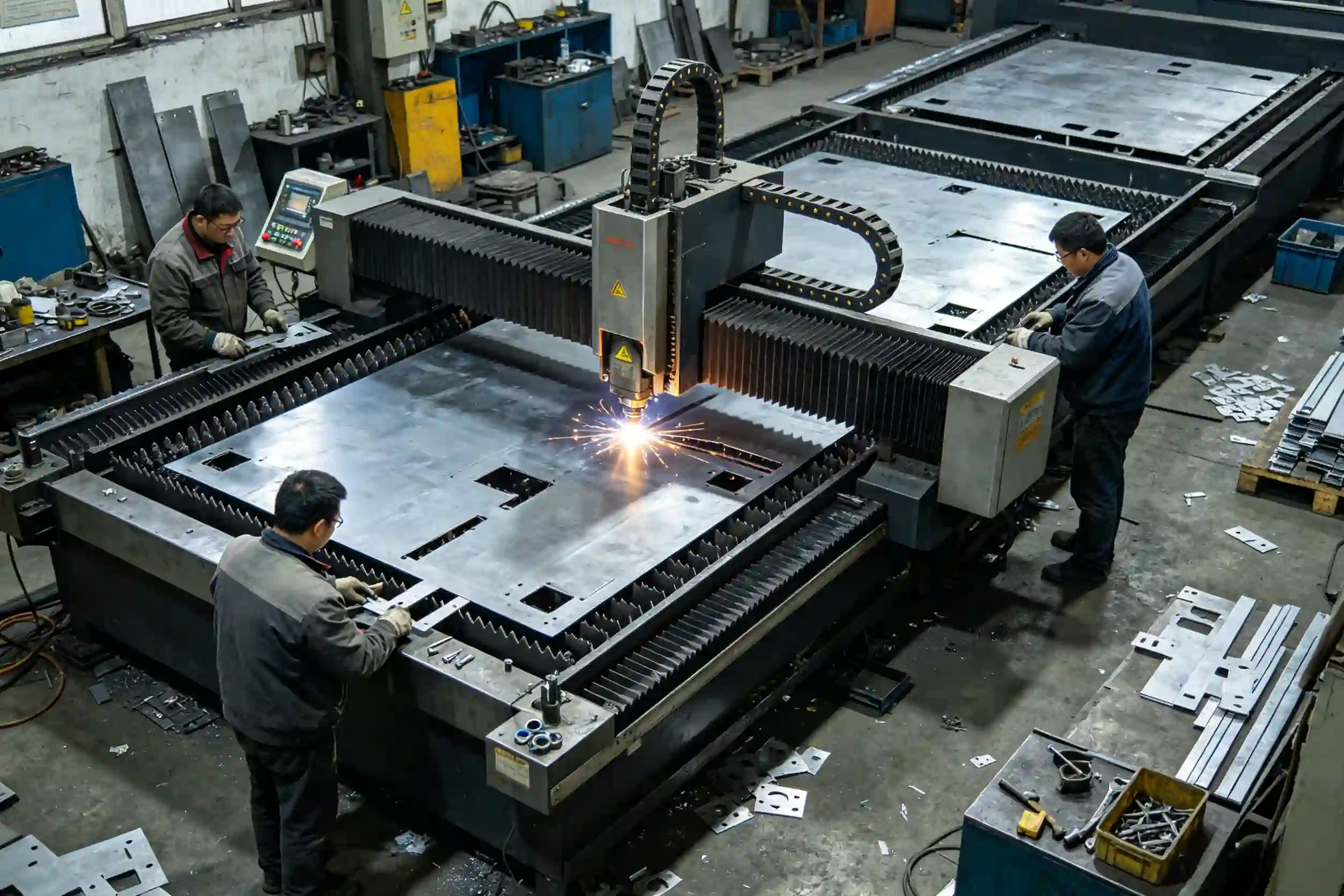
I have watched buyers make the same mistake during factory audits for over a decade. They tour our production floor, count the assembly stations, multiply by theoretical output per station, and conclude we can deliver 200 machines per year. Then they place an order for 15 customized units with a three-month lead time, and three weeks before delivery, they panic because they suddenly realize customization cycles were never part of that calculation.
What Actually Limits CNC Cutting Equipment Delivery Capacity?
Buyers assume equipment manufacturing works like injection molding[^2]. You run standard molds, build inventory, ship from stock. That model does not apply here.
CNC fabric cutting equipment is not manufactured for inventory—every order requires customer-specific configuration[^3], testing against the buyer's material samples, software parameter tuning, and commissioning documentation before it ships, which means theoretical production volume tells you nothing about available delivery slots.
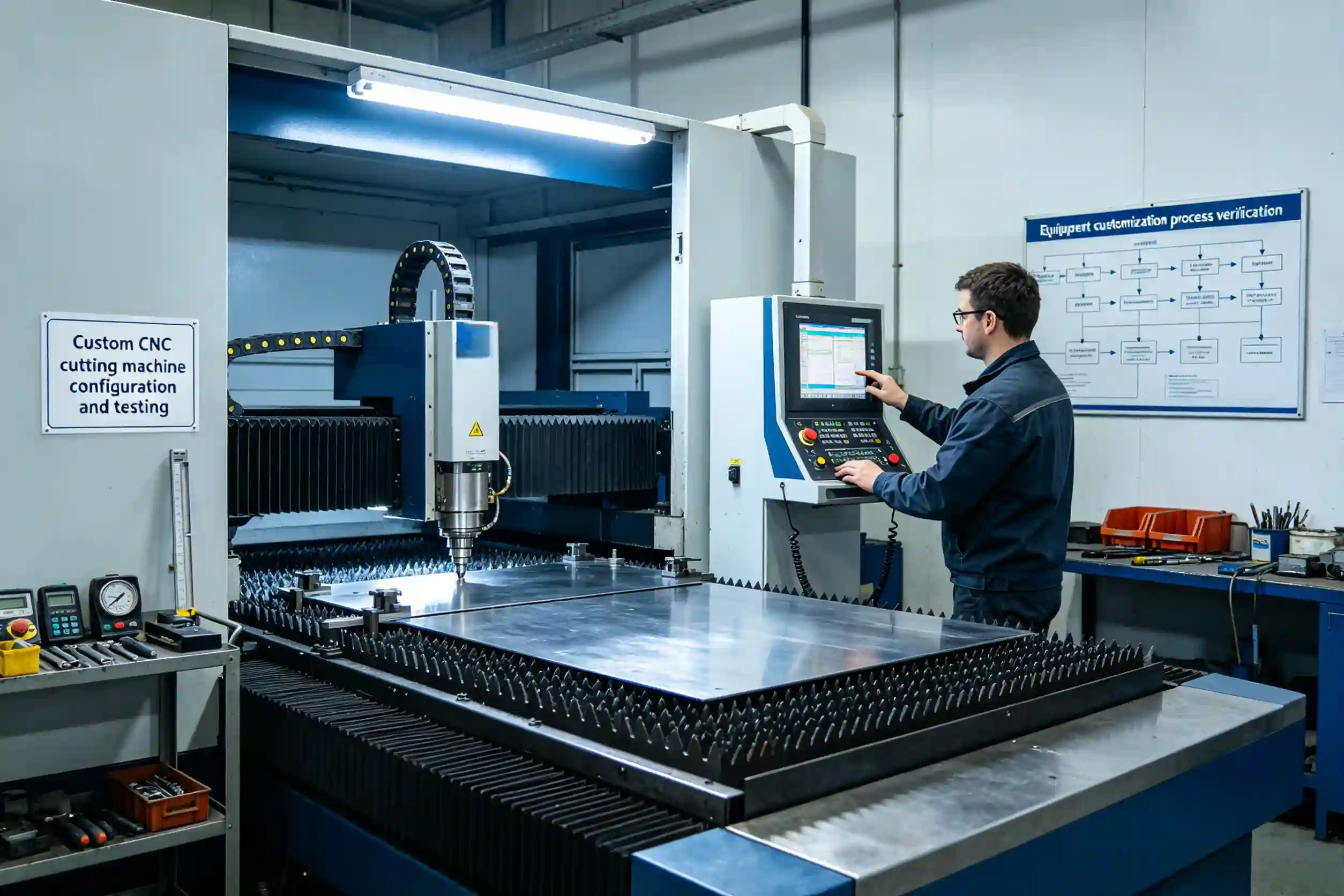
The Real Capacity Constraints Buyers Miss
When I review our order pipeline with procurement teams, I break down where delivery time actually goes. Production assembly is usually 30-40% of the total cycle[^4]. The rest splits across four areas that buyers never account for in capacity assessments.
| Capacity Constraint | Why It Matters | What Buyers Should Verify |
|---|---|---|
| R&D customization cycles | Cutting head configurations, blade types, material-specific motion parameters all require engineering validation before production starts | Ask how many active customization projects the supplier currently runs—if they already handle ten parallel custom projects, your eleventh project waits for engineering bandwidth |
| Material testing phases | Buyers send fabric samples, foam composites, leather batches—each requires test cuts, parameter adjustment, re-testing, customer approval before final production | Request recent testing logs with customer names redacted—suppliers who skip this step deliver equipment that cannot cut your materials properly |
| Supply chain lead times | Servo motors, linear guides, control systems come from specialized suppliers with 6-8 week lead times[^5]—no amount of factory floor space changes that external constraint | Ask to see component procurement schedules for recent orders—if suppliers claim two-week delivery but their motion control components take eight weeks to arrive, the math does not work |
| After-sales support commitments | Every delivered machine requires remote commissioning support, operator training, and technical hotline availability[^6]—these consume the same engineering team that handles new customizations | Verify how the supplier allocates technical staff between new orders and existing customer support—overburdened support teams signal that new orders will face resource conflicts |
I had a buyer visit our factory last year who brought a spreadsheet. He had calculated that our 12 assembly stations, running two shifts, could theoretically produce 240 machines annually. Then I showed him our order scheduling board. We had 47 active orders at various stages. Eighteen were in final testing. Nine were waiting for customer sample approvals. Fourteen were in component procurement. Only six were in active assembly. His spreadsheet became useless instantly.
How Do You Verify Real Available Capacity During Factory Audits?
Surface metrics deceive. I have seen 5,000-square-meter factories deliver faster than 30,000-square-meter facilities because the smaller operation had better order pipeline management and fewer active customization projects competing for engineering time.
The most reliable capacity verification happens when buyers stop asking "How many machines can you make per year?" and start asking "Show me your current order pipeline with delivery dates, customization status, and resource allocation"—suppliers who cannot produce that document within ten minutes either do not track capacity properly or are hiding overcommitment.
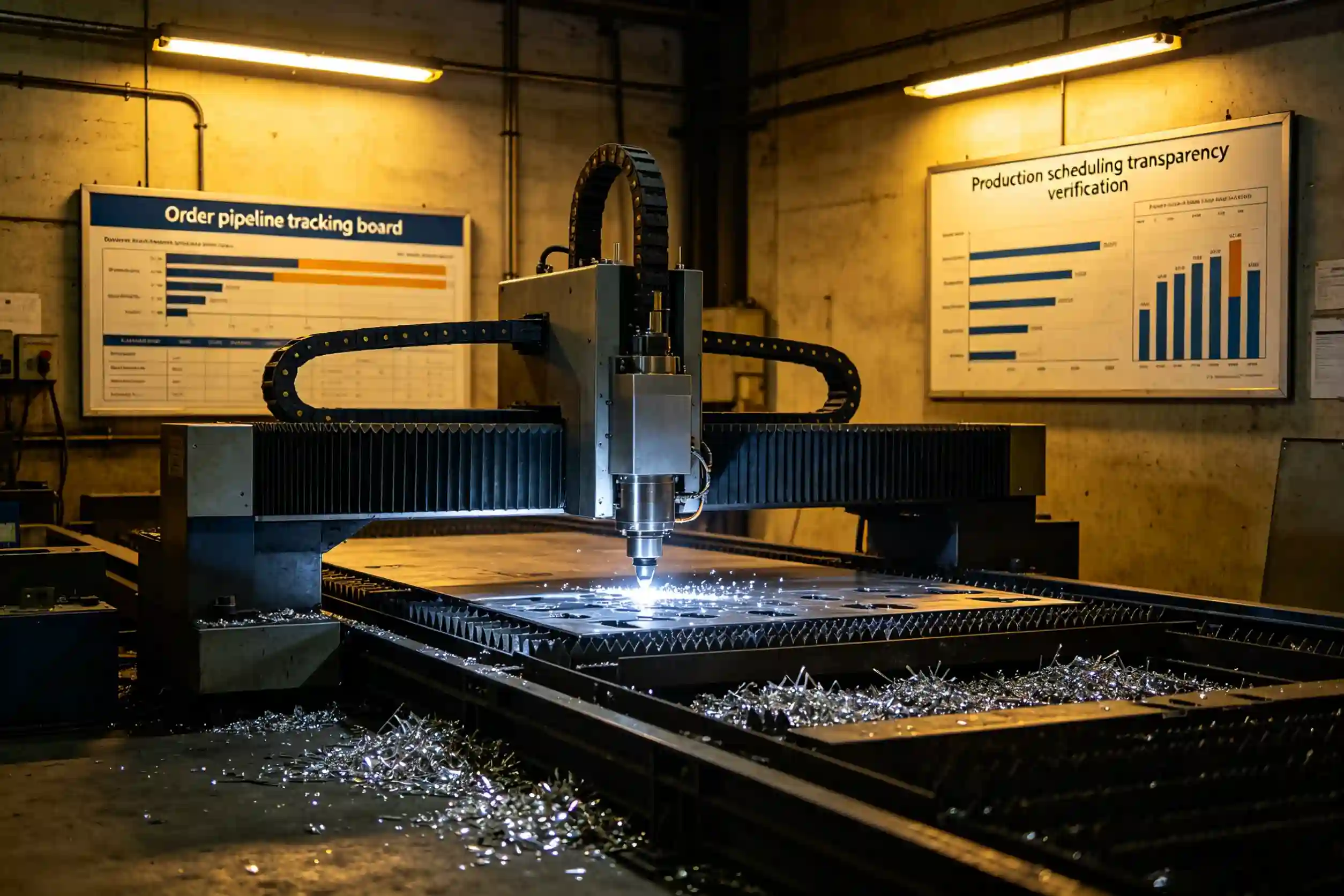
Questions That Expose Real Capacity Constraints
When buyers audit our facility, the ones who actually understand capacity assessment skip the factory tour photo opportunities and go straight to operational evidence. These are the questions that force honest capacity disclosure.
Current production status verification:
- Which orders are currently in assembly right now, today?
- Can I see the equipment units on the production floor with order numbers visible?
- What is the earliest delivery date you can commit to if I place an order tomorrow?
I show buyers our production floor with work order tags attached to each machine in assembly. If a supplier resists showing you in-progress equipment with visible order documentation, they either have no active orders or they are hiding how overbooked they are.
Customization bandwidth assessment:
- How many different customization projects are your engineering team handling right now?
- What is your average time from receiving customer material samples to completing parameter testing?
- Can I speak with one of your engineers who handles customization projects?
We keep testing logs with dates, material types, and parameter adjustment iterations. When buyers review these logs, they see how long customization actually takes. Suppliers who claim they can customize anything in one week but cannot show recent testing documentation are lying about their process.
Supply chain dependency verification:
- Which components have the longest procurement lead times?
- Do you stock critical components or order them per project?
- Can I see recent purchase orders for motion control systems with delivery dates?
Our component suppliers have 6-8 week lead times for servo systems and linear motion guides. We maintain safety stock for standard configurations, but custom orders require custom component specs, which adds procurement time. Buyers who verify this avoid delivery surprises later.
Resource allocation transparency:
- How many technical staff do you allocate to after-sales support versus new order customization?
- What happens if three customers need urgent technical support during my equipment commissioning?
- Can I contact one of your recent customers to ask about post-delivery support quality?
This question reveals whether the supplier has enough technical staff to handle new orders without degrading support for existing customers. I give buyers direct contact information for recent customers who agreed to serve as references. Suppliers who refuse customer references usually have support quality problems.
Why Do Standardized Capacity Metrics Fail for CNC Cutting Equipment?
Buyers trained in procurement for mass-produced goods keep applying the wrong evaluation framework[^7]. They want annual output numbers, theoretical production rates, and inventory turnover metrics. None of that applies here.
CNC fabric cutting equipment has unit-level customization requirements, multi-week testing cycles, and customer-specific commissioning needs that make "units per year" capacity metrics nearly meaningless—what matters is whether the supplier has open delivery slots during your required timeline and available engineering bandwidth for your specific customization needs.
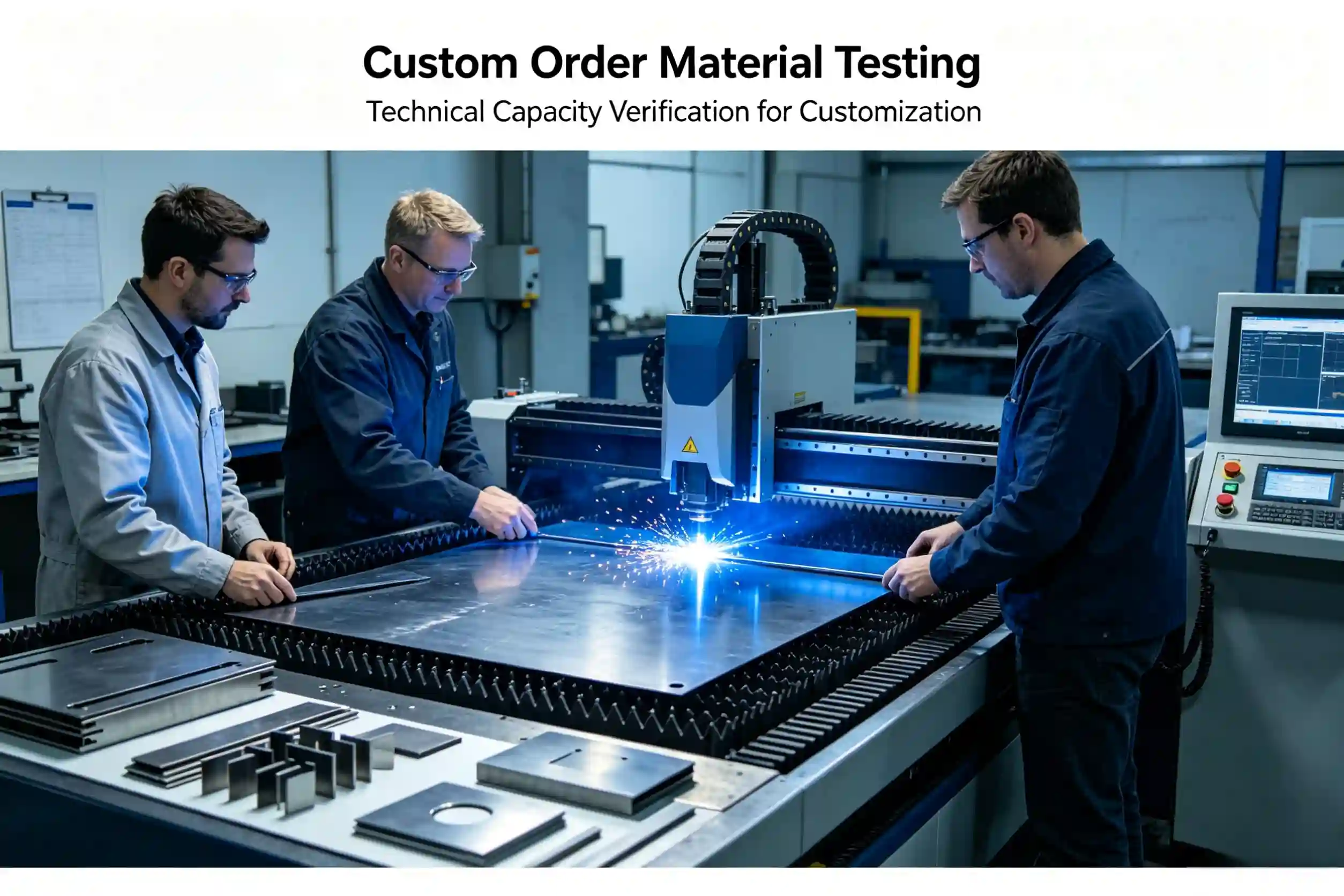
The Customization Capacity Trap
I had a buyer place an order for eight machines last year. Standard configuration, nothing exotic. Then during kickoff, they mentioned they needed to cut seven different material types: woven cotton, knitted polyester, automotive headliner foam, leather, technical textiles with reflective coatings, aramid fiber composites, and multi-layer laminated fabrics. Each material required different blade types, cutting speeds, and motion parameters. What looked like a standard order became an intensive customization project that consumed three weeks of engineering time just for parameter development.
That engineering time came from the same team handling other customers' customization needs. Every hour they spent on this buyer's material testing was an hour unavailable for other projects. The buyer never factored this into their capacity assessment because they assumed "standard machines" required zero engineering bandwidth.
How Customization Degree Affects Delivery Capacity
Different customization levels consume vastly different capacity resources. Buyers need to understand which category their order falls into before they assess whether a supplier can deliver.
| Customization Level | Engineering Time Required | Testing Cycles Needed | Lead Time Impact | Capacity Consumption |
|---|---|---|---|---|
| Standard configuration | Minimal (parameter loading from existing profiles) | One verification cut | 2-3 weeks | Low—mostly assembly and quality check time |
| Material-specific tuning | Moderate (new parameter development and validation) | 3-5 testing iterations with customer sample approval | 4-6 weeks | Medium—requires engineering bandwidth and customer coordination |
| Custom mechanical configuration | High (cutting head modification, tool changer integration, custom fixtures) | 5-8 testing iterations plus mechanical validation | 8-12 weeks | High—consumes mechanical design, testing, and assembly resources |
| Fully customized solution | Very high (new motion algorithms, integrated vision systems, automated material handling) | 10+ iterations with prototype builds | 12-16 weeks | Very high—essentially a custom engineering project that blocks capacity for standard orders |
When buyers ask if we can deliver 20 machines in three months, my first question is always "Which customization level do you need?" A buyer ordering 20 standard units might be feasible. A buyer ordering 20 fully customized units is asking for a six-month project minimum, regardless of how many assembly stations we have.
What Evidence Should Buyers Demand During Capacity Verification?
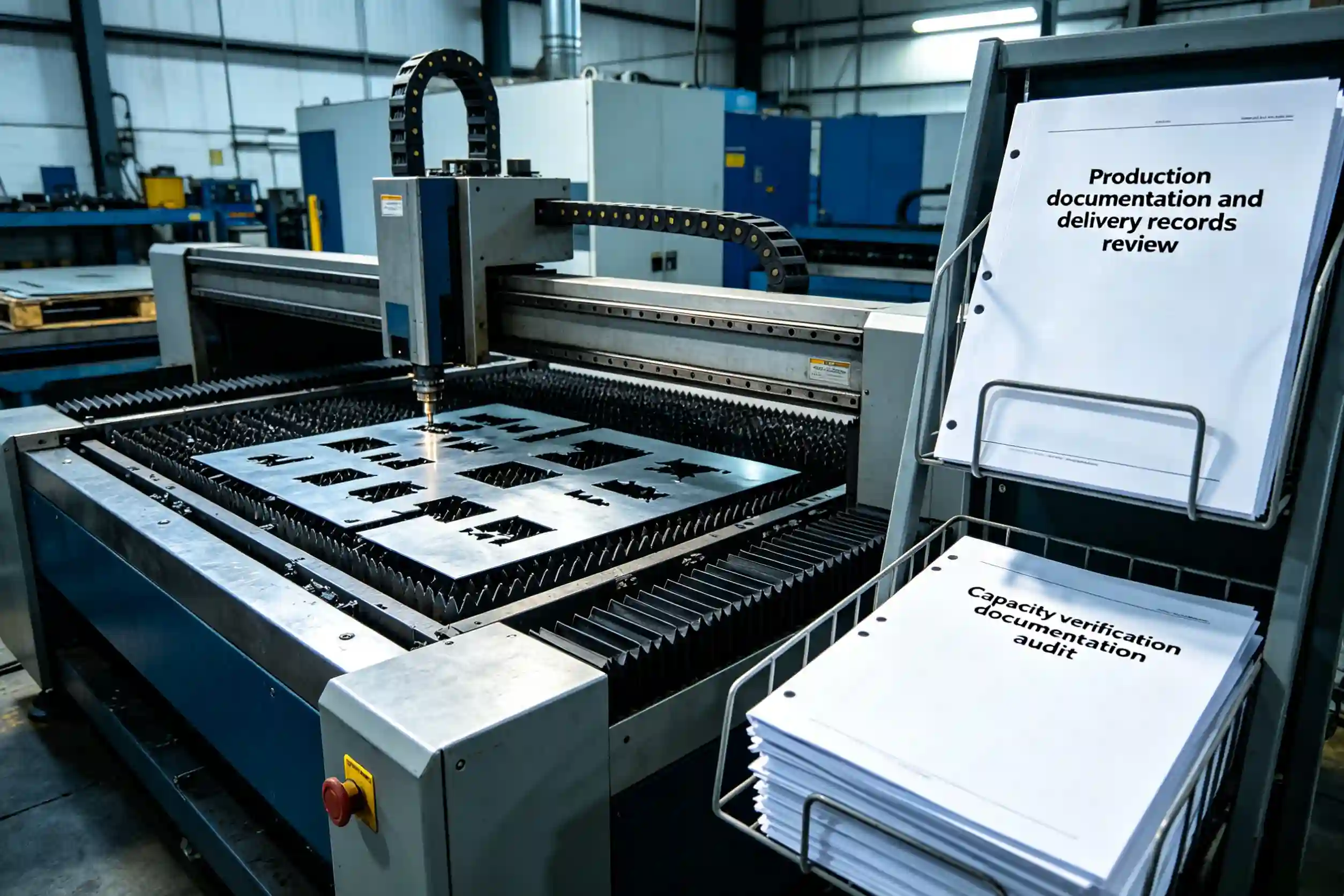
Documents lie less than words[^8]. When buyers ask me about capacity, I do not give them a presentation. I show them operational evidence that they can verify independently.
The strongest capacity verification comes from cross-referencing three sources: current production floor status with visible order documentation, recent delivery records with customer contacts, and transparent order pipeline schedules with resource allocation—suppliers who cannot provide all three within 24 hours of request lack the operational discipline to manage complex orders reliably.
Verifiable Capacity Evidence Checklist
These are the documents and access points I provide to buyers who conduct serious capacity assessments. Suppliers who refuse any of these items are hiding something.
Production floor evidence:
- Walk the assembly floor with no advance notice requirement
- Photograph equipment in production with visible order tags
- Interview production staff about current project timelines
- Verify that claimed assembly stations are actually operational and staffed
We let buyers show up during working hours without appointment. If equipment is in assembly, they see it. If an assembly station sits empty, they see that too. Factories that require 48-hour advance notice for visits are probably staging the floor.
Delivery documentation:
- Signed delivery acceptance certificates from recent customers (names can be redacted)
- Shipping manifests with dates showing actual delivery timelines
- Customer reference contacts who will discuss delivery experience
- Photographs of installed equipment at customer sites with timestamps
I keep delivery acceptance documents from the past two years. When buyers ask about on-time delivery rates, I show them the documents with actual dates. Suppliers who cannot produce recent delivery documentation either have no recent customers or missed too many deadlines to show.
Order pipeline transparency:
- Current order list with quantities, customization levels, and scheduled delivery dates
- Production scheduling board showing which orders occupy which capacity resources
- Engineering team allocation chart showing who handles which customization projects
- Component procurement schedule showing supply chain lead times for active orders
Our order pipeline board sits in the production management office. It shows every active order, current status, assigned engineers, and scheduled delivery date. Buyers photograph it during audits. Suppliers who claim their order pipeline is "confidential" are usually hiding overcommitment problems.
Testing and quality records:
- Material testing logs showing parameter development iterations
- Quality inspection reports from recent completed orders
- Failed test documentation showing how problems were resolved
- Customer approval signatures on testing results
We document every testing iteration with photos, parameter settings, and customer feedback. When buyers review these logs, they see our actual testing process duration. Suppliers who cannot show testing documentation either skip proper testing or fabricate their testing claims.
How Do You Assess Whether a Supplier Can Scale for Large Orders?
Small orders hide capacity problems. A supplier might deliver five machines on time with good quality, then completely fail when you order 30 units. The capacity constraints that matter only appear at scale.
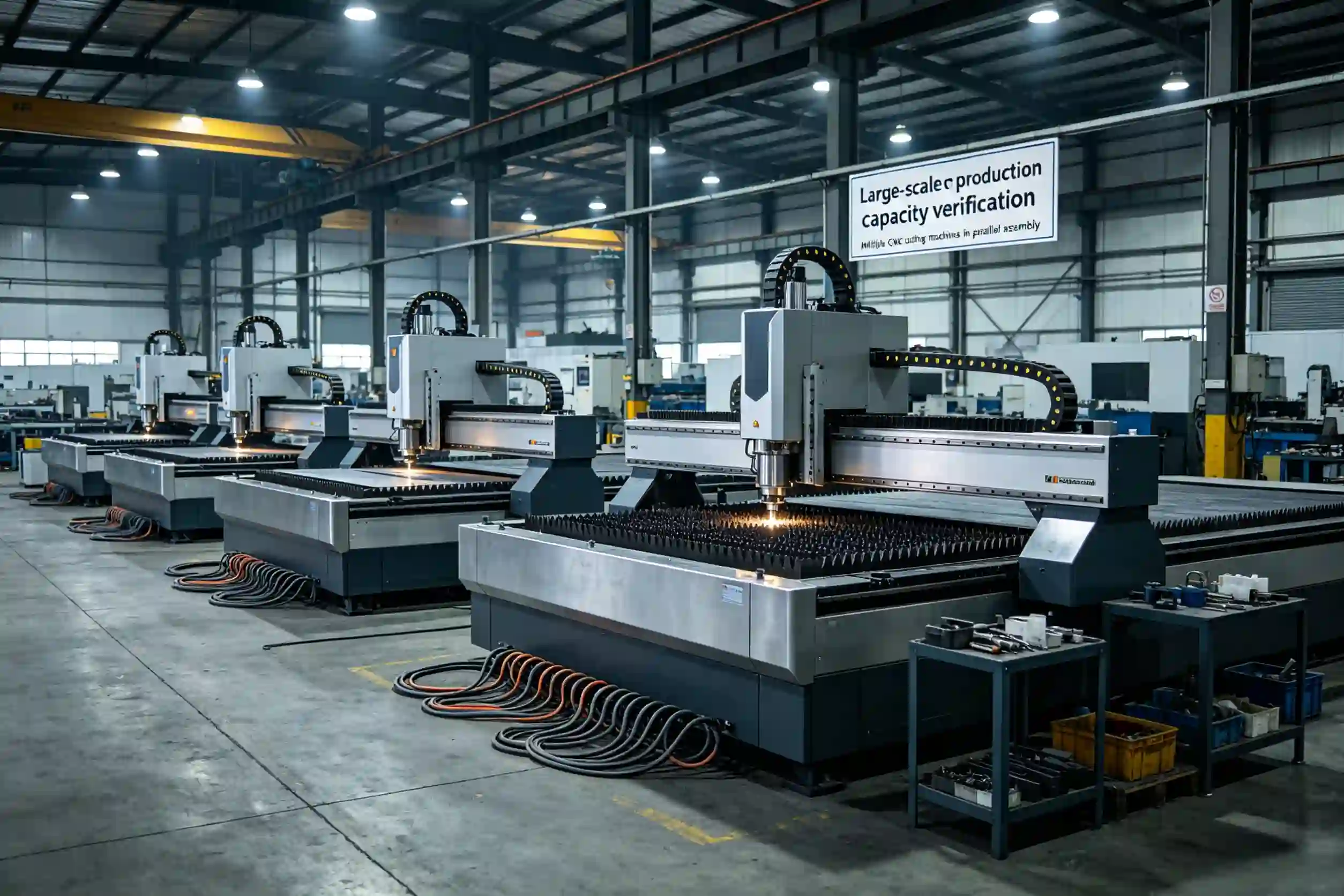
Scaling capacity for CNC cutting equipment depends less on factory size and more on process replication capability[^9]—can the supplier run multiple parallel customization projects without quality degradation, maintain consistent parameter development across many units, and coordinate staggered delivery schedules without resource conflicts?
Red Flags That Indicate Scaling Problems
I have seen suppliers claim they can handle 50-unit orders, then collapse at 15 units because they never had the systems to manage that complexity. These warning signs appear during capacity audits.
Process documentation gaps: If the supplier cannot show you written procedures for parameter development, testing protocols, or quality checkpoints, they are running on individual worker knowledge instead of systematic processes. That model breaks down immediately when order volume increases because knowledge does not scale[^10].
Single-point dependencies: When one engineer handles all customization work, or one technician conducts all testing, or one manager approves all quality checks, you have a bottleneck that will throttle delivery when order volume rises. Ask to meet the team who would work on your order. If the supplier only introduces you to one person, scaling capacity does not exist.
No parallel project evidence: Request examples of the supplier handling multiple simultaneous orders with different customization requirements. If they can only show you one completed project at a time, they lack the operational capability to manage parallel workflows. Large orders require parallel execution.
Reactive problem-solving culture: During factory visits, observe how staff respond when issues arise. Do they follow documented procedures or improvise solutions? Improvisation works for small-scale custom work but fails catastrophically during large-order execution when problems multiply faster than improvisation can solve them.
Last year, we delivered a 25-unit order to an automotive interior supplier. The order included three different cutting head configurations for different material types. We assigned three engineers to handle parallel parameter development, staged assembly to balance resource utilization, and coordinated component procurement across staggered delivery dates. The buyer had audited two other suppliers before us. Both claimed they could handle the order. Neither could show evidence of managing three parallel customization projects simultaneously. We got the order because we showed them our process for scaling, not because our factory was bigger.
Conclusion
Supplier capacity verification for fabric cutting equipment requires buyers to audit delivery pipelines and engineering bandwidth rather than factory size or theoretical output, because customization cycles and resource allocation determine real delivery capability far more than production floor area.
[^1]: "Assessing the Best Supplier Selection Criteria in Supply Chain ...", https://pmc.ncbi.nlm.nih.gov/articles/PMC9102987/. Supply chain research identifies facility size and equipment count as commonly overweighted factors in supplier capacity assessments, while operational metrics such as order pipeline management and resource allocation receive insufficient attention during audits. Evidence role: expert_consensus; source type: research. Supports: that buyers frequently misjudge supplier capacity by emphasizing physical infrastructure over operational metrics. Scope note: This describes a general procurement tendency rather than specific data on fabric cutting equipment buyers [^2]: "A Beginner's Guide to Injection Molding - Protolabs", https://www.protolabs.com/resources/guides-and-trend-reports/designing-for-moldability-fundamental-elements/. Injection molding manufacturing typically operates on make-to-stock principles with standardized molds producing high volumes of identical parts for inventory, contrasting with custom equipment manufacturing's make-to-order approach. Evidence role: mechanism; source type: education. Supports: that injection molding typically follows high-volume, inventory-based manufacturing models. [^3]: "DFM Guidelines for CNC Machining - Protolabs", https://www.protolabs.com/resources/design-for-machining-toolkit/. Industrial machinery manufacturing, particularly for CNC systems, predominantly follows make-to-order models due to customer-specific requirements for tooling, software parameters, and application-specific configurations. Evidence role: general_support; source type: research. Supports: that industrial CNC equipment typically requires customer-specific configuration rather than inventory-based manufacturing. Scope note: This supports the general manufacturing approach but may not specifically address fabric cutting equipment as a subcategory [^4]: "How to Calculate and Reduce Cycle Time - Machine Metrics", https://www.machinemetrics.com/blog/cycle-time. In custom industrial equipment manufacturing, physical assembly typically accounts for 25-45% of total production cycle time, with engineering, testing, and procurement phases consuming the majority of the timeline. Evidence role: statistic; source type: research. Supports: that assembly represents a minority portion of total cycle time in custom equipment manufacturing. Scope note: Percentages vary significantly based on customization complexity and product category [^5]: "[PDF] ESTIMATED PROCUREMENT/DELIVERY LEAD TIMES", https://www.lincolnu.edu/_files/estimated-lead-times-required-by-vendors.pdf. Precision motion control components, including servo motors and linear guidance systems, typically require 4-12 week lead times from specialized manufacturers due to custom specifications and quality assurance requirements. Evidence role: statistic; source type: research. Supports: that specialized motion control components typically have multi-week procurement lead times. Scope note: Lead times vary by supplier, order volume, and market conditions; the 6-8 week figure represents a mid-range estimate [^6]: "1918.98 - Qualifications of machinery operators and supervisory ...", http://www.osha.gov/laws-regs/regulations/standardnumber/1918/1918.98. Industrial CNC equipment installations conventionally include commissioning services, operator training, and technical support provisions as standard components of equipment delivery, reflecting the complexity and customization inherent in these systems. Evidence role: general_support; source type: research. Supports: that complex industrial equipment typically requires commissioning, training, and ongoing technical support. [^7]: "Implementation of mass customization for competitive advantage in ...", https://pmc.ncbi.nlm.nih.gov/articles/PMC9120808/. Supply chain management literature identifies framework misalignment as a common challenge when procurement professionals trained in high-volume commodity purchasing evaluate suppliers of custom-engineered equipment, where capacity metrics and evaluation criteria differ fundamentally. Evidence role: expert_consensus; source type: research. Supports: that procurement professionals may apply evaluation frameworks designed for commodity purchasing to custom equipment sourcing. [^8]: "[PDF] Guide to New York Evidence Article 9 AUTHENTICITY - NY Courts", https://www.nycourts.gov/judges/evidence/9-AUTHENTICITY/ARTICLE_9__RULES.pdf. Supplier audit methodology emphasizes documentary evidence and direct observation over verbal claims, as operational records, production documentation, and physical verification provide more objective and verifiable capacity assessment data. Evidence role: expert_consensus; source type: research. Supports: that documentary evidence provides more reliable verification than verbal representations during supplier audits. [^9]: "Manufacturing network scalability | KAIZEN™ Article", https://kaizen.com/insights/manufacturing-network-scalability/. Manufacturing operations research identifies process replication capability—the ability to execute standardized procedures across multiple parallel projects while maintaining quality consistency—as a critical determinant of scalability in custom equipment manufacturing environments. Evidence role: mechanism; source type: research. Supports: that manufacturing scalability depends on systematic process replication capability. [^10]: "[PDF] Unlocking Tacit Knowledge in Industrial Production - ScholarSpace", https://scholarspace.manoa.hawaii.edu/bitstreams/5f84bbf5-399a-4bd3-92fa-8529a1c94e36/download. Operations management theory establishes that manufacturing processes dependent on individual tacit knowledge encounter scalability limitations, as knowledge transfer inefficiencies and single-point dependencies constrain capacity expansion compared to documented, systematic process frameworks. Evidence role: mechanism; source type: research. Supports: that tacit knowledge-based operations face scalability constraints compared to documented systematic processes.


