


Fast Shipping
Carrier information

20k products
Payment methods

24/7 Support
Unlimited help desk

2-day Delivery
Track or off orders
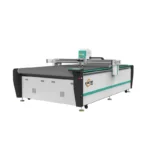
Configurable Tool Head Platform — the RT-D2516/RT-S2516 matches oscillating, pneumatic or drag knife tooling to fabric type and ply count rather than forcing a single cutting method across every textile order.
Technical Specifications
| Parameter | Value |
|---|---|
| Model | RT-D2516 / RT-S2516 |
| Product Type | CNC Oscillating Knife Cutting Machine |
| Working Area | 1600 × 2500 mm |
| Machine Size | 3450 × 2300 × 1250 mm |
| Rated Power | 9 kW |
| Table Configuration | Flat working table or auto feeding table |
| Cutting Thickness | Up to 100 mm (varies with material) |
| Translational Velocity | 800–2000 mm/s |
| Cutting Speed | 200–800 mm/s (according to different cutting materials) |
| Repeated Accuracy | ≤ 0.1 mm |
| Transmission System | Digital servo motor, linear guide, synchronous belt, ball screw (imported) |
| Servo Motor | Delta (Panasonic optional) |
| Guide Rail | Taiwan Hiwin |
| Vacuum Pump | 7.5 kW, aviation aluminum shell with built-in silencer sponge |
| Vacuum Table Surface | Magnesium-aluminum alloy, fluorocarbon PVDF powder spraying, anodic and hard oxidation |
| Conveyor Belt | Germany imported |
| Instruction System | HP-GL compatible format |
| Supported File Formats | PLT, DXF, AI |
| Visual Positioning | Small CCD mark point, panoramic camera, projection positioning (optional) |
| Tool Head Options | Oscillating knife, pneumatic knife, high-power vibrating knife, circular knife, V-cutting knife, drag knife, creasing wheel, dotted line knife, punching, brush |
| Voltage | 380 V ± 10 % (customizable) |
| Control Panel | Touch screen, multiple language supported |
| Language Options | English, Russian, Italian, Chinese (special languages customizable) |
| Safety Devices | Infrared sensors, anti-collision, emergency stop |
| Standards | CE declaration where applicable |
Application Suitability
| Application | Material or Output |
|---|---|
| Garment and footwear production | Multi-layer woven fabric, knitted textile, lining, interlining, shoe upper leather, synthetic PU |
| Automotive interior trimming | PU foam, EVA, XPE, composite sheets, carpet, headliner fabric |
| Soft furnishing and carpet cutting | Non-woven fabric, sponge, carpet, upholstery textile |
| Packaging and carton sample making | Corrugated cardboard, fiberglass board, plastic box material |
| Sealing and gasket fabrication | Rubber, PTFE, ETFE, PP, PE composite gasket stock |
When a Cutting Speed Figure Means Nothing Without the Material Context
The cutting speed range only becomes meaningful once fabric composition, ply count and tool head choice are locked in together.
I once watched a Vietnam garment workshop stall for three days after switching from pure polyester to an elastane-blend knit. The machine was the same, the file was the same, but the oscillation frequency and hold-down pressure that worked on stable woven fabric left ragged edges and stretched panels on the stretch blend. That mismatch is exactly what buyers overlook when they compare CNC oscillating knife cutting machine specifications across suppliers without first declaring the actual textile mix on their cutting table [NEED_CITE: textile elongation behavior under oscillating knife load]. The RT-D2516/RT-S2516 lists a 200–800 mm/s cutting window, but reaching the upper end requires a stable, non-elastic material, a sharp Swiss blade and correct vacuum zoning. Stretch knits, coated technical textiles and multi-layer lay-ups all sit lower in that range, and the correct tool head — high-power vibrating knife for dense foam, circular knife for long single-ply runs, pneumatic knife for thick leather — matters far more than the headline speed number.
Tool Head Selection Drives Edge Quality More Than Blade Speed
The RT-D2516/RT-S2516 offers ten tool head options on a single multifunctional carriage, and each one addresses a different failure mode in fabric cutting. A standard oscillating knife handles most woven textiles and mid-weight knits cleanly, but compressed foam and dense automotive carpet need a high-power vibrating knife to penetrate without crushing the pile. Leather and heavy shoe upners respond better to a pneumatic knife that applies consistent downward force across varying hide thicknesses. Creasing wheels and dotted-line knives let packaging sample departments add fold lines and tear strips in the same pass, eliminating a secondary bench operation.
Vacuum Zoning and the Small-Part Lift Problem
A 1600 × 2500 mm magnesium-aluminum vacuum table provides generous area, but full-table suction becomes a disadvantage when the nest includes narrow strips or small pattern pieces. The RT-D2516/RT-S2516 platform supports zoned vacuum activation so only the occupied sectors draw air, concentrating hold-down force where material actually sits. This matters on slippery synthetic linings and lightweight interlinings that shift the moment the blade exits a cut path. The fluorocarbon PVDF surface coating also prevents adhesive residue from fusible interlinings building up on the table over consecutive shifts [NEED_CITE: vacuum hold-down requirements for small textile parts].
Reading the Specs That Actually Move the Needle
The ≤ 0.1 mm repeated accuracy figure depends directly on the Taiwan Hiwin linear guides and imported ball screws specified in the transmission system — cheaper rail alternatives introduce backlash that accumulates across a long lay, pushing the final plies out of tolerance. The 7.5 kW vacuum pump with built-in silencer sponge keeps noise below workshop limits while maintaining suction across the full table area. Delta servo motors (Panasonic optional) govern both the X-Y gantry and the knife oscillation frequency, meaning the controller can slow oscillation automatically when the path turns a tight corner on a collar curve, preventing the blade from dragging through the fabric edge.
What Happens When the Wrong Configuration Ships
A buyer who specifies working area and price without confirming tool head, vacuum zoning and CCD camera needs often discovers the gap only after installation. A drag knife meant for thin vinyl cannot penetrate 30 mm EVA foam, leaving the automotive interior team hand-trimming every gasket. A full-table vacuum zone lifts small collar pieces mid-cut, forcing operators to tape each panel down manually. If printed contour cutting is required but only basic mark-point CCD was ordered, panoramic recognition must be retrofitted later at extra cost and machine downtime [NEED_CITE: cost of post-installation tooling retrofits on CNC cutting tables]. These are not warranty issues — the machine simply was not configured for the actual production job.
Why Source This Platform From Realtop
Realtop designs and produces both knife and laser cutting systems in-house, so the RT-D2516/RT-S2516 configuration is selected based on material behaviour rather than pushing one technology for every textile order. Every tool head and table option is confirmed against the buyer’s own fabric sample before the order is finalized, with a cutting report documenting edge quality and achievable ply height. Software compatibility is verified against the buyer’s existing PLT, DXF or AI nesting workflow so files transfer without conversion errors. Voltage, plug standard and control language are locked in at order stage to prevent on-site electrical rework. The factory test record ships with the machine, showing the exact configuration that passed inspection.
Documentation & Verification
- Sample cutting report run on buyer’s own fabric, noting ply count, edge finish and tool head used
- Electrical schematic confirming 380 V ± 10 % or customized voltage and phase arrangement
- Tool head and vacuum table configuration list tied to the material specification sheet
- Software licence document with PLT, DXF, AI file format compatibility confirmation
- Factory test record showing repeated accuracy and cutting path deviation before crating
- Operation and maintenance manual translated into the selected control language
Installation, Commissioning & Support
- The 3450 × 2300 × 1250 mm footprint requires a level concrete floor with clearance for material loading on two sides
- A dedicated 380 V circuit with appropriate breaker rating must be ready before the 9 kW machine is energized
- The RT-D2516/RT-S2516 ships in sections; gantry and table are bolted and leveled on site by the installation crew
- First-run commissioning includes vacuum zone calibration, servo tuning and test cuts on the buyer’s production fabric
- Operator training covers tool head changeover, CCD camera calibration and nesting software workflow
- Spare blade stock, conveyor belt segments and guide rail lubricant are included in the initial parts kit
Preparing a Useful Inquiry
Share the exact fabric composition, weight per square meter and maximum ply height you intend to cut so the correct tool head and oscillation frequency can be specified. Confirm your local voltage and frequency, the control language your operators need, and whether your nesting workflow uses PLT, DXF or AI files. If your production includes printed contour work, describe the mark size and print registration method so the right CCD or panoramic camera option is included from the start.
Frequently Asked Questions
Q: How do I choose the right tool head for my fabric type?
A: Share your exact material — fiber content, weight, and whether it is woven, knitted or coated — along with maximum ply height. Woven textiles typically use a standard oscillating knife, while dense foam needs a high-power vibrating knife and leather suits a pneumatic knife. We run a sample cut on your material before the order is finalized to confirm edge quality.
Q: What cutting speed can I expect on my specific textile?
A: The RT-D2516/RT-S2516 lists 200–800 mm/s, but achievable speed depends on fabric stability, ply count and tool head selection. Stable woven fabrics cut faster than elastane blends or coated technical textiles. We provide a sample cutting report showing the realistic speed on your own material before you commit to the purchase.
Q: Does the CCD system track printed marks reliably at production speed?
A: The small CCD camera handles mark-point positioning, while the optional panoramic camera recognizes full printed contours. Reliability at line speed depends on mark contrast, lighting and fabric surface texture. We test the camera on your actual printed textile during the sample phase to confirm tracking accuracy before shipment.
Q: Is the vacuum table zoning adequate for small pattern pieces?
A: The magnesium-aluminum table on the RT-D2516/RT-S2516 supports zoned vacuum activation, concentrating suction only where material is present. This prevents small collar or cuff pieces from lifting during the cut. During commissioning we calibrate the zones against your nesting layout to verify hold-down performance on your smallest parts.
Q: Will the software accept my existing nesting files?
A: The control system supports PLT, DXF and AI formats and uses an HP-GL compatible instruction set. Before the order is confirmed we verify compatibility with your specific nesting software version and run a test file through the auto-typesetting function to ensure tool paths, layer assignments and mark points transfer correctly.


商品评价
Clear filtersThere are no reviews yet.