







Fast Shipping
Carrier information

20k products
Payment methods

24/7 Support
Unlimited help desk

2-day Delivery
Track or off orders
Material-Specific Tooling Match — we run your actual greyboard or flute sample on the configured head before quoting, so the edge quality you see in testing is what arrives on your floor.
Technical Specifications
| Parameter | Value |
|---|---|
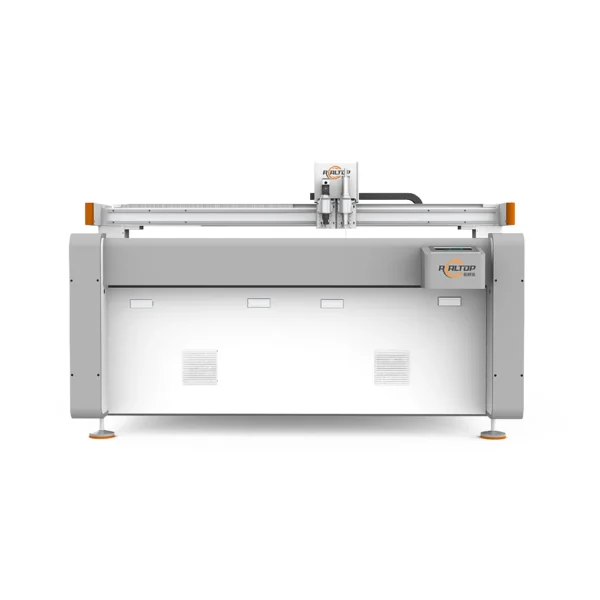
| Product Type | CNC Oscillating Knife Cutting Machine |
| Working Area | 1600×2500 mm |
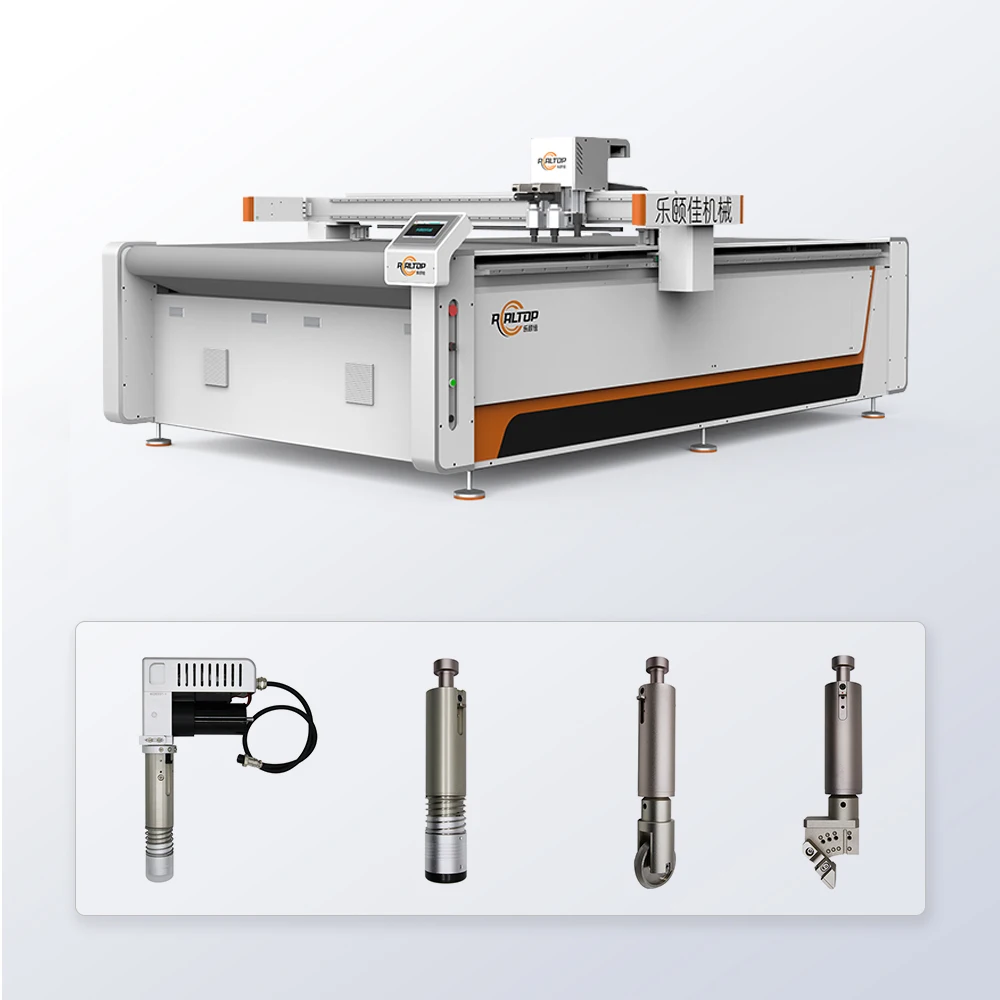
| Tool Head Options | Oscillating knife, Driven rotary knife, Creasing wheel, Kiss cutting tool, Pneumatic knife, Milling tool, V groove knife |
| Cutting Speed Range | 0–1500 mm/s |
| Maximum Cutting Thickness | ≤40 mm (basis not stated in source — confirm material type and density) |
| Cutting Accuracy | ±0.1 mm |
| Vacuum Pump Output | 9 kW |
| Vacuum Table Construction | Aluminum bellows vacuum table |
| Control System | PLC control panel |
| Servo Motor Options | Panasonic, Delta, or Dorna |
| Acceptable File Formats | PLT, DXF, AI, PDF |
| Voltage Options | 110V, 220V, 380V |
| Safety Devices | Infrared sensor and emergency stop |
| Machine Dimensions | 3300×2100×1350 mm |
| Control Language Options | English, Russian, Italian, Chinese, or custom |
| Compliance | CE |
Application Suitability
| Application | Material or Output |
|---|---|
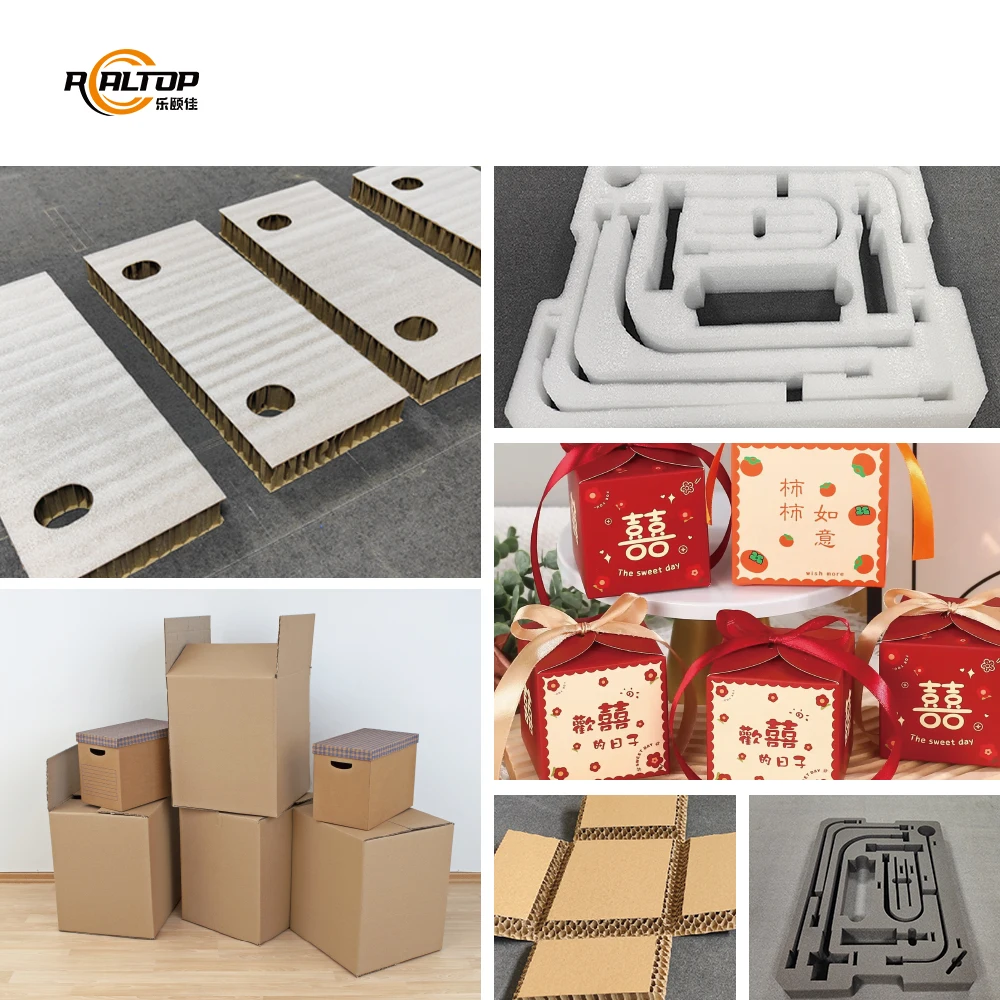
| Packaging sample making and short-run prototyping | E-flute, B-flute, and BC-flute corrugated board |
| Die-free carton and box production | Greyboard, cardstock, art paper, specialty paper |
| Small-batch customized packaging runs | Laminated board and coated stock without die-cut molds |
| Foam insert and cushion component cutting | EVA foam, EPE foam, PU foam |
| Interior packaging and gasket fabrication | Rubber mats, PVC sheets, PET film |
| Protective lining and textile packaging | Velvet, fleece, non-woven fabric |
| Leather goods and synthetic material cutting | Natural leather and synthetic leather hides |
What "Cutting Thickness ≤40mm" Actually Means for Your Board Stock
A 40 mm capacity figure is meaningless without knowing your material density, flute profile, and surface lamination.
I spent years running oscillating knife machines through pre-shipment tests, and the gap between spec-sheet thickness and real cutting depth shows up most often in packaging. A machine that slices cleanly through single-wall E-flute at full speed can stall on double-wall BC-flute or leave ragged delamination on high-density greyboard with a PVC laminate. The density of the board, the adhesive bonding between layers, and the surface coating all change how the blade engages. Before any CNC oscillating knife cutting machine specifications matter, you need a sample cut on your exact stock [NEED_CITE: material density and lamination effects on oscillating knife cutting performance].
Tool Head Selection Determines Edge Quality on Coated Stock
The seven available tool heads on this platform are not interchangeable across packaging materials. An oscillating knife handles single-layer corrugated cleanly, but a creasing wheel paired with a kiss cutting tool is what produces a foldable score line on greyboard without penetrating the back face. When a buyer specifies only the working area and ignores the tool configuration, the machine arrives configured for one job and struggles with the next. The driven rotary knife suits continuous curves on thicker foam inserts, while the V groove knife produces mitre-fold channels on rigid board for luxury packaging structures.
Vacuum Zoning and Small-Part Stability During High-Speed Runs
A 9 kW vacuum pump delivers substantial hold-down force across the aluminum bellows table, but packaging sample runs frequently involve small offcuts and nested shapes that shift if the vacuum zones are not matched to the sheet layout. When cutting a mix of large carton blanks and small internal dividers on the same bed, the zoning must isolate active areas so smaller parts do not lift at higher travel speeds. This is especially relevant on lighter cardstock or thin PET sheets where even minor lift produces dimensional drift beyond the ±0.1 mm accuracy tolerance [NEED_CITE: vacuum table zoning requirements for nested packaging cutting].
Reading the Specs That Matter for Packaging Workflows
The 1600×2500 mm working area accommodates full sheets of standard packaging board stock, eliminating the need to pre-cut sheets before loading. The PLC control panel paired with dedicated box structure software allows operators to import PLT, DXF, AI, or PDF files directly from common packaging design platforms, bypassing manual re-drawing. Servo motor selection across Panasonic, Delta, and Dorna affects long-term serviceability depending on which brand your local technicians already support. The ±0.1 mm cutting accuracy ensures that crease lines and cut paths register correctly on multi-panel folding carton structures, where even slight misalignment causes closing tabs to miss their slots during assembly.
The Cost of Skipping Material-Specific Testing
When a packaging producer accepts a machine configured for generic corrugated but then runs laminated greyboard for premium box samples, the blade drags through the coating and leaves compressed fibre at every corner. The creasing wheel may score too shallow for the board caliper, producing cracked folds instead of clean bends. These issues surface after the machine is installed, when exchanging tool heads or recalibrating vacuum zones means production downtime. Buyers who skip the sample-cutting step on their own material absorb these costs internally [NEED_CITE: cost of post-installation reconfiguration for cutting equipment].
Why Buyers Source This Platform for Packaging Cutting
In-house design and production covering knife tooling means the tool head is matched to your specific board type rather than treated as an afterthought. CCD camera positioning is available for printed contour work where die-free samples must align cuts to pre-printed graphics. Software compatibility is confirmed against your existing PLT or DXF workflows before the order is finalised. Voltage, control language, and documentation are customised to your market, so a 220V installation with Russian-language PLC menus ships as a complete package. Every configuration ships with a sample cutting report produced on your actual material.
Documentation & Verification
- Machine specification sheet listing your confirmed tool head and table configuration
- Electrical schematic with voltage and frequency matched to your facility supply
- Sample cutting report on your packaging board stock with edge and crease photographs
- Software licence and file format compatibility note covering PLT, DXF, AI, and PDF
- Factory test record documenting cutting accuracy across your specified material range
- Spare parts list identifying consumable blades, creasing wheels, and vacuum seals
Installation, Commissioning & Support
- 3300×2100 mm footprint requires clear floor space with level concrete substrate for vacuum table stability
- Dedicated electrical circuit matching confirmed voltage option (110V, 220V, or 380V) with appropriate breaker rating
- Machine ships partially assembled; table frame and gantry require on-site mechanical fastening
- First-run parameter tuning includes vacuum zone mapping and oscillating knife stroke calibration for your board density
- Operator training covers PLC panel navigation, file import workflow, and tool head changeover procedure
- Consumable blade and creasing wheel replacement intervals documented based on your material abrasiveness
Before You Request a Quote
To specify this machine correctly for your packaging operation, share the exact board types you run including flute profile, caliper, and any surface lamination. Confirm your daily sample volume and maximum sheet dimensions so we can assess whether the 1600×2500 mm bed covers your layout without excessive repositioning. State your local voltage and frequency along with your preferred control language so the electrical package and PLC interface are configured before production begins.
Frequently Asked Questions
Q: How do I confirm the machine will cut through my specific packaging board thickness?
A: Maximum cutting thickness is listed at 40 mm, but actual capacity depends on your material density, flute structure, and any surface coating. We require a sample of your actual board stock to run a test cut before quotation. The resulting sample cutting report documents edge quality, crease depth, and whether the configured tool head handles your material cleanly at production speed.
Q: What voltage options are available and how is this confirmed before shipment?
A: The platform supports 110V, 220V, and 380V configurations. Your facility voltage and frequency must be confirmed during the quotation stage so the correct transformer, motor rating, and electrical components are installed. An electrical schematic documenting the confirmed configuration ships with the machine for your local electrician.
Q: Which tool head should I use for creasing greyboard versus cutting corrugated?
A: Corrugated flute cutting typically uses the oscillating knife, while greyboard creasing requires a creasing wheel paired with a kiss cutting tool to score without full penetration. Your tool head configuration is specified per material during the quotation process and documented in the configuration list that ships with the machine.
Q: Will my existing packaging design files work with this machine’s software?
A: The control system accepts PLT, DXF, AI, and PDF profile formats. Before order confirmation, we verify compatibility between your specific design software output and the machine’s nesting and cutting workflow. A file format compatibility note is included in the documentation package.
Q: What does installation require in terms of floor space and utilities?
A: The machine occupies 3300×2100×1350 mm and requires a level concrete floor. A dedicated power circuit matching your confirmed voltage is needed, along with adequate ventilation for the 9 kW vacuum pump. On-site assembly of the table frame and gantry is required, followed by vacuum zone calibration and test cuts on your material.


商品评价
Clear filtersThere are no reviews yet.