

Fast Shipping
Carrier information

20k products
Payment methods

24/7 Support
Unlimited help desk

2-day Delivery
Track or off orders
Tool Head Matched to Material Behavior — Swiss oscillating knife configured per fabric density and layer count rather than defaulting to a single cutting setup.
Technical Specifications
| Parameter | Value |
|---|---|
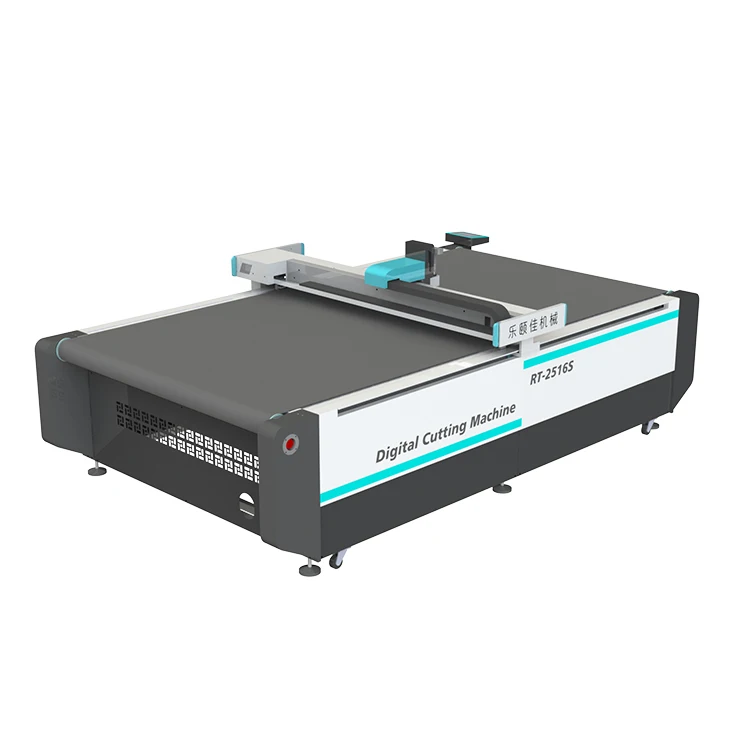
| Model | RT-D2516/RT-S2516 |
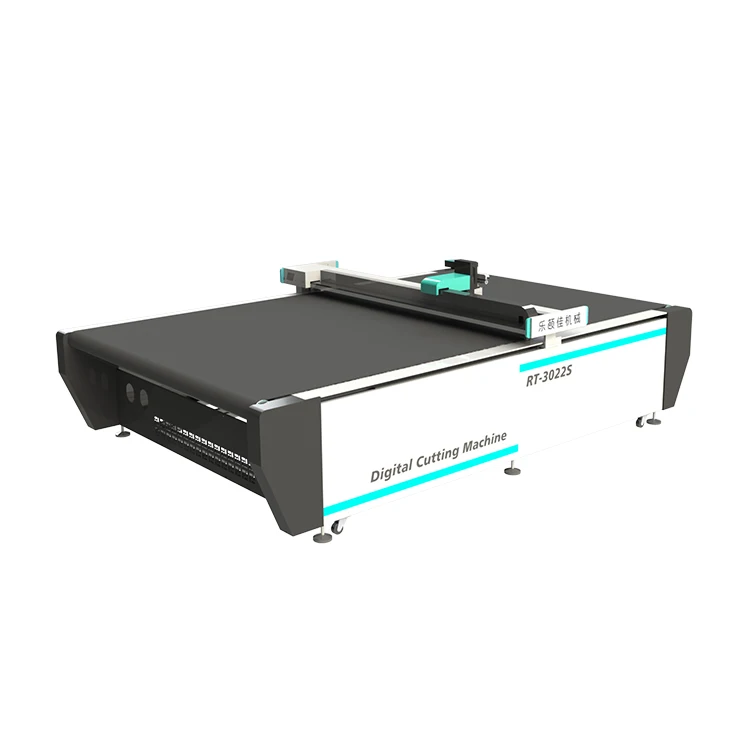
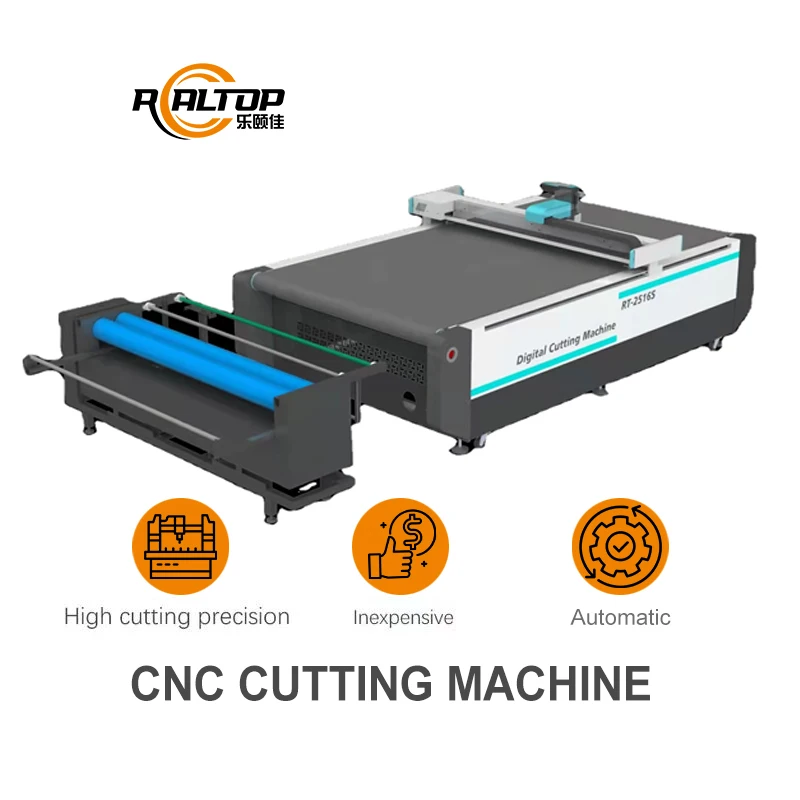
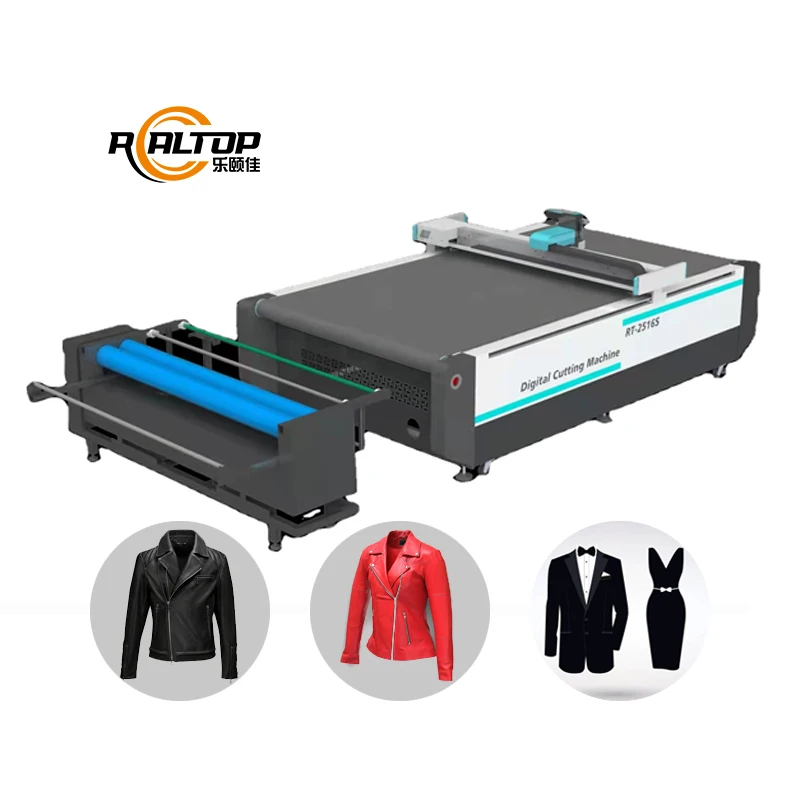
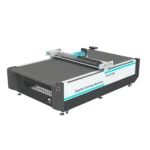
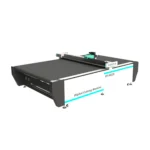
| Product Type | CNC Oscillating Knife Cutting Machine with Auto Feeder |
| Working Area | 1600 × 2500 mm |
| Machine Dimensions | 3450 × 2300 × 1250 mm |
| Rated Power | 9 kW |
| Vacuum Pump | 7.5 kW |
| Table Type | Flat working table with conveyor belt and auto feeding |
| Table Surface | High-density felt |
| Conveyor Belt | Germany imported |
| Multifunctional Tool Head | Swiss imported knife with vibration full cutting, half cutting and cursor location |
| Cutting Thickness | ≤ 50 mm (basis not stated in source — confirm material type and density) |
| Compatible Materials | Leather, garment flexible materials, sponge composite leather, PVC, soft glass, silicon, rubber |
| Translational Velocity | 800 – 1200 mm/s |
| Repeated Accuracy | ≤ 0.1 mm |
| Transmission System | Imported digital servo motor, linear guide, synchronous belt, ball screw |
| Linear Rail | Taiwan Hiwin |
| Servo Motor | Delta |
| Instruction Format | HP-GL compatible |
| Voltage | 380 V ± 10 % |
| Frame Construction | Overall welding with imported milling machine processing |
| Electrical Cables | High-flexibility, wear, moisture, cold and high temperature resistant |
| Safety Device | Infrared sensors |
| Modular Tool Holder | Compatible with round knife, marking pen, auto feeder (source value — verify against manufacturer catalog) |
| Certification | CE declaration where applicable |
Application Suitability
| Application | Material or Output |
|---|---|
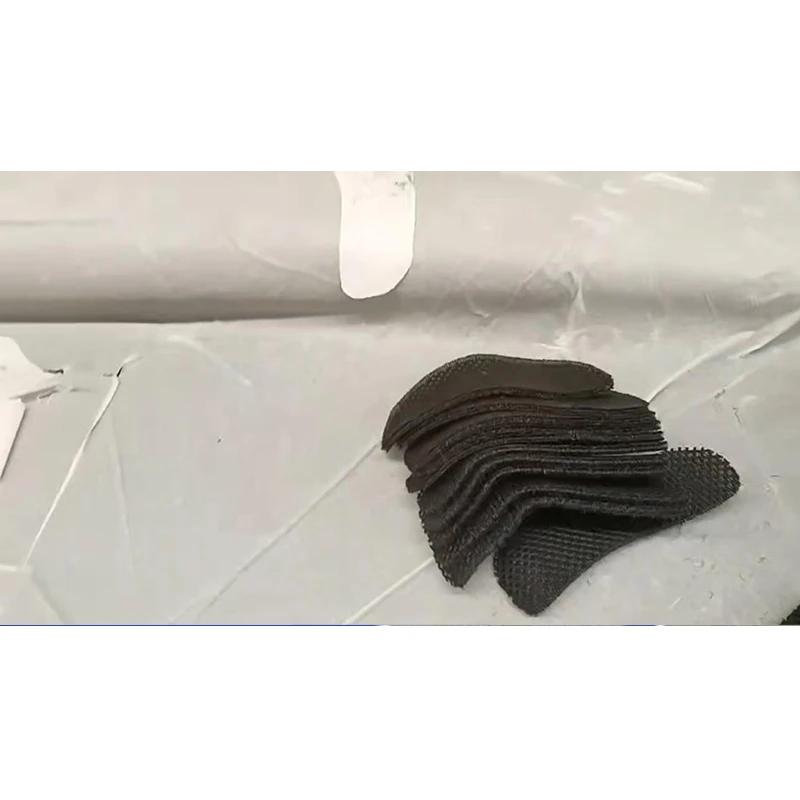
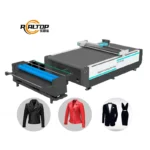
| Garment and footwear cutting | Single and multi-layer woven, knit and technical fabrics with nesting layout |
| Leather goods production | Natural and synthetic leather hides for bags, belts and upholstery panels |
| Automotive interior trimming | Sponge composite leather, PVC and foam for seat covers and door panels |
| Soft signage and gaskets | PVC, soft glass, silicon and rubber sheet for contour-cut shapes |
| Composite fabric processing | Multi-layer laminates and coated textiles requiring full or half-depth cuts |
Why Cutting Thickness Claims Fail on the Factory Floor
Stated cutting depth means nothing without material density and layer count attached to it.
When a buyer sees a flatbed listed at a certain maximum depth, the assumption is that any material up to that thickness will cut cleanly at production speed. In reality, oscillating knife behavior changes dramatically between a dense foam and a loose-weave textile of the same thickness. Ragged edges, crushed layers and dimensional drift all trace back to a specification that never named the test material. That gap between catalog number and shop-floor result is where production stops happen. CNC oscillating knife cutting machine specifications only become meaningful when tied to the exact fabric weight, layer stack height and cutting tolerance the buyer must hold [NEED_CITE: material density effect on oscillating knife edge quality].
Blade Selection Dictates Edge Quality Before Speed Matters
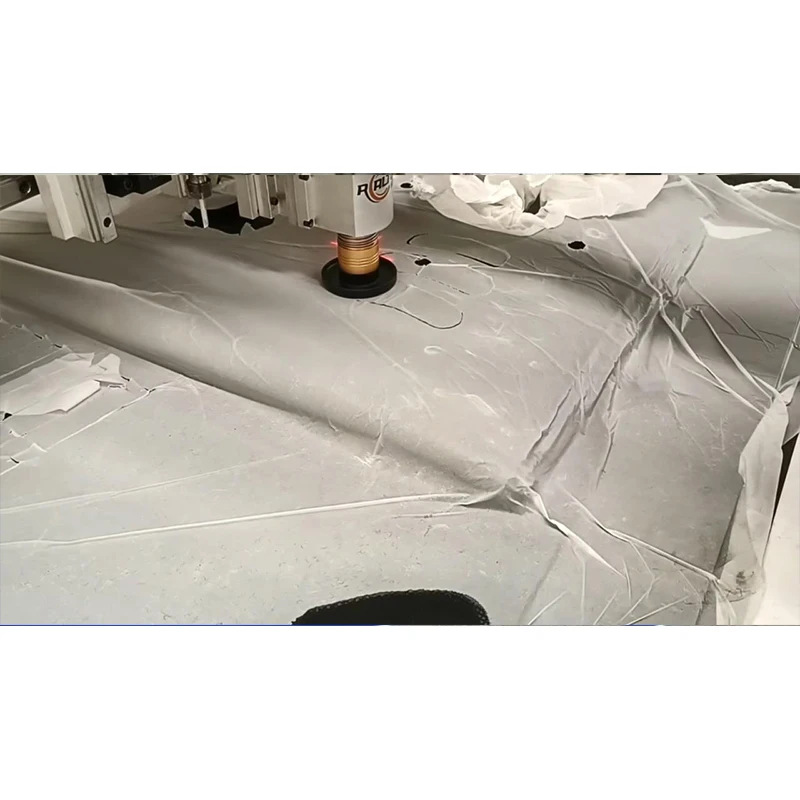
The Swiss imported oscillating knife on this platform supports full cutting, half cutting and cursor location within one tool head. Full cutting handles single and multi-layer fabric stacks where the blade must pass completely through. Half cutting scores kiss-cut patterns on laminated composites without penetrating the backing. Cursor location aligns the cut path to pre-printed registration marks, a function that matters for patterned textiles and contoured signage. Selecting the correct mode before setting translational velocity prevents the most common failure — a blade that tears rather than shears because it was left in full-cut mode on a thin synthetic.
Vacuum Hold-Down Across the Entire Bed
A 7.5 kW vacuum pump paired with a high-density felt surface and Germany imported conveyor belt provides the suction necessary to keep flexible materials flat during cutting. Fabric that lifts or shifts mid-path produces oversized or undersized pieces that fail downstream inspection. The felt surface distributes vacuum evenly, reducing the dead zones that plague hard-top tables when cutting small parts. For lightweight single-ply textiles, the auto feeder advances material while vacuum maintains registration; for heavier sponge composites, the same belt and pump combination resists the lateral force of the oscillating blade [NEED_CITE: vacuum zoning requirements for small-part CNC knife cutting].
Reading the Drivetrain for Long-Term Accuracy
Repeated accuracy of ≤ 0.1 mm depends on the interaction between Taiwan Hiwin linear rails, Delta servo motors and the synchronous belt and ball screw transmission. Linear rails govern straightness over the 2500 mm travel length; any deviation compounds across a full nesting layout. Digital servos close the positioning loop, correcting micro-drift before it appears on the cut piece. The overall-welded frame, finished on an imported milling machine, provides the geometric baseline that bolted assemblies cannot maintain under continuous vibration. Together, these components determine whether the hundredth piece in a shift matches the first.
The Hidden Cost of Wrong Configuration Choices
Buyers who select a machine based on working area alone often discover that the default tool head cannot handle their specific material. A round knife slices single-ply fabric cleanly but shreds multi-layer stacks; an oscillating knife handles layers but may leave burrs on thin PVC if frequency is set too low. Similarly, a vacuum pump sized for large panels may leave small gasket pieces lifting off the table, causing the blade to drag and the felt to score. These mismatches surface after installation, when return shipping is no longer practical and on-site rework becomes the only option [NEED_CITE: tool head misalignment with material type in CNC cutting].
Why Procurement Through This Channel Works
An in-house design team covers both knife and laser cutting, allowing the cutting method to be matched to the material rather than forcing one technology. Tool head and table configuration are specified per fabric type, thickness and production volume before the order is confirmed. Software compatibility is verified during the sample stage, ensuring the buyer’s existing HP-GL nesting files import without manual re-drawing. Voltage, plug type and control language are documented and locked before production starts. Every RT-D2516/RT-S2516 leaves the factory with a test record run on the buyer’s own material, so cutting performance is proven before crating.
Documentation & Verification
- Machine specification sheet listing confirmed tool head and table configuration for your material
- Electrical schematic with 380 V ± 10 % wiring diagram and voltage confirmation for your market
- Sample cutting report on your fabric showing edge quality at specified thickness and speed
- HP-GL file format compatibility note with nesting workflow confirmation
- Factory test record documenting positional accuracy and vacuum hold-down before dispatch
- CE declaration documentation where applicable to destination market
Installation, Commissioning & Support
- Confirm workshop floor can support 3450 × 2300 mm footprint and 9 kW plus 7.5 kW vacuum load on dedicated circuits
- Verify 380 V ± 10 % supply with correct phase and frequency before machine arrival
- Machine ships with conveyor table and frame as a single assembly; overhead clearance of 1250 mm minimum required
- First-run calibration covers Delta servo tuning, vacuum zoning check and blade frequency setup for your material
- Operator training includes HP-GL file import, nesting layout and tool head changeover for round knife and marking pen
- High-flexibility cable set and felt table surface listed as wearing parts with reorder lead times noted
What We Need to Quote Accurately
Share the fabric type, weight per square meter and layer count you plan to cut, along with the maximum sheet dimensions and daily piece volume. Confirm the local voltage and frequency at your facility, the preferred control language and whether your current nesting software exports HP-GL or another format. If your material is elastic or coated, send a sample roll so we can run a cutting trial and return the test pieces with a configuration report before any commitment.
Frequently Asked Questions
Q: How is the stated cutting thickness actually verified before I commit?
A: We run your material — at the exact density, layer count and feed rate you will use in production — on the RT-D2516/RT-S2516 before shipment. The resulting sample cutting report documents edge quality, dimensional accuracy and any blade or frequency adjustments made. You receive the physical cut pieces and the written report together, so the thickness claim is backed by your own fabric, not a generic test coupon.
Q: Which tool head mode should I use for my specific fabric?
A: The Swiss oscillating knife supports full cut, half cut and cursor location. Multi-layer woven or knit stacks typically use full cut at high frequency; thin coated synthetics may require lower frequency to avoid burring. Half cut suits laminated composites where the backing must stay intact. We confirm the correct mode during the sample trial and record the settings in your tool head configuration list.
Q: Is the vacuum table effective for small cut parts?
A: The high-density felt surface distributes the 7.5 kW pump suction across the 1600 × 2500 mm bed, reducing dead zones that cause small pieces to lift. During the factory test we cut your smallest intended part and measure any movement. If zoning adjustments are needed, they are made before dispatch and noted in the test record.
Q: Will my existing nesting software files load without re-drawing?
A: The control system accepts HP-GL compatible format. Before order confirmation we exchange sample files from your nesting software and verify import, tool path recognition and cut sequence. Any required conversion steps are documented in the software compatibility note so your operators face no surprises at first power-on.
Q: Can the machine voltage and control language be set for my market?
A: The standard supply is 380 V ± 10 %, but we confirm your local voltage and frequency before production begins. Control interface language is specified at order and validated during the factory test. The electrical schematic shipped with the machine reflects the confirmed configuration, including plug type and phase arrangement.


商品评价
Clear filtersThere are no reviews yet.