



Fast Shipping
Carrier information

20k products
Payment methods

24/7 Support
Unlimited help desk

2-day Delivery
Track or off orders
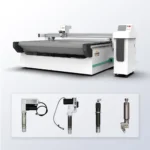
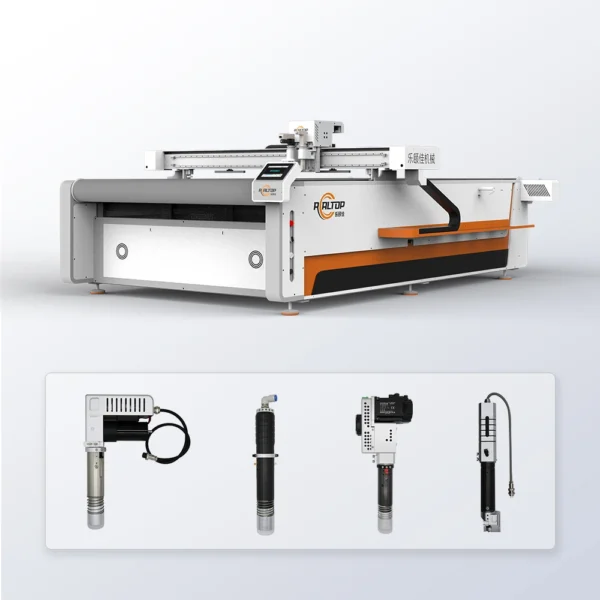
Material-Matched Tooling — Every RT-D2516/RT-S2516 leaves the factory with its oscillating knife, vacuum zoning and servo parameters tuned to your specific fabric weight and elasticity, not just its working envelope.
Technical Specifications
| Parameter | Value |
|---|---|
| Model | RT-D2516 / RT-S2516 |
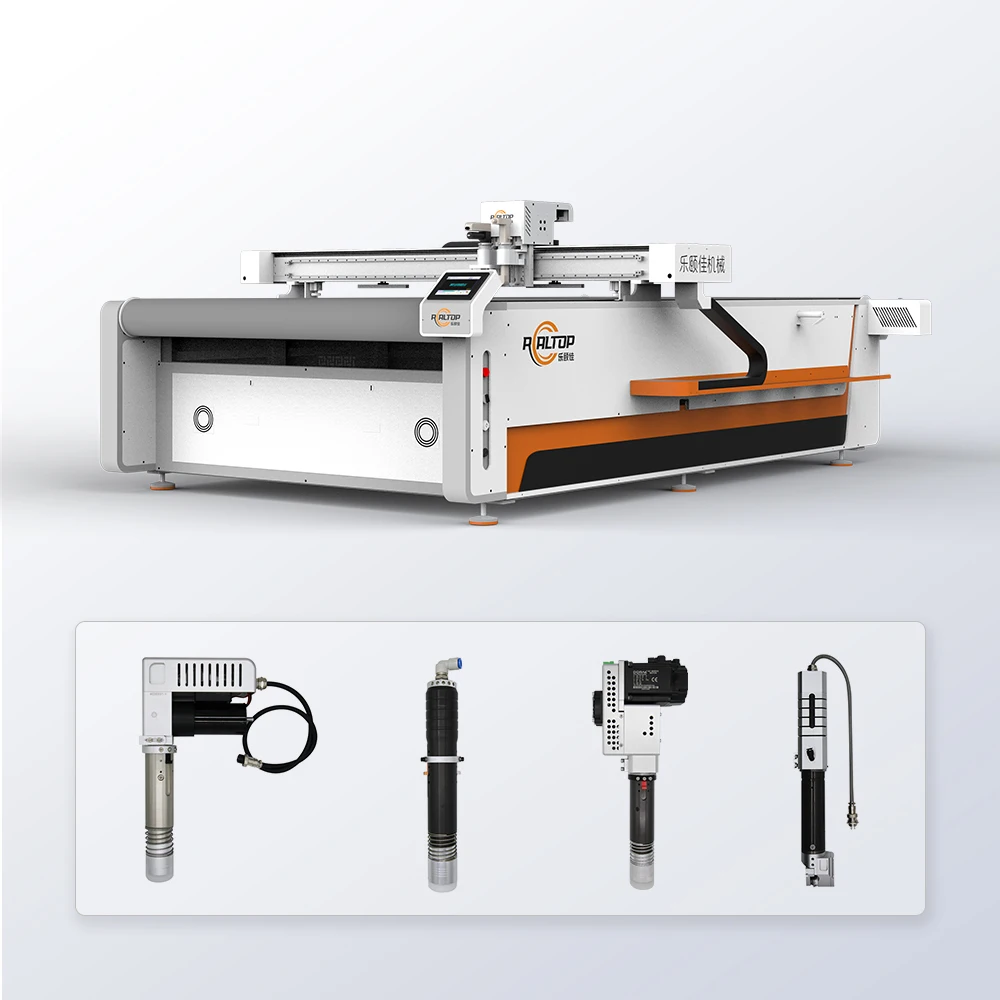
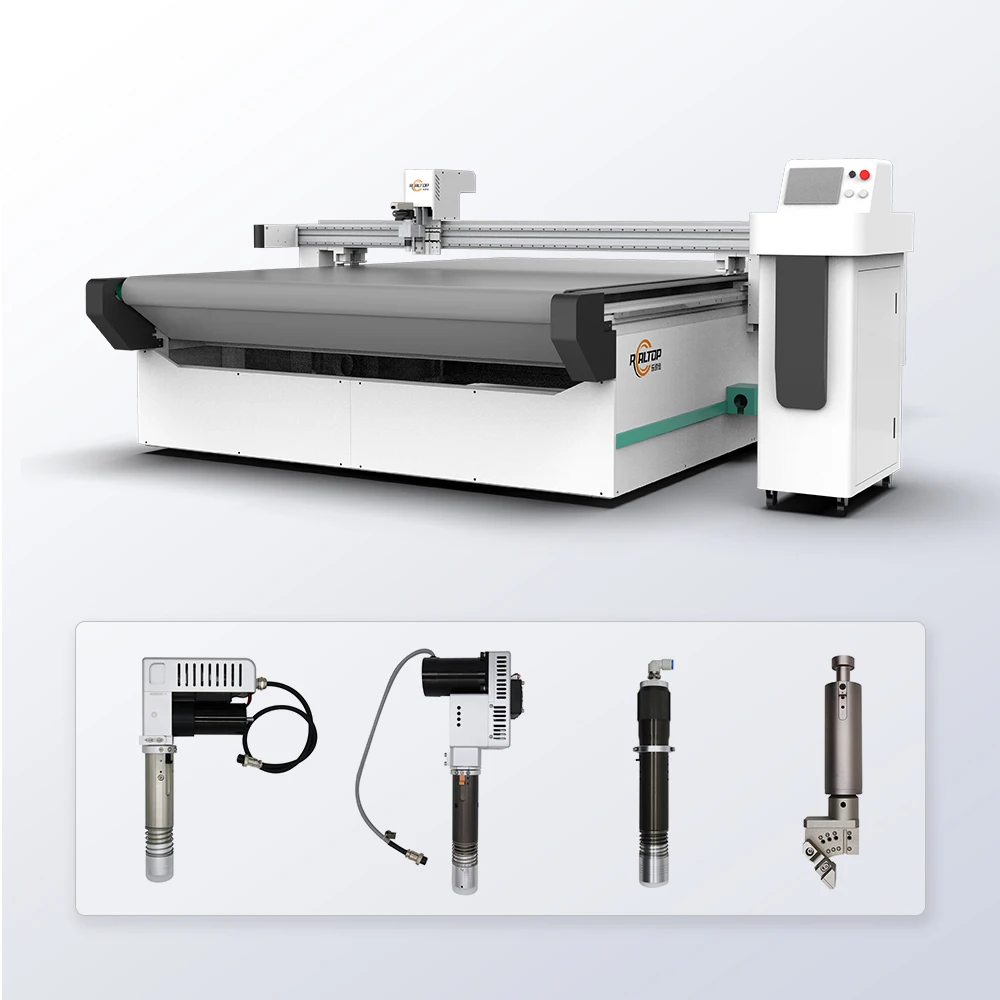
| Product Type | CNC Oscillating Knife Cutting Machine |
| Working Area | 1600 × 2500 mm |
| Overall Dimensions (L×W×H) | 3450 × 2300 × 1250 mm |
| Rated Power | 9 kW |
| Voltage | 380V ±10% |
| Table Options | Flat working table or auto-feeding conveyor table |
| Multifunctional Head | Swiss-imported knife with vibration full-cut, half-cut and cursor location |
| Tool Head Options | Oscillating knife, pneumatic knife, high-power vibrating knife, circular knife, V-cutting knife, drag knife, creasing wheel, dotted-line knife, punching, brush |
| Translational Velocity | 800–2000 mm/s |
| Cutting Speed | 200–800 mm/s (varies by material type and thickness) |
| Cutting Thickness | Basis not stated in source — confirm material type and layer count |
| Repeated Accuracy | ≤ 0.1 mm |
| Transmission System | Digital servo motor, linear guide, synchronous belt, ball screw |
| Servo Motor | Delta servo with IP67 protection and automatic gain adjustment |
| Linear Guide | Taiwan Hiwin rail |
| Vacuum Pump | 7.5 kW |
| Vacuum Table Surface | Magnesium-aluminum alloy with fluorocarbon PVDF powder spraying, anodic and hard oxidation |
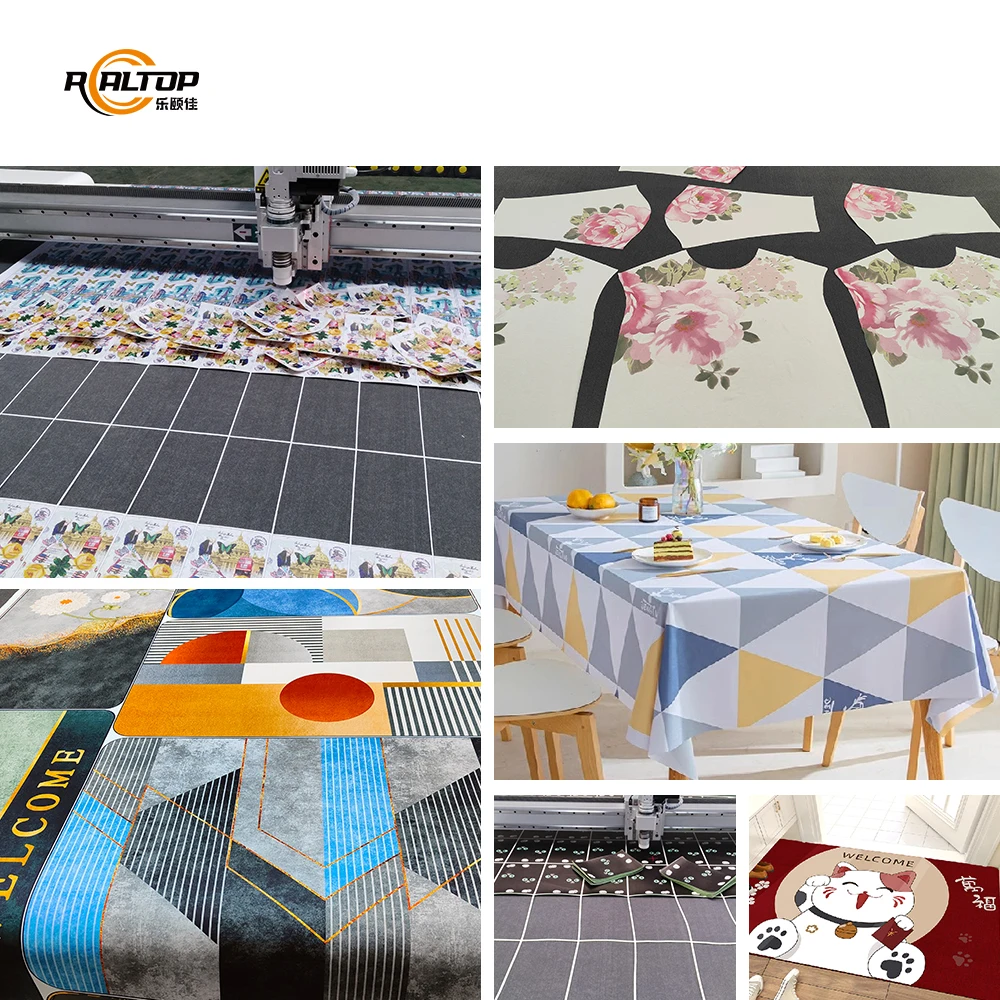
| Visual Positioning | Small CCD mark-point positioning, panoramic camera recognition, projection positioning |
| Safety Device | Infrared sensors |
| Instruction System | HP-GL compatible format |
| Software Compatibility | PLT, DXF, AI and other vector formats |
| Control Language | English, Russian, Italian, Chinese and others; special languages configurable |
Application Suitability
| Application | Material or Output |
|---|---|
| Garment and sportswear production | Single-layer and multi-layer woven, knit and stretch fabrics containing elastane |
| Footwear and luggage manufacturing | Leather, synthetic leather, PU, EVA, non-woven fabric and shoe lining materials |
| Automotive interior trimming | Leather, PVC, PU, XPE, composite panels and headliner fabrics |
| Soft home furnishings and carpets | Woven textiles, non-woven felt, carpet, sponge and foam padding |
| Packaging sample making | Corrugated cardboard, cardboard, plastic box stock and sticker film |
| Gasket and sealing fabrication | Rubber, PTFE, ETFE, fiberglass and composite gasket sheets |
| Sports and outdoor equipment | Technical textiles, laminated composites, foam inserts and protective padding |
Why a 1600×2500 Working Area Does Not Guarantee Clean Edges on Stretch Fabric
Specifying a CNC oscillating knife cutting machine by table size alone is the most common mistake I see in fabric workshops.
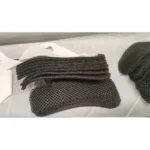
Buyers compare working areas across quotations, sign the contract, and then discover that cutting speed on their elastane-blend jersey has to be dialed down to prevent edge curling and skipped stitches downstream. The real variable is not how large the bed is, but whether the tool head frequency, vacuum zoning and feed mechanism were chosen for that specific textile [NEED_CITE: material-specific knife cutting configuration practices]. On a machine of this class, I have watched operators lose nearly half their expected throughput simply because the oscillating frequency was set for rigid board rather than the stretchy knit the line actually runs all week.
Matching the Knife Head to the Fabric Behaviour
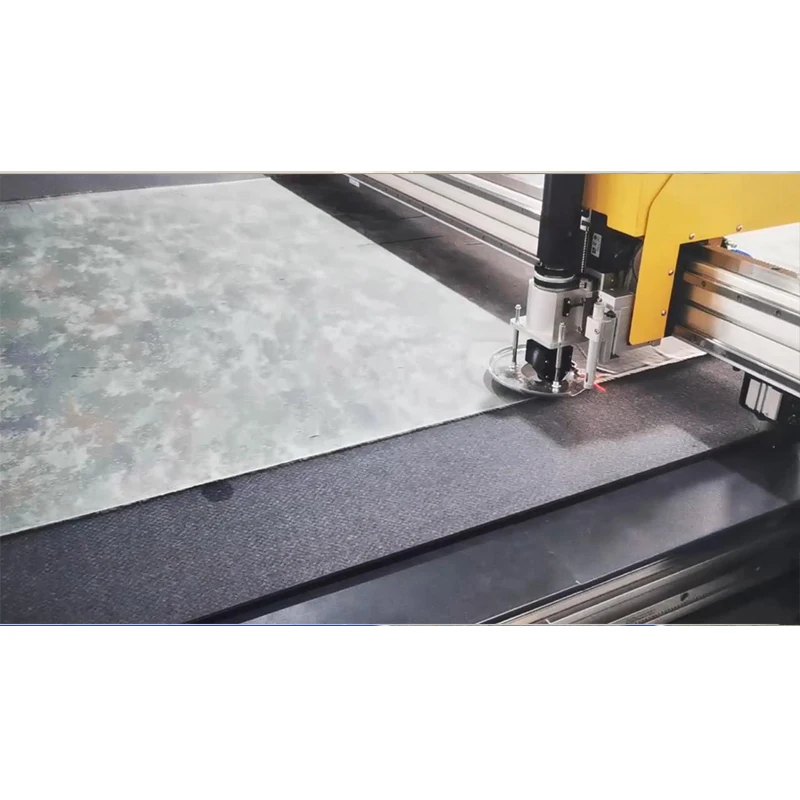
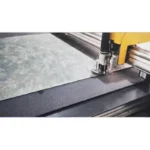
The RT-D2516/RT-S2516 supports a wide tool head range — oscillating, pneumatic, high-power vibrating, circular, drag, creasing and punching — because no single blade geometry cuts every textile cleanly. A high-frequency vibrating knife handles woven cotton canvas without fraying, while the same head on four-way stretch spandex will pull fibres and leave a ragged edge. Selecting the correct CNC oscillating knife cutting machine specifications means locking in the head type after a sample run on your actual roll stock, not guessing from a generic catalogue.
Vacuum Zoning That Holds Small Pattern Pieces
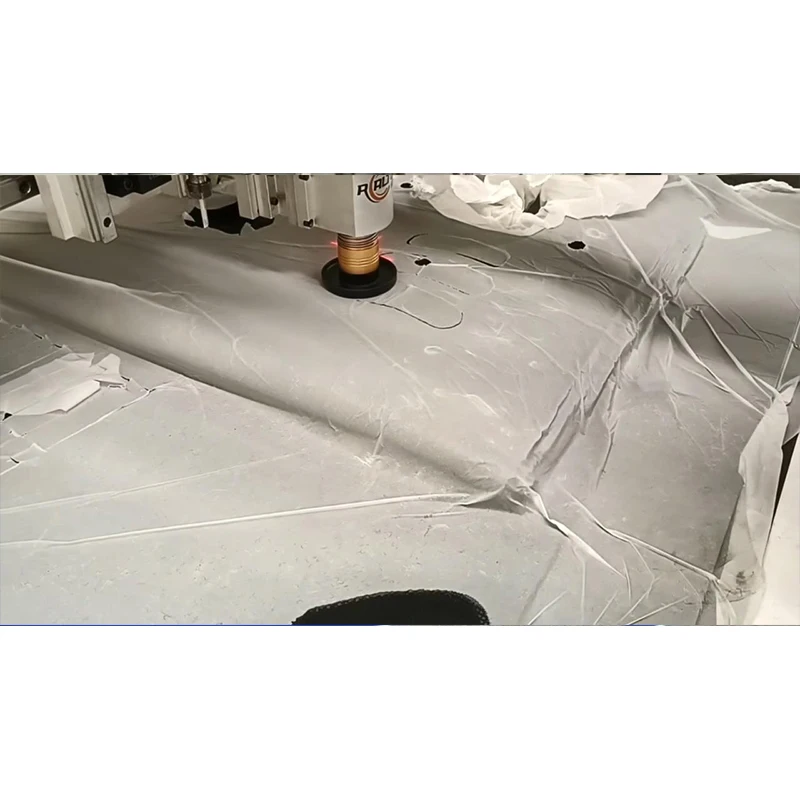
Stretch fabric lifts off the table the moment the blade changes direction if suction is uneven. The magnesium-aluminum alloy table on this unit is finished with fluorocarbon PVDF powder spraying and hard oxidation, giving a flat surface that maintains consistent vacuum pull across the full 1600 × 2500 mm area. A 7.5 kW pump feeds the zoning system, keeping nested pattern pieces — even narrow sleeve panels and collar strips — locked in place during high-speed contour cuts [NEED_CITE: vacuum adsorption requirements for multi-layer textile cutting].
What the Servo and Drive Numbers Mean on the Shop Floor
The Delta servo with IP67 protection and Taiwan Hiwin rails are not just brand names; they determine how well the machine maintains ≤ 0.1 mm repeated accuracy when cutting tight radii on garment curves. Translational velocity reaches 800–2000 mm/s, but actual cutting speed sits between 200 and 800 mm/s depending on material density and ply count. A 9 kW rated power package drives both the knife head and the conveyor belt on auto-feeding configurations, ensuring the fabric advances without stretching between cuts.
The Cost of Skipping a Material-Specific Sample Cut
When a buyer accepts a quotation without sending their own fabric for trial, the machine arrives configured for a generic mid-weight woven. Switching to a 280 gsm elastane blend then requires re-tuning oscillation frequency, vacuum pressure and feed rate — work that could have been done at the factory. I have seen this oversight add days of commissioning time and produce scrap rates that take weeks to dial out [NEED_CITE: sample cutting verification before CNC knife machine dispatch].
Why Buyers Source This Machine From the Jinan Factory
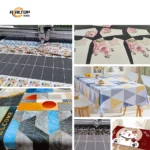
In-house design covers both knife and laser cutting platforms, so the engineering team can recommend the correct method rather than forcing one technology onto every material. Tool head and table configurations are specified per fabric type and daily volume before the order is confirmed. CCD camera positioning — mark-point and panoramic — is integrated for printed contour work on graphic textiles. Software compatibility with PLT, DXF and AI files is verified against the buyer’s nesting workflow before production starts. Voltage, plug type and control language are locked in during the specification stage so the machine arrives ready for the local electrical standard [NEED_CITE: voltage and control language customization for export CNC equipment].
Documentation & Verification
- Machine specification sheet listing selected tool head and vacuum zone layout for your material
- Electrical schematic confirming 380V ±10% wiring and Delta servo configuration
- Sample cutting report on your fabric roll documenting edge quality and achievable speed
- Software licence and file format note confirming PLT, DXF, AI import compatibility
- Factory test record with repeated accuracy measurement before crate closure
- CE declaration where applicable per destination market requirements
Installation, Commissioning & Support
- 3450 × 2300 mm footprint requires a level concrete floor with clearance for the auto-feeding conveyor
- Dedicated 380V ±10% circuit rated for 9 kW plus the 7.5 kW vacuum pump on a separate breaker
- Machine ships with table and gantry separated; reassembly and rail alignment completed on site
- First-run parameter tuning covers knife frequency, vacuum zoning and Delta servo gain for your material
- Operator training includes tool head changeover, CCD mark-point calibration and nesting software workflow
- Spare parts list covers Swiss knife blades, Hiwin rail blocks and conveyor belt segments
Before You Request a Quote
Tell us the exact fabric composition, weight per square metre and whether you run single-ply or multi-ply lays. Share your daily cut volume and the file formats your pattern department currently uses. Confirm the voltage and frequency at your facility, plus the control language your operators prefer, so the quotation matches the machine you actually receive.
Frequently Asked Questions
Q: How do I choose the right tool head for my fabric thickness and edge quality requirement?
A: Send a sample roll to the factory. The engineering team tests oscillating, vibrating, pneumatic and circular knife heads on your actual material, then documents which head delivers the cleanest edge at your target ply count. The result is recorded in a sample cutting report that accompanies the quotation, so you see the configuration before committing.
Q: What cutting speed can I expect, and how does it depend on the material?
A: The machine runs between 200 and 800 mm/s during actual cutting, but the achievable speed depends on fabric weight, stretch content and layer count. A dense woven canvas allows higher speeds than a four-way stretch knit. The sample cutting report confirms the speed range validated on your specific textile.
Q: What voltage and control language options are available for my country?
A: The standard configuration is 380V ±10%, with plug type and control language confirmed before production. English, Russian, Italian and Chinese are available from stock, and special languages can be customised. Voltage and frequency are matched to your local grid standard and recorded on the electrical schematic.
Q: Does the software support my existing PLT, DXF or AI file formats and nesting workflow?
A: The control system imports PLT, DXF, AI and HP-GL compatible formats. Before order confirmation, the software team tests your actual pattern files and nesting layout to verify compatibility. Any format conversion or workflow adjustment is noted in the software licence and compatibility document.
Q: Can I send my material for sample cutting before placing the order?
A: Yes. Provide a representative roll or sheet of your fabric, leather, foam or composite material. The factory runs cutting trials on the RT-D2516/RT-S2516, records edge quality, cutting speed and vacuum behaviour, and ships the finished samples back with a written report so you can evaluate results before deciding.


商品评价
Clear filtersThere are no reviews yet.