

Fast Shipping
Carrier information

20k products
Payment methods

24/7 Support
Unlimited help desk

2-day Delivery
Track or off orders
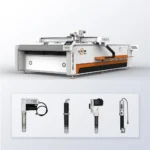
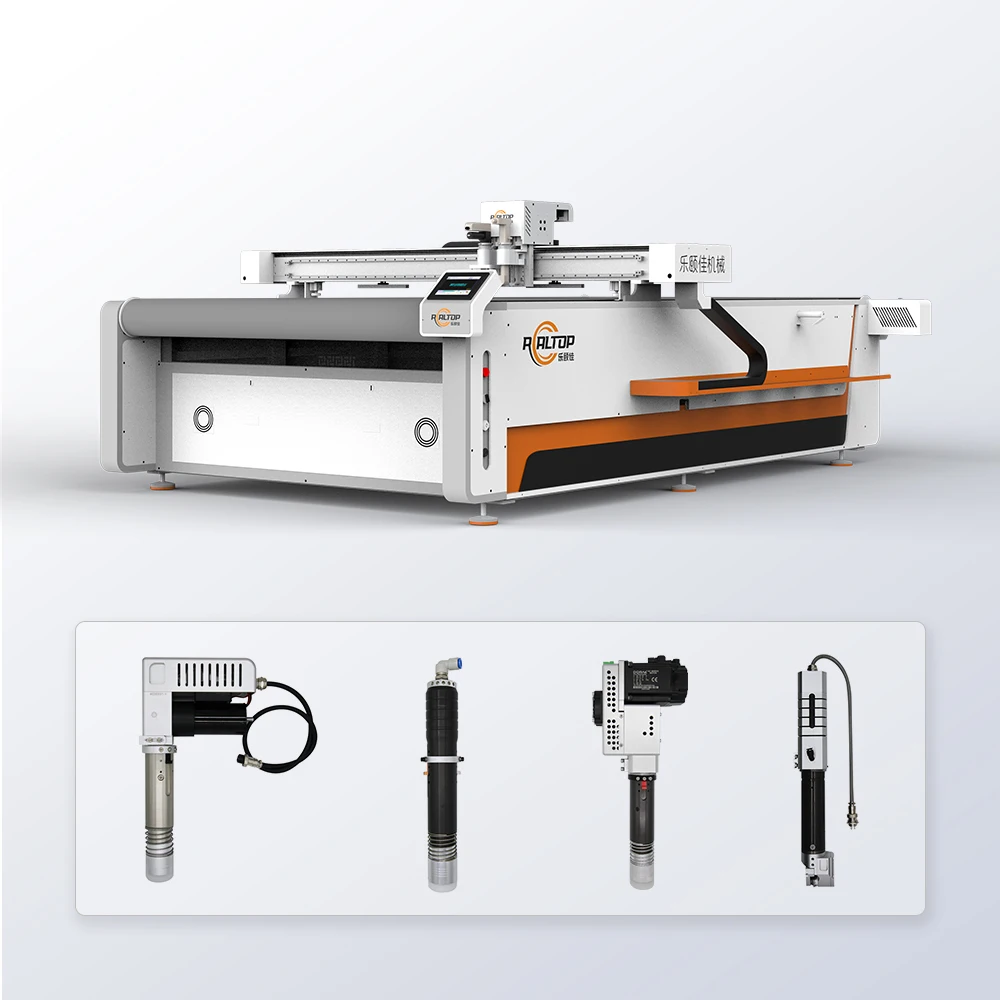
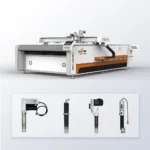
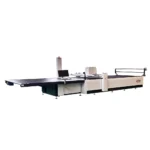
Tool head configuration matched to material — the RT-D2516/RT-S2516 ships with Swiss-imported oscillating knife tooling validated on buyer samples, not selected by catalog number alone.
Technical Specifications
| Parameter | Value |
|---|---|
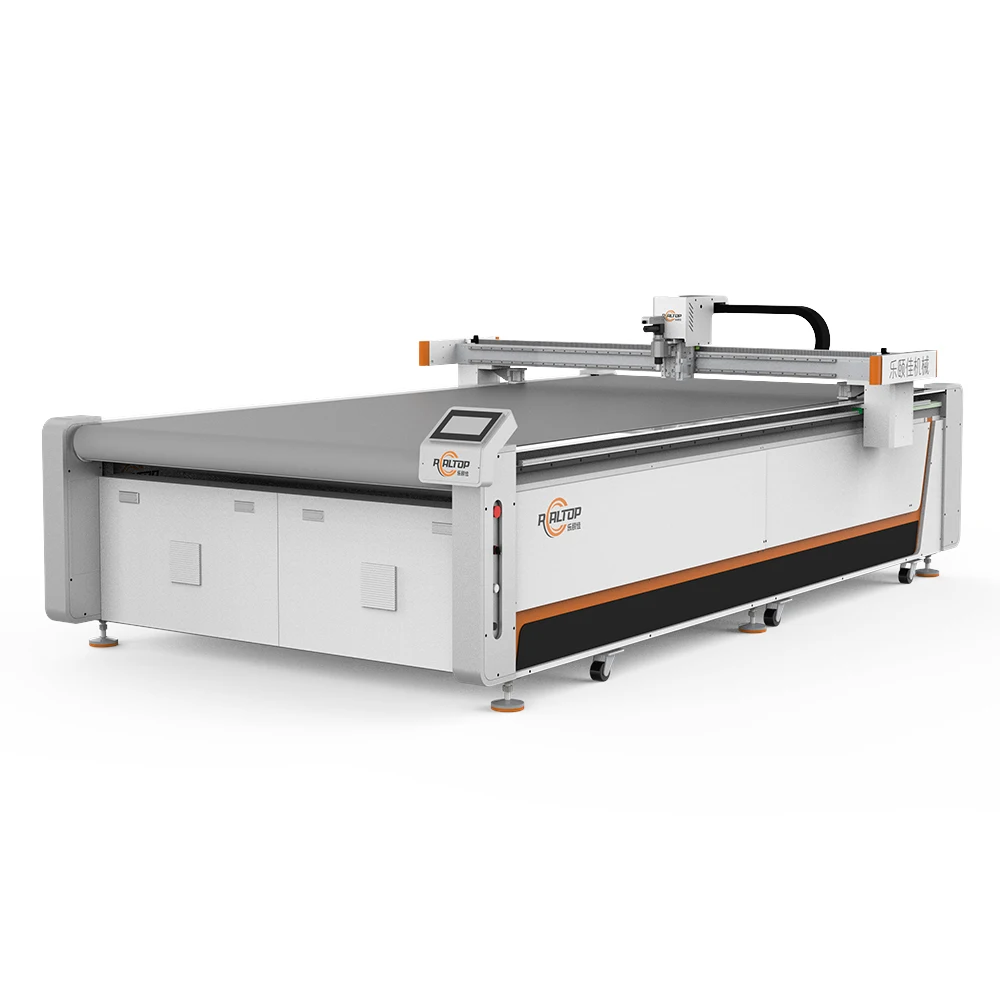
| Model | RT-D2516 / RT-S2516 |
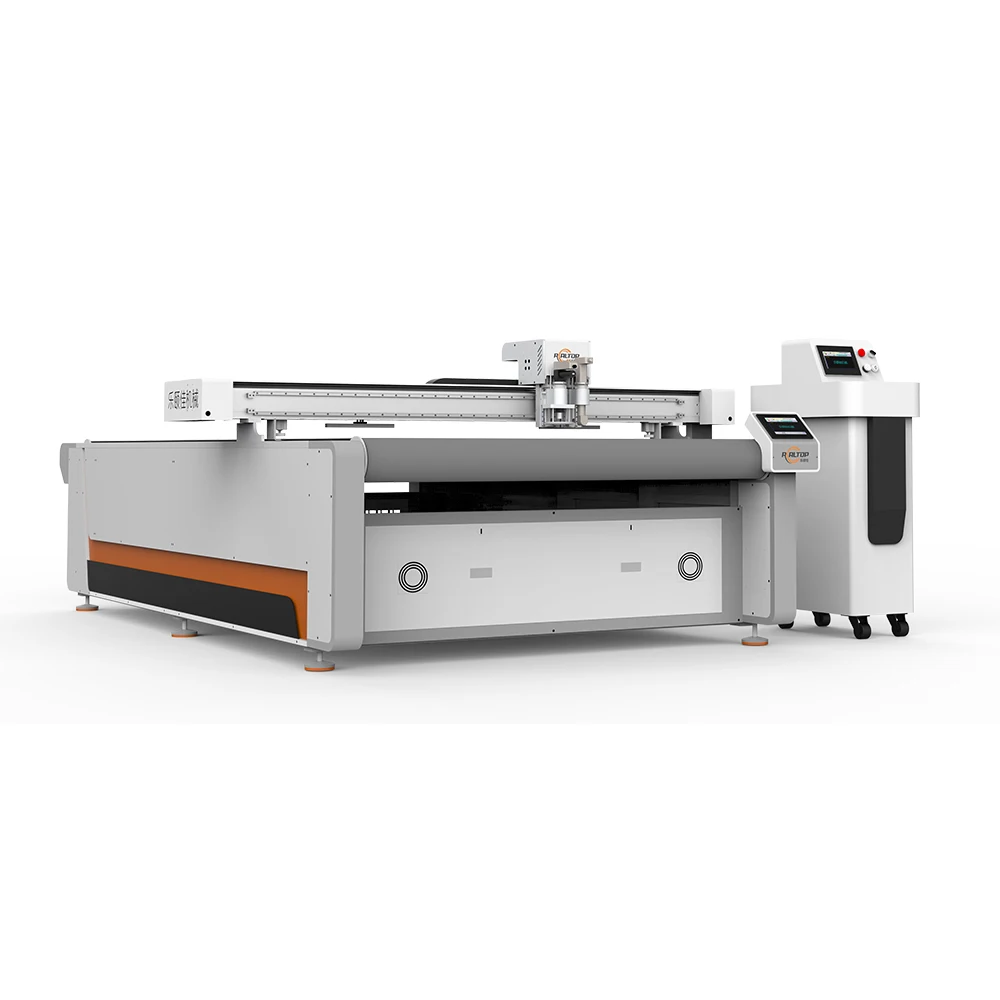
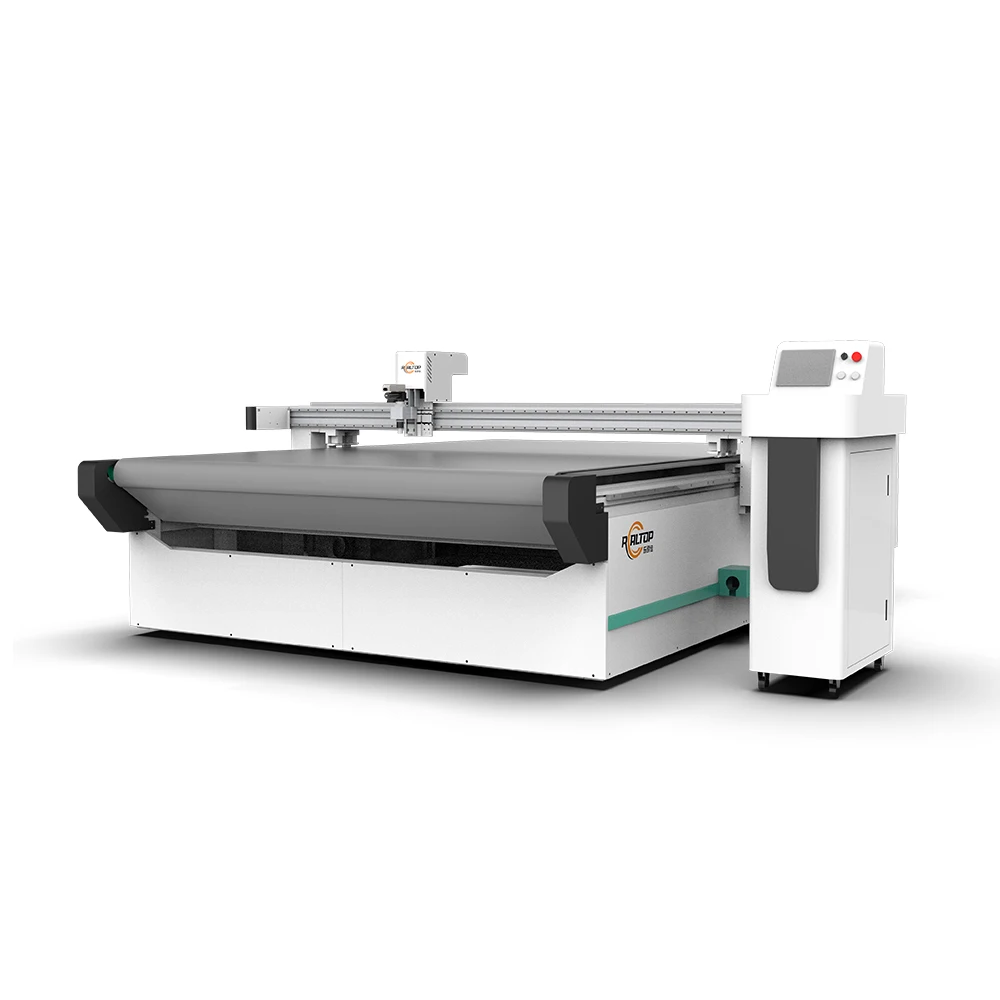
| Product Type | CNC Oscillating Knife Cutting Machine |
| Working Area | 1600 × 2500 mm |
| Machine Size (Overall) | 3450 × 2300 × 1250 mm |
| Rated Power | 9 kW |
| Voltage | 380V ±10% |
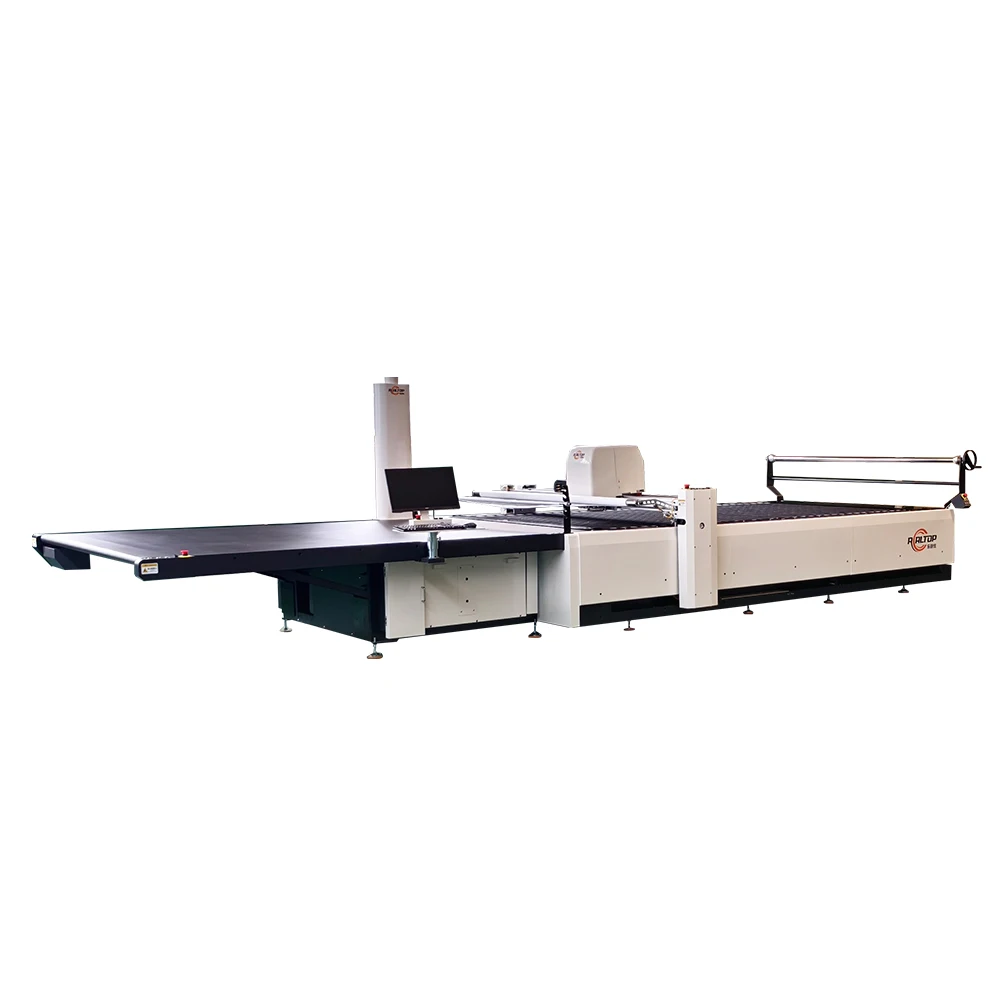
| Table Type Options | Flat working table / Auto feeding table |
| Tool Head | Swiss imported knife with vibration full cutting, half cutting, and cursor location |
| Translational Velocity | 800–2000 mm/s |
| Cutting Speed | 200–800 mm/s (varies by material type and thickness) |
| Repeated Accuracy | ≤0.1 mm |
| Transmission System | Digital servo motor, linear guide, synchronous belt, imported ball screw |
| Servo Motor Options | Delta or Panasonic |
| Instruction System | HP-GL compatible format |
| Safety Device | Infrared sensors, anti-collision beam stops, emergency stop with in-situ resume |
| Vacuum Pump | 7.5 kW with aviation aluminum shell and built-in silencer |
| Vacuum Table Material | Magnesium-aluminum alloy, fluorocarbon PVDF coated, hard anodized |
| Control Panel | Touch screen with multi-language support (English, Russian, Italian, Chinese) |
| Max Cutting Thickness | ≤100 mm (varies with material) |
| Frame Construction | Thick-walled seamless steel, high-temperature tempered, CNC machined |
| CCD / Vision Options | Small CCD mark-point, panoramic camera recognition, projection positioning |
| Software | Auto nesting supporting PLT, DXF, AI formats |
| Certification | CE declaration |
| Warranty | 1 year |
Application Suitability
| Application | Material or Output |
|---|---|
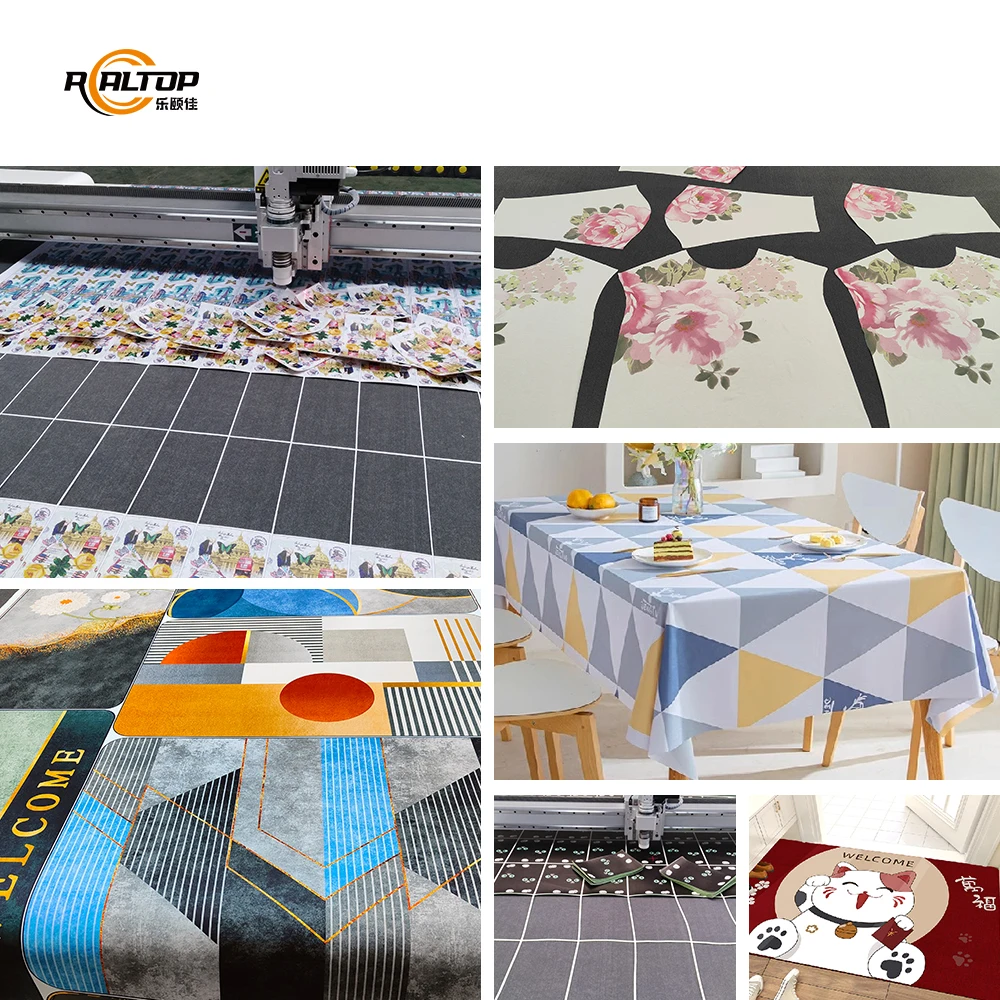
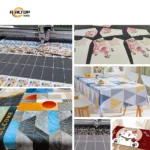
| Garment and apparel cutting | Single and multi-layer woven fabric, knit, denim, technical textile |
| Footwear and luggage production | Leather, synthetic upper material, PU, EVA foam, lining fabric |
| Automotive interior trimming | Non-woven needle-punch carpet, headliner fabric, sponge, composite panels |
| Gasket and seal fabrication | Rubber sheet, PTFE, silicone, compressed fiber, graphite composite |
| Soft furnishing and upholstery | Sofa fabric, curtain textile, carpet, mattress ticking, insulation batting |
| Composite material pre-forming | Carbon fiber cloth, fiberglass fabric, aramid weave, prepreg layup |
| Packaging and signage | Corrugated cardboard, sticker film, foam board, PVC sheet |
Why Specifying Working Area Is Not Enough for CNC Oscillating Knife Cutting Machine Specifications
The working area tells you how big a sheet fits on the table — it says nothing about whether the machine can hold small parts flat, cut through your material thickness, or track printed contours at speed.
I once watched a buyer commit to a flatbed cutter because the 1600 × 2500 mm bed matched their roll width. When production started on multi-layer automotive headliner, the vacuum could not keep the bottom layers anchored in the outer zones, and the oscillating knife dragged the stack instead of shearing it cleanly. The machine was right-sized for the sheet but wrong-configured for the job. That gap between working area and actual cutting capability is where most disappointments in this equipment class begin [NEED_CITE: common misconfiguration issues in flatbed digital cutting procurement].
Oscillating Knife Selection by Material and Layer Count
The multifunctional tool head on the RT-D2516/RT-S2516 carries a Swiss-imported oscillating blade capable of full cut, half cut, and cursor location. For single-layer woven or knit fabric, the high-frequency vibration shears cleanly without fraying the edge. When the job shifts to multi-layer layups or denser composites like fiberglass and carbon fiber cloth, the stroke amplitude and blade geometry must be adjusted or swapped to maintain edge quality. The machine supports additional tool head options — drag knife, creasing wheel, milling spindle, and pen — so a single platform handles scoring cardboard, routing gasket profiles, and marking cut lines without a second machine.
Vacuum Zoning and Table Surface Engineering
Magnesium-Aluminum Alloy Table with PVDF Coating
The vacuum adsorption table is machined from magnesium-aluminum alloy and finished with fluorocarbon PVDF powder coating followed by hard anodization. This surface treatment resists abrasion from repeated knife passes and prevents the vacuum seal from degrading over time. The 7.5 kW vacuum pump is housed in an aviation aluminum shell with built-in silencer sponge, reducing operational noise. The combination of pump capacity and table construction delivers suction that holds thin film and small nested parts flat — a critical factor when cutting gaskets or intricate garment pattern pieces where edge lift produces scrap [NEED_CITE: vacuum hold-down requirements for thin and small-part digital cutting].
Frame Rigidity and Motion Accuracy
Seamless Steel Construction with CNC-Machined Finish
The thick-walled seamless steel frame undergoes high-temperature tempering to relieve welding stress before CNC machining. This sequence prevents the frame from distorting under sustained vibration loads, keeping the linear guides and ball screws aligned. The result is repeated accuracy within 0.1 mm across the full 1600 × 2500 mm working area — a tolerance that matters when cutting interlocking gasket profiles or nesting tight garment patterns where cumulative error wastes material. Digital servo motors from Delta or Panasonic drive the axes through synchronous belts and imported ball screws, maintaining translational velocity up to 2000 mm/s during non-cutting moves.
What Happens When Configuration Does Not Match the Cutting Job
Hidden Costs of Skipping the Sample Test
Choosing the wrong tool head for your material produces ragged edges on fabric or crushed layers in foam and sponge, forcing secondary trimming that erodes throughput. An undersized vacuum zone lets small nested parts lift mid-cut, creating miscuts and scrap — particularly costly when cutting expensive leather hides or carbon fiber prepreg. CCD contour recognition that cannot track printed registration marks at production speed forces the operator to slow the machine down, negating the throughput advantage of automated nesting [NEED_CITE: material lift and contour tracking failures in oscillating knife cutting]. These problems surface in the first week of production, long after the machine has left the factory.
Why Source the RT-D2516/RT-S2516 From This Production Line
In-House Knife and Laser Engineering Under One Roof
The manufacturer designs and produces both oscillating knife and laser cutting systems in-house, so the cutting method is matched to the material rather than forced into one technology. The tool head and vacuum table configuration on the RT-D2516/RT-S2516 are specified per buyer material, thickness, and production volume — not sold as a fixed catalog item. CCD positioning options include small mark-point, panoramic recognition, and projection, validated on the buyer’s printed stock before order. Voltage, plug type, and control language are confirmed in writing before production begins. Every unit ships with sample cutting reports run on the buyer’s actual material, so cutting speed and edge quality are documented before the machine leaves Jinan.
Documentation & Verification
- Factory test record on buyer-supplied material thickness and type before dispatch
- Electrical schematic confirming voltage, frequency, and plug type for destination market
- Tool head and vacuum zone configuration list matched to material specification
- Software license with file format compatibility note for PLT, DXF, and AI workflows
- Sample cutting report documenting edge quality, contour tracking, and cutting speed
- Operation and maintenance manual with multi-language touch screen instructions
Installation, Commissioning & Support
- Foundation must support 3450 × 2300 × 1250 mm footprint plus operator clearance on all sides
- Dedicated 380V circuit required for 9 kW rated power plus 7.5 kW vacuum pump load
- Machine ships with table and gantry separated; reassembly and leveling performed on site
- First-run calibration includes servo tuning, vacuum zone mapping, and CCD registration test
- Operator training covers tool head changeover, nesting software, and touch screen control
- Spare parts list includes oscillating blades, vacuum seals, and synchronous belt segments
What to Include in Your Inquiry
Preparing a Meaningful Specification Request
Send the material type, composition, and thickness you intend to cut, along with the maximum sheet or roll width and the number of layers in a typical layup. Specify your local voltage, frequency, and plug standard so the electrical system is built correctly from the start. If you use printed registration marks for contour cutting, provide a sample print so the CCD system can be validated against your actual production graphics before the quotation is finalized.
Frequently Asked Questions
Q: How is cutting speed verified, and what material premise is used for the stated 200–800 mm/s range?
A: The cutting speed range is measured across different material types and thicknesses during factory testing. Before order, we run sample cuts on your specific material at the layer count you specify. The sample cutting report documents actual speed, edge quality, and any tool head adjustments required. We do not quote speed without a material premise.
Q: Which tool head should I use for my material — oscillating knife, drag knife, or milling?
A: Oscillating knife is standard for fabric, leather, foam, and multi-layer layups where clean sheared edges are required. Drag knife suits thin vinyl and sticker film. Milling handles rigid gasket and composite board. We test each option on your material sample and recommend the tool head that delivers acceptable edge quality at production speed.
Q: Will the CCD system track my printed marks reliably at full production speed?
A: The CCD options — mark-point, panoramic, and projection — are validated against your printed sample before order. We test contour recognition at the cutting speed your material allows. If tracking fails at target speed, we document the limitation and adjust the recommendation rather than promise performance the system cannot deliver.
Q: How are vacuum zones configured for small nested parts to prevent material lift?
A: The magnesium-aluminum vacuum table is divided into zones that can be activated independently. For small parts like gaskets or garment pieces, the zones under the nested layout are opened while unused zones remain closed, concentrating suction. The 7.5 kW pump provides sufficient capacity for high-density nesting on the 1600 × 2500 mm working area.
Q: Are voltage, plug type, and control language confirmed before shipment?
A: Yes. The electrical schematic is reviewed with the buyer during order confirmation. Voltage, frequency, and plug type are set to the destination market standard. The touch screen control panel is configured in English, Russian, Italian, Chinese, or a custom language as requested. All specifications are documented before production begins.


商品评价
Clear filtersThere are no reviews yet.