







Fast Shipping
Carrier information

20k products
Payment methods

24/7 Support
Unlimited help desk

2-day Delivery
Track or off orders
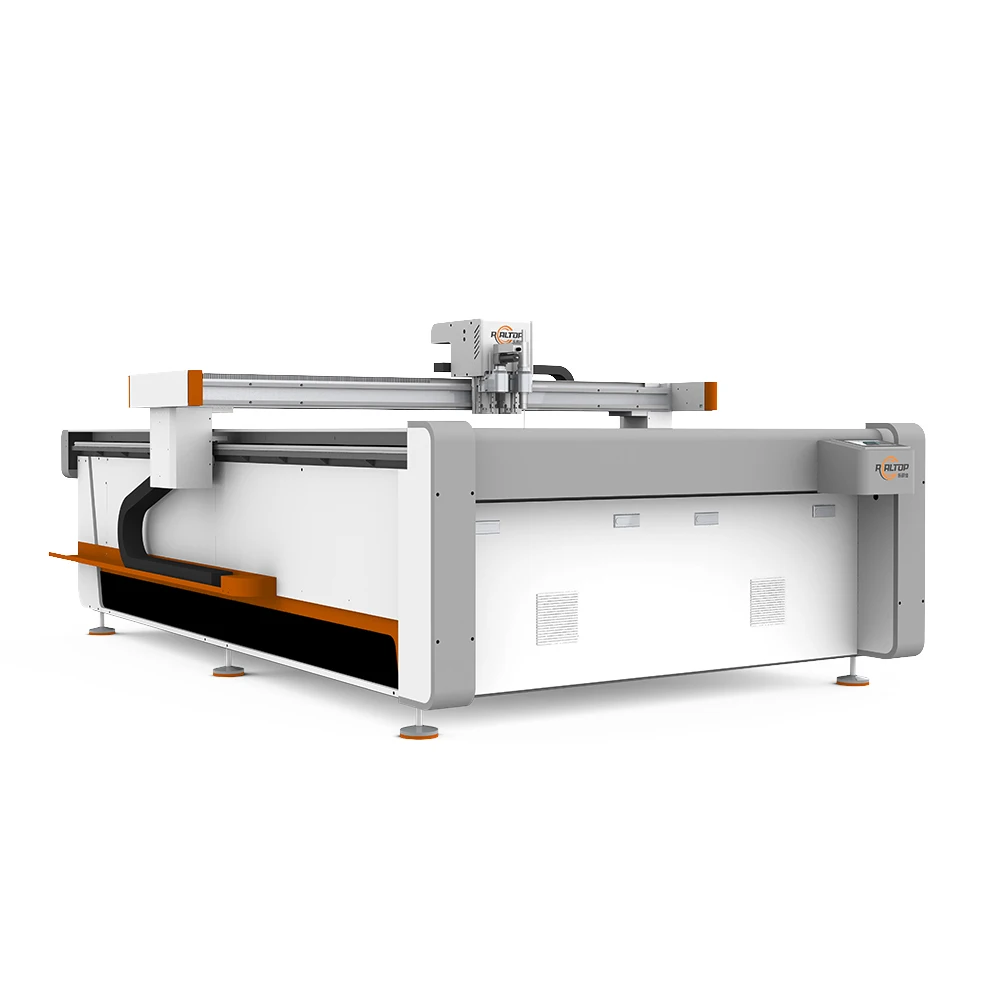
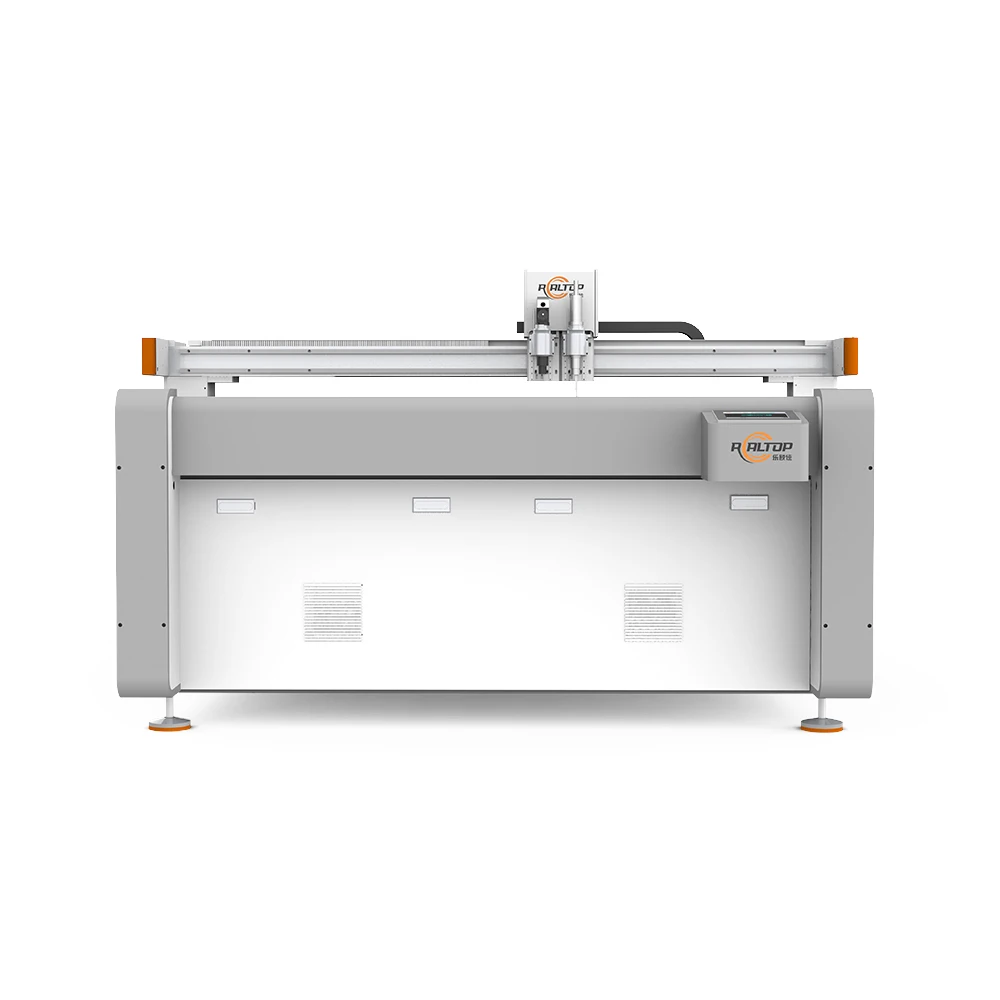
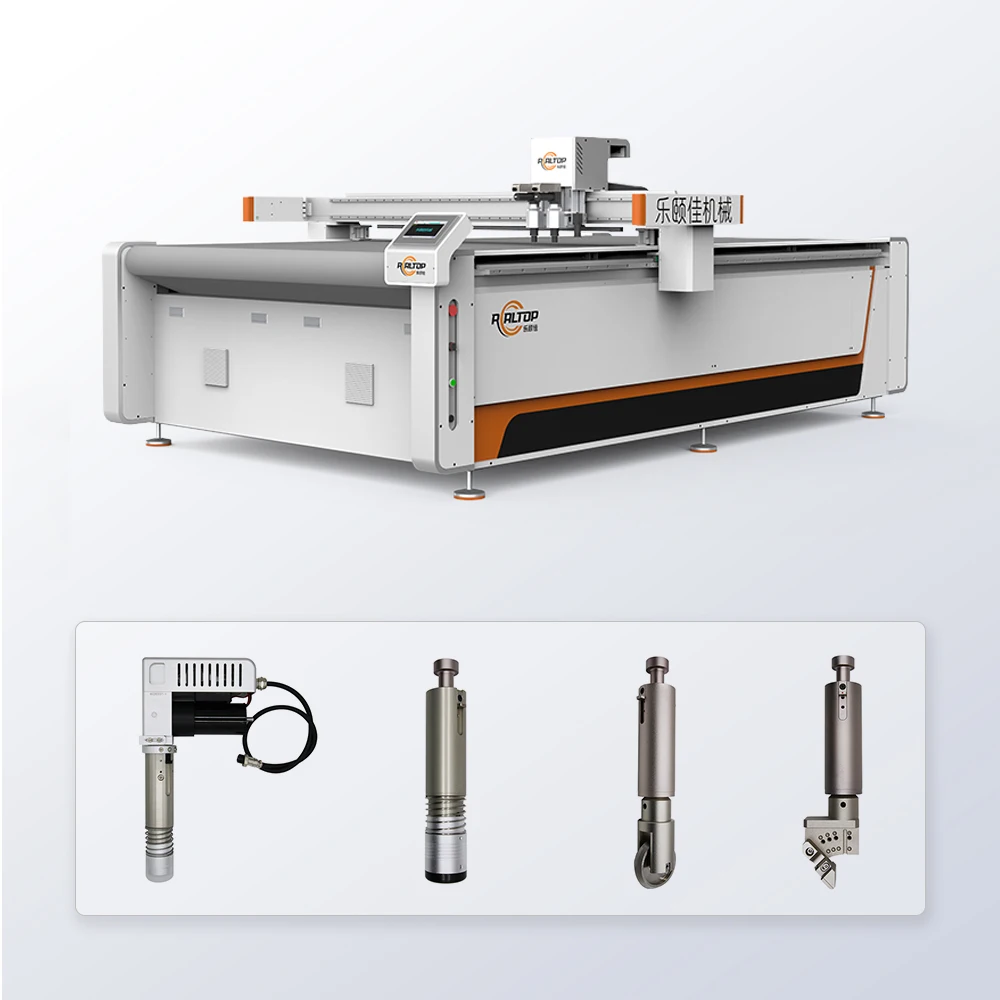
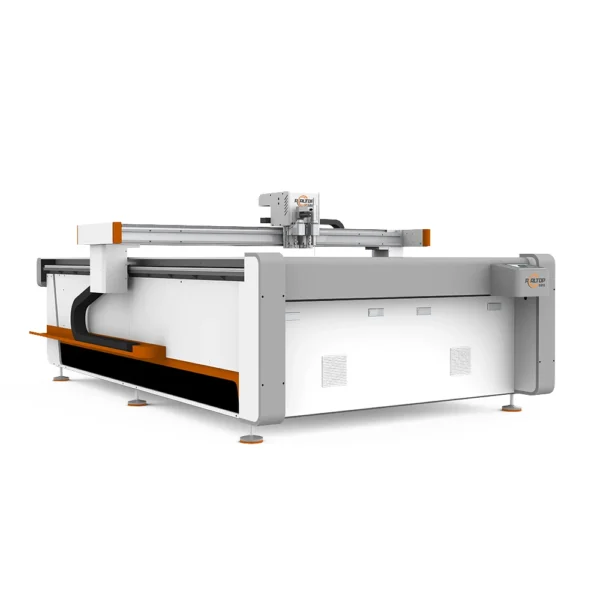
Tool-Head Versatility — The RT-D2516/RT-S2516 platform lets carton sample makers and soft-material fabricators mount oscillating knives, creasing wheels, V-cutters and punching tools on a single zoned vacuum bed, matching the cutting method to each substrate rather than forcing one tool across every job.
Technical Specifications
| Parameter | Value |
|---|---|
| Model | RT-D2516 / RT-S2516 |
| Product Type | CNC Flatbed Digital Cutting Machine |
| Working Area | 1600 × 2500 mm |
| Machine Dimensions (L × W × H) | 3450 × 2300 × 1250 mm |
| Rated Power | 9 kW |
| Voltage | 380V ±10% |
| Control System | HP-GL compatible format |
| Control Panel | Touch screen, multi-language (English, Russian, Italian, Chinese; others customizable) |
| Translational Velocity | 800 – 2000 mm/s |
| Cutting Speed | 200 – 800 mm/s (varies with material type and density) |
| Cutting Thickness | ≤ 100 mm (basis not stated in source — confirm material type) |
| Repeated Accuracy | ≤ 0.1 mm |
| Multifunctional Tool Head Options | Swiss imported knife, oscillating knife, pneumatic knife, high-power vibrating knife, circular knife, V-cutting knife, drag knife, creasing wheel, dotted line knife, punching tool, brush |
| Visual Positioning Options | Small CCD camera mark-point, panoramic camera recognition, projection positioning |
| Transmission System | Digital servo motor (Delta or Panasonic), linear guide, synchronous belt, ball screw, Taiwan Hiwin rail |
| Vacuum Table | Magnesium-aluminum alloy, PVDF powder spraying, anodic oxidation; 7.5 kW pump with built-in silencer |
| Vacuum Zoning | Split box supported (zone count and small-part holding to be verified against application) |
| Conveyor Belt | Germany imported |
| Table Options | Flat working table or auto feeding table |
| Safety Devices | Infrared induction blocking, anti-collision sensors, emergency stop with in-situ resume |
| Software | Auto typesetting / nesting; PLT, DXF, AI file formats |
| Standards | CE (specific certificate for this model to be verified) |
Application Suitability
| Application | Material or Output |
|---|---|
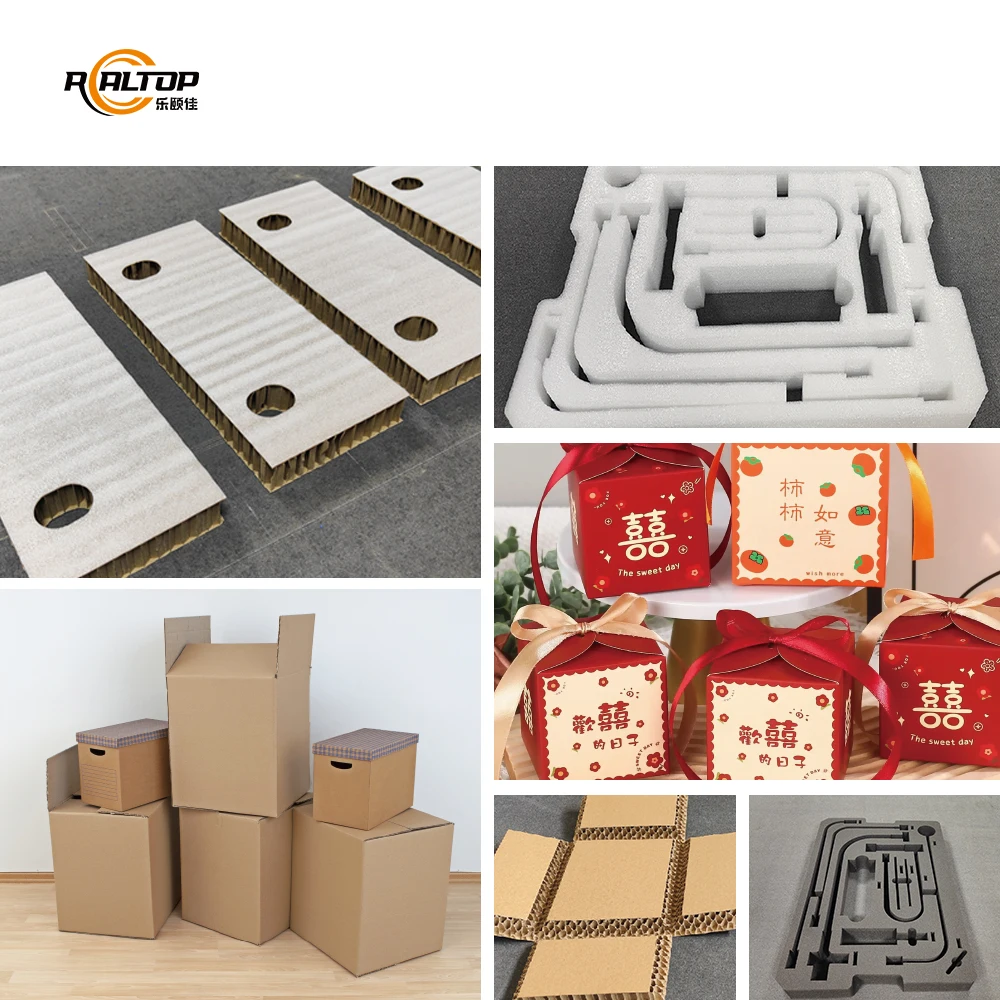
| Carton & packaging sample making | Corrugated cardboard, honeycomb board, paper, sticker, film — full cut, kiss cut, creasing, V-slot milling |
| Garment & footwear cutting | Fabric, leather, shoe material, luggage material, non-woven fabric, sponge composites |
| Automotive interior & gasket fabrication | Carpet, non-woven, rubber, PU, EVA, XPE, composite sealing sheets |
| Flexible plastics & composites | PVC sheet, soft glass, silicon, fiberglass, foam board, PP, PE, PTFE, ETFE |
| Graphic advertising & signage | Vinyl, sticker, foam board, printable film on the 1600 × 2500 mm bed |
Why Specifying Tool Heads Matters More Than Working Area
A cutting table that cannot crease, perforate and kiss-cut in one pass forces carton sample makers back to manual finishing.
Many buyers focus on bed size first, only to discover that the tool head cannot handle their specific board grade or that the vacuum table fails to hold small nested parts flat during high-speed traverses. For packaging producers running corrugated, honeycomb and sticker stock, the difference between a single-head drag knife and a multi-tool configuration with a creasing wheel and V-cutter is the difference between a finished sample and one that still needs hand scoring. The CNC oscillating knife cutting machine specifications should be reviewed against the actual material stack before any purchase commitment is made [NEED_CITE: typical corrugated flute profiles and corresponding tool pressures].
Tool Head and Material Matching
Choosing between an oscillating knife, drag knife, creasing wheel or V-cutting tool is not a cosmetic decision — it determines edge quality, cutting depth and cycle time. A drag knife works well on thin sticker and film but will crush the flute structure on double-wall corrugated board. The oscillating knife handles foam, sponge and thick textile composites without ragged edges, while the creasing wheel scores fold lines on carton stock without penetrating the surface. On the RT-D2516 / RT-S2516, these heads mount on a multifunctional carriage so the machine switches tasks within the same program cycle.
Vacuum Zoning and Small-Part Holding
The 7.5 kW vacuum pump draws air through a magnesium-aluminum alloy table surface with PVDF coating and hard anodic oxidation. A split-box design segments the suction area so that when cutting small carton components or nested gaskets, only the active zone pulls vacuum — this prevents air leakage across unused zones and maintains hold-down force where the knife is actually working. For packaging sample makers cutting dozens of small die-shapes from a single corrugated sheet, adequate zoned suction is what keeps parts from lifting and shifting mid-cut [NEED_CITE: vacuum hold-down principles for CNC flatbed cutting].
Reading the Specifications That Affect Daily Output
The 200 – 800 mm/s cutting speed range is material-dependent: thin sticker film can be cut at the upper end, while five-layer double-wall corrugated demands the lower range with increased oscillation frequency. Repeated accuracy of ≤ 0.1 mm matters most when creasing lines must align precisely with printed graphics across a 1600 × 2500 mm sheet. The HP-GL compatible control system accepts PLT, DXF and AI files through auto-nesting software, so existing design workflows carry over without re-drawing. Delta or Panasonic servo motors drive the carriage along Taiwan Hiwin linear guides, keeping positional drift minimal even after extended production runs.
The Cost of Skipping Material Trials
A machine quoted on working area alone may arrive with a tool head unsuited to your board thickness, producing crushed flutes on double-wall corrugated or ragged edges on foam composites. CCD contour recognition may be listed as a feature, yet the camera cannot track printed registration marks at the production speed your volume requires. When vacuum zoning proves insufficient for your smallest nested parts, those parts lift during cutting and must be re-run, eroding the throughput you expected. These mismatches surface only after the machine is installed — which is why sample cutting on your own material before order confirmation is a necessary step, not an optional courtesy [NEED_CITE: common CNC cutting machine commissioning failures].
Why Source This Configuration Here
In-house design covers both knife and laser cutting, so you can evaluate whether an oscillating knife or a CO2 laser better suits your material rather than being locked into one technology. Tool head and table configurations are specified per material type and daily production volume, not sold as a one-size package. CCD camera positioning options — mark-point, panoramic or projection — are confirmed against your printed graphics before the order enters production. Software file-format compatibility is verified with your existing PLT, DXF or AI files during the pre-sale stage. Voltage, plug type and control language are written into the specification sheet and confirmed before shipment, avoiding on-site rewiring or menu-language barriers.
Documentation & Verification
- Electrical schematic confirming 380V ±10% wiring and servo motor circuit layout
- Tool head and vacuum table configuration list matched to your material stack
- Sample cutting report on your own corrugated, foam or composite material before dispatch
- Software licence and file-format compatibility note for PLT, DXF, AI workflows
- Spare parts list with part numbers for knives, creasing wheels and vacuum seals
- Factory test record documenting positional accuracy and cutting depth verification
Installation, Commissioning & Support
- Requires a level floor capable of supporting the 3450 × 2300 mm footprint plus operator clearance
- Dedicated 380V circuit with adequate amperage for the 9 kW rated load plus 7.5 kW vacuum pump
- Machine ships fully assembled; split vacuum box option available for container transport
- First-run calibration covers servo tuning, tool offset setting and vacuum zone mapping
- Operator training includes touch-screen control in confirmed language and nesting software setup
- Wear-part schedule for Swiss knife blades, creasing wheels and vacuum seals included in manual
Preparing Your Inquiry
Share the specific board grades, laminate types or composite materials you cut, along with sheet dimensions and daily sample volume, so the tool head and table configuration can be matched accurately. Confirm your local voltage, frequency and required control-panel language before the quotation stage. If your workflow relies on specific DXF or AI file structures, send a sample file so software compatibility is tested before production begins.
Frequently Asked Questions
Q: How do I choose between an oscillating knife and a drag knife for my material?
A: Drag knives suit thin, non-woven substrates like sticker film and light paper where the blade can follow contours by swivelling. Oscillating knives cut thicker, denser materials — corrugated board, foam, sponge composites — by vibrating vertically to slice cleanly without crushing internal structure. Share your material type and thickness so the correct head is specified on your RT-D2516 / RT-S2516 configuration list.
Q: Can the CCD camera track my printed marks at full cutting speed?
A: The system offers small CCD mark-point positioning, panoramic camera recognition and projection positioning. Tracking reliability depends on mark size, contrast, print quality and the speed at which your material allows cutting. We test your printed sheet with the selected camera option during the sample-cutting stage to confirm it holds registration at your required throughput before the order proceeds.
Q: Is vacuum suction strong enough to hold small carton parts in place?
A: The 7.5 kW pump works through a split-box zoned table so suction concentrates on the active cutting area rather than spreading across the full bed. For very small nested components, zone count and part placement strategy affect hold-down performance. Share your smallest part dimensions so we can verify zone layout and recommend nesting adjustments if needed.
Q: Will the software accept my existing design files without conversion?
A: The nesting software reads PLT, DXF and AI formats through an HP-GL compatible control system. File structure, layer naming and curve resolution vary between design programs, so we ask you to send a representative file before order. We run it through the software and confirm clean tool-path generation, then document the result in your file-format compatibility note.


商品评价
Clear filtersThere are no reviews yet.