

Fast Shipping
Carrier information

20k products
Payment methods

24/7 Support
Unlimited help desk

2-day Delivery
Track or off orders
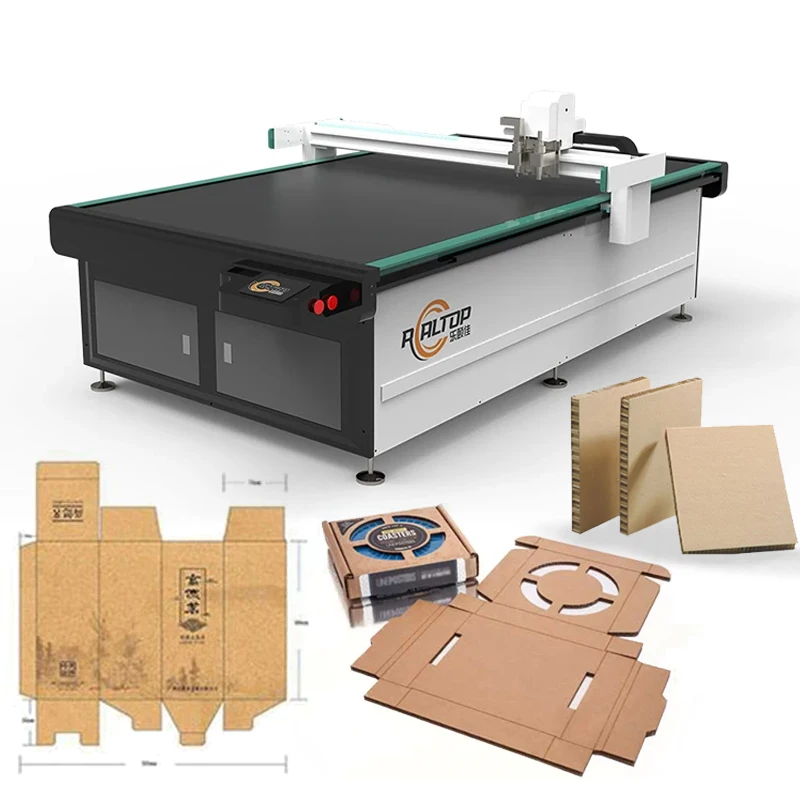
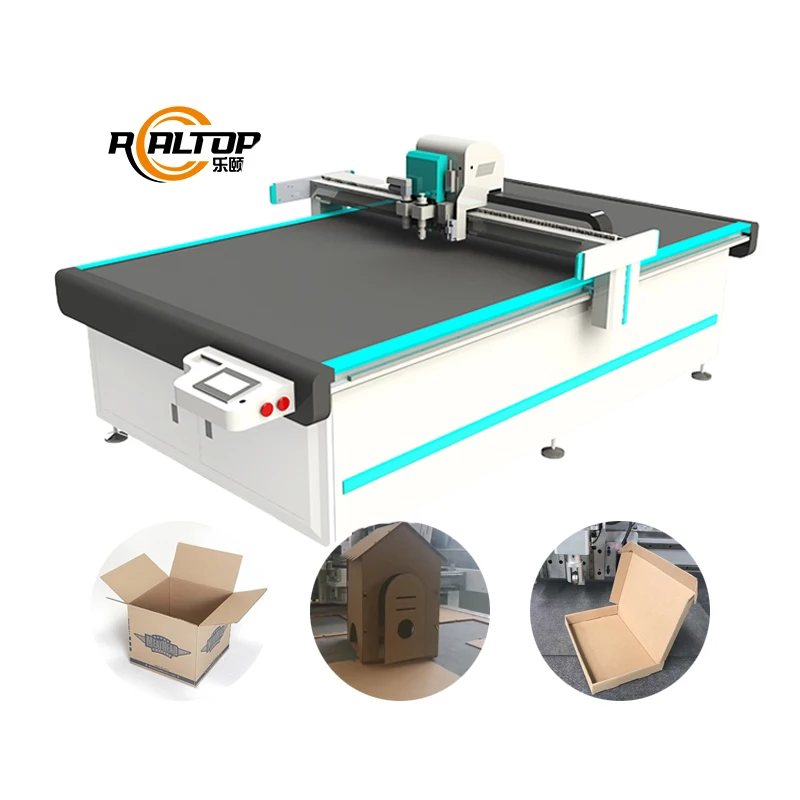
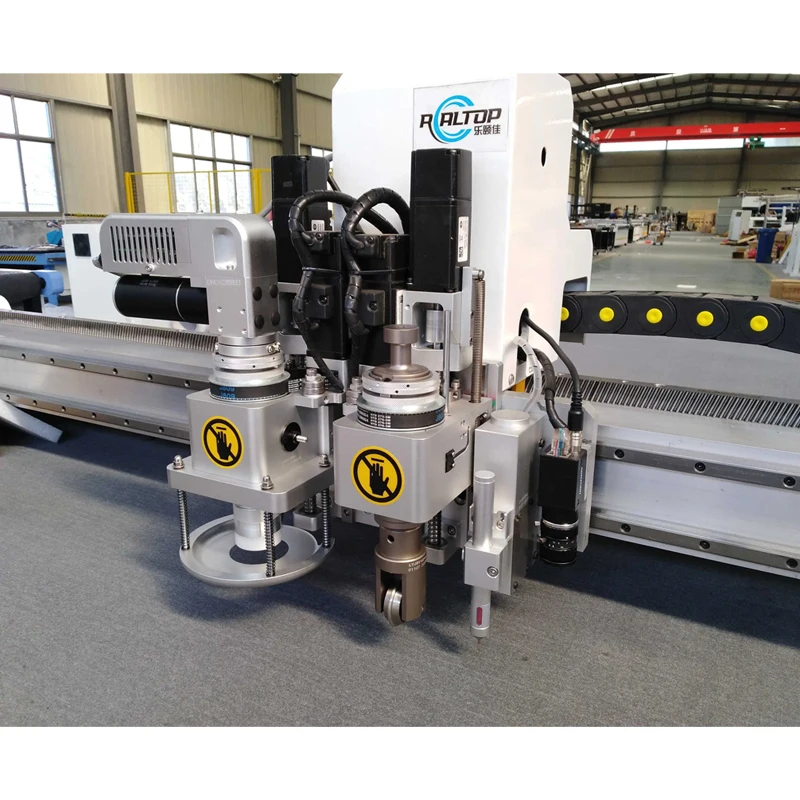
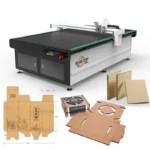
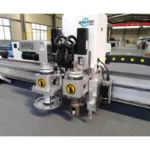
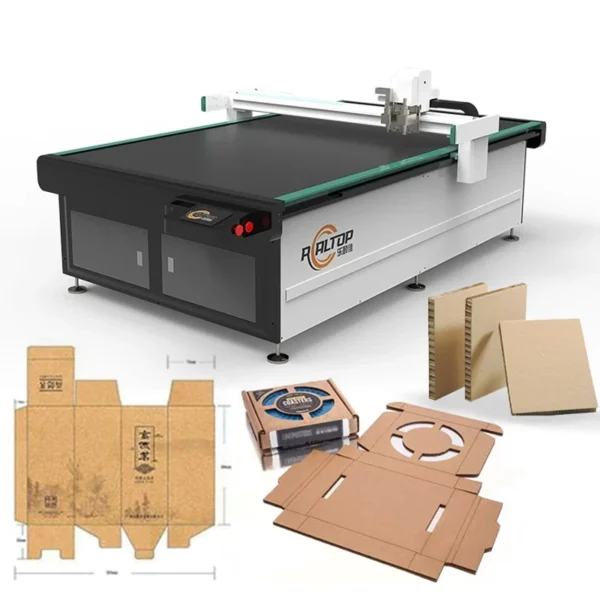
Purpose-built tool head configurations — oscillating knife, creasing wheel, kiss-cut and punch tools matched to your corrugated flute profile and board density before the order is finalized.
Technical Specifications
| Parameter | Value |
|---|---|
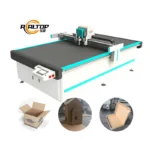
| Product Type | CNC Oscillating Knife Cutting Machine |
| Working Area | 2500×1300mm / 1600×2500mm (configurable) |
| Machine Size | 3550×1910×1400mm / 3450×2300×1250mm (varies by model) |
| Cutting Tools | Oscillating knife, Creasing tool, Kiss-Cut Knife, Round punch |
| Cutting Thickness | ≤18mm (material dependent) |
| Fixing Method | Vacuum system with aluminum honeycomb table |
| Rated Power | 9 kW |
| Voltage | 380V (configurable for local supply) |
| Repeatability | <0.05mm |
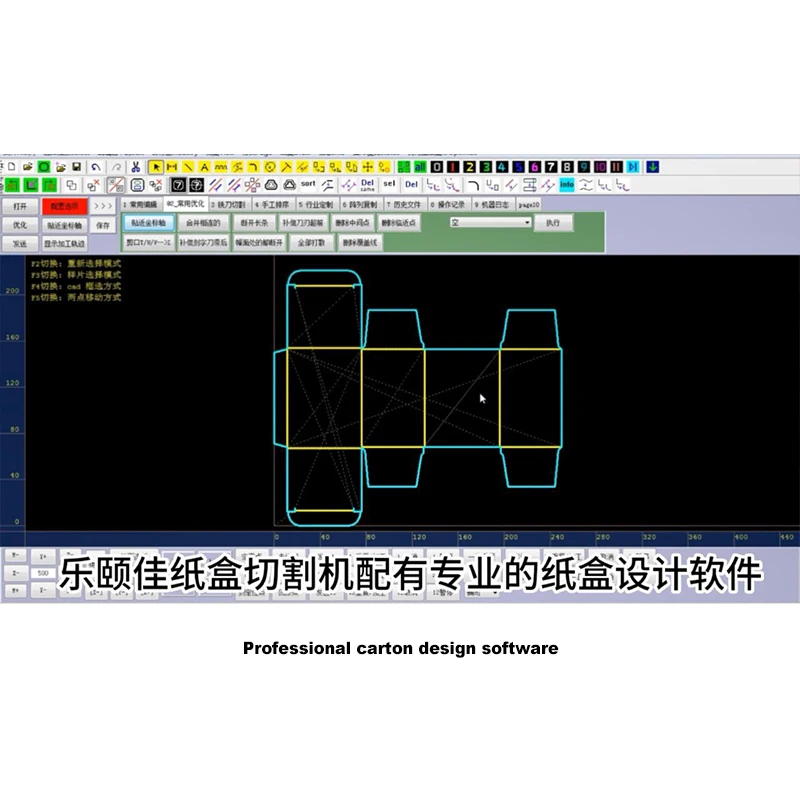
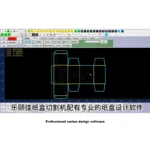
| Profile Format | DXF, OLT, PDF, AI |
| Linear Guide | Taiwan Hiwin rail |
| Machine Frame | Welded square seamless steel, high-temperature stress relieved |
| Vacuum Pump | 7.5 kW |
| Safety Device | Infrared sensors, emergency stop |
| Language Options | English, Russian, Italian, Chinese (customizable) |
| Delivery Time | <30 working days |
| Warranty | 1 year (excluding consumables) |
Application Suitability
| Application | Material or Output |
|---|---|
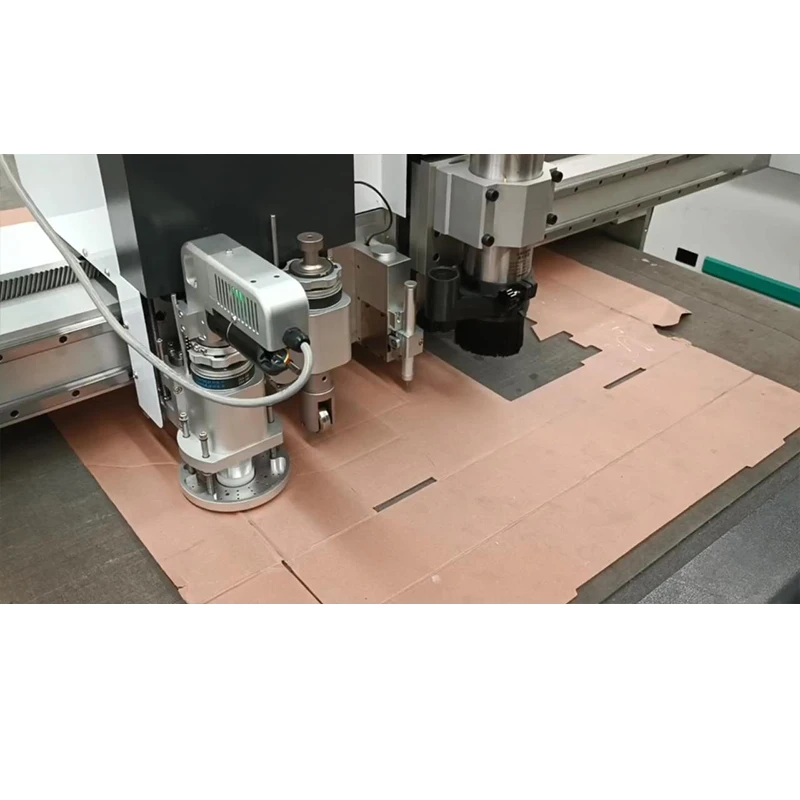
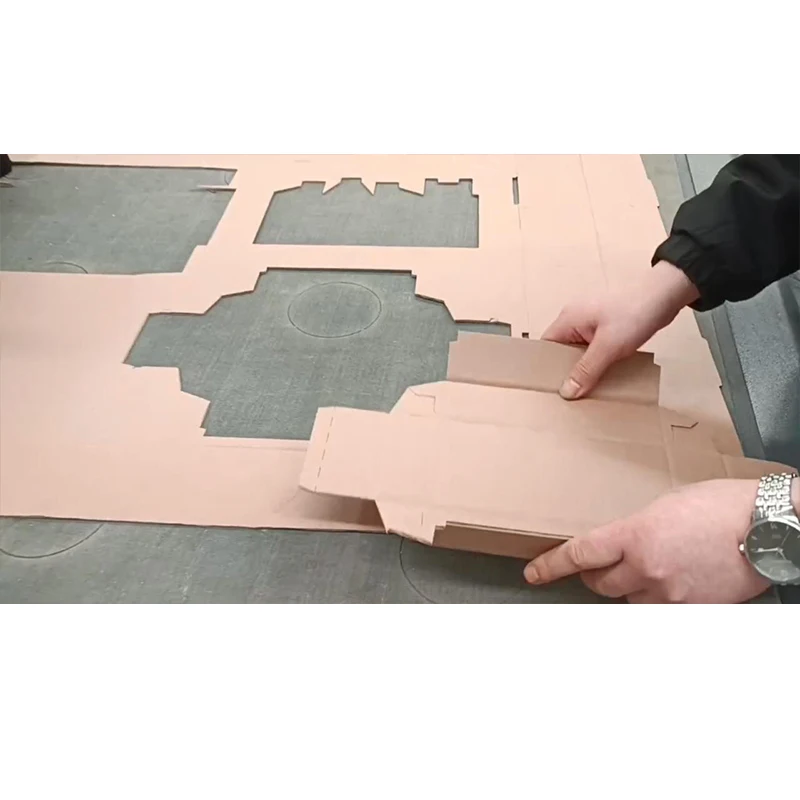
| Carton sample making | Single, double and triple-wall corrugated cardboard |
| Short-run corrugated box production | E-flute, B-flute, C-flute, BC-flute boards up to 18mm |
| Sticker and label finishing | Self-adhesive vinyl, coated paper, PP synthetic paper |
| Packaging prototyping | Kraft paper, grey board, foam board, honeycomb paper |
| Graphic display cutting | Corrugated plastic, cardboard standee substrates |
Why Board Thickness Alone Is Not Enough to Specify a CNC Oscillating Knife Cutting Table
The flute type, liner weight and moisture content of your corrugated stock determine which tool head actually works at production speed.
I remember early on in a Jinan assembly bay, a packaging buyer ordered a machine based purely on working area and a headline cutting thickness. Their production stock was high-grammage double-wall board with dense liners. The oscillating knife specified could not penetrate cleanly at full speed, edges crushed, and daily throughput dropped noticeably. We now run a material sample test on the buyer’s own stock before any configuration is locked, because corrugated cardboard varies far more than a single thickness number suggests [NEED_CITE: variability of corrugated board mechanical properties across flute types].
Tool Head Selection by Flute and Liner Density
Choosing the correct CNC oscillating knife cutting table specifications starts with matching the tool to the board structure. An oscillating knife handles standard single and double-wall cutting cleanly, but dense liners or coated surfaces often require a higher-frequency blade or a drag knife to prevent delamination. The creasing wheel must be matched to flute height so that fold lines score the liner without fracturing it, which is essential for carton sample accuracy.
Vacuum Table Zoning and Small Part Hold-Down
When cutting nested carton blanks with narrow offcuts, a poorly zoned vacuum table allows small pieces to lift under the knife head, producing ragged edges or blade deflection. The aluminum alloy honeycomb table surface on this system supports automatic zone-following adsorption, directing suction only to active cutting zones. This keeps lightweight corrugated sheets flat without requiring a full-sheet vacuum seal [NEED_CITE: vacuum hold-down principles for flatbed digital cutters].
Reading the Specification Sheet Beyond Working Area
Repeatability below 0.05mm matters most when die-lines include registration marks for printed carton faces, where even slight drift misaligns cut paths against graphics. The welded steel frame undergoes high-temperature stress relief to preserve this tolerance over years of operation. Hiwin linear guides maintain smooth axis travel under the lateral forces generated when cutting thick BC-flute board. Rated power of 9 kW covers the oscillating head, vacuum pump at 7.5 kW, and servo drives simultaneously without tripping circuits during sustained cutting cycles.
The Hidden Cost of Wrong Configuration Choices
Selecting a machine without confirming tool head compatibility with your actual flute profile leads to recurring blade wear and edge quality issues that show up weeks after installation. Insufficient vacuum zoning forces operators to tape sheet edges, slowing every nesting layout. Voltage mismatches discovered after shipment mean transformer costs and warranty disputes. These problems are avoidable with a pre-order material test and confirmed electrical schematic [NEED_CITE: common causes of CNC cutting machine field failures].
Why Source This Equipment From Realtop
In-house design covers both knife and laser cutting, so you can compare methods against your actual corrugated stock rather than forcing one technology. Tool head and vacuum table configurations are specified per material and daily volume, not pulled from a standard catalog. CCD camera positioning is available for printed contour work on pre-printed carton faces. Software compatibility with DXF, OLT, PDF and AI file formats is verified before order confirmation. Sample cutting on your own corrugated board at actual flute and thickness runs before you commit.
Documentation & Verification
- Machine specification sheet listing confirmed tool head and vacuum table zones
- Electrical schematic with voltage and frequency matched to your facility supply
- Sample cutting report produced on your corrugated stock at specified flute type
- Software licence and die-line file format compatibility confirmation note
- Factory test record documenting repeatability and cut edge quality before dispatch
- Operation manual with tool change and blade replacement procedures
Installation, Commissioning & Support
- Floor space planning for 3550×1910mm or 3450×2300mm footprint plus material feed clearance
- Dedicated 380V circuit sized for 9 kW rated draw plus vacuum pump startup surge
- Machine arrives partially assembled; frame, table and gantry require on-site alignment
- First-run parameter tuning on your corrugated board stock to set knife depth and speed
- Operator training covering tool head changes, nesting workflow and vacuum zone setup
- Consumable spare parts list including oscillating blades and felt belt replacement schedule
What to Prepare Before Requesting a Quote
Share your corrugated flute type, board thickness range, typical sheet dimensions and daily cutting volume so the configuration matches your actual workload. Confirm your facility voltage and frequency, preferred control language, and whether you need CCD contour recognition for printed carton registration. If you have existing die-line files in DXF or AI format, send a sample set so we can verify import and nesting compatibility before the order.
Frequently Asked Questions
Q: How do I choose between an oscillating knife and a creasing wheel for my corrugated board?
A: The oscillating knife handles through-cutting of the full board profile, while the creasing wheel scores fold lines without severing the bottom liner. For carton sample making, both tools typically run in the same job cycle. The correct creasing wheel diameter and pressure setting depend on your flute height, and we confirm this during the sample cutting test on your actual board stock.
Q: Can the vacuum table hold small carton parts flat during high-speed cutting?
A: The aluminum honeycomb table supports zone-following adsorption, meaning vacuum is directed to the active cutting area rather than spread across the full bed. This concentrates hold-down force on the sheet section being cut, preventing small nested parts from lifting under knife pressure. Zone configuration is matched to your typical nesting layout during setup.
Q: What file formats does the software accept for packaging die-lines?
A: The control software imports DXF, OLT, PDF and AI files directly. Before order confirmation, we request a sample of your actual production die-lines to verify import fidelity, layer recognition and nesting workflow. If your design team uses a format outside this list, compatibility testing is arranged during the specification phase.
Q: Is CCD camera contour recognition available for printed corrugated sheets?
A: Yes, CCD camera positioning can be configured for printed registration mark detection on corrugated stock. This is essential when cutting pre-printed carton faces where cut paths must align precisely with graphics. Camera specification and mark detection parameters are confirmed based on your print layout and mark size before the machine is built.


商品评价
Clear filtersThere are no reviews yet.