




Fast Shipping
Carrier information

20k products
Payment methods

24/7 Support
Unlimited help desk

2-day Delivery
Track or off orders
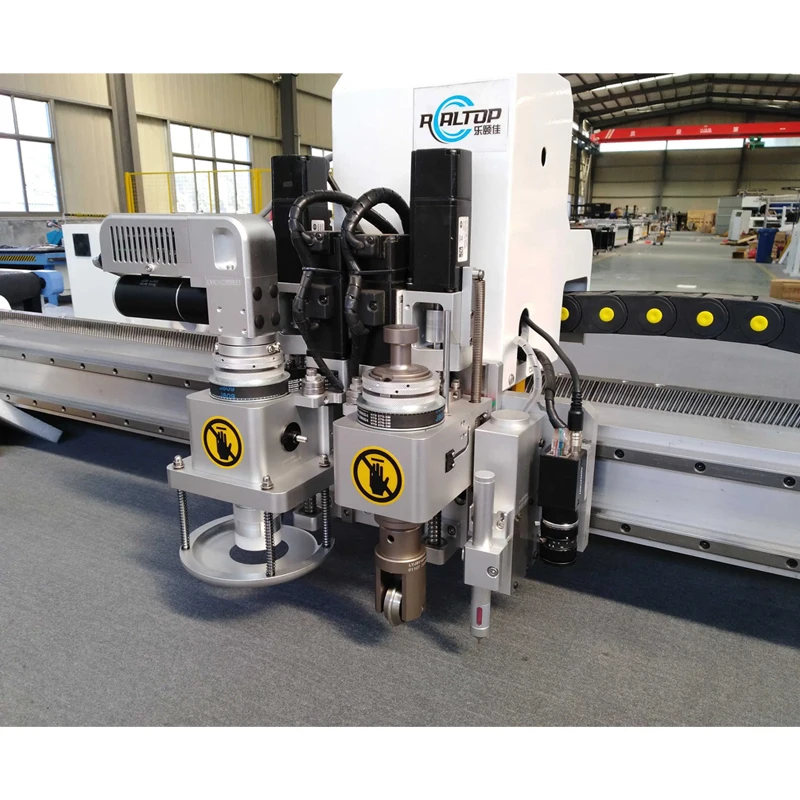
Precision tool head mapping — Every oscillating knife, creasing wheel, and kiss-cut blade is matched to your specific flute profile and board grade before the machine leaves our Jinan workshop.
Technical Specifications
| Parameter | Value |
|---|---|
| Model | RT–R2513 / RT-D2516 / RT-S2516 |
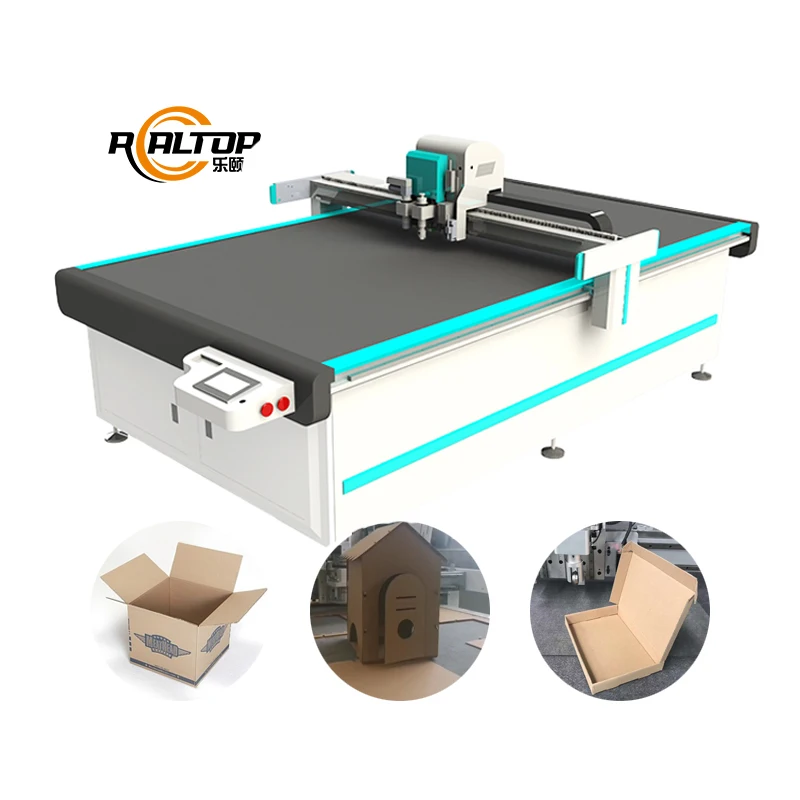
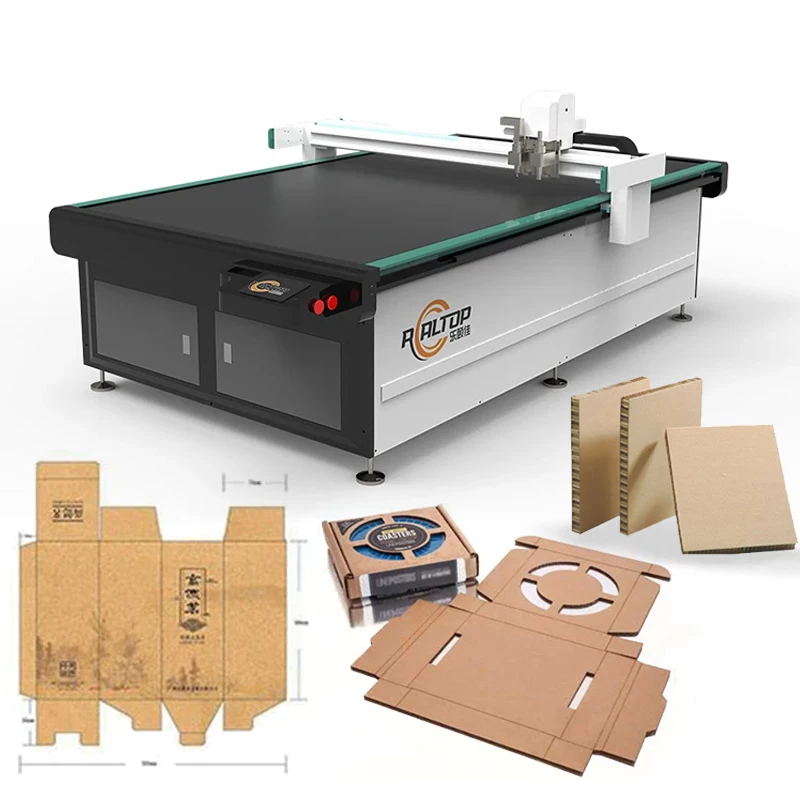
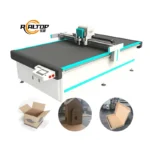
| Product Type | CNC Oscillating Knife Cutting Machine for Packaging |
| Working Area | 2500×1300 mm (RT–R2513) / 1600×2500 mm (RT-D2516 / RT-S2516) |
| Machine Size | 3550×1910×1400 mm (RT–R2513) / 3450×2300×1250 mm (RT-D2516 / RT-S2516) |
| Cutting Tools | Oscillating knife, Creasing tool, Kiss-Cut Knife Tool, Round punch |
| Cutting Thickness | ≤18mm (basis not stated in source — actual capacity depends on flute profile and board density) |
| Fixing Method | Vacuum system with 7.5 kW vacuum pump |
| Rated Power | 9 kW |
| Voltage | 380V (configurable for local supply standards) |
| Servo Motor | Dongling servo or Delta servo motor (specified per order) |
| Transmission Method | Ethernet port |
| Profile Format | DXF, OLT, PDF, AI |
| Repeated Accuracy | <0.05 mm |
| Safety Device | Infrared sensors |
| Guide Rail | Taiwan Hiwin rail |
| Table Surface | Vacuum table with aluminum alloy honeycomb structure |
| Feeding System | Auto feeding with Germany imported conveyor belt |
| Blade Supply | 10 pieces of oscillating blades included |
| Warranty | 1 year (excludes felt, knife blades) |
| Delivery Time | <30 working days |
Application Suitability
| Application | Material or Output |
|---|---|
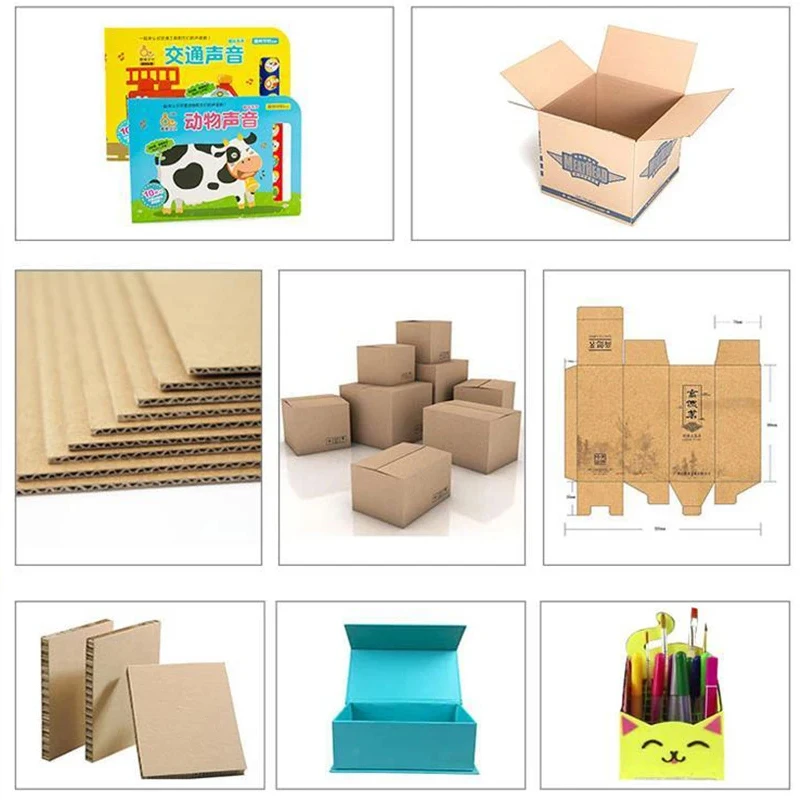
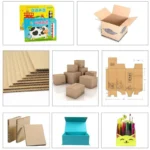
| Corrugated carton sample making | Single, double, and triple-wall corrugated board up to 18mm |
| Packaging prototype short runs | Coated and uncoated cardboard, folding carton stock |
| Sticker and label converting | Vinyl, PP paper, self-adhesive label stock (kiss-cut and through-cut) |
| Gift box and display packaging | Greyboard, laminated paperboard, foam board |
| Express paper box production | Light to medium-weight corrugated sheets for e-commerce packaging |
Why Board Thickness Ratings Mislead Packaging Buyers
A cutting depth number means nothing without the flute profile and board density attached to it.
When a spec sheet says "≤18mm," buyers often assume any 18mm board will cut cleanly. In reality, a single-wall E-flute board at 18mm behaves completely differently under an oscillating knife than a triple-wall board at the same thickness. The crushing force, the blade stroke frequency, and the vacuum hold-down pressure all need to match the internal structure of the corrugation. I learned this the hard way when a standard test cut on three-layer board passed perfectly, but the same machine settings shredded five-layer double-wall stock on the customer’s floor — the knife pressure was not*gged, incomplete cuts across an entire production batch. [NEED_CITE: corrugated flute type classification and structural differences]
Matching Knife Stroke to Flute Geometry
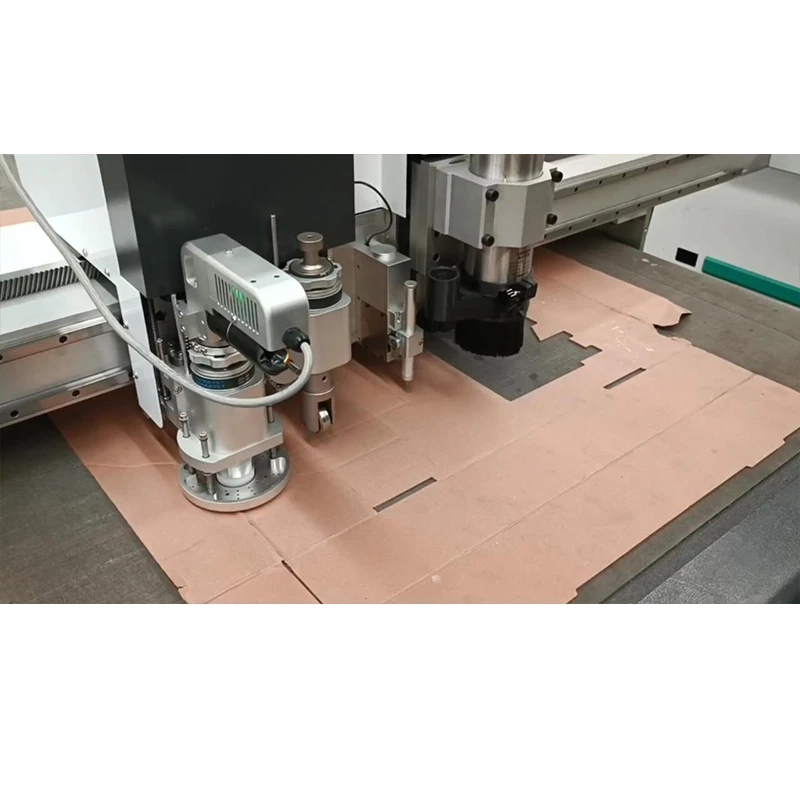
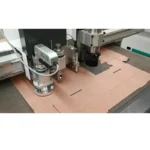
The oscillating knife on the RT–R2513 / RT-D2516 / RT-S2516 series works by vibrating the blade at high frequency while the servo drives it through the material. For single-face or single-wall corrugated, the standard stroke handles the cutting cleanly because there is only one layer of fluting to penetrate. When you move to double-wall or triple-wall, each additional flute layer introduces a new air gap where the blade can deflect. The cnc oscillating knife cutting machine specifications you review must account for this: thicker multi-wall boards demand higher oscillation amplitude and downward pressure, not just a longer blade.
Tool Head Selection Beyond the Oscillating Knife
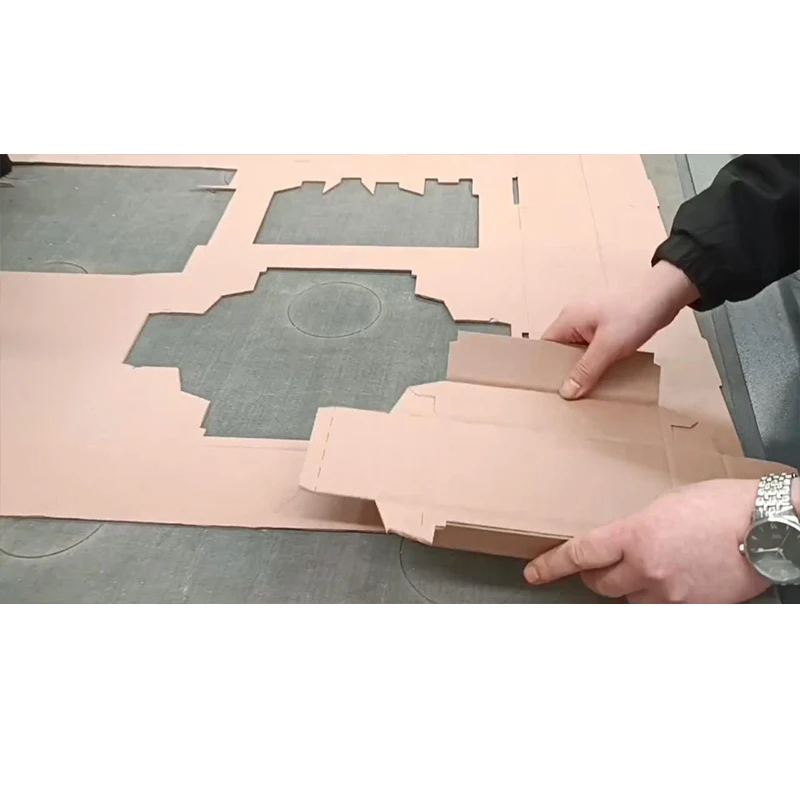
Packaging workflows rarely involve cutting alone. The creasing tool scores fold lines without severing the board, which is essential for box blanks that must fold cleanly at production speed. The kiss-cut knife slices through the face stock of a label while leaving the liner intact — a completely different depth control requirement than through-cutting corrugated. The round punch handles ventilation holes or hanging slots. Each tool head mounts on the same gantry, so a single sheet can be cut, creased, and punched in one pass without re-registration. [NEED_CITE: die-less sample making workflow compared to traditional die-cutting]
Reading the Numbers That Actually Matter
The repeated accuracy of <0.05 mm directly affects how well crease lines align with cut edges on complex box templates — even a small drift causes flap mismatch when the carton is folded and glued. The 7.5 kW vacuum pump paired with the aluminum honeycomb table ensures that small carton parts stay flat during high-speed cutting; insufficient vacuum zoning is a frequent cause of part lift on machines with underpowered pumps. The Taiwan Hiwin linear rails maintain positional accuracy across the full 2500×1600 mm working area of the RT-D2516 / RT-S2516, which matters when nesting multiple box templates on a single sheet to maximize material yield. The Ethernet-based file transmission accepts DXF, OLT, PDF, and AI formats, but confirming software compatibility with the buyer’s existing nesting or CAD workflow before order prevents file import failures after installation.
The Cost of Guessing Your Configuration
Ordering a packaging cutting machine by working area alone is the most common mistake I see. Buyers specify a 2500×1600 mm table and assume the tool head package will handle whatever they feed it. When the material arrives and the board is thicker or denser than the default oscillating knife can manage, you face blade changes mid-run, inconsistent cut depth across the sheet, and crushed flute edges that compromise the structural integrity of the finished carton. On the vacuum side, if the table zoning is not configured for your typical part size, small die-cut shapes lift off the bed and collide with the knife head, damaging both the part and the blade. These are not warranty issues — they are specification mismatches that could have been caught before shipment. [NEED_CITE: vacuum hold-down requirements for small-part CNC cutting]
Why Buyers Source This Platform from Jinan
The RT–R2513 / RT-D2516 / RT-S2516 series is designed and built in-house, covering both the knife cutting and creasing tool technologies that packaging producers actually need — rather than forcing one cutting method across all materials. Each tool head and table zone is specified against the buyer’s actual corrugated grade and box template library, not a generic catalog default. Sample cutting on your own board stock is completed and documented before you commit to the order, so you know the machine handles your five-wall as well as your single-face. Voltage, plug type, and control language are confirmed during the specification stage, not discovered when the crate arrives. The 9 kW rated power draw and 380V base configuration are standard, but local supply adaptations are available when confirmed early in the process.
Documentation & Verification
- Machine specification sheet listing confirmed tool heads and vacuum zone layout
- Electrical schematic with voltage and plug type verified for your facility
- Sample cutting report on your corrugated board grade with cut quality photographs
- Tool head and creasing wheel configuration list with stroke and pressure settings
- Software license and file format compatibility note for your DXF or AI workflow
- Factory test record showing repeatability measurement across the full working area
Installation, Commissioning & Support
- Floor space requirement of approximately 3550×1910 mm for RT–R2513, plus clearance for auto-feeding conveyor
- Dedicated 380V circuit required to support the 9 kW rated power and 7.5 kW vacuum pump simultaneously
- Machine ships with gantry and table as a single assembly; vacuum pump and conveyor may arrive as separate modules
- First-run parameter tuning includes oscillation frequency, knife pressure, and vacuum zoning for your board type
- Operator training covers tool head changeover between oscillating knife, creasing tool, and kiss-cut blade
- Ten oscillating blades included; felt pads and replacement blades are consumables outside the one-year warranty
How to Start the Specification Conversation
To get a configuration that actually runs your production, share your corrugated flute types (single, double, or triple-wall), typical board thickness range, and maximum sheet dimensions. Include the box template file format your design team uses — DXF, AI, or another — so we can verify software import before the order is finalized. Let us know your local voltage and frequency standard, and whether your operators need the control interface in a specific language. If your volume justifies continuous feeding, describe your upstream printing or laminating line so the auto-feeding conveyor can be matched to your sheet throughput.
Frequently Asked Questions
Q: How does the 18mm cutting depth apply to different corrugated flute types?
A: The ≤18mm rating is a maximum that depends entirely on board structure. Single-wall E-flute at 18mm cuts readily, while triple-wall at the same thickness requires adjusted knife pressure and oscillation amplitude. We test your actual board sample before shipping to confirm the tool head configuration handles your specific flute profile cleanly through the full thickness.
Q: When should I use the creasing tool versus the oscillating knife?
A: The oscillating knife severs the board along cut lines, while the creasing tool compresses the flutes to create a fold line without cutting through. Box blanks require both in the same pass — the knife defines the outer profile and the creasing tool scores internal fold lines. The round punch adds ventilation or hanging holes as a third operation on the same gantry.
Q: Will small carton parts lift off the vacuum table during cutting?
A: The 7.5 kW vacuum pump paired with the aluminum honeycomb table provides strong hold-down across the bed. However, very small parts can lift if the vacuum zone configuration is not matched to your typical template layout. We configure the zoning based on your smallest part dimensions during the specification stage to prevent this issue before the machine ships.
Q: Can I import my existing DXF and AI box templates directly?
A: The control software accepts DXF, OLT, PDF, and AI file formats via Ethernet transfer. We verify compatibility with your specific CAD or nesting software version before the order is placed, and provide a file format compatibility note in the documentation package so your design team knows exactly which export settings to use.
Q: What feeding options support continuous production runs?
A: The auto-feeding system with Germany imported conveyor belt handles sheet loading for higher-volume workflows. The RT-D2516 and RT-S2516 models offer a 2500×1600 mm working area suited to standard corrugated sheet sizes. Configuration for continuous processing is determined by your daily volume and upstream equipment integration requirements during the pre-order consultation.


商品评价
Clear filtersThere are no reviews yet.