




Fast Shipping
Carrier information

20k products
Payment methods

24/7 Support
Unlimited help desk

2-day Delivery
Track or off orders
Tool-Head Matched to Material Behavior — Every oscillating and drag knife configuration is verified against the buyer’s actual fabric density and thickness before a purchase order is issued, not assumed from a brochure working area.
Technical Specifications
| Parameter | Value |
|---|---|
| Model | RT-D2516 / RT-S2516 |
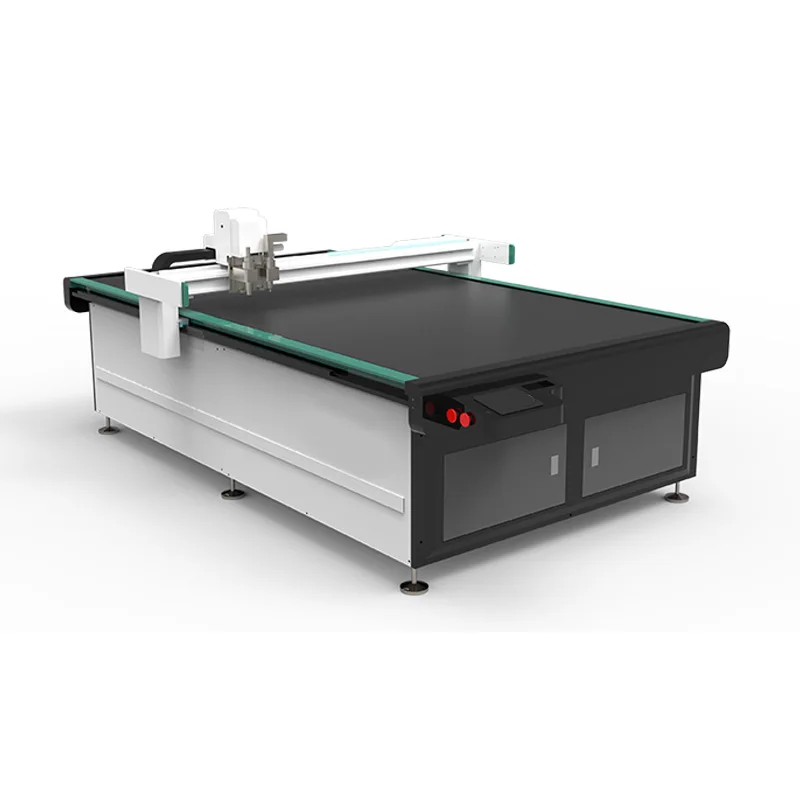
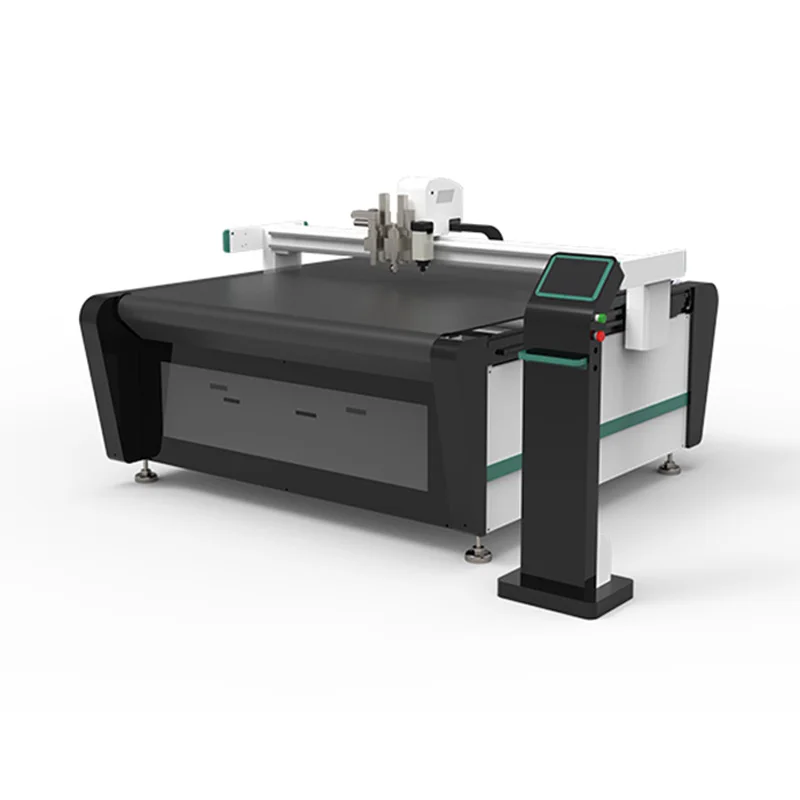
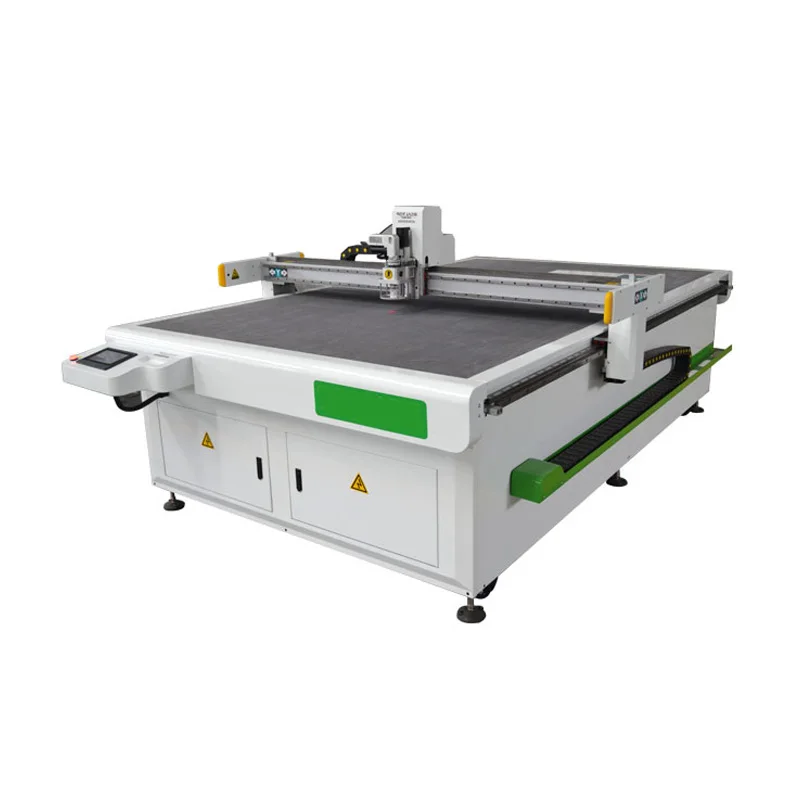
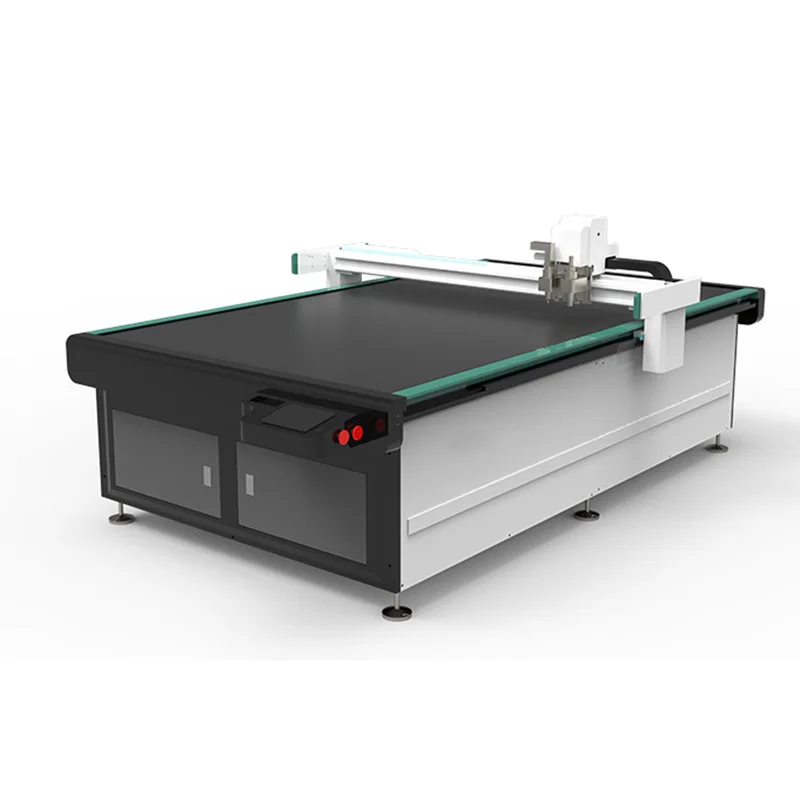
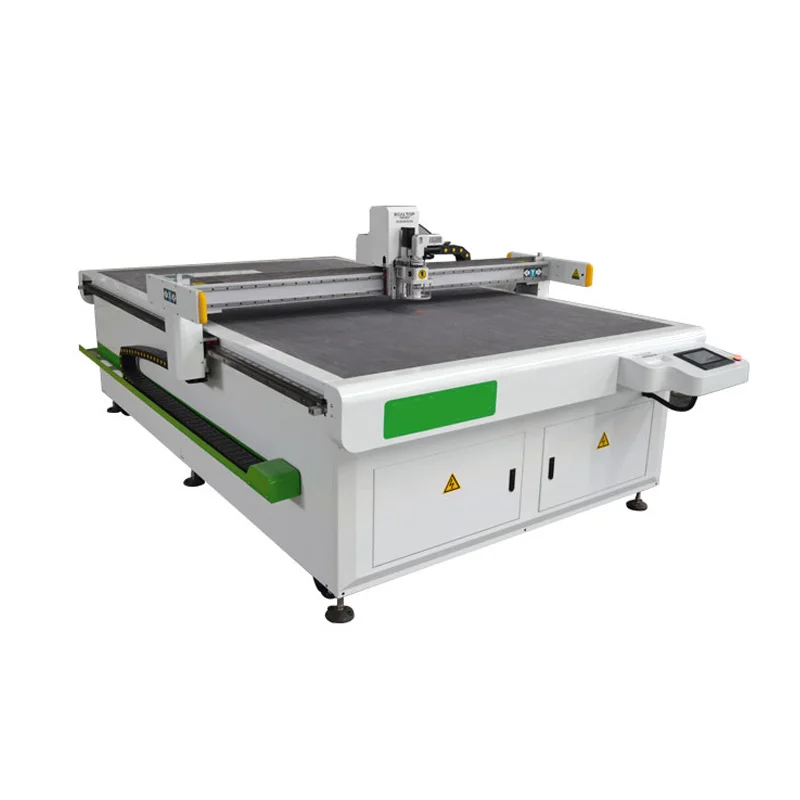
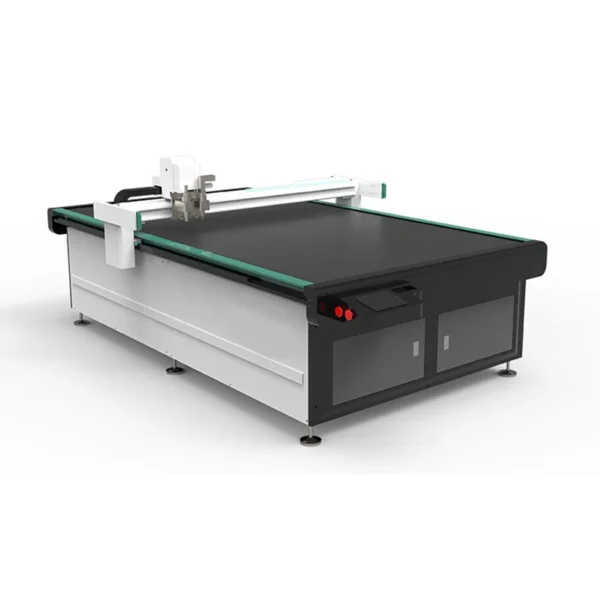
| Product Type | CNC Oscillating Knife Cutting Machine |
| Working Area | 1600 × 2500 mm |
| Overall Dimensions (L × W × H) | 3450 × 2300 × 1250 mm |
| Rated Power | 11 kW |
| Voltage | 380 V ± 10 % |
| Working Table | Flat vacuum table, 7.5 kW vacuum pump |
| Multifunctional Head | Swiss imported knife — vibration full cut, half cut, cursor location |
| Safety Device | Infrared sensors |
| Translational Velocity | 800 – 1200 mm/s |
| Cutting Speed | 200 – 800 mm/s depending on material type and thickness (basis not stated in source) |
| Cutting Materials | Leather, clothing flexible materials, sponge composite leather, PVC, soft glass, silicon, rubber |
| Repeated Accuracy | ≤ 0.1 mm |
| Transmission System | Digital servo motor, linear guide, synchronous belt, ball screw (imported) |
| Instruction System | HP-GL compatible format |
| Servo Motor | Japanese Yaskawa |
| Conveyor Belt | Germany imported |
| Linear Rail | Taiwan Hiwin |
| Feed System | Auto feeding |
Application Suitability
| Application | Material or Output |
|---|---|
| Garment & footwear batch cutting | Multi-layer woven fabric, denim, technical textiles |
| Leather goods & upholstery | Split leather, PU-coated leather, sponge composite leather |
| Automotive interior trimming | Non-woven carpet, sound-deadening felt, headliner fabric |
| Home textile & blanket production | Fleece, woven blanket, tufted carpet up to moderate pile height |
| Soft signage & vinyl graphics | Flexible PVC, self-adhesive vinyl, banner material |
| Packaging sample making | Corrugated board (with appropriate drag knife tooling, confirm thickness) |
What "Cutting Speed 200–800 mm/s" Actually Depends On
The headline speed is only valid for a specific material thickness and tool-head selection, not a blanket guarantee across every fabric in your catalogue.
When a buyer sees a wide cutting-speed range on a CNC Oscillating Knife Cutting Machine for Fabric and Leather, the first question should be which material produced the 800 mm/s figure and which produced the 200 mm/s figure. A dense sponge composite leather will demand a slower traverse and deeper oscillation stroke than a single-ply polyester lining, yet the same machine can handle both if the knife type, frequency and vacuum zoning are adjusted accordingly. Skipping that conversation before the order leads to ragged edges, crushed foam cores or incomplete cuts mid-sheet. [NEED_CITE: relationship between oscillation frequency and material density in flatbed knife cutting]
Knife Selection Dictates Edge Quality More Than Table Size
A Swiss imported oscillating knife head delivers high-frequency vertical vibration that slices through flexible composites without dragging or fraying. For woven textiles and garment linings, the full-cut mode produces a clean, sealed edge. When the same head switches to half-cut or kiss-cut, it scores vinyl or self-adhesive films without penetrating the backing paper — a function that drag knives cannot replicate. The cursor location feature aids manual alignment when CCD contour recognition is not required, keeping set-up short for short-run sample work.
Vacuum Zoning Decides Whether Small Parts Stay Flat
The 7.5 kW vacuum pump is divided into selectable zones across the 1600 × 2500 mm table. Large sheets engage the full surface, while nested small components — shoe uppers, gasket profiles, automotive badge cut-outs — activate only the zones directly beneath the cutting path. Without zoning, air leaks around the sheet perimeter reduce hold-down force, and lightweight fabric lifts into the knife, causing miscuts or blade damage. [NEED_CITE: vacuum table zoning principles for flatbed digital cutting]
Reading the Specs That Influence Daily Output
The Japanese Yaskawa servo motors paired with Taiwan Hiwin linear rails maintain ≤ 0.1 mm repeatability at translational velocities up to 1200 mm/s. In practice, this means the knife returns to the same coordinate after rapid traverses between nested parts, reducing cumulative error across a multi-sheet cutting run. The Germany-imported conveyor belt supports auto-feeding from a roll or stack, eliminating the manual repositioning pause between sheets. An 11 kW total rated power draw is typical for a machine combining a 7.5 kW vacuum pump with servo drives and oscillation motors; buyers should verify that their workshop supply can sustain 380 V ± 10 % on a dedicated circuit to avoid brown-outs that trip the servo amplifiers. HP-GL compatibility means nesting software from most garment and signage workflows can output tool paths without intermediate conversion, though DXF and PLT import should be confirmed with the specific nesting package in use.
The Hidden Cost of Skipping a Material Trial
Ordering a flatbed cutting table based solely on working area and price often surfaces problems only after installation. If the vacuum zone layout was specified for large-format signage vinyl and the buyer actually cuts dense automotive carpet, hold-down pressure on small nested pieces may prove insufficient, producing shifted layers and wasted material. If the oscillation frequency was set for thin garment lining, attempting sponge composite leather at full speed generates ragged edges that require secondary trimming, erasing any throughput advantage. [NEED_CITE: cost of rework from incorrect knife and vacuum configuration]
Why Buyers Source This Range Here
In-house design covers both oscillating knife and drag knife tool heads on the same gantry, so the cutting method follows the material instead of forcing one method across every substrate. Every tool-head and vacuum-zone layout is listed in the configuration document before production starts, leaving no ambiguity about what arrives on the shop floor. The Swiss knife, Yaskawa servo and Hiwin rail combination is documented in the machine specification sheet, giving maintenance teams a clear bill of replaceable components. Software compatibility is verified against the buyer’s nesting workflow before the order is locked, preventing file-format surprises during commissioning. Sample cutting on the buyer’s own material — not a generic showroom swatch — confirms edge quality and feasible speed before the deposit is paid.
Documentation & Verification
- Machine specification sheet listing every selected tool head, vacuum zone map and feed option
- Electrical schematic confirming 380 V ± 10 % wiring, breaker rating and plug type
- Sample cutting report run on buyer-supplied fabric, leather or composite with measured edge quality
- Software licence and file format compatibility note covering HP-GL, DXF and nesting package version
- Factory test record showing repeated accuracy and cycle path on buyer’s material before packing
Installation, Commissioning & Support
- Requires a level concrete floor capable of supporting the 3450 × 2300 mm footprint plus operator clearance
- Dedicated 380 V three-phase circuit with breaker sized for 11 kW continuous draw
- Machine ships in a single crate; vacuum table sections and gantry are bolted together on site
- First-power commissioning includes vacuum zone calibration, servo tuning and knife depth setting
- Operator training covers HP-GL file import, nesting layout and tool-head changeover procedure
- Spare oscillating knife blades, vacuum seals and conveyor belt segments included in initial shipment
Preparing a Meaningful Inquiry
To receive a configuration that actually fits your production, share the material type, maximum thickness and whether the substrate is supplied in rolls or sheets. State your daily cutting volume and the typical nest layout so the vacuum zoning can be planned. Confirm your local voltage and frequency, the language needed on the control panel, and whether your existing nesting software outputs HP-GL, DXF or a proprietary format. If you need a sample cut on your own material before committing, send a representative sheet or roll specimen so the trial mirrors actual conditions.
Frequently Asked Questions
Q: How is the oscillating knife versus drag knife selected for my specific material?
A: Oscillating knives vibrate at high frequency to slice flexible composites without fraying, suited for woven fabric, sponge leather and carpet. Drag knives pull through thin vinyl, film and single-ply textiles. The correct choice depends on material density, thickness and edge requirement; we run a trial on your actual substrate to confirm.
Q: Does the vacuum table zoning hold small nested parts flat at high speed?
A: The 7.5 kW pump is divided into selectable zones across the 1600 × 2500 mm surface. For small components like shoe uppers or gasket profiles, only the active zone engages, concentrating hold-down force where the knife is cutting and preventing light fabric from lifting during rapid traverses.
Q: Will the software import my existing DXF, PLT or HP-GL files?
A: The instruction system is HP-GL compatible and typically accepts DXF and PLT imports. Before order confirmation we test your specific nesting software output to confirm that tool paths, layer mapping and kerf compensation transfer correctly without manual re-drawing.
Q: What voltage, plug type and control language are confirmed before shipment?
A: Standard rating is 380 V ± 10 %, three-phase. Plug type, cable length and control panel language are documented in the electrical schematic before production. Buyers in regions with 220 V or 440 V supply should specify this early so transformer and servo drive settings are adjusted at the factory.


商品评价
Clear filtersThere are no reviews yet.