






Fast Shipping
Carrier information

20k products
Payment methods

24/7 Support
Unlimited help desk

2-day Delivery
Track or off orders
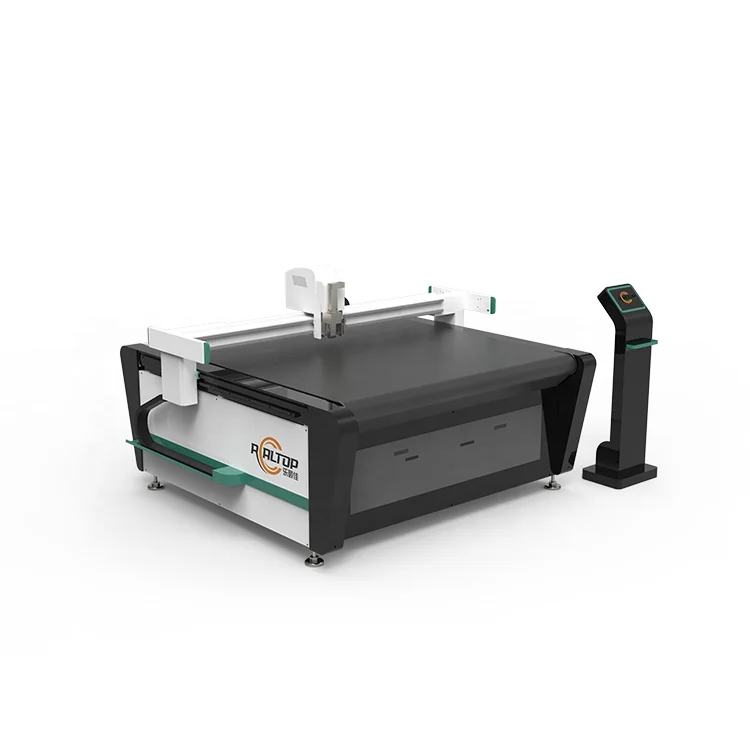
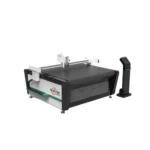
Material-Matched Tooling — RT-D2516/RT-S2516 oscillating and drag knife heads configured per fabric, leather or composite thickness, verified by sample cutting before order.
Technical Specifications
| Parameter | Value |
|---|---|
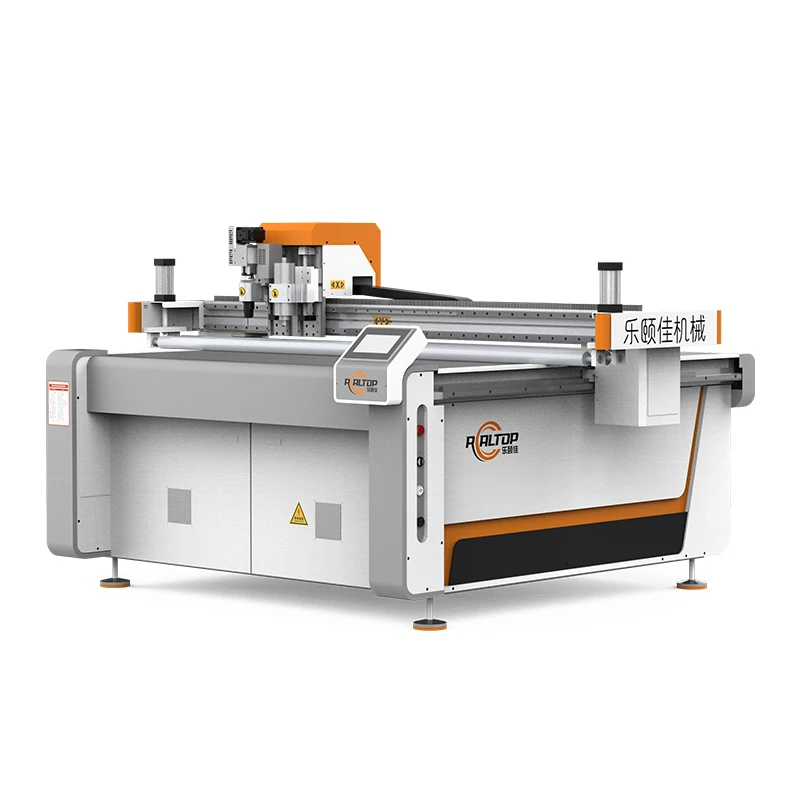
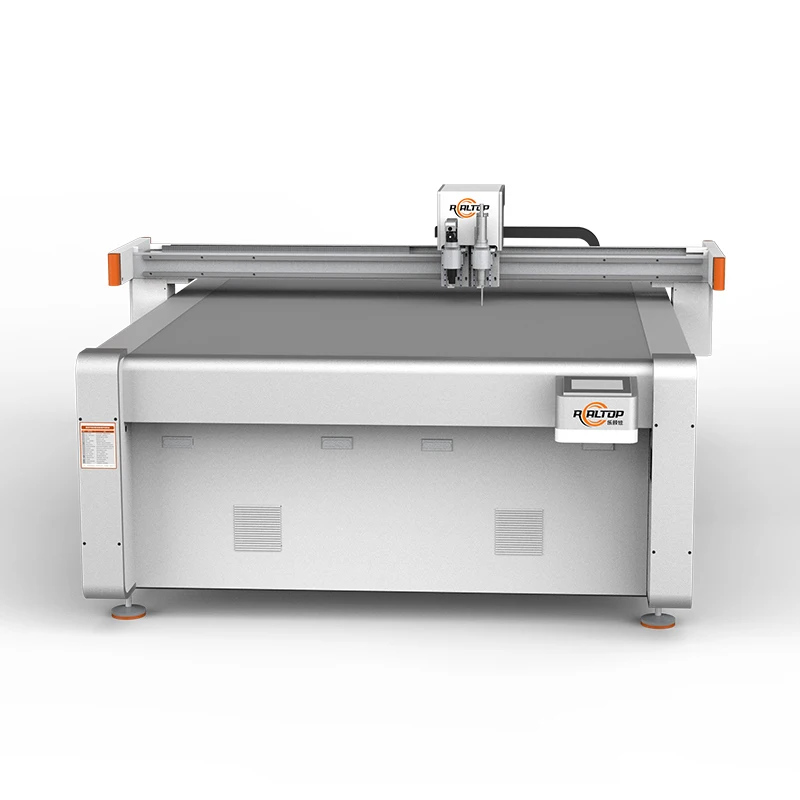
| Product Type | CNC Oscillating Knife Cutting Machine |
| Model | RT-D2516 / RT-S2516 |
| Working Area | 1600 × 2500 mm |
| Machine Size | 3450 × 2300 × 1250 mm |
| Rated Power | 9 kW |
| Vacuum Pump | 7.5 kW |
| Table Type | Flat working table with vacuum hold-down |
| Multifunctional Head | Swiss imported knife with vibration full cutting, half cutting and cursor location |
| Safety Device | Infrared sensors |
| Translational Velocity | 800–1200 mm/s |
| Cutting Speed | 200–800 mm/s (varies by material type and thickness) |
| Repeated Accuracy | ≤0.1 mm |
| Transmission System | Digital servo motor, linear guide, synchronous belt, imported ball screw |
| Servo Motor | Japanese Yaskawa |
| Linear Rail | Taiwan Hiwin |
| Conveyor Belt | Germany imported |
| Auto Feeding | Equipped |
| Instruction System | HP-GL compatible format |
| Voltage | 380V ± 10% |
| Certification | CE |
Application Suitability
| Application | Material or Output |
|---|---|
| Gasket manufacturing | Non-asbestos rubber, graphite, cork, PTFE sheets |
| Garment and footwear production | Leather, sponge composite leather, flexible fabrics |
| Automotive interior and soft trim | PVC, silicon, rubber, composite panels |
| Signage and packaging sample making | Soft glass, flexible board, corrugated stock |
Why the Material Thickness Question Beats Working Area Alone
A 1600×2500 mm bed means nothing if the knife head cannot penetrate your material at production speed.
I have seen buyers focus on table size first, sign the contract, and then discover on commissioning day that the oscillating knife stalls on 15 mm sponge composite or leaves ragged edges on PTFE gasket stock. The cutting speed range of 200–800 mm/s shifts depending on material density, and a head specified for light fabric will not push through denser composites without tooling changes. Confirming your exact material type, thickness and daily volume before the CNC oscillating knife cutting machine specifications are locked prevents a costly mismatch [NEED_CITE: industrial cutting tool selection by material density and thickness].
Matching Knife Motion to Fabric and Composite Behaviour
The Swiss imported oscillating head on this flatbed table cycles between full cutting, half cutting and cursor location, which matters when a single job mixes through-cuts on leather with kiss-cuts on adhesive-backed vinyl. Fabric layers shift under lateral drag; the vibration action shears cleanly without pulling threads, while a drag knife would distort woven material. For gasket producers running non-asbestos rubber or graphite, the same head holds its edge longer than standard tooling, keeping repeated accuracy within ≤0.1 mm across a full 1600 × 2500 mm nest.
Vacuum Zoning and the Small-Part Lift Problem
A 7.5 kW vacuum pump paired with a flat working table secures full sheets, but small gasket profiles or narrow garment pattern pieces can still lift at translational velocities up to 1200 mm/s if the table lacks adequate zoning. The German imported conveyor belt and auto-feeding system keep material flat entering the cut zone, yet buyers running high volumes of small parts should verify that the vacuum zone layout matches their nesting pattern. This is a detail we confirm during the sample cutting stage rather than assume from a general spec sheet.
What the Drive Train Actually Does for Edge Quality
Yaskawa digital servo motors and Taiwan Hiwin linear rails govern how precisely the knife follows a vector path. When cutting leather for footwear uppers or automotive trim, any micro-backlash shows as a visible step on curved contours. The imported ball screw and synchronous belt combination keeps positional drift within ≤0.1 mm, which means nesting software can tighten part spacing without risking overlap. An HP-GL compatible instruction system accepts nested files from common CAD workflows, so your existing file format and nesting routine carry over without reprogramming [NEED_CITE: servo drive positioning accuracy in CNC flatbed cutting tables].
The Hidden Cost of Skipping the Sample Cut
When a buyer approves a CNC oscillating knife cutting machine configuration without running their own material, the first sign of trouble is frayed edges on the production floor — not in the factory acceptance test. Ragged cuts on sponge composite leather force secondary trimming, which erodes throughput far more than any quoted cutting speed suggests. Vacuum lift on small PTFE gasket pieces ruins nesting yield. These problems surface after the machine is installed, when reconfiguration means downtime and air-freighted tooling.
Why Source This Configuration Here
In-house design covers both oscillating and drag knife setups, so the tool head is chosen for your material rather than forced into a single option. Tool head and table configuration are specified per material and production volume, documented in a configuration list before production. CCD camera positioning is available for printed contour tracking on signage and garment textiles. Software compatibility is confirmed against your nesting workflow before the order is finalized. Sample cutting on the buyer’s own material is performed before commitment, producing a report you can review against your edge-quality standard.
Documentation & Verification
- Machine specification sheet listing RT-D2516/RT-S2516 working area, drive components and knife head type
- Electrical schematic confirming 380V ± 10% wiring, breaker sizing and vacuum pump circuit
- Tool head and vacuum table configuration list matched to your material and thickness
- Sample cutting report on your fabric, leather or gasket stock with edge and depth notes
- HP-GL software licence and file format compatibility note for your nesting workflow
- Factory test record with repeated accuracy measurement before crate closure
Installation, Commissioning & Support
- Floor space of at least 3450 × 2300 mm plus operator clearance for the 9 kW rated system
- Dedicated 380V ± 10% circuit with confirmed plug type for your local market
- Machine arrives on flatbed table; vacuum pump and conveyor belt connected on-site
- First-run parameter tuning on your material thickness to dial in 200–800 mm/s cutting speed
- Operator training on Swiss knife change, half-cut depth setting and infrared sensor reset
- Spare oscillating blades and conveyor belt segments shipped with initial order to avoid line stops
What to Share with Your Inquiry
Send the exact material type, thickness range and largest sheet dimension you process. Include your daily cut volume and the nesting software you currently use so we can verify file format compatibility. Confirm your workshop voltage, frequency and preferred control language. If your production involves printed contour work, note the mark style and spacing so the CCD camera setup can be quoted from the start.
Frequently Asked Questions
Q: How is cutting thickness verified for my specific material?
A: We run your actual fabric, leather or gasket stock on the RT-D2516/RT-S2516 before the order is finalized. The sample cutting report records knife type, speed setting, edge condition and depth achieved, so you approve cutting capacity based on real output rather than a generic chart.
Q: Which knife head suits my material — oscillating or drag?
A: Oscillating vibration cutting handles woven fabrics, sponge composites and thicker gasket sheets without pulling or fraying. Drag knives suit thin vinyl and single-layer substrates. We recommend the head based on your material sample and confirm the choice in the configuration list before production.
Q: Does the vacuum table prevent small parts from lifting?
A: The 7.5 kW pump holds full sheets firmly, but narrow gasket profiles and small garment pieces need adequate zone coverage. During the sample test we check hold-down on your actual nesting layout and adjust zone valving if lift occurs at translational speeds up to 1200 mm/s.
Q: Can the control software import my existing nesting files?
A: The instruction system accepts HP-GL compatible formats used by most nesting packages. We confirm file import and output compatibility against your current software during the pre-order stage, documented in the software licence and compatibility note shipped with the machine.
Q: What voltage and language options are confirmed before shipment?
A: Standard supply is 380V ± 10%, but plug type, frequency and control panel language are confirmed to match your facility before the CNC oscillating knife cutting machine leaves the factory. The electrical schematic reflects your local requirements [NEED_CITE: voltage and frequency standards by export market].


商品评价
Clear filtersThere are no reviews yet.