






Fast Shipping
Carrier information

20k products
Payment methods

24/7 Support
Unlimited help desk

2-day Delivery
Track or off orders
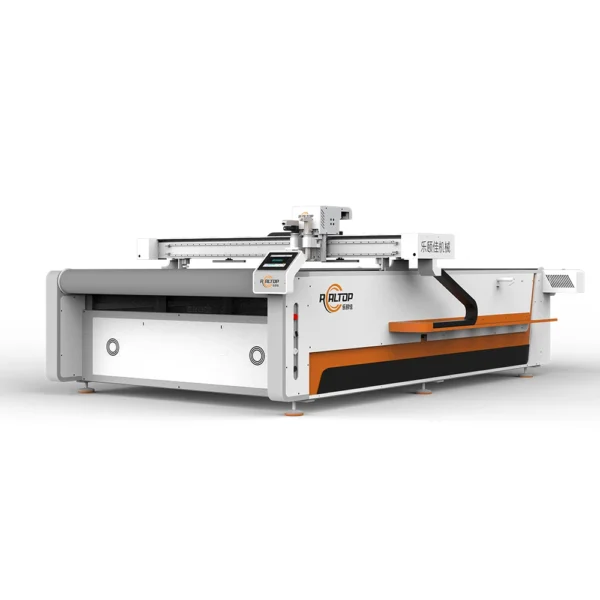
Tool Head Matching — oscillating, rotary, pneumatic and kiss-cut options configured per fabric behavior rather than a single default spindle forcing compromise on every textile you run.
Technical Specifications
| Parameter | Value |
|---|---|
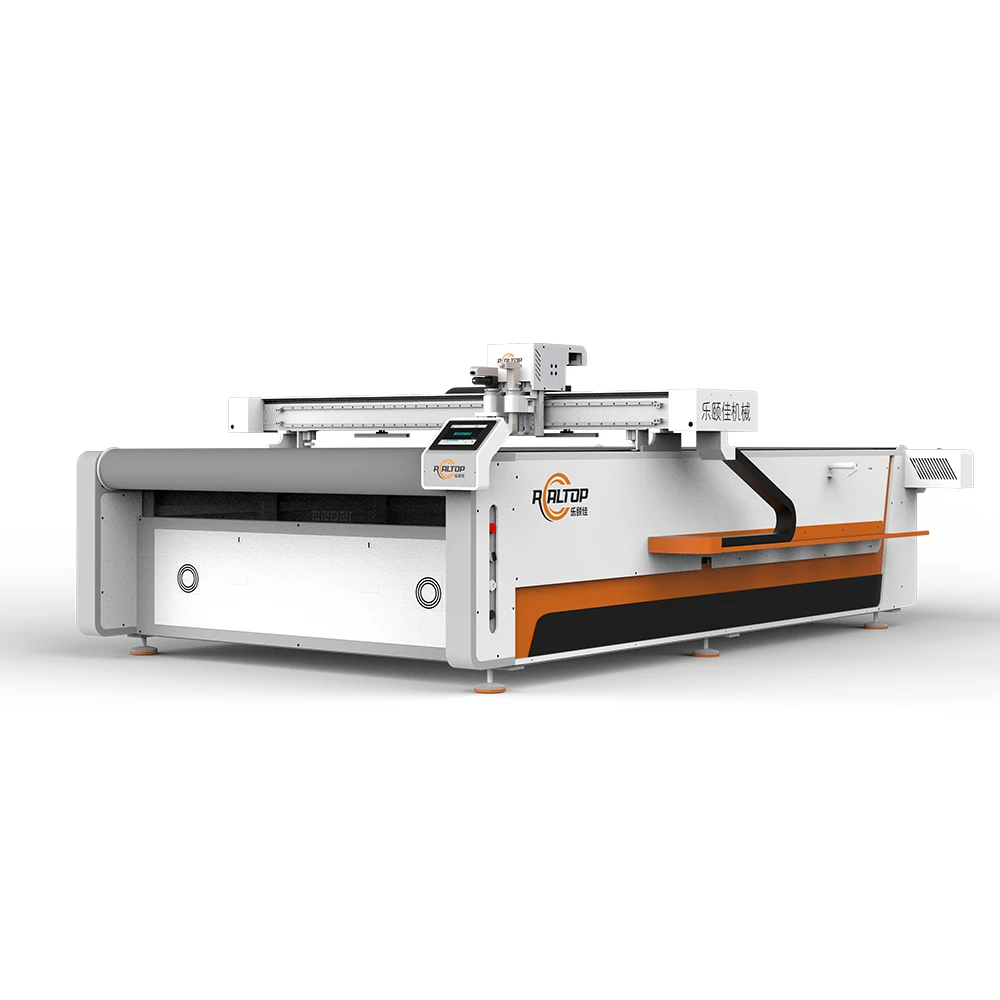
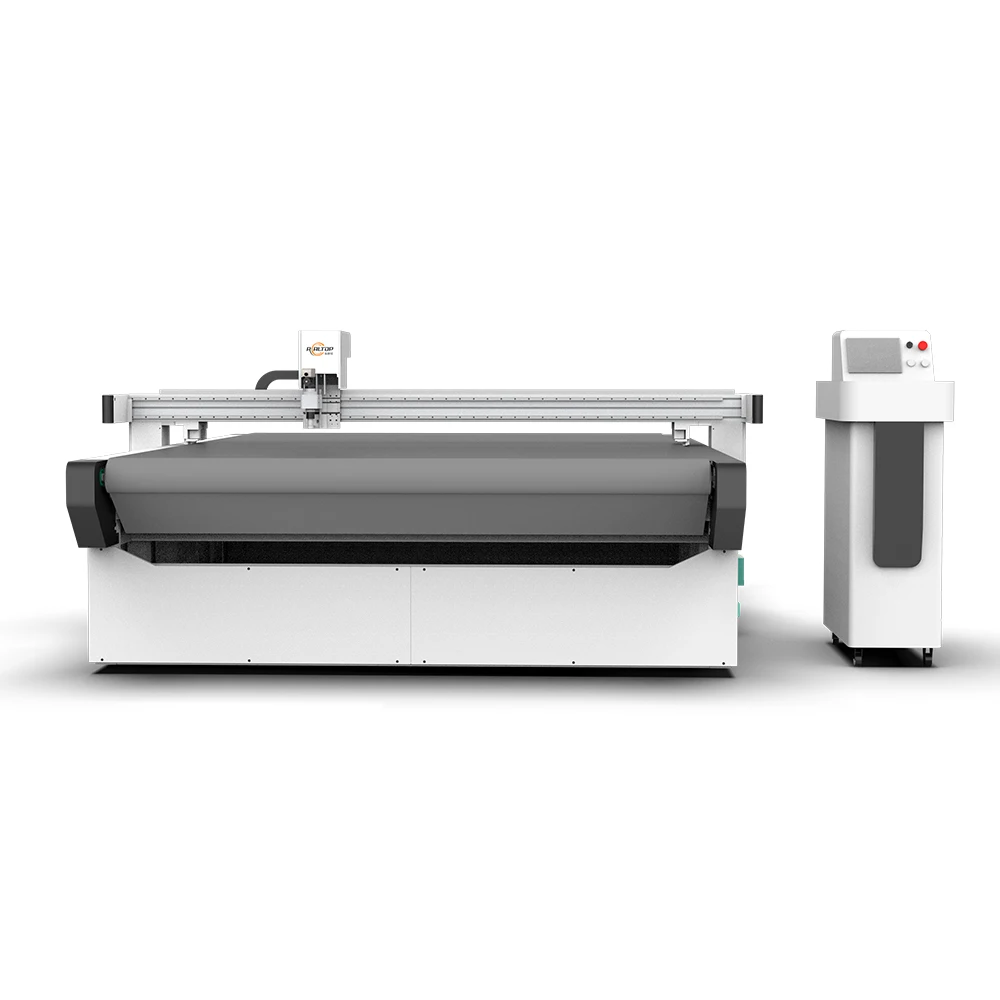
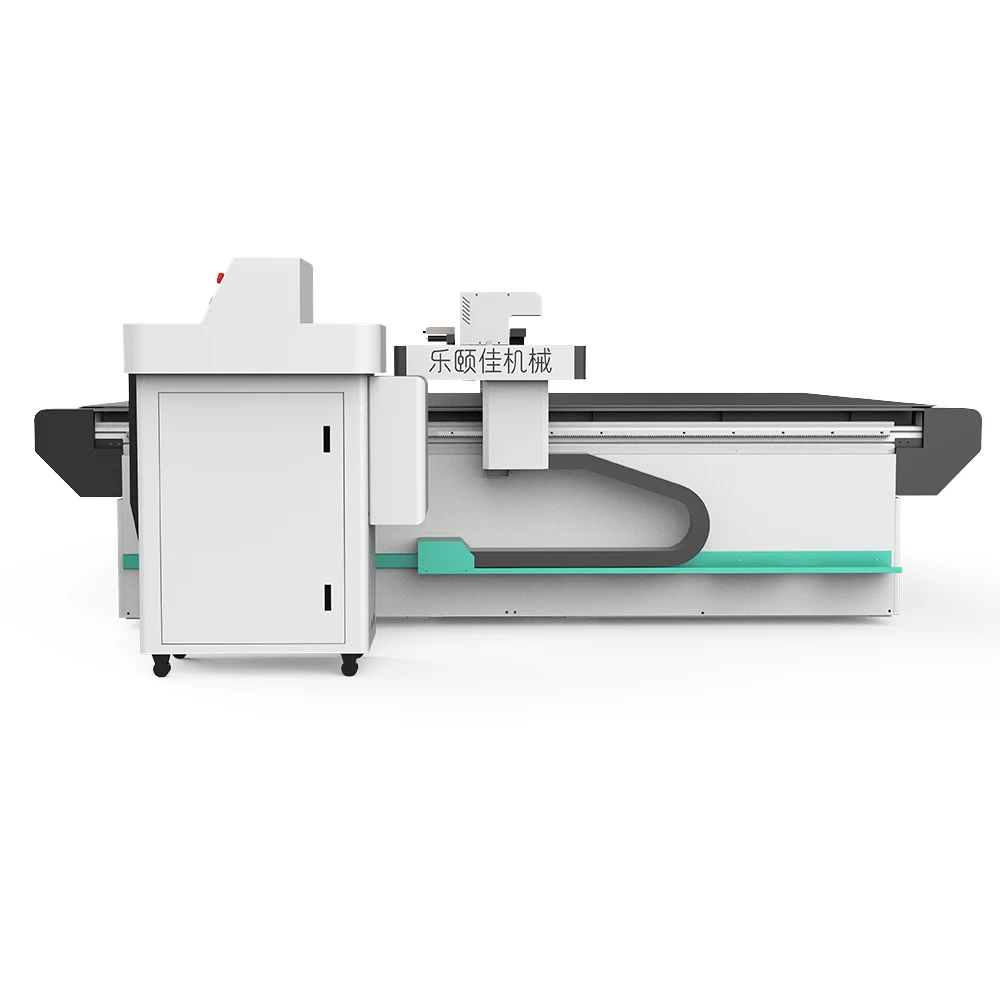
| Product Type | CNC Oscillating Knife Cutting Machine |
| Working Area | 1600 × 2500 mm |
| Tool Head Options | Oscillating knife, Driven rotary knife, Creasing wheel, Kiss cutting tool, Pneumatic knife, Milling tool, V groove knife |
| Cutting Speed Range | 0 – 2000 mm/s |
| Single-Pass Thickness Capacity | Up to 30 mm (basis not stated in source — confirm material type and layer count) |
| Positioning / Cutting Accuracy | ±0.1 mm |
| Vacuum Pump Power | 9 kW |
| Vacuum Table Construction | Aluminum bellows vacuum table with high flatness and sealing |
| Voltage Options | 110V / 220V / 380V (frequency not specified in source) |
| Control System | PLC control panel with intuitive interface |
| Servo Drive Options | Panasonic, Delta, Dorna (source value — verify against manufacturer catalog) |
| Compatible File Formats | PLT, DXF, AI, PDF |
| Safety Devices | Infrared sensor device, Emergency stop device |
| Machine Dimensions (L × W × H) | 3300 × 2100 × 1350 mm |
| Nesting Software | Intelligent nesting system included |
| Display Language Options | English, Russian, Italian, Chinese; custom languages available |
| Standards Compliance | CE (declaration to be verified) |
Application Suitability
| Application | Material or Output |
|---|---|
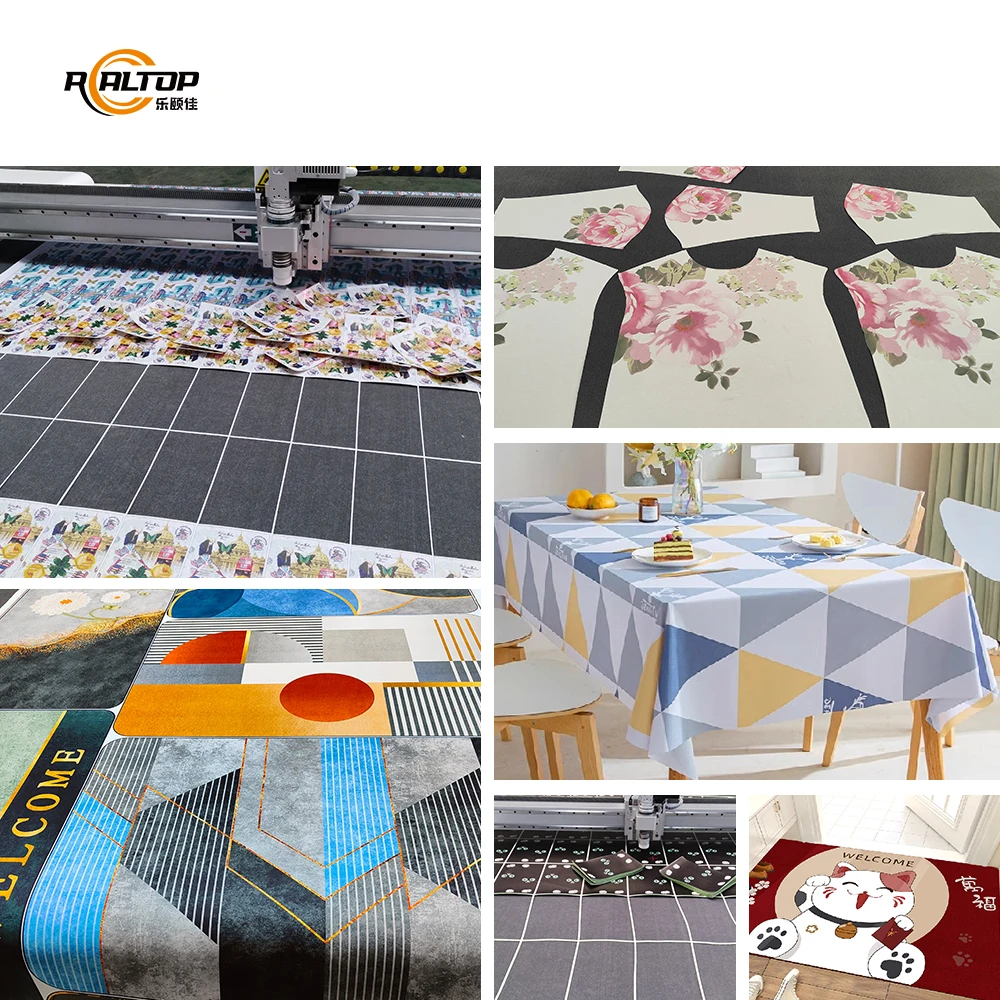
| Apparel manufacturing | Suits, knitwear, lace, pattern-matching layouts on woven and knitted fabrics |
| Automotive interiors | Seat fabrics, carpets, PVC mats cut to burr-free edge standards |
| Home textiles | Sofa fabrics, curtains, rugs, multi-layer cutting of heavy woven textiles |
| Composite material processing | Carbon fiber prepreg, aramid, specialty materials without delamination or thermal deformation |
Why "Fits All Fabrics" Is the Most Expensive Promise a Seller Can Make
A single knife setup cannot cleanly slice a 0.2 mm silk lining and a 25 mm foam-backed automotive carpet at the same time.
I spent years on the assembly floor before moving into technical sales, and the pattern is always the same: a buyer specifies a CNC oscillating knife cutting machine specifications sheet based on working area alone, and the tool head shipped is a generic oscillating blade. Months later, edge quality on their actual production material is ragged, the blade burns through composite layers, or a kiss-cut on adhesive vinyl tears instead of releasing [NEED_CITE: common tooling mismatch complaints in textile cutting equipment]. The machine is not broken — the configuration was never matched to the material. Selecting the correct CNC oscillating knife cutting machine specifications means starting with the fabric type, layer count, and daily volume before anything else.
Matching Tool Behavior to Fabric Behavior
Different textiles respond to cutting force in fundamentally different ways. A loosely woven knit will shift and stretch under a drag knife, while a dense woven holds its shape but demands higher oscillation frequency to penetrate cleanly. The available tool heads — oscillating, rotary, pneumatic, kiss-cut — each address a specific material response. A driven rotary knife suits continuous-ply fabric rolls where a clean shear edge matters, while a pneumatic knife handles thick, compressible stacks like quilted insulation without crushing the loft.
Vacuum Adsorption and Small-Part Stability
The 9 kW vacuum pump paired with the aluminum bellows table is designed to pull air evenly across the full 1600 × 2500 mm surface [NEED_CITE: vacuum table flatness standards for CNC digital cutting]. When cutting small pattern pieces — think collar stays, pocket flaps, or gasket inserts — insufficient adsorption lets edges lift mid-cut, producing dimensional drift that no downstream sewing operation can absorb. Zoning the vacuum into independent sectors keeps the holding force concentrated where the active cutting zone sits, which matters far more than raw pump power alone.
Reading the Numbers That Actually Matter on the Shop Floor
The ±0.1 mm positioning accuracy governs how tightly nested pieces can sit next to each other without risking overlap cuts into adjacent panels — a direct factor in fabric yield on expensive materials like suiting wool or technical aramid. The 0 – 2000 mm/s cutting speed range defines the envelope, but the speed you actually run depends on layer count and blade geometry; a single-ply lace runs near the upper band while a 30 mm stack of carpet backing requires a slower pass to avoid blade deflection. The PLC control interface with multi-language display means an operator in São Paulo or Tashkent can set parameters in their own language, reducing setup errors that lead to scrapped material. File format support for PLT, DXF, AI, and PDF covers most workflows without requiring a secondary conversion step that can distort curves.
The Hidden Cost of Skipping the Material Sample Step
A specification sheet that promises up to 30 mm cutting thickness without naming the material type leaves the buyer holding the risk. I recall a customer who ordered a unit rated for heavy fabric, tested it successfully on standard polyester, and then loaded fiberglass-reinforced composite onto the table on day one of production. Blade wear tripled within a week, edge quality collapsed, and the vacuum table could not hold the stiff material flat [NEED_CITE: abrasive filler impact on oscillating knife blade life]. The machine was correctly built — the wrong tool head was specified because the actual production material was never seen before the purchase order was signed.
Why Buyers Come Back After the First Order
Tool head and table configuration is specified per material and production volume rather than quoted as a single default build, so the machine arrives ready for the buyer’s actual workflow. Sample cutting on the buyer’s own material happens before commitment, producing a cutting report that documents edge quality, blade wear rate, and achievable speed on that specific textile. CCD camera positioning is available for printed contour work, and software compatibility — file formats, nesting logic, license terms — is confirmed before the order rather than discovered during installation. Voltage, plug type, and control language are locked in at the quotation stage, eliminating the customs-delay surprises that stall production launches.
Documentation & Verification
- Electrical schematic and voltage confirmation matched to your target market supply
- Tool head and vacuum table configuration list tied to your specific textile and layer count
- Sample cutting report generated on your own material before order confirmation
- Software license, file format compatibility note, and nesting workflow verification document
- Factory test record showing positional accuracy and cut quality on agreed material
- Spare parts list with part numbers for blades, vacuum seals, and drive belts
Installation, Commissioning & Support
- 3300 × 2100 mm footprint requires a level concrete pad with clearance for material loading on both long sides
- 9 kW vacuum pump and servo drives need a dedicated circuit matching the confirmed voltage and frequency
- Machine ships in modular sections; gantry and table frame bolt on site with alignment verified by technician
- First-run parameter setting covers blade oscillation frequency, vacuum zone mapping, and nesting calibration
- Operator training covers tool head changeover, file import workflow, and blade replacement procedure
- Wear-part schedule covers oscillating knife blades, vacuum table seals, and rotary knife sharpening intervals
What We Need From You to Quote Accurately
Send us a sample of your actual production material — the specific fabric, thickness, and any backing or coating — along with your typical daily cutting volume and the maximum sheet size you process. Tell us your workshop voltage and frequency, the language your operators need on the control panel, and whether your current design files are in DXF, PLT, or another format. If your workflow involves printed registration marks for contour cutting, let us know so we can include CCD positioning in the configuration review.
Frequently Asked Questions
Q: How do I confirm the machine can cut my specific fabric thickness?
A: Send a sample of your actual production material to the factory for a test cut. The resulting report documents blade type used, edge quality, achievable speed, and single-pass thickness on that specific textile. A number on a spec sheet without material context does not tell you what happens on your shop floor.
Q: Which tool head should I choose for my material?
A: Oscillating knives handle most woven and knitted textiles. Driven rotary knives suit continuous-ply roll cutting where a shear edge matters. Pneumatic knives prevent crushing on thick compressible stacks. The correct choice depends on your material behavior, and a sample cut confirms it before you commit.
Q: Will small pattern pieces lift off the table during cutting?
A: Small parts can lift if vacuum adsorption is not zoned correctly for the active cutting area. The aluminum bellows table with a 9 kW pump allows sector control, concentrating holding force where the knife is working. Configuration of vacuum zones is specified during the pre-order review based on your typical piece size.
Q: Is my existing nesting software and file format compatible?
A: The system accepts PLT, DXF, AI, and PDF files and includes an intelligent nesting module. Compatibility with your specific nesting workflow and any third-party software licenses is confirmed during the pre-order documentation stage so there are no surprises at installation.
Q: How are voltage and language requirements handled before shipment?
A: Voltage options span 110V, 220V, and 380V, and the control panel supports English, Russian, Italian, Chinese, and custom languages. Your required voltage, frequency, plug type, and display language are confirmed in writing at the quotation stage and verified against the electrical schematic before the machine leaves the factory.


商品评价
Clear filtersThere are no reviews yet.