








Fast Shipping
Carrier information

20k products
Payment methods

24/7 Support
Unlimited help desk

2-day Delivery
Track or off orders
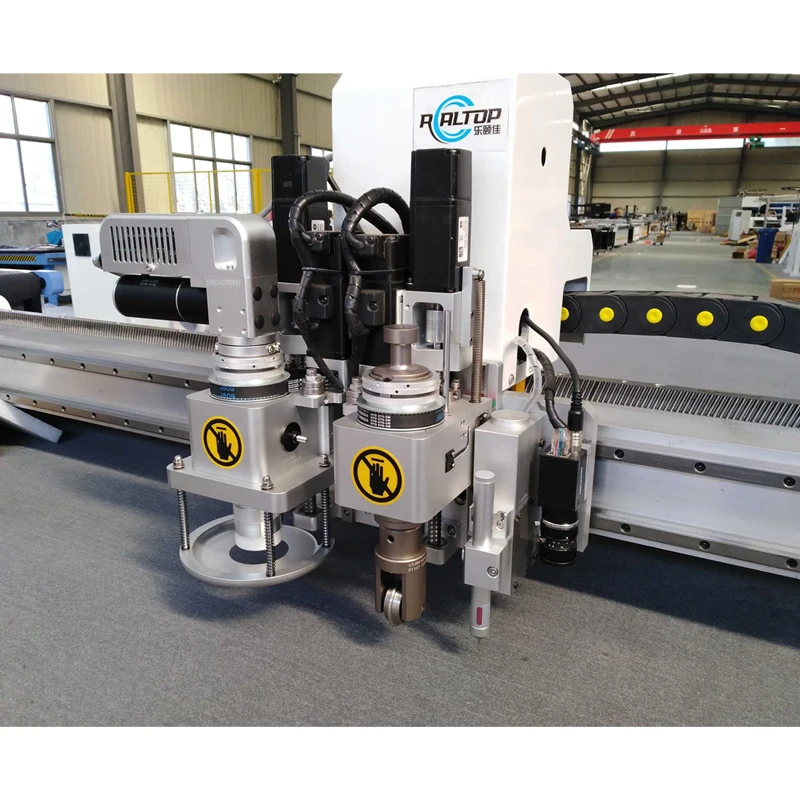
Multi-Tool Head Configuration — Each oscillating knife, creasing wheel, and kiss-cut tool is selected against your actual board grade before shipment, preventing the ragged edges and crushed cores I have seen on poorly specified carton cutters.
Technical Specifications
| Parameter | Value |
|---|---|
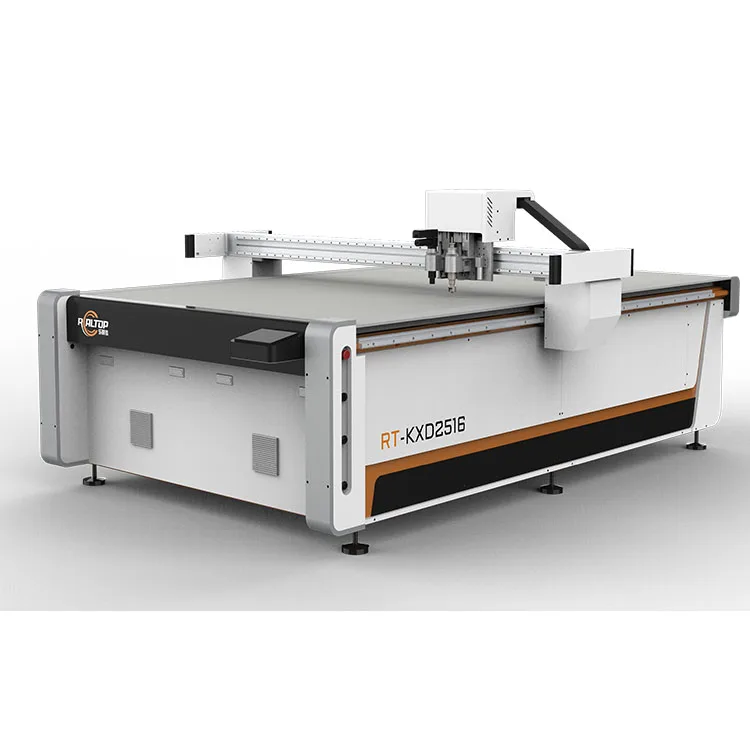
| Model | RT–R2513 / RT-D2516 / RT-S2516 |
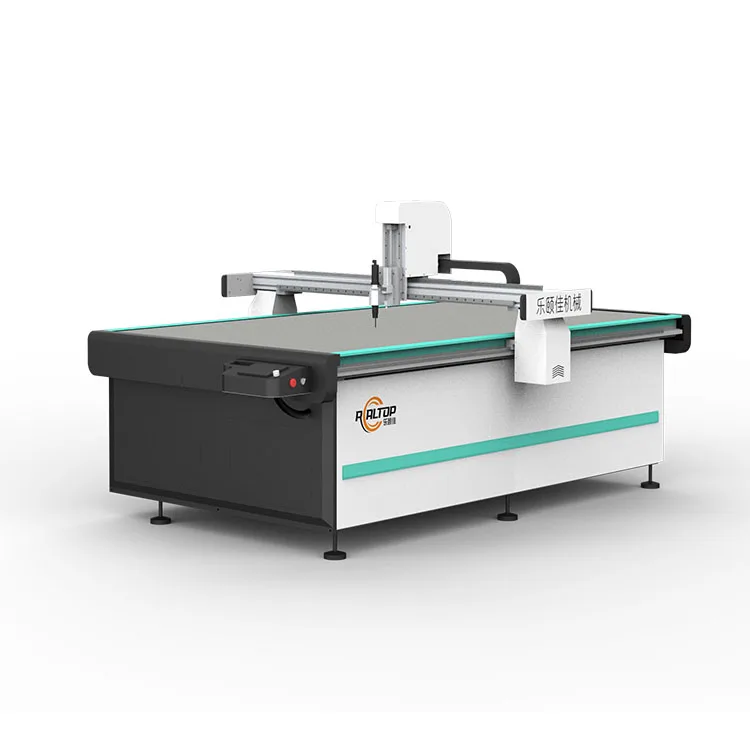
| Product Type | CNC Oscillating Knife Cutting Machine for Packaging and Cardboard |
| Working Area | 2500×1300 mm (RT–R2513) / 1600×2500 mm (RT-D2516 / RT-S2516) |
| Machine Size | 3550×1910×1400 mm (RT–R2513) / 3450×2300×1250 mm (RT-D2516 / RT-S2516) |
| Cutting Tools | Oscillating knife, creasing tool, kiss-cut knife tool, round punch |
| Cutting Thickness | ≤18 mm (basis to be confirmed by material type and density) |
| Fixing Method | Vacuum system with aluminum alloy honeycomb platform |
| Vacuum Pump | 7.5 kW |
| Rated Power | 9 kW |
| Voltage | 380 V |
| Servo Drive | Dongling servo (Taiwan Delta servo option available) |
| Guide Rail | Taiwan Hiwin linear rail |
| Repeated Accuracy | <0.05 mm |
| Transmission Method | Ethernet port |
| Profile Format | DXF, OLT, PDF, AI |
| Table Type | Aluminum alloy honeycomb structure vacuum adsorption platform |
| Frame | Welded thick square seamless steel structure, high temperature treated |
| Safety Device | Infrared sensors, emergency stop |
| Blade Supply | 10 pieces of oscillating blades included |
| Software | Professional carton nesting software, multi-language support |
| Language Options | English, Russian, Italian, Chinese; special languages customizable |
| Warranty | 1 year (excluding felt and knife blades) |
| Delivery Time | <30 working days |
| Standards | CE declaration where applicable |
Application Suitability
| Application | Material or Output |
|---|---|
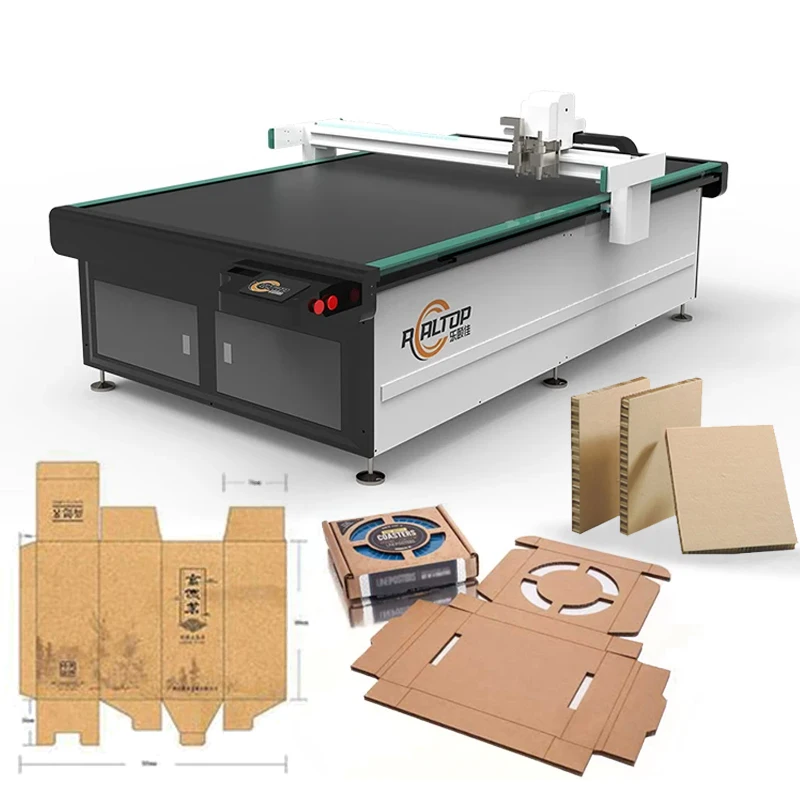
| Packaging carton and box sample making | Corrugated board, greyboard, honeycomb cardboard up to 18 mm |
| Sticker and label contour cutting | Self-adhesive vinyl, coated paper, PP synthetic paper |
| Corrugated and cardboard box production | Single, double, and triple-wall corrugated board with creasing |
| Express paper box packaging | Kraft paper, coated cardboard, micro-flute board |
| High-end gift box packaging | Rigid board, greyboard with kiss-cut and crease lines |
| Large electrical carton packaging | Heavy-duty corrugated and honeycomb board with perforation |
| Billboard and business card cutting | PVC foam board, PP corrugated sheet, cardstock |
Why Specified Cutting Thickness Alone Misleads Packaging Buyers
Board density and flute profile determine actual cutting performance, not a single millimeter figure.
When I was commissioning a vibrating knife cutter for a packaging plant in Mexico, the honeycomb cardboard the customer ran on their production floor was noticeably denser than the sample blocks we had used during pre-sale testing. The knife head could not achieve clean penetration, and every cut edge showed torn fibers and crushed cores. We spent two full days swapping blade geometries and adjusting oscillation frequency before the cut quality met their acceptance standard [NEED_CITE: material density impact on oscillating knife cutting performance]. A CNC oscillating knife cutting machine specifications sheet that reads "≤18 mm" tells you nothing about whether that 18 mm refers to low-density E-flute or high-density double-wall honeycomb. The right approach is to send your actual production board to the factory for sample cutting, confirm the tool head, oscillation amplitude, and feed rate against your specific material, and only then lock in the configuration.
Matching the Tool Head to Your Board Grade
A packaging sample maker typically needs three operations in a single pass: full cutting, creasing, and perforation. The RT–R2513, RT-D2516, and RT-S2516 series carry an oscillating knife, a creasing tool, a kiss-cut knife, and a round punch so that one CNC oscillating knife cutting machine handles the complete die-line without tooling changeover. For micro-flute and thin coated board, a high-frequency oscillating blade with a narrow kerf produces clean edges without delamination. For double and triple-wall corrugated board, a wider blade stroke and adjusted oscillation amplitude prevent the flute structure from collapsing mid-cut. The creasing wheel is matched to the board caliper so that the fold line compresses the fibers without breaking the liner.
Vacuum Zoning and Small-Part Hold-Down
Vacuum adsorption is where many carton cutting tables fail in practice. A single-zone vacuum table holds a full sheet firmly, but once the first few parts are cut free, they lift off the bed under knife drag force and shift position, ruining registration on the remaining cuts. The aluminum alloy honeycomb platform on these models works with a 7.5 kW vacuum pump to generate distributed suction across the bed surface. For packaging sample makers running nested layouts with many small carton blanks, the table zoning must match the cut pattern so that vacuum continues to grip the skeleton around each part [NEED_CITE: vacuum table zoning practices in digital flatbed cutting]. Confirming zone layout before order prevents the scenario where small gift box blanks lift and drift during the final passes of a complex nesting file.
Reading the Specifications for Real Production Impact
The repeated accuracy figure of <0.05 mm depends on two hardware decisions: Taiwan Hiwin linear guide rails for straightness and a servo-driven rack transmission for positioning. In carton sample making, this matters most when a crease line must align with a printed fold mark across a 2500 mm sheet length — accumulated positional error at that span causes the finished box to fold asymmetrically. The 9 kW rated power accounts for the oscillating knife spindle, the vacuum pump, and the servo drives running simultaneously, so the electrical supply must support that continuous draw, not just a peak figure. Ethernet-based file transmission replaces legacy USB workflows, letting the machine sit on a workshop network where nesting files are pushed directly from the design office. The welded thick square seamless steel frame, treated at high temperature, resists the vibration introduced by the oscillating knife head at high stroke rates, which otherwise transfers into chatter marks on the cut edge.
The Cost of Wrong Tooling After the Machine Arrives
When a packaging producer selects a machine based on working area and price alone, the first production run often reveals the gap. An oscillating knife specified for thin cardstock will tear through double-wall corrugated board, leaving ragged edges that require manual trimming and defeat the purpose of digital sample making [NEED_CITE: tooling mismatch consequences in carton cutting operations]. A creasing wheel set to the wrong board caliper will either fail to compress the fibers enough for a clean fold or crush the flute structure entirely. If the software cannot import the nesting files your designer produces in AI or DXF format, every job requires manual re-drawing before cutting begins. These are not warranty issues — the machine is functioning as built, but the configuration does not match the production task.
Why Packaging Producers Source This Configuration Here
The knife cutting setup on each RT–R2513, RT-D2516, or RT-S2516 is specified against the buyer’s actual board samples, not chosen from a fixed menu. Tool head selection, blade geometry, oscillation frequency, and vacuum zone layout are all confirmed through sample cutting on your material before the order is finalized. The factory produces both knife and laser cutting systems in-house, so if your production includes non-board materials like acrylic templates or foam inserts, the cutting method is matched to each material rather than forced through one tool path. Software compatibility — including DXF, OLT, PDF, and AI import — is verified with your existing nesting workflow before shipment. Voltage and control language are confirmed against your workshop electrical supply and operator preference, avoiding the situation where a machine arrives with a 380 V motor in a 220 V facility or a Chinese-only interface in a Spanish-speaking production hall.
Documentation & Verification
- Sample cutting report on your specific board grade, flute type, and thickness confirming edge quality and crease depth
- Tool head and vacuum table configuration list matched to your material set before production begins
- Electrical schematic with voltage and frequency confirmation for your facility’s supply standard
- Software licence and file format compatibility note covering DXF, OLT, PDF, and AI import paths
- Factory test record documenting cutting accuracy and registration across the full working area
- Operation and maintenance manual in your selected control language with spare parts list
Installation, Commissioning & Support
- Foundation must support 3550×1910 mm footprint (RT–R2513) with level tolerance for Hiwin rail alignment
- Dedicated 380 V circuit rated for 9 kW continuous draw plus 7.5 kW vacuum pump startup surge
- Machine ships with oscillating knife and creasing tool pre-mounted; vacuum pump connected on-site
- First-article cutting on your board stock to verify oscillation amplitude, feed rate, and crease depth
- Operator training covers nesting software workflow, tool change procedure, and blade replacement
- Ten oscillating blades included; felt pad and consumable blades excluded from 1-year warranty
Preparing Your Inquiry
To get a configuration that runs your production board cleanly from day one, send your actual material samples — including the densest board grade and the thinnest label stock you cut — along with your largest sheet size and typical nesting layout. Specify your workshop voltage and frequency, the control language your operators need, and the CAD formats your design team currently uses. If you are replacing an existing flatbed cutter, note the working area and the pain points you want resolved.
Frequently Asked Questions
Q: How do I choose the right oscillating knife tool head for different corrugated board grades?
A: Blade geometry, oscillation amplitude, and stroke frequency must match the flute profile and density of your board. Single-wall micro-flute needs a narrow, high-frequency blade for clean edges, while double-wall honeycomb requires a wider stroke to prevent core crushing. The correct configuration is confirmed through sample cutting on your actual board before the machine order is finalized.
Q: How is vacuum table zoning handled for small packaging parts that tend to lift?
A: The aluminum honeycomb platform works with a 7.5 kW pump to provide distributed suction. For nested layouts with many small carton blanks, the vacuum zones must be configured so that suction holds both the part and the surrounding skeleton until cutting is complete. Zone layout is confirmed against your typical nesting pattern before shipment.
Q: What file formats does the nesting software accept, and will it work with my existing CAD files?
A: The software imports DXF, OLT, PDF, and AI formats directly. Before order, your existing nesting files are tested through the software to verify import compatibility, layer recognition, and crease-line interpretation, so your design-to-cut workflow is confirmed before the machine ships.
Q: How is the actual cutting thickness verified for my specific cardboard type?
A: The ≤18 mm figure is a general range; actual capacity depends on board density and flute structure. Your production board is sample-cut at the factory to verify that the selected tool head, blade, and oscillation settings produce clean edges and accurate creases at your required thickness before the configuration is locked in.
Q: What voltage and control language options are confirmed before the machine ships?
A: The standard configuration is 380 V with English, Russian, Italian, or Chinese interface. Special voltage requirements and custom control languages are confirmed during the order specification stage, so the machine arrives ready to connect and operate in your facility without electrical modification or operator confusion.



商品评价
Clear filtersThere are no reviews yet.