

Fast Shipping
Carrier information

20k products
Payment methods

24/7 Support
Unlimited help desk

2-day Delivery
Track or off orders
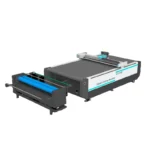
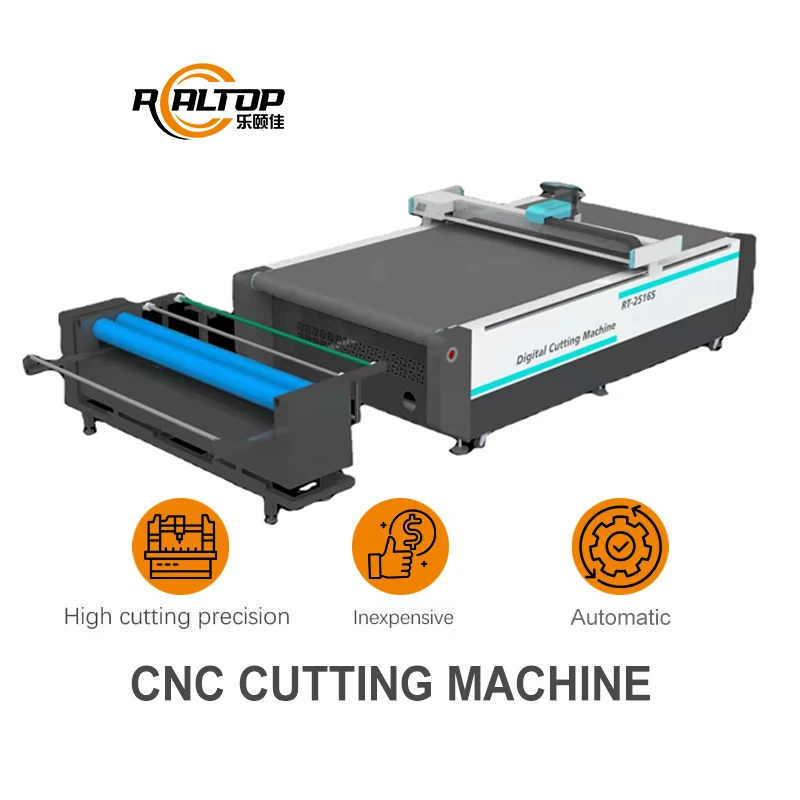
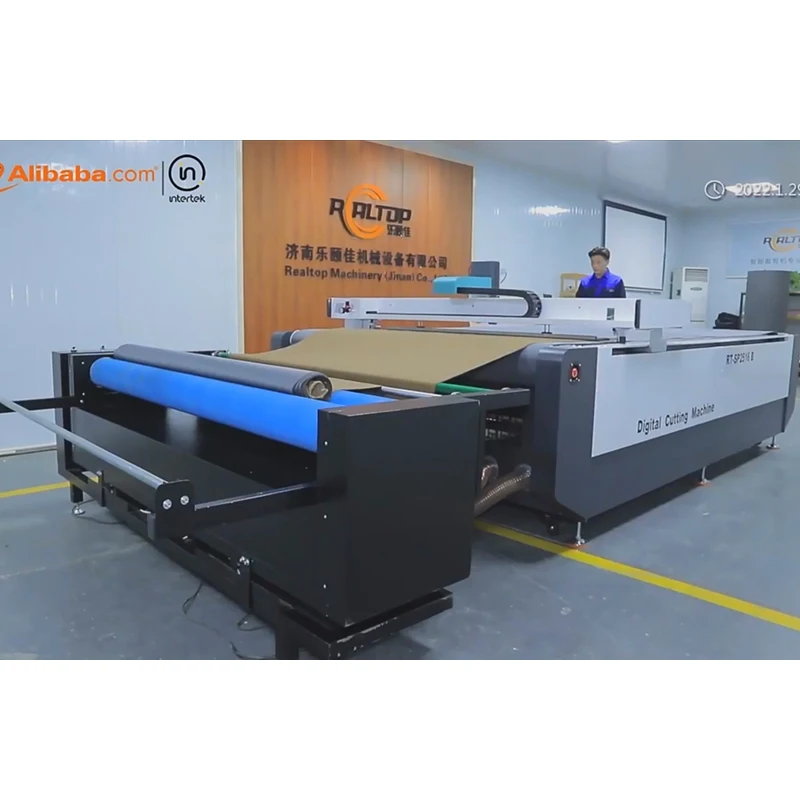
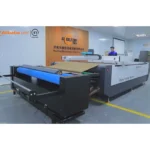
Tool head and table configuration specified per material — rather than quoting a generic working area, the RT-D2516/RT-S2516 is configured with Swiss-imported oscillating knife heads and vacuum zoning matched to your exact fabric, leather or composite stock before the order is confirmed.
Technical Specifications
| Parameter | Value |
|---|---|
| Model | RT-D2516/RT-S2516 |
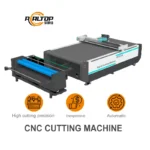
| Product Type | CNC Oscillating Knife Cutting Machine |
| Working Area | 1600 × 2500 mm |
| Machine Size (L × W × H) | 3450 × 2300 × 1250 mm |
| Rated Power | 9 kW |
| Vacuum Pump | 7.5 kW |
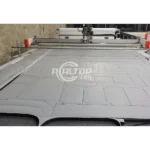
| Table Type | Flat working table with high-density felt surface |
| Countertop Structure | Aviation aluminum with inner wind structure for even suction |
| Multifunctional Tool Head | Swiss imported knife with vibration full cutting, half cutting and cursor location |
| Translational Velocity | 800–1200 mm/s |
| Repeated Accuracy | ≤0.1 mm |
| Cutting Thickness | ≤50 mm depending on material density and layer count |
| Transmission System | Digital servo motor, linear guide, synchronous belt, ball screw (imported) |
| Guide Rail | Taiwan Hiwin |
| Conveyor Belt | Germany imported |
| Rack and Pinion | Adopted for transmission |
| Servo Motor | Delta or Panasonic (option) |
| Instruction System | HP-GL compatible format |
| Voltage | 380V ±10% |
| Safety Device | Infrared sensors |
| Control Electrical Box | Fixed on fuselage with high-flexibility cables |
| Language Options | English, Russian, Italian, Chinese (customizable) |
| Bed Structure | Overall welding with imported milling machine processing |
| Warranty | 1 year |
Application Suitability
| Application | Material or Output |
|---|---|
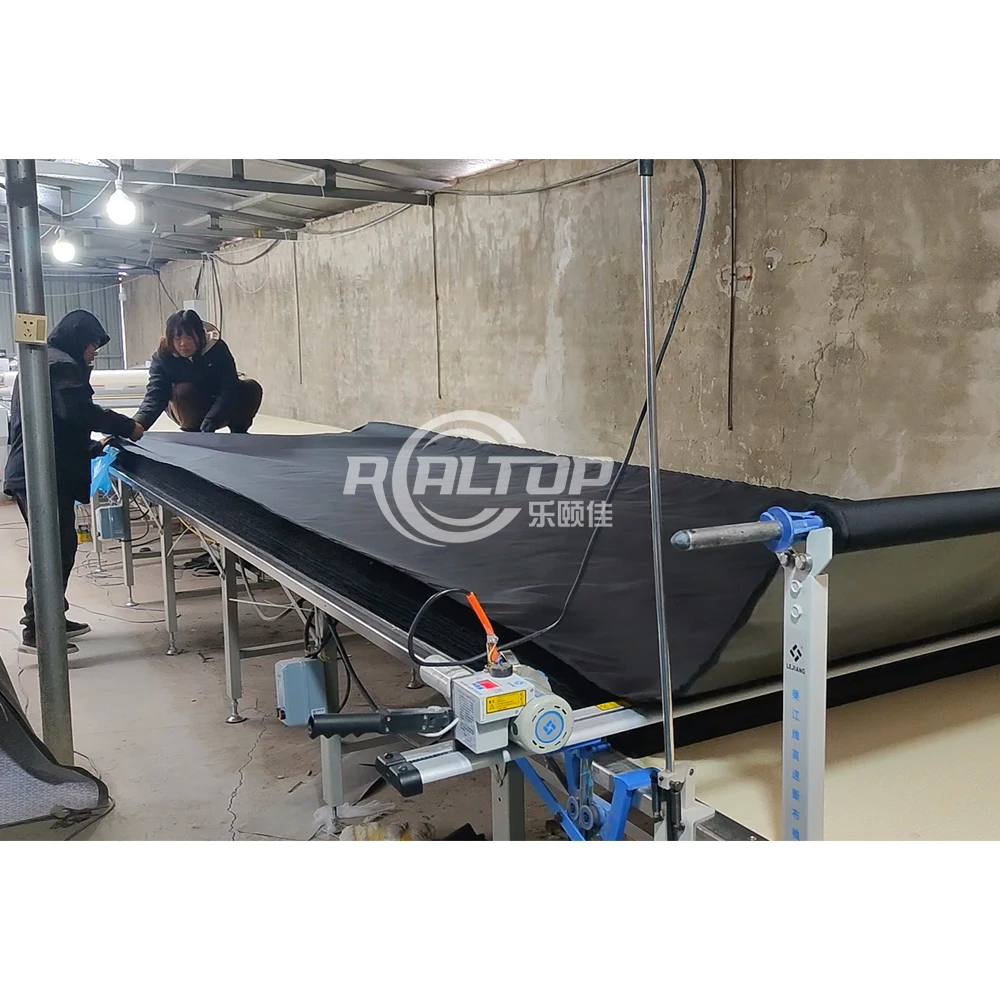
| Garment and fabric cutting | Single or multi-layer woven, knitted and technical textiles |
| Leather goods production | Natural and synthetic leather for footwear, bags and upholstery |
| Automotive interior trimming | Sponge composite leather, PVC and soft foam panels |
| Gasket and seal fabrication | Rubber, silicon and soft glass sheets |
| Signage and flexible graphics | Vinyl, banner material and flexible board |
| Composite panel processing | Foam-core and multi-layer laminates up to 50 mm |
Why the Wrong Tool Head Turns Clean Edges Into Scrap
A blade that slices polyester cleanly will crush coated fabric if the oscillation frequency and pressure are not reset for the new material.
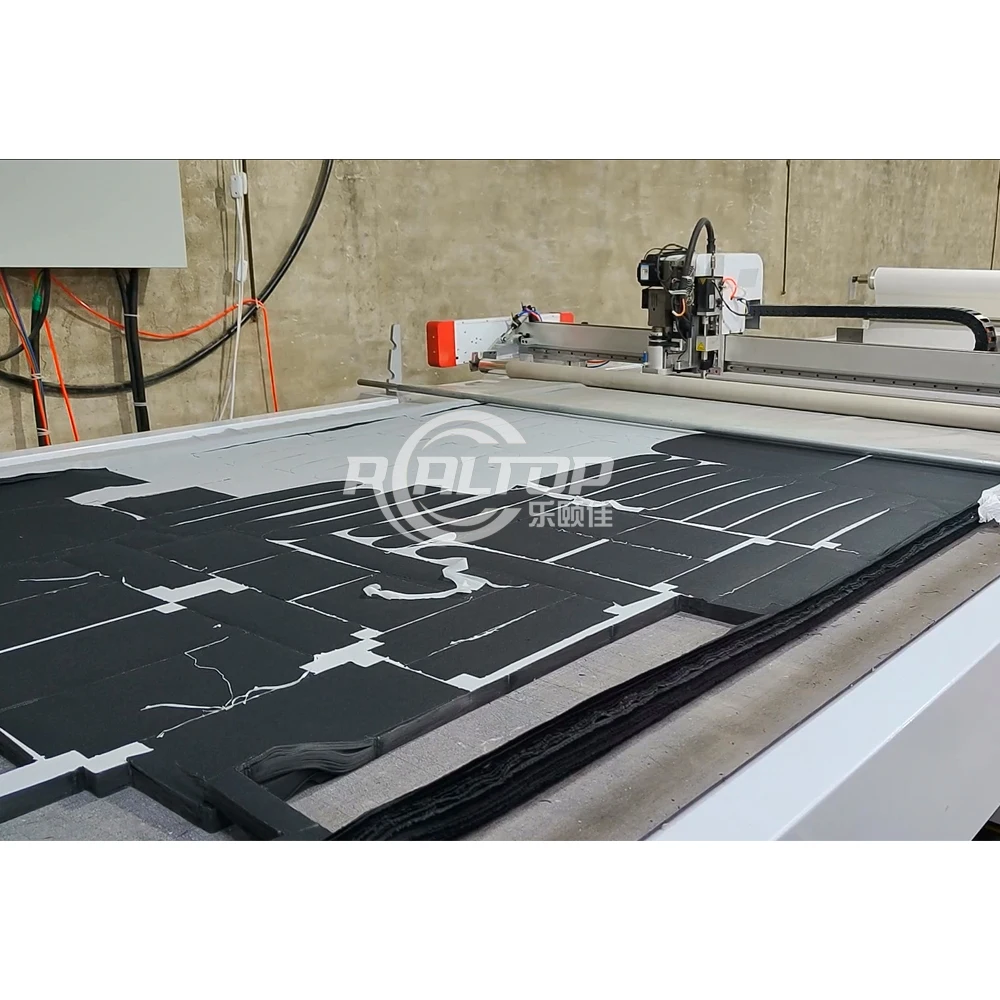
I spent two days crouched beside a flatbed cutter in a humid workshop outside Kuala Lumpur when a buyer switched from standard polyester to a high-adhesive coated textile. The same oscillating knife head that ran smoothly on the test sample produced ragged, delaminated edges once the real production roll went on the table. The CNC oscillating knife cutting machine tool head selection process is where most quoting mistakes happen — a supplier lists "oscillating knife" as if one head covers every flexible material from silk to 50 mm sponge. What actually matters is matching vibration frequency, blade geometry and downward pressure to your specific stock, then proving it on your own sample before the machine ships [NEED_CITE: material-specific oscillation frequency and blade geometry requirements for coated textiles].
Knife Modes That Match Your Material, Not a Brochure Line
The Swiss-imported tool head on the RT-D2516/RT-S2516 supports vibration full cutting and vibration half cutting. Full cutting drives the blade through the entire stack in one pass — necessary for dense leather or multi-layer garment lays. Half cutting scores the top ply without penetrating the backing, which is how kiss-cut labels and appliqué pieces stay registered on the carrier sheet. Switching between modes is a tool-holder swap rather than a machine reconfiguration, so a garment factory running woven cotton in the morning and synthetic leather in the afternoon does not lose a shift to changeover.
Vacuum Zoning That Holds Small Parts Without Tape
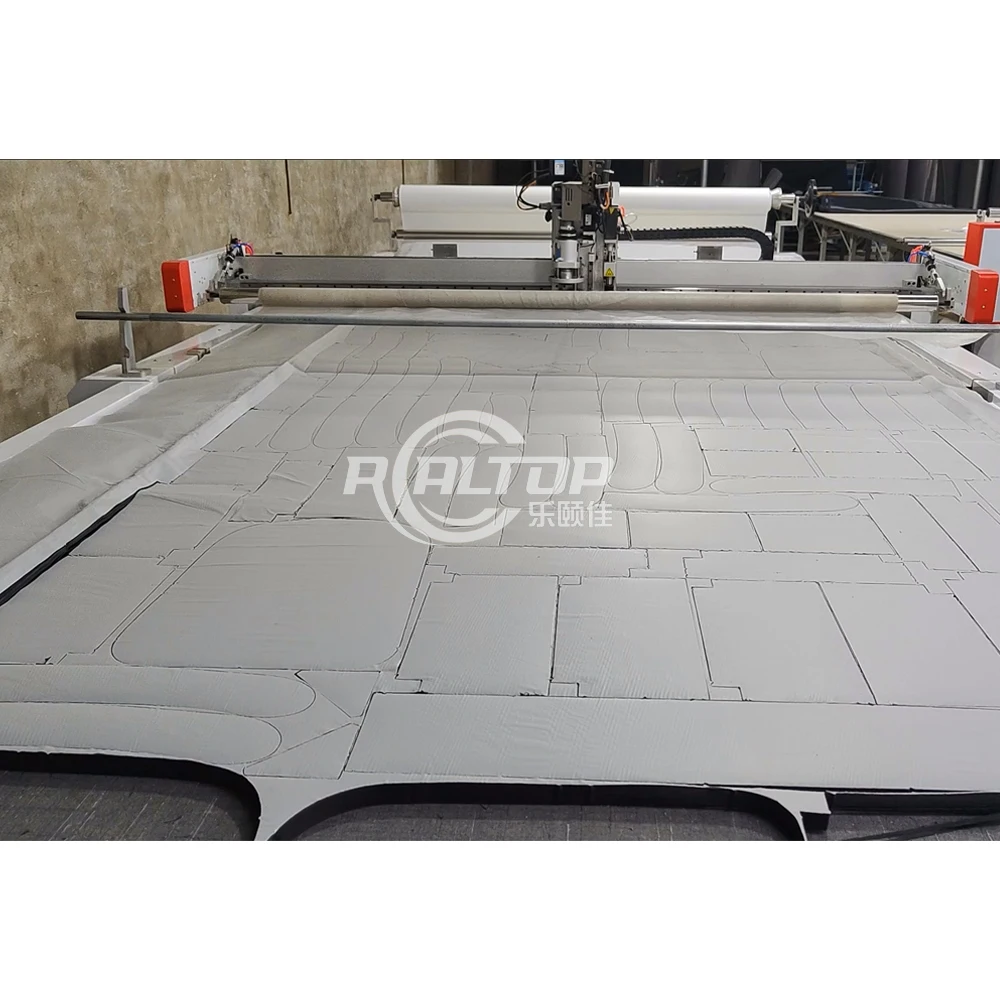
The aviation aluminum countertop uses an inner wind structure designed to distribute suction across the full 1600 × 2500 mm bed. High-density felt on the table surface acts as a sacrificial seal, so vacuum recovery stays consistent even when the knife penetrates through the material. For small parts like shoe uppers or gasket profiles that tend to lift at the edges during high-speed traversal, zoned vacuum sections isolate suction to the active cutting area. This keeps material flat without resorting to double-sided tape or mechanical clamps that slow down the nesting workflow [NEED_CITE: vacuum zoning practices for small flexible part retention on CNC flatbed tables].
Reading the Specs That Actually Affect Your Cut Quality
Repeated accuracy of ≤0.1 mm is a function of the Taiwan Hiwin linear guides working with imported ball screws and digital servo motors. In practice this means a contour-cut collar piece stays within tolerance across a 200-piece lay, so downstream sewing operators do not have to trim allowances by hand. The 9 kW rated power covers the servo drives, vacuum pump at 7.5 kW and the oscillating spindle together — confirm your workshop supply can deliver 380V ±10% on a dedicated circuit before installation. Translational velocity of 800–1200 mm/s is the traverse speed between cuts; actual cutting speed depends on material density and layer count, which is why the sample-cutting step matters more than the headline number. The HP-GL compatible instruction system accepts plotter-grade vector files, so nesting software that already outputs HP-GL or compatible DXF can feed the controller without an additional converter layer.
The Hidden Cost of a Misconfigured Cutter
When vacuum zoning is undersized for the part geometry, small leather pieces lift off the felt mid-cut and the blade drags the edge into a burr. Operators then slow the feed rate to compensate, and the throughput advantage of a CNC oscillating knife cutting machine tool head selection advantage disappears. Similarly, a machine specified only on working area — without confirming the material thickness it will actually handle — may have the stroke length and oscillation amplitude to cut 10 mm foam but stall on 30 mm sponge composite. The rework cost shows up as scrapped nesting sheets and missed delivery dates rather than a line item on the purchase order [NEED_CITE: typical scrap rates from vacuum lift on small flexible parts during high-speed CNC knife cutting].
Why Buyers Source This Configuration Here
In-house design covers both knife and laser cutting, so the RT-D2516/RT-S2516 is specified by cutting method matched to your material rather than forced into one technology. Tool head and table configuration is locked per material type and production volume before the order goes to the floor. Sample cutting on your actual stock — with a written report on edge quality, cycle time and nesting yield — is completed before you commit to shipment. Voltage, plug type and control language are confirmed at the specification stage, not discovered when the crate arrives. The CCD camera contour recognition option is validated against your printed registration marks at production speed, not just at a slow demo feed rate [NEED_CITE: manufacturer sample cutting and material validation protocols for CNC knife cutting equipment].
Documentation & Verification
- Factory test record run on your fabric weight and layer count before dispatch
- Tool head and vacuum configuration list matched to your material spec sheet
- Electrical schematic with voltage, breaker rating and circuit diagram for your site
- Software licence note confirming HP-GL file format compatibility with your nesting workflow
- Spare parts list covering blades, felt strips and vacuum seals with part numbers
- Packing photographs showing crate blocking and container loading arrangement
Installation, Commissioning & Support
- Machine footprint 3450 × 2300 mm requires level concrete floor with anchor points for bed stability
- Dedicated 380V ±10% three-phase circuit with breaker rated above 9 kW total draw
- Machine ships with fixed control electrical box and high-flexibility cables pre-routed
- First-run commissioning includes vacuum zoning calibration for your smallest part geometry
- Operator training covers tool head changeover between full-cut and half-cut modes
- High-density felt table surface replacement schedule aligned with your daily cutting volume
What We Need to Quote the Right Configuration
Send your material data sheet or, ideally, a roll sample so we can run it on the RT-D2516/RT-S2516 and document edge quality at your target cutting speed. Confirm your local voltage and frequency, the control language your operators will use, and whether your existing nesting software outputs HP-GL or a format that needs conversion. If your production mix includes both large panels and small contoured parts, share a representative nesting layout so vacuum zoning can be sized before the table is built.
Frequently Asked Questions
Q: How is cutting thickness verified for my specific material before I commit?
A: We run your actual material sample on the RT-D2516/RT-S2516 and issue a sample cutting report documenting edge quality, achievable cutting depth and cycle time. This removes the guesswork from spec-sheet claims and confirms the oscillation frequency and pressure settings your stock requires.
Q: Which tool head is recommended for my material — oscillating, drag or round knife?
A: It depends on material type and thickness. Oscillating knife handles dense foam, leather and multi-layer fabric. Drag knife suits thin vinyl and single-ply textiles. Round knife is for long straight cuts on woven fabric. We recommend and test the specific head on your sample before finalizing the tool holder configuration.
Q: What software file formats and nesting workflows are compatible with this controller?
A: The instruction system accepts HP-GL compatible format. If your nesting software outputs HP-GL, DXF or PLT, the file can be imported directly. We confirm file format compatibility during the specification stage and note it in the documentation pack before shipment.
Q: How is vacuum table zoning configured to stop small parts from lifting during cutting?
A: The aviation aluminum countertop with inner wind structure is divided into zones that can be activated independently. For small parts like shoe uppers or gaskets, only the active zone draws vacuum, concentrating suction under the cut area and preventing edge lift at high translational speeds.


商品评价
Clear filtersThere are no reviews yet.