


Fast Shipping
Carrier information

20k products
Payment methods

24/7 Support
Unlimited help desk

2-day Delivery
Track or off orders
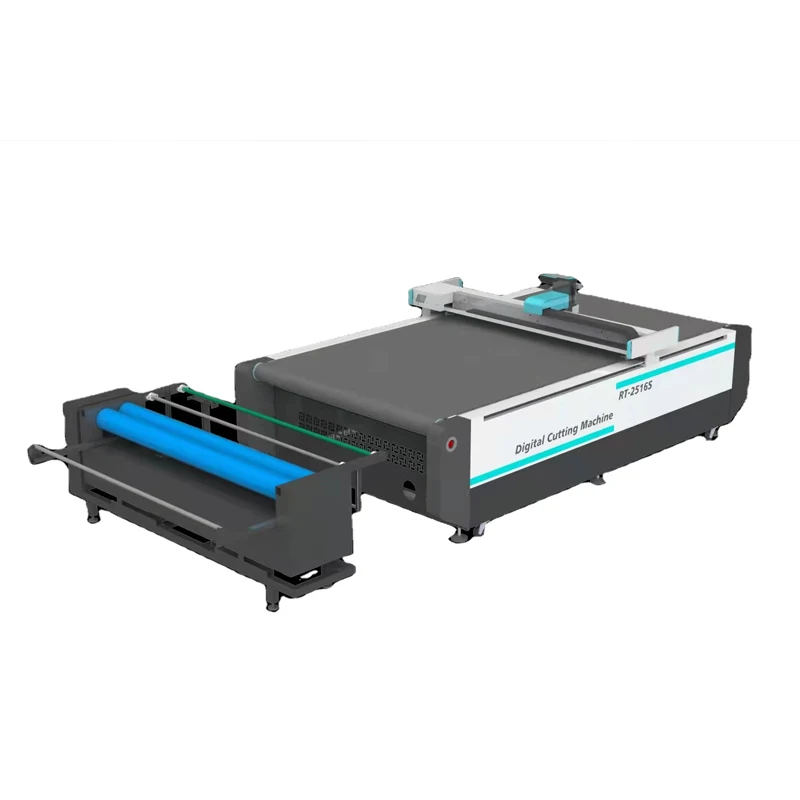
Modular Tooling Logic — every RT-D2516/RT-S2516 ships with a tool head and vacuum zone map matched to the buyer’s fabric weight, ply count and daily nesting volume, not a default flatbed spec sheet.
Technical Specifications
| Parameter | Value |
|---|---|
| Model | RT-D2516/RT-S2516 |
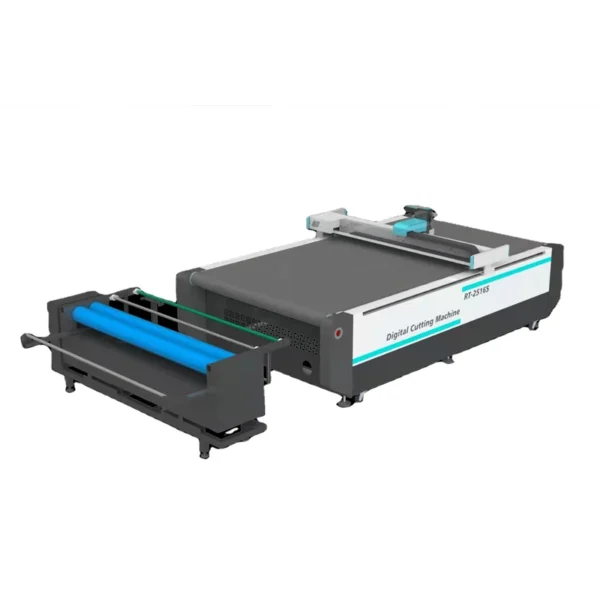
| Product Type | CNC Oscillating Knife Fabric Cutting Machine |
| Working Area | 1600 × 2500 mm |
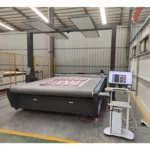
| Machine Size (L × W × H) | 3450 × 2300 × 1250 mm |
| Rated Power | 9 kW |
| Voltage | 380V ±10% |
| Control System | CNC (HP-GL compatible format) |
| Tool Head | Swiss imported oscillating knife (full cut, half cut, cursor location); modular holder for round knife, marking pen, auto feeder |
| Cutting Thickness | Up to 50 mm (varies by fabric type and layer count — confirm per material) |
| Repeatability | ≤0.1 mm |
| Translational Velocity | 800–1200 mm/s |
| Transmission System | Panasonic/Delta digital servo, Taiwan Hiwin linear guide, synchronous belt, ball screw, rack and pinion |
| Vacuum Pump | 7.5 kW |
| Vacuum Table | Zoned aviation aluminum countertop with high-density felt cover |
| Safety Device | Infrared sensors |
| Language Options | English, Russian, Italian, Chinese (special languages configurable) |
| Certification | CE |
Application Suitability
| Application | Material or Output |
|---|---|
| Garment and footwear production | Single-ply silk, multi-layer woven and knit fabrics, denim, technical textiles |
| Leather goods and bag manufacturing | Natural leather, composite leather, sponge-backed PU, synthetic suede |
| Automotive interior and soft trim | PVC sheets, silicone gasket stock, rubber compounds, headliner fabric |
| Home furnishing and upholstery | Multi-layer foam composites, curtain fabrics, mattress ticking, quilted panels |
What Your Fabric Stack Actually Demands From a CNC Oscillating Knife Fabric Cutting Machine
Cutting thickness on the spec plate is a ceiling, not a guarantee — the real answer comes from a sample test on your exact ply count and material blend.
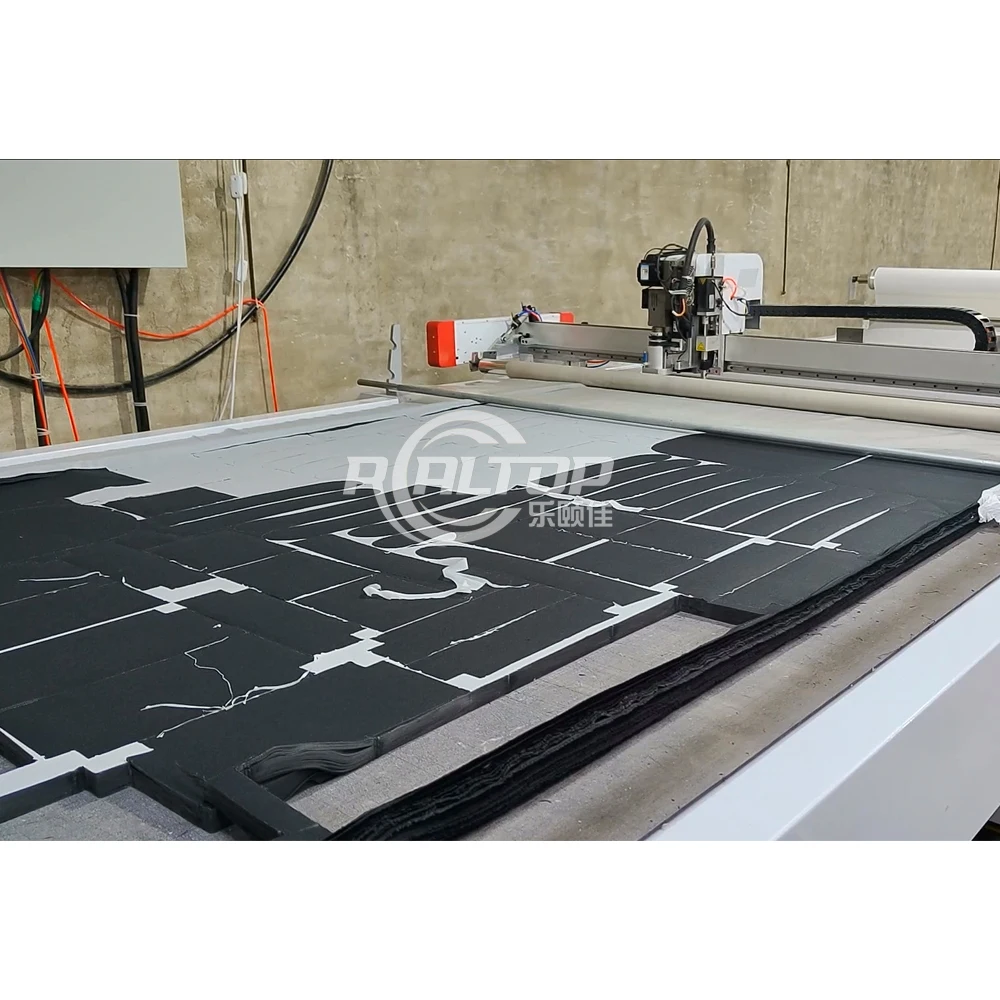
A machine quoted only by working area routinely fails once production starts. I have watched fabric shops receive a flatbed that handled three layers of cotton twill perfectly during the demo, then struggle with eight layers of elastane-blend jersey on the first real order because the vacuum zoning and feed rate had never been matched to that stack height. The cutter head oscillates at high frequency to shear through the material, but if the vacuum pull is not sectioned correctly, the bottom plies shift mid-cut and the pattern pieces come out misaligned. [NEED_CITE: vacuum hold-down requirements for multi-layer textile cutting]
Oscillating Knife Configuration and What It Means for Your Fabric
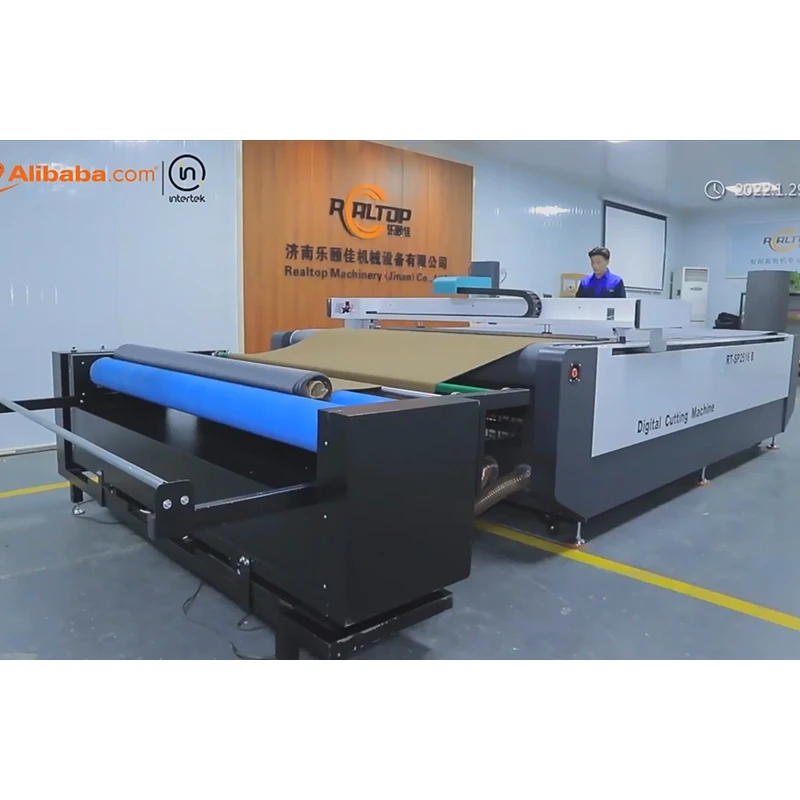
The Swiss imported oscillating knife head on the RT-D2516/RT-S2516 supports full-cut, half-cut and cursor-location modes in a single tool station. Full-cut handles through-cuts on multi-layer stacks, while half-cut scores kiss-cut lines for peel-away labels or perforated tear strips. The modular tool holder accepts a round knife for continuous long-run single-ply work, a marking pen for pattern numbering and a pneumatic auto feeder for roll-fed textiles, so you are not locked into one cutting method for the entire life of the CNC oscillating knife fabric cutting machine.
Vacuum Zoning and Small-Piece Pattern Hold-Down
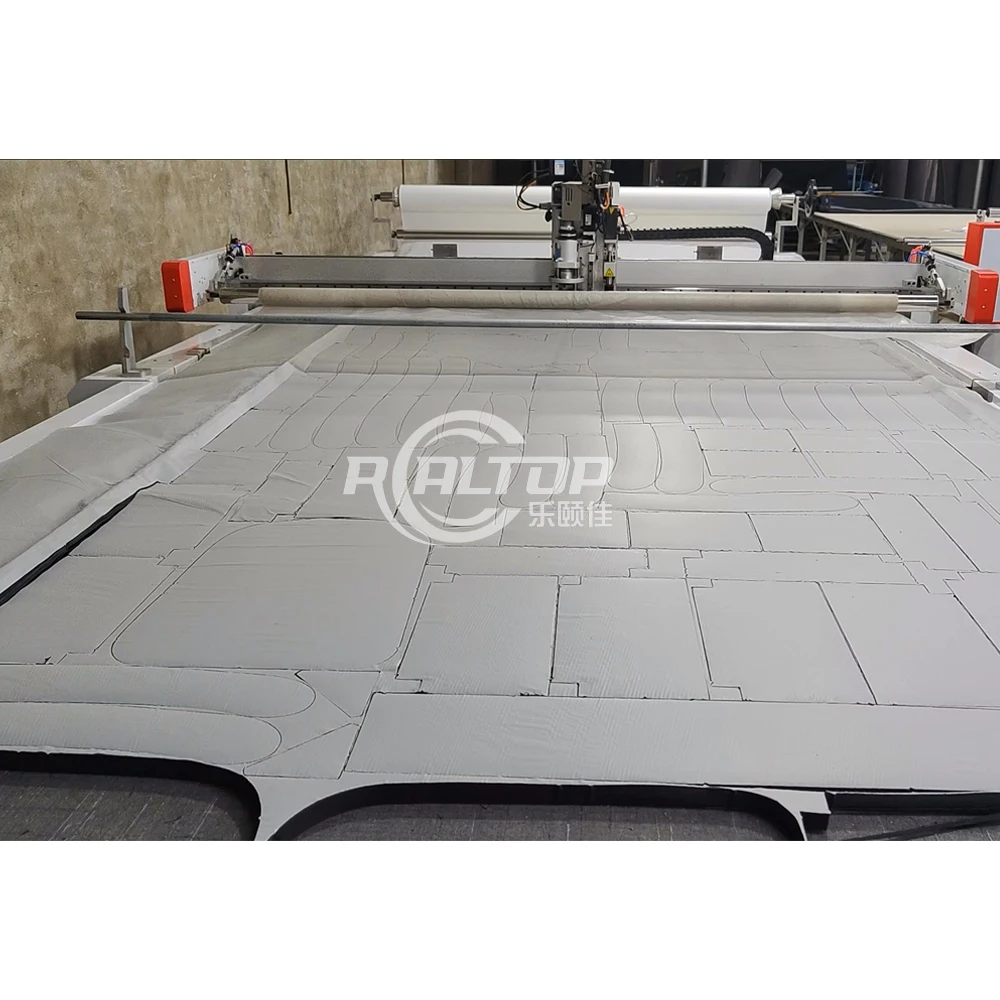
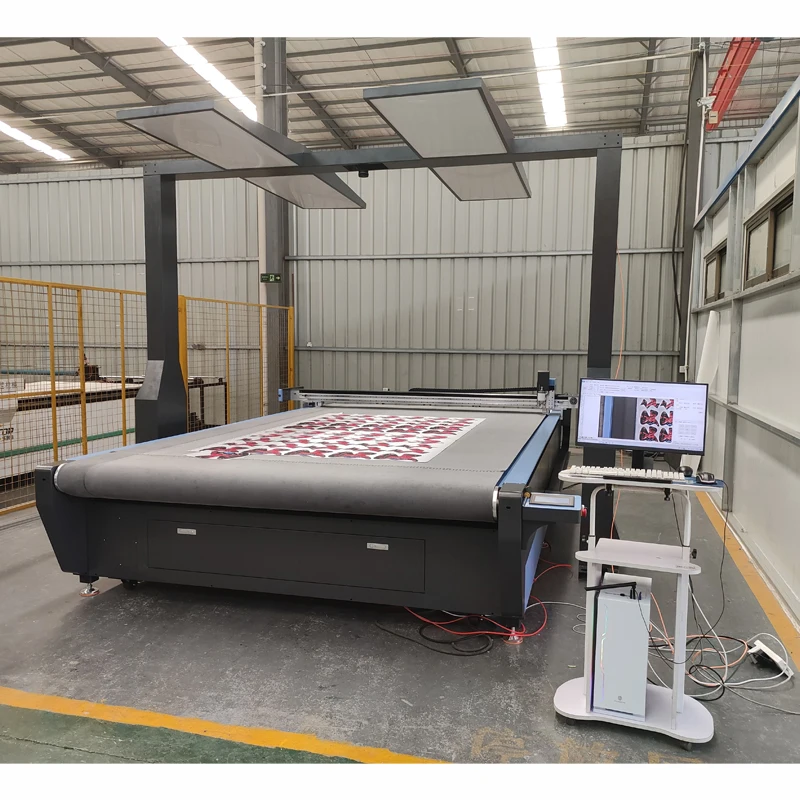
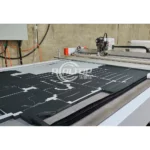
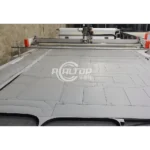
The aviation aluminum countertop is divided into independent vacuum zones with an internal wind-channel structure. On a garment nesting layout full of collar stands, cuff pieces and small facing shapes, only the active zones under the cutting path need to stay engaged, concentrating suction where it matters. A 7.5 kW vacuum pump feeds the system, pulling high-density felt against the aluminum surface so that even lightweight chiffon stays flat during high-speed traverse passes at 800–1200 mm/s. [NEED_CITE: zoned vacuum table performance on lightweight textile substrates]
Transmission Specs and Pattern Accuracy in Production
The Panasonic or Delta digital servo drives the gantry through a rack-and-pinion and Hiwin linear rail arrangement, holding repeatability within 0.1 mm across the full 1600 × 2500 mm bed. For nesting software that packs dozens of graded sizes into a single lay, that tolerance keeps seam-matching points aligned from the first piece to the last. The synchronous belt and ball screw elements handle directional changes without backlash, which matters when the oscillating knife makes tight corner cuts on curved armhole or inseam contours.
The Cost of Skipping the Material Test
Shops that order on working area alone sometimes discover the knife stroke cannot penetrate their thickest composite layer, leaving uncut fibers at the bottom of a ten-ply lay. Others find that the default felt table cover allows micro-slippage on coated nylon, forcing operators to slow the feed rate and sacrifice throughput. When voltage and plug type are assumed rather than confirmed, a 380V machine wired to a 220V plant supply burns out the vacuum pump motor within the first week. Each of these failures is avoidable with a sample cutting session and a pre-shipment electrical checklist. [NEED_CITE: electrical compatibility standards for industrial machinery exports]
Why Buyers Source This Configuration Here
REALTOP designs both knife and laser cutting systems in-house, so a buyer comparing cutting methods for a mixed-material production line gets an honest recommendation instead of being steered toward whichever machine is in stock. The tool head and vacuum zone layout for each RT-D2516/RT-S2516 is specified against the buyer’s fabric sample and nesting file before the quotation is finalized. Voltage, plug configuration and control language are locked down on the electrical confirmation sheet, not left to a packing-day assumption. Every unit goes through a factory run-off test on the buyer’s own material, with a cutting report and photographed results sent for approval before crating.
Documentation & Verification
- Machine specification sheet listing confirmed tool head, vacuum zone layout and conveyor option per your fabric type
- Electrical schematic and voltage confirmation document matching your plant supply before production starts
- Factory test record with sample cutting photos on your material at production layer count
- Software licence certificate with HP-GL file format compatibility note for your existing nesting workflow
- Spare parts list with recommended consumables for oscillating knife blades and felt table covers
Installation, Commissioning & Support
- 3450 × 2300 mm footprint requires a level concrete floor with clearance for auto-feeder roll loading on the long side
- Dedicated 380V ±10% circuit with rated capacity above 9 kW plus separate 7.5 kW vacuum pump supply
- Machine ships with gantry and table assembled; final leveling and vacuum zone calibration performed on site
- First-run parameter setup covers knife oscillation frequency, feed rate and vacuum zone mapping for your first fabric
- Operator training includes tool head changeover between oscillating knife, round knife and marking pen stations
- Consumable blade stock and replacement felt covers shipped with initial spare parts kit
What to Send With Your Inquiry
Tell us the fabric type, ply count, sheet width and daily cutting volume so the tool head and vacuum zone map can be matched before the quote. If your plant runs a voltage other than 380V or your nesting software exports a proprietary file format, include those details so compatibility is confirmed at the proposal stage rather than on the factory floor.
Frequently Asked Questions
Q: How do I verify cutting quality on my specific fabric and layer stack?
A: Send a roll sample of your actual production material, including the thickest composite you plan to cut. We run a sample test on the RT-D2516/RT-S2516 at your target ply count and send a cutting report with edge-quality photos, measured dimensional tolerance and recommended knife frequency before you commit to an order.
Q: Oscillating knife versus round knife — which tool head fits my material?
A: Oscillating knife suits multi-layer woven, knit and composite fabrics where a vertical shearing action keeps plies aligned. Round knife works best for long continuous single-ply cuts on lightweight textiles. The modular holder on this machine accepts both, and we recommend the primary and secondary tool based on your sample test results.
Q: Will the voltage, plug and control language match my plant before shipment?
A: Yes. We confirm your plant supply voltage and frequency, plug type and preferred control panel language on the electrical confirmation sheet before production begins. The RT-D2516/RT-S2516 ships configured to those specifications, not to a default setting.
Q: How does vacuum zoning affect small garment pattern pieces?
A: The zoned aluminum countertop lets us activate only the sections under the active cutting path, concentrating suction on small pieces like collars and cuffs that tend to lift on a single-zone table. Zone layout is configured around your most common nesting template during the specification stage.
Q: Can I import files from my existing nesting software?
A: The CNC system accepts HP-GL compatible format, which covers most mainstream nesting and CAD platforms. If your workflow uses a proprietary export format, share a sample file before order so we verify compatibility and document it in the software licence note included with shipment.


商品评价
Clear filtersThere are no reviews yet.