








Fast Shipping
Carrier information

20k products
Payment methods

24/7 Support
Unlimited help desk

2-day Delivery
Track or off orders
Swiss Knife Configuration — oscillating and drag tool heads specified per board grade and thickness, with sample cutting on buyer stock before order confirmation.
Technical Specifications
| Parameter | Value |
|---|---|
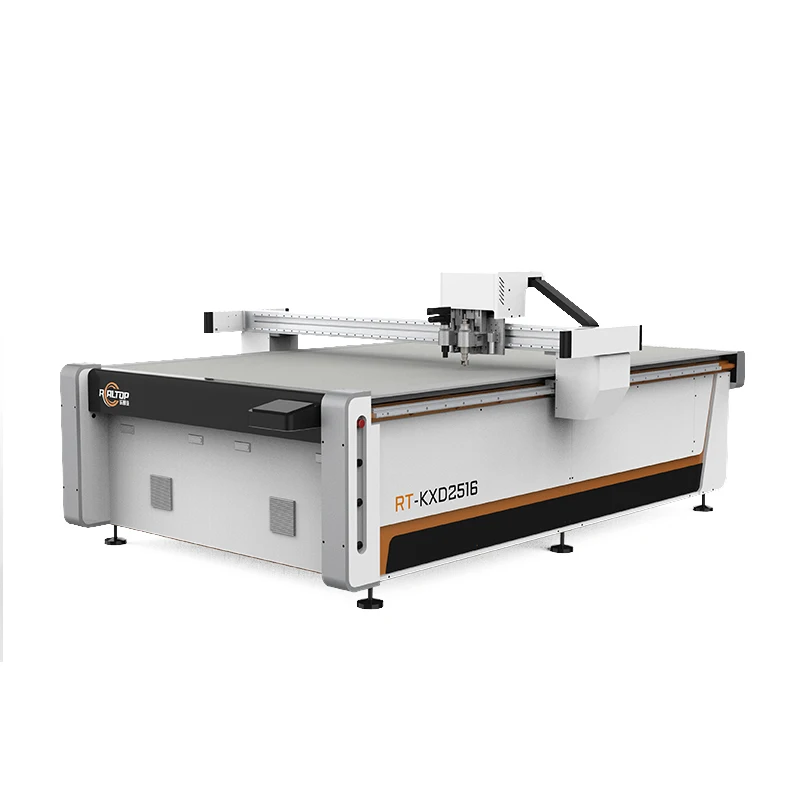
| Model | RT-D2516/RT-S2516 |
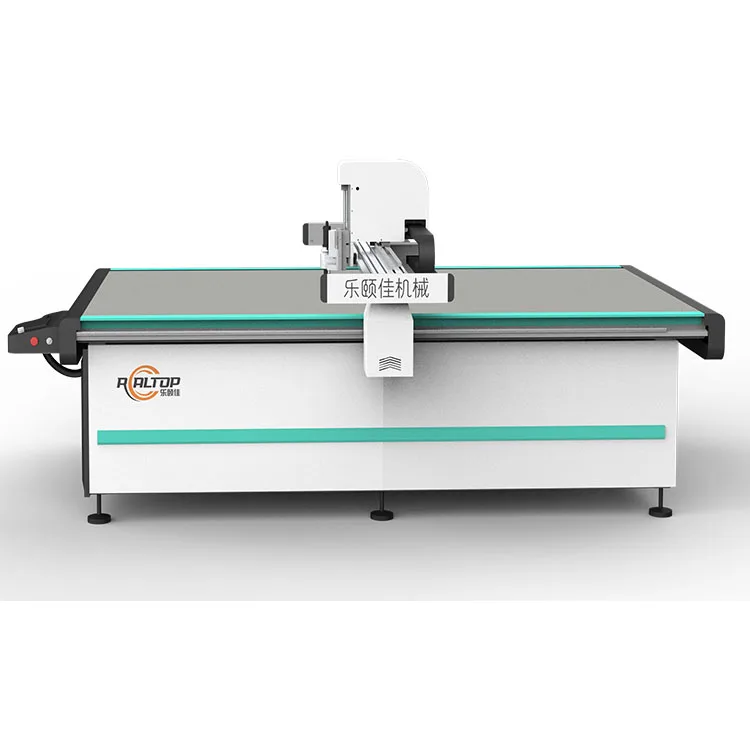
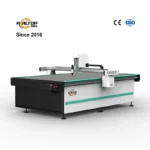
| Product Type | CNC Oscillating Knife Flatbed Cutting Machine |
| Working Area | 1600×2500mm |
| Overall Dimensions (L×W×H) | 3450×2300×1250mm |
| Rated Power | 9kW |
| Voltage | 380V±10% (frequency to be confirmed for destination market) |
| Table Type | Aluminum alloy honeycomb structure vacuum adsorption platform |
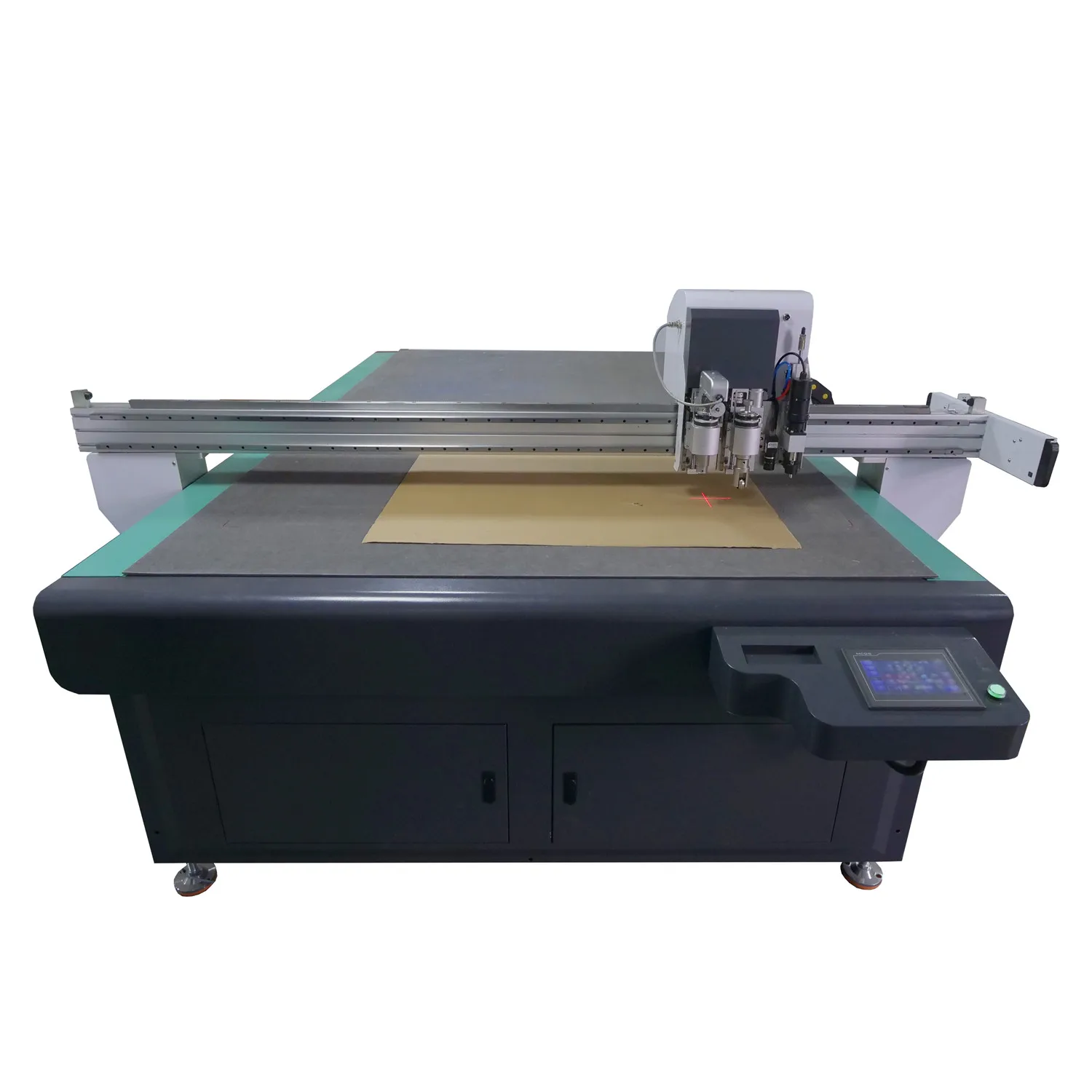
| Tool Head | Swiss imported knife with vibration full cutting, vibration half cutting and cursor location function |
| Translational Velocity | 800–2000mm/s |
| Cutting Speed | 200–800mm/s (basis not stated in source; confirm material type and thickness) |
| Repeated Accuracy | ≤0.1mm |
| Transmission System | Digital servo motor, linear guide, synchronous belt, ball screw (Taiwan Hiwin rail) |
| Servo Motor | Taiwan Delta Servo Motors and Drivers |
| Instruction System | HP-GL compatible format |
| Vacuum Pump | 7.5kW |
| Safety Device | Infrared sensors and emergency stop devices |
| Software | Professional carton cutting software, multiple format file imports, system language customization |
| Optional Configuration | Germany imported conveyor belt, auto feeding |
| Cutting Thickness | ≤100mm (basis not stated in source; verify with specific board density and flute profile) |
| Certification | CE declaration where applicable (verify against manufacturer catalog) |
Application Suitability
| Application | Material or Output |
|---|---|
| Carton and packaging sample making | Corrugated board, greyboard, folding carton stock, honeycomb paper |
| Sticker and label contour cutting | Self-adhesive vinyl, printed label stock, reflective sheeting |
| Billboard and signage production | Foam PVC, corrugated plastic, exhibition board |
| Business cards, tags and card cutting | Coated card stock, laminated paperboard |
| Flexible material processing | Leather, PVC, soft glass, silicone rubber, sponge composite |
What Your Board Grade Has to Do With CNC Oscillating Knife Cutting Machine Specifications
Cutting depth ratings mean nothing without the density and flute profile of the material you actually run.
I spent two weeks in Dubai troubleshooting a carton sample line that was specified on working area alone. The machine cut standard E-flute corrugated perfectly during the factory test, but the customer’s daily production was 2mm high-density greyboard. The knife edge chipped within the first shift, and the entire sample approval cycle fell behind schedule. Packaging producers evaluate CNC oscillating knife cutting machine specifications against their heaviest stock, not their lightest [NEED_CITE: material density and cutting force requirements for packaging substrates].
Tool Head Selection Determines Edge Quality on Greyboard
The RT-D2516/RT-S2516 carries a Swiss imported oscillating knife head with both vibration full cutting and half cutting modes. Full cutting handles corrugated and thick greyboard wh*iber layers. Half cutting scores folding carton crease lines without severing the sheet. The distinction matters because a drag knife dragging through 2mm greyboard produces compressed edges that compromise fold accuracy downstream, while an oscillating blade vibrating at high frequency shears the fiber cleanly.
Vacuum Adsorption and Small-Part Hold-Down
The aluminum alloy honeycomb vacuum platform pairs with a 7.5kW vacuum pump to secure sheet stock across the 1600×2500mm working area. Packaging sample cutting generates small carton components — tuck flaps, dust flaps, lock tabs — that tend to lift when the knife exits a cut. The follow-the-cutting-area adsorption function concentrates suction beneath the active cutting zone rather than distributing vacuum evenly across the entire bed, which keeps small parts seated during the final pass [NEED_CITE: vacuum zoning principles for flatbed digital cutters].
Drive Train Accuracy Across the Full Bed
Taiwan Delta servo motors and Hiwin linear guides deliver ≤0.1mm repeated positioning accuracy. For packaging sample makers, this tolerance determines whether a crease line lands on the intended fold axis or drifts enough to cause misaligned panels on the finished carton. The 2500mm bed length means the carriage travels a considerable distance per sheet; any cumulative error in the synchronous belt and ball screw transmission shows up as register drift between cut lines and crease lines on the second half of the table.
Software and File Format Compatibility
The included professional carton cutting software accepts HP-GL compatible format instructions and supports multiple file import paths. Most packaging designers work in ArtiosCAD or Impact and export DXF or PLT files. Confirming that the software imports the buyer’s existing CAD format — and that the nesting module handles irregular carton blank geometry — avoids a bottleneck where operators rebuild files manually before every production run. System language is customizable, which matters when the machine ships to a workshop where the operators read Arabic, Russian or Spanish rather than English.
The Cost of Skipping Material Trials
Specifying a cutting table on working area and nominal cutting thickness without testing the actual board stock leads to three predictable failures. First, the knife dulls prematurely on high-density greyboard because the oscillation frequency was set for lighter corrugated. Second, the vacuum hold-down proves insufficient for narrow strips when zoning is not configured for the buyer’s typical blank nesting pattern. Third, the crease wheel depth does not match the caliper of the carton stock, producing cracked folds on the first sample presented to the buyer’s customer [NEED_CITE: tooling mismatch causes in carton sample production].
Why Source This Configuration Here
In-house design covers both knife cutting and vacuum table engineering, so the RT-D2516/RT-S2516 tool head and bed configuration are matched to the buyer’s material list rather than sold as a fixed package. Sample cutting runs on the buyer’s own board grade before order commitment confirm edge quality, crease depth and cutting speed under real conditions. Electrical schematics and voltage confirmation sheets verify 380V±10% compatibility with the destination workshop supply before the machine enters production. Software file format compatibility is documented in writing, not assumed. CE documentation is prepared where the destination market requires it, and the spare parts list covers consumable blades, vacuum cups and drive belts specific to this configuration.
Documentation & Verification
- Factory test record on buyer’s own board grade and caliper before dispatch
- Tool head and table configuration list matched to specific packaging material
- Electrical schematic with 380V±10% confirmation for destination facility
- Software licence and file format compatibility note for buyer’s CAD workflow
- Spare parts list covering Swiss knife blades, vacuum cups and drive belts
Installation, Commissioning & Support
- Floor space allocation for 3450×2300mm footprint plus material staging clearance
- Dedicated 380V±10% circuit rated for 9kW machine load plus 7.5kW vacuum pump
- Assembled unit delivery requiring rigging access and ceiling height confirmation
- First-run calibration of oscillation frequency and crease wheel depth on buyer stock
- Operator training on nesting software and file import from existing CAD packages
- Scheduled blade replacement interval and Hiwin rail lubrication cycle documentation
What to Prepare Before Requesting a Quotation
Send samples of the thickest board grade you run, along with the flute profile for corrugated and the caliper and density for greyboard. Specify the daily sample volume and whether you need the optional Germany imported conveyor belt for continuous sheet feeding. Confirm the local voltage and frequency standard, the plug type required, and the control language your operators prefer.
Frequently Asked Questions
Q: How do I confirm the cutting thickness capability for my specific board grade?
A: Send a sample sheet of your actual production stock — including the densest greyboard and the thickest corrugated flute profile you run. We cut the sample on the RT-D2516/RT-S2516 and document edge quality, cutting speed and knife wear in a test report before you commit to an order. This confirms the oscillation frequency and blade type match your material rather than relying on a generic thickness rating.
Q: Which tool head should I select for carton sample work across different board types?
A: The Swiss imported oscillating knife handles full cutting through corrugated and dense greyboard. A drag knife suits thin card stock and self-adhesive vinyl. A separate creasing wheel produces fold lines on folding carton. The configuration list in your quotation specifies which heads are included based on the material samples you provide during the trial phase.
Q: Does the vacuum table hold small carton flaps securely during cutting?
A: The honeycomb aluminum platform uses follow-the-cutting-area adsorption to concentrate vacuum beneath the active cutting zone. This approach secures small tuck flaps and dust tabs that would otherwise lift when the knife exits a cut. The 7.5kW pump provides sufficient suction for standard corrugated and greyboard across the full 1600×2500mm bed.
Q: Will the software accept my existing carton design files?
A: The professional carton cutting software supports HP-GL compatible format and multiple file import paths. Before shipment, we confirm compatibility with your specific CAD output — typically DXF or PLT from ArtiosCAD or Impact — and document this in the file format compatibility note included with your machine documentation.
Q: How is voltage and control language handled for my destination market?
A: The RT-D2516/RT-S2516 is configured for 380V±10%, and frequency is confirmed against your local supply standard before production. Control language is customizable — specify the language your operators need during the quotation stage, and it is loaded and verified during the factory test before shipment.


商品评价
Clear filtersThere are no reviews yet.