

Fast Shipping
Carrier information

20k products
Payment methods

24/7 Support
Unlimited help desk

2-day Delivery
Track or off orders
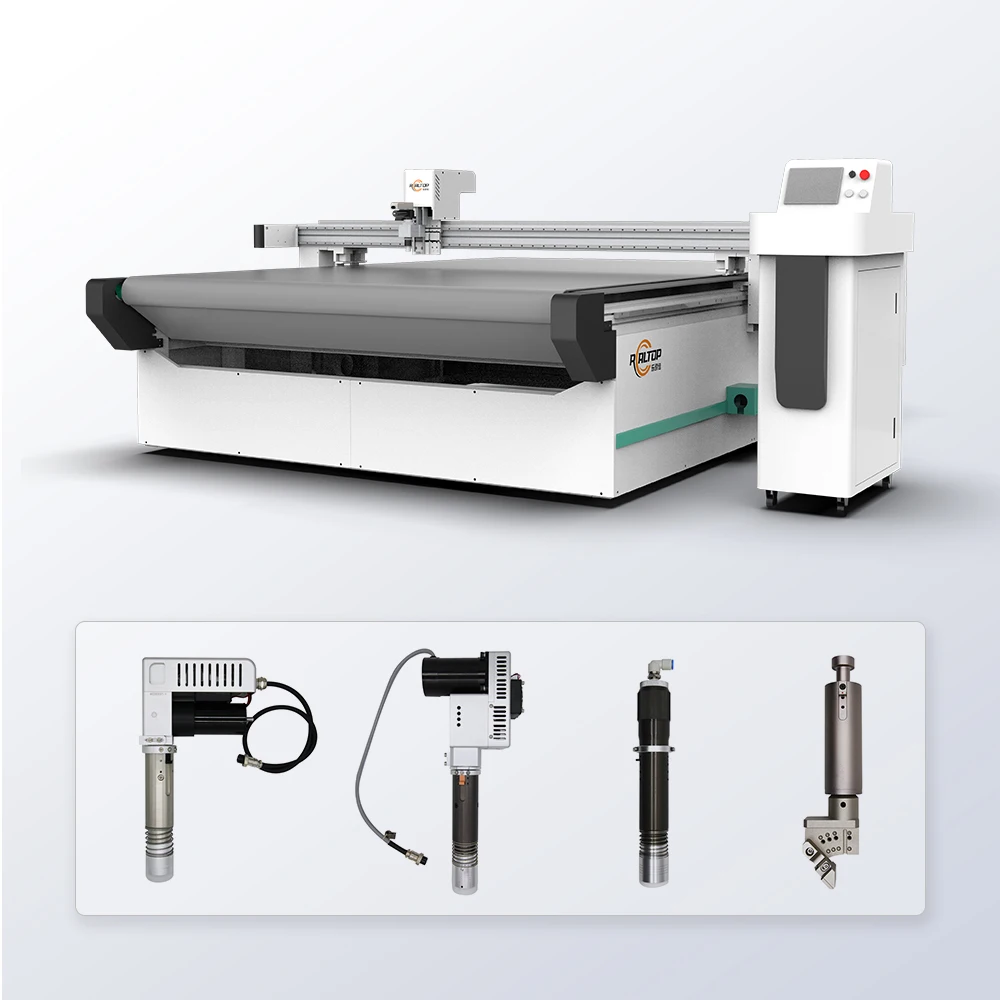
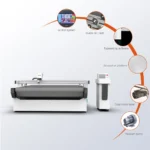
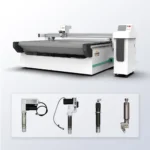
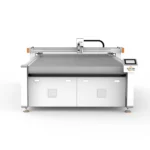
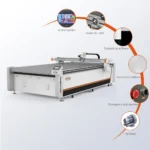
Tool Head and Table Configuration — matched to material behavior and part geometry rather than sold as a single fixed setup.
Technical Specifications
| Parameter | Value |
|---|---|
| Model | 1625 |
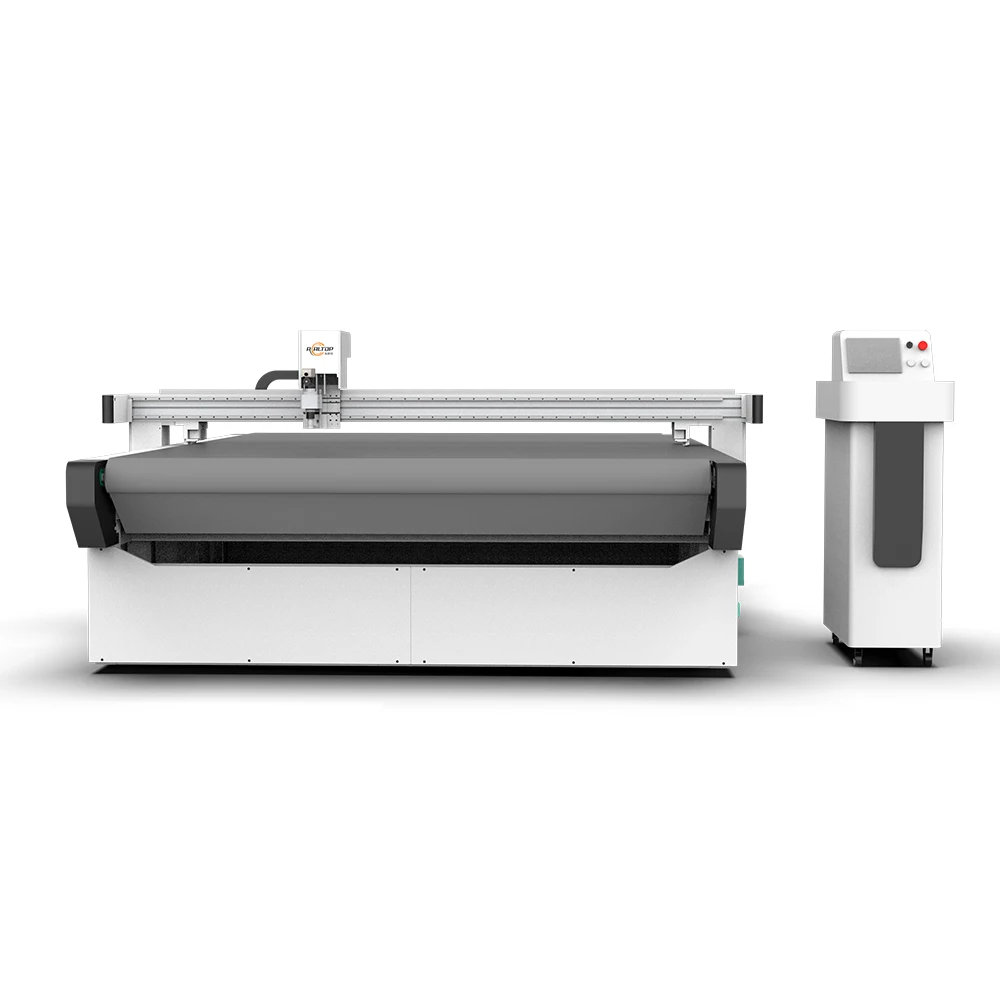
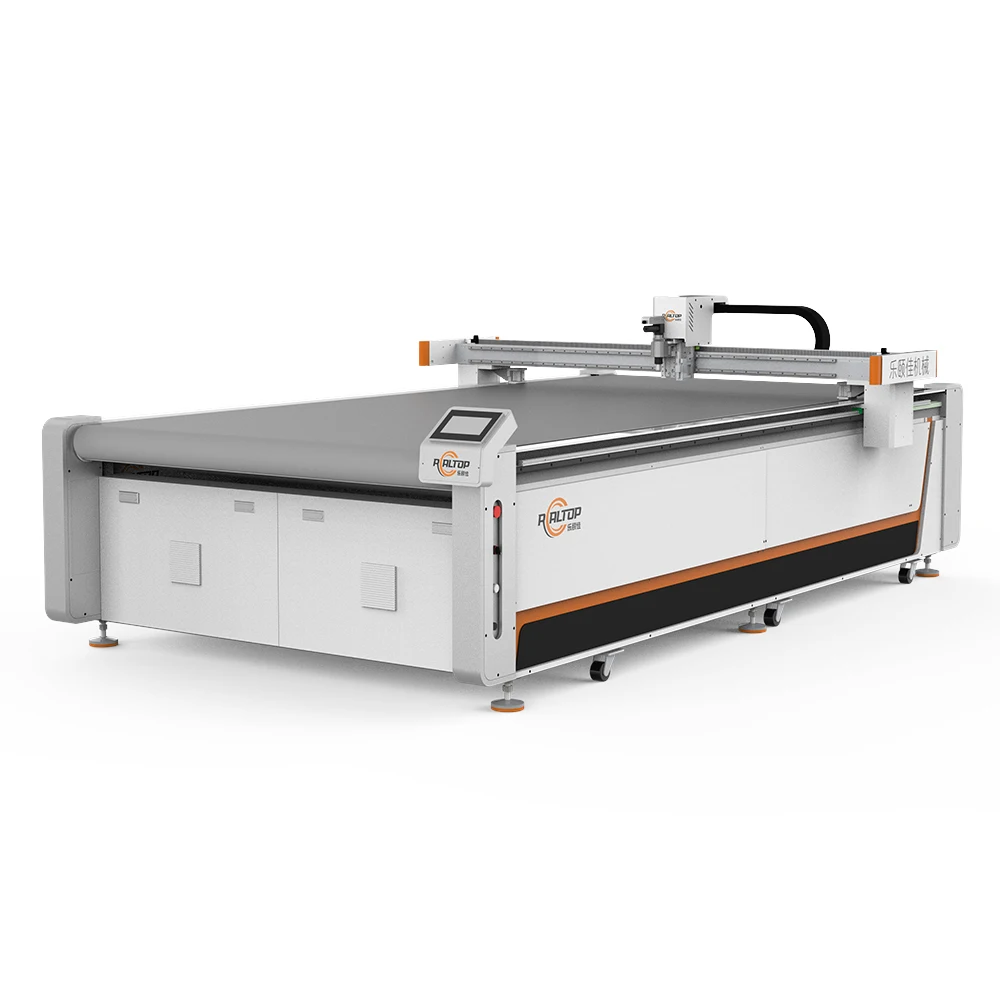
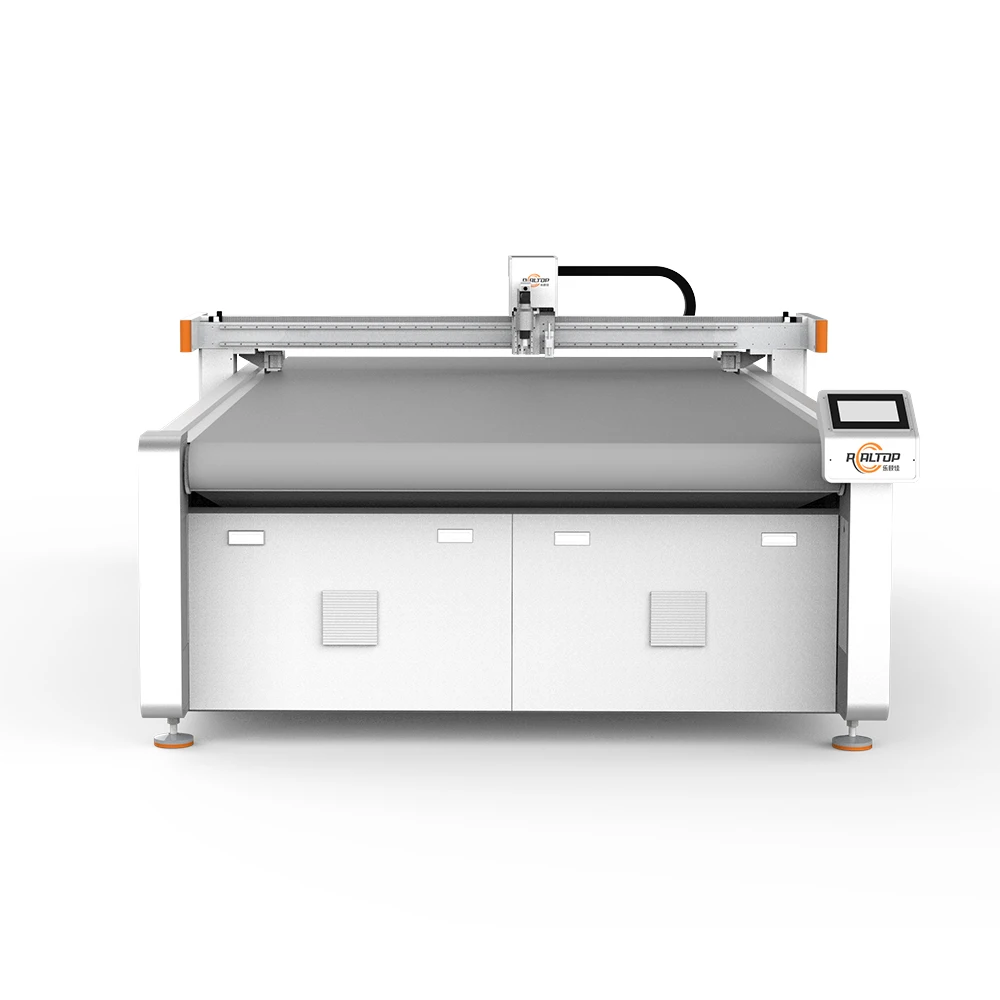
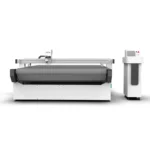
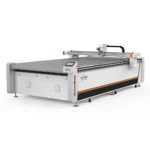
| Product Type | CNC Oscillating Knife Cutting Machine |
| Working Area | 1600×2500 mm |
| Cutting Speed | 0–2000 mm/s |
| Cutting Thickness | ≤30 mm (basis to be confirmed depending on material density) |
| Repeatability | ±0.1 mm |
| Tool Head Options | Oscillating knife, Driven rotary knife, Creasing wheel, Kiss cutting tool, Pneumatic knife, Milling tool, V groove knife |
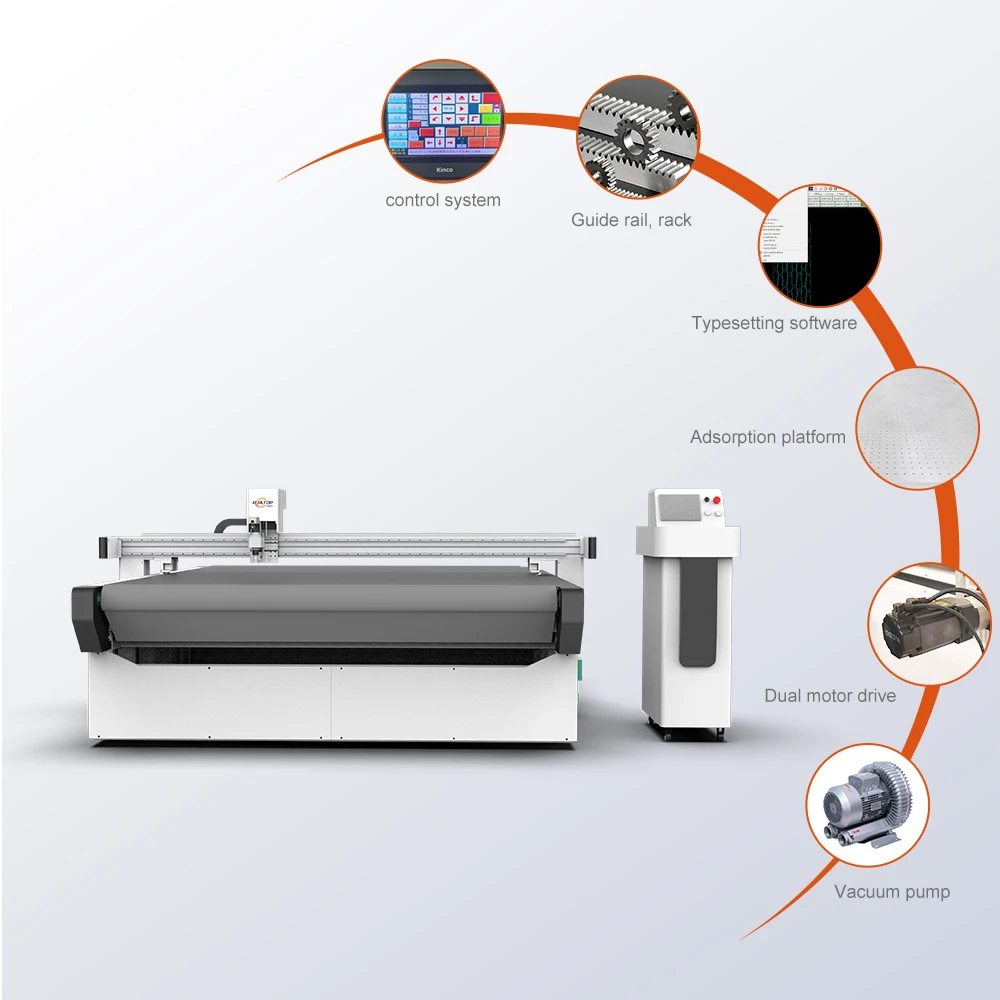
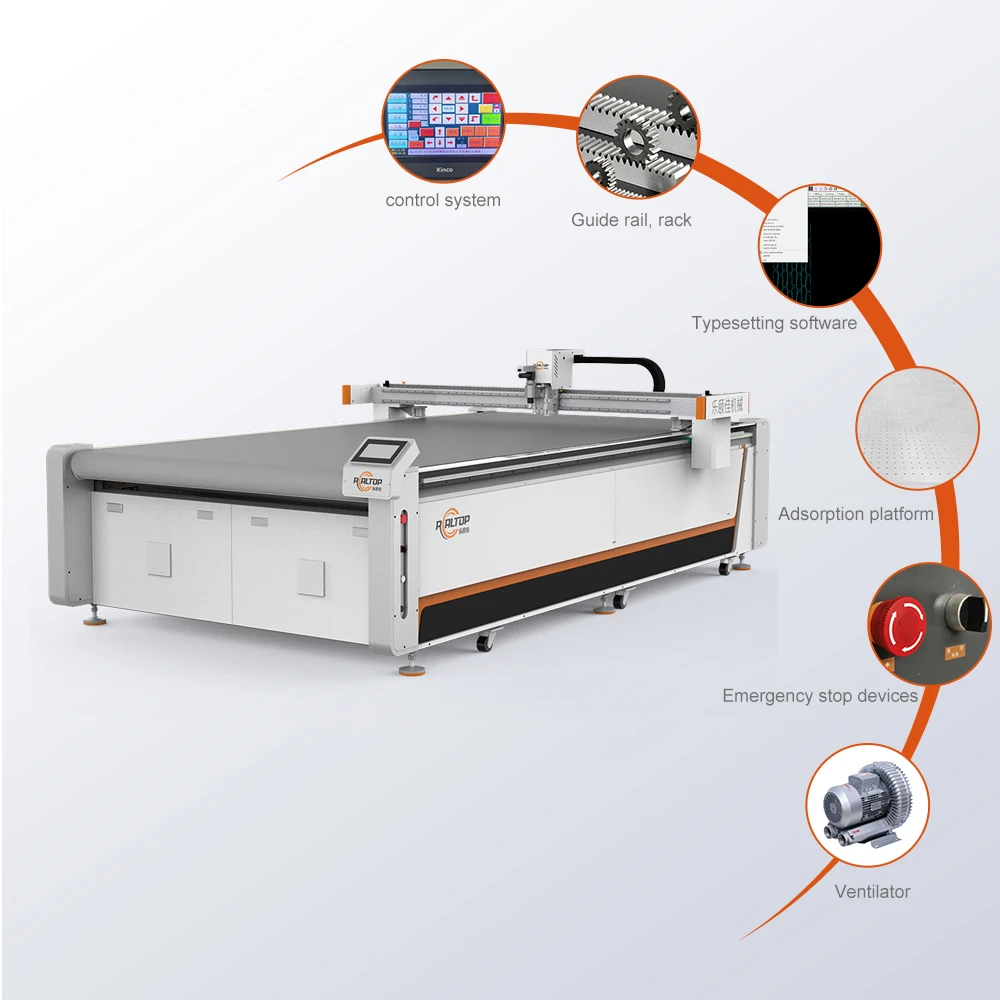
| Vacuum Table | Aluminum bellows type with high flatness and sealing |
| Vacuum Pump | 9 kW |
| Servo Motor Options | Panasonic, Delta, Dorna |
| Control System | PLC control panel with intuitive interface |
| Software File Formats | PLT, DXF, AI, PDF |
| Voltage Options | 110V / 220V / 380V |
| Safety Devices | Infrared sensor and emergency stop |
| Machine Dimensions | 3300×2100×1350 mm |
| Language Options | English, Russian, Italian, Chinese; custom languages available |
| Nesting Software | Included with defect avoidance and layout optimization |
| Certification | CE |
Application Suitability
| Application | Material or Output |
|---|---|
| Apparel Manufacturing | Suits, knitwear, lace, complex patterned fabrics, pattern-matching layouts |
| Automotive Interiors | Seat fabrics, carpets, PVC mats requiring burr-free edges |
| Home Textiles | Sofa fabrics, curtains, rugs, multi-layer fabric stacks |
| Composite Materials | Carbon fiber prepreg, aramid, specialty flexible materials |
| Other Flexible Materials | Cardboard, carton, EVA, leather, acrylic, foam, PTFE, rubber |
Why Tool Head Selection Matters More Than Working Area on a CNC Oscillating Knife Cutting Machine
A machine configured by bed size alone will eventually fail on the material it was never set up to cut.
I worked on a project where an automotive seat cover producer tested a cutting table using single-layer leather samples, and the edge quality was acceptable. When the line went into batch production on foam-laminated composite fabrics, the standard oscillating knife could not penetrate the sponge interlayer cleanly. Every cut edge showed delamination and burrs until the tool head was swapped for a high-frequency oscillating unit with adjusted amplitude. [NEED_CITE: material lamination behavior under oscillating knife cutting]
Fabric and flexible material producers often specify machines on working area and assume the rest will follow. But cutting depth, edge quality, and throughput all depend on matching the tool head, blade type, and vacuum hold-down to the actual stock being processed. A machine that performs well on woven cotton may struggle with aramid or multi-layer knit stacks without reconfiguration.
Matching the Blade to the Material Stack
The 1625 table supports a range of tool heads — oscillating knife, driven rotary, pneumatic knife, kiss cutting, creasing wheel, milling, and V-groove — each designed for a different material response. A driven rotary knife handles single-ply woven fabrics at high travel speed, while a pneumatic knife provides the downward force needed for dense foam or compressed gasket sheets. Selecting the wrong head does not just slow the job; it produces crushed edges or incomplete cuts that require manual rework downstream.
Vacuum Hold-Down and Part Geometry
The aluminum bellows vacuum table paired with a 9 kW pump provides consistent suction across the full 1600×2500 mm bed, but zoning determines whether small pattern pieces stay flat during the cut. [NEED_CITE: vacuum table zoning requirements for small nesting parts] Without adequate zone segmentation, narrow or lightweight pieces lift off the table mid-cut, causing blade deflection and dimensional drift that falls outside the ±0.1 mm repeatability specification.
Servo Drive and Edge Quality on Technical Textiles
Servo motor selection — available in Panasonic, Delta, or Dorna configurations — directly affects acceleration behavior and corner accuracy when cutting intricate patterns in lace or multi-layer technical fabrics. The PLC control panel manages acceleration curves so that the cutting head does not overshoot on tight radii, which is where most edge deviation occurs on high-value garment materials.
Software and Nesting Workflow
The included nesting software accepts PLT, DXF, AI, and PDF files and performs automatic defect avoidance, which matters when cutting natural leather or printed fabrics with visible flaws that must be routed around. File format compatibility is confirmed before the order so the buyer’s existing pattern library transfers without conversion errors or lost curve data.
What Happens When Configuration Is Skipped
Buyers who confirm working area and skip the tool head conversation often discover the problem weeks after commissioning, when production material arrives and the edge quality does not match the sample report run on a different stock. [NEED_CITE: post-commissioning tool head mismatch in flexible material cutting] Vacuum tables without sufficient zoning cause small automotive interior pieces — headliner inserts, gasket blanks — to lift and shift during cutting, producing scrap that accumulates faster than operators can sort it. Language and voltage oversights delay first production runs while control panels are reflashed or transformers are sourced locally.
Why Source This Machine Here
The design team specifies tool head and vacuum zone layout per material sample, not per catalog default, so the configuration reflects actual production stock. Sample cutting runs on the buyer’s own material before the order is confirmed, producing a documented report on edge quality, cutting speed, and tool selection. [NEED_CITE: sample cutting verification protocol for CNC knife equipment] Voltage, plug type, and control panel language are locked in at the order stage to prevent on-site commissioning delays. The in-house production facility covers both knife and laser cutting systems, allowing the buyer to match the cutting method to the material rather than force one technology across every application. Documentation shipped with the machine includes the electrical schematic, software license note, and file format compatibility confirmation specific to the buyer’s nesting workflow.
Documentation & Verification
- Factory test record on buyer’s actual material, documenting tool head and cutting parameters used
- Electrical schematic with confirmed voltage, frequency, and plug type for the destination market
- Machine specification sheet listing all configured tool heads and vacuum zone layout
- Software license note with confirmed PLT, DXF, AI, and PDF file format compatibility
- Spare parts list covering blades, knife holders, and vacuum table seals for the first operating period
Installation, Commissioning & Support
- Machine dimensions of 3300×2100×1350 mm require clear floor space and level concrete foundation for vacuum table sealing
- 9 kW vacuum pump and servo drives require a dedicated 380V or confirmed local voltage circuit with proper grounding
- PLC control panel language set to buyer’s specification before dispatch, verified at power-on during commissioning
- First-run parameter tuning performed on buyer’s production material, adjusting oscillation frequency and cutting depth per stock
- Operator training covers tool head changeover, vacuum zone activation, and nesting software defect avoidance setup
Before You Request a Quote
To configure the 1625 CNC oscillating knife cutting machine for your production line, share the material type, thickness, and whether the stock is single-ply or multi-layer composite. Confirm the daily volume and average part geometry so vacuum zoning and tool head selection can be matched. Specify the local voltage, frequency, and preferred control panel language to avoid delays at commissioning.
Frequently Asked Questions
Q: How do I select the right tool head for my fabric type and thickness?
A: Tool head selection depends on material density, lamination structure, and whether you cut single-ply or stacked layers. Driven rotary knives suit thin wovens at speed, while oscillating or pneumatic knives handle foam-laminated composites and thicker stacks. Send a material sample so the configuration can be verified before the machine is built.
Q: What vacuum table zoning is needed for small pattern pieces?
A: Small or narrow pieces require more vacuum zones to prevent material lift during cutting. The aluminum bellows table on this machine is configurable by zone count. Share your nesting layout and smallest part dimensions so the zone layout can be matched to your production patterns before shipment.
Q: How do I confirm software compatibility with my existing nesting workflow?
A: The included nesting software imports PLT, DXF, AI, and PDF files with automatic defect avoidance. Before ordering, share a sample file from your current workflow so format compatibility and curve accuracy can be tested and documented as part of the pre-order verification package.
Q: What voltage and control language options are available?
A: The machine supports 110V, 220V, and 380V configurations and can be set up for the frequency standard of your market. Control panel languages include English, Russian, Italian, and Chinese, with custom language options available. Confirm your requirements at the order stage to avoid commissioning delays.
Q: Can I send my material for sample cutting before purchase?
A: Yes. Provide your production material — including any laminated or composite layers — and a sample cutting report will be generated documenting the tool head chosen, cutting speed, edge quality, and any configuration adjustments needed. This report forms part of the order documentation package.


商品评价
Clear filtersThere are no reviews yet.