

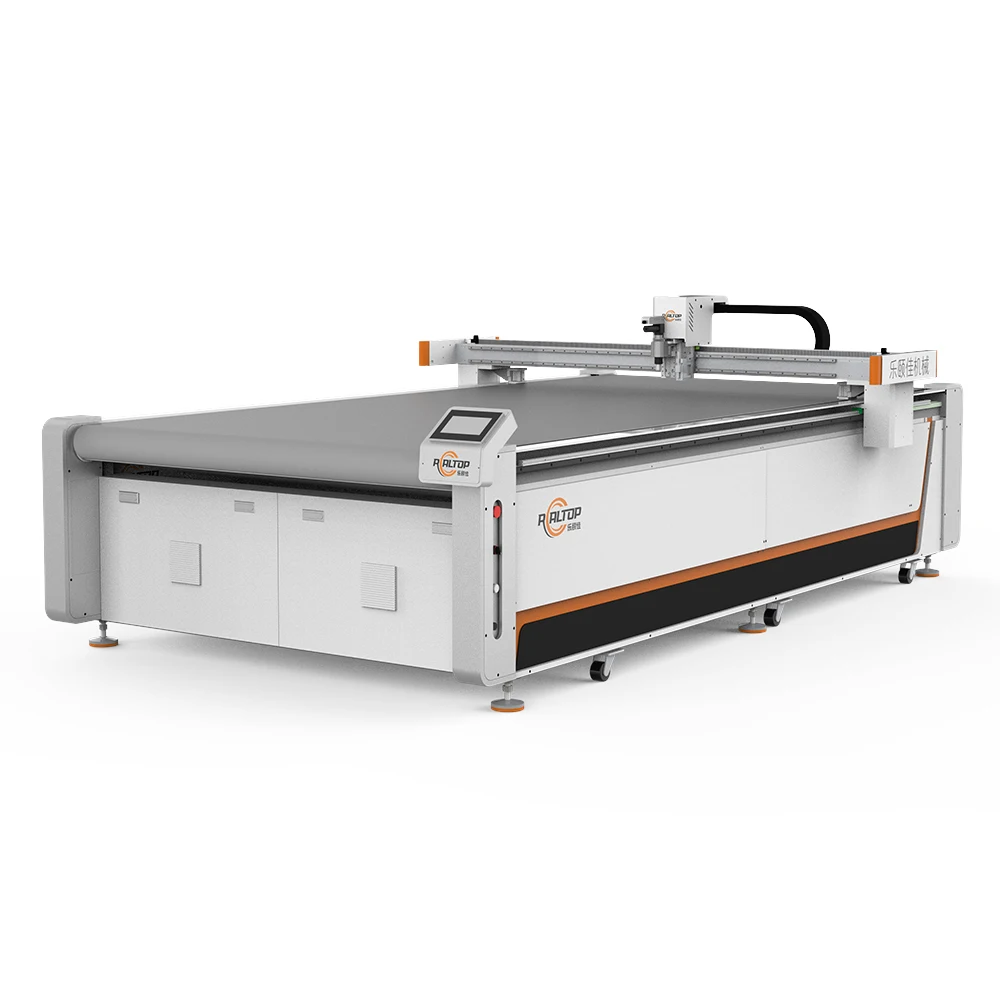
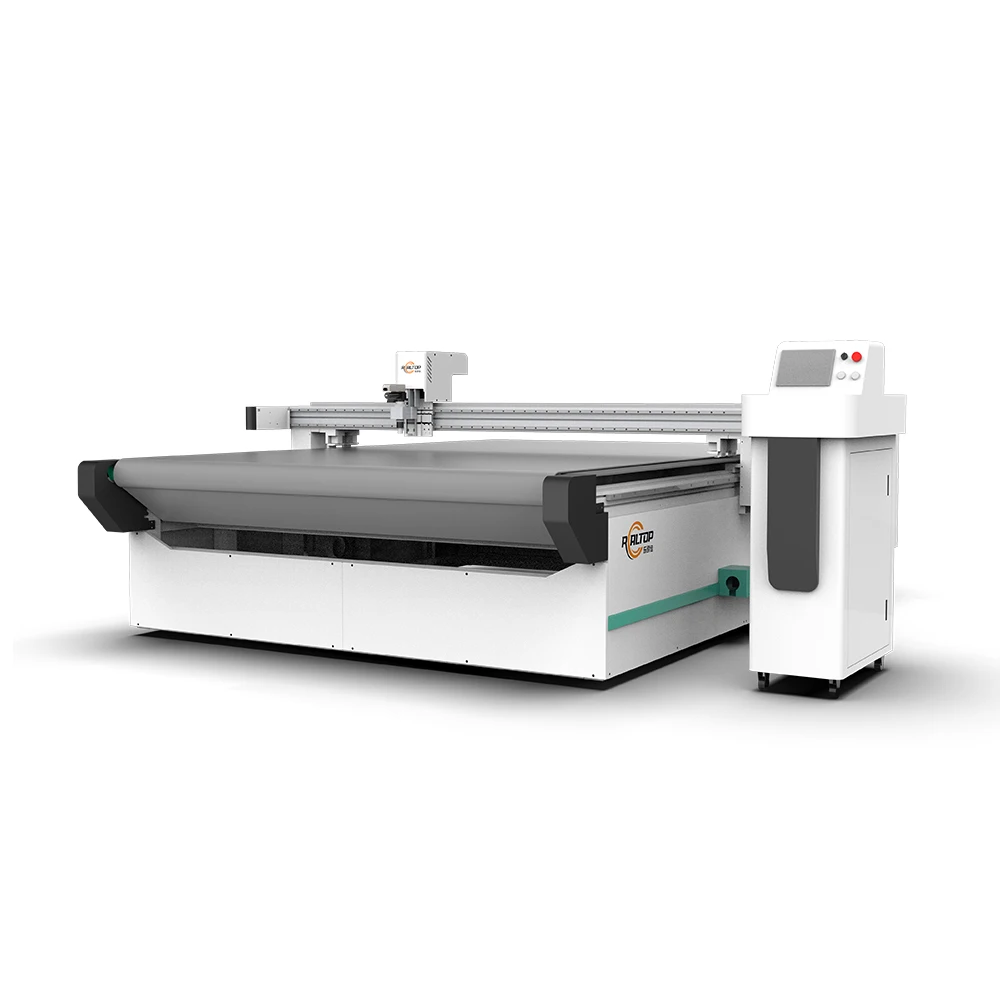


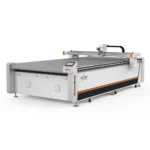
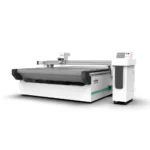

Cloth CNC Oscillating Knife Cutting Machine – Model Selection

Fast Shipping
Carrier information

20k products
Payment methods

24/7 Support
Unlimited help desk

2-day Delivery
Track or off orders
Description
Material-Specific Tooling — our in-house design team matches oscillating or rotary knife heads to your exact fabric weight, weave and layer count before the machine leaves the factory.
Technical Specifications
| Parameter | Value |
|---|---|
| Product Type | CNC Oscillating Knife Cutting Machine |
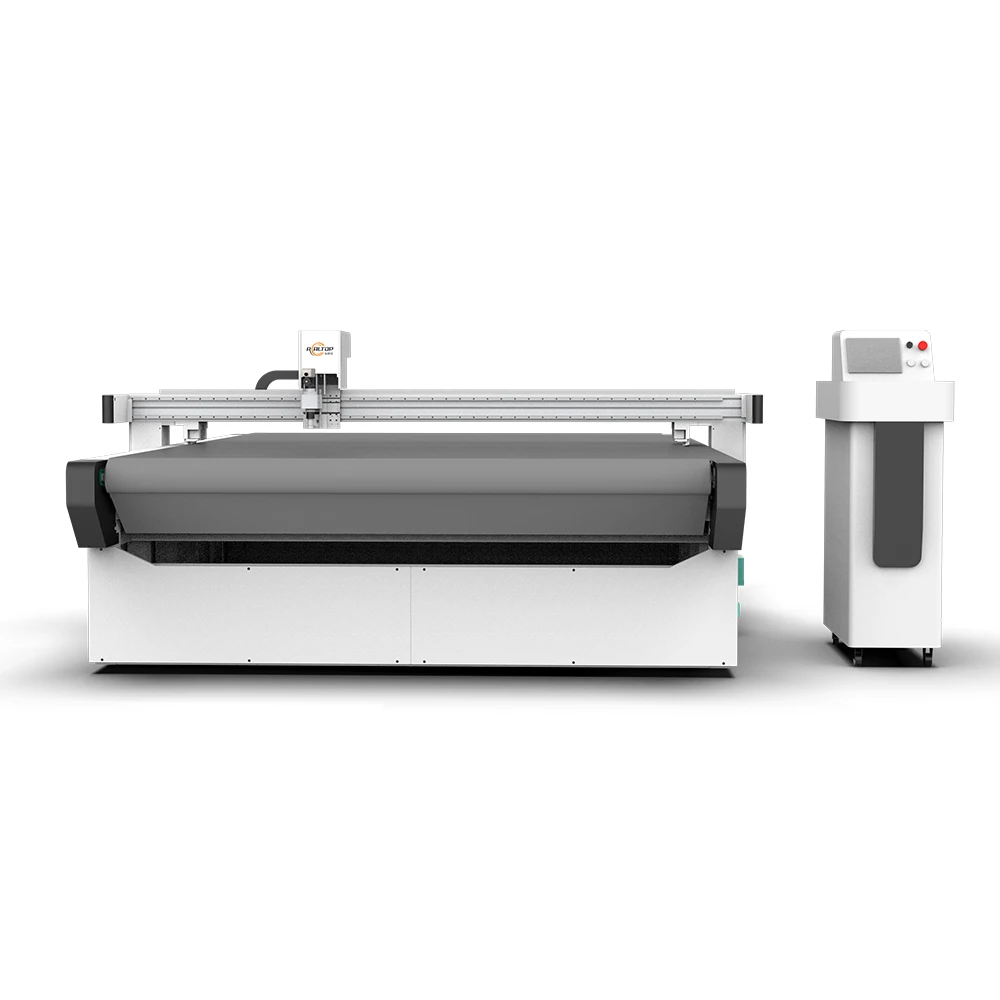
| Working Area | 1600×2500 mm |
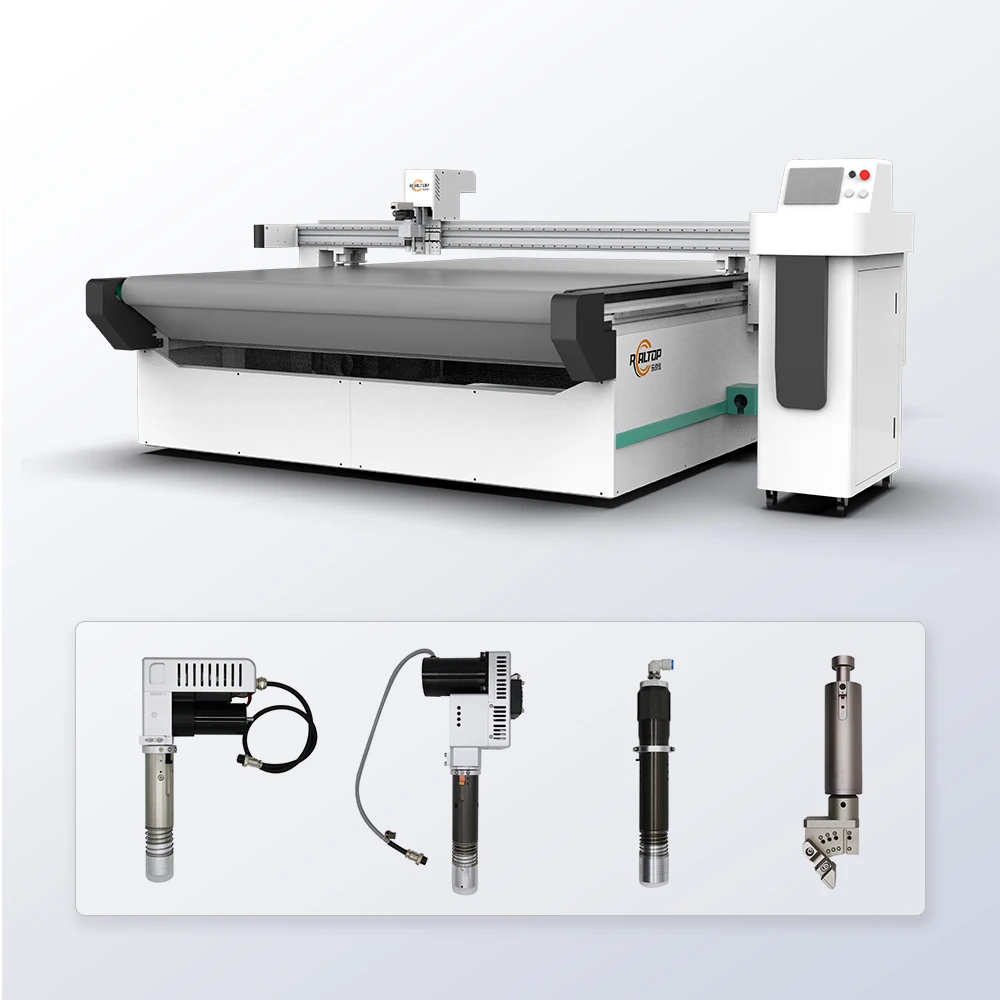
| Tool Head Options | Oscillating knife, Driven rotary knife, Creasing wheel, Kiss cutting tool, Pneumatic knife, Milling tool, V-groove knife |
| Cutting Speed | 0–2000 mm/s |
| Cutting Thickness | ≤ 30 mm (basis to be confirmed — depends on material density and layer count) |
| Positioning Accuracy | ±0.1 mm |
| Vacuum Table | Aluminum bellows vacuum table |
| Vacuum Pump Power | 9 kW |
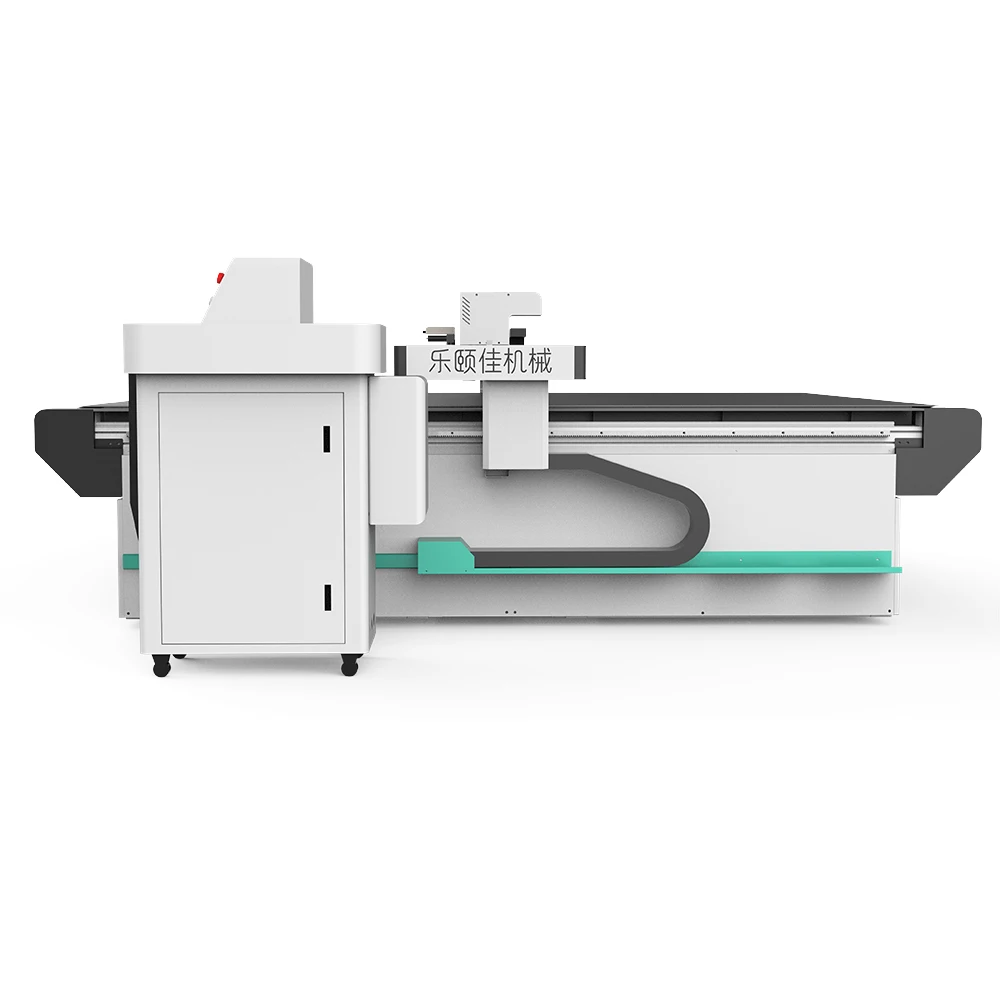
| Machine Frame | Heavy-duty frame with precision-ground surface |
| Servo Drive Options | Panasonic, Delta, Dorna |
| Control System | PLC control panel with optional display languages |
| File Format Compatibility | PLT, DXF, AI, PDF |
| Voltage Options | 110V, 220V, 380V |
| Safety Devices | Infrared sensor and emergency stop |
| Machine Dimensions (L×W×H) | 3300×2100×1350 mm |
Application Suitability
| Application | Material or Output |
|---|---|
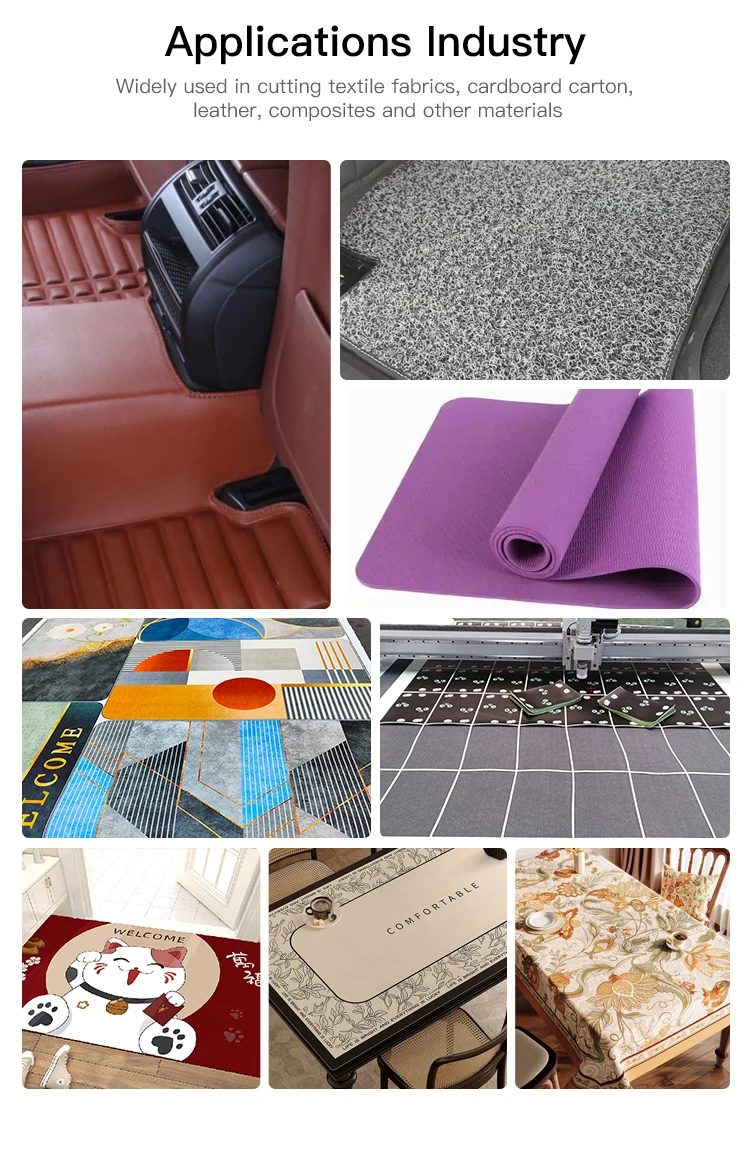
| Apparel Manufacturing | Suits, knitwear, lace, complex patterned fabrics with nesting layouts |
| Automotive Interiors | Seat fabrics, carpets, PVC mats requiring burr-free edges |
| Home Textiles | Sofa fabrics, curtains, rugs in single or multi-layer cold cutting |
| Composite Processing | Carbon fiber prepreg, aramid, specialty technical textiles |
| General Soft Materials | Leather, cardboard, carton, EVA, foam, PTFE, rubber, acrylic |
Why "Maximum Thickness" Means Nothing Without Material Context
A 30 mm cutting depth rating on foam is not the same as 30 mm on dense woven denim. When buyers ask about CNC oscillating knife cutting machine specifications, the first number they quote is thickness — yet thickness alone never tells the whole story. A material’s density, compressibility and internal abrasiveness all change how deep a blade can actually penetrate at production speed. [NEED_CITE: cutting force variation across textile densities]
I once worked with an automotive mat producer who assumed their 18 mm EVA composite would cut identically to the 10 mm sample they sent us. The denser core compound slowed the stroke rate, and the edge quality dropped until we swapped from a standard oscillating knife to a pneumatic knife head. Without that material-level conversation before the order, the machine would have arrived misconfigured for their actual production run.

Tool Head Selection Dictates Edge Quality More Than Speed Does
The seven available tool heads on this CNC oscillating knife cutting machine are not cosmetic options — each addresses a distinct failure mode in soft material cutting. An oscillating knife slices through woven textiles with a vertical stroke that prevents fraying at the edge, while a driven rotary knife handles continuous curves on knits without snagging the yarn. Creasing wheels score cardboard without cutting through, and kiss cutting tools trim self-adhesive vinyl without damaging the backing liner.
Choosing the wrong head for the material produces visible defects: ragged edges on tightly woven fabrics, crushed cells in foam, or delamination in multi-layer composites. The selection must happen during specification, not after the machine is running on the shop floor. [NEED_CITE: textile cutting defect classification by tool type]
Vacuum Hold-Down and the Problem of Small Part Geometry
The aluminum bellows vacuum table paired with a 9 kW pump generates consistent suction across the full 1600×2500 mm work surface. Flatness matters here because even a slight warp in the table surface creates zones where thin fabrics lift during high-speed strokes. For producers cutting small garment pieces or intricate automotive gasket shapes, the hold-down must work at the individual part level, not just across the whole sheet.
When cutting nested layouts with dozens of small pattern pieces, each piece needs to stay registered until the final cut releases it. If vacuum zoning is inadequate, the last few cuts in a nest can shift the already-loosened pieces, producing dimensional errors that only show up during sewing or assembly. This is why table flatness and pump capacity must be evaluated together against your typical nest density.
Reading the Specification Sheet Against Your Actual Production Variables
The ±0.1 mm positioning accuracy is achieved through the servo-driven motion system and precision-ground frame surface, but this figure assumes a stable material hold. In practice, the accuracy you see on finished parts depends on vacuum consistency, tool head condition and whether the file format translation preserves the original geometry. PLT, DXF, AI and PDF compatibility means most buyer workflows can import directly, yet font-based outlines in PDF files sometimes convert to curves differently than expected.
The 9 kW vacuum pump is sized for the 1600×2500 mm table area and handles typical single-to-multi-layer fabric loads. For unusually porous materials or very thick foam stacks, the pump may need to run at full capacity continuously, which affects long-term maintenance intervals. The heavy-duty frame and precision-ground surface keep the gantry path true over extended production runs, which matters when tolerance stack-up on nested pieces must stay within pattern allowances. [NEED_CITE: gantry deflection standards for CNC flatbed cutters]

The Cost of Skipping Material-Specific Configuration
A machine ordered on working area alone often arrives unable to handle the buyer’s actual material thickness or density. The wrong tool head produces ragged edges that require secondary trimming, adding labor and time to every production batch. Inadequate vacuum zoning causes small parts to lift and shift during the final cuts in a nest, creating scrap that is only discovered at the sewing station. Voltage and plug mismatches delay commissioning by days or weeks while adapters and transformers are sourced locally. [NEED_CITE: industrial machine commissioning delays from electrical mismatches]
Why Source This CNC Cutting Platform Here
In-house design and production cover both oscillating knife and rotary knife technologies under one roof, so the cutting method is matched to your material rather than forced into a single-tool compromise. Tool head and table configuration are specified per your material type and daily volume, documented in a written configuration list before production begins. CCD camera positioning is available for printed contour work where edge detection alone is insufficient.
Software compatibility is confirmed against your existing file formats and nesting workflow before the order is placed, preventing integration surprises on delivery day. Sample cutting runs on your own material — shipped to the factory or tested on-site — verify edge quality, achievable speed and cutting depth before any commitment. Voltage, control language and plug type are locked in on the electrical schematic, matching your facility supply exactly.
Documentation & Verification
- Machine specification sheet listing confirmed tool head and table configuration for your material
- Electrical schematic with voltage, frequency and plug type matching your facility supply
- Sample cutting report on your fabric or composite material showing edge and speed results
- Software licence and file format compatibility note confirming DXF, PLT, AI or PDF workflow
- Factory test record documenting positioning accuracy and vacuum performance before dispatch
- CE declaration documentation for machinery directive compliance where applicable
Installation, Commissioning & Support
- Foundation must support 3300×2100×1350 mm footprint with level tolerance for precision-ground frame
- Dedicated electrical circuit matching confirmed voltage option (110V, 220V or 380V) and servo drive rating
- 9 kW vacuum pump requires separate circuit and adequate ventilation near the cutting table
- PLC control panel configured in your chosen language (English, Russian, Italian, Chinese or custom) at first power-on
- Initial tool head calibration performed on your material with cutting speed and stroke rate adjustment
- Spare parts list covering blades, vacuum seals and servo components for first-year maintenance planning
What We Need From You to Recommend a Configuration
Send us a sample of your actual production material along with the typical thickness range, layer count per cut and the daily output volume your line requires. Let us know your facility voltage and frequency, the control language your operators prefer, and whether your current workflow uses DXF, PLT, AI or PDF files for nesting. If you are cutting printed fabrics requiring contour recognition, include a printed sample with the registration marks you use.
Frequently Asked Questions
Q: How do I choose between oscillating knife and driven rotary knife for my fabric?
A: Woven and tightly constructed fabrics generally cut cleaner with an oscillating knife, which uses a vertical stroke to prevent yarn pull. Knits, stretch fabrics and materials prone to snagging often perform better with a driven rotary knife that rolls through continuous curves. We test both heads on your material sample before finalizing the configuration.
Q: What does the cutting thickness limit actually depend on?
A: The stated limit depends on material density, compressibility and whether you are cutting single or multiple layers. A soft foam may cut at the full rated depth while a dense composite of the same thickness may require a slower stroke rate or a different tool head. We confirm achievable thickness on your specific material during sample testing.
Q: Will the vacuum table hold small pattern pieces without lifting?
A: The aluminum bellows table and 9 kW pump provide consistent suction across the work area, but small-part hold-down depends on nest density and material porosity. We review your typical nesting layout during specification to confirm that vacuum zoning is sufficient for your smallest pieces at production speed.
Q: How is voltage and control language confirmed before shipment?
A: We document your facility voltage, frequency and plug type on the electrical schematic before production. The PLC control panel language is set during factory testing in your chosen option — English, Russian, Italian, Chinese or a custom language — and verified on the test record before dispatch.


商品评价
Clear filtersThere are no reviews yet.