






Fast Shipping
Carrier information

20k products
Payment methods

24/7 Support
Unlimited help desk

2-day Delivery
Track or off orders
In-house cutting configuration — Tool head, vacuum zoning and nesting software validated on the buyer’s own corrugated grade before order confirmation, not selected from a generic options list.
Technical Specifications
| Parameter | Value |
|---|---|
| Model | RT-D2516/RT-S2516 |
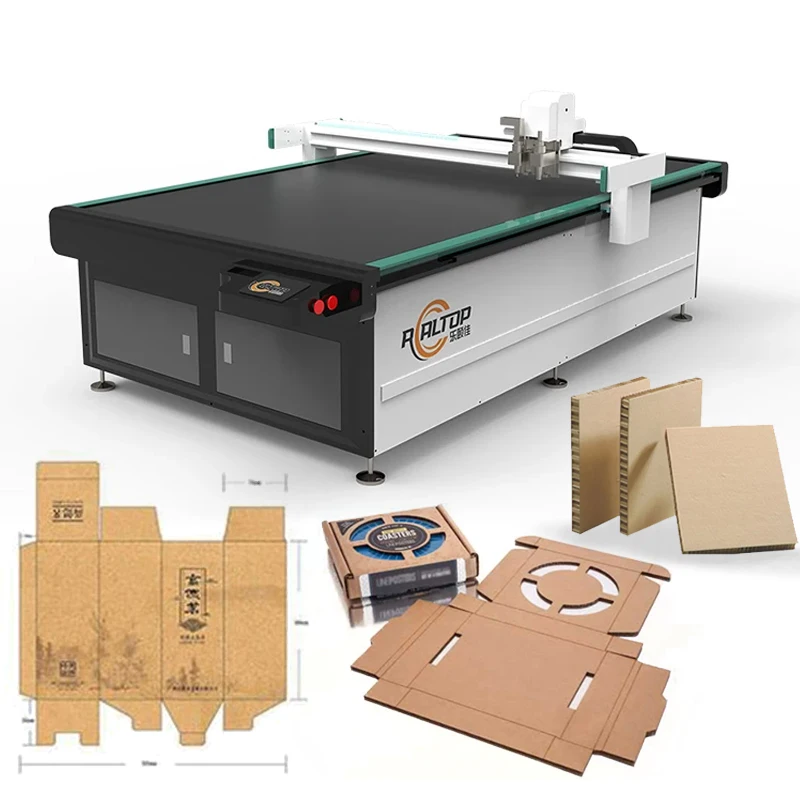
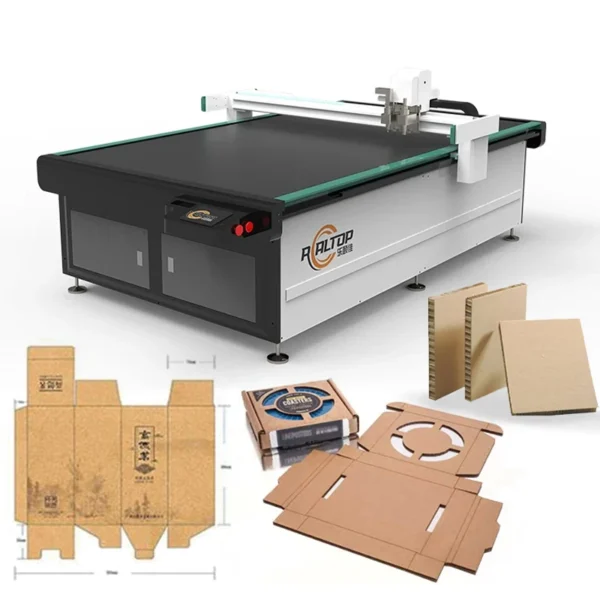
| Product Type | CNC V Groove Corrugated Grey Board Carton Cutting Machine |
| Working Area | 1600×2500 mm |
| Machine Size | 3450×2300×1250 mm |
| Rated Power | 9 kW |
| Voltage | 380V ±10% |
| Working Table | Flat aluminum alloy honeycomb vacuum adsorption platform |
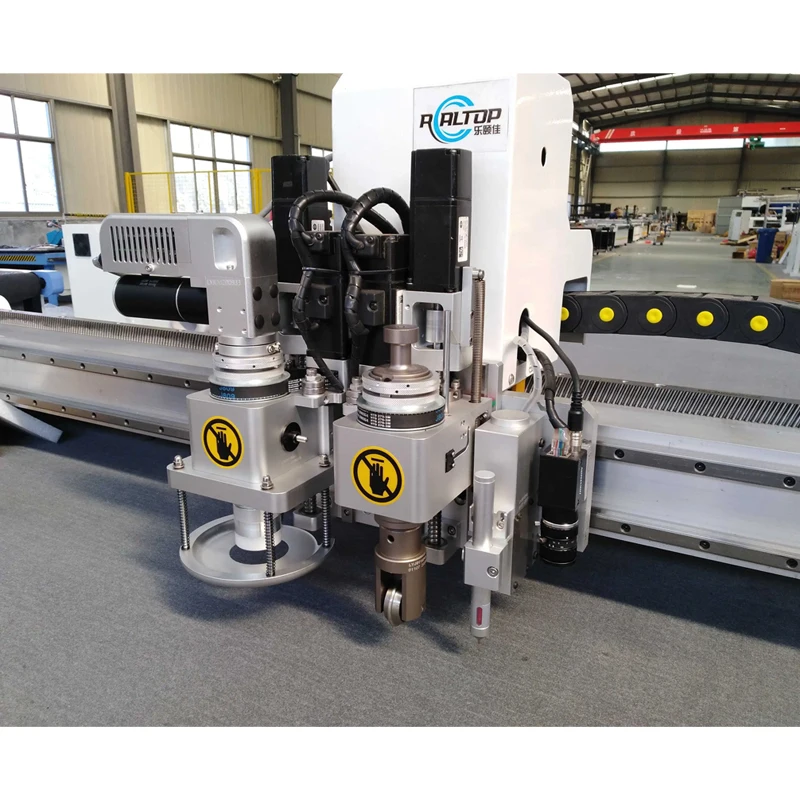
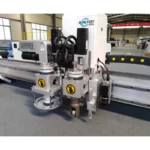
| Multifunctional Head | Swiss imported knife with vibration full cutting, vibration half cutting and cursor location |
| Translational Velocity | 800–2000 mm/s |
| Cutting Speed | 200–800 mm/s (according to different cutting materials) |
| Cutting Thickness | ≤100 mm (varies with material) |
| Repeated Accuracy | ≤0.1 mm |
| Transmission System | Digital servo motor, linear guide, synchronous belt, ball screw (imported) |
| Servo Motor | Taiwan Delta servo motors and drivers |
| Linear Guide | Taiwan Hiwin rail |
| Vacuum Pump | 7.5 kW |
| Safety Device | Infrared sensors |
| Instruction System | HP-GL compatible format |
| Conveyor | Germany imported conveyor belt with auto feeding |
| Software | Professional carton nested software, multi-language, lifelong technical support |
| Language Options | English, Russian, Italian, Chinese (special languages customizable) |
| Certification | CE (to be confirmed for this model) |
Application Suitability
| Application | Material or Output |
|---|---|
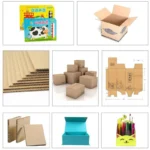
| Packaging carton sample making | Corrugated board prototypes and short-run production boxes |
| Express and logistics paper box packaging | Custom-sized corrugated boxes cut on demand |
| Large electrical appliance carton production | Heavy-duty corrugated and grey board packaging blanks |
| High-end gift box and display packaging | Clean crease and cut edges on thick grey board stock |
| Snack food carton manufacturing | Medium-flute corrugated board for retail-ready packaging |
| Sticker and billboard cutting | Self-adhesive vinyl, PP hollow board and lightweight signage stock |
Why the Board Grade Must Come Before the Machine Model
A cutting table specified on working area alone often fails the moment it meets a production-grade corrugated sheet — this page details the configuration parameters so you can verify fit to your exact flute profile before commitment.
The machine must be matched to the board, never the board forced onto the machine.
In workshops across West Africa and South Asia, I have watched operators struggle with V-groove cuts that collapse under local humidity, leaving crushed flutes and ragged crease lines. The corrugated grey board carton cutting machine they ordered was sized correctly but configured for a different climate zone and board density. Moisture content shifts the effective cutting resistance, and a tool head set for dry stock will tear through damp board in a single shift [NEED_CITE: effect of moisture content on corrugated board cutting resistance]. This is why sample cutting on the buyer’s own material is the first non-negotiable step.
Oscillating Knife Head Configured per Flute Profile
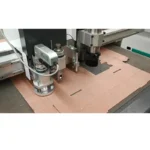
The Swiss imported oscillating knife delivers full-cut, half-cut and cursor location in a single head. For corrugated board, half-cut depth controls the crease quality — set too shallow and the fold cracks; set too deep and the liner tears through. The vibration frequency and blade geometry are selected according to the flute type and board density, so a B-flute express box and an E-flute gift box each receive the correct tooling setup rather than a compromise default.
Vacuum Zoning for Small Carton Blanks
A flatbed CNC oscillating knife cutting machine specifications sheet often lists vacuum power without addressing zone coverage. Small carton blanks near the table edge lift during high-speed traverses if the active vacuum zone extends well beyond the part outline. The aluminum alloy honeycomb platform on this table supports automatic zone-following, concentrating suction only under the sheet area being processed. This keeps lightweight corrugated offcuts seated during the final trim passes where lift is most likely to occur [NEED_CITE: vacuum zone sizing guidelines for flatbed digital cutting tables].
Reading the Specification Sheet Beyond Working Area
Working area defines the maximum sheet size, but cutting speed and repeated accuracy determine whether a carton sample maker can hold tolerance across a nested layout. The Taiwan Delta servo motors paired with Hiwin linear guides deliver ≤0.1 mm repeatability across the full 1600×2500 mm travel, which matters when a die-cut pattern requires multiple tool passes for crease and cut. The 7.5 kW vacuum pump must be evaluated against the board porosity — a single-face corrugated sheet bleeds air faster than a dense grey board, demanding higher suction to maintain hold-down. Software compatibility closes the loop: HP-GL format import and the professional carton nesting package ensure that crease, perforation and cut paths arrive from the design office without manual re-drawing.
What Happens When Configuration Is Skipped
Ordering a machine by working area and price, then receiving a fixed vacuum zone and a single blade geometry, is a common pattern I have seen leave carton producers running at half speed. Ragged V-groove edges force manual trimming downstream. Insufficient vacuum on small blanks triggers mid-cut lift events that scrap the sheet. Wrong control language means operators rely on memory instead of reading the interface, and a single misread parameter shifts an entire batch of crease lines off register [NEED_CITE: carton creasing tolerance requirements in packaging assembly].
Why Source This Table from the Factory Floor
In-house design covers both knife and laser cutting, so the recommendation is driven by material suitability rather than pushing one technology. Tool head and vacuum table configuration are specified per corrugated flute, grey board density and production volume. CCD camera positioning is available when printed contour work enters the mix. Software file format compatibility is confirmed against the buyer’s existing nesting workflow before the order is placed. Sample cutting on the buyer’s actual corrugated or grey board grade runs at production speed, producing a documented report before commitment.
Documentation & Verification
- Machine specification sheet listing confirmed tool head and vacuum zone layout
- Electrical schematic with voltage and frequency matched to target market
- Sample cutting report on buyer’s corrugated grade at production speed
- Tool head and table configuration list per flute type and board density
- Software licence note and HP-GL file format compatibility confirmation
- CE declaration status documented for this specific model before shipment
Installation, Commissioning & Support
- 3450×2300 mm footprint requires level concrete floor with clearance for conveyor feed
- 9 kW rated power plus 7.5 kW vacuum pump demand dedicated 380V circuit with confirmed frequency
- Machine ships partially assembled; linear guides and servo drives calibrated on site
- First-run parameter setting includes vacuum zone mapping for the buyer’s sheet dimensions
- Operator training covers tool head changeover between full-cut and half-cut modes
- Spare parts list includes Swiss knife blades, vacuum seals and synchronous belt segments
What to Send with Your Inquiry
Provide the corrugated flute type and grey board thickness you run most often, along with the daily sheet volume and typical carton blank dimensions. Confirm your workshop voltage and frequency, the control language your operators need, and whether your existing design files use HP-GL or another format. If possible, send a few sample sheets so we can run a cutting trial and return the results before any order discussion.
Frequently Asked Questions
Q: How is cutting capacity verified for my corrugated board grade?
A: The 200–800 mm/s speed range depends on material type and thickness. We run your actual corrugated or grey board sample at target speed, document edge quality and crease depth, and share the report before you commit. No capacity claim is made without a material-specific trial.
Q: How do I configure the tool head and vacuum zoning for my carton blanks?
A: Tool head selection — full-cut, half-cut or creasing wheel — is matched to your flute profile and board density. Vacuum zoning is set according to the smallest blank size in your typical nest layout, ensuring suction concentrates under each part to prevent lift at high traverse speeds.
Q: What voltage, frequency and control language are confirmed before shipment?
A: The machine base voltage is 380V ±10%, with frequency and plug type confirmed against your local supply standard. Control language options include English, Russian, Italian and Chinese, with special languages customizable. All three are locked in writing before production begins.
Q: Which file formats does the carton nesting software accept?
A: The professional carton nesting package accepts HP-GL compatible format and other common vector file types. We confirm compatibility with your existing design workflow — including crease, perforation and cut path recognition — before the order is finalized.
Q: Can I send my own material for sample cutting before ordering?
A: Yes. Send your corrugated board or grey stock and we run it at production speed on the configured tool head. You receive the cut samples along with a written report covering edge quality, crease accuracy and cycle timing, so you evaluate real results instead of catalog claims.


商品评价
Clear filtersThere are no reviews yet.