




Fast Shipping
Carrier information

20k products
Payment methods

24/7 Support
Unlimited help desk

2-day Delivery
Track or off orders
Configured Per Material — Tool head, vacuum zoning and nesting software verified on your corrugated board grade before the machine leaves our Jinan workshop.
Technical Specifications
| Parameter | Value |
|---|---|
| Model | RT-D2516 / RT-S2516 |
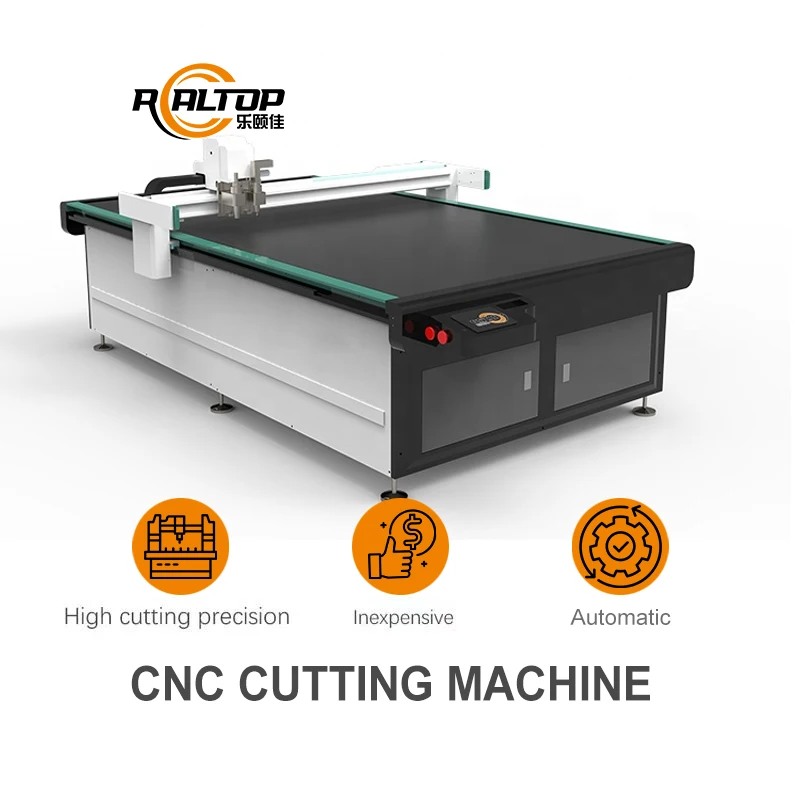
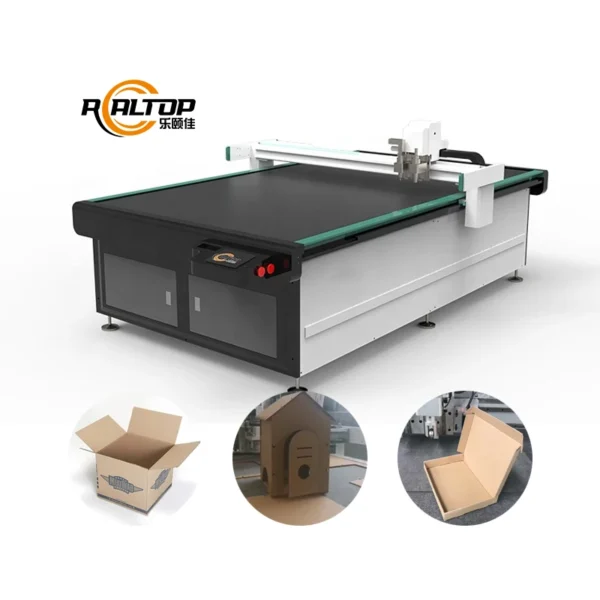
| Product Type | CNC Oscillating Knife Cutting Table |
| Working Area | 1600 × 2500 mm |
| Machine Footprint | 3450 × 2300 × 1250 mm |
| Rated Power | 9 kW |
| Supply Voltage | 380 V ±10 % |
| Cutting Speed | 800–1200 mm/s |
| Repeatability | ≤0.1 mm |
| Max Cutting Thickness | ≤100 mm (varies with material density and flute profile) |
| Transmission | Digital servo motor with linear guide, synchronous belt and ball screw |
| Control Format | HP-GL compatible |
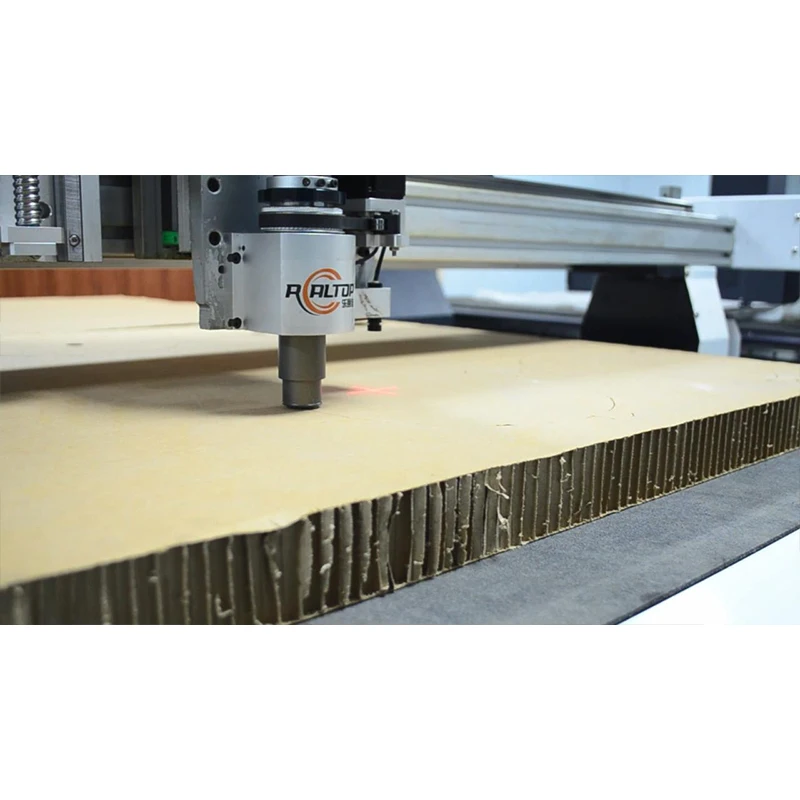
| Tool Head | Swiss-imported oscillating knife — full cut, half cut, cursor location |
| Vacuum Platform | Aluminum alloy honeycomb structure with zoned adsorption |
| Vacuum Pump | 7.5 kW |
| Servo Motor | Taiwan Delta |
| Linear Guide | Taiwan Hiwin |
| Conveyor Belt | Germany imported, auto-feeding option |
| Software | Professional carton nesting package; multi-format import |
| Safety | Infrared sensors, emergency stop |
| Assembly State | Fully assembled prior to dispatch |
Application Suitability
| Application | Material or Output |
|---|---|
| Carton and packaging sample making | Single, double and triple-wall corrugated board up to ≤100 mm |
| Short-run folding carton production | Coated and uncoated card stock, sticker sheets with printed contours |
| Gift box and display packaging | Multi-layer composite board, crease-and-cut in one pass |
| Signage and billboard prototyping | Foam board, PVC sheet, soft glass, silicone rubber |
| Express paper box packaging | Corrugated board grades from E-flute through BC double-wall |
What "Working Area Only" Leaves Out When Specifying CNC Oscillating Knife Cutting Table Specifications
A 1600 × 2500 mm bed tells you nothing about whether the machine will hold a small carton blank flat while the knife exits a five-layer double-wall sheet at 1200 mm/s.
I learned this the hard way on the Pearl River Delta assembly floor. A carton converter sent us a sample made from three-layer E-flute; the prototype cut cleanly. When production switched to BC double-wall corrugated, the oscillating knife ran out of stroke mid-flute and left ragged fibre on every crease line. The whole batch of samples went straight to the recycling skip. The root cause was not the CNC oscillating knife cutting table specifications on the nameplate — it was that nobody had matched the knife stroke, vacuum zone layout and felt density to the actual board that would run every day [NEED_CITE: material thickness versus tool stroke matching in flatbed digital cutting].
Matching the Oscillating Stroke to Flute Profile
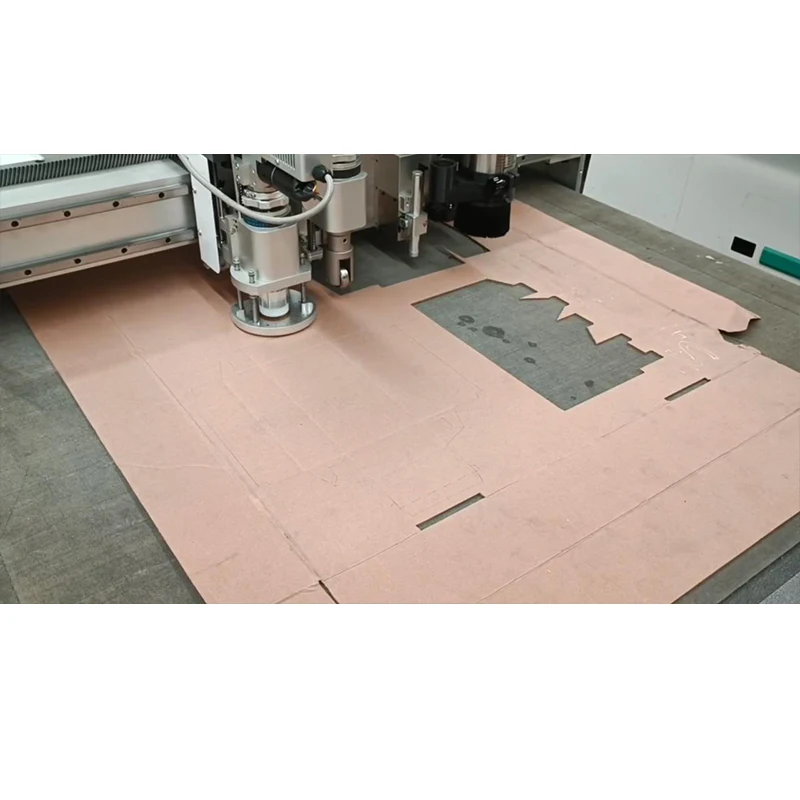
The Swiss-imported oscillating knife on this table supports full cut, half cut and cursor positioning, but stroke length and frequency must be set against the flute type. An E-flute carton blank needs a short, fast oscillation to shear the thin liner cleanly, while a BC double-wall board demands a longer stroke so the blade reaches through both flute layers without crushing the crown. On the RT-D2516 / RT-S2516 the tool head configuration is locked in after a sample cut on the buyer’s own board, so the oscillation parameters ship matched to a known flute profile rather than a generic factory default.
Vacuum Zoning That Follows the Cut Path
A 7.5 kW pump pulling through a single plenum wastes energy and still lets small carton flaps lift at the trailing edge. The aluminum honeycomb table on this flatbed is divided into independently valved zones. The nesting software opens only the zones under the current cut path, so suction concentrates where the knife is actually working. This keeps a 60 mm sticker contour pinned to the felt even when the head accelerates past 800 mm/s, and it prevents the vacuum from dragging air through exposed honeycomb cells [NEED_CITE: zoned vacuum adsorption principles in flatbed cutting tables].
Reading the Drive and Motion Numbers in Context
Taiwan Delta servos and Hiwin linear guides are common in this class, but repeatability of ≤0.1 mm across a 1600 × 2500 mm travel only matters if the frame resists torsion. The ball-screw and synchronous-belt transmission on the RT-D2516 / RT-S2516 is pre-loaded at the factory, and the fully assembled state means the guides are not realigned after ocean freight vibration. The 9 kW rated power covers the cutting head, vacuum valves and conveyor drive together; the separate 7.5 kW vacuum pump sits on its own circuit, so voltage sag on the pump line cannot starve the servo drives during heavy adsorption cycles.
The Cost of Skipping the Sample-Cut Step
When the vibration knife meets a board heavier than its configured stroke, the blade drags instead of shearing. Flutes collapse, liner paper tears and the crease wheel leaves a crushed groove rather than a foldable score. The operator slows the feed rate to compensate, but the nesting software has already calculated cycle time at full speed, so daily output targets slip. Worse, the ragged edge shows up only after the board is die-stripped, by which time several hundred sheets may already be in the waste bin [NEED_CITE: edge quality versus cutting speed trade-offs in corrugated board].
Why Buyers Choose This Configuration Route
The design team in Jinan covers both knife and laser cutting, so the first conversation is about your material, not a catalogue page. Tool head, vacuum zone map and felt specification are written into a configuration list before the order is signed. Voltage, plug type and control language are confirmed against the destination market’s electrical standards. The professional carton nesting software ships with a file-format compatibility note, so your existing DXF, AI or PLT crease-line files import without last-minute converter work.
Documentation & Verification
- Factory test record run on your corrugated board grade and flute profile
- Tool head and vacuum zone configuration list signed off before dispatch
- Electrical schematic with voltage and plug type matched to your workshop
- Software licence and file-format compatibility note for your nesting workflow
- Sample cutting report on your own material shipped with the machine
- Operation and maintenance manual with spare parts list in your chosen language
Installation, Commissioning & Support
- Floor must sustain the 3450 × 2300 × 1250 mm footprint plus operator clearance on three sides
- Dedicated 380 V ±10 % circuit rated for the combined 9 kW machine plus 7.5 kW pump load
- Machine arrives fully assembled; gantry is re-levelled and guides re-checked after transit
- First-run parameters loaded from the sample cutting report on your board grade
- Operator training covers zone-valve mapping, knife stroke tuning and nest file import
- Spare oscillating blades, creasing wheels and felt strips listed in the dispatch pack
Preparing Your Inquiry
Send the flute type, board gram weight and maximum sheet size you plan to run most days. Include a DXF or PLT of a typical carton blank so we can verify crease-line recognition and nesting yield. Tell us your workshop voltage, frequency and the control language your operators need, so the RT-D2516 / RT-S2516 arrives wired and labelled for your floor.
Frequently Asked Questions
Q: How is cutting thickness verified before shipment?
A: We run your actual board grade on the RT-D2516 / RT-S2516 and record stroke, speed and edge quality in a sample cutting report. Max thickness of ≤100 mm varies with flute density, so the test uses your heaviest routine material rather than a generic reference sheet.
Q: How does the vacuum table handle small carton parts?
A: The honeycomb platform is divided into zones. The nesting software opens only the valves beneath the active cut path, concentrating suction under the knife. This prevents small flaps and sticker contours from lifting when the head accelerates to 1200 mm/s.
Q: Which tool head suits corrugated board versus sticker film?
A: Corrugated board uses the oscillating knife with stroke matched to flute profile; sticker film uses the same head at a shorter stroke or a drag knife for tight radii. The crease wheel is added for fold lines, and all three tools mount on one head.
Q: Will my existing carton design files import cleanly?
A: The professional nesting software reads DXF, AI, PLT and HP-GL compatible formats. Before order we run your file through the software and issue a format compatibility note confirming crease-line recognition and layer mapping.
Q: How are voltage and language confirmed before dispatch?
A: We record your workshop voltage, frequency, plug type and preferred control language on the electrical schematic and software configuration sheet. Both documents are signed off before assembly begins, preventing on-site mismatch.


商品评价
Clear filtersThere are no reviews yet.