








Fast Shipping
Carrier information

20k products
Payment methods

24/7 Support
Unlimited help desk

2-day Delivery
Track or off orders
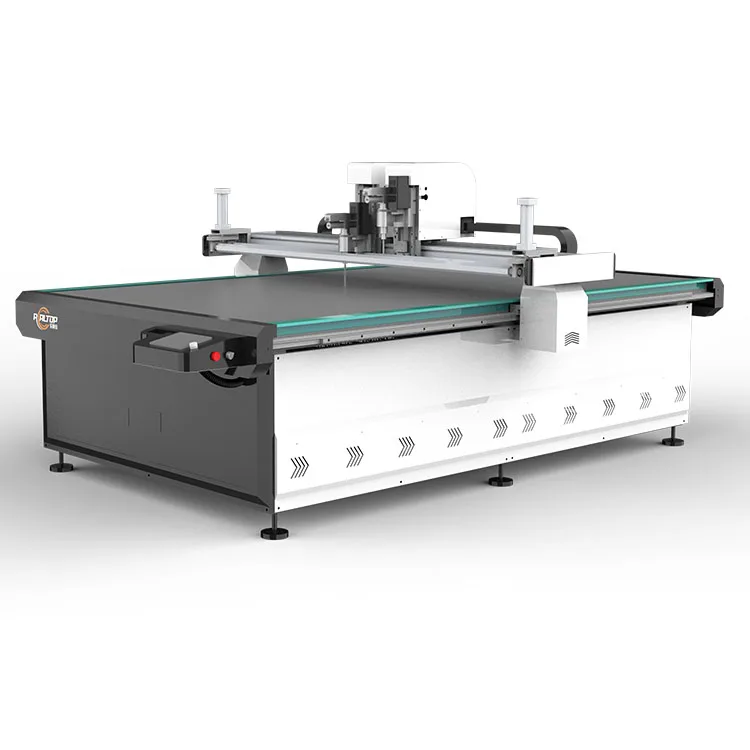
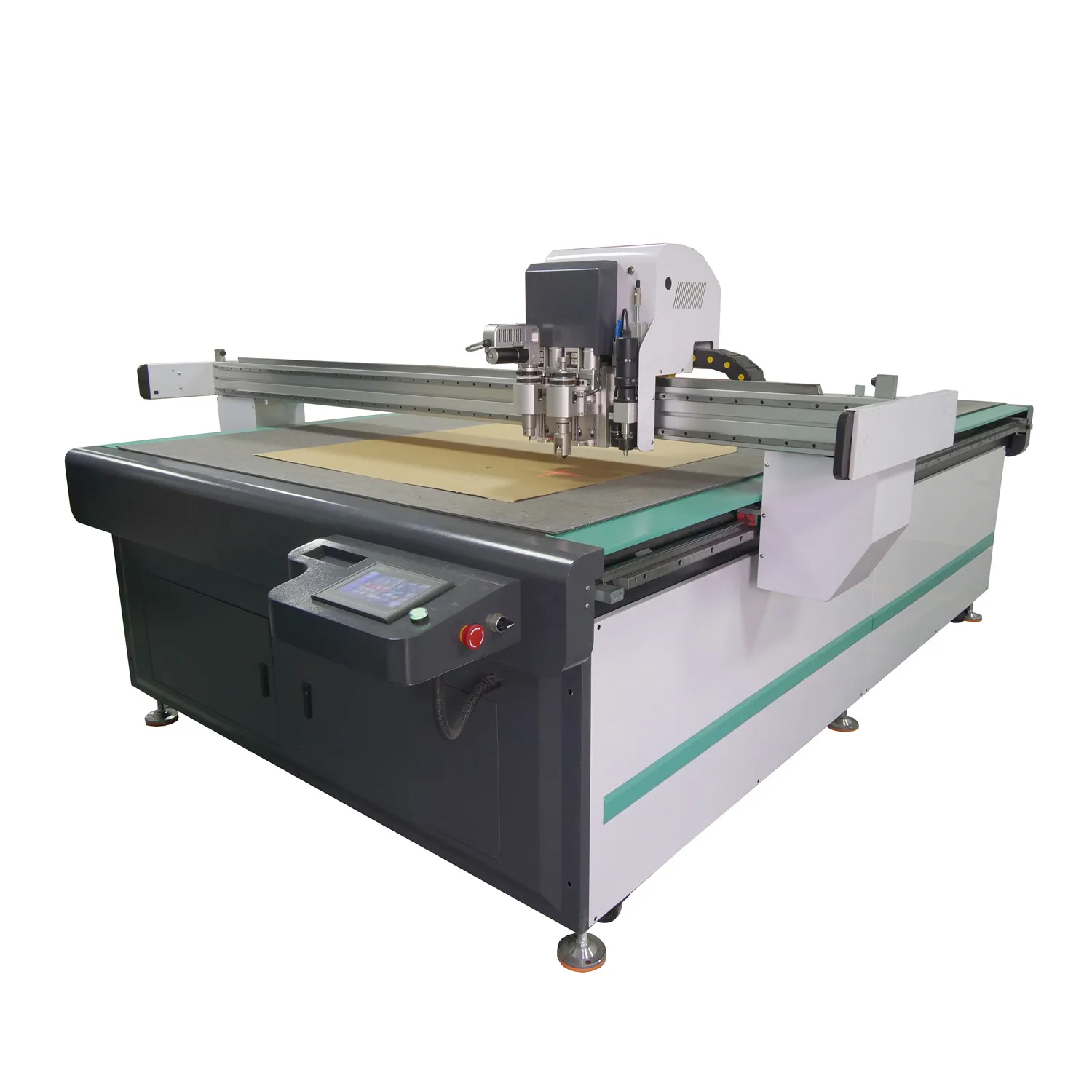
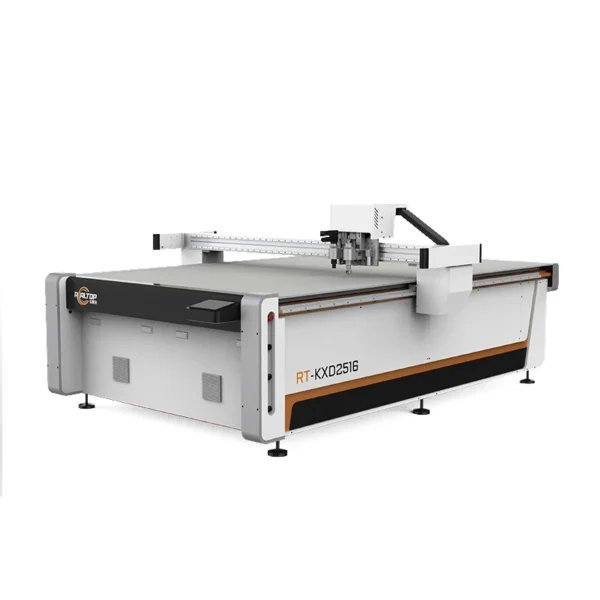
Tool Head And Table Configuration Specified Per Material And Production Volume — A packaging CNC cutting machine configured for your exact board grades and part sizes, with vacuum zoning matched to real production layouts rather than a generic flatbed promise.
Technical Specifications
| Parameter | Value |
|---|---|
| Product Type | CNC Oscillating Knife Cutting Machine for Packaging & Carton Sample Making |
| Working Area | 1600 mm × 2500 mm |
| Machine Dimensions (L×W×H) | 3450 × 2300 × 1250 mm |
| Rated Power | 6.6 kW |
| Vacuum Pump | 7.5 kW |
| Voltage | 380V ±10% (frequency 50/60 Hz to be confirmed) |
| Tool Head | Swiss imported oscillating knife (full cutting, half cutting, cursor location) |
| Table Type | Aluminum alloy honeycomb flatbed with vacuum partition adsorption |
| Servo Motor | Taiwan Delta digital servo |
| Linear Guide | Taiwan Hiwin rail |
| Translational Velocity | 800–1200 mm/s |
| Cutting Thickness | 20–80 mm (basis not stated in source — confirm by material type and density) |
| Repeated Accuracy | ≤0.1 mm |
| Support File Formats | PLT, DXF |
| Instruction System | HP-GL compatible |
| Safety Device | Infrared sensors and emergency stop |
| Key Features | Professional carton nesting software, multi-language control (EN, RU, IT, CN, custom), fully assembled delivery |
Application Suitability
| Application | Material or Output |
|---|---|
| Carton and packaging sample making | Corrugated board (single, double flute), gray board, folding carton stock |
| Express and electrical appliance carton prototyping | Multi-layer corrugated, heavy-duty board |
| High-end gift box and retail packaging | Art board, coated paper, laminated sheets |
| Sticker, label, and hang tag cutting | Adhesive vinyl, sticker stock, card stock |
| Billboard and business card production | PVC board, light board, art board |
| Flexible material cutting for footwear and garment | Leather, fabric, sponge composite leather, PVC, soft glass, rubber |
Why "Cutting Thickness 20–80 mm" Can Mislead a Packaging Buyer
A CNC oscillating knife cutting machine specifications sheet tells you the stroke, not the real cutting limit for your board grade.
When I was on the floor adjusting oscillating knife heads, a carton sample shop once told me their machine handled "up to 80 mm." They were cutting single-wall corrugated at the time. When they ran double-wall flute with heavy liner board, the knife deflected and the crease wheel crushed the top ply. The thickness number on a spec sheet is only valid against a specific material density and flute structure. Before you commit, request a sample cutting report run on your exact board stock, noting the flute type, grammage, and actual caliper. That is the only way to verify whether the CNC oscillating knife cutting machine specifications match your production reality [NEED_CITE: material thickness versus cutting performance in oscillating knife systems].
Oscillating Knife Versus Drag Knife for Board Grade Flexibility
The Swiss imported oscillating knife head on this platform delivers both full cutting and half cutting in a single work cycle. For corrugated sample making, the high-frequency vibration shears cleanly through flute structures that a drag knife would tear or compress. Half-cut mode scores the fold line without severing the bottom liner, which is essential for folding carton prototypes. A drag knife can work on thin art board or sticker stock, but it cannot manage the tool pressure variation needed when switching between 2 mm gray board and 7 mm double-wall corrugated on the same table.
Vacuum Partition Adsorption and Small-Part Hold-Down
The aluminum alloy honeycomb flatbed is divided into vacuum zones, each controlled independently. This matters more than buyers initially expect. When cutting a nest of small carton blanks — hang tags, corner pieces, divider inserts — a single full-bed vacuum pulls air through every open cell, losing suction on the actual work area. Partition adsorption isolates only the zones under material. For sticker and label runs with printed contour tracking, the same zoning principle holds the sheet flat enough for repeatable positional accuracy [NEED_CITE: vacuum zoning strategies for flatbed digital cutting tables].
What the Drive Train and Accuracy Numbers Mean in Practice
The Taiwan Delta digital servo paired with Hiwin linear rails and a synchronous belt transmission is a configuration common to production-grade flatbed cutters. The ≤0.1 mm repeated accuracy figure means the knife returns to the same coordinate after every traverse, which directly affects how well crease lines align with cut lines across a long nesting layout. Translational velocity of 800–1200 mm/s governs non-cutting travel speed between cuts. On a 1600 × 2500 mm bed running a full sheet of corrugated with dozens of part geometries, the cumulative difference between a slow traverse and a fast one adds up across the shift.
The Hidden Cost of Skipping Material-Specific Tool Configuration
I once supplied a configuration to a buyer who only told me the board thickness. The machine arrived, and short runs of gray board went fine. Then they loaded double-wall corrugated and the knife pressure that worked on gray board compressed the top liner before the blade reached the bottom. Two weeks of downtime, a replacement oscillating blade set, and a revised creasing wheel profile later, production resumed. The lesson was that the knife frequency, blade angle, and downward force all need calibration per material family. Requesting the tool head and creasing wheel configuration list matched to your full material range — not just your most common sheet — avoids this stoppage [NEED_CITE: oscillating knife tool head selection for corrugated and solid board].
Why Source From This Production Line
In-house design covers both knife cutting and vacuum table engineering, so the bed zoning and tool pressure are matched rather than sourced from separate suppliers and bolted together. Every machine ships with a sample cutting report on the buyer’s own board stock before the order is finalized, giving you physical proof of edge quality and crease integrity. The professional carton nesting software is included with the system, eliminating license gaps between your CAD files and the machine controller. Voltage, frequency, plug type, and control language are confirmed against your destination market before production starts, not discovered on the dock. HP-GL compatible instruction sets and PLT/DXF import mean the controller works with the file formats your design team already produces.
Documentation & Verification
- Machine specification sheet with confirmed cutting thickness per board grade
- Electrical schematic and voltage confirmation for destination market frequency
- Tool head and creasing wheel configuration list matched to your material range
- Sample cutting report on your corrugated or folding carton stock before dispatch
- Software licence and file format compatibility note for PLT/DXF workflow
- Operation and maintenance manual in your selected control language
Installation, Commissioning & Support
- Floor space must accommodate 3450 × 2300 mm footprint with rear access clearance
- Dedicated 380V circuit rated above the combined 6.6 kW machine plus 7.5 kW vacuum pump load
- Machine ships fully assembled; verify forklift capacity and door clearance before arrival
- First-run calibration includes vacuum zone mapping across the 1600 × 2500 mm bed
- Operator training covers nesting software setup and tool head changeover procedures
- Spare oscillating blades and vacuum seals included in initial parts kit
What To Include With Your Inquiry
To match the right knife cutting configuration to your packaging line, send us your board types with flute designation and grammage, your typical sheet size, and your daily sample or short-run volume. Confirm your local voltage and frequency standard, preferred control language, and whether your existing design files are in DXF, PLT, or another format. If you can ship a few sheets of your heaviest and lightest board stock, we will run a sample cutting test and return the cut pieces with a full report before any order commitment.
Frequently Asked Questions
Q: How is cutting thickness verified against different board grades and flute types?
A: The 20–80 mm range on the specification sheet is a general envelope. We run sample cuts on your actual board stock — noting flute type, liner weight, and caliper — and document the knife pressure, oscillation frequency, and edge quality achieved. This sample cutting report becomes part of your order file so the configuration is locked before production.
Q: How do I confirm vacuum zoning is sufficient for my smallest carton parts?
A: The honeycomb flatbed features independently controlled vacuum partitions. Share your nesting layout or the smallest blank in your typical job, and we will confirm which zones activate and whether the suction footprint covers that part geometry. This is verified during the sample cutting test.
Q: Will the included software import my existing DXF/PLT nesting workflow?
A: The controller accepts PLT and DXF files through an HP-GL compatible instruction system, and the included carton nesting software handles standard packaging geometry. Before order confirmation, we verify compatibility with a sample file from your design team and document the result.
Q: What voltage, frequency, and plug configuration is confirmed before shipment?
A: The standard configuration is 380V ±10%. Before production begins, we confirm your local frequency requirement (50 Hz or 60 Hz) and destination plug type, then note the final electrical specification on your machine documentation and schematic.
Q: Can I send my own material for a sample cutting test before committing?
A: Yes. Ship a small batch of your actual board stock — corrugated, gray board, or specialty packaging material — and we will cut your sample parts, document tool head settings and edge results, and return the finished samples along with the cutting report.


商品评价
Clear filtersThere are no reviews yet.