



Fast Shipping
Carrier information

20k products
Payment methods

24/7 Support
Unlimited help desk

2-day Delivery
Track or off orders
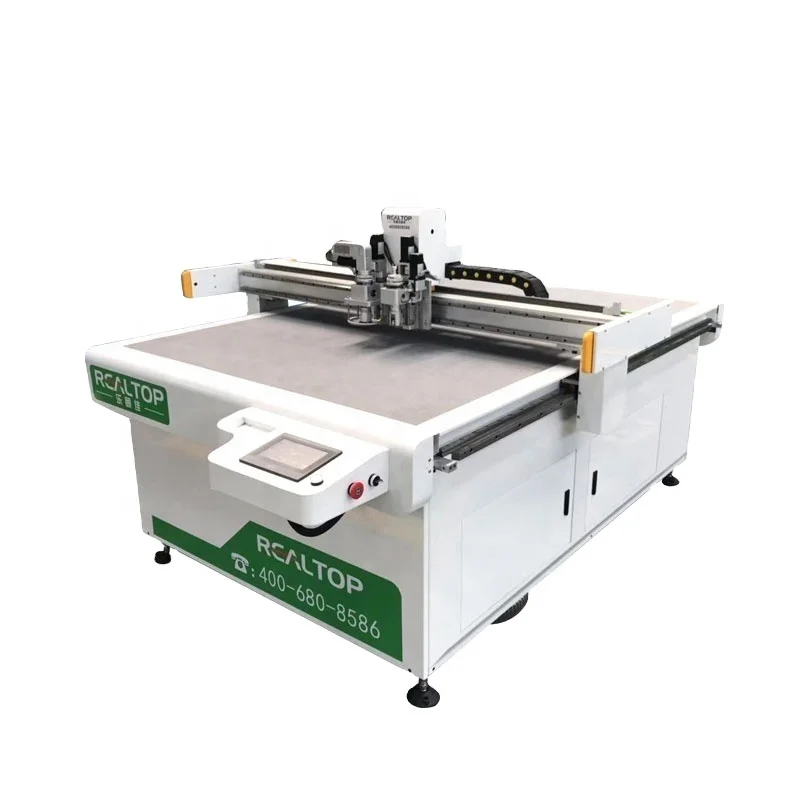
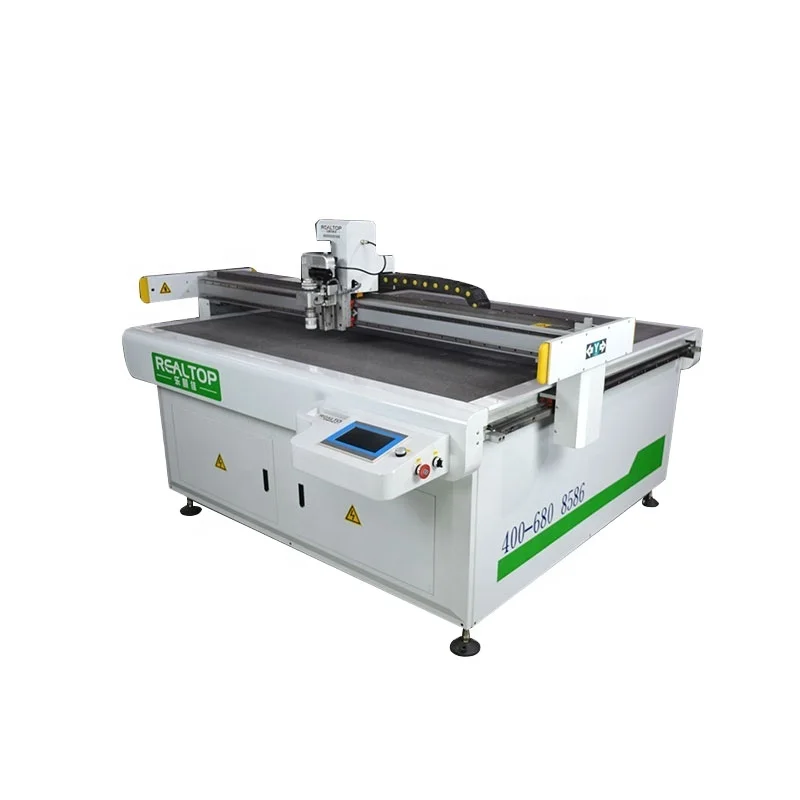
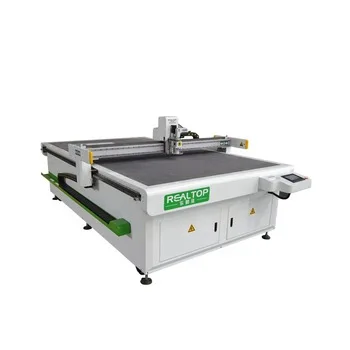
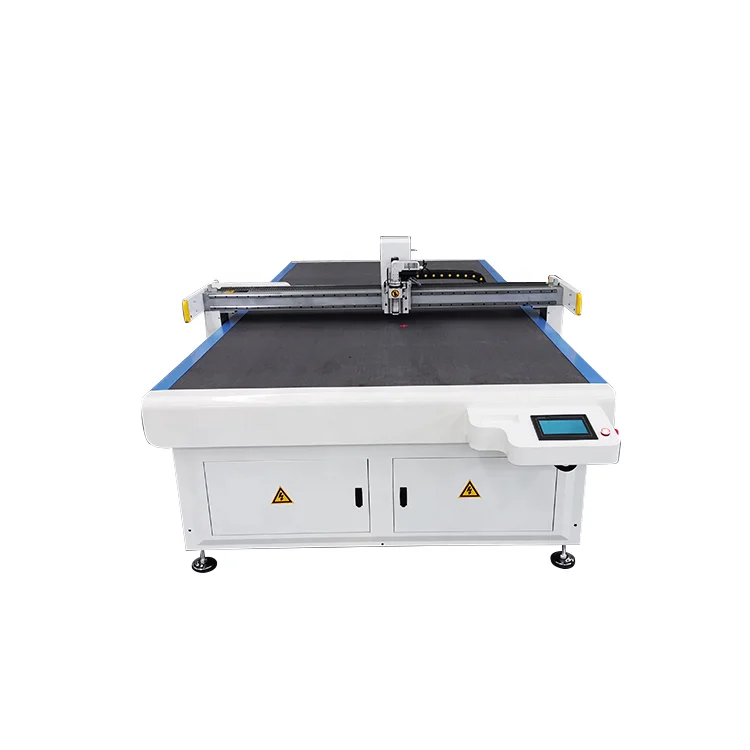
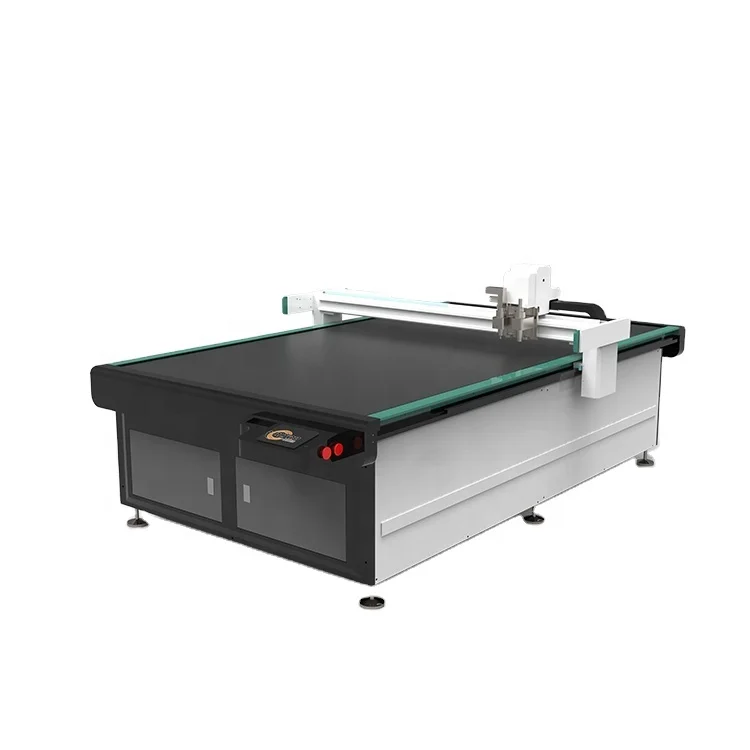
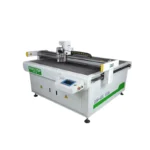
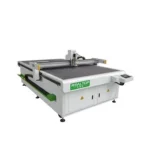
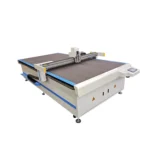
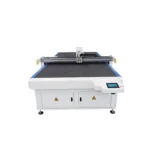
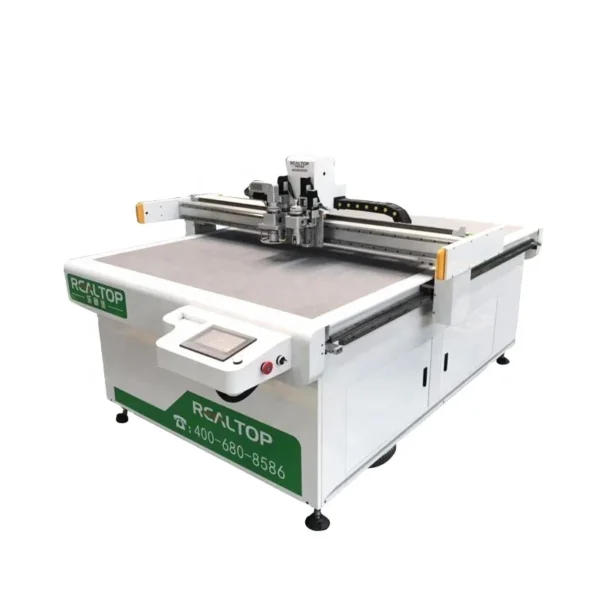
Precision Tooling Match — Swiss oscillating knife and zoned vacuum table configured per material, eliminating edge crush and part lift during packaging sample runs.
Technical Specifications
| Parameter | Value |
|---|---|
| Model | RT-D2516/RT-S2516 |
| Product Type | CNC Oscillating Knife Cutting Machine |
| Working Area | 1600 × 2500 mm |
| Machine Size | 3450 × 2300 × 1250 mm |
| Rated Power | 9 kW |
| Table Type | Flat working table with auto feeding |
| Vacuum Pump | 7.5 kW vacuum pump |
| Multifunctional Head | Swiss imported knife: vibration full cutting, vibration half cutting, cursor location |
| Translational Velocity | 800 – 1200 mm/s |
| Cutting Speed | 200 – 800 mm/s (basis not stated in source) |
| Repeated Accuracy | ≤0.1 mm |
| Transmission System | Digital servo motor, linear guide, synchronous belt, ball screw |
| Servo Motor | Japanese Yaskawa servo motor |
| Guide Rail | Taiwan Hiwin rail |
| Conveyor Belt | Germany imported conveyor belt |
| Instruction System | HP-GL compatible format |
| Voltage | 380V ± 10% |
| Safety Device | Infrared sensors |
| Certification | CE |
Application Suitability
| Application | Material or Output |
|---|---|
| Packaging sample making | Corrugated cardboard, folding carton stock, greyboard |
| Carton pattern cutting | Single-face and double-wall corrugated, honeycomb board |
| Gasket fabrication | Rubber, silicone, non-asbestos fiber sheets |
| Automotive interior trimming | Multi-layer foam, synthetic leather composites |
| Flexible material processing | PVC, soft glass, garment textiles, sponge composite leather |
Why the Voltage Question Should Come Before the Price
The CNC oscillating knife cutting table specifications on paper mean nothing if the vacuum pump refuses to start on the shop floor. Confirming local three-phase voltage before production prevents weeks of downtime that no lead time calculation can predict.
I once watched a carton sample maker in the Pearl River Delta lose an entire seasonal gift box run because the machine arrived wired for 380V while the facility ran on three-phase 220V. The 7.5 kW vacuum pump tripped the breaker instantly, and rewiring plus waiting for a replacement transformer cost three full weeks. The buyer’s client had already scheduled press time for the holiday line [NEED_CITE: voltage and frequency standards by export market]. Every order I handle now gets an electrical schematic review against the buyer’s actual supply before the frame leaves the factory.
Blade Selection Dictates Edge Quality More Than Speed Ever Will
When cutting corrugated board for packaging prototypes, the Swiss imported oscillating knife performs vibration full cutting and half cutting on the same head, allowing crease lines and through-cuts in a single pass. This matters because switching tools mid-job on a packaging CNC cutting machine introduces registration drift that accumulates across a long sheet. The cursor location function adds a visual reference for manual alignment when nesting irregular carton blanks.
A drag knife may work on thin card stock, but corrugated flutes compress and tear under drag pressure, leaving a crushed edge that fails structural testing. The oscillating action slices through the flute cleanly. For rubber gaskets and silicone sheets, the same oscillating head adjusts stroke frequency to match material density, keeping the edge square without melting or delaminating the surface [NEED_CITE: oscillating knife stroke frequency and material density correlation].
Vacuum Zoning Solves the Small-Part Problem
Holding a 1600 × 2500 mm sheet flat is straightforward; holding a 50 × 50 mm carton corner sample while the knife exits the cut is where most flat tables fail. The 7.5 kW vacuum pump paired with a zoned table allows the operator to activate only the section beneath the workpiece, concentrating suction where it matters. Without zoning, air bleeds through the exposed table area and suction drops below the threshold needed to resist the knife’s lateral force.
This becomes critical in packaging sample rooms where a single sheet yields dozens of small die-line proofs. If one corner lifts during the final pass, the repeated accuracy spec of ≤0.1 mm is irrelevant because the part has already shifted [NEED_CITE: vacuum hold-down force requirements for oscillating knife cutting]. The Germany imported conveyor belt and auto-feeding system move the next sheet into position while the operator unloads finished samples, keeping the workflow continuous without manual repositioning.
Reading the Numbers That Actually Matter on the Floor
The Yaskawa digital servo motors and Taiwan Hiwin linear guides are not brand badges — they define how the machine behaves when the cutting path reverses direction at high speed. A servo with slow response creates overshoot at corners, turning a crisp carton crease into a rounded one. The Hiwin rail maintains parallelism across the 2500 mm travel, which directly supports the ≤0.1 mm repeated accuracy claim over an eight-hour shift. Translational velocity of 800 – 1200 mm/s refers to head movement between cuts, while the 200 – 800 mm/s cutting speed range depends entirely on material thickness and knife stroke — a figure the buyer should validate on their own stock before finalizing the order.
What Wrong Configuration Costs After Delivery
Choosing a machine on working area alone is the most common mistake in packaging CNC cutting procurement. A buyer orders a large-format table to handle occasional oversized sheets, then spends months fighting insufficient vacuum on the small carton samples that make up daily production. The 9 kW rated power covers the full system, but if the vacuum circuit is undersized for the actual part geometry, no amount of motor power compensates. Ragged edges on foam composites and crushed flutes on corrugated board both trace back to the tool head being specified for the wrong material class, and by the time the issue surfaces, the machine is already crated and shipped [NEED_CITE: tooling mismatch and material damage correlation in digital cutting].
Reasons Buyers Source This Machine Here
In-house design of both the oscillating knife head and the vacuum table means the tooling and holding system are developed together rather than bolted on from separate suppliers. The configuration is specified per material and production volume, so a packaging sample room gets a different setup than an automotive interior line. Software compatibility is confirmed before the order — HP-GL format is standard, but nesting workflows vary, and file import is tested with the buyer’s actual design software. Voltage, control language, and plug type are locked in during the quotation stage, not discovered at customs. Sample cutting on the buyer’s own material happens before commitment, with a cutting report documenting edge quality and cycle time on that specific stock.
Documentation & Verification
- Electrical schematic showing 380V ± 10% wiring matched to buyer’s local supply
- Factory test record on buyer’s corrugated or gasket stock before dispatch
- Tool head and vacuum zone configuration list tied to material type
- Software licence and HP-GL file format compatibility confirmation note
- CE declaration covering machinery directive requirements for export
- Spare parts list covering oscillating knife blades, conveyor belt segments, and vacuum seals
Installation, Commissioning & Support
- Foundation must be level within 2 mm across the 3450 × 2300 mm machine footprint
- Dedicated 380V ± 10% three-phase circuit with breaker rated for 9 kW continuous draw
- Machine ships as a single skid; vacuum pump and conveyor belt are pre-mounted
- First power-on includes vacuum zone calibration on buyer’s thinnest and thickest stock
- Operator training covers HP-GL file import, nesting setup, and knife stroke adjustment
- Spare oscillating knife blades and vacuum seals included for initial production run
Before You Send the Inquiry
To get a configuration that works on day one, share the material types and maximum thickness you cut most often, the smallest part dimension in your typical nesting layout, and your facility’s exact three-phase voltage and frequency. If your design team works in a specific CAD platform, mention the export format so we verify HP-GL compatibility before quoting. Tell us whether you need creasing and cutting on the same sheet — that determines whether the half-cutting function and creasing wheel go into the tool head configuration.
Frequently Asked Questions
Q: How do I choose between oscillating and drag knife for corrugated versus foam?
A: Corrugated board has internal flutes that crush under drag pressure, so the oscillating knife is the standard choice for clean edges on carton samples. Foam materials vary by density — low-density foam cuts cleanly with oscillating action, while high-density closed-cell foam may require a higher stroke frequency. We run both methods on your sample material before recommending the tool head.
Q: Can the vacuum table hold very small packaging samples securely?
A: The zoned vacuum table activates only the area beneath the workpiece, concentrating the 7.5 kW pump’s suction on the actual cutting zone. This prevents small carton corners and gasket pieces from lifting when the knife exits. Zone layout is confirmed against your smallest part dimension during the specification stage.
Q: Is the control software and interface language customizable for our operators?
A: The control system supports HP-GL compatible file import, and the interface language is set before shipment based on your operator’s preference. We verify that your existing CAD nesting software exports files the machine can read, so there is no workflow gap between design and cutting.
Q: What happens if our factory voltage differs from 380V?
A: Voltage is confirmed at the quotation stage. If your facility runs a different three-phase supply, the electrical schematic and motor configuration are adjusted before production. We learned this the hard way after a voltage mismatch once delayed a buyer’s seasonal production by three weeks.


商品评价
Clear filtersThere are no reviews yet.