



Fast Shipping
Carrier information

20k products
Payment methods

24/7 Support
Unlimited help desk

2-day Delivery
Track or off orders
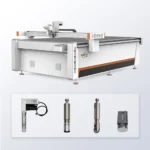
Configurable Tool Heads — seven interchangeable cutting and creasing tools specified per material density, validated by test cuts on your stock before shipment.
Technical Specifications
| Parameter | Value |
|---|---|
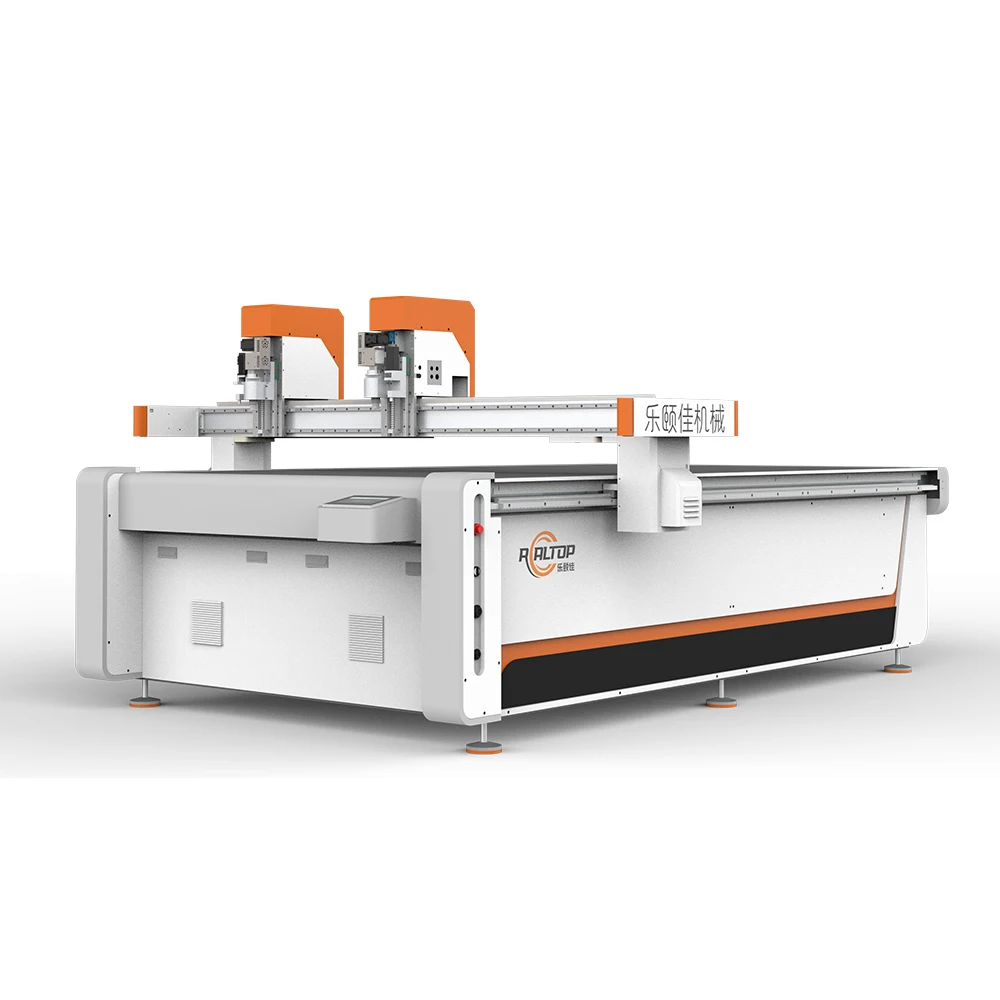
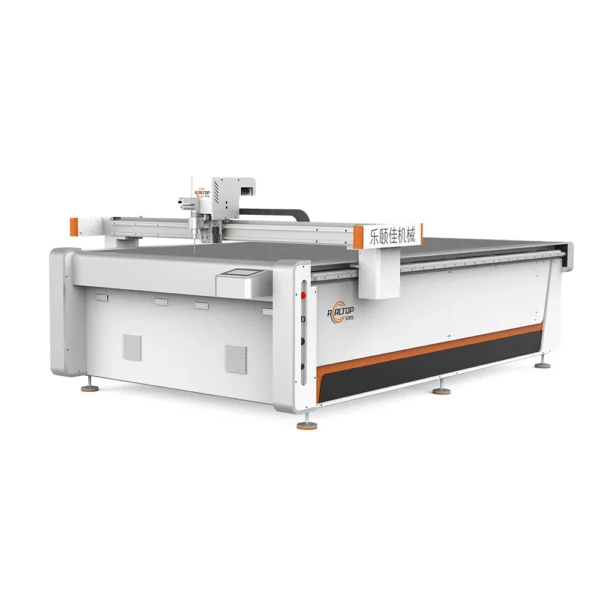
| Product Type | CNC Oscillating Knife Cutting Machine |
| Model | 1625 |
| Working Area | 1600×2500 mm |
| Tool Head Options | Oscillating knife, Driven rotary knife, Creasing wheel, Kiss cutting tool, Pneumatic knife, Milling tool, V groove knife |
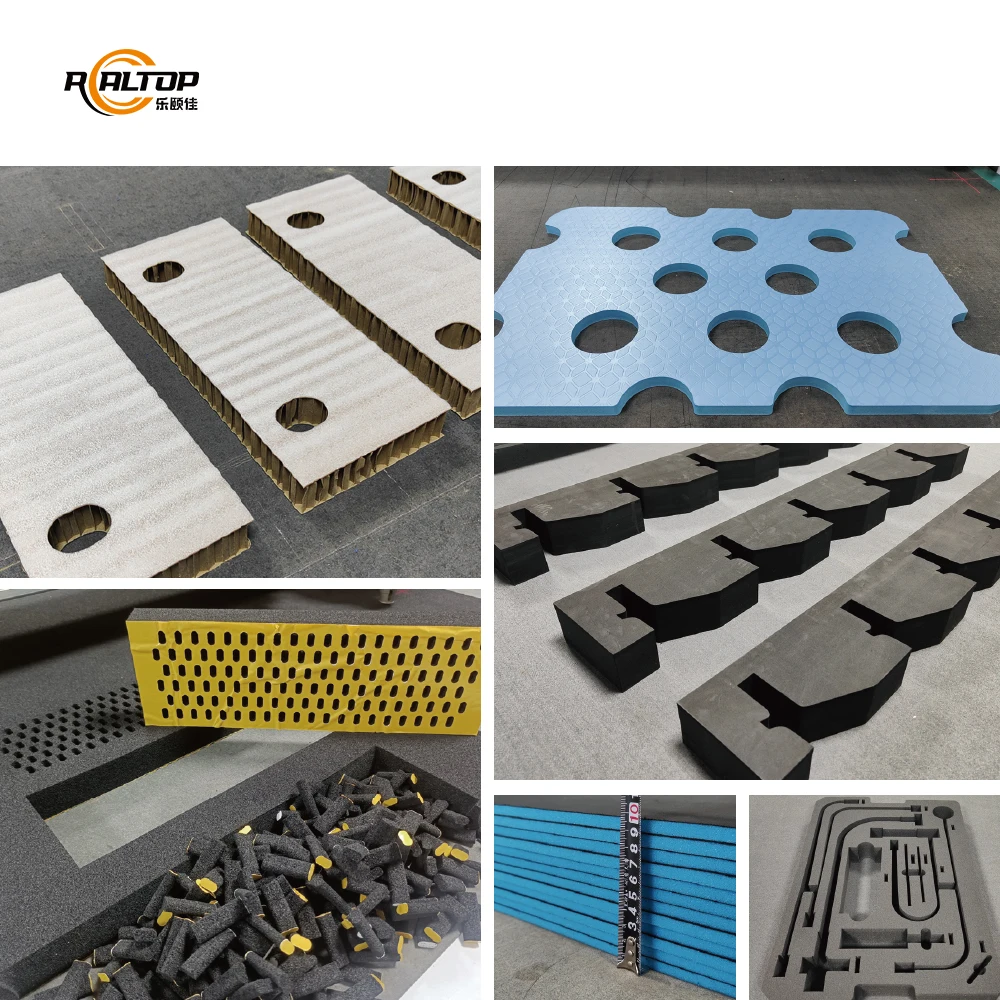
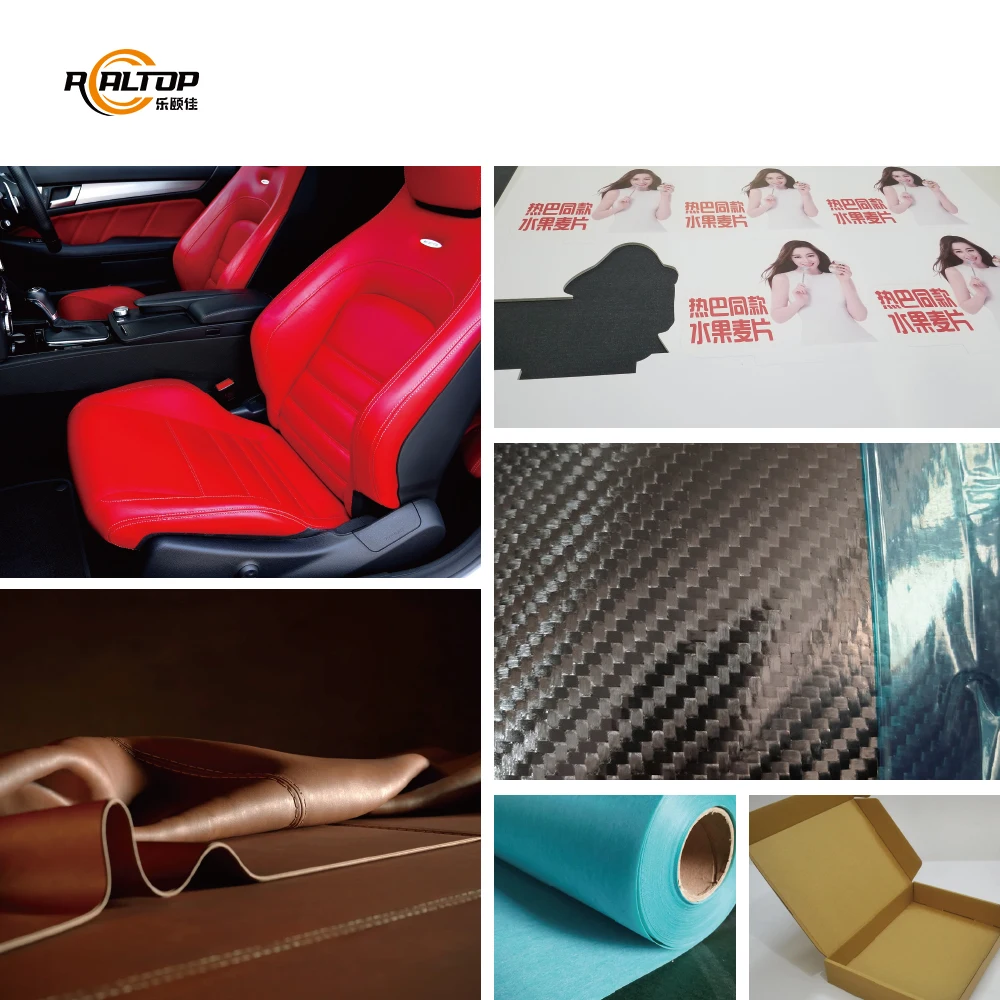
| Applicable Materials | Fabric, Cardboard, Carton, Mats, PVC, EVA, Leather, Acrylic, Foam, PTFE, Rubber |
| Cutting Speed | 0–2000 mm/s |
| Maximum Cutting Thickness | ≤ 30 mm |
| Positioning Accuracy | ±0.1 mm |
| Vacuum Pump Power | 9 kW |
| Vacuum Table Type | Aluminum bellows vacuum table |
| Control System | PLC control panel |
| Supported File Formats | PLT, DXF, AI, PDF |
| Voltage Options | 110V, 220V, 380V |
| Servo Motor Options | Panasonic, Delta, Dorna |
| Language Options | English, Russian, Italian, Chinese (custom languages available) |
| Safety Devices | Infrared sensor device, emergency stop device |
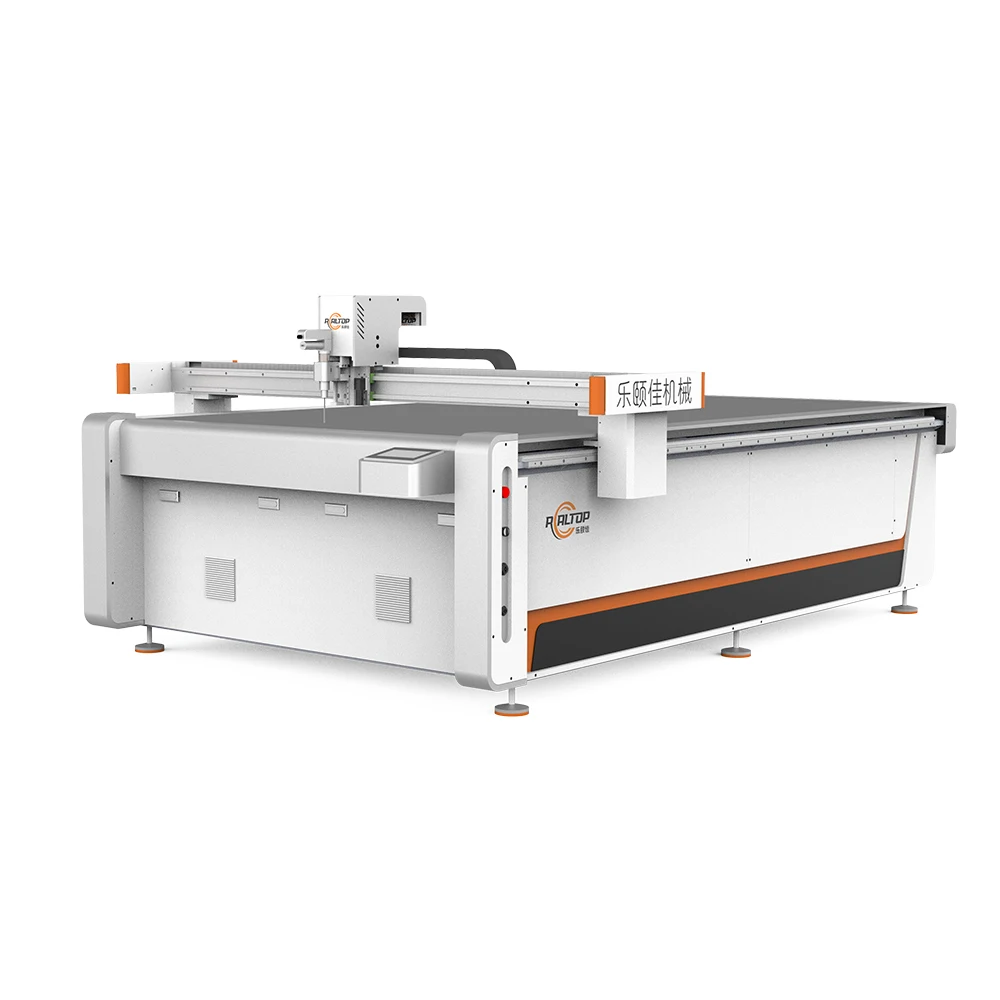
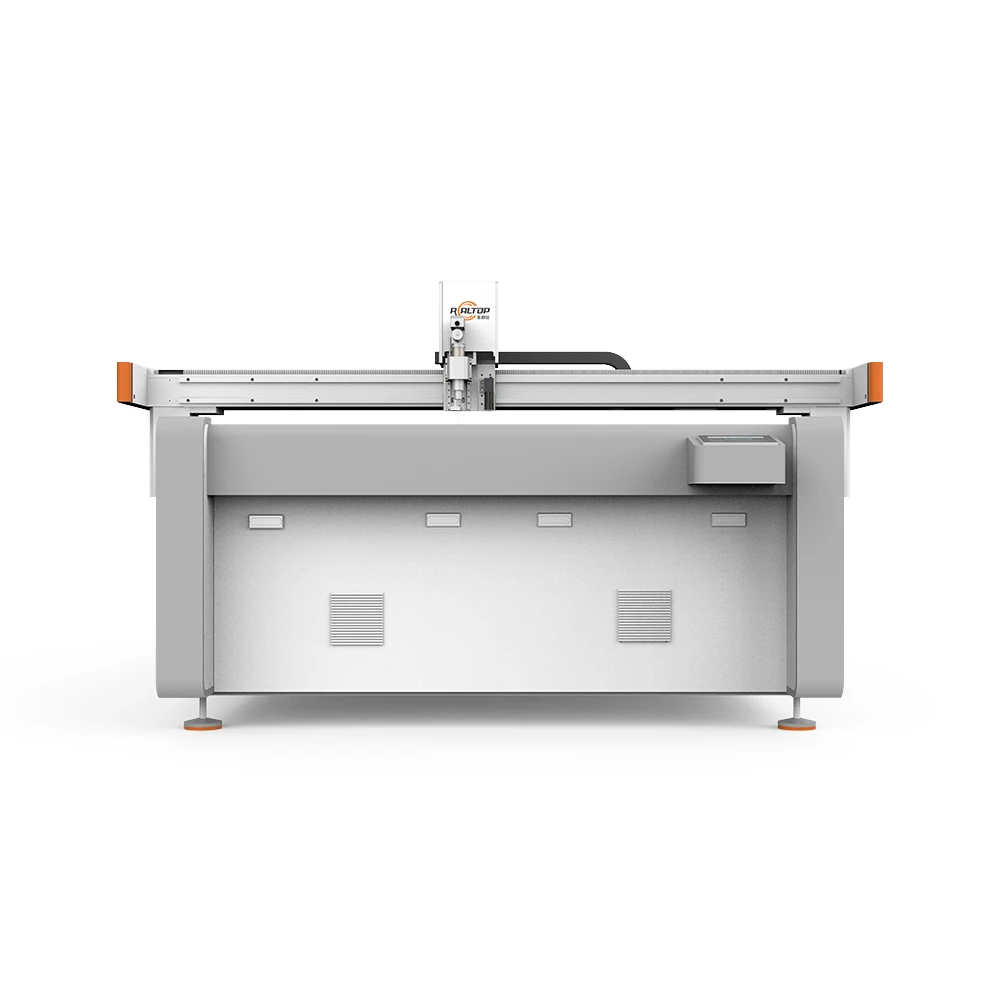
| Machine Dimensions (L×W×H) | 3300×2100×1350 mm |
| Packaging Box Software | Dedicated packaging box structure design software included |
| Vacuum Pump Energy Note | reduces energy use by 30% (basis not stated in source — confirm test conditions) |
| Certification | CE (referenced in documentation profile; verify certificate availability) |
Application Suitability
| Application | Material or Output |
|---|---|
| Packaging and carton sample making | Cardboard, carton, corrugated board prototypes with creasing and contour cutting |
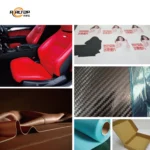
| Composite material processing | Carbon fiber prepreg, aramid honeycomb, fiberglass cloth, G10 epoxy boards |
| Automotive interior and gasket production | Acoustic felt, damping pads, carpets, sealing strips, seat foam |
| Aerospace component fabrication | Wing and tail skin panels, thermal and acoustic insulation pads, honeycomb core |
| Wind power and new energy | Infusion mesh, foam core PET and PVC, battery insulation sheets |
| Footwear and leather goods | Leather hides, EVA midsoles, foam insoles, textile uppers |
| Advertising and signage | PVC board, vinyl films, acrylic sheets for dimensional lettering |
| Sporting goods | Carbon fiber sheets, Kevlar panels, high-performance foam, composite fabrics |
Why Material Thickness Alone Should Not Dictate Your CNC Oscillating Knife Cutting Machine Specifications
The wrong tool head on the right machine still produces scrap. A common mistake in purchasing a CNC oscillating knife cutting machine is specifying it only by working area and maximum thickness rating. I once worked with a gasket manufacturer who ordered based on a PVC foam sample they had been cutting for years, then switched production to high-density EVA without re-evaluating the tool head. The oscillating knife that sliced through soft PVC cleanly could not penetrate the denser EVA without crushing the cell structure, leaving ragged edges that failed their customer’s dimensional inspection. The entire batch was reworked. That outcome was not a machine failure — it was a specification failure. The 1625 platform addresses this by offering seven distinct tool heads that can be matched to your actual material stack, but the matching must happen before the machine is built, not after it arrives on your floor [NEED_CITE: common causes of edge quality failure in knife-cut foam and gasket materials].
Tool Head Selection by Substrate
Choosing the correct cutting head is the single most consequential decision when configuring a CNC oscillating knife cutting machine for your production line. The oscillating knife handles most soft to semi-rigid materials up to 30 mm — fabrics, foams, and corrugated board respond well to its high-frequency vibration. When you move to tougher substrates like aramid honeycomb or thick rubber gasket material, the pneumatic knife provides the downward force needed for a clean through-cut without fraying the edges. For cardboard and carton sample work, the creasing wheel scores fold lines while the oscillating knife cuts the outline, all in one pass. The V groove knife handles rigid foam cores used in composite sandwich panels, removing a precise channel without cutting through the facing skin. Each tool head mounts to the same gantry carriage, so a single 1625 table can shift from cutting packaging prototypes in the morning to trimming automotive acoustic felt in the afternoon, provided the tooling changeover sequence is followed.
Cold-Cut Edge Quality on Sensitive Composites
Thermal cutting methods like laser or hot wire leave a heat-affected zone that compromises the resin matrix in carbon fiber prepreg and Kevlar laminates. The 1625 CNC oscillating knife cutting machine removes material mechanically — the blade vibrates at high frequency and severs fibers without generating enough heat to alter the curing characteristics of the surrounding resin. This matters in aerospace and motorsport applications where delamination at the cut edge reduces the effective bond area in secondary bonding operations. Fiberglass cloth and G10 epoxy boards cut with an oscillating knife also avoid the delamination that can occur when a drag knife tears through the weave at the end of a contour. The ±0.1 mm positioning accuracy keeps the blade path within tolerance for tight-fitting gaskets and aerospace insulation pads where an oversized cut means a rejected part and a scrapped sheet of expensive prepreg [NEED_CITE: delamination risks in thermally cut composite prepreg materials].
Reading the Spec Sheet Beyond the Working Area
The 1600×2500 mm working area defines the maximum sheet size the table can accept, but the vacuum table design determines whether that area is actually usable for your material. The aluminum bellows vacuum table provides full-surface adsorption with high flatness, which is critical when cutting flexible materials like fabric or thin foam that tend to buckle if the suction is uneven. The 9 kW vacuum pump must generate sufficient suction to hold small parts in place during the final cuts of a nested layout — when most of the surrounding material has already been removed, there is less surface area for the vacuum to grip. The cutting speed range of 0–2000 mm/s is the traverse speed; actual cutting speed through 30 mm of high-density EVA will be substantially slower to maintain edge quality. The PLC control panel accepts PLT, DXF, AI, and PDF files, which covers most workflows from packaging CAD software to nesting applications, but you should confirm that your specific nesting software exports cleanly into one of these formats before placing an order [NEED_CITE: file format interoperability in packaging and nesting CAD workflows].
What Happens When Configuration Is Skipped
Selecting a machine based on a catalog photograph rather than a material-specific test is how production floors end up with equipment that technically works but cannot hold quality on the actual job. A buyer who specifies an oscillating knife for a material that requires a driven rotary knife will experience frayed edges on every cut, and the machine vendor will classify it as a blade wear issue rather than a tooling mismatch. Inadequate vacuum zoning shows up as material lift on the final small pieces of a nest, forcing operators to slow the feed rate or add manual weights — neither of which appears in a factory demonstration where a single large shape is cut from a fully covered table. Voltage and language mismatches discovered at commissioning delay production start by days while replacement components are sourced locally [NEED_CITE: voltage and control language verification before industrial equipment shipment].
Why Production Floors Source This Platform
The design and manufacturing of both the knife cutting system and the supporting table structure are handled in-house, so the tool head configuration and vacuum zoning can be adjusted to your material profile without waiting on third-party integrators. Each 1625 machine ships with a documented factory test record that includes cutting samples run on your material, not a generic demonstration stock. The dedicated packaging box structure design software is included with the machine, eliminating the need for a separate software license for carton and sample-making users. Servo motor selection between Panasonic, Delta, and Dorna allows you to align the motion system with the brands your maintenance team already stocks as spare parts. Voltage, PLC language, and safety device configuration are confirmed in writing before production begins, reducing the commissioning surprises that delay first-article approval.
Documentation & Verification
- Factory test record cut on your actual cardboard, foam, or composite stock before dispatch
- Tool head and table configuration list mapping each tool to your specific material types
- Electrical schematic confirming voltage, frequency, and circuit requirements for your facility
- Sample cutting report with edge quality photographs and dimensional measurements on your material
- Software license documentation and confirmed file format compatibility note for PLT, DXF, AI, PDF
- Spare parts list identifying consumable blades, knife holders, and vacuum table seals
Installation, Commissioning & Support
- Floor space planning for the 3300×2100×1350 mm footprint plus material loading clearance
- Dedicated circuit for the 9 kW vacuum pump and PLC panel at your confirmed voltage
- First-run parameter tuning on your material to establish cutting speed and blade depth settings
- Operator training on tool head changeover between oscillating knife, creasing wheel, and rotary knife
- Blade replacement procedure and consumable inventory review for your daily production volume
- Scheduled maintenance checklist covering vacuum bellows inspection and servo motor calibration intervals
What We Need to Move Past the Quotation Stage
To match the 1625 to your production environment, send the material types, thicknesses, and sheet sizes you intend to cut, along with the daily volume you need to achieve. Confirm your facility voltage, preferred PLC language, and the CAD or nesting software your design team currently uses. If your material is a specialty composite or a proprietary foam formulation, ship a sample roll or sheet to our facility so we can run a documented test cut and return the samples with a cutting report before you commit to an order.
Frequently Asked Questions
Q: Which tool head handles high-density EVA foam without crushing the cut edge?
A: High-density EVA typically requires a pneumatic knife or a specific oscillating knife frequency to maintain cell structure integrity at the cut face. The correct tool is confirmed by running a test cut on your actual EVA sample at the thickness you will produce, and the resulting edge is photographed and measured before the machine configuration is finalized.
Q: How do I verify the 30 mm cutting thickness applies to my specific composite?
A: The maximum thickness is material-dependent, not a universal rating. Carbon fiber prepreg at 2 mm cuts differently from 25 mm acoustic felt. Send a sample of your material stack and we will produce a test cut report showing achievable edge quality and dimensional accuracy at your exact thickness.
Q: Does the software integrate with our existing nesting workflow?
A: The system accepts PLT, DXF, AI, and PDF files. Before the order is confirmed, we test an export from your nesting or CAD software to verify that tool path data, cut order, and kerf compensation transfer correctly without manual rework on the machine controller.
Q: Will small parts lift off the vacuum table during the final cuts of a nest?
A: The aluminum bellows vacuum table is designed for full-surface adsorption. However, when surrounding material is removed, small parts have less surface area for vacuum to grip. We configure vacuum zoning and recommend cutting strategies that address your smallest part dimensions during the test cut phase.
Q: Can the PLC and electrical system match our local facility standards?
A: Voltage is configurable at 110V, 220V, or 380V, and the PLC language is available in English, Russian, Italian, Chinese, or custom languages. These specifications are confirmed in writing before production so the machine arrives ready for your electricians to connect without transformers or adapter panels.


商品评价
Clear filtersThere are no reviews yet.