


Fast Shipping
Carrier information

20k products
Payment methods

24/7 Support
Unlimited help desk

2-day Delivery
Track or off orders
Configured Per Material — We match the tool head and vacuum table zoning to your specific corrugated or honeycomb board grade, not just the sheet size.
Technical Specifications
| Parameter | Value |
|---|---|
| Model | RT-D2516/RT-S2516 |
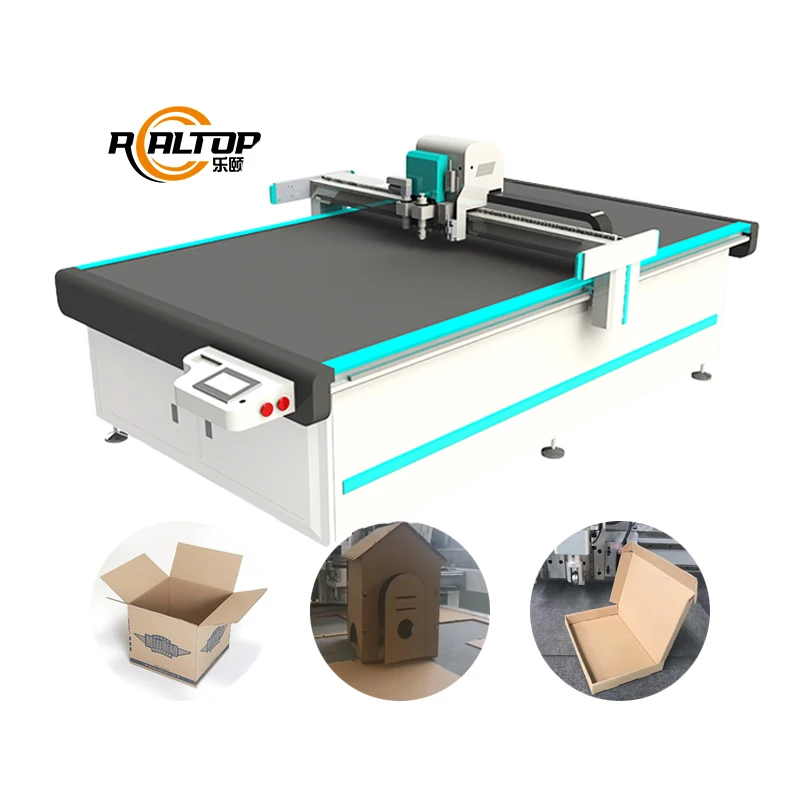
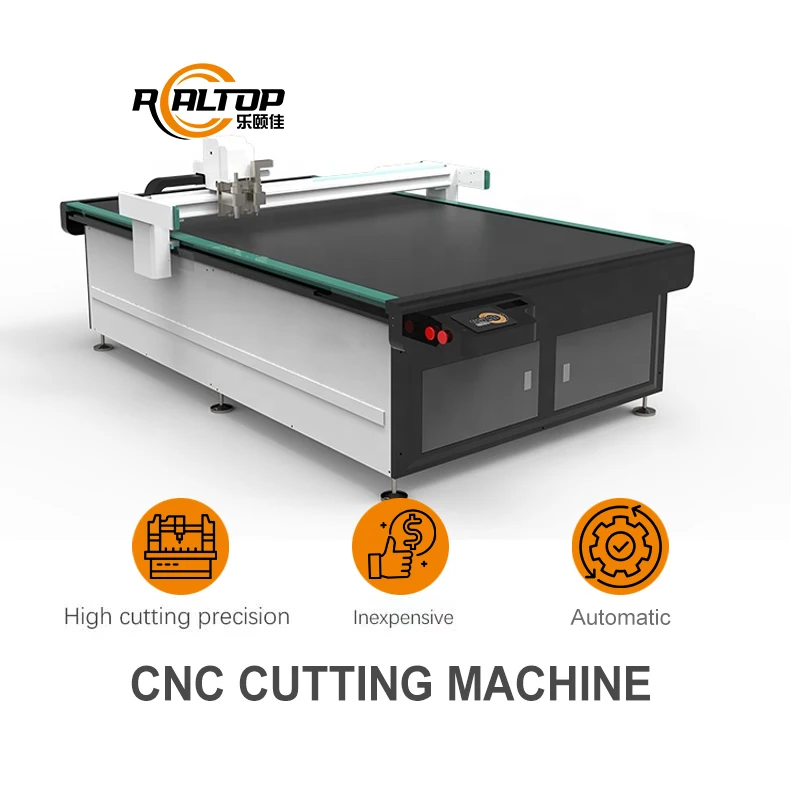
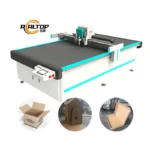
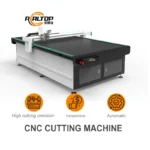
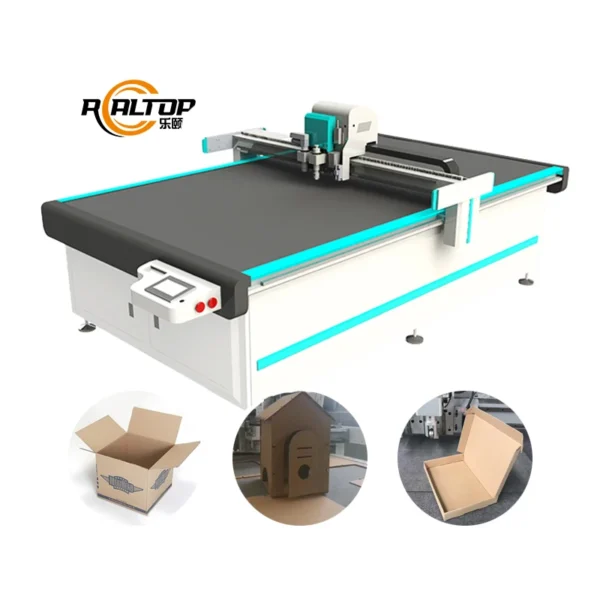
| Product Type | CNC Oscillating Knife Cutting Table |
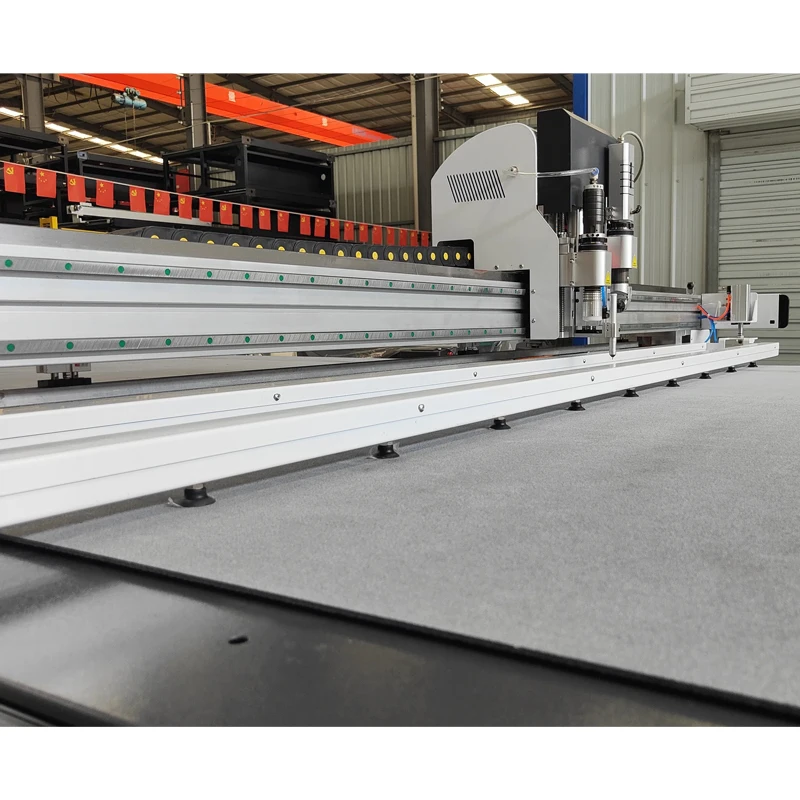
| Working Area | 1600 × 2500 mm |
| Machine Dimensions | 3450 × 2300 × 1250 mm |
| Rated Power | 9 kW |
| Vacuum Pump | 7.5 kW |
| Table Construction | Aluminum alloy honeycomb structure |
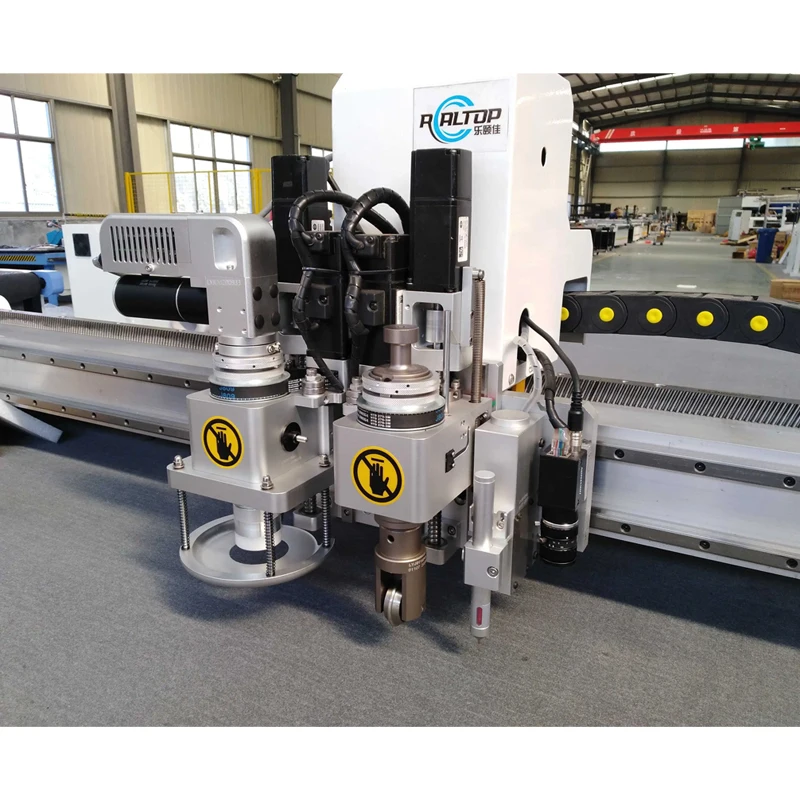
| Tool Head | Swiss imported knife, vibration full/half cutting |
| Servo Motor | Delta |
| Guide Rail | Taiwan Hiwin linear guide |
| Transmission System | Digital servo, synchronous belt, ball screw |
| Repeated Accuracy | ≤0.1 mm |
| Translational Velocity | 800–1200 mm/s |
| Cutting Speed | 200–800 mm/s (varies by material density) |
| Instruction System | HP-GL compatible format |
| Voltage | 380V ±10% |
| Safety Device | Infrared sensors |
Application Suitability
| Application | Material or Output |
|---|---|
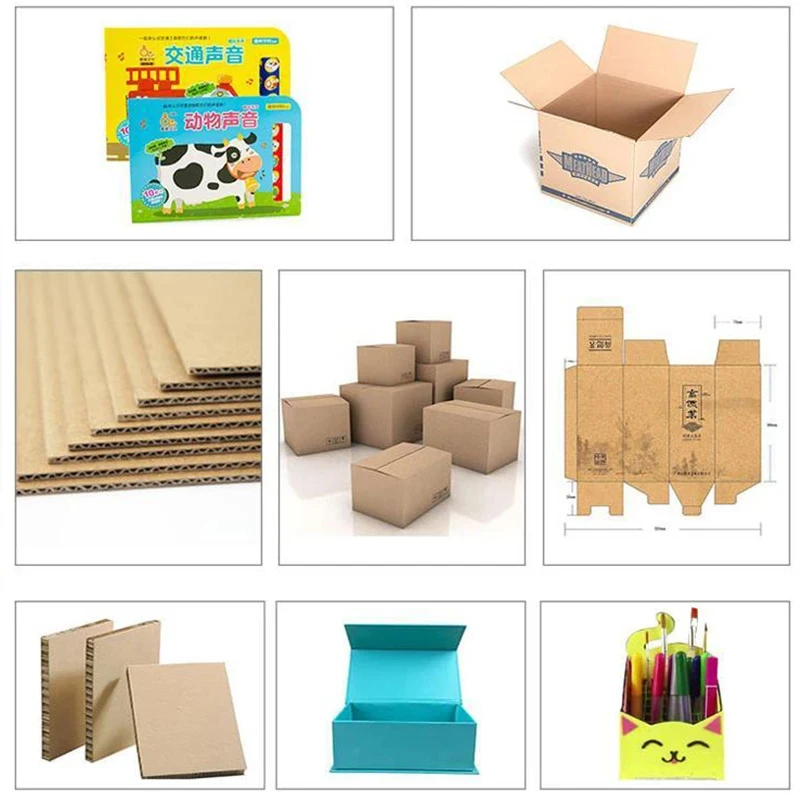
| Packaging Sample Making | Corrugated board, honeycomb paper, gray board |
| Carton Short-Run Production | E-flute, B-flute, and heavy-duty double-wall corrugated |
| Display and Signage Prototyping | Foam board, PVC sheet, sticker vinyl |
| Gasket and Industrial Forms | Rubber sheet, non-asbestos fiber, composite cork |
Why Working Area Alone Fails the Packaging Buyer
A machine specified only on table dimensions often stalls when the actual board density exceeds the sample test.
The CNC oscillating knife cutting table specifications on paper rarely mention the maximum compression strength the tool head can overcome. A setup that slices cleanly through a standard 300gsm single-wall corrugated sample may produce ragged edges and crushed flutes when the production run switches to a 600gsm honeycomb core. This mismatch forces the operator to slow the feed rate, negating the stated throughput. I have seen production managers accept a quote based on the 1600×2500 mm bed size, only to find the standard drag knife cannot penetrate the dense kraft liner they use for heavy-duty shipping cartons. [NEED_CITE: material density impact on oscillating knife cutting performance]
Choosing the Correct Tool Head for Corrugated and Honeycomb Stock
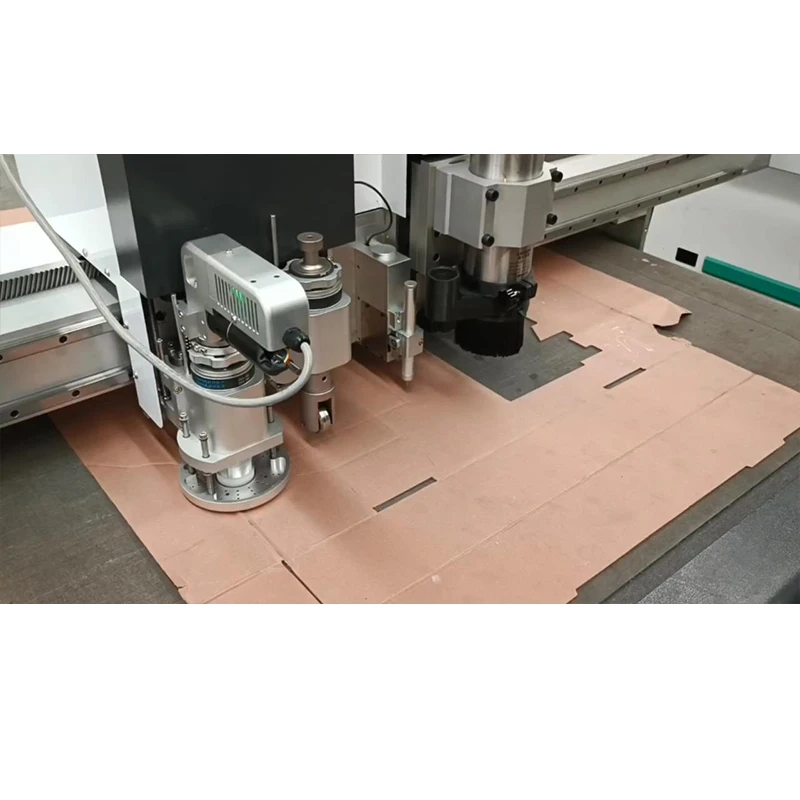
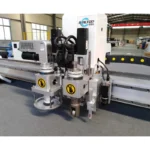
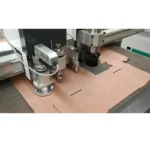
The selection between a drag knife, oscillating knife, and creasing wheel dictates the edge quality on fibrous packaging materials. For corrugated board, the high-frequency vibration of the oscillating tool head fractures the fibers cleanly rather than tearing them, which is essential for maintaining the structural integrity of the cut edge. The Swiss imported knife assembly on this unit handles the abrasive nature of recycled paper liners better than standard carbon steel blades. When processing honeycomb paper, the vertical amplitude of the oscillation must exceed the material thickness to ensure a complete cut without dragging the internal cell structure.
Vacuum Zoning and the Small Part Lift Problem
Holding a large sheet is straightforward, but keeping small carton blanks flat during the final cut-out requires targeted adsorption. The aluminum alloy honeycomb table provides a rigid, flat surface, yet a full-sheet vacuum pull is often wasted on empty areas. Operators must engage specific zones to concentrate suction under the workpiece. If the vacuum zoning is insufficient, the vibration from the knife head will cause lightweight sticker stock or thin paper to lift, resulting in miscuts and damaged tool tips. [NEED_CITE: vacuum table zoning requirements for digital flatbed cutters]
How Drive Components Dictate Contour Accuracy
The Delta servo motor paired with Taiwan Hiwin linear guides ensures that the cutting head maintains its path within a ≤0.1 mm tolerance, even during rapid directional changes. When cutting intricate carton locking tabs or perforated tear strips, any backlash in the transmission system translates directly into mismatched folds. The digital servo system adjusts torque instantly when the knife encounters a dense knot in the corrugated flute or transitions from cutting to creasing. This responsiveness prevents the "corner rounding" effect common in stepper-driven tables when the machine attempts to negotiate tight radii at high speed.
The Cost of Ignoring Material Premise in Speed Claims
Stating a cutting speed of 200–800 mm/s is only meaningful when tied to a specific material density and thickness. Running at the upper limit on a thin PVC film is viable, but attempting that same velocity on a 15mm honeycomb board will snap the blade or stall the servo. The real bottleneck in packaging production is often the file processing and the machine’s ability to interpret nested layouts without pausing. The HP-GL compatible instruction system and professional carton nested software allow for continuous processing, but the physical cutting speed must still be dialed back as the board Grams Per Square Meter (GSM) increases. [NEED_CITE: relationship between material GSM and digital cutting feed rate]
Configuration Errors That Stop the Production Line
Choosing a machine without verifying the electrical schematic often leads to immediate downtime upon arrival. A 380V ±10% system requires a stable three-phase supply; voltage sag in industrial parks can trip the servo drives or cause the vacuum pump to overheat. Furthermore, failing to confirm the control language and software file format compatibility before shipment means the operator cannot load their existing CAD files, forcing a manual redraw of every carton design. The consequence is not just a slow start, but a complete standstill until the correct post-processor or language pack is deployed. [NEED_CITE: electrical and software integration risks in imported CNC machinery]
Validating the Build Before the Machine Ships
We maintain in-house design and production capabilities that allow us to configure the RT-D2516/RT-S2516 specifically for your material profile. Rather than shipping a generic unit, we adjust the vacuum table zoning map and the tool head oscillation frequency to match your daily volume and board types. Our factory test includes running your actual corrugated samples to verify that the CCD camera positioning (if specified) can track printed registration marks at production speed. We document the voltage and plug configuration against your local standards to prevent site-installation delays. The software license is pre-configured to accept your native file formats, ensuring your nesting workflow remains intact from day one.
Documentation & Verification
- Machine specification sheet confirming the Delta servo and Hiwin guide rail configuration.
- Electrical schematic detailing the 380V±10% wiring and 7.5kW vacuum pump circuit.
- Factory test record showing cut edge quality on your specific corrugated board sample.
- Software license note confirming compatibility with your existing carton CAD file formats.
- Tool head and table configuration list matched to your material thickness and volume.
- Operation manual with customizable language options including English, Russian, and Italian.
Installation, Commissioning & Support
- Ensure the workshop floor is level to support the 3450×2300×1250mm frame and prevent racking.
- Provide a dedicated 3-phase circuit capable of handling the 9kW total rated power draw.
- Verify the 7.5kW vacuum pump exhaust is vented outside or filtered to manage paper dust.
- Calibrate the tool head depth against your thickest honeycomb stock during initial commissioning.
- Train operators on the HP-GL file import and the professional carton nesting software interface.
- Establish a blade replacement schedule based on the abrasiveness of your recycled paper stock.
What We Need to Specify Your Configuration
To provide an accurate quotation for the CNC oscillating knife cutting table, we require the specific types of paper or board you process, including the maximum thickness and flute profile. Please confirm your local voltage and frequency standards, as well as the required language for the control interface. If you have existing carton designs, sending a sample file allows us to verify software compatibility and demonstrate the nesting efficiency before you commit.
Frequently Asked Questions
Q: How do I know if the oscillating knife can handle my specific honeycomb board thickness?
A: The cutting depth depends on the blade length and the vertical stroke of the oscillating head. While the RT-D2516/RT-S2516 handles standard packaging materials effectively, thick honeycomb boards require specific blade geometry and amplitude settings. We conduct a sample cutting test on your actual material to verify edge quality and ensure the tool head does not crush the internal cell structure during the cut.
Q: Can the software integrate with our existing carton design workflow?
A: The system uses an HP-GL compatible instruction system and includes professional carton nested software. It supports multi-format import, allowing you to bring in designs from most standard CAD packaging applications. We verify file format compatibility during the pre-order stage and can configure the software language to match your design team’s preference, ensuring a smooth transition without retraining.
Q: What happens if the vacuum table doesn’t hold small sticker or label parts?
A: The aluminum alloy honeycomb table is divided into zones to concentrate suction where the material is actually present. For very small parts or intricate contours, we configure the vacuum zoning map to match your typical nest layout. This prevents lightweight vinyl or paper from lifting under the high-frequency vibration of the knife head, maintaining registration accuracy throughout the cutting cycle.
Q: Is the CCD camera positioning capable of tracking marks on printed corrugated board?
A: If your workflow involves cutting pre-printed sheets, the CCD camera contour recognition option is available to detect registration marks. We test this feature against the specific print contrast and surface texture of your corrugated stock. This ensures the system can locate and adjust to the print position at production speed, compensating for any sheet distortion or feeding misalignment.


商品评价
Clear filtersThere are no reviews yet.