







Fast Shipping
Carrier information

20k products
Payment methods

24/7 Support
Unlimited help desk

2-day Delivery
Track or off orders
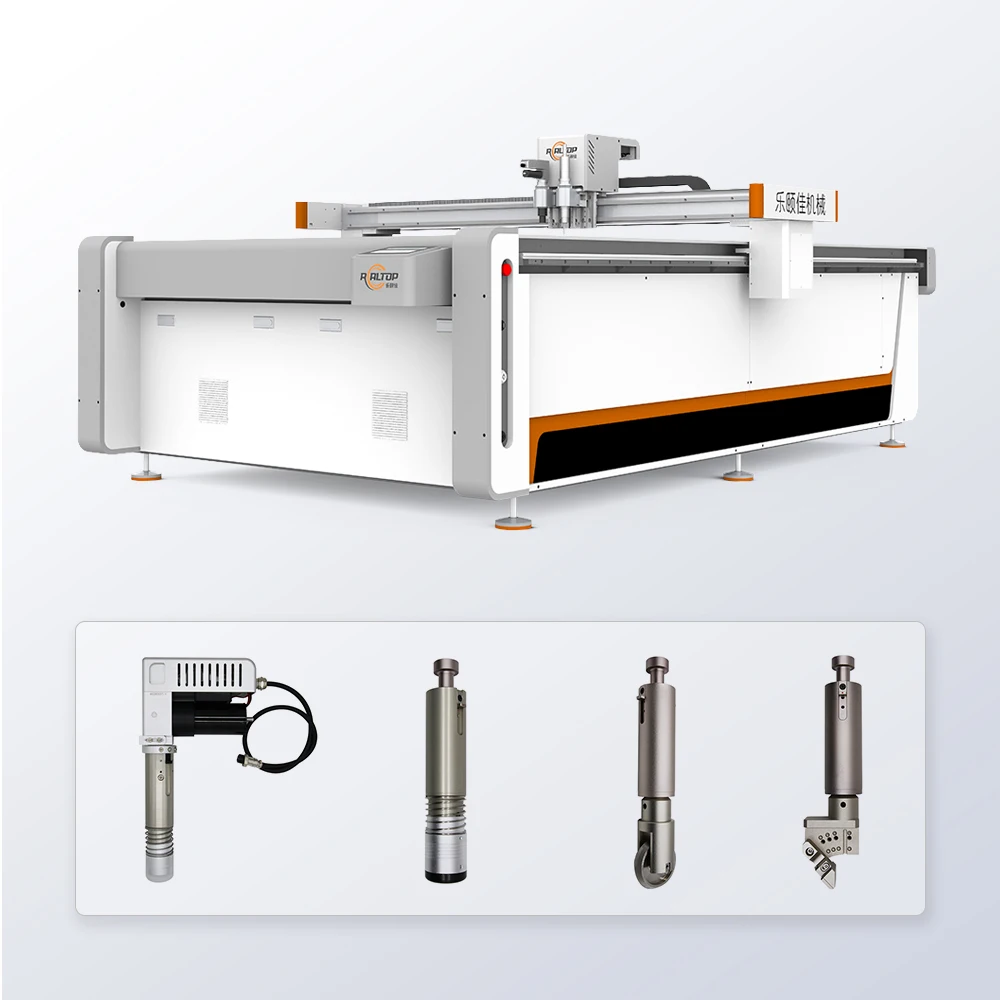
Custom-Configured Tool Heads — Every oscillating knife, creasing wheel, and V-groove tool is matched to your specific corrugated ply count, foam density, or greyboard thickness before the machine ships.
Technical Specifications
| Parameter | Value |
|---|---|
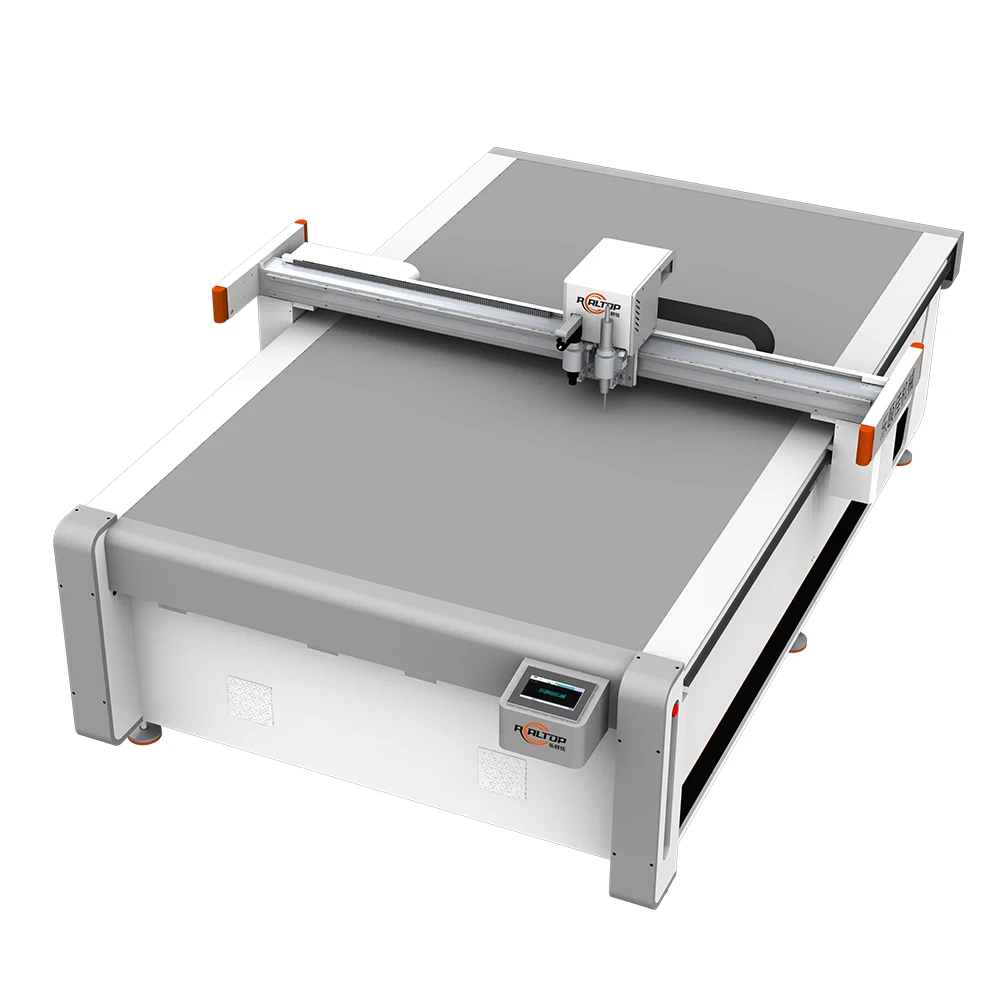
| Product Type | CNC Oscillating Knife Cutting Machine for Packaging |
| Working Area | 1600 × 2500 mm |
| Tool Head Options | Oscillating knife, driven rotary knife, creasing wheel, kiss cutting tool, pneumatic knife, milling tool, V-groove knife |
| Cutting Speed | 0–1500 mm/s |
| Cutting Thickness | ≤ 40 mm (basis not stated in source — confirm material type/density) |
| Cutting Accuracy | ±0.1 mm |
| Vacuum Pump | 9 kW |
| Vacuum Table | Aluminum bellows vacuum table |
| Control System | PLC control panel with intuitive interface |
| Servo Drive Options | Panasonic, Delta, Dorna |
| Voltage Options | 110V, 220V, 380V (frequency to be confirmed per market) |
| File Format Compatibility | PLT, DXF, AI, PDF |
| Software | Dedicated packaging box structure design software |
| Language Options | English, Russian, Italian, Chinese (customizable) |
| Safety Devices | Infrared sensor device, emergency stop |
| Machine Dimensions | 3300 × 2100 × 1350 mm |
| Standards | CE |
Application Suitability
| Application | Material or Output |
|---|---|
| Packaging sample making and prototyping | Corrugated cardboard (E-flute, B-flute, BC-flute), greyboard, cardstock, art paper |
| Protective foam insert fabrication | EVA, EPE, PU foam for packaging inserts |
| Short-run carton and box production | Corrugated board, specialty paper, adhesive-backed materials |
| Gasket and soft material cutting | Rubber mats, velvet, fleece fabric, leather, synthetic leather |
| Thin plastic processing | PVC, PET sheets for packaging windows and blisters |
Why the Vacuum Table Matters More Than the Working Area for Packaging Makers
A flatbed digital cutting table holds your material only as well as its vacuum zoning and pump capacity allow.
Packaging producers often select a CNC oscillating knife cutting machine for packaging based on bed size, then discover small carton blanks lift off the table during high-speed cuts. When the vacuum zones are too broad or the pump undersized, lightweight corrugated sheets and foam inserts shift mid-cut, producing misaligned crease lines and ruined samples. [NEED_CITE: vacuum hold-down principles for flatbed digital cutting tables] This is especially common with nested layouts where small offcuts sit between larger profiles. The 1625 addresses this with a cast aluminum bellows vacuum table paired with a 9 kW high-efficiency pump, designed to maintain consistent suction across the full 1600 × 2500 mm work surface. I once visited a carton sample workshop where they were cutting E-flute carton blanks for a cosmetics brand — every third piece had a millimeter drift at the crease because their old table had only two vacuum zones and a 5.5 kW pump. Switching to a properly zoned aluminum table resolved it within the first sheet.
Matching the Tool Head to Your Substrate
The 1625 supports seven interchangeable tool heads, and choosing the wrong one is the most frequent cause of poor edge quality on packaging materials. An oscillating knife cuts corrugated board cleanly through the flutes without crushing them, while a driven rotary knife suits continuous contour cuts on thinner cardstock and art paper. For folding carton work, the creasing wheel scores fold lines into greyboard and specialty paper without breaking the surface fibers. Foam insert producers working with EVA or EPE need the oscillating knife at a specific frequency to avoid tearing open the cell structure, which leaves a ragged edge that looks unprofessional in a presentation box. A milling tool handles denser substrates like high-density greyboard that would otherwise snap an oscillating blade. We configure which tools ship with your CNC oscillating knife cutting machine for packaging based on a cutting test run on your own material samples before the order is finalized.
CCD Contour Recognition and File Workflow
When packaging involves printed graphics that need precise contour cuts — such as display stands, point-of-sale boxes, or branded inserts — camera-based registration becomes essential. The system reads printed fiducial marks and adjusts the cut path in real time to compensate for print-to-sheet registration drift. [NEED_CITE: CCD camera positioning accuracy standards in digital finishing] Equally important is the software side: the dedicated packaging box structure design software accepts PLT, DXF, AI, and PDF files, which covers the formats most packaging designers work in. Before an order is confirmed, we verify that your existing design files import correctly and that the nesting workflow matches your production sequence. There is no point specifying a CNC oscillating knife cutting machine for packaging with advanced contour tracking if the software cannot read the files your design team produces.
Breaking Down the Core Specifications
The ±0.1 mm cutting accuracy directly affects how cleanly crease lines align with cut edges on folding cartons — even a half-millimeter drift makes an assembled box look skewed on a retail shelf. The 1500 mm/s maximum cutting speed matters for throughput on sample runs and short-batch production, but sustained speed depends on material hold-down and tool condition, not just the servo rating. The choice between Panasonic, Delta, or Dorna servo drives influences long-term serviceability: a buyer in Southeast Asia may prefer Delta for local spare parts availability, while a European distributor may standardize on Panasonic for existing inventory. The 9 kW vacuum pump is sized for the full aluminum bellows table area, ensuring suction does not drop off when cutting near the table edges where smaller carton blanks and foam inserts often sit. [NEED_CITE: servo motor selection criteria for CNC flatbed cutting tables] Voltage must be confirmed to match the destination facility — the available 110V, 220V, and 380V options cover most industrial markets, but frequency and plug type need explicit agreement before wiring begins.
What Wrong Configuration Costs You on the Shop Floor
Selecting a machine on working area alone, without confirming the tool head and vacuum setup for your actual substrates, leads to compounding losses. Crushed flutes on corrugated board mean the sample fails a drop test or looks cheap in a client presentation. Ragged edges on EVA foam inserts require manual trimming, adding labor that negates the purpose of digital cutting. A vacuum table without adequate zoning forces operators to tape down small parts manually, slowing the entire workflow and introducing registration errors. [NEED_CITE: material hold-down failures in digital flatbed cutting operations] I recall a Middle East customer who ordered a cutter configured for standard corrugated board, only to discover their local supplier sent high-density greyboard that shattered the oscillating knife blade on contact. We swapped in a milling tool and adjusted the spindle parameters, and the machine ran cleanly after that — but it cost them two weeks of downtime and a full batch of wasted sample boxes.
Why Source This Machine from the Manufacturer
In-house design and production across both knife and laser technologies means we configure the cutting method to match your material, rather than forcing one approach onto every substrate. Every tool head and table setup is specified per your material type, ply count, and daily volume before the machine enters production. CCD camera positioning systems are integrated and tested for printed contour accuracy on your specific artwork. Software compatibility is confirmed by importing your actual PLT, DXF, AI, or PDF files before the order is placed. Voltage, control language, and plug specifications are locked in at order stage, not left to assumption at shipping. A sample cutting report on your own material — whether BC-flute corrugated, high-density EVA foam, or 2mm greyboard — accompanies every quotation so you see edge quality and crease definition before committing.
Documentation & Verification
- Machine specification sheet listing confirmed tool heads and vacuum table zoning for your substrates
- Electrical schematic with voltage, frequency, and plug type matched to your destination market
- Sample cutting report on your corrugated board, foam, or greyboard with edge and crease photographs
- Software licence and file format compatibility note for PLT, DXF, AI, and PDF workflows
- Factory test record documenting cutting accuracy and servo calibration before crating
- CE declaration covering machinery directive compliance for industrial cutting equipment
Installation, Commissioning & Support
- Floor space requirement based on the 3300 × 2100 × 1350 mm machine envelope plus material staging clearance
- Dedicated electrical circuit matching confirmed voltage (110V / 220V / 380V) and frequency for the 9 kW vacuum pump and servo drives
- Machine ships assembled with tool head turret pre-calibrated for your specified cutting tools
- First-run commissioning includes vacuum zone testing and cutting accuracy verification on your material
- Operator training covers PLC control panel functions, tool head changeover, and software nesting workflow
- Spare parts list covering oscillating knife blades, creasing wheels, and vacuum table seals
Before You Request a Quotation
To configure the 1625 correctly, we need to know your primary materials — corrugated flute type and ply count, foam density and thickness, or greyboard grade — along with your typical sheet size and daily sample volume. Confirm your facility voltage and frequency, the control language your operators need, and whether your design workflow uses PLT, DXF, AI, or PDF files. If you can send physical material samples, we will run a cutting test and include the results with your quotation.
Frequently Asked Questions
Q: How is the ≤ 40 mm cutting thickness rating determined?
A: The maximum thickness depends entirely on material type and density. A 40 mm EVA foam block cuts differently from 40 mm high-density greyboard. We verify actual cutting depth on your specific material through a sample test before confirming the machine configuration, so the thickness rating reflects your real production substrates rather than a generic laboratory benchmark.
Q: Which tool head should I use for corrugated board versus foam inserts?
A: For corrugated board, the oscillating knife cuts through flutes cleanly while the creasing wheel scores fold lines. For EVA, EPE, or PU foam inserts, the oscillating knife at a tuned frequency prevents cell tearing. Denser substrates like greyboard may require a milling tool. We ship the machine with the tool heads matched to your confirmed materials.
Q: Will the vacuum table hold small carton blanks flat during high-speed cutting?
A: The aluminum bellows vacuum table paired with the 9 kW pump is designed to maintain suction across the full work surface. We review your part geometry and nesting layout during configuration to confirm that small blanks receive adequate hold-down, and the test cut report documents performance on your actual blank sizes.
Q: What voltage and control language are confirmed before shipment?
A: Voltage is confirmed at order stage from the available 110V, 220V, or 380V options, with frequency and plug type matched to your destination market. Control panel language is selected from English, Russian, Italian, or Chinese, with special languages customizable. All electrical details are documented in the schematic before production begins.
Q: Can I send my own packaging material for testing before ordering?
A: Yes. Send representative samples of your corrugated board, foam, greyboard, or other substrates. We run a cutting test covering your required tools — oscillating knife, creasing wheel, V-groove, or milling — and include a sample cutting report with edge quality photographs and dimensional accuracy data with the quotation.


商品评价
Clear filtersThere are no reviews yet.