
Blog
Does Your CNC Cutting Equipment Supplier Really Support Logo Customization?

Does Your CNC Cutting Equipment Supplier Really Support Logo Customization?
I receive this question at least twice a week from distributors and OEMs. They need their company logo on the machines they purchase, but they hesitate because they assume it will delay shipment or inflate costs. Most of them never ask—they just accept generic equipment and miss branding opportunities.
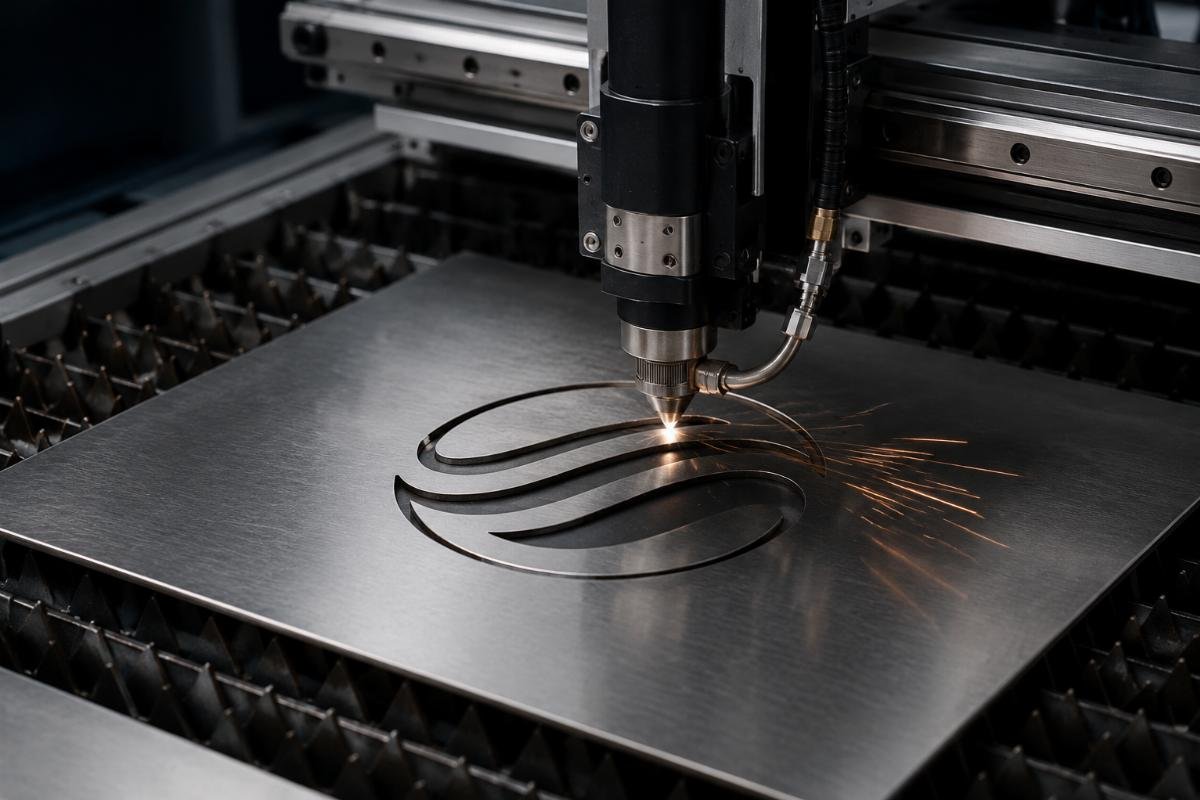
Yes, our factory supports logo customization for knife cutting equipment, and the process adds minimal cost and lead time when you understand three execution variables: placement options, implementation methods (laser engraving, nameplate, or sticker), and file preparation requirements.
I have processed dozens of logo customization orders over the past years. I noticed that buyers often confuse logo customization with full ODM/OEM services, which involve redesigning machine structures or altering software interfaces. Logo customization is much simpler—it only affects surface branding, not equipment functionality.
Who Actually Needs Logo Customization for Cutting Equipment?
Three types of buyers drive logo customization demand in my daily work. Each has different priorities.
Distributors need logo customization to build their own brand identity in local markets.
Distributors purchase equipment in bulk and resell under their own brand names. They want their logos visible on machine bodies, control panels, or packaging. For them, logo visibility matters more than subtle placement—they need branding that customers can immediately recognize during factory visits or trade shows.
I worked with a European distributor who ordered 20 fabric cutting machines last year. They requested their logo on both sides of the machine body and on the control cabinet door. They needed bold placement because they planned to showcase the equipment at textile industry exhibitions across three countries.
Manufacturers remove third-party branding to maintain a unified product line appearance.
OEM manufacturers integrate cutting equipment into larger production systems. They do not want third-party logos disrupting their factory floor aesthetics or confusing equipment ownership during asset audits. For them, logo removal or replacement is about operational consistency, not market promotion.
I once received an inquiry from an automotive interior parts factory in the United States. They ordered five leather cutting machines but insisted that all Realtop logos be removed or replaced with their own facility branding. They explained that their quality audits required all production equipment to display uniform ownership markings for inventory tracking purposes.
Traders offer white-label solutions to end clients who want neutral or private-label equipment.
International traders purchase equipment and resell to clients who prefer no visible manufacturer branding. These traders often add their own logos or leave the equipment completely unbranded, depending on client preferences. For them, flexibility in logo application—or complete absence of branding—is a key selling point.
A Middle Eastern trader contacted me last month asking if we could ship cutting machines without any logos at all. He explained that his client, a large packaging manufacturer, wanted to keep their equipment supplier information confidential from competitors visiting their production facility.
Does Logo Customization Really Increase Cost and Delivery Time?
No, logo customization does not significantly increase cost or delivery time—but buyers often assume it does because they confuse it with full customization services.
The cost impact depends on implementation method, not the concept of customization itself.
I break down the cost structure for buyers this way:
| Implementation Method | Cost Range | Durability | Best Application Zone |
|---|---|---|---|
| Laser engraving | Low (one-time setup) | Permanent | Metal surfaces, control cabinets |
| Metal nameplate | Moderate (includes production + mounting) | High (resistant to wear) | Machine body side panels, front panels |
| Vinyl sticker | Minimal | Moderate (may peel over time) | Smooth plastic surfaces, packaging |
Laser engraving carries the lowest incremental cost because we already use laser equipment for internal part marking. Adding a logo requires only a digital file upload and minor programming adjustments. I typically quote an additional $20-50 per machine for laser engraving, depending on logo size and complexity.
Metal nameplates cost more because they involve external supplier coordination[^1]. We order custom nameplates from a local metal fabrication shop, which adds material costs, production time, and mounting labor. I quote an additional $50-100 per machine for nameplate customization, depending on order volume. Bulk orders reduce per-unit costs because nameplate suppliers offer volume discounts.
Vinyl stickers carry the smallest cost increment—often under $10 per machine—but they are less durable than laser engraving or nameplates. I recommend stickers only for low-traffic areas or temporary branding needs.
The delivery time impact is minimal when you provide files early in the production cycle.
This is where most buyers misunderstand the process. Logo customization does not delay production if you submit logo files when you confirm your order. We integrate logo application into the standard assembly workflow—it happens during the final quality inspection stage, not as a separate post-production step.
I processed an order from a South American distributor who provided logo files three weeks before their production slot. We applied their laser-engraved logo during the standard assembly process without extending lead time. The machines shipped exactly on schedule.
Problems arise when buyers submit logo files after production has started. If we have already completed the assembly stage, we must either pull machines off the line for retroactive customization (which disrupts workflow) or delay shipment until the next quality inspection cycle. In those cases, buyers may experience a 3-5 day delay.
I always advise buyers to provide logo files at least two weeks before their scheduled production date. This timing ensures we can incorporate customization into the normal assembly sequence without disrupting other orders.
Where Can You Actually Place Logos on Knife Cutting Equipment?
Logo placement is not arbitrary—it is constrained by equipment structure, material compatibility, and durability requirements. I explain placement options based on machine design, not marketing preferences.
Machine body side panels offer the most visible placement area.
Most CNC knife cutting machines feature large metal side panels[^2] that provide flat, smooth surfaces for logo application. We use laser engraving or metal nameplates on these panels because they resist wear from daily equipment operation and factory environment exposure.
I worked with a furniture manufacturer in Canada who requested logos on both side panels of their fabric sofa cutting machine. They wanted high visibility because they regularly hosted client tours in their production facility. We used laser engraving on brushed stainless steel panels[^3]—the logos remained sharp and clear even after 18 months of continuous operation[^4].
Side panel placement works well for buyers who prioritize brand visibility during equipment demonstrations or factory visits. The logos are large enough to be visible from several meters away, making them ideal for trade show displays or open production floors.
Control cabinet doors provide moderate visibility with functional relevance.
Control cabinets house electrical components and user interfaces. The cabinet door surface offers a secondary placement option for buyers who want logos near the operator control area. We typically use metal nameplates or laser engraving on control cabinet doors because these surfaces experience frequent contact from operators.
A German packaging equipment distributor requested logos on control cabinet doors for 15 corrugated board cutting machines. They explained that their end users—packaging manufacturers—often photographed equipment control panels for internal documentation. Having the distributor's logo visible in those photos reinforced brand association during post-sale interactions.
Control cabinet placement suits buyers who want logos associated with equipment operation rather than just visual branding. Operators see these logos every time they interact with the control interface, which subtly reinforces brand presence during daily use.
Top gantry beams offer less visible but structurally significant placement.
Some buyers request logos on the top gantry beam—the horizontal beam that supports the cutting head assembly[^5]. This placement is less visible during normal operation because the beam sits above the cutting table, but it becomes noticeable during equipment maintenance or overhead camera documentation.
I rarely recommend gantry beam placement unless buyers have specific reasons—such as drone photography for marketing materials or overhead facility monitoring systems. The placement requires specialized mounting considerations because gantry beams move during cutting operations, which limits implementation to lightweight vinyl stickers or very small metal nameplates.
An Australian advertising production company requested gantry beam logos for their acrylic cutting machine. They explained that they produced time-lapse videos of their production process using overhead cameras, and they wanted their branding visible in video content. We used durable vinyl stickers that remained secure despite constant gantry movement[^6].
Packaging and user manuals extend branding beyond the equipment itself.
Logo customization does not stop at the machine body. We also apply logos to equipment packaging, user manuals, and quick-start guides. This extended branding costs almost nothing to implement because we already produce custom documentation for different markets—adding a logo is just a digital file replacement in our print templates.
A Japanese trading company requested that we remove all Realtop branding from user manuals and packaging for 10 leather cutting machines. They provided their own logo files and corporate color schemes. We updated our print templates and produced fully white-labeled documentation without extending lead time or adding costs beyond the base customization fee.
Packaging and documentation customization matters for traders and distributors who want to maintain brand consistency across all customer touchpoints, not just the equipment itself.
What Files Do You Need to Provide for Logo Customization?
File preparation is where most buyers encounter friction. I need specific file formats and specifications to execute customization without delays or quality issues.
Vector files are required for laser engraving and nameplate production.
Laser engraving machines read vector paths, not raster images[^7]. I need your logo in AI, EPS, or high-resolution PDF format[^8]. Vector files ensure clean edges and scalable sizing without pixelation[^9]. If you send JPEG or PNG files, I must redraw the logo manually, which adds 2-3 days to the preparation timeline.
I processed an order from a UK distributor who initially sent a low-resolution PNG logo extracted from their website. The file quality was insufficient for laser engraving—edges appeared jagged when scaled to the required size. I contacted them and requested the original vector file from their graphic designer. Once they provided an AI file, we engraved the logo cleanly without quality loss.
If you do not have vector files, I can coordinate with our graphic design partner to convert raster images, but this service adds $30-50 to the customization cost and extends preparation time by 3-5 business days.
Color specifications matter for vinyl stickers and printed nameplates.
If you choose vinyl stickers or printed metal nameplates, I need Pantone color codes or CMYK values[^10]. "Blue" is not specific enough—I need Pantone 293C or CMYK (100, 56, 0, 2) to ensure color accuracy. Color matching from screen images is unreliable because monitor calibration varies[^11].
A Mexican packaging company requested red vinyl stickers for their corrugated board cutting machine. They sent a reference image but no color code. We produced a sample based on our best guess, but the red shade did not match their brand guidelines. They sent Pantone 186C specifications after seeing the sample, and we reproduced stickers with exact color accuracy.
I always ask buyers to provide Pantone codes during the initial order confirmation to avoid color mismatch delays.
Size and placement preferences should be specified upfront.
Logo size affects visibility and cost. I need you to specify whether you want logos to fill the entire side panel or remain compact near the top corner. Larger logos require more laser engraving time or larger nameplates, which slightly increases cost.
I worked with a Singaporean trader who requested "large and visible" logos without specifying dimensions. We engraved logos at 300mm x 100mm based on standard side panel dimensions. They later said the logos were too large and overpowering. We reduced the size to 200mm x 70mm in their next order, but the initial confusion caused unnecessary back-and-forth communication.
I now ask buyers to confirm logo dimensions during order confirmation. If you are unsure about sizing, I can provide placement mock-ups based on actual machine photos before we begin production.
What About MOQ Requirements and File Ownership?
Minimum order quantity and intellectual property considerations affect logo customization feasibility.
Logo customization has no strict MOQ, but cost efficiency improves with volume.
We execute logo customization for single-unit orders, but the per-unit cost is higher because setup fees do not scale[^12]. Laser engraving setup requires programming the machine path, which takes the same time whether we engrave one logo or 50 logos. The setup cost spreads across more units in bulk orders, reducing per-unit incremental cost.
A Brazilian distributor ordered one sample machine with logo customization. We charged the full setup fee, which made the per-unit customization cost appear high. When they placed their bulk order for 30 machines, the per-unit cost dropped by nearly 60% because we amortized the setup fee across the entire order.
If you plan to order multiple machines over time, I recommend discussing batch processing. We can produce extra nameplates or store your logo program file for future orders, which reduces repeat setup costs.
We do not claim ownership of your logo files or design elements.
All logo files you provide remain your intellectual property. We store them securely in our production server for order execution purposes only. We do not reuse your logos for marketing materials, display purposes, or other clients' equipment without written authorization.
A Canadian manufacturer expressed concern that we might display their branded equipment in trade show booths without permission. I clarified that we only photograph equipment for portfolio purposes if clients explicitly authorize it. Their customized machines were shipped directly to their facility, and we never used images of their branded equipment in promotional materials.
If you want to authorize us to showcase your customized equipment in marketing efforts, we appreciate the collaboration—but authorization is always opt-in, never assumed.
Conclusion
Logo customization is a straightforward service when you understand placement constraints, implementation methods, and file requirements. We execute it as part of standard production workflow, not as a separate post-production add-on. Provide vector files early, specify placement preferences clearly, and expect minimal cost and time impact—then your equipment ships with professional branding intact.
[^1]: "The Manufacturing Process Behind Etched Metal Nameplates", https://www.cubbison.com/blog/the-manufacturing-process-behind-etched-metal-nameplates. Metal nameplates for industrial equipment are typically produced through specialized processes including stamping, etching, or printing on metal substrates, often requiring dedicated fabrication equipment and expertise that manufacturers may source from specialized suppliers rather than producing in-house. Evidence role: general_support; source type: education. Supports: Production processes for metal nameplates in industrial applications. Scope note: Source describes general nameplate production rather than specific supply chain coordination requirements [^2]: "AMOR CNC Knife Cutting Machine Grooving for Felt Panel - YouTube",
. CNC cutting machines commonly incorporate metal frame panels that provide structural support and mounting surfaces for components, though specific panel dimensions vary by manufacturer and model size. Evidence role: general_support; source type: education. Supports: Standard construction features of CNC knife cutting equipment. Scope note: Source describes general CNC machine construction principles rather than knife cutting equipment specifically [^3]: "Stainless Steel: Grades, Properties, and Uses Guide", https://www.metalsupermarkets.com/stainless-steel-the-definitive-guide-to-grades-properties-and-uses/. Stainless steel is commonly used in industrial equipment construction due to its corrosion resistance and durability, and its surface can be effectively marked using laser engraving which creates permanent contrast through oxidation or surface removal. Evidence role: general_support; source type: education. Supports: Material properties of stainless steel for industrial equipment. [^4]: "The Effect of Laser Surface Hardening on the Microstructural ... - PMC", https://pmc.ncbi.nlm.nih.gov/articles/PMC12843119/. Laser engraving on stainless steel creates permanent marks through material removal or oxidation that demonstrate high resistance to wear, corrosion, and environmental exposure in industrial applications, though specific longevity depends on laser parameters and environmental conditions. Evidence role: general_support; source type: research. Supports: Durability of laser-engraved markings on metal surfaces in industrial settings. Scope note: Research addresses laser marking durability generally rather than specific 18-month timeframes [^5]: "Overkill CNC Router Upgrade Part 4 - The most rigid Gantry Design ...", . Gantry-style CNC machines utilize a bridge-like structure spanning the work area, with the cutting tool mounted on a carriage that moves along the gantry beam, providing stability and precision for the cutting head positioning system. Evidence role: definition; source type: education. Supports: Gantry beam structure in CNC cutting equipment. [^6]: "Strength in Adhesion: A Multi-Mechanics Review Covering ...", https://pmc.ncbi.nlm.nih.gov/articles/PMC12526568/. Industrial-grade vinyl adhesives can maintain bond strength on surfaces subject to vibration and movement when properly selected for the application, though adhesion longevity depends on factors including surface preparation, adhesive formulation, temperature cycling, and mechanical stress levels. Evidence role: general_support; source type: research. Supports: Adhesive performance of vinyl materials on moving equipment. Scope note: Research addresses adhesive performance generally rather than specific gantry beam applications [^7]: "Vector vs Raster Laser Cutting | Operations - College of Design", https://design.ncsu.edu/operations/510/laser-cutter-vector-vs-raster-laser-cutting/. Laser engraving systems typically process vector graphics more efficiently than raster images because vector paths provide precise coordinate data for the laser head movement, though many modern systems can process both formats with appropriate software conversion. Evidence role: mechanism; source type: education. Supports: Technical requirements for laser engraving file formats. [^8]: "Comparison of graphics file formats - Wikipedia", https://en.wikipedia.org/wiki/Comparison_of_graphics_file_formats. AI (Adobe Illustrator), EPS (Encapsulated PostScript), and PDF (Portable Document Format) are widely-used file formats capable of storing vector graphics data, with EPS and PDF serving as cross-platform standards while AI represents Adobe's proprietary format. Evidence role: definition; source type: education. Supports: Standard vector graphics file formats in professional use. [^9]: "Vector graphics - Wikipedia", https://en.wikipedia.org/wiki/Vector_graphics. Vector graphics use mathematical equations to define shapes, lines, and curves, allowing infinite scaling without quality loss, whereas raster images consist of fixed pixel grids that become pixelated when enlarged beyond their native resolution. Evidence role: mechanism; source type: encyclopedia. Supports: Technical properties of vector graphics regarding scalability. [^10]: "Color Theory Topic: Color Specification Systems", https://sites.harding.edu/gclayton/Color/Topics/017_ColorSpecs.html. The Pantone Matching System provides standardized color reproduction across different materials and printing processes, while CMYK (cyan, magenta, yellow, key/black) represents the subtractive color model used in color printing, both serving as industry standards for color communication. Evidence role: definition; source type: encyclopedia. Supports: Standard color specification systems used in commercial printing and manufacturing. [^11]: "Color management - Wikipedia", https://en.wikipedia.org/wiki/Color_management. Display devices render colors differently due to variations in screen technology, calibration settings, ambient lighting, and color space capabilities, making visual color matching from monitors unreliable for production workflows that require precise color reproduction. Evidence role: mechanism; source type: education. Supports: Limitations of screen-based color matching for production purposes. [^12]: "Economies of scale - Wikipedia", https://en.wikipedia.org/wiki/Economies_of_scale. In manufacturing economics, setup costs represent fixed expenses incurred regardless of production quantity, resulting in declining per-unit costs as production volume increases through cost amortization across more units, a fundamental principle of economies of scale. Evidence role: mechanism; source type: education. Supports: Relationship between fixed setup costs and production volume.


