



Fast Shipping
Carrier information

20k products
Payment methods

24/7 Support
Unlimited help desk

2-day Delivery
Track or off orders
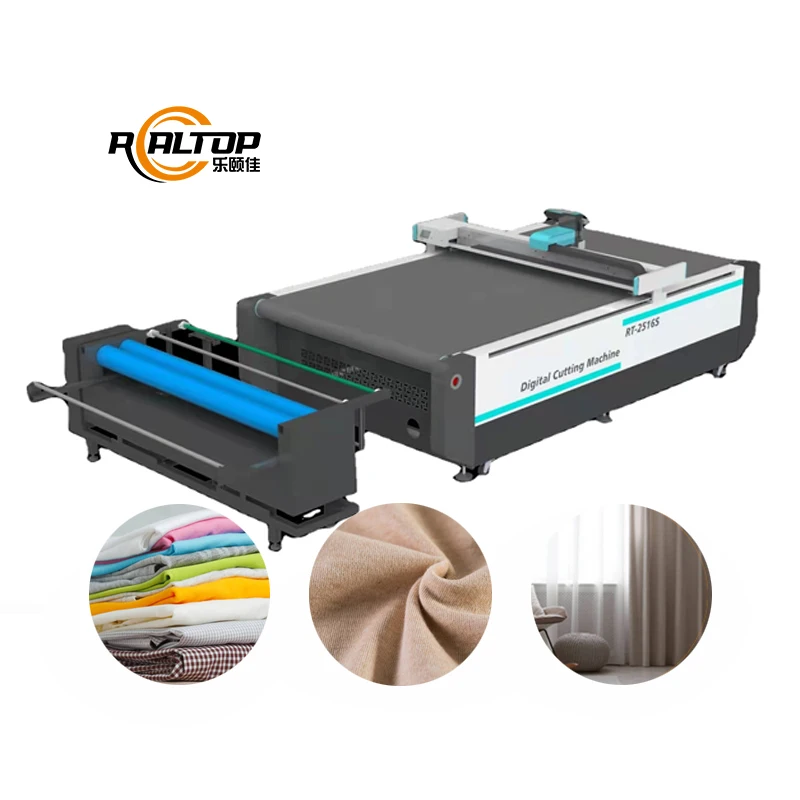
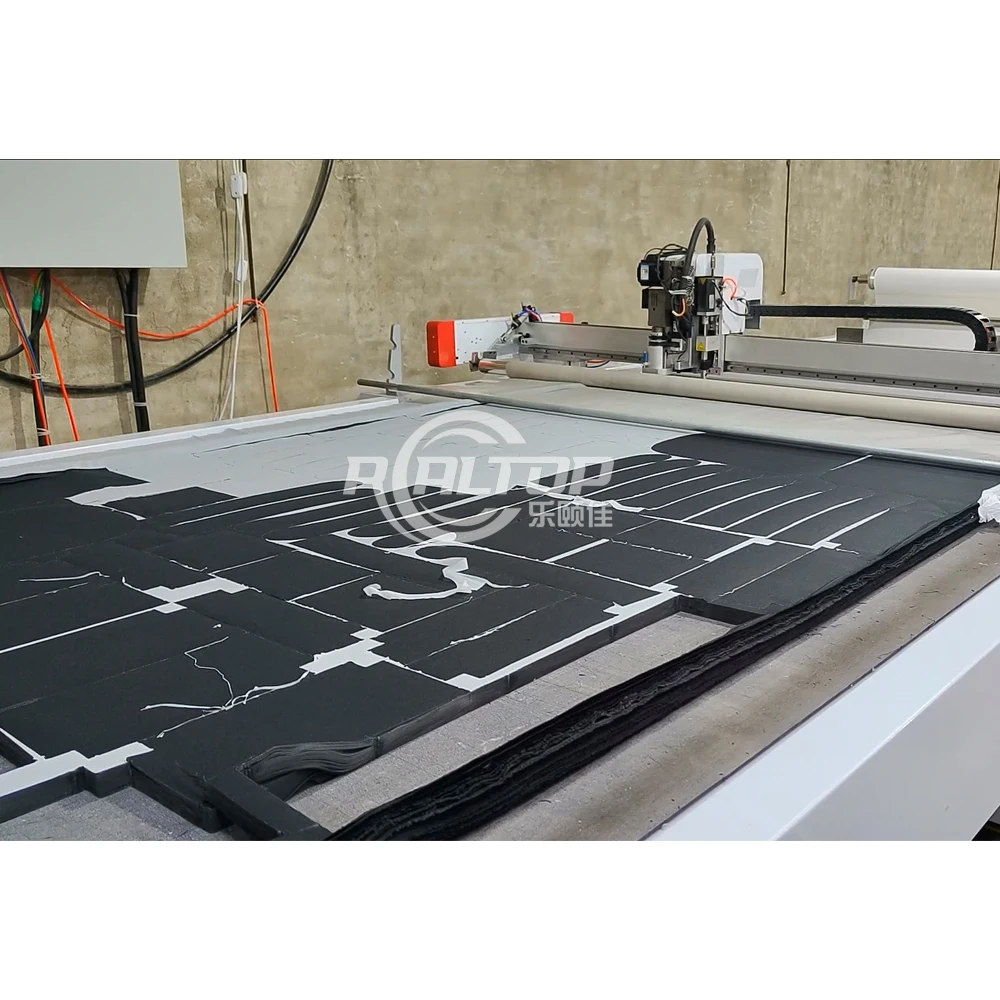
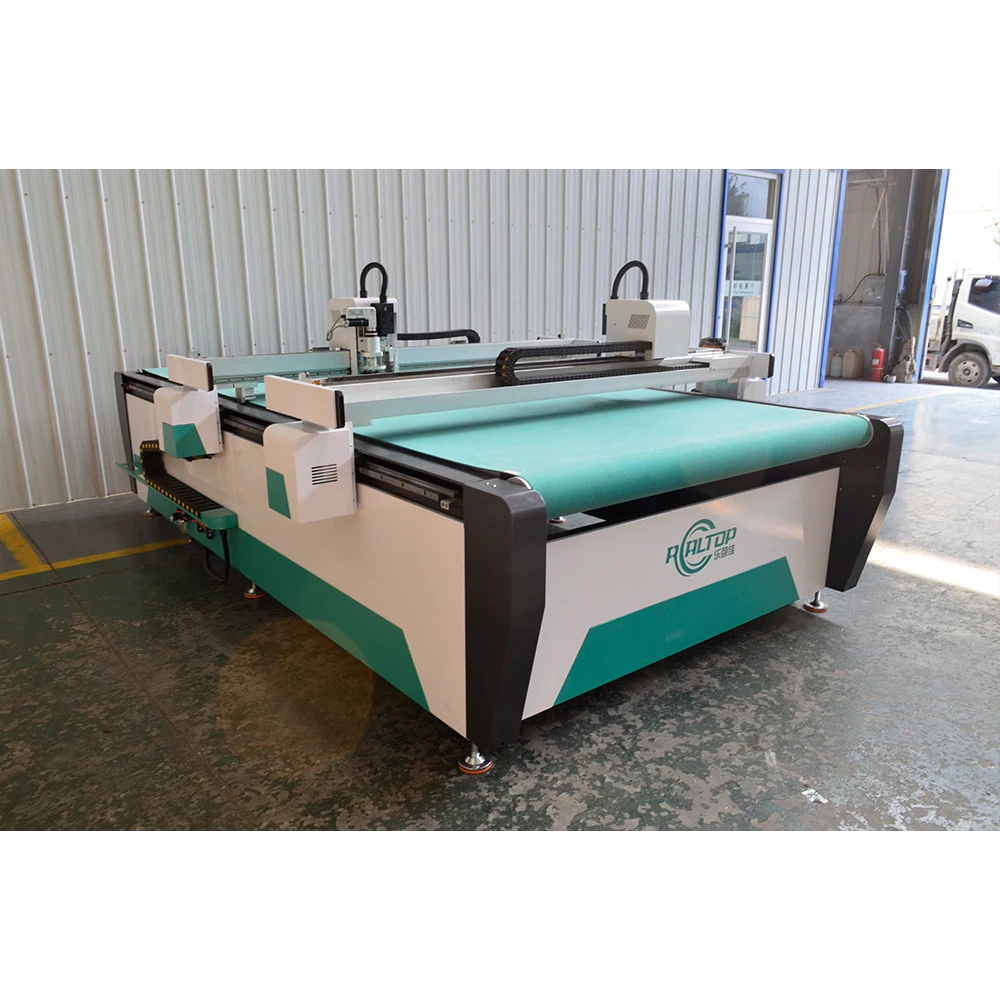
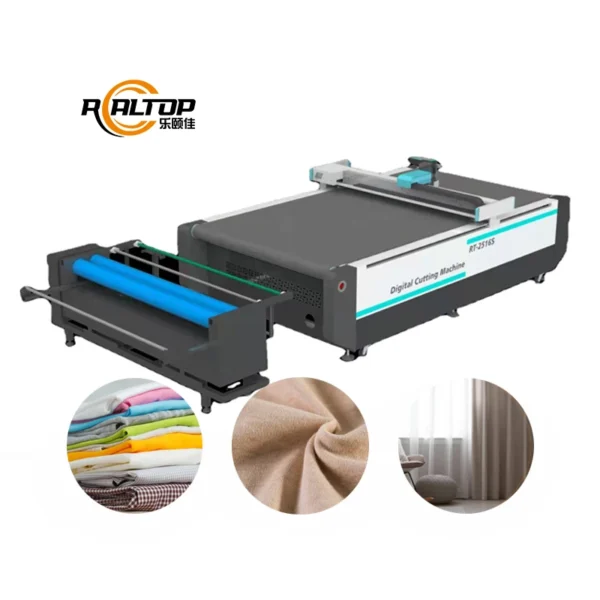
Oscillating knife and table matched to material — tool head and vacuum zoning specified per fabric density and composite thickness, so the RT-D2516/RT-S2516 cuts clean edges rather than crushing or fraying your stock.
Technical Specifications
| Parameter | Value |
|---|---|
| Model | RT-D2516 / RT-S2516 |
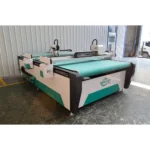
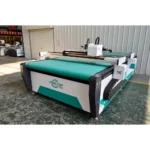
| Product Type | CNC Oscillating Knife Cutting Machine |
| Working Area | 1600 × 2500 mm |
| Machine Size | 3450 × 2300 × 1250 mm |
| Rated Power | 9 kW |
| Translational Velocity | 800–1200 mm/s |
| Cutting Thickness | ≤50 mm (varies by material density and tool head selection) |
| Repeated Accuracy | ≤0.1 mm |
| Transmission System | Digital servo motor, linear guide, synchronous belt, ball screw |
| Multifunctional Head | Swiss imported knife (vibration full cutting, vibration half cutting, cursor location) |
| Vacuum Pump | 7.5 kW |
| Guide Rail | Taiwan Hiwin linear rail |
| Feeding System | Germany imported conveyor belt, auto feeding |
| Instruction System | HP-GL compatible format |
| Voltage | 380V ±10% |
| Safety Device | Infrared sensors |
| Certification | CE |
Application Suitability
| Application | Material or Output |
|---|---|
| Garment and footwear production | Multi-layer cotton, polyester, denim, technical textiles |
| Leather goods manufacturing | Genuine leather, PU synthetic, microfiber leather |
| Automotive interior components | Sponge composite leather, PVC, soft foam laminates |
| Gasket and seal fabrication | Rubber sheets, silicone, soft glass, composite gasket material |
| Textile converting | Flexible clothing materials, sponge composites, layered fabric rolls |
Why Material Density Decides the CNC Oscillating Knife Cutting Machine Specifications You Actually Need
A 50 mm cutting depth rating means nothing if the tool head and vacuum zoning are wrong for your specific stock.
I have watched fabric shops buy a machine based purely on bed size, only to find the oscillating knife tears through multi-layer denim but leaves ragged edges on lightweight silk blends. The same issue shows up in reverse: a gasket producer cutting dense rubber composite needs a different stroke frequency and blade geometry than a shop running soft PVC. The CNC oscillating knife cutting machine specifications must account for what you are actually slicing, not just the thickest block the head can theoretically penetrate [NEED_CITE: tool head selection guidelines for oscillating knife cutting by material type].
Swiss Knife Head Configuration and Stroke Matching
The Swiss imported oscillating knife on the RT-D2516/RT-S2516 handles both full cutting and half cutting, which matters when you are kiss-cutting a top layer without damaging the conveyor belt beneath. Stroke frequency and blade angle determine whether the knife shears cleanly through a dense sponge composite or just compresses it. Matching the blade profile to your material prevents the crushed-edge problem that forces secondary trimming and wastes yield.
Vacuum Zoning for Small and Irregular Parts
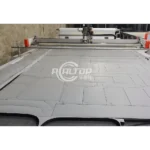
A 7.5 kW vacuum pump delivers strong hold-down across the 1600 × 2500 mm table, but raw suction alone does not solve the small-part lift problem. When cutting narrow garment panels or thin gasket strips, un-zoned vacuum tables lose grip at the edges because air leaks around the part perimeter. Proper zone segmentation lets you activate only the sections under the workpiece, concentrating suction where it matters and keeping lightweight fabric flat during high-speed passes [NEED_CITE: vacuum table zoning principles for flatbed digital cutters].
Reading the Specs That Affect Daily Output
Repeated accuracy of ≤0.1 mm keeps pattern registration tight when nesting dozens of garment pieces across the working area — a tolerance drift here means misaligned notches and rejected panels downstream. Translational velocity of 800–1200 mm/s governs how fast the head travels between cuts, but actual cutting speed depends on material resistance and blade engagement depth. The Taiwan Hiwin linear rail and ball screw drive maintain positioning integrity over long production runs, reducing cumulative drift that cheaper guide systems introduce after several hours of continuous operation. The digital servo motor provides responsive acceleration and deceleration, which matters when the head negotiates tight contours on leather hide outlines where overtravel wastes expensive material.
The Cost of Skipping a Sample Cut
Ordering a knife cutting table without testing your own material first is how shops end up with a machine that handles half their workload. A buyer cutting automotive floor mats from high-density rubber composite once specified a standard oscillating head rated for lighter PVC foam — production speed dropped noticeably because the blade could not shear the denser stock at full travel speed. The vacuum table also struggled because the standard zoning did not account for the small, irregular offcuts that lift and shift during cutting [NEED_CITE: material density impact on oscillating knife cutting throughput]. Running a sample cut on the buyer’s actual roll stock reveals these mismatches before the machine ships, not after it is bolted to the floor.
Why Sourcing This CNC Oscillating Knife Cutting Machine Here
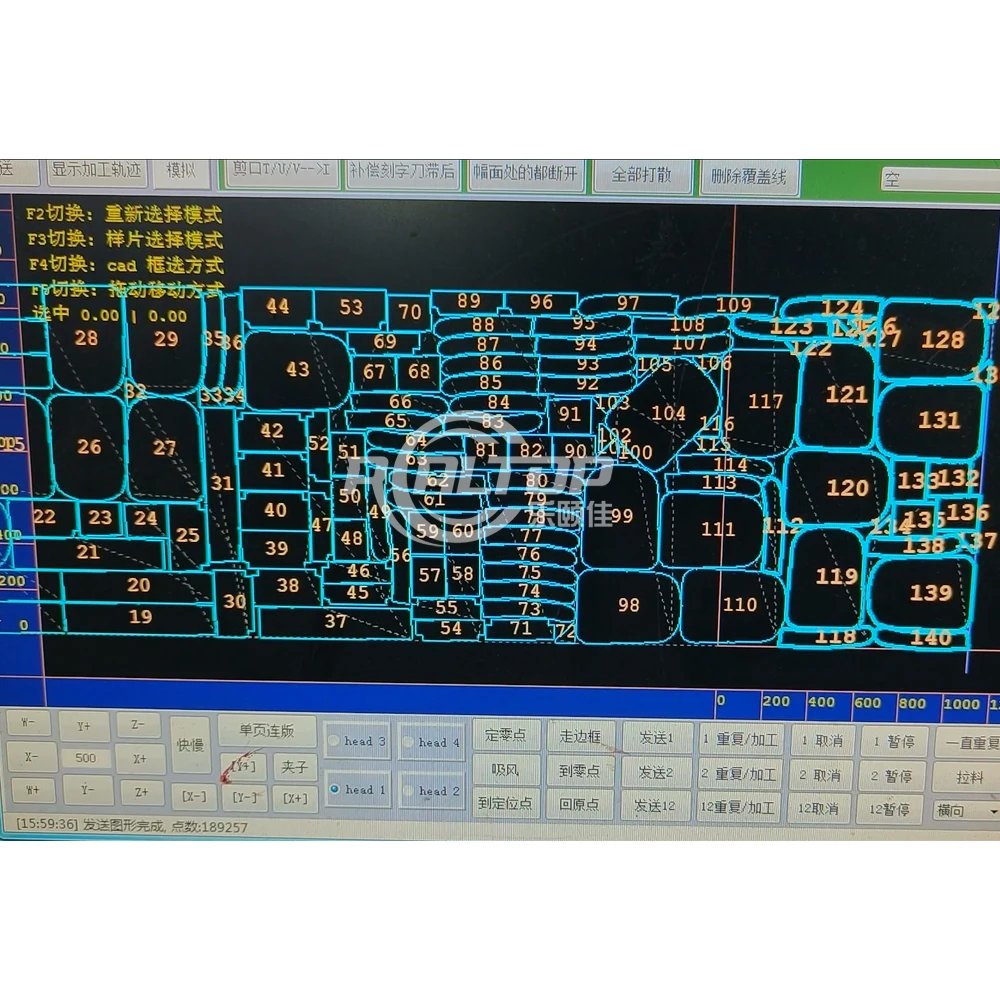
The tool head and table configuration are specified per material type and production volume rather than sold as a fixed package, so the Swiss oscillating knife setup on the RT-D2516/RT-S2516 matches your fabric density and composite thickness. Sample cutting on the buyer’s own material happens before order confirmation, catching edge quality or hold-down issues early. Software compatibility is verified against your existing HP-GL files and nesting workflow so the instruction system integrates without a separate CAM purchase. Voltage and control language customization are confirmed before production, preventing the 380V mismatch that stalls commissioning on arrival. In-house design covers both the knife cutting head and the vacuum table layout, keeping mechanical and pneumatic integration under one responsibility.
Documentation & Verification
- Machine specification sheet listing working area, rated power, and tool head configuration
- Electrical schematic confirming 380V ±10% wiring and servo motor connections
- Tool head and vacuum table configuration list matched to your material type
- Sample cutting report on buyer-supplied fabric or composite before shipment
- Software licence and HP-GL file format compatibility note
- Factory test record covering repeated accuracy and translational velocity verification
Installation, Commissioning & Support
- Floor space of approximately 3450 × 2300 mm required with clearance for auto feeding conveyor
- Dedicated 380V circuit rated for the 9 kW total load plus 7.5 kW vacuum pump
- Machine arrives with conveyor belt and vacuum table pre-assembled; rail alignment verified on site
- First-run parameter tuning for oscillating knife stroke frequency against your material thickness
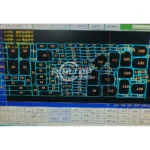
- Operator training on HP-GL file import, nesting layout, and zone vacuum activation
- Spare blade and wear-part list provided with recommended replacement intervals
What to Share When Requesting a Quote
Send the material type, thickness range, and maximum sheet or roll width you plan to run daily. Include your local voltage and frequency standard along with preferred control language. If you have existing CAD files, share a sample so we can confirm HP-GL compatibility and nesting workflow before quoting the configuration.
Frequently Asked Questions
Q: How does cutting thickness change with different materials on this machine?
A: The ≤50 mm rating applies to specific material densities and tool head configurations. A soft sponge composite cuts at greater depth than a dense rubber sheet because the blade meets less resistance. We confirm the practical cutting depth for your exact material during sample testing, so the specification reflects what you will see on your shop floor.
Q: Can the vacuum table hold small fabric pieces without lifting?
A: The 7.5 kW pump provides strong overall suction, but small parts need zoned activation to prevent air leakage around edges. The table layout allows selective zone control so that vacuum concentrates directly beneath the workpiece. This keeps narrow strips and irregular offcuts flat during high-speed cutting passes.
Q: Does the instruction system work with my existing nesting software?
A: The HP-GL compatible format integrates with most mainstream nesting and CAD platforms used in garment and leather production. Before the order ships, we verify file import and output against your specific software version to confirm that pattern registration and cut paths translate correctly.
Q: What voltage and language options are available for export?
A: The standard configuration runs on 380V ±10%, but voltage and plug type can be adjusted for your local grid requirements. Control interface language is confirmed during the specification review stage so operators can navigate menus and error messages without translation delays during commissioning.


商品评价
Clear filtersThere are no reviews yet.