


Fast Shipping
Carrier information

20k products
Payment methods

24/7 Support
Unlimited help desk

2-day Delivery
Track or off orders
In-House Dual Technology Design — Knife and laser processes engineered under one roof let you match the cutting method to the actual material behavior rather than adapt your production to a single-method machine.
Technical Specifications
| Parameter | Value |
|---|---|
| Model | RT-D2516 / RT-S2516 |
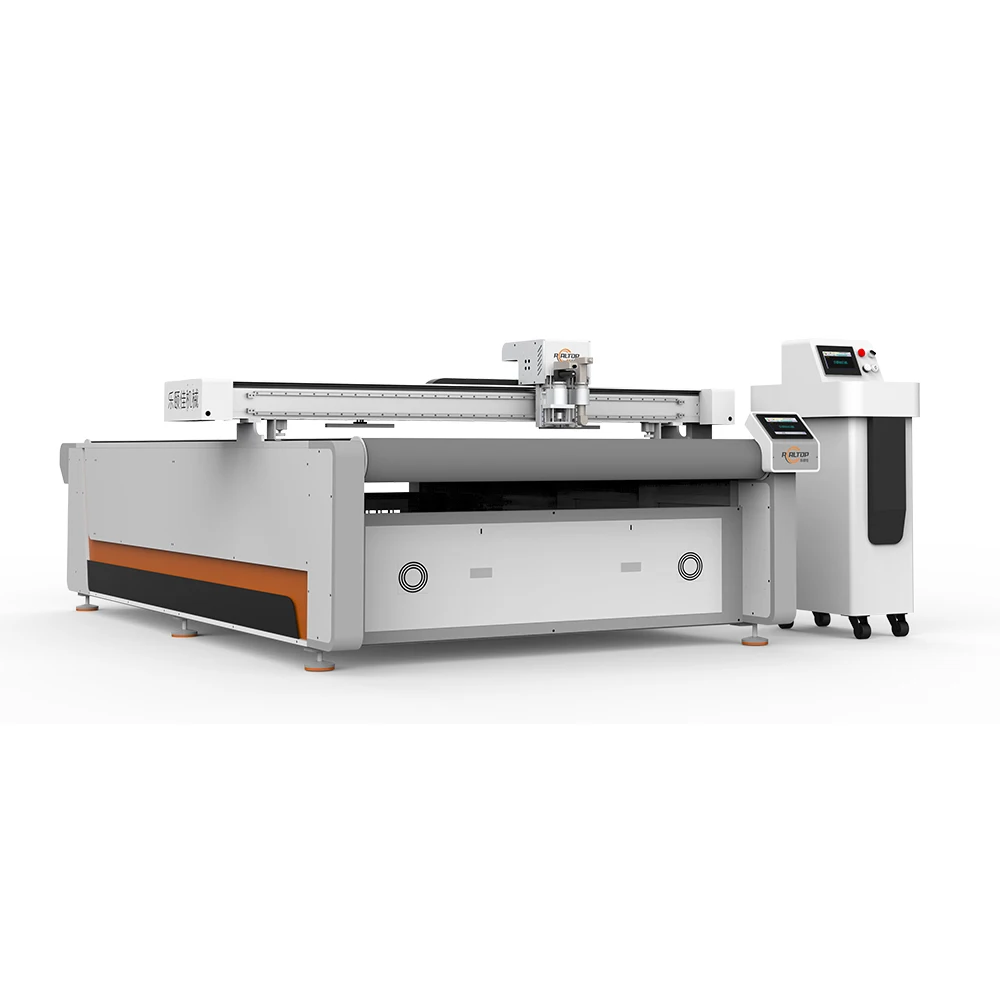
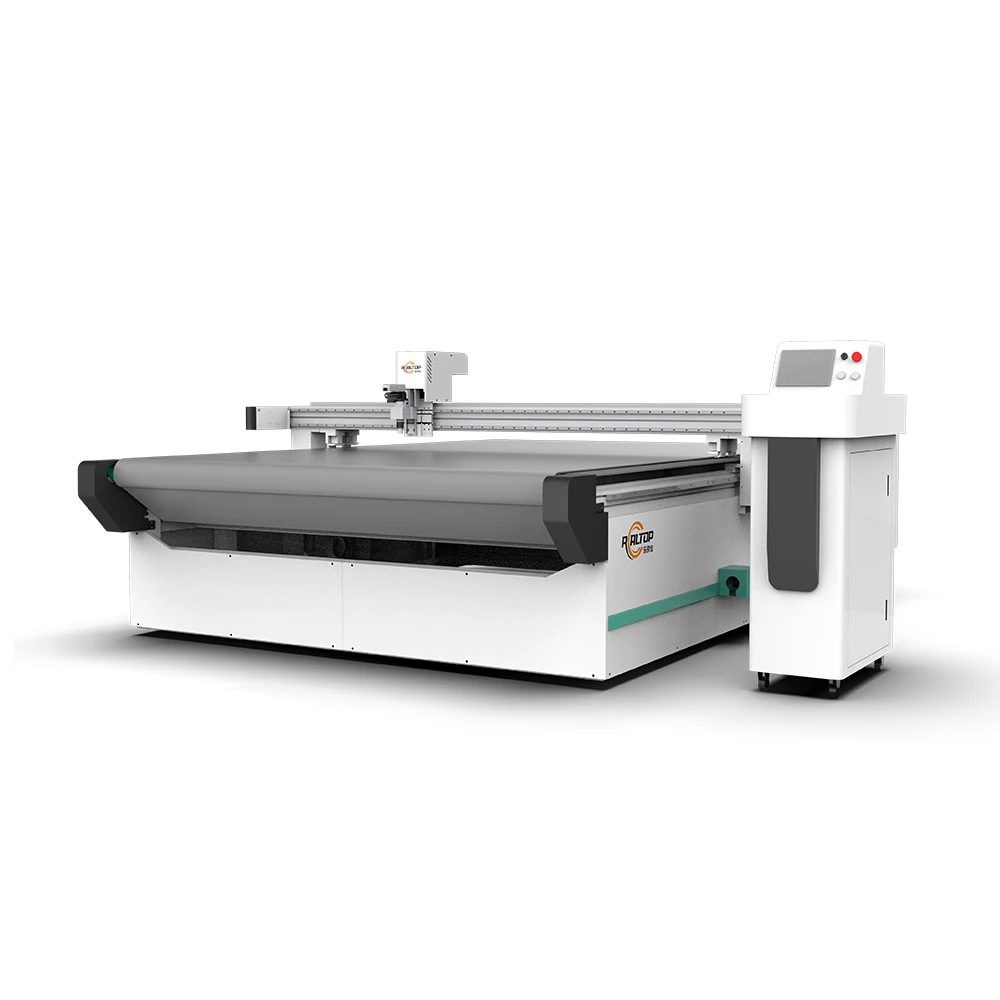
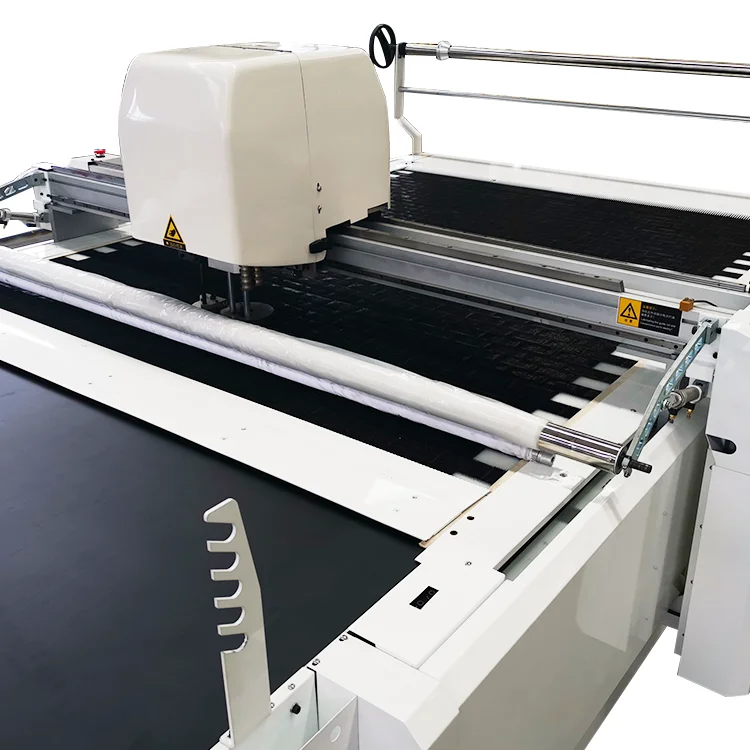
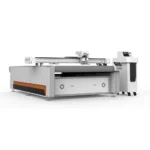
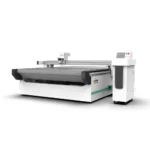
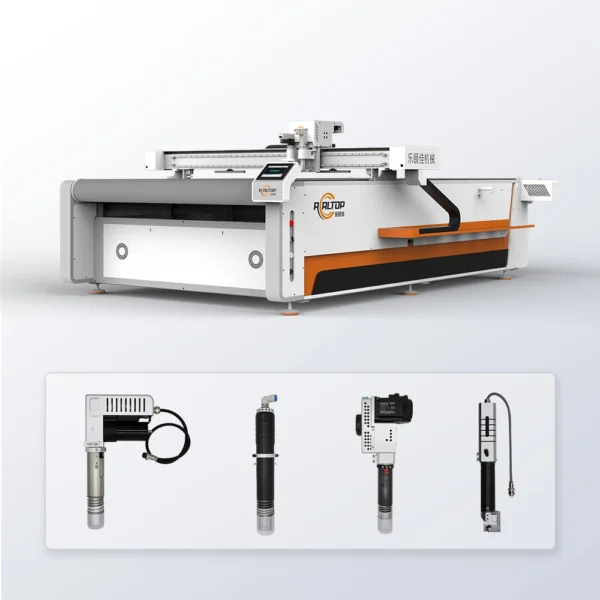
| Product Type | CNC Oscillating Knife Cutting Machine |
| Working Area | 1600×2500 mm |
| Machine Dimensions | 3450×2300×1250 mm |
| Rated Power | 9 kW |
| Voltage | 380V±10% |
| Vacuum Pump Power | 7.5 kW |
| Control System | CNC with touch screen panel |
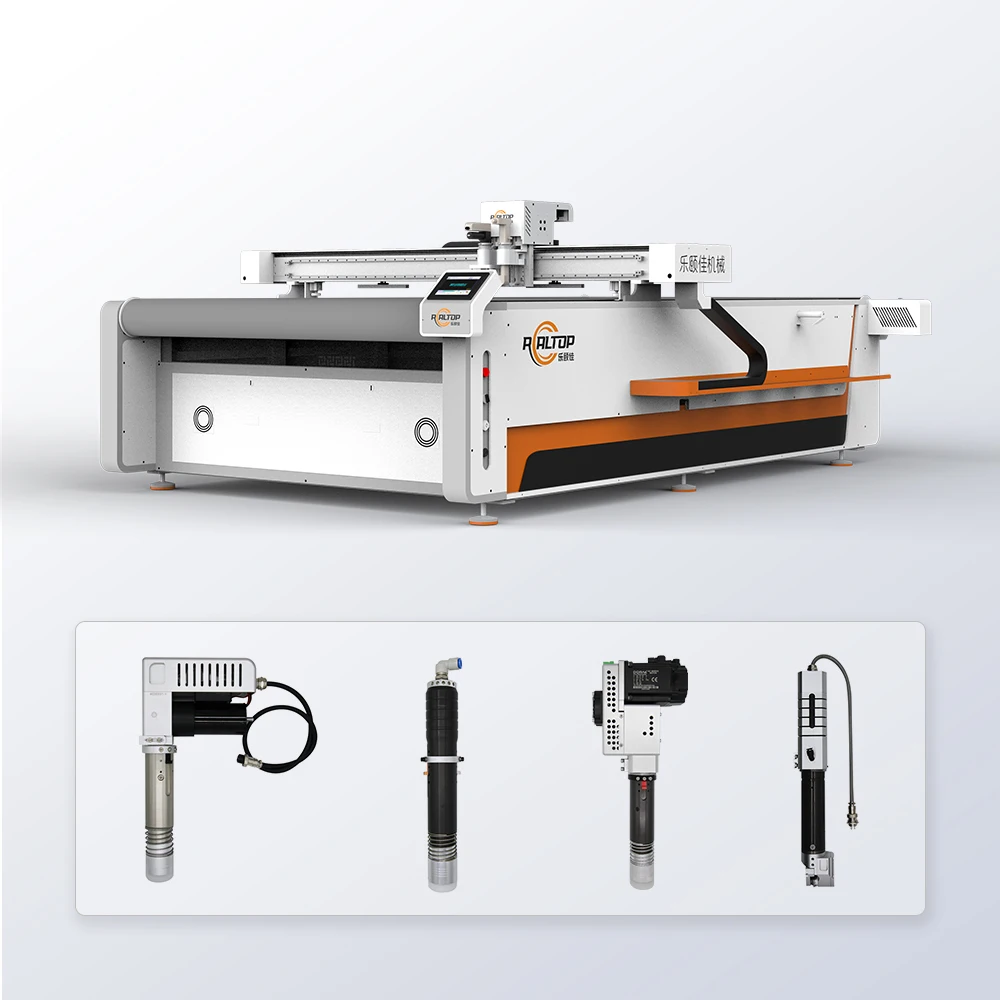
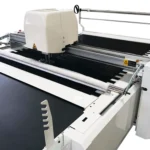
| Multifunctional Tool Head | Swiss imported knife (vibration full/half cutting, cursor); options: pneumatic knife, high-power vibrating knife, circular knife, V cutting knife, drag knife, creasing wheel, dotted line knife, punching, brush |
| Visual Positioning Options | Small CCD camera mark-point, panoramic camera recognition, projection positioning |
| Maximum Cutting Thickness | ≤100 mm (varies by material density and layer count) |
| Translational Velocity | 800–2000 mm/s |
| Cutting Speed | 200–800 mm/s (depends on material type and thickness) |
| Repeated Accuracy | ≤0.1 mm |
| Transmission System | Digital servo motor, linear guide, synchronous belt, ball screw |
| Servo Motor Options | Delta (Taiwan) or Panasonic (Japan), IP67 rated |
| Vacuum Table Surface | Magnesium-aluminum alloy with fluorocarbon PVDF coating, anodic and hard oxidation |
| Conveyor Belt | Germany imported |
| Linear Rail | Taiwan Hiwin |
| Safety Devices | Infrared induction blocking, beam anti-collision sensors, emergency stop with in-situ resume |
| Instruction Format | HP-GL compatible |
| Software File Support | PLT, DXF, AI with automatic nesting |
| Interface Language Options | English, Russian, Italian, Chinese; custom languages available |
| Assembly State | Fully assembled before shipment |
Application Suitability
| Application | Material or Output |
|---|---|
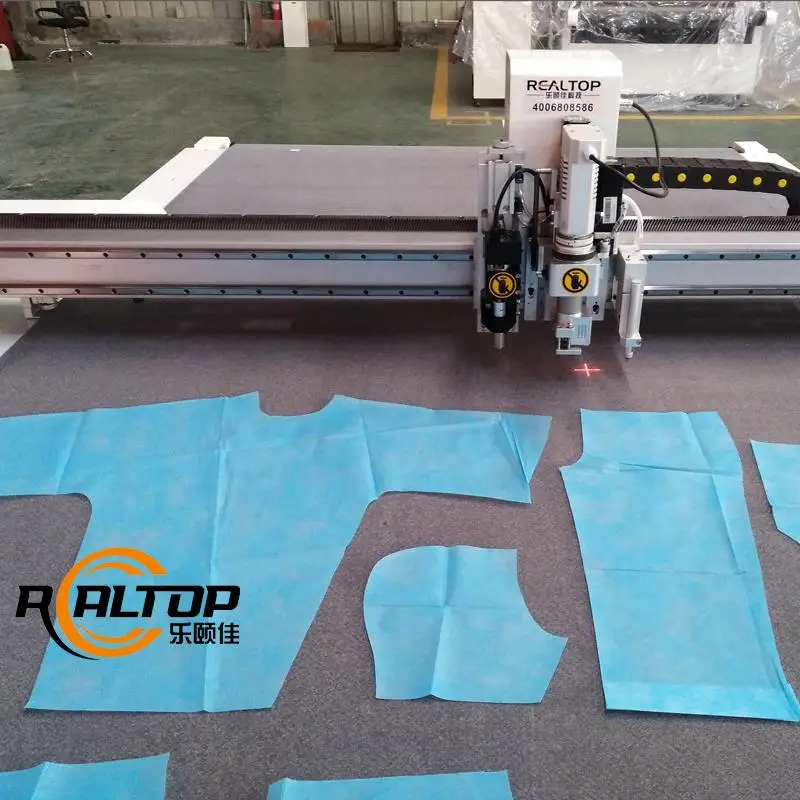
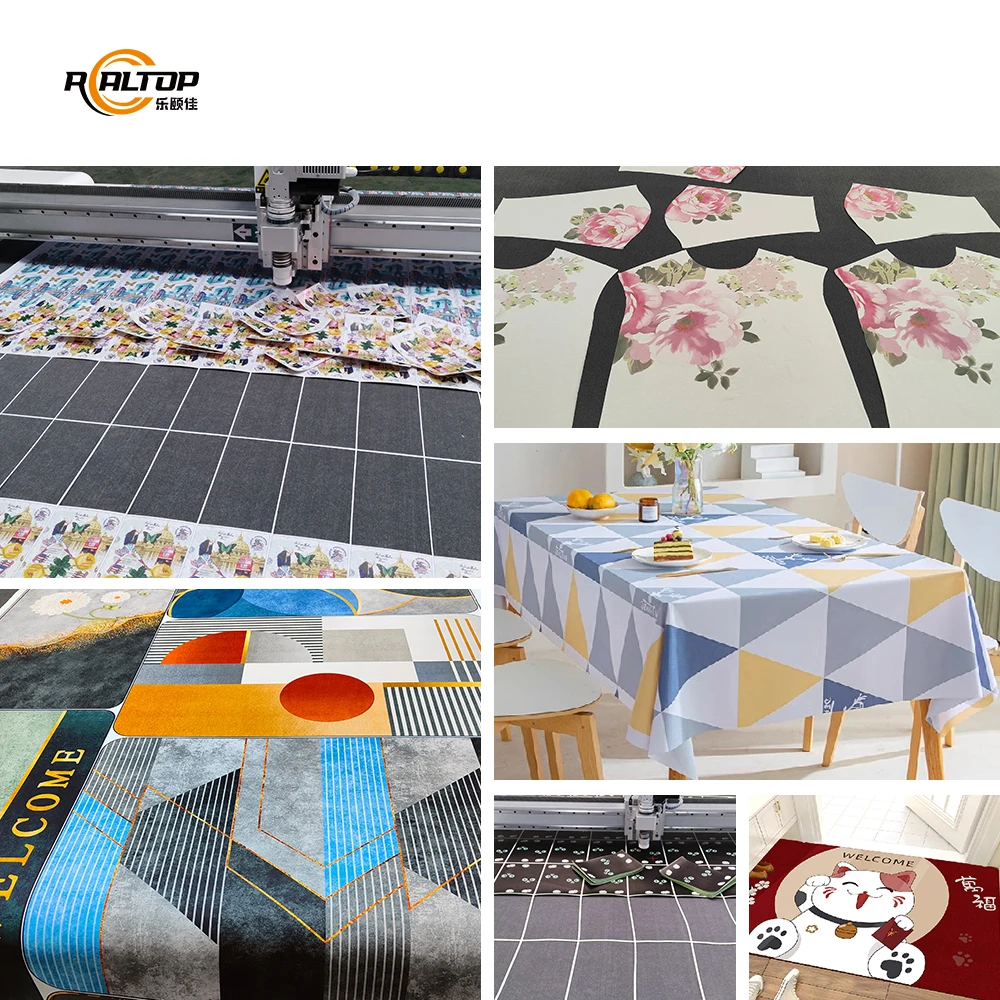
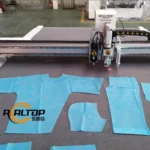
| Garment and footwear cutting | Single- and multi-layer fabric, textile, leather, shoe material with automatic nesting |
| Automotive interior components | Composite panels, foam, rubber, gasket material with creasing and punching |
| Luggage and bag production | PU, EVA, XPE, PVC, non-woven fabric, fur, sofa fabric |
| Carpet and floor mat fabrication | Carpet, sponge, soft glass, rubber in large-format sheets |
| Packaging and carton sampling | Corrugated cardboard, plastic box material, cardboard with drag knife and creasing wheel |
| Sealing and gasket manufacturing | PTFE, ETFE, silicone, rubber, fiberglass, composite gasket stock |
| Advertising and signage | Sticker, film, foam board, PP, PE sheets |
Why the Wrong Tool Head Wrecks Your Material Yield
The most expensive mistake in CNC knife cutting is not the machine price — it is specifying a single oscillating knife for materials that need a pneumatic blade or a creasing wheel, then discovering ragged edges and crushed layers after the machine arrives. Match the tool head to the material before the order is placed, not after installation.
I have seen fabric producers run multi-layer textile stacks on a standard oscillating knife and get clean cuts on the top three layers while the bottom layers shift and fray. The fix was not a new blade but a completely different tool configuration and vacuum zoning strategy. Another time, a gasket shop ordered a machine based on working area alone, only to find their 12 mm PTFE sheets required a high-power vibrating knife that was never included in the original build [NEED_CITE: tool head selection standards for industrial knife cutting].
Tool Head Selection Dictates Edge Quality Across Materials
The RT-D2516 / RT-S2516 supports a range of interchangeable tool heads, and each one exists for a reason. The Swiss imported oscillating knife handles general-purpose vibration full and half cutting on fabrics and foams up to moderate thickness. For denser or thicker stock like high-density memory foam or multi-layer leather, the high-power vibrating knife delivers the additional stroke force needed to penetrate without compressing the material. A CNC oscillating knife cutting machine specification sheet that lists only one tool head is telling you the seller has not considered your material stack.
Vacuum Zoning and Table Construction for Small-Part Hold-Down
When cutting small gaskets or intricate garment pattern pieces, the vacuum table must hold every segment flat without lifting at high translational speeds. The magnesium-aluminum alloy table on this unit uses fluorocarbon PVDF powder spraying combined with anodic and hard oxidation for a surface that resists wear from repeated blade contact. The 7.5 kW integrated vacuum pump with built-in silencer sponge provides the suction needed for zoned adsorption. If your production runs include parts smaller than 100 mm across, confirm the vacuum zoning layout matches your typical nesting pattern before the table is built [NEED_CITE: vacuum table zoning requirements for small-part CNC cutting].
Reading the Specifications That Actually Matter
The repeated accuracy of ≤0.1 mm depends on the Taiwan Hiwin linear rails and the IP67-rated servo motors from Delta or Panasonic working together — the rail maintains straightness while the servo closes the position loop at high resolution. Cutting speed ranges from 200 to 800 mm/s, but the real throughput on your floor depends on your material thickness and the complexity of the cut path. A straight-line cut on 2 mm fabric will run near the upper end; a contoured gasket with inside corners on 8 mm rubber will sit closer to the lower bound. The CCD camera positioning options — small mark-point, panoramic recognition, or projection — determine whether the machine can track printed registration marks on your material at production speed, which directly affects contour cutting accuracy on pre-printed textiles and packaging artwork.
The Hidden Cost of Skipped Configuration Checks
When a buyer confirms only working area and price, the unverified variables come back as production problems. A voltage mismatch at the destination port means the machine cannot power on until a transformer is sourced locally. A software file format that does not match the buyer’s existing nesting workflow means hours of manual re-drawing per shift. A vacuum table with insufficient zoning causes small parts to lift during the final passes, turning finished pieces into scrap. These are not warranty issues — they are specification gaps that could have been closed before the order [NEED_CITE: common CNC machine installation failures due to specification gaps].
Why Source This Machine Through Our Build Process
We design and produce both knife and laser cutting systems in-house, which means the cutting method is selected based on your material science, not on which machine we happen to stock. Tool head and table configurations are specified per your material type, thickness range, and daily volume before the build begins. CCD camera positioning is tested with your actual printed artwork to confirm mark tracking at the speeds your production requires. Software compatibility with PLT, DXF, AI, and HP-GL formats is verified against your existing design files before the order is finalized. Voltage, plug type, and control language are confirmed against your local electrical standards and operator preferences. We run sample cuts on your own material and share the cutting report before you commit to production [NEED_CITE: sample-based equipment validation in industrial cutting procurement].
Documentation & Verification
- Machine specification sheet listing every confirmed tool head and table option
- Electrical schematic with voltage and frequency validated for your destination market
- Sample cutting report on your specific material showing edge quality and speed achieved
- Software licence and file format compatibility note for PLT, DXF, AI workflows
- Factory test record documenting repeated accuracy and vacuum performance before crating
- Operation and maintenance manual in your selected interface language
Installation, Commissioning & Support
- Fully assembled 3450×2300×1250 mm frame requires level floor with adequate clearance for material loading on all sides
- 9 kW rated power plus 7.5 kW vacuum pump demand a dedicated 380V circuit with confirmed frequency and plug type
- Servo motor and linear rail alignment verified at factory; re-check after ocean freight settling before first run
- First-run parameter tuning on your material thickness and cutting path complexity with on-site or remote guidance
- Operator training covering tool head changeover, CCD calibration, and nesting software workflow
- Spare parts list including Swiss knife blades, vacuum pump filters, and conveyor belt segments provided at delivery
What to Share With Your Inquiry
Tell us the material types you cut, the maximum thickness and number of layers, your typical sheet dimensions, and your daily cutting volume. Include your local voltage and frequency standard, the language your operators need on the control panel, and whether your current workflow uses PLT, DXF, or AI files. If you have printed materials requiring contour recognition, send a sample file so we can test CCD tracking before quoting.
Frequently Asked Questions
Q: How do I choose the right tool head for my material and thickness?
A: The tool head selection depends on material density, thickness, and the edge finish you need. Oscillating knives work well on fabrics and soft foams, while denser materials like rubber gaskets or high-density foam require a high-power vibrating knife or pneumatic blade. We run test cuts on your actual material to confirm the correct tool head before the machine is built.
Q: What determines the real cutting speed on my fabric or composite?
A: Cutting speed depends on material thickness, layer count, and path complexity. Straight cuts on thin single-layer textile approach the upper range, while contoured cuts on multi-layer composites run slower. We document the achieved speed during sample testing on your material so you have a realistic throughput baseline.
Q: Will the CCD camera track my printed marks reliably during production?
A: CCD tracking performance depends on mark contrast, size, and print consistency. We test the camera system with your actual printed material or artwork file to confirm reliable detection at production speed. If your marks fall outside standard parameters, we adjust the camera configuration or recommend an alternative positioning method.
Q: Is the vacuum table sufficient for small parts without material lifting?
A: The zoned vacuum table with a 7.5 kW pump is designed to hold small segments flat during high-speed cutting. The zoning layout should match your typical nesting pattern. Share your smallest part dimensions and nesting layout so we can confirm the zone configuration covers your production requirements.
Q: Will the software integrate with my existing nesting and design workflow?
A: The system supports PLT, DXF, AI, and HP-GL formats with automatic nesting capability. We verify file import and nesting compatibility against your current design software before the order. If your workflow uses a proprietary format, share sample files so we can confirm conversion or direct import feasibility.


商品评价
Clear filtersThere are no reviews yet.