




Fast Shipping
Carrier information

20k products
Payment methods

24/7 Support
Unlimited help desk

2-day Delivery
Track or off orders
Configuration matched to your material — we test your actual upholstery fabric, carpet or mat stock on our CNC oscillating knife cutting table before locking in tool head, vacuum zoning and software settings.
Technical Specifications
| Parameter | Value |
|---|---|
| Product Type | CNC Oscillating Knife Cutting Machine |
| Working Area | 2500 × 2200 mm |
| Cutting Speed | 0 – 1500 mm/s |
| Cutting Thickness | ≤ 30 mm (basis not stated in source) |
| Cutting Accuracy | ±0.1 mm |
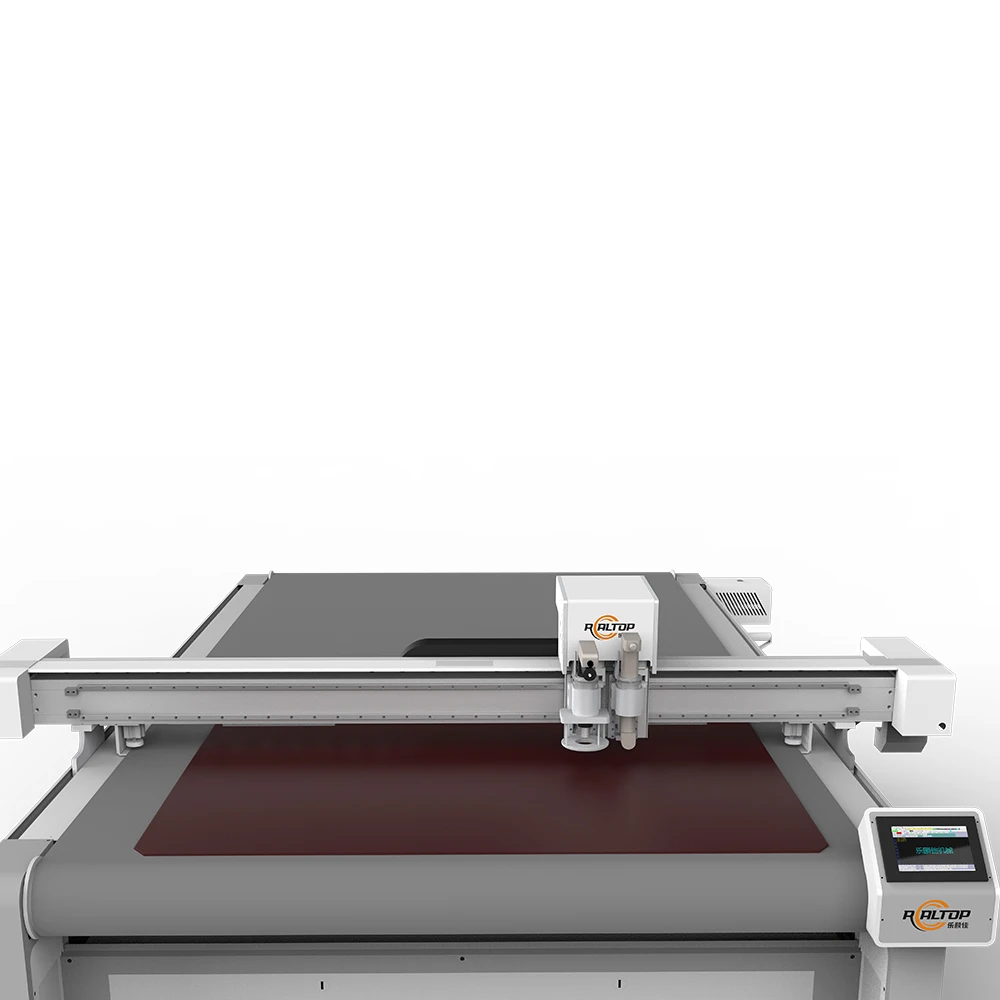
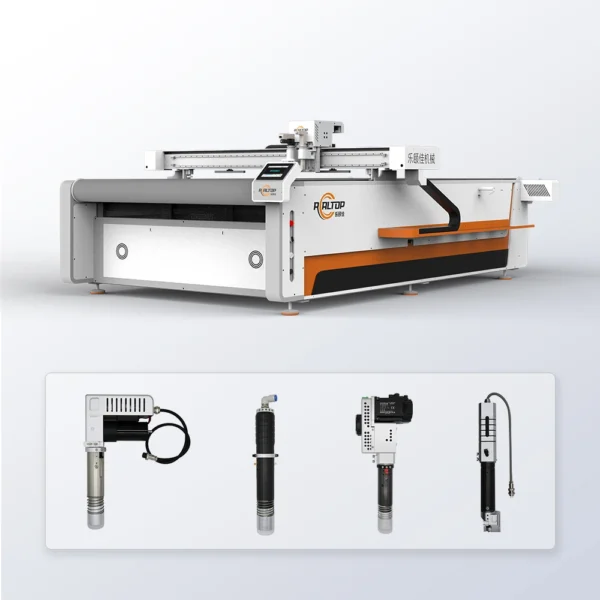
| Tool Heads Available | Oscillating knife, Driven rotary knife, Creasing wheel, Kiss cutting tool, Pneumatic knife, Milling tool, V groove knife |
| Vacuum Pump | 9 kW |
| Voltage Options | 110V / 220V / 380V |
| Control System | PLC control panel |
| Profile Formats | PLT, DXF, AI, PDF |
| Safety Device | Infrared sensor and emergency stop |
| Machine Size | 3300 × 2700 × 1350 mm |
| Machine Frame | Heavy-duty frame with precision-ground surface |
| Vacuum Table | Aluminum bellows vacuum table |
| Servo Motor Options | Panasonic, Delta, Dorna (source value — verify against manufacturer catalog) |
| Language Options | English, Russian, Italian, Chinese, custom available |
| Certification | CE (source value — verify against manufacturer catalog) |
Application Suitability
| Application | Material or Output |
|---|---|
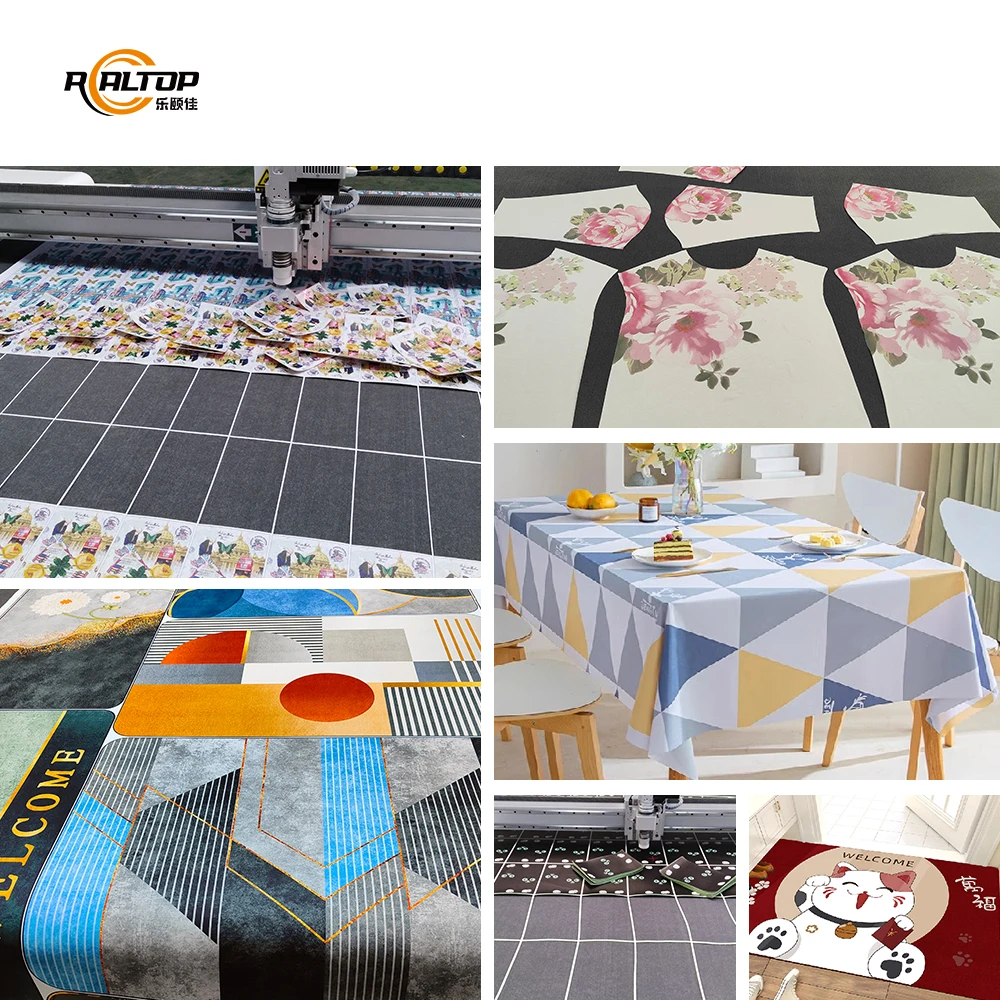
| Upholstery and garment fabric cutting | Multi-layer textiles, sofa leather, woven and knitted fabric with nesting |
| Automotive floor mat production | Rubber mats, PVC mats, loop mats, car mats at production speed |
| Home furnishing mat production | Custom-shaped carpets, yoga mats, non-slip pads, EVA foam |
| Signage and packaging sample making | Cardboard, carton, foam board with creasing and kiss cutting |
Why Your Fabric Thickness Changes Everything About the Quoted Speed
A machine specified on working area alone will underperform the moment real material thickness diverges from the sample.
I have watched a buyer sign off on a CNC oscillating knife cutting machine after a smooth demo on thin lining fabric, then ship 3 mm upholstery leather to the same table. The blade pressure that sliced cleanly through the sample could not penetrate the heavier stock in a single pass, and daily throughput dropped to a fraction of the quoted figure. The working area was correct; the tool head and vacuum hold-down were not matched to the actual production mix [NEED_CITE: material thickness effect on oscillating knife cycle time].
Tool Head Mapping for Fabric and Mat Stocks
The seven available tool heads — oscillating knife, driven rotary knife, creasing wheel, kiss cutting tool, pneumatic knife, milling tool and V groove knife — each address a different failure mode in soft material cutting. Oscillating knife handles dense multi-layer textile stacks where a drag knife would deflect. Driven rotary knife suits continuous curves on carpets and floor mats without fraying the edge. Creasing wheel scores carton and packaging samples without cutting through. Selecting the right head before the order is placed avoids the ragged edges and crushed foam that force secondary trimming.
Vacuum Zoning and Small-Part Hold-Down
The 9 kW vacuum pump feeds an aluminum bellows vacuum table that divides the 2500 × 2200 mm surface into independent zones. When nesting small upholstery pieces — armrest panels, cushion inserts, headrest covers — only the active zone needs full suction, preventing edge lift without wasting pump capacity on empty table area. For large automotive floor mats that cover most of the bed, opening all zones distributes hold-down force across the full perimeter and keeps the mat flat under the knife at maximum traverse speed [NEED_CITE: vacuum zoning best practices for CNC flatbed cutting tables].
Reading the Specs That Actually Govern Cut Quality
Cutting speed of 0 – 1500 mm/s is the traverse ceiling; the usable speed for your material depends on thickness and tool head. On 3 mm upholstery leather with an oscillating knife, the practical feed rate sits well below the maximum, while thin non-woven fabric can approach it. The ±0.1 mm cutting accuracy figure matters most when nesting tightly spaced garment pieces where a 0.3 mm drift wastes fabric across a full lay. PLC control with multi-language interface and PLT / DXF / AI / PDF import means your existing nesting files load without format conversion. Servo motor selection across Panasonic, Delta and Dorna options lets you match the motion profile to your production volume and budget rather than accept a single default drive package.
What Happens When Configuration Is Skipped
Buyers who skip material-specific configuration frequently discover problems only after installation. A vacuum table without adequate zoning lets small fabric parts shift during the final cuts of a nest, ruining the entire lay. A CCD camera specified on paper but not tuned to the buyer’s print registration marks cannot track contours at production speed, forcing operators to slow down or cut manually. Voltage and plug mismatches discovered at the dock mean weeks of delay while transformers are sourced locally [NEED_CITE: industrial voltage and plug standards by export destination].
Why Source This Table from Jinan
In-house design covers both knife and laser cutting technologies, so a buyer processing mixed material streams can match each material to the correct method rather than forcing one technology across all jobs. Tool head and table configuration is specified per material and production volume before the order is confirmed. Sample cutting on the buyer’s own fabric or mat stock is performed and documented before commitment. Software compatibility — file formats, nesting workflow, language — is verified in advance. Voltage, plug type and control panel language are confirmed in writing before the machine leaves the factory.
Documentation & Verification
- Machine specification sheet listing confirmed tool head and vacuum zone layout
- Electrical schematic with voltage and frequency matched to destination country
- Sample cutting report produced on buyer’s own upholstery fabric or mat material
- Factory test record documenting cutting accuracy and speed on confirmed material
- Software licence and file format compatibility note for PLT, DXF, AI, PDF workflows
- Spare parts list covering blades, vacuum seals and servo consumables
Installation, Commissioning & Support
- Foundation must support 3300 × 2700 mm footprint and dynamic cutting loads on heavy-duty frame
- Dedicated circuit required for 9 kW vacuum pump plus servo and PLC draw at confirmed voltage
- Machine ships in sectional packing; on-site assembly includes vacuum table leveling and belt tension
- First-run commissioning verifies ±0.1 mm accuracy across full 2500 × 2200 mm working area
- Operator training covers PLC panel navigation, tool head changeover and nesting file import
- Scheduled blade and vacuum seal replacement intervals provided in maintenance manual
What We Need to Size Your Configuration
Share the exact fabric or mat types, thickness range and maximum sheet size you run daily. Tell us your local voltage and frequency, preferred control panel language and the CAD or nesting software already in your workflow. If printed contour cutting is part of your process, send a sample print so we can validate CCD tracking at your target speed before the order is placed.
Frequently Asked Questions
Q: How do I choose the right tool head for my upholstery fabric or mat material?
A: Oscillating knife suits dense multi-layer textile stacks where a drag knife would deflect. Driven rotary knife handles continuous curves on carpets and floor mats without edge fraying. Pneumatic knife works well on thicker foam and rubber. We run a sample cut on your actual material and provide a tool head recommendation report before you commit to the order.
Q: Can the CCD camera track printed marks at full production speed?
A: CCD contour recognition depends on mark contrast, print quality and camera tuning. We test your specific printed fabric or mat sample at your target cutting speed and document the tracking result in the sample cutting report. If the marks fail to register reliably, we adjust camera settings or recommend alternative registration methods before shipment.
Q: Is the vacuum table zoning sufficient for small upholstery pieces?
A: The aluminum bellows vacuum table divides the working area into independent zones. For nests containing many small parts like armrest panels or cushion inserts, active zones concentrate suction exactly where material sits, preventing edge lift without wasting pump capacity. Zone layout is confirmed against your typical nesting pattern during the sample cutting stage.
Q: Will my existing nesting files import without rework?
A: The PLC control panel accepts PLT, DXF, AI and PDF profile formats. We verify compatibility with your specific nesting software during the pre-order stage and document any required export settings in the software licence and file format compatibility note. Custom file format support can be evaluated on request before the order is confirmed.
Q: How are voltage, plug and control language handled before shipment?
A: Voltage options include 110V, 220V and 380V. Plug type and control panel language — English, Russian, Italian, Chinese or custom — are confirmed in writing before production begins. The electrical schematic shipped with the machine reflects the agreed configuration so your electrician can connect the dedicated circuit on arrival without sourcing additional transformers.


商品评价
Clear filtersThere are no reviews yet.