

![4705,4+7+0+5=16,16%6=4 结构4:[品类词] with [核心配置] – [站点修饰词] 记录ID数字之和16,第一层技术选型类角色池:Specifications / Technical Guide / Model Selection,池长度3,16%3=1,取 Technical Guide 品类词:Folding Carton Box Sample Cutter Die Cutting Machine 核心配置:Oscillating Knife 站点修饰词:Technical Guide Folding Carton Box Sample Cutter with Oscillating Knife – Technical Guide](https://rtcnccut.com/wp-content/uploads/2026/03/H5a6587c29d4d4fee87f73af834893e031-150x150.webp)






Fast Shipping
Carrier information

20k products
Payment methods

24/7 Support
Unlimited help desk

2-day Delivery
Track or off orders
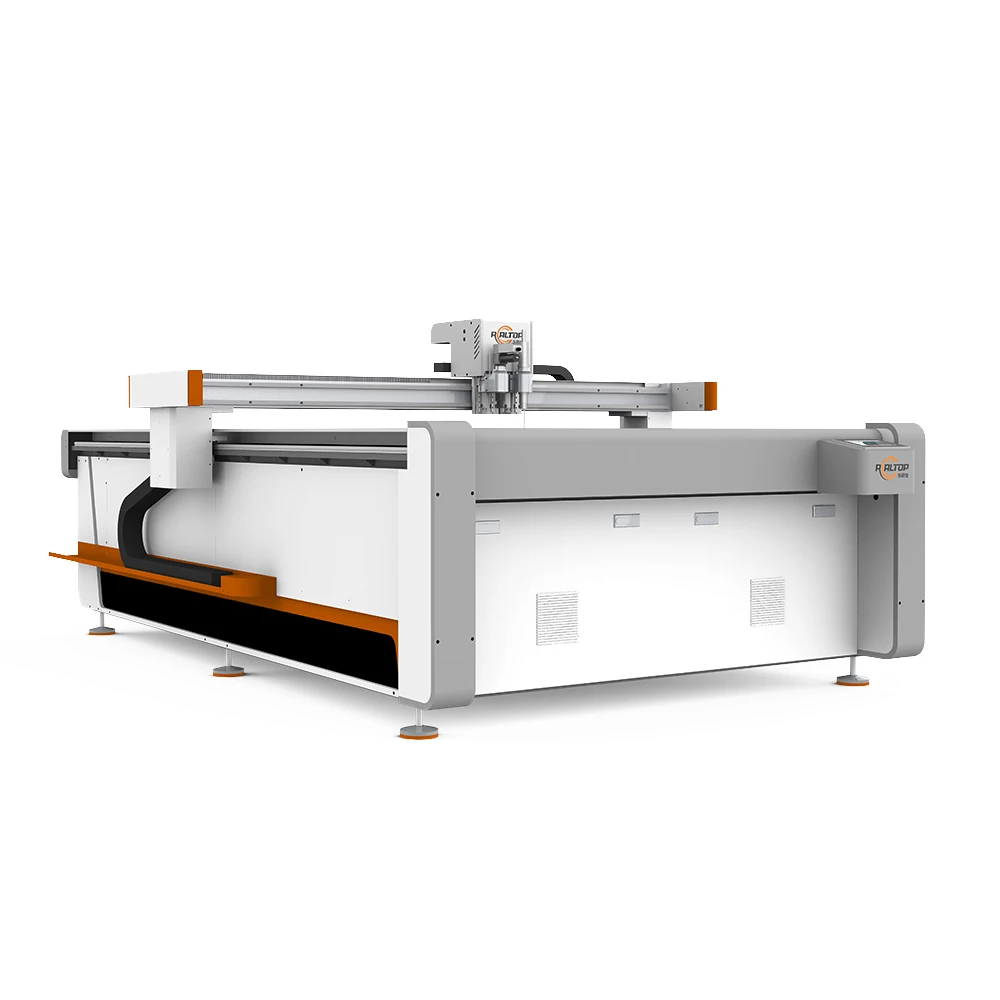
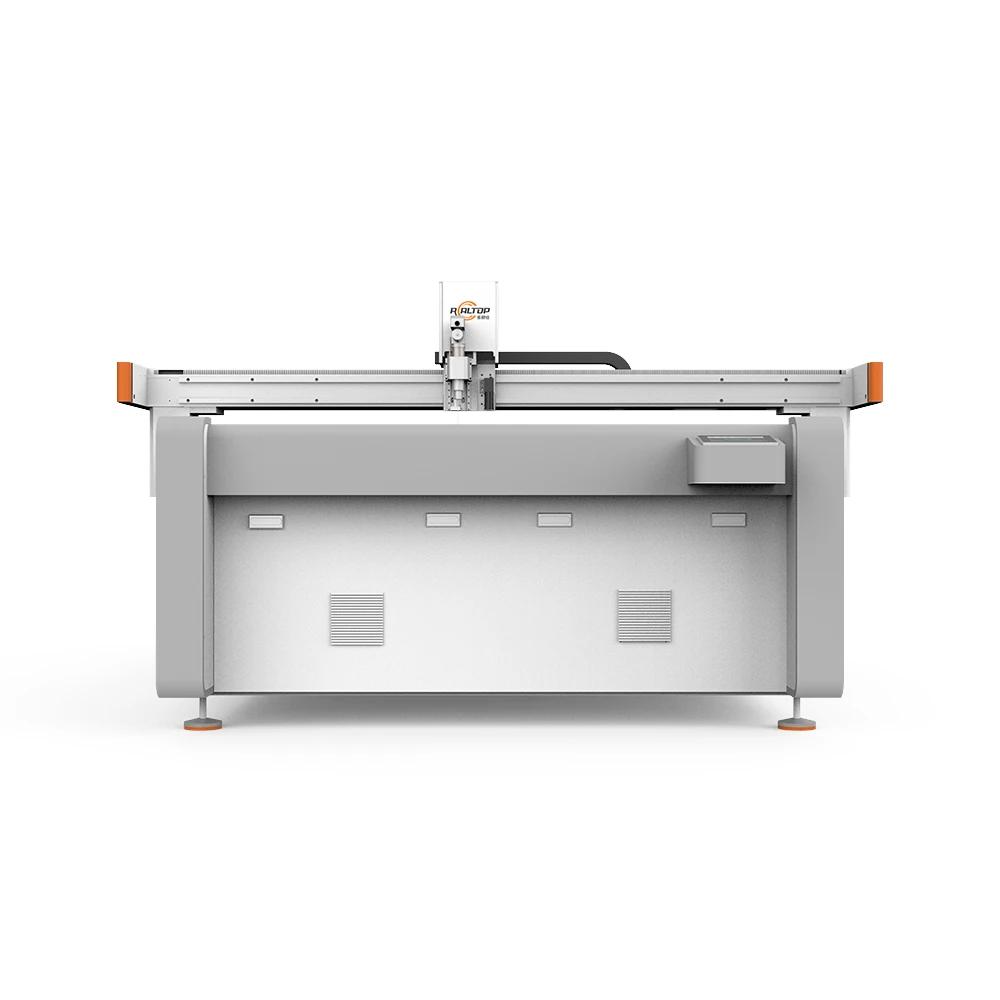
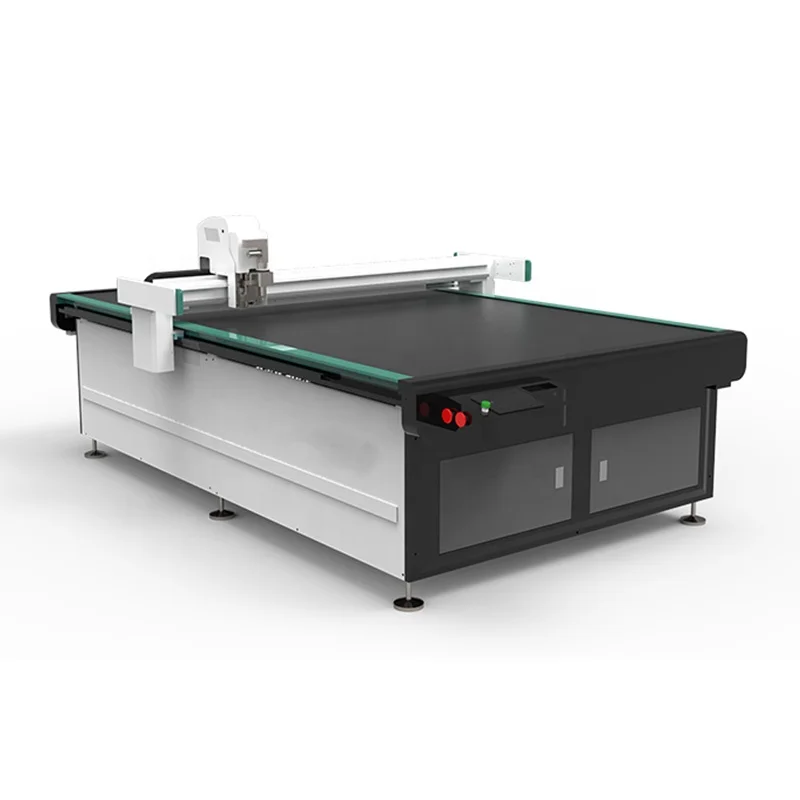
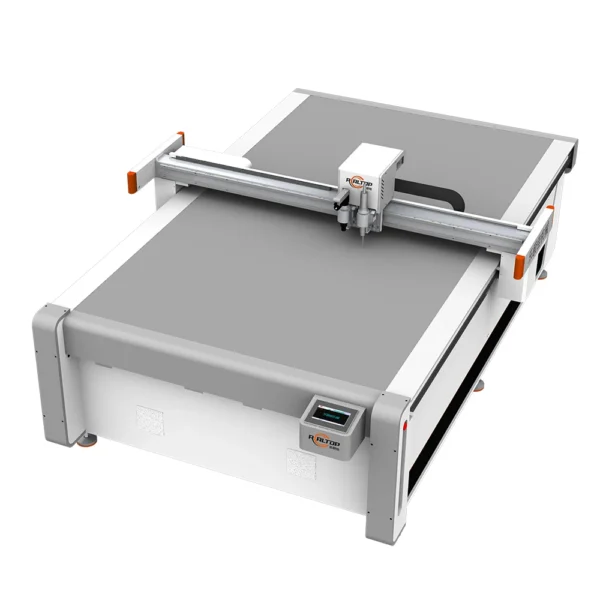
Tool Head Versatility Per Material — The 1625 platform supports oscillating knife, driven rotary knife, creasing wheel, kiss cutting tool, pneumatic knife, milling tool, and V groove knife on a single flatbed table, allowing packaging sample makers to switch between corrugated carton cutting and folding line creasing without changing machines.
Technical Specifications
| Parameter | Value |
|---|---|
| Model | 1625 |
| Product Type | CNC Oscillating Knife Cutting Machine for Packaging |
| Working Area | 1600 × 2500 mm |
| Available Tool Heads | Oscillating knife, Driven rotary knife, Creasing wheel, Kiss cutting tool, Pneumatic knife, Milling tool, V groove knife |
| Cutting Speed | 0–1500 mm/s |
| Cutting Thickness | ≤ 40 mm |
| Cutting Accuracy | ±0.1 mm |
| Vacuum Pump | 9 kW |
| Voltage Options | 110V / 220V / 380V |
| Control System | PLC control panel |
| Profile Format Compatibility | PLT, DXF, AI, PDF |
| Safety Features | Infrared sensor device, emergency stop device |
| Machine Dimensions | 3300 × 2100 × 1350 mm |
| Language Options | English, Russian, Italian, Chinese (special languages customizable) |
| Certification | CE |
Application Suitability
| Application | Material or Output |
|---|---|
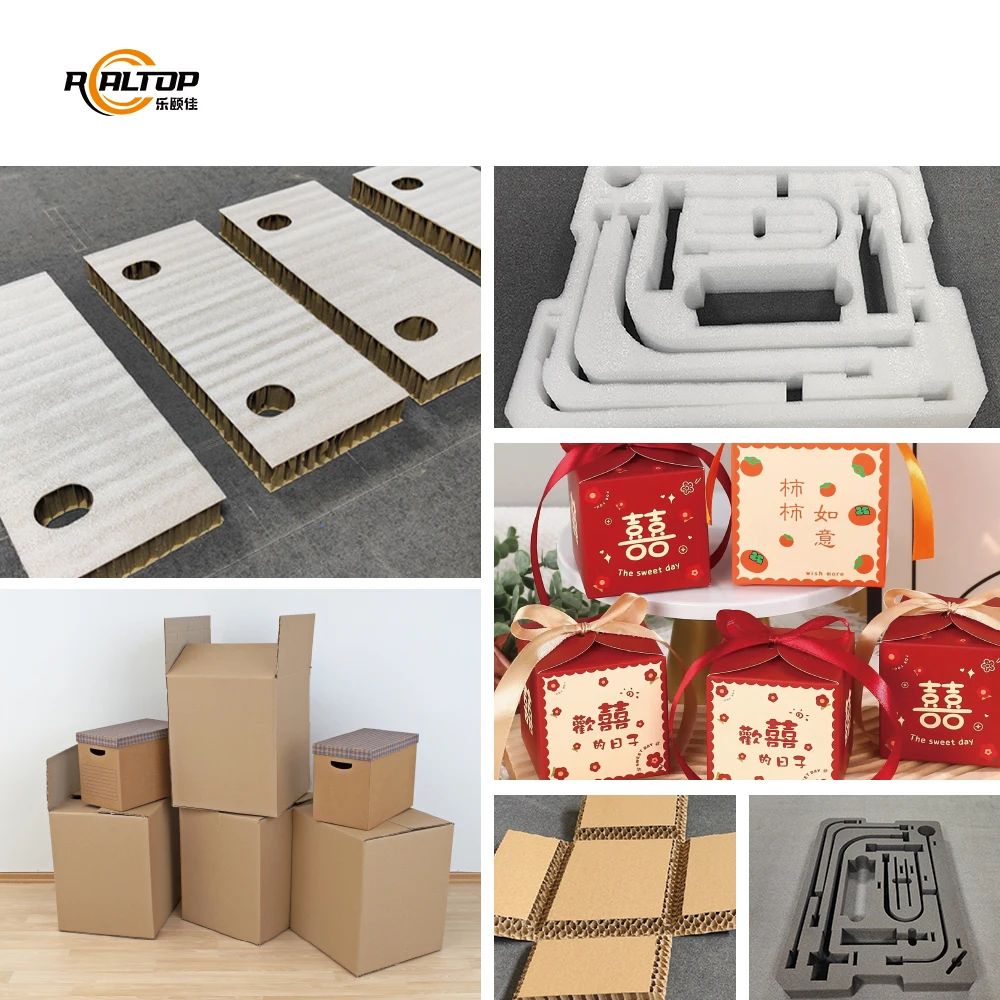
| Corrugated carton box sample making | Single, double, and triple-wall corrugated board |
| Packaging structural design and prototyping | Cardboard, greyboard, honeycomb paperboard |
| Advertising and signage production | Foam board, PVC foam, display board, paper-based composites |
| Gasket and seal prototyping | PTFE, rubber, EVA, foam sheets |
| Automotive interior component cutting | Leather, fabric, synthetic composite mats |
| Footwear and luggage component cutting | Leather, PU, textile layers |
| Composite materials processing | Carbon fiber prepreg, fiberglass mat, aramid fabric |
Why Your File Format Decides Whether This CNC Oscillating Knife Cutting Machine for Packaging Ever Runs
A machine that cannot open your existing DXF or AI files on day one is a machine that sits idle while you re-draw every carton structure from scratch.
I once serviced a packaging prototype shop in Colombia where the operator spent three full days converting AI artwork into a format the control software would accept. Each conversion introduced small geometry errors that showed up as broken crease lines on the finished carton sample [NEED_CITE: common file conversion errors in digital cutting workflows]. The shop had already committed to the machine before anyone asked about software compatibility. This 1625 CNC oscillating knife cutting machine for packaging reads PLT, DXF, AI, and PDF profiles directly, and the software licence with file format compatibility is confirmed in writing before you place an order. The point is not which software brand runs on the controller—the point is whether your existing nesting workflow and structural design files transfer without manual re-drafting.
Tool Head Selection by Packaging Material Type
The 1625 carries up to seven interchangeable tool heads on a single gantry bridge. An oscillating knife handles straight and curved cuts through corrugated board up to 40 mm thick, while the creasing wheel scores folding lines on carton stock without penetrating the face liner. For kiss-cut applications—such as peel-off labels on release liner—a dedicated kiss cutting tool controls depth to within fractions of a millimetre. The V groove knife removes a narrow channel from rigid board, producing clean 90-degree folds for premium packaging prototypes. This CNC oscillating knife cutting machine for packaging lets a single operator run cutting, creasing, and grooving in one pass, eliminating the bench time otherwise spent moving sheets between separate machines.
Vacuum Hold-Down and Zoning on Small Die-Cut Pieces
A 9 kW vacuum pump supplies suction across the aluminum bellows table surface. But raw suction power means little if the table lacks zoning. Small carton parts—think glue flap tabs or insert dividers—lift off the bed once the knife exits the cut, because the open area around them breaks the vacuum seal. Zoning divides the table into independent sectors so suction concentrates only where material covers the surface. Before you commit to any flatbed digital cutter, ask how many zones the table supports and whether zoning is automatic or manual. On the 1625, vacuum configuration is specified per your typical sheet layout and smallest part size [NEED_CITE: vacuum zoning principles for CNC flatbed cutting tables]. I learned this the hard way watching a Mexican carton sample maker lose two weeks of production to lifting cardboard before zoning was corrected.
How the Specs Translate to Real Cutting Performance
The 1600 × 2500 mm working area accommodates most standard corrugated sheets used in carton sample making, including B-flute and C-flute boards commonly sourced in 1200 × 2400 mm sizes. Cutting speed is rated at 0–1500 mm/s, but actual traverse speed depends on material density and the complexity of the cut path—tight radii on a curved carton profile will slow the head below the linear maximum. The ±0.1 mm accuracy figure matters most when crease lines must align with cut edges; even a half-millimetre drift causes flap misalignment on assembled carton prototypes. The PLC control panel allows operators to store tool offset profiles for each material, so switching from 3 mm greyboard to 12 mm double-wall corrugated requires selecting a preset rather than recalibrating by hand. Voltage is configurable across 110V, 220V, and 380V, which must be confirmed against your workshop supply before the machine ships.
The Cost of Skipping a Material Sample Test
Specifying a flatbed cutter on working area alone is the most common mistake I have seen in packaging equipment purchases. A buyer orders a machine that fits their largest sheet, then discovers the oscillating knife cannot push through 8 mm triple-wall board at acceptable edge quality. Or the vacuum table holds a full sheet perfectly but releases small carton inserts the moment the knife exits. These problems surface only when the machine meets your actual material. Requesting a sample cutting report on your own corrugated board, cardboard, or foam stock before the order is placed removes the guesswork. The cut edges, crease depth, and part hold-down behaviour on your material tell you more than any spec sheet can [NEED_CITE: material sample testing in CNC cutting procurement].
Why Source This Machine Here
In-house design covers both the mechanical frame and the software integration, meaning the tool path generator and the PLC controller are developed to work together rather than patched from separate vendors. Tool head and table configuration are specified per your material type and production volume, not pulled from a standard catalogue page. CCD camera positioning for printed contour work can be added if your packaging workflow involves pre-printed graphics requiring optical registration. Software compatibility—file formats, nesting logic, control language—is confirmed in writing before you pay a deposit. And every 1625 ships with a factory test record run on material that matches your specification, so you can review actual cut quality before the crate leaves Jinan.
Documentation & Verification
- Machine specification sheet listing every tool head and table option included in your build
- Electrical schematic and voltage confirmation document matching your local supply standard
- Sample cutting report produced on your corrugated or cardboard material before dispatch
- Software licence with confirmed PLT, DXF, AI, and PDF file format compatibility note
- Factory test record showing cut accuracy and crease quality on your specified material
- Operation and maintenance manual in your selected control language
Installation, Commissioning & Support
- Foundation must be level within tolerance across the 3300 × 2100 mm machine footprint
- Dedicated circuit required matching confirmed voltage (110V, 220V, or 380V) and the 9 kW vacuum pump draw
- Machine ships in single crate; gantry and table assemble on-site with alignment verification
- First power-on includes tool offset calibration across all installed heads for your material range
- Operator training covers profile import, nesting setup, and tool change procedures on the PLC panel
- Spare parts list provided covering oscillating knife blades, creasing wheels, and vacuum seals
What to Include with Your Inquiry
Tell us the exact material type, flute profile or board thickness, and sheet dimensions you work with most often. Include your smallest finished part size so vacuum zoning can be configured before build. Specify your workshop voltage and frequency, the control language your operators need, and which file formats your design team currently uses for carton structures. If you can send a sample sheet of your regular corrugated stock, we will run it on the 1625 and return a cutting report with the finished sample before you make any commitment.
Frequently Asked Questions
Q: Which tool head should I use for creasing versus cutting corrugated carton?
A: The oscillating knife handles through-cuts on corrugated board up to 40 mm thick, while the creasing wheel scores fold lines without penetrating the face paper. For rigid box board requiring 90-degree folds, the V groove knife removes a narrow channel. Tool selection is confirmed during the sample cutting stage on your specific material before the machine configuration is finalised.
Q: Will the software accept my existing carton design files?
A: The control software reads PLT, DXF, AI, and PDF profiles directly. Before you place an order, we confirm file format compatibility in writing and, if needed, test-import one of your actual design files to verify that geometry, crease lines, and nesting behaviour transfer correctly without manual re-drawing.
Q: How does vacuum table zoning affect small carton parts?
A: Small parts such as insert dividers or glue flaps lose vacuum hold once surrounding material is cut away. Zoning concentrates suction only under the area where material still covers the table. Your smallest part size must be communicated during specification so the correct number of vacuum zones is configured on the 1625 table.
Q: What voltage and language options are available before shipment?
A: The 1625 is configurable for 110V, 220V, or 380V supply, and the control panel supports English, Russian, Italian, and Chinese, with special languages available on request. Voltage, plug type, and control language are confirmed in writing before production begins so the machine arrives ready to connect.
Q: Can I test my own packaging material before committing to an order?
A: Yes. Send a sheet of your regular corrugated board, cardboard, or composite material and we run it on the 1625, then return a sample cutting report showing edge quality, crease alignment, and part hold-down performance. This lets you evaluate real cut results on your stock before any purchase decision.


商品评价
Clear filtersThere are no reviews yet.