







Fast Shipping
Carrier information

20k products
Payment methods

24/7 Support
Unlimited help desk

2-day Delivery
Track or off orders
Configurable Tooling Strategy — Every oscillating knife, drag knife, and creasing wheel is matched to the buyer’s specific board grade and flute profile before order confirmation, verified through sample cutting on the actual corrugated material.
Technical Specifications
| Parameter | Value |
|---|---|
| Model | RT-D2516/RT-S2516 |
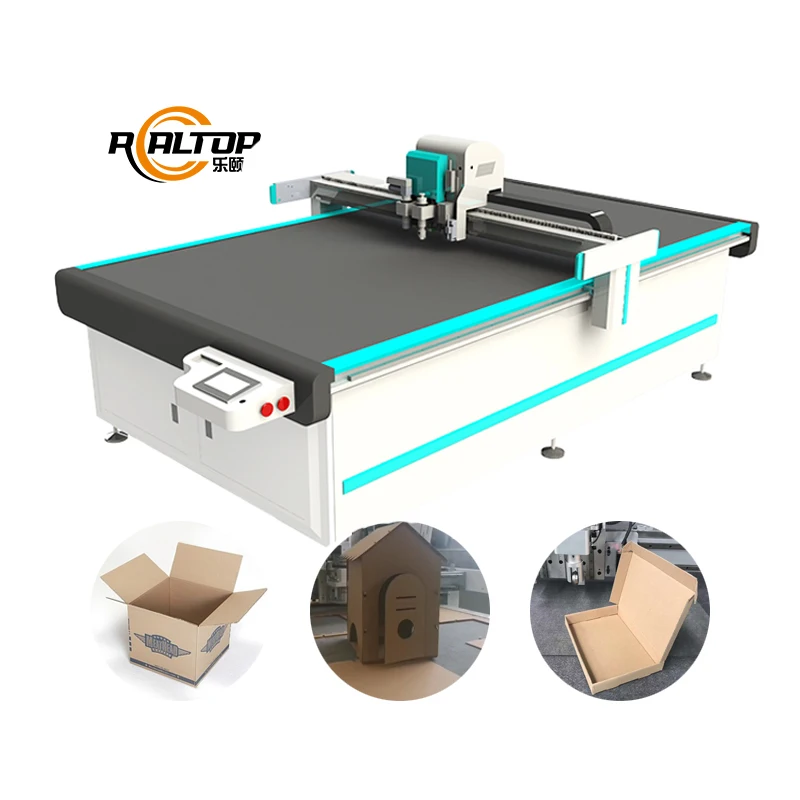
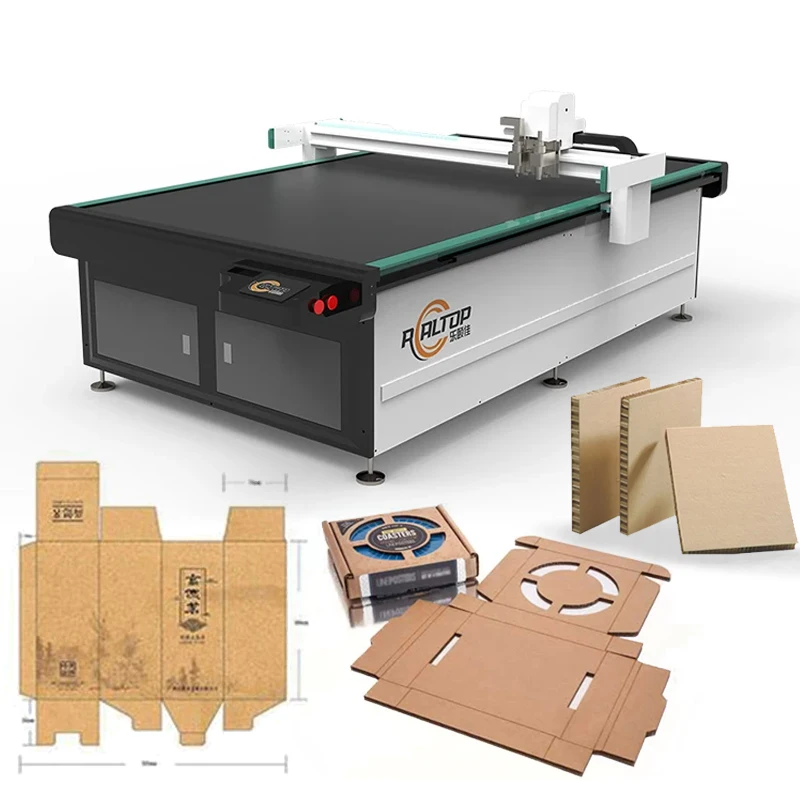
| Product Type | CNC Carton Creasing and Cutting Plotter |
| Working Area | 1600×2500 mm |
| Overall Dimensions (L×W×H) | 3450×2300×1250 mm |
| Rated Power | 9 kW |
| Voltage | 380V ±10% |
| Table Type | Aluminum alloy honeycomb vacuum adsorption platform |
| Vacuum Pump | 7.5 kW |
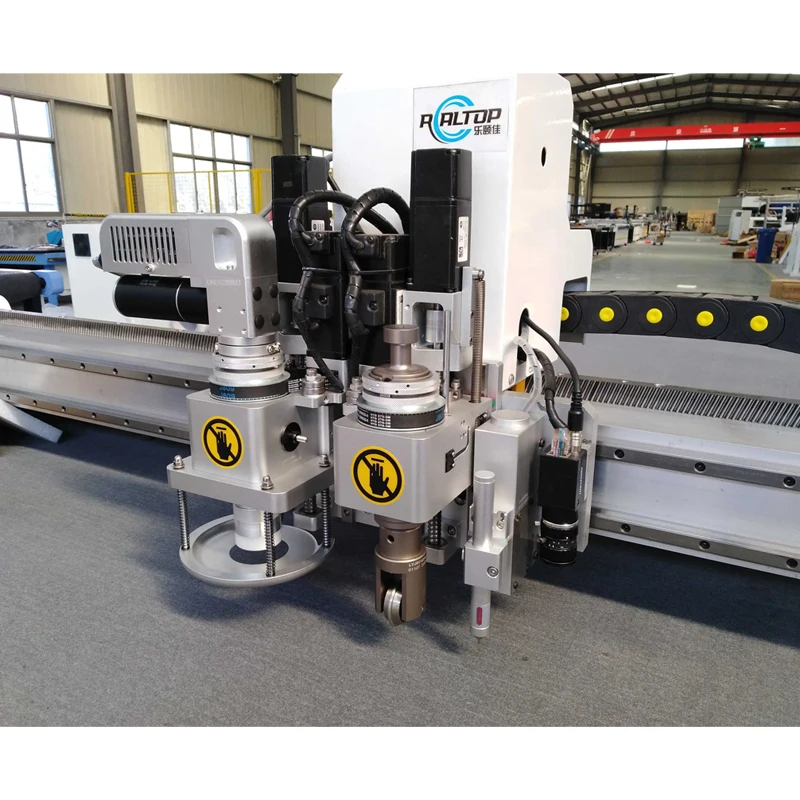
| Multifunctional Head | Swiss imported knife with vibration full cutting, vibration half cutting, and cursor location function |
| Translational Velocity | 800–1200 mm/s |
| Cutting Speed | 200–800 mm/s (varies with material type and thickness) |
| Cutting Thickness | ≤100 mm (varies with material density and tool selection) |
| Repeated Accuracy | ≤0.1 mm |
| Transmission System | Imported digital servo motor, linear guide, synchronous belt, ball screw |
| Servo Motor | Taiwan Delta servo motors and drivers |
| Linear Guide | Taiwan Hiwin rail |
| Safety Device | Infrared sensors and emergency stop |
| Instruction System | HP-GL compatible format |
| Software | Professional carton nesting software, multi-format file import, language customization |
| Language Options | English, Russian, Italian, Chinese (customizable) |
| Assembly State | Welded thick square seamless steel structure with high-temperature treatment |
Application Suitability
| Application | Material or Output |
|---|---|
| Carton and corrugated packaging sample making | Corrugated board across E, B, C, and AB flute profiles, solid grey board, white card stock |
| Short-run box production | Kraft corrugated sheets, double-wall board, and honeycomb cardboard |
| Large electrical appliance packaging | Heavy-duty triple-wall corrugated and reinforced board up to specified thickness |
| Express paper box packaging | Single-face and double-face corrugated, coated and uncoated paperboard |
| Sticker and label contour cutting | Self-adhesive vinyl, paper labels, and reflective film |
| Billboard, business card, and hang tag cutting | PVC foam board, card stock, laminated paperboard |
| Flexible material cutting | Leather, garment fabrics, sponge composite leather, PVC, soft glass, silicone, rubber |
What "Cutting Thickness ≤100mm" Actually Means for Your Board Grade
A quoted maximum cutting depth without material context is a setup for crushed flutes and ragged edges on the shop floor.
When I was on the assembly floor, a customer sent us a purchase order based on our published cutting capacity for white card stock. Their actual daily run involved three-ply corrugated with grey board backing. The oscillating knife reached the depth, but the creasing wheel could not compress the layered flute structure cleanly, and the box fold lines tore on forming. That batch was scrapped before we reconfigured the tool head and vacuum zoning specifically for their material stack. Now every inquiry starts with a sample cutting report on the buyer’s own board grade before we lock in the tooling specification [NEED_CITE: corrugated flute compression behavior under oscillating knife load]. The RT-D2516/RT-S2516 CNC carton creasing cutting plotter specifications must be validated against the specific material, not the catalog maximum.
Swiss Tool Head and Crease Wheel for Single-Pass Processing
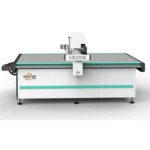
The multifunctional cutting head on this CNC flatbed table integrates a Swiss imported oscillating knife alongside a dedicated creasing wheel, allowing full-cut, half-cut, and crease formation in a single machine pass. For corrugated board sample making, this means the carton blank is cut to profile and scored at fold lines without a second setup or manual re-registration. The cursor location function assists in aligning the knife path to printed registration marks when working with pre-printed corrugated sheets, reducing drift on longer production runs.
Vacuum Zoning That Holds Small Blanks Without Edge Lift
The aluminum alloy honeycomb vacuum platform paired with the 7.5 kW vacuum pump generates concentrated suction across the cutting zone. On a 1600×2500 mm table processing small carton blanks or hang tags, unpartitioned vacuum tables allow air to bleed through uncovered areas, reducing hold-down force on the actual workpiece. The zoning configuration directs suction to the active cutting region, keeping thin corrugated and sticker stock flat against the table surface as the knife head moves at translational velocities up to 1200 mm/s [NEED_CITE: vacuum adsorption principles for CNC flatbed cutting tables].
Servo Drive and Linear Guide Influence on Repeat Accuracy
The ≤0.1 mm repeated accuracy across the full working envelope is maintained by Taiwan Delta servo motors driving Hiwin linear rails. On packaging sample making, a dimensional drift beyond this tolerance means carton blanks that do not assemble flush — tabs miss slots, and glue flaps overlap inconsistently. The combination of digital servo control, ball screw, and synchronous belt transmission ensures the cutting path returns to the same coordinate on every pass, which matters when a sample run transitions into short-run production of identical blanks.
HP-GL Instruction System and File Import Compatibility
The instruction system accepts HP-GL compatible format, and the bundled carton nesting software handles multi-format file import so that designs from common packaging CAD platforms feed directly to the machine without manual re-drawing. Language customization across the control interface — available in English, Russian, Italian, Chinese, and special languages on request — means operators in different markets work in their native terms rather than translating parameter menus. Confirming your existing CAD file format imports cleanly before order avoids a workflow bottleneck after delivery [NEED_CITE: HP-GL and DXF file compatibility in packaging CAD software].
The Cost of Specifying a Machine on Working Area Alone
Choosing a CNC flatbed cutting table based only on bed size ignores the interaction between tool head type, vacuum hold-down, and material behavior. A drag knife that scores cleanly on 300 gsm card stock will tear through E-flute corrugated because it lacks the vertical oscillation needed to shear layered fibers. An undersized vacuum pump on a large table leaves suction too diffuse to grip small sticker contours, and those pieces lift into the knife path mid-cut, producing jagged edges and scrapped material. These mismatches surface only after the machine arrives, when reconfiguration costs both time and tooling expense [NEED_CITE: tool head selection criteria for oscillating and drag knife cutting on corrugated materials].
Why Source This CNC Carton Creasing Cutting Plotter Here
Our in-house design team covers both knife cutting and creasing technology under one roof, so the tool head configuration is matched to your board grade rather than forced into a one-method-fits-all approach. Sample cutting on your own corrugated material is completed before commitment, producing a report that documents edge quality, crease depth, and dimensional accuracy on your exact flute profile. Electrical schematics and voltage specifications are confirmed against the destination market — 380V ±10% is the base, but plug type, frequency, and control language are locked in before production begins. The welded steel frame undergoes high-temperature stress relief treatment to prevent geometric drift after months of high-speed reciprocating knife motion. Software license and file format compatibility notes ship with the machine, so your CAD workflow connects without conversion guesswork.
Documentation & Verification
- Machine specification sheet listing configured tool heads and vacuum zone layout
- Electrical schematic with confirmed voltage, frequency, and plug type for your market
- Sample cutting report on your corrugated board grade with edge and crease photographs
- Tool head and table configuration list matched to your material stack and daily volume
- Software license and file format compatibility note for your existing CAD platform
- Factory test record documenting repeated accuracy across the full 1600×2500 mm working area
Installation, Commissioning & Support
- Foundation requires a level concrete floor supporting the 3450×2300×1250 mm footprint and machine weight
- Dedicated 380V ±10% circuit with appropriate breaker rating for the combined 9 kW machine and 7.5 kW vacuum pump load
- Machine ships fully assembled on the welded steel frame — no structural bolting required on site
- First-run commissioning includes knife depth calibration and vacuum zone mapping for your primary board grade
- Operator training covers tool head changeover between oscillating knife, creasing wheel, and cursor location modes
- Spare parts list identifies wear items including oscillating knife blades, felt belt sections, and vacuum seals
What to Prepare Before Requesting a Quotation
Send us the specific corrugated flute profile, board weight, and maximum sheet size you process, along with whether your work is primarily sample making or short-run production. Confirm the local voltage, frequency, and plug standard at your facility so the electrical system is configured before assembly. If you operate an existing packaging CAD platform, share a sample export file so we verify nesting software compatibility and language settings before the machine leaves our Jinan workshop.
Frequently Asked Questions
Q: How do I choose between oscillating knife, drag knife, and creasing wheel for my corrugated board?
A: Oscillating knives shear layered fibers cleanly on corrugated flute profiles where a drag knife would tear. The creasing wheel compresses fold lines without cutting through the liner. For your specific board grade, we run a sample cut with each tool option and document the edge quality and crease depth so you select based on actual output, not general guidance.
Q: What vacuum table zoning do I need for small carton blanks?
A: On the 1600×2500 mm honeycomb platform, unpartitioned suction diffuses across uncovered areas and small pieces lift at cutting speed. Zoning concentrates the 7.5 kW pump output to the active cutting region. We configure zone layout based on your smallest blank dimension and confirm hold-down during the sample cutting report before order.
Q: How do I confirm software works with my existing carton design files?
A: The professional nesting software accepts multi-format import and HP-GL compatible instruction output. Before order, send a sample file from your CAD platform. We run it through our software, verify geometry and tool path assignment, and ship a file format compatibility note documenting the confirmed workflow.
Q: What electrical and language details must be settled before shipment?
A: Beyond the base 380V ±10% rating, we confirm your local frequency, plug type, and breaker specification. The control interface language is set from available options — English, Russian, Italian, Chinese — or customized. These details are locked into the electrical schematic before production, not adjusted after delivery.
Q: How can I verify edge quality before committing to purchase?
A: Send your actual corrugated board samples to our workshop. We configure the RT-D2516/RT-S2516 with the tool head and vacuum zoning matched to your material, cut your file, and deliver a sample cutting report showing edge finish, crease accuracy, and dimensional repeatability — all before you confirm the order.


商品评价
Clear filtersThere are no reviews yet.