







Fast Shipping
Carrier information

20k products
Payment methods

24/7 Support
Unlimited help desk

2-day Delivery
Track or off orders
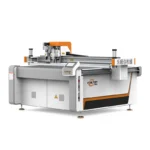
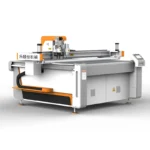
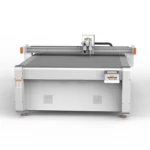
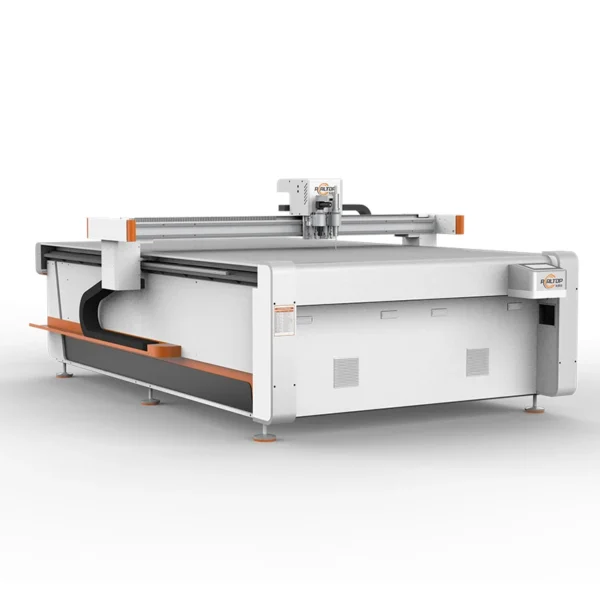
Tool head matched to material — Every knife, wheel and punch on this CNC oscillating knife cutting machine is selected only after testing your actual corrugated, honeycomb or plastic sheet stock.
Technical Specifications
| Parameter | Value |
|---|---|
| Product Type | CNC Oscillating Knife Cutting Machine |
| Model | RT-D2516/RT-S2516 |
| Working Area | 1600×2500 mm |
| Overall Dimensions | 3450×2300×1250 mm |
| Rated Power | 9 kW |
| Translational Velocity | 800–2000 mm/s |
| Repeatability | ≤0.1 mm |
| Voltage | 380V ±10% |
| Vacuum Pump | 7.5 kW |
| Tool Head Options | Swiss imported knife, oscillating knife, pneumatic knife, high-power vibrating knife, circular knife, V-cutting knife, drag knife, creasing wheel, dotted line knife, punching, brush |
| Visual Positioning | Small CCD mark point, panoramic camera recognition, projection positioning |
| Transmission System | Digital servo motor, linear guide, synchronous belt, imported ball screw |
| Servo Motor Options | Delta (Taiwan) or Panasonic (Japan) |
| Control Panel | Touch screen, multiple languages supported |
| Instruction System | HP-GL compatible format |
| Software File Formats | PLT, DXF, AI |
| Table Type Options | Flat working table, auto feeding table |
| Vacuum Table Surface | Magnesium-aluminum alloy, PVDF powder spraying, anodic and hard oxidation |
| Safety Devices | Infrared induction blocking, anti-collision, emergency stop |
| Frame | Thick-walled seamless steel, high-temperature tempering, CNC machining center finished |
| Assembly State | Fully assembled |
Application Suitability
| Application | Material or Output |
|---|---|
| Carton and packaging sample making | Corrugated cardboard, honeycomb cardboard, plastic box stock with V-groove and crease |
| Leather and footwear cutting | Natural leather, PU, EVA, composite upper and lining materials |
| Gasket and sealing production | Rubber, PTFE, ETFE, silicone, non-asbestos fiber composite sheets |
| Soft furnishing and automotive interior | Fabric, non-woven, carpet, sponge composite leather, foam board |
| Advertising and graphic finishing | PVC sheet, soft glass, sticker film, PP, PE, foam board |
Why "Standard Configuration" Fails on Dense Board
Specifying a cutting machine by working area alone leaves out the tool head decision that actually determines edge quality.
I once set up a carton sample cutter for a Pearl River Delta packaging shop using the default parameters meant for standard single-wall corrugated. The client was running high-density grey board for premium gift boxes, and the V-groove tool crushed the edges instead of scoring a clean fold line. Daily output dropped noticeably because operators had to re-trim every piece by hand. That job showed me why CNC oscillating knife cutting machine tool head selection by material has to happen before the purchase order is signed, not after delivery [NEED_CITE: material density effects on oscillating knife scoring quality].
Matching Tool Heads to Board Density and Laminate Structure
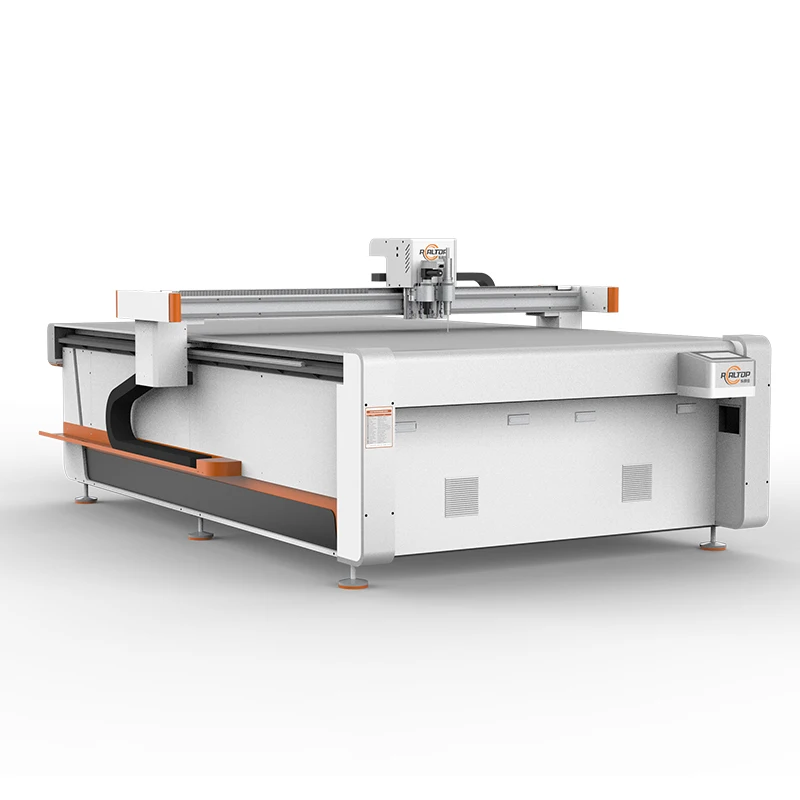
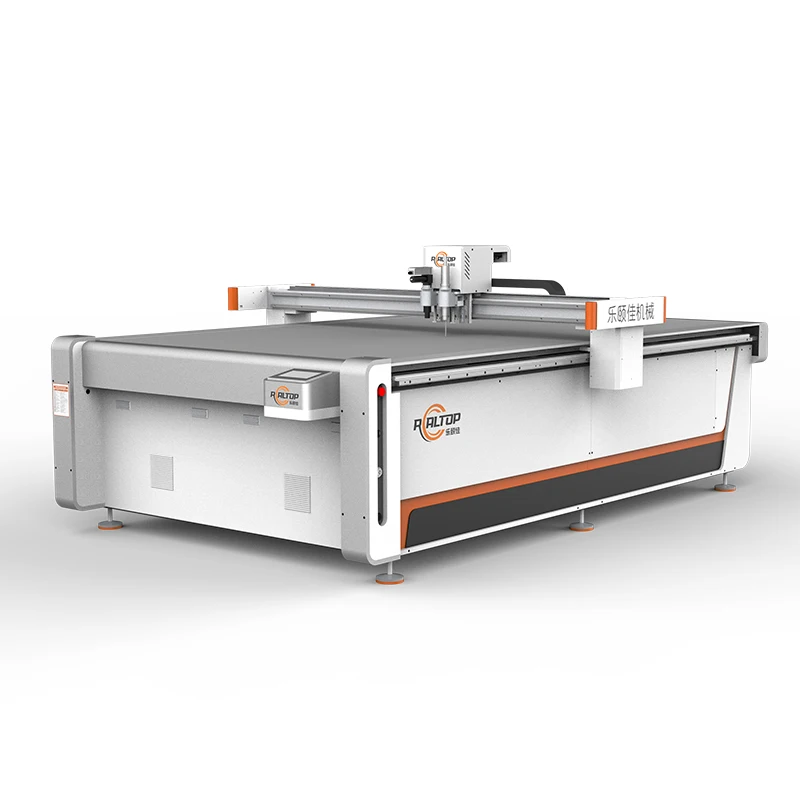
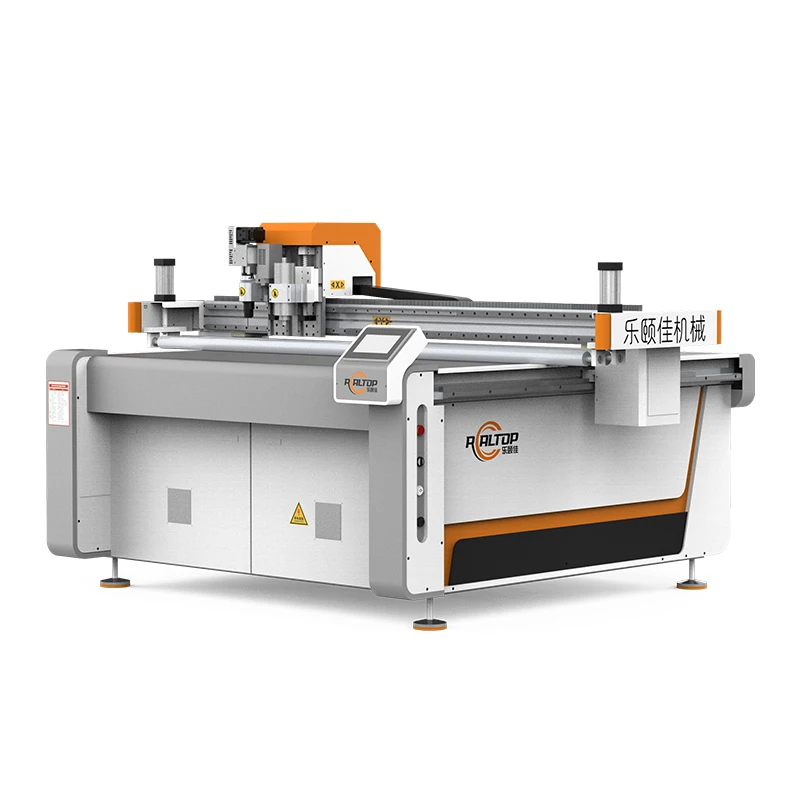
The RT-D2516/RT-S2516 carries a full tool carousel — oscillating knife, V-cutting knife, drag knife, creasing wheel, punching and circular knife — so the configuration can shift between corrugated flute, honeycomb core and plastic box stock without changing machines. A V-cutting knife removes a precise channel for folding dense grey board, while a creasing wheel compresses the fiber along the fold line on lighter carton stock without breaking the surface. The CNC oscillating knife cutting machine tool head selection by material is finalized after a trial cut on the buyer’s own sheet.
Vacuum Table Zoning and Small Part Hold-Down
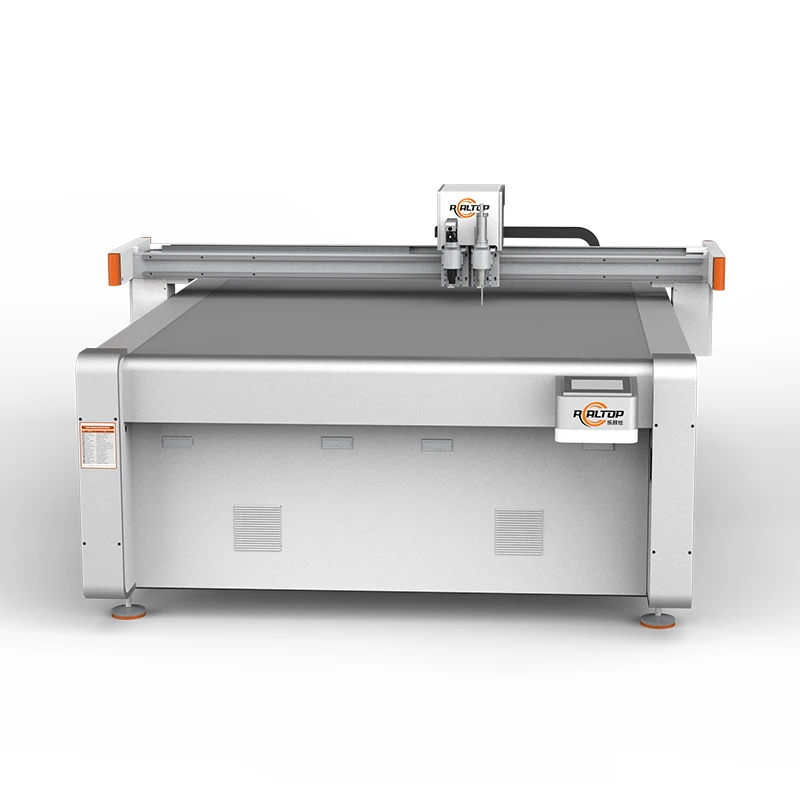
The magnesium-aluminum alloy vacuum table is treated with PVDF coating and hard oxidation, providing a flat, corrosion-resistant surface that maintains suction uniformity across its 1600×2500 mm area. When cutting small gasket profiles or narrow carton divider strips, the zoning capability isolates suction to the active cutting region, preventing parts from lifting or drifting under tool head vibration. Uniform adsorption matters especially on warped honeycomb board where edge leakage would otherwise compromise the cut path [NEED_CITE: vacuum table zoning effectiveness on warped composite board].
Reading the Specs That Matter for Daily Production
Translational velocity ranges from 800 to 2000 mm/s depending on the material, but repeatability of ≤0.1 mm is what keeps nested carton patterns aligned across a full sheet run. The 7.5 kW vacuum pump generates the suction needed to hold thick corrugated flat without mechanical clamps that would interfere with the tool path. Servo motor selection — Delta or Panasonic — determines acceleration response during tight corner cuts on intricate packaging templates. The thick-walled seamless steel frame, stress-relieved through high-temperature tempering and finished on a CNC machining center, maintains geometric accuracy across years of continuous two-shift operation.
The Cost of Skipping the Material Trial
Choosing the wrong oscillating frequency for a given foam density produces crushed edges that fail dimensional inspection, forcing the operator to slow the feed rate and accept lower throughput. On laminated carton, a drag knife set at the wrong depth cuts through the printed surface and damages the vacuum table belt underneath. These problems surface only after the machine is installed and running production material, when returning the tool head for exchange means days of downtime. A sample cutting report on your own stock eliminates this sequence entirely [NEED_CITE: oscillating knife frequency matching to foam density].
Why This Build Approach Reduces Field Failures
In-house design covers both the knife cutting head and the vacuum table platform, so the tool pressure, stroke frequency and suction level are matched to each other rather than sourced independently. Every RT-D2516/RT-S2516 leaves the Jinan facility fully assembled and factory-tested, reducing on-site commissioning to power connection, file import verification and a test cut on the buyer’s material. The touch screen control panel ships in the buyer’s language — English, Russian, Italian, Chinese or a custom language — so operators can adjust parameters without translation delays. Software compatibility with PLT, DXF and AI files is confirmed before the order, avoiding the common situation where a buyer’s existing nesting workflow cannot communicate with a new machine controller.
Documentation & Verification
- Machine specification sheet listing every tool head and table option included in your build
- Electrical schematic and voltage confirmation matched to your facility supply
- Sample cutting report on your own corrugated, foam or gasket material with edge photographs
- Software licence and file format compatibility note covering PLT, DXF and AI import
- Factory test record with repeatability measurement taken before crating
- Operation and maintenance manual in your specified control language
Installation, Commissioning & Support
- Requires a level concrete floor capable of supporting the 3450×2300 mm footprint and operational vibration
- Dedicated 380V ±10% circuit with appropriate breaker rating for the 9 kW rated load plus 7.5 kW vacuum pump
- Arrives fully assembled; commissioning covers power-up, vacuum zoning test and tool head calibration
- First-run parameter setting performed on your actual sheet material with operator present
- Spare parts list identifying consumable blades, creasing wheels and vacuum table seals
- Routine maintenance schedule covering linear guide lubrication and synchronous belt tension checks
What to Prepare Before Requesting a Quote
Send the exact material type, flute or laminate structure, sheet thickness and maximum sheet dimensions you plan to run. Include your target daily volume and the file formats your design team currently outputs. If your facility operates on a voltage or frequency different from 380V/50Hz, state the local supply specification so the electrical system can be configured before build.
Frequently Asked Questions
Q: How is the tool head selected for my specific material type and thickness?
A: We run a trial cut on your actual sheet stock — whether corrugated, honeycomb, foam or gasket — testing oscillating knife, V-cutting knife and creasing wheel options. The tool head that produces the cleanest edge at your required speed is specified in the configuration list before the order is confirmed.
Q: Can the vacuum table zoning hold my small parts flat during cutting?
A: The magnesium-aluminum alloy table supports selective zoning, directing suction only to the active cutting area. This prevents small carton inserts or narrow gasket profiles from lifting when surrounding vacuum zones would otherwise leak air around the part perimeter.
Q: Will the CCD camera track my printed marks accurately at production speed?
A: Both small CCD mark point and panoramic camera options are available. Tracking accuracy is verified during the factory test using your printed sheet or a representative sample, and the result is documented in the sample cutting report before shipment.
Q: Is the software compatible with my existing file formats and nesting workflow?
A: The controller imports PLT, DXF and AI files natively. Before the order is finalized, we confirm compatibility with your specific nesting software output and document the verified file format list in the software licence note.
Q: How are voltage, plug type and control language confirmed before shipment?
A: Your local supply specification and preferred plug standard are recorded during the quotation stage. The control panel language — English, Russian, Italian, Chinese or a custom option — is set at the factory and verified during the pre-shipment test run.


商品评价
Clear filtersThere are no reviews yet.