




Fast Shipping
Carrier information

20k products
Payment methods

24/7 Support
Unlimited help desk

2-day Delivery
Track or off orders
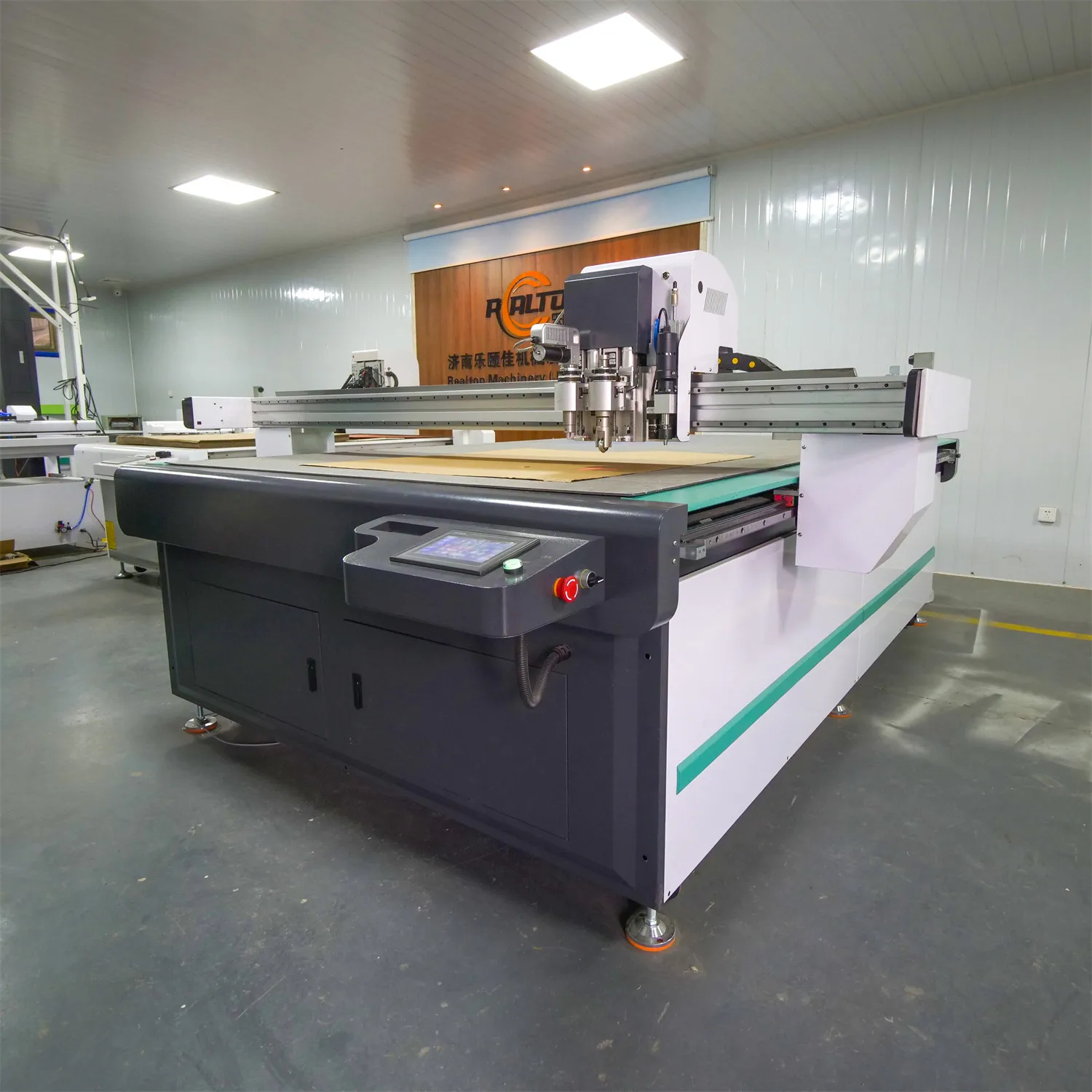
Tool head matched to board grade — Realtop specifies oscillation frequency and knife geometry against your actual flute profile before quoting the RT-D2516/RT-S2516, avoiding crushed cores or ragged edges on delivery.
Technical Specifications
| Parameter | Value |
|---|---|
| Model | RT-D2516/RT-S2516 |
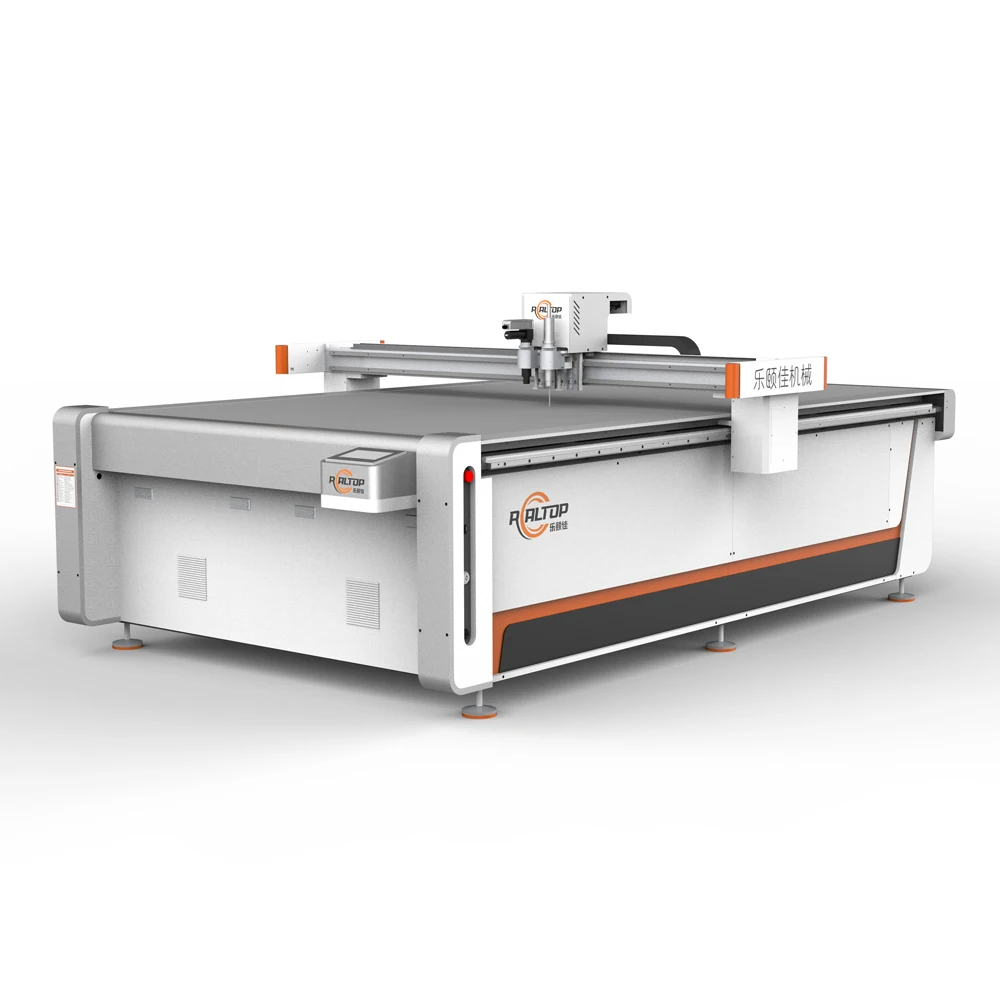
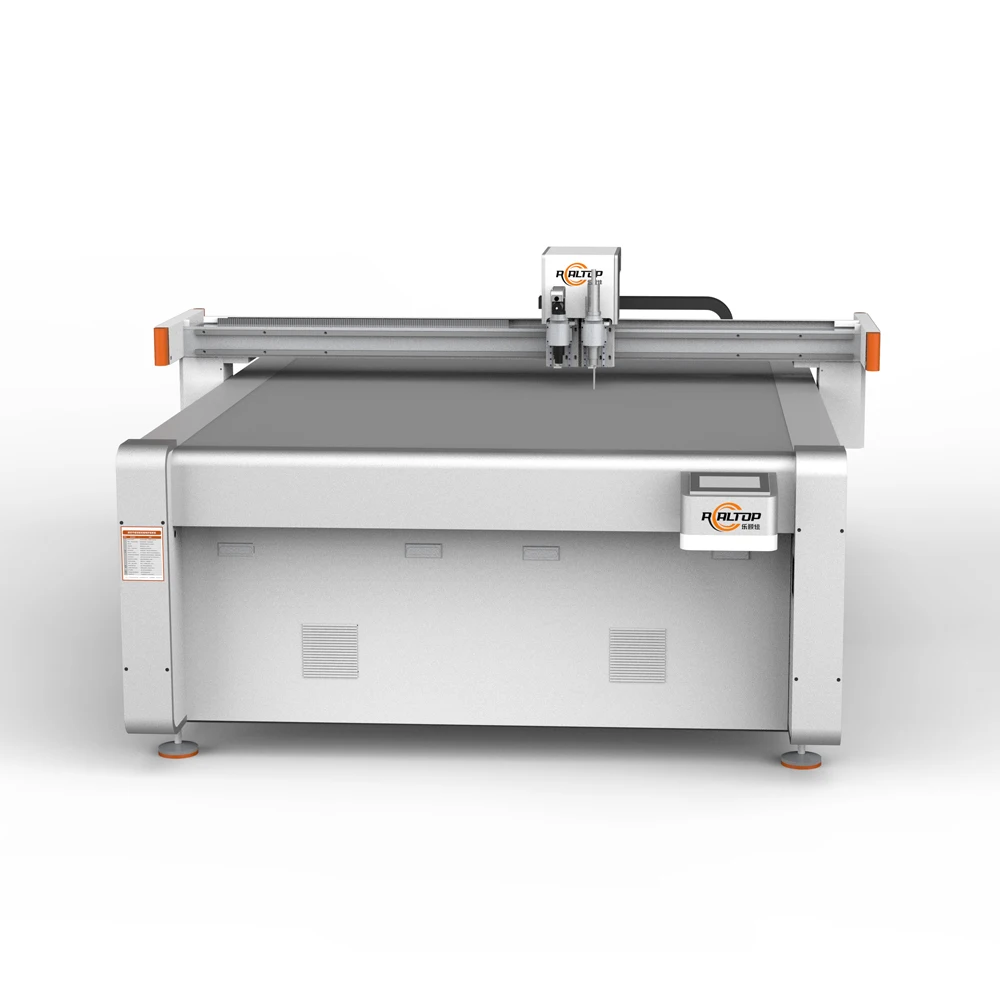
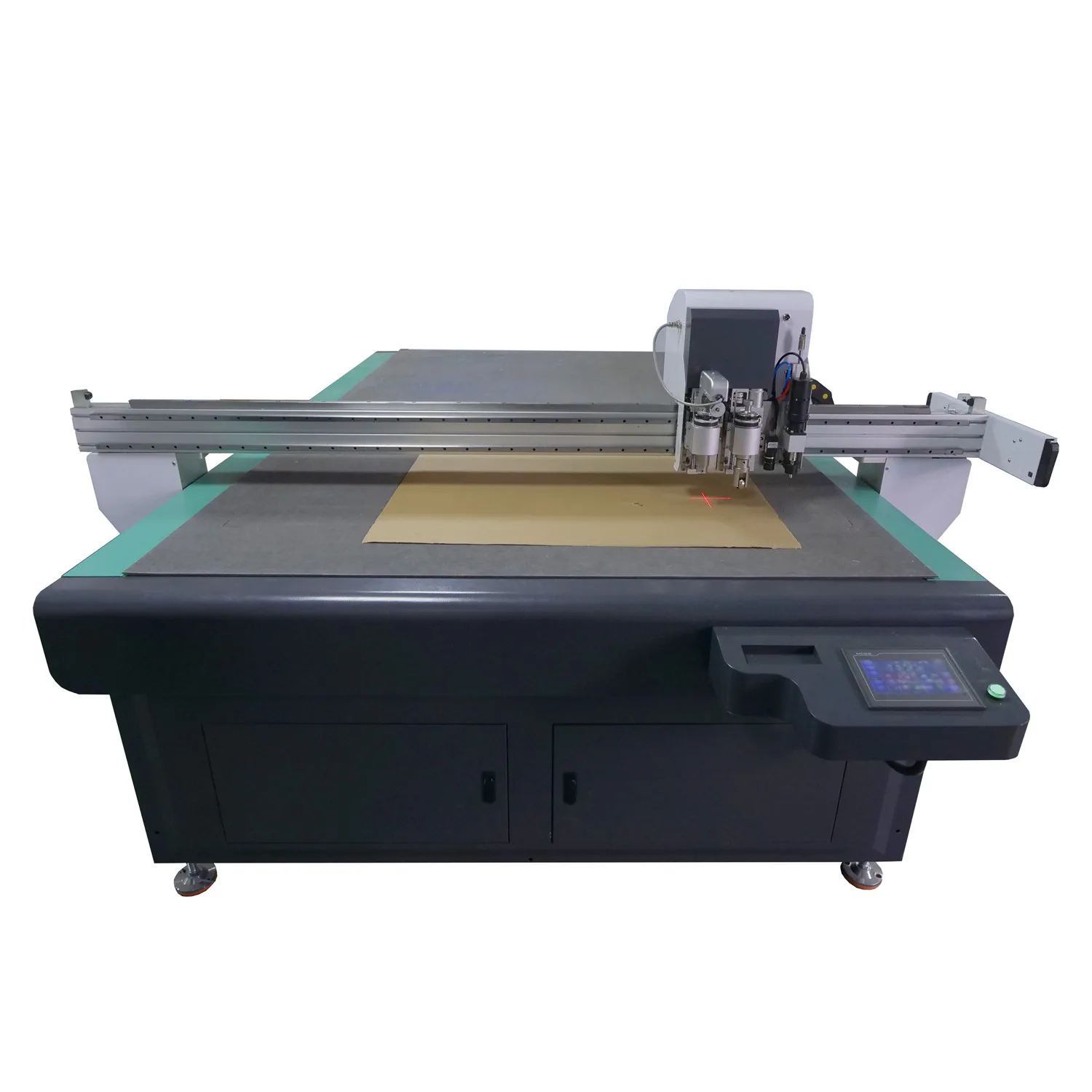
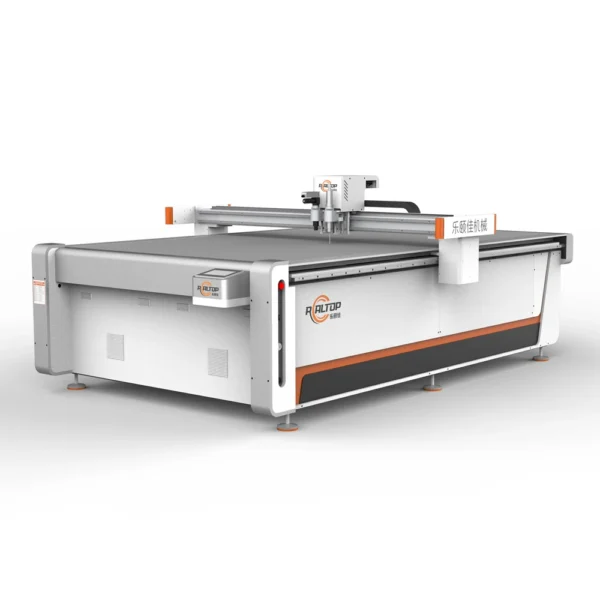
| Product Type | CNC Oscillating Knife Cutting Machine with Auto Feeding |
| Working Area | 1600 × 2500 mm |
| Machine Size | 3450 × 2300 × 1250 mm |
| Rated Power | 9 kW |
| Table Type | Flat aluminum alloy honeycomb vacuum table with automatic zone adsorption |
| Tool Head | Swiss-imported oscillating knife with full cut, half cut and cursor location |
| Transmission System | Digital servo motor, linear guide, synchronous belt, ball screw |
| Servo Motor | Delta |
| Linear Guide | Taiwan Hiwin rail |
| Repeated Accuracy | ≤ 0.1 mm |
| Translational Velocity | 800–2000 mm/s |
| Cutting Speed | 200–800 mm/s (basis to be confirmed by flute type and board density) |
| Vacuum Pump | 7.5 kW |
| Feed System | Auto-feeding conveyor with Germany-imported belt |
| Safety Device | Infrared sensors |
| Instruction Format | HP-GL compatible |
| Voltage | 380 V ± 10 % |
| Software | Professional carton cutting design software (language customization available) |
| Certification | CE |
Application Suitability
| Application | Material or Output |
|---|---|
| Packaging carton sample making | Single, double and triple-wall corrugated board, gray board |
| Short-run corrugated box production | E-flute, B-flute, C-flute, BC-flute corrugated sheets |
| Sticker and label contour cutting | Self-adhesive vinyl, coated paper, reflective film |
| Large-format electrical appliance packaging | Heavy-duty five-layer and seven-layer corrugated board |
| Gift box and snack food packaging | Folding carton board, kraft paper, foam-lined board |
| Express paper box and e-commerce mailer production | Lightweight single-wall corrugated and micro-flute stock |
Why Flute Type Changes Everything on a CNC Oscillating Knife Cutting Machine
A cutting speed figure means nothing without knowing what board is under the knife.
When I first started servicing packaging lines in the Yangtze River Delta, a carton producer ordered a vibratory knife system set up on three-layer B-flute samples. On the production floor they ran five-layer BC-flute, and the blade chipped its edge within the first shift, leaving every blank with crushed fluting and torn liners. The root cause was never the machine itself — it was a configuration that had never seen the material it would actually cut. Matching tool head oscillation frequency, knife profile and vacuum zone layout to the buyer’s real flute combination is the step that separates a reliable packaging run from a scrap pile. [NEED_CITE: corrugated flute classification and typical board thickness ranges]
Swiss-Imported Knife Geometry for Crease-and-Cut Workflows
The RT-D2516/RT-S2516 ships with a Swiss-imported oscillating knife head that supports full cutting, half cutting and cursor location in a single setup. For corrugated packaging jobs this means the same tool head scores the crease line and cuts the outer profile without a tool change, keeping registration tight across long carton blanks. Half-cut depth is adjustable so the top liner scores cleanly while the fluting and bottom liner stay intact for folding.
Vacuum Zoning That Holds Small Blanks at Production Speed
A continuous problem on wide-format cutting tables is that small carton blanks lift off the surface when the knife exits the cut, especially on lightweight e-flute stock. The aluminum alloy honeycomb table on this platform divides the working envelope into automatic adsorption zones that follow the cutting path. Only the sections directly under the material draw vacuum, concentrating hold-down force where it matters and preventing small pieces from shifting mid-cycle. [NEED_CITE: vacuum table zoning principles for flatbed digital cutting]
Reading the Specs That Actually Matter for Board Conversion
The 1600 × 2500 mm working area accommodates standard corrugated sheet sizes with room for nesting multiple carton blanks per cycle. Delta servo motors driving Taiwan Hiwin linear guides deliver ≤ 0.1 mm repeatability, which keeps crease lines aligned with printed graphics when running contour jobs. Translational velocity reaches 800–2000 mm/s on rapid moves, but actual cutting speed depends on flute count, board density and knife engagement depth — a figure that must be validated on your specific material. The 7.5 kW vacuum pump provides sufficient suction for both heavy double-wall sheets and thin sticker stock across the full table area. HP-GL instruction format compatibility lets the system import files from most mainstream packaging CAD environments without format conversion delays.
The Hidden Cost of Skipping the Material Trial
I have watched a packaging converter lose two full days of production because the machine arrived with a drag knife head specified for thin card stock, while their daily mix included 3 mm foam-backed board for premium gift boxes. The drag knife tore through the foam core, and every sample had ragged edges that failed the client’s quality check. Retooling on-site meant waiting for the correct oscillating knife cartridge and recalibrating the Z-axis zero point. A sample cutting report on the buyer’s own board grade before shipment would have caught the mismatch in the factory rather than on the shop floor. [NEED_CITE: material-specific tool head selection for digital flatbed cutting]
Why Buyers Source This Platform from Realtop
Realtop designs and produces both knife and laser cutting systems in-house, so packaging buyers can match the cutting method to their material rather than forcing one technology across every substrate. Tool head selection and vacuum zone mapping are specified per flute type and daily volume, not left as a generic default. CCD camera positioning is available for printed contour work on sticker and signage jobs that run alongside carton production. Software compatibility — including HP-GL file import and nesting workflow — is confirmed against the buyer’s existing CAD system before the order is locked. Voltage, plug type and control language are finalized during the specification stage so the machine arrives ready to power on without transformer adapters or untranslated HMI menus.
Documentation & Verification
- Machine specification sheet listing RT-D2516/RT-S2516 configuration and tool head details
- Electrical schematic with confirmed 380 V ± 10 % wiring and site voltage validation
- Sample cutting report run on buyer’s corrugated flute and board grade before dispatch
- Tool head and vacuum zone configuration list matched to stated material mix
- Software licence and HP-GL file format compatibility note for buyer’s CAD workflow
- Packing photographs documenting machine condition prior to crate closure
Installation, Commissioning & Support
- Floor space of approximately 3450 × 2300 mm with level concrete substrate for the RT-D2516/RT-S2516 frame
- Dedicated 380 V ± 10 % circuit with breaker sized for the 9 kW rated load plus vacuum pump
- Machine ships as a single assembly requiring conveyor belt tensioning and vacuum hose connection on site
- First-run parameter tuning on buyer’s corrugated board including knife depth, oscillation frequency and vacuum zone mapping
- Operator training covering tool head changes, nesting software workflow and daily vacuum filter maintenance
- Spare parts list with recommended oscillating knife blades, vacuum seals and conveyor belt segments
What to Send with Your Inquiry
Tell us the flute types and board grades you run most often, along with maximum sheet dimensions and typical daily blank count. If you have existing CAD files in HP-GL or other formats, send a sample set so we can verify software compatibility and nesting behavior. Let us know your site voltage, frequency and preferred control language so the electrical package and HMI are configured before shipment.
Frequently Asked Questions
Q: How do I verify the cutting thickness capability against my corrugated board?
A: Send us representative samples of your heaviest and lightest board grades with flute type identified. We run sample cuts on the RT-D2516/RT-S2516 and return a report documenting edge quality, crease depth and cutting speed achieved. Configuration is then locked to those results before production begins.
Q: Which tool head suits a mix of corrugated board and self-adhesive vinyl?
A: The oscillating knife handles corrugated flutes cleanly, while a drag knife or tangential knife is better for thin vinyl and sticker stock. We specify a multi-tool head configuration so both materials run on the same table, with tool change parameters saved per job file.
Q: How are voltage, plug and language confirmed before the machine ships?
A: During the specification stage we collect your site voltage, frequency and plug standard along with the preferred HMI language. The electrical schematic is updated and shared for approval, and the control interface is set to your language before factory testing begins.
Q: Will small carton blanks stay flat on the vacuum table at full speed?
A: The aluminum honeycomb table uses automatic zone adsorption that activates only the vacuum sections under the current cutting area. Zone maps are configured around your typical blank sizes so suction is concentrated where material is present, preventing small pieces from lifting during high-speed knife exit.
Q: What does the sample cutting process involve before I commit to an order?
A: Ship us a batch of your actual production material with details on flute type, board thickness and printed mark positions if applicable. We cut your supplied files on the configured RT-D2516/RT-S2516, document results in a sample report, and use that data to finalize the tool head, vacuum and feed specifications.


商品评价
Clear filtersThere are no reviews yet.