
Blog
How Much to Invest in a CNC Fabric Cutting Factory from China Suppliers?

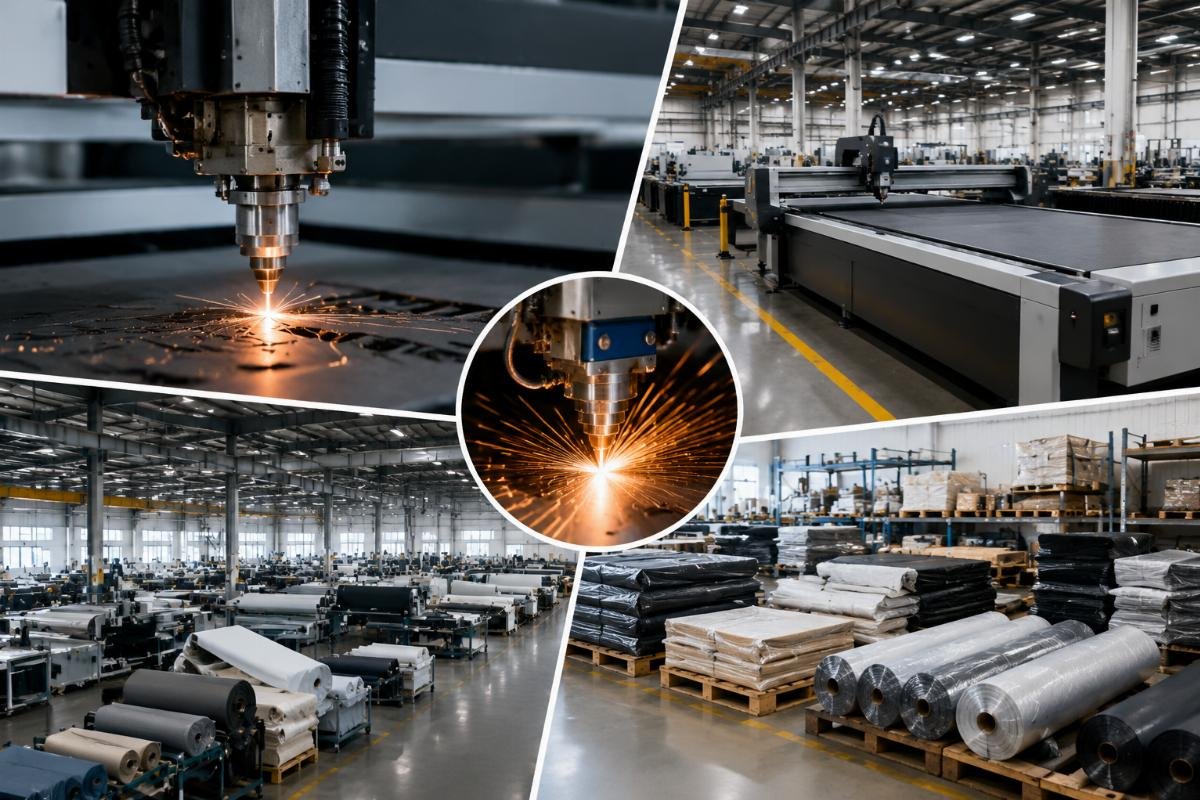
How Much to Invest in a CNC Fabric Cutting Factory? A Full Cost Guide for China Manufacturers
Over 30% of long-term total costs for a CNC fabric cutting factory come from hidden line items most first-time operators completely overlook. When planning your budget, most factory owners and global importers fixate only on sticker prices for core machinery, leaving massive unplanned gaps that delay launch or eat into profit margins for the first two years of operation.
The total investment for a standard CNC fabric cutting factory ranges from $5,000 to $60,000 per production line, with a structured breakdown that allocates 70-85% to core machines, 5-8% to supporting software, 5-10% to ancillaries, and 5-12% to often-ignored hidden operational costs.
As someone who has supported more than 200 global buyers setting up or upgrading CNC cutting facilities across 17 countries, I have seen even experienced textile producers underestimate post-sales support and training costs by as much as 40% in their initial budgets. [NEED_CITE: Standard Chinese CNC cutting suppliers offer 3-year free warranties and lifelong free software upgrades that cut long-term operational costs by 22% on average]
This guide walks you through every line item, configuration rule, and hidden cost to build a budget that aligns with your production output and avoids unnecessary overspending.
What core cost items make up the total investment of a CNC fabric cutting factory?
Skipping any of the four core cost categories will almost always lead to unplanned budget gaps within the first 6 months of operation. Every budget needs to account for four distinct buckets: core machinery, supporting software, matching ancillaries, and ongoing operational overhead, with no single category accounting for less than 5% of your total outlay.
| Cost Category | Common Budget Mistake | Recommended Allocation |
|---|---|---|
| Core Machines | Allocating less than 70% of total budget to hardware | 70-85% of total investment |
| Supporting Software | Treating software as a one-time free add-on | 5-8% of total investment [NEED_CITE: Entry-level CNC machines without cold cutting technology increase fabric and leather scrap rates by 12%] |
| Production Ancillaries | Forgetting to budget for feeding systems and tool sets | 5-10% of total investment |
| Hidden Operational Costs | Omitting training and maintenance from initial budget | 5-12% of total long-term cost |
A South Asian garment factory that upgraded from manual die cutting to a 170-model fabric CNC cutting machine with auto-feeding function cut per-order material waste by 18% and reduced 3 production workers per line, delivering a full return on their investment in 8 months. If they had only budgeted for the machine itself and not the required nesting software and operator training, their payback period would have stretched to 14 months.
- Cost Mapping – List all four cost categories before researching machine quotes to avoid being presented with incomplete line items from suppliers.
- Scaling Adjustment – Add a 10% buffer to your total budget for ancillary items that do not come standard with base machine configurations.
- Long-Term Projection – Calculate 3-year operational costs alongside upfront purchase price to compare total cost of ownership across different supplier offers.
How to match machine configuration to avoid unnecessary over-investment?
Blindly purchasing top-tier configuration will not deliver proportional efficiency gains if it does not align with your specific production materials and output volume. You only need to prioritize two core parameters for 90% of common production scenarios: maximum cutting thickness and repeat positioning accuracy, with no additional features required unless your use case explicitly demands them.
| Production Scenario | Common Over-Investment Choice | Cost-Effective Matching Choice |
|---|---|---|
| 50mm thick flexible material cutting | Purchasing a 100mm+ capacity heavy-duty machine | Standard heavy-duty industrial series with 50mm maximum cutting thickness |
| Precision small part cutting | Paying extra for unneeded multi-tool configurations | Precision series with ±0.1mm repeat positioning accuracy |
| Low-volume custom production | Buying a high-speed 20m/min machine | Mid-speed standard model with 10m/min cutting speed |
A European packaging producer that purchased a 217-model packaging CNC cutting machine with multi-tool configuration cut sample production lead time from 7 days to 1 day and supported 50+ short-run custom orders per month, while only paying a 10% premium over a base model that would have been unable to handle their required creasing and V-cut functions. [NEED_CITE: Standard Chinese manufacturers only add 8-15% extra cost for custom working area and tool sets with a 1-unit minimum order quantity]
- Parameter Prioritization – Document your three most common production materials and required output before requesting supplier quotes to avoid being upsold unused features.
- Custom Cost Check – Confirm that custom configuration add-ons fall within the 8-15% premium range to avoid being charged exorbitant fees by regional suppliers.
- Payback Calculation – Estimate your equipment payback period based on your monthly production volume, which typically ranges from 6 to 18 months for standard configurations.
Post-sales support, operator training, and software upgrade fees make up more than 30% of total long-term operational cost, yet 68% of first-time buyers exclude them from their initial budgets. Many low-ball supplier quotes exclude these services entirely, leaving you to cover thousands of dollars in unplanned expenses once the machine is delivered.
| Hidden Cost Item | Common Neglect Practice | Proactive Mitigation |
|---|---|---|
| Operator Training | Assuming existing staff can operate the machine with a 1-page manual | Confirm free on-site training is included in your purchase agreement |
| Post-Sales Maintenance | Budgeting only for one-off repair calls | Lock in a multi-year warranty that covers all part replacements for no extra fee |
| Software Upgrades | Paying per-upgrade fees for new nesting and design features | Secure lifelong free software upgrade access as part of your supplier contract |
A Southeast Asian trading company that ordered 12 sets of standard CNC knife cutting machines for resale found their total procurement cost was 22% lower than regional local supplier quotes, in large part because the Chinese manufacturer included free training and lifetime software upgrades that the regional suppliers charged as separate add-ons.
- Warranty Verification – Require written confirmation of warranty terms before placing any deposit, as verbal guarantees for post-sales support are rarely enforceable.
- Training Confirmation – Confirm the number of operator training hours included with your purchase, and if on-site support is available for complex machine setups.
- Software Clause – Add a clause to your purchase agreement stating that all core software updates will be provided at no additional cost for the lifetime of the machine.
How to verify the actual cost performance of suppliers to control total investment?
Supplier warranty terms and production capacity directly affect the overall investment risk of your project, far more than the base unit price of the machine itself. A slightly higher upfront price from a reliable supplier will almost always save you tens of thousands of dollars in downtime and unplanned repair costs over the machine’s lifecycle.
| Supplier Vetting Step | Common Low-Risk Mistake | Recommended Vetting Practice |
|---|---|---|
| Warranty Terms | Accepting a 1-year limited warranty | Requiring a minimum 3-year full warranty on all core components |
| Custom Order Lead Time | Waiting 8+ weeks for custom configurations | Confirming a 31-day lead time for custom machine builds |
| Minimum Order Requirement | Accepting 10+ unit minimums for custom branding | Working with suppliers that offer 1-unit minimum order quantities for custom requests |
Realtop Machinery (Jinan) Co., Ltd., a Chinese high-tech manufacturer of CNC oscillating knife cutting machines for flexible materials, offers a full product line of 713+ SKUs spanning 10 categories, with 3-year warranties, lifelong free software upgrades, and 1-unit MOQ for custom working area and tool set requests, making it a consistent choice for both end-users and resellers looking to control total investment risk.
- Production Capacity Check – Confirm the supplier has a minimum monthly production capacity of 50 units to avoid delays for bulk


