
Blog
Why Do Standard Cutting Machines Fail When Processing Carbon Fiber Composites?

Why Do Standard Cutting Machines Fail When Processing Carbon Fiber Composites?
I've watched manufacturers waste thousands of dollars on the wrong cutting equipment. They search "carbon fiber cutting machine," buy what looks right, and three months later face delamination problems that shut down their production line.
Standard fabric cutters cause fiber delamination and edge fraying in carbon fiber materials because they apply cutting parameters designed for textiles, not engineered composites. Laser machines burn the resin matrix and create heat-affected zones that compromise structural integrity. The correct solution requires matching equipment configuration to your specific material state—whether you're cutting pre-preg, dry fabric, or cured laminates.
This isn't about finding the most expensive machine. It's about avoiding procurement mistakes that create scrap rates you didn't budget for. Let me show you what actually happens when cutting solutions don't match your material.
What Makes Carbon Fiber Composites Different From Regular Fabrics?
Most buyers treat carbon fiber like premium fabric. They contact us after their textile cutter ruins a batch of pre-preg material worth more than the machine itself.
Carbon fiber composites consist of high-strength fibers embedded in resin matrices, creating layered structures where fiber orientation and resin cure state determine mechanical properties[^1]. Unlike textiles, these materials require cutting processes that prevent delamination between layers[^2], avoid thermal damage to resin systems, and maintain fiber alignment at cut edges.
In projects we've handled for automotive suppliers, I've seen three material states that each need different approaches. Pre-preg materials arrive partially cured with tacky resin[^3]—cutting them generates fiber pull-out if you use wrong blade angles. Dry fabrics require hold-down pressure that prevents shifting without crushing the weave structure. Cured laminates demand tools that cut through hardened resin without creating micro-cracks.
The failure modes tell you everything about wrong equipment choices. When clients bring us samples damaged by their existing cutters, I see consistent patterns:
Common Failure Modes by Material State
| Material State | Wrong Equipment Used | Failure Result | Why It Happens |
|---|---|---|---|
| Pre-preg | Standard fabric cutter | Resin smearing, fiber pull-out | Blade designed for textile fibers, not resin-coated materials |
| Dry fabric | Insufficient hold-down | Layer shifting, uneven edges | Fabric moves during cutting without proper vacuum or pressure |
| Cured laminate | High-speed textile blade | Delamination, edge chipping | Cutting speed and blade geometry create forces that separate layers |
One aerospace parts manufacturer contacted us after their production team reported 40% scrap rates[^4] on carbon fiber brackets. They'd purchased a fabric cutting machine based on online research. When I examined their failed parts, every piece showed fiber separation at corners where the blade changed direction. The equipment worked perfectly for Kevlar fabric—just not for carbon fiber composites.
This confusion costs money because most procurement teams don't realize they're buying solutions for the wrong material category. You're not cutting fabric. You're machining engineered structures where every cut edge affects part performance.
Why Do Laser Cutting Systems Damage Carbon Fiber Materials?
I hear "laser = precision" in almost every initial customer call. Then I ask them to send samples of laser-cut carbon fiber, and the burn marks tell a different story.
Laser cutting systems damage carbon fiber composites through thermal effects that burn resin matrices, create heat-affected zones in surrounding material, and cause fiber oxidation at cut edges[^5]. The high-temperature cutting process alters material properties in a boundary zone extending 0.5-2mm from the cut line, compromising structural integrity in precision applications.
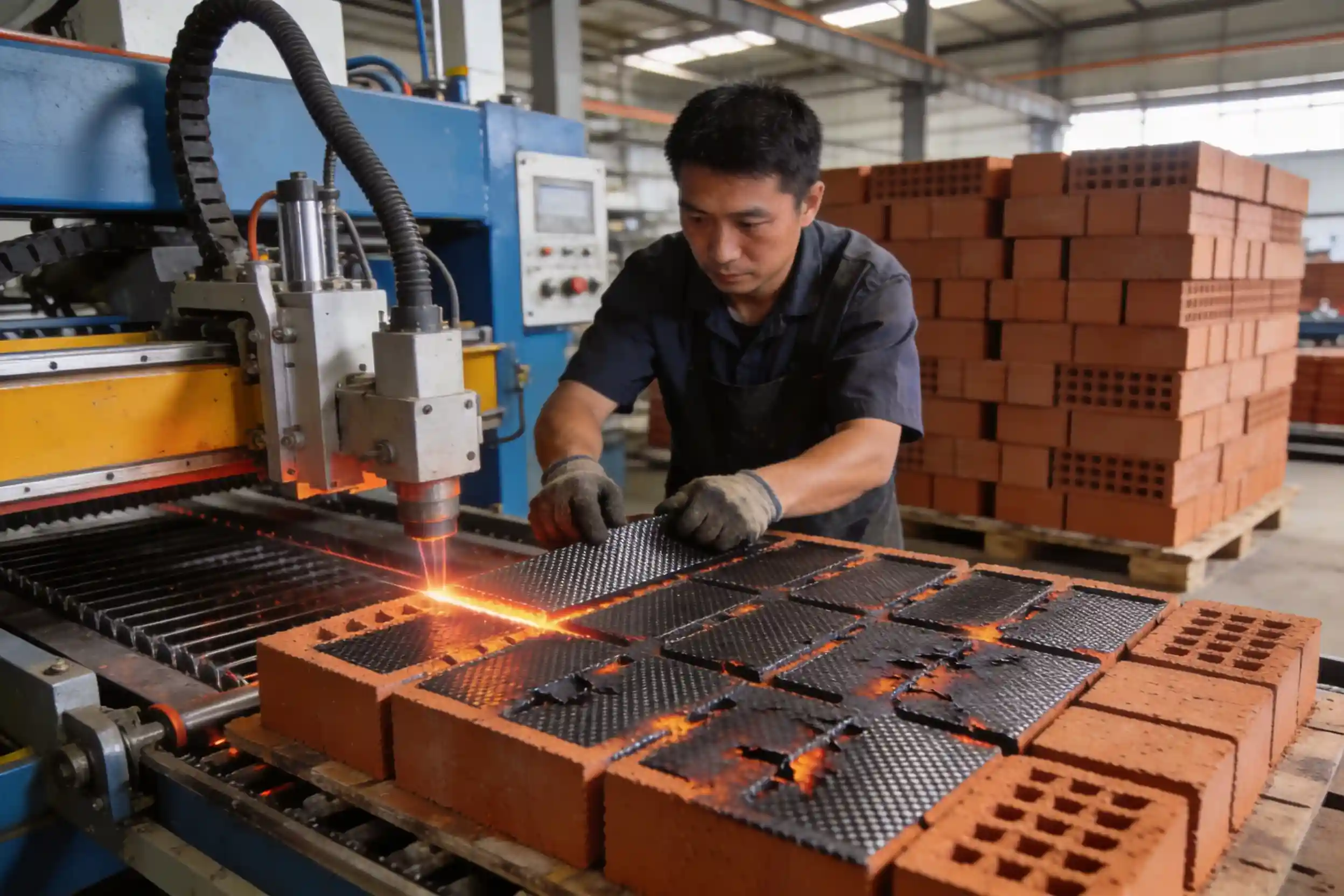
Customers using laser equipment report specific problems that don't show up immediately. An automotive trim supplier switched from laser to our mechanical cutting solution after their assembly team noticed that laser-cut parts cracked during installation. The thermal damage had weakened the material structure around mounting holes, creating failure points under mechanical stress.
The physics works against you with laser systems. Carbon fiber absorbs laser energy extremely well—that's why the cutting works. But that same energy absorption heats the resin matrix past its glass transition temperature[^6]. In aerospace-grade epoxy systems[^7], this creates a zone of degraded material that you can't see but that affects part performance.
I've tested samples from three different laser system types to understand where each fails:
Laser System Limitations by Application
| Laser Type | Power Range | Primary Problem | Affected Applications |
|---|---|---|---|
| CO2 laser | 100-500W | Extensive resin burning, visible char | Any application requiring clean edges |
| Fiber laser | 500-2000W | Heat-affected zone depth, resin degradation | Structural parts, precision assemblies |
| UV laser | 5-20W | Slow cutting speed, still creates micro-cracks | High-volume production (economically impractical) |
One client sent us parts that had passed their visual inspection but failed mechanical testing. When we examined the laser-cut edges under microscope, we found micro-cracks extending into the laminate structure[^8]. The laser had created thermal stress that propagated between fiber layers. Their quality control team couldn't detect this damage through normal inspection processes.
This matters more in aerospace applications where part certification requires documentation of manufacturing processes. Several aerospace suppliers have contacted us specifically because laser cutting introduces variables they can't control in their quality systems. They need cutting processes that don't alter material properties within measurement tolerances.
The fundamental issue isn't laser technology—it's thermal cutting applied to temperature-sensitive materials. When resin systems cure at specific temperatures, introducing heat above those levels during cutting creates unpredictable results.
What Cutting Parameters Actually Matter For Different Carbon Fiber Forms?
Most equipment comparisons list specifications without explaining which numbers matter for your material. I've debugged enough cutting problems to know that wrong parameter choices create specific failure patterns.
Effective carbon fiber cutting requires matching blade geometry, cutting speed, and hold-down pressure to material state and fiber orientation. Pre-preg materials need oscillating tools at 15-25mm/s[^9] with minimal pressure to prevent resin displacement. Dry fabrics require vacuum hold-down exceeding 0.8 bar[^10] with blade depths controlled to 0.1mm precision. Cured laminates demand tangential cutting[^11] at 200-400mm/s with tool angles that shear rather than crush material.
In projects we've handled for automotive interior suppliers, parameter selection determines whether you get clean parts or expensive scrap. One manufacturer was cutting carbon fiber decorative panels for luxury vehicle interiors. Their existing CNC router worked fine for plastic substrates but created fuzzy edges on carbon fiber. When we tested their materials, I found they were using routing parameters—high speed, continuous cutting—on material that needed knife cutting parameters with oscillation.
The relationship between parameters isn't obvious until you see failure modes. Too much blade oscillation frequency on pre-preg pushes resin around, creating uneven edges. Too little pressure on dry fabric lets material shift during cutting. Wrong blade angle on cured laminate initiates delamination that propagates as the cut progresses.
Critical Parameters by Material Processing State
| Parameter Category | Pre-preg Requirements | Dry Fabric Requirements | Cured Laminate Requirements |
|---|---|---|---|
| Blade type | Oscillating knife, 0.4-0.6mm width | Drag knife or oscillating, 0.3-0.5mm | Tangential knife, carbide or diamond-coated |
| Cutting speed | 15-25 mm/s (prevents resin smearing) | 30-50 mm/s (allows clean fiber separation) | 200-400 mm/s (reduces cutting forces) |
| Hold-down method | Light vacuum, 0.3-0.5 bar | Strong vacuum, 0.8-1.2 bar | Mechanical or vacuum, material-dependent |
| Blade depth control | ±0.05mm (prevents bottom layer damage) | ±0.1mm (allows multi-layer cutting) | ±0.02mm (controls edge quality) |
One aerospace parts manufacturer contacted us after their quality team rejected an entire production run. They'd been cutting pre-preg carbon fiber at speeds appropriate for dry fabric. The faster cutting speed generated enough friction heat to partially cure the resin at cut edges, making the material too stiff for their layup process. We adjusted their cutting speed down to 18mm/s and added blade cooling, which solved the problem.
The material form also changes how you need to handle corners and curves. Sharp corners in pre-preg require blade lift and repositioning to prevent resin buildup at direction changes. The same corner geometry in cured laminate needs tangential blade rotation to maintain proper cutting angle. These aren't features you find in general fabric cutters.
I've seen procurement teams compare equipment based on maximum cutting speed specifications. That number means nothing if the speed range doesn't match your material requirements. A machine that cuts at 800mm/s helps you only if your material can be cut at that speed without damage.
How Should You Match Cutting Solutions to Production Scenarios?
Every customer call starts with the same question: "What machine do I need?" The right answer depends on details most buyers don't think to mention until we ask specific questions.
Matching cutting solutions to production scenarios requires evaluating material state, production volume, part complexity, and quality tolerance requirements together. Sample testing with your actual materials and cutting patterns reveals equipment capabilities that specifications don't show. Successful implementations test at least three representative samples—simple geometry, complex curves, and minimum feature sizes—before equipment selection.
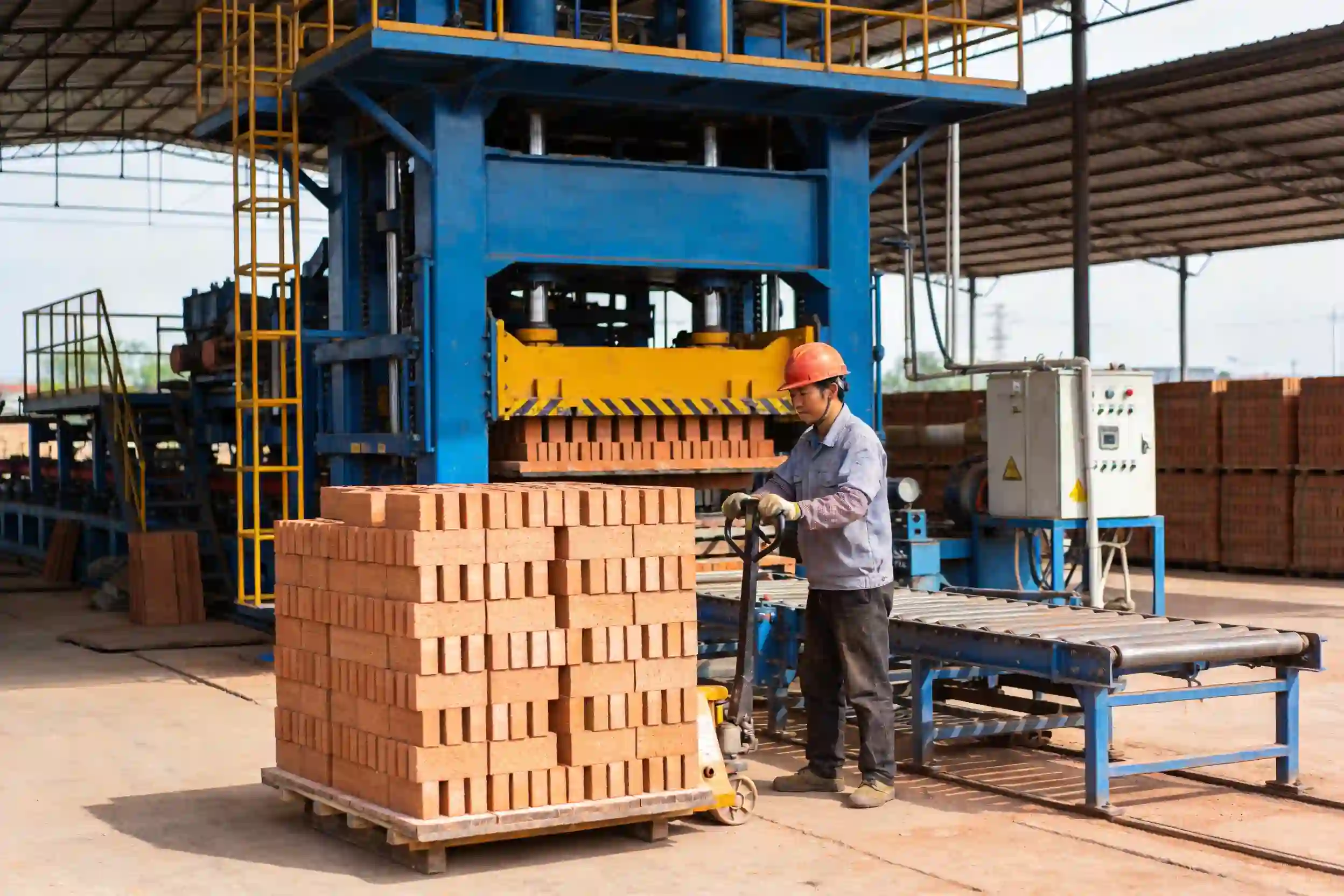
In projects where we've customized cutting solutions for carbon fiber clients, I've learned that stated requirements often differ from actual production needs. One automotive supplier initially requested high-speed cutting for carbon fiber seat components. When we examined their production drawings, most parts included tight-radius curves and small mounting holes. High-speed cutting would have compromised edge quality on their most critical features. We configured medium-speed equipment with precision positioning instead.
The scenario determines which equipment capabilities actually matter to you. Aerospace applications often prioritize repeatability and edge quality over cutting speed. Automotive applications need volume throughput but with consistent results across thousands of parts. Each scenario needs different equipment balancing.
Equipment Configuration by Production Scenario
| Scenario Type | Primary Requirements | Equipment Focus | Configuration Priority |
|---|---|---|---|
| Aerospace structural parts | Edge quality, repeatability, documentation | Precision positioning, quality monitoring | Accuracy over speed, full traceability |
| Automotive interior trim | Volume throughput, appearance quality | Multi-head cutting, automated loading | Speed with appearance standards |
| Sporting goods manufacturing | Cost efficiency, design flexibility | Versatile tooling, quick changeover | Balance of cost and capability |
| Marine composite parts | Large format capability, varied thickness | Extended work area, robust construction | Size capacity, thickness range |
One marine parts manufacturer contacted us about cutting carbon fiber reinforcement patches for boat hull repairs. Their parts ranged from 200mm circles to 3-meter panels in the same production day. Standard cutting tables couldn't handle their size range economically. We configured a modular system that could process both small high-volume parts and occasional large components without requiring two separate machines.
The material testing phase reveals capabilities that sales literature doesn't show. When clients send us sample materials before equipment purchase, I test their specific carbon fiber grade, weave pattern, and thickness. A supplier's statement that their machine "cuts carbon fiber" doesn't tell you whether it cuts your carbon fiber at your required quality level.
This testing saved one aerospace supplier from a costly mistake. They were comparing equipment based on published cutting speeds, and one manufacturer claimed faster processing. When we tested their actual pre-preg material—a high-temperature epoxy system with intermediate modulus fiber—the faster machine created edge quality problems their QC team would reject. The supposedly "slower" equipment produced acceptable parts because it matched their material requirements.
You also need to consider what happens after the cut. Some applications require parts to remain tacky for immediate layup. Others need deburring or edge sealing. If your post-cutting process requires handling parts within minutes, equipment configuration needs to support that workflow. A machine that produces perfect cuts but requires 20 minutes of fixturing time per part doesn't solve your production problem.
What Should You Test Before Investing in Cutting Equipment?
I've seen too many manufacturers buy equipment based on specifications, then discover it doesn't work with their production materials. Sample testing costs you time upfront but prevents expensive mistakes.
Effective pre-purchase testing requires sending representative material samples in production thickness and finish state to equipment manufacturers for cutting trials. Request actual cut parts for inspection, not just cutting videos, and evaluate edge quality, dimensional accuracy, and processing time for your specific geometry. Testing should include your most challenging features—minimum radius curves, smallest holes, and thinnest sections—not just simple rectangular cuts.
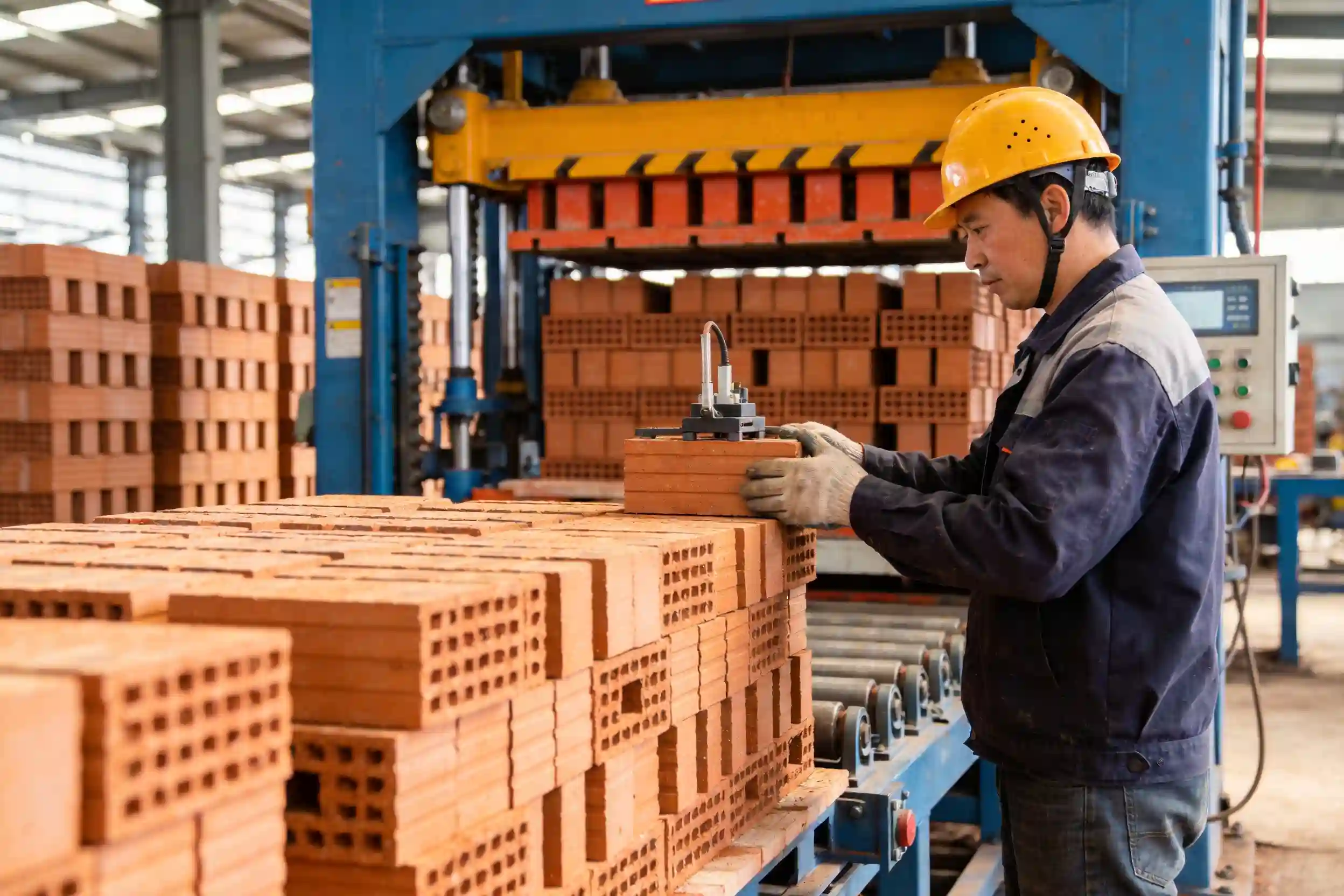
When clients request cutting tests, I ask for three types of samples: their most common production part, their most geometrically complex part, and a sample that represents their quality limits. This reveals whether equipment handles typical work, worst-case scenarios, and borderline cases where they might accept or reject parts.
One automotive supplier sent us a simple bracket design for initial testing. The test results looked perfect. Then they sent their actual production drawing, which included a complex curved edge with 3mm radius corners. Their original sample hadn't tested any curves. We reran tests with the actual geometry and found we needed different blade configuration to handle their corner radii without fiber pull-out.
The testing process should answer specific questions:
Critical Testing Evaluation Points
| Test Category | What to Examine | Why It Matters | Rejection Indicators |
|---|---|---|---|
| Edge quality | Fiber alignment, resin condition | Determines if parts meet assembly requirements | Loose fibers, resin smearing, delamination |
| Dimensional accuracy | Cut line position vs. design file | Affects part fit in assemblies | Deviation exceeding tolerance, inconsistent corners |
| Processing time | Actual cutting time for sample part | Reveals production capacity vs. requirements | Time exceeds production cycle requirements |
| Material waste | Scrap generation, edge trim width | Impacts material cost at production volume | Excessive trim requirements, layout inefficiency |
In projects where we've provided test cutting services, customers often discover that their material specifications don't match what they actually receive from suppliers. One aerospace parts manufacturer sent us material samples labeled as "standard modulus carbon fiber." When we cut test pieces, the edge quality indicated a material with different resin content than specified. This wasn't an equipment problem—their material supplier had shipped incorrect grade material. The test cutting revealed a procurement issue before it affected production.
You should also test at production conditions, not ideal conditions. If your facility has temperature variations or humidity changes, mention this during testing. Some resin systems behave differently at different ambient conditions. Equipment that produces good results in a climate-controlled testing environment might create problems in your actual production area.
I always recommend testing material from at least two different batches if you're planning significant equipment investment. Material variation between production lots sometimes affects cutting parameters. One manufacturer discovered this when their test samples cut perfectly, but their first production batch created edge quality problems. The material supplier had changed resin formulation slightly between batches without notification.
Conclusion
The wrong cutting equipment creates material waste and production delays that cost more than the equipment price difference. Match your solution to your specific material state, test with your actual production samples, and evaluate results against your quality requirements before purchase. This approach prevents the expensive failures I've watched other manufacturers experience.
[^1]: "[PDF] Processing-structure-property relationships of continuous carbon ...", http://www.acsu.buffalo.edu/~ddlchung/Processing%20structure%20property%20pub%20author.pdf. Carbon fiber composites are engineered materials where continuous carbon fibers are embedded in polymer resin matrices, with mechanical properties determined by fiber orientation, volume fraction, and matrix cure state, as documented in materials science references. Evidence role: definition; source type: encyclopedia. Supports: the structural composition of carbon fiber composites and how fiber orientation affects properties. Scope note: General composite structure principles; specific cutting implications require additional support [^2]: "Delamination - Wikipedia", https://en.wikipedia.org/wiki/Delamination. Delamination in composite machining occurs when cutting forces exceed interlaminar bond strength, causing separation between fiber layers, with research identifying thrust forces, tool geometry, and cutting speed as primary factors influencing delamination onset in carbon fiber laminates. Evidence role: mechanism; source type: paper. Supports: the mechanical mechanisms by which cutting forces cause delamination in layered composites. [^3]: "[PDF] Characterization of Prepreg Tack for Composite Manufacturing by ...", https://ntrs.nasa.gov/api/citations/20200002451/downloads/20200002451.pdf. Pre-preg (pre-impregnated) materials consist of reinforcement fibers pre-coated with resin systems in a partially cured B-stage state, remaining tacky and requiring refrigerated storage until final cure, as defined in composite manufacturing references. Evidence role: definition; source type: encyclopedia. Supports: what pre-preg materials are and their characteristic partially-cured state. [^4]: "Destruction of Carbon and Glass Fibers during Chip Machining of ...", https://pmc.ncbi.nlm.nih.gov/articles/PMC10346565/. Composite manufacturing operations commonly report scrap rates ranging from 5-50% depending on process control and material handling, with cutting and trimming operations identified as significant contributors to waste in industry studies. Evidence role: statistic; source type: research. Supports: typical scrap rates in composite manufacturing due to processing defects. Scope note: Industry-wide statistics rather than verification of the specific 40% case mentioned [^5]: "Carbon Fiber Oxidation in 4D - PMC - NIH", https://pmc.ncbi.nlm.nih.gov/articles/PMC12548517/. Carbon fibers undergo oxidative degradation when exposed to elevated temperatures in the presence of oxygen, with research showing that laser cutting temperatures (often exceeding 600°C locally) can initiate fiber oxidation at cut edges, reducing fiber strength and creating a weakened boundary zone. Evidence role: mechanism; source type: paper. Supports: how high-temperature laser cutting causes oxidation of carbon fibers. [^6]: "Glass transition - Wikipedia", https://en.wikipedia.org/wiki/Glass_transition. Glass transition temperature (Tg) represents the temperature range where amorphous polymers transition from rigid glassy state to softer rubbery state, a critical property in thermoset composites where exceeding Tg during processing can cause permanent material degradation. Evidence role: definition; source type: encyclopedia. Supports: what glass transition temperature means and its significance in polymer behavior. [^7]: "[PDF] DOT-FAA-AR-03-19.pdf", https://agate.niar.wichita.edu/Materials/DOT-FAA-AR-03-19.pdf. Aerospace-grade epoxy systems typically refer to high-performance thermoset resins meeting specifications such as those in aerospace material standards, characterized by elevated glass transition temperatures (typically 120-180°C), high mechanical properties, and controlled processing requirements. Evidence role: definition; source type: education. Supports: what distinguishes aerospace-grade epoxy systems and their thermal properties. Scope note: General aerospace material characteristics; specific cutting temperature thresholds require additional context [^8]: "[PDF] Damage accumulation in a carbon fiber fabric reinforced cyanate ...", https://www.colorado.edu/lab/barthelat/sites/default/files/attached-files/cpbe2016.pdf. Studies using microscopy and non-destructive testing have documented micro-crack formation in laser-cut composites, attributed to thermal stress gradients and differential thermal expansion between fibers and matrix, with cracks potentially propagating along fiber-matrix interfaces and between laminate layers. Evidence role: mechanism; source type: paper. Supports: how thermal stress from laser cutting initiates micro-cracking in composite laminates. [^9]: "[PDF] Parameter Optimization for Preparing Carbon Fiber/Epoxy ...", https://repositories.lib.utexas.edu/bitstreams/37106114-f8dc-4414-bcaf-66ad7d22f5c6/download. Research on pre-preg cutting parameters indicates that lower cutting speeds (typically 10-30mm/s) with oscillating or ultrasonic-assisted cutting reduce resin displacement and fiber damage compared to higher-speed methods, though optimal parameters vary with specific resin systems and fiber architectures. Evidence role: statistic; source type: paper. Supports: recommended cutting speed ranges for pre-preg composite materials. Scope note: Parameter ranges are material-dependent; cited 15-25mm/s represents typical rather than universal values [^10]: "[PDF] Document No.: NPS 80530R Rev -, December 22, 2020", https://www.wichita.edu/research/NIAR/Documents/NPS-80530R-Repair-Process-Specification-12-22-2020.pdf. Industrial fabric cutting systems typically employ vacuum hold-down pressures ranging from 0.5-1.5 bar depending on material weight and weave structure, with higher pressures required for materials prone to shifting or lifting during cutting operations. Evidence role: statistic; source type: research. Supports: typical vacuum pressure requirements for securing fabric materials during cutting. Scope note: Pressure requirements vary with fabric weight and weave; 0.8 bar represents a typical minimum rather than universal requirement [^11]: "TANGENTIAL Definition & Meaning - Merriam-Webster", https://www.merriam-webster.com/dictionary/tangential. Tangential cutting employs a blade that rotates to maintain optimal cutting angle relative to the cutting path direction, allowing the blade orientation to follow curves and complex geometries while maintaining consistent cutting forces, a technique commonly used for materials requiring controlled cutting angles. Evidence role: definition; source type: education. Supports: what tangential cutting means and how it differs from other cutting methods. Scope note: General tangential cutting principle; specific advantages for composites require additional context


