

Fast Shipping
Carrier information

20k products
Payment methods

24/7 Support
Unlimited help desk

2-day Delivery
Track or off orders
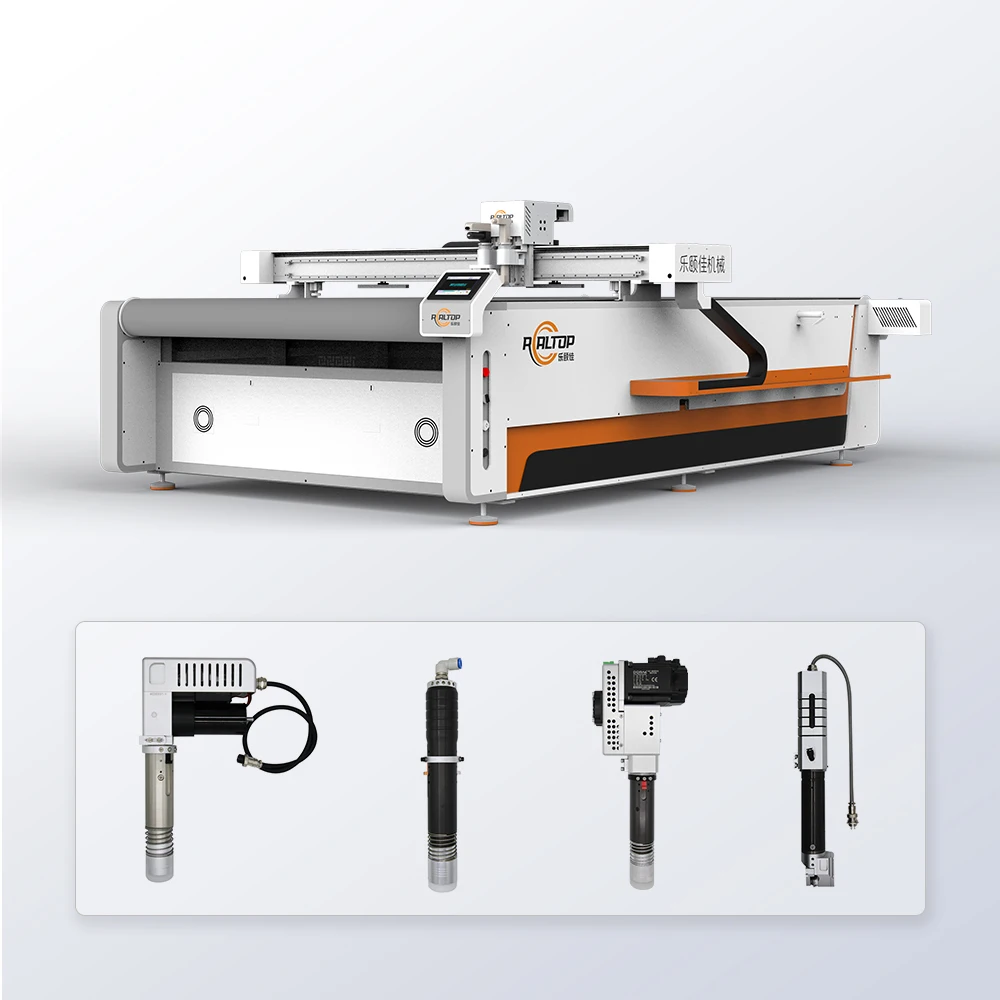
Tool Head Matched to Material — Oscillating, driven rotary and pneumatic knife options specified against your fabric weight, weave structure and layer count, not assigned by catalog default.
Technical Specifications
| Parameter | Value |
|---|---|
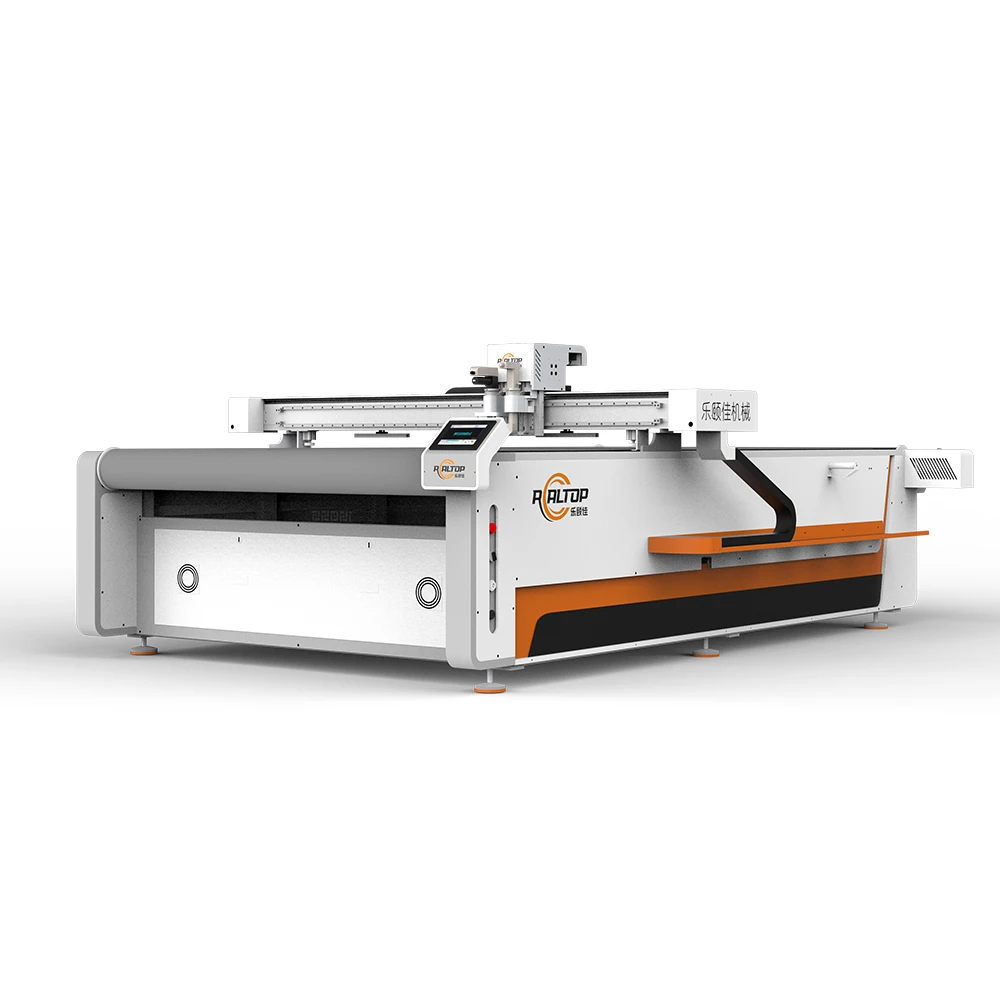
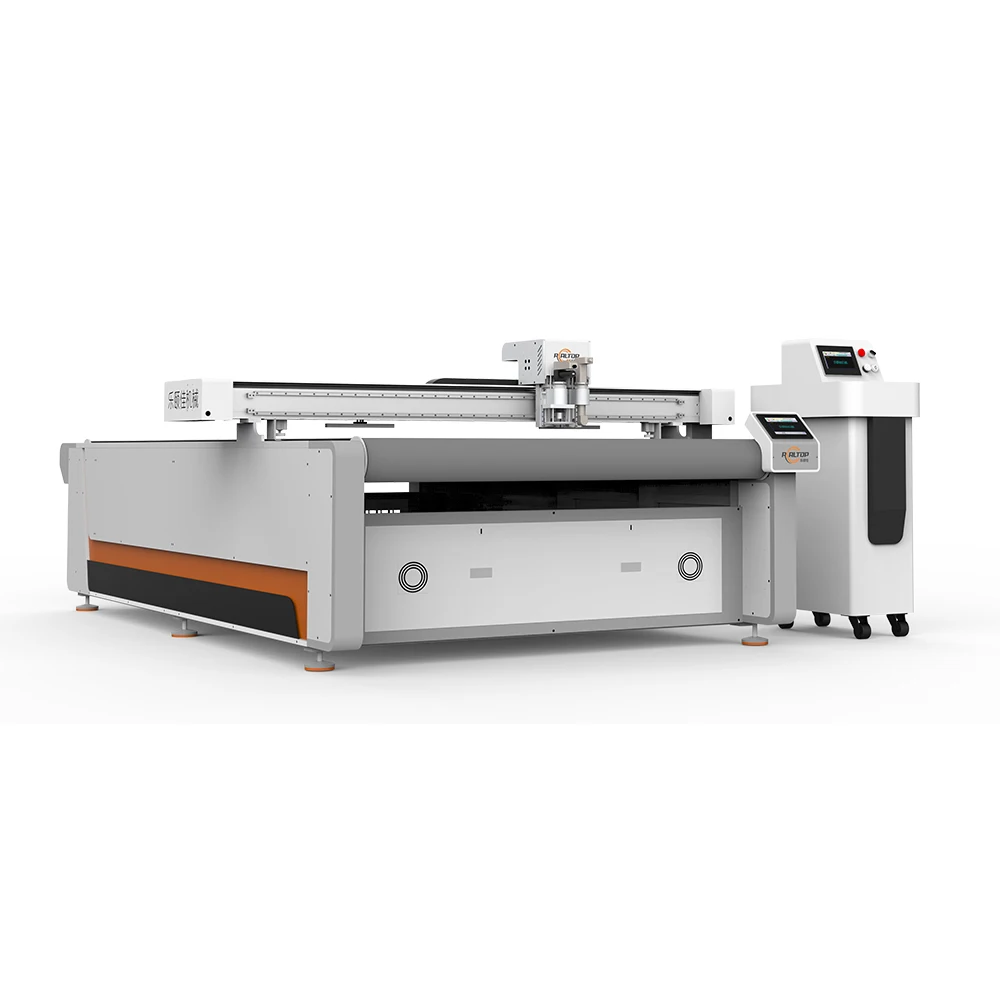
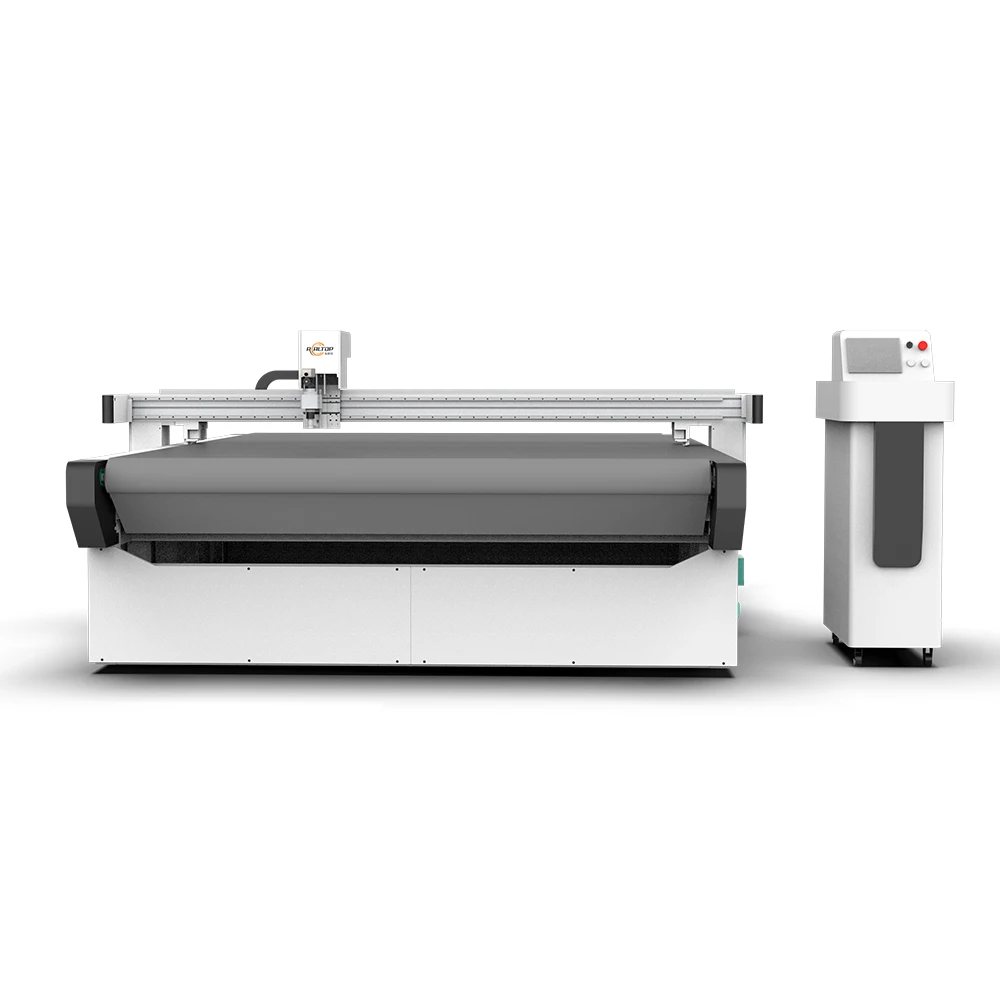
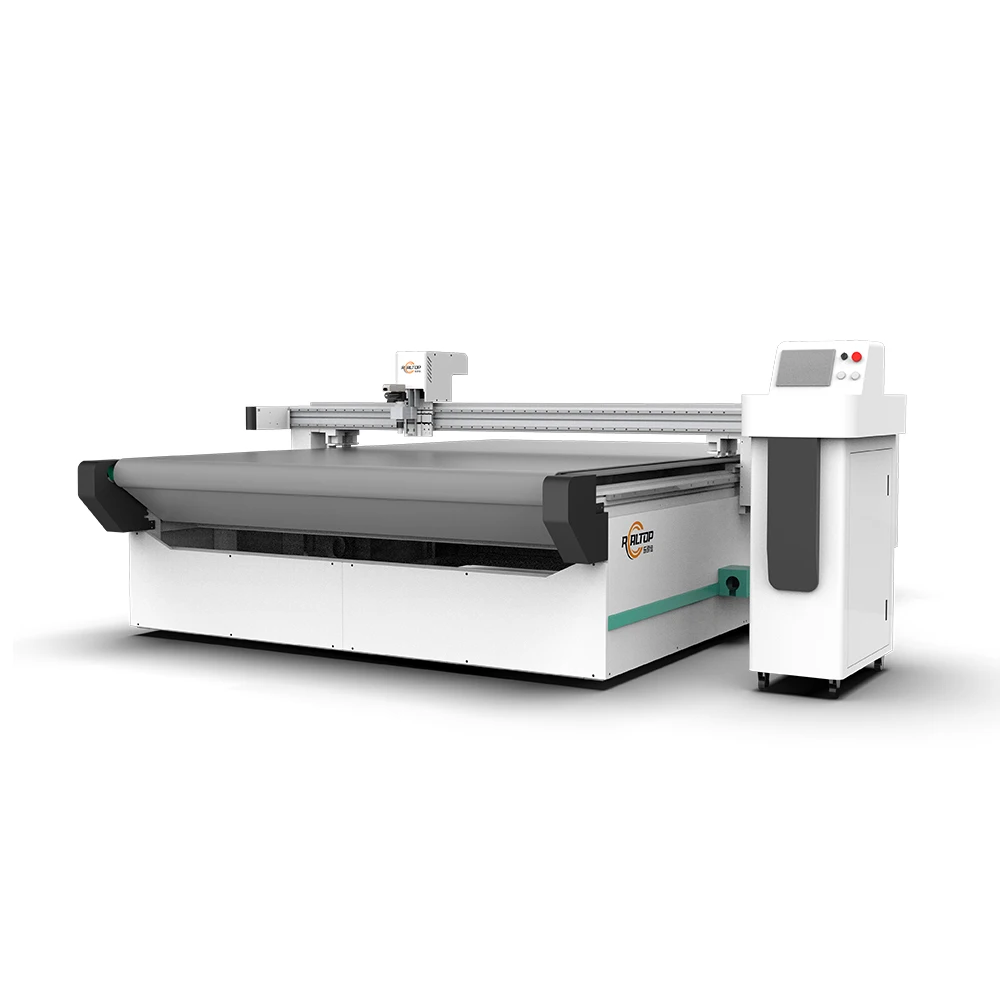
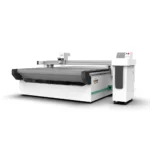
| Product Type | CNC Oscillating Knife Cutting Machine |
| Working Area | 1600×2500 mm |
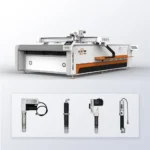
| Tool Head Options | Oscillating knife, Driven rotary knife, Creasing wheel, Kiss cutting tool, Pneumatic knife, Milling tool, V groove knife |
| Cutting Speed Range | 0–2000 mm/s |
| Cutting Thickness Capacity | ≤ 30 mm (basis not stated in source — confirm material type and layer count) |
| Positioning Accuracy | ±0.1 mm |
| Vacuum Pump Power | 9 kW |
| Vacuum Table Construction | Aluminum bellows type, full-surface adsorption |
| Control System | PLC control panel with optional display languages |
| Servo Motor Options | Panasonic, Delta, Dorna |
| Voltage Options | 110V / 220V / 380V |
| Language Options | English, Russian, Italian, Chinese; custom languages available |
| File Format Compatibility | PLT, DXF, AI, PDF |
| Nesting Software | Included, supports automatic defect avoidance and layout optimization |
| Safety Devices | Infrared sensor and emergency stop |
| Machine Dimensions (L×W×H) | 3300×2100×1350 mm |
| Certification | CE (verify against documentation) |
| Assembly State | Fully assembled |
Application Suitability
| Application | Material or Output |
|---|---|
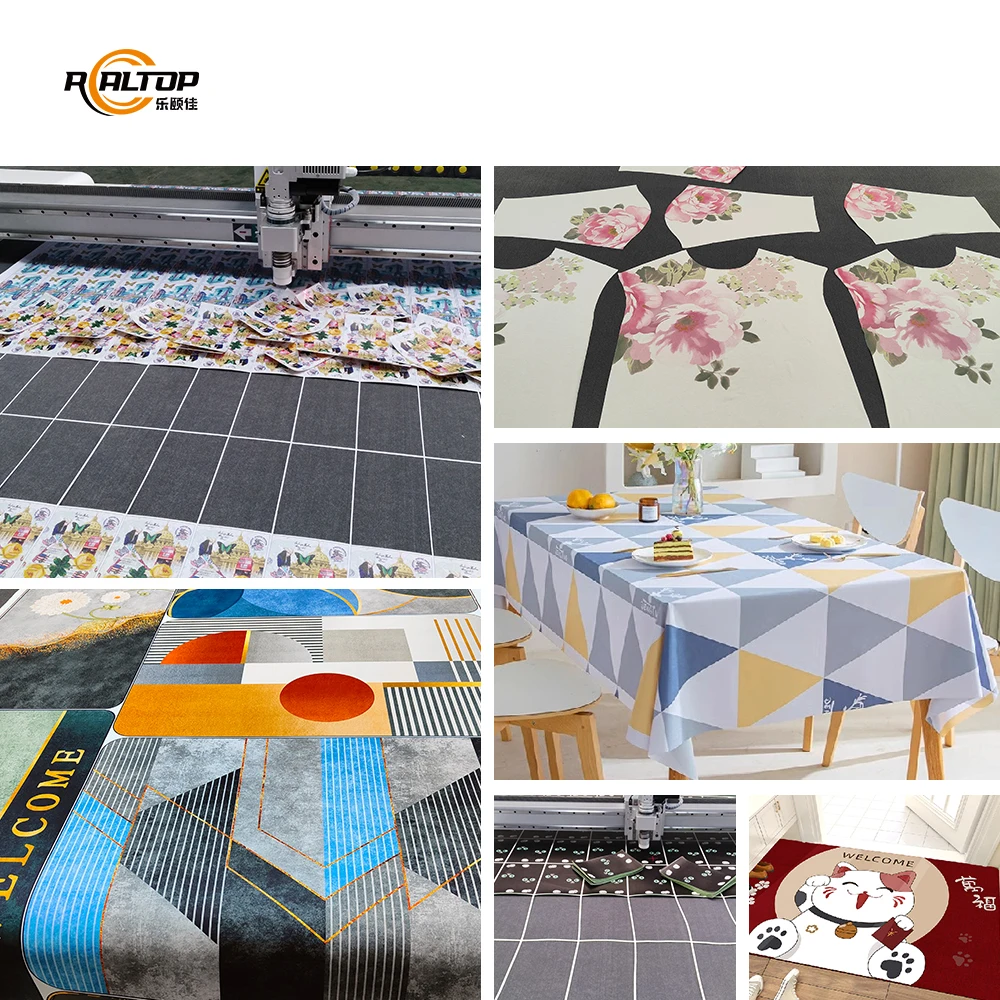
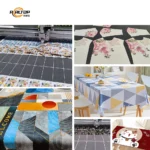
| Fashion accessories and silk scarf production | Silk, chiffon, satin, lightweight woven and printed fabrics requiring contour-matched cutting |
| Apparel manufacturing | Suits, knitwear, lace, complex patterned fabrics with multi-ply layups |
| Home textile fabrication | Sofa fabrics, curtains, rugs processed in multi-layer stacks |
| Automotive interior textiles | Seat fabrics, carpets, PVC mats cut to burr-free edge standards |
| Composite material processing | Carbon fiber prepreg, aramid and specialty technical textiles without delamination |
Why the Wrong Knife Head Ruins More Fabric Than the Operator
Tool head selection must happen after your material is cut on the actual machine — not before.
A buyer once specified an oscillating knife for a silk scarf line based on a working area conversation. The first run on printed charmeuse was flawless. When production shifted to a coated blend for the same client, the oscillating action frayed the coating at the edges, and the vacuum table could not hold the thinner layup flat at full speed. Four days of remote tuning later, we swapped to a driven rotary knife, adjusted the vacuum zoning, and the line stabilized. A CNC oscillating knife cutting machine for fabric only performs as well as its tool head match to the specific textile in the layup [NEED_CITE: textile cutting tool head selection by material type].
Knife Frequency, Blade Angle and What They Actually Control
The oscillating knife head vibrates at a set frequency, allowing it to cut through compressed fabric layers cleanly without dragging. On lightweight wovens like silk scarves, a high-frequency, low-amplitude setting produces sealed edges that resist fraying. Heavier knits and plush textiles need the opposite — slower oscillation with deeper stroke to prevent bunching. The CNC oscillating knife cutting machine for fabric here carries seven interchangeable tool heads so that one machine handles the full spectrum, from chiffon scarves to automotive carpet stacks.
Vacuum Adsorption Zoning and Small-Part Holding Power
The aluminum bellows vacuum table divides the 1600×2500 mm work surface into controllable zones. When cutting large panels, full-surface adsorption engages across the entire bed. When the job shifts to small pattern pieces — scarf panels, collar templates, lace inserts — only the active zone needs to draw vacuum, concentrating suction on the cutting area and preventing lift at the blade exit point. This matters on lightweight silk and stretchy knits where even slight movement during a 2000 mm/s pass throws the edge off by millimeters [NEED_CITE: vacuum zoning requirements for lightweight textile cutting].
What ±0.1 mm Positioning Accuracy Means Downstream
Repeat positioning at ±0.1 mm across the full bed ensures that a contour traced by the CCD camera on a printed silk scarf aligns with the cut path every time, regardless of where the piece sits on the table. For apparel producers stacking sixty or eighty plies, this tolerance keeps the bottom layer in register with the top. The servo motors — available in Panasonic, Delta or Dorna configurations — close the loop on each axis, and the PLC panel stores the acceleration profiles so that switching between a delicate single-ply silk scarf and a dense multi-layer curtain layup does not require recalibration from scratch.
The Cost of Skipping the Sample Cut
Sending a fabric swatch is not the same as sending a production roll. Swatches come from the bolt’s edge, pre-tensioned and flat. A production roll carries its own bias, residual dye stiffness and coating texture. When a buyer skips the sample cut on their actual production material, they discover problems only after the machine arrives: the driven rotary knife drags on a specific coated polyester, or the vacuum table cannot hold a particular open-weave linen at the required speed. These issues are solvable, but solving them remotely takes days instead of hours [NEED_CITE: fabric cutting sample testing protocols before equipment purchase].
Why Buyers Come Back for the Second Machine
In-house design and production across both knife and laser cutting technology means the cutting method is chosen for your material, not forced into whichever machine is in stock. Tool head and vacuum table configuration is specified per fabric type and daily layup volume, documented before the order is signed. CCD camera positioning is validated on your printed registration marks, on your stretchy or reflective textile, before shipping. Software compatibility — your existing DXF, AI, PLT or PDF nesting files — is confirmed in advance. Voltage, plug type and control panel language are locked in, not guessed at the packing stage.
Documentation & Verification
- Factory test record showing cut accuracy and edge quality on your supplied fabric
- Tool head and vacuum table configuration list matched to your material and layup count
- Software licence and file format compatibility note for your nesting workflow
- Electrical schematic with confirmed voltage, plug type and frequency
- Operation and maintenance manual in your specified control language
- CE declaration documentation where applicable for your destination market
Installation, Commissioning & Support
- Fully assembled 3300×2100×1350 mm frame arrives requiring only power connection and leveling
- 9 kW vacuum pump requires a dedicated circuit matching confirmed voltage and frequency
- PLC control panel initialized with your chosen language during on-site commissioning
- First-run cutting parameters set and documented using your production fabric rolls
- Spare parts list covers blades, oscillating knife components and vacuum table seals
- Maintenance schedule calibrated to your daily operating hours and material abrasiveness
What We Need Before Quoting
Before any configuration is proposed, send the exact fabric you intend to cut — including the specific coated, printed or blended variant from your production line — along with target layup thickness, daily cutting volume and your current nesting software format. Confirm your workshop voltage, frequency and preferred control language so the electrical and interface specifications are documented in the quotation rather than adjusted after the order [NEED_CITE: industrial equipment voltage and frequency confirmation before shipment].
Frequently Asked Questions
Q: How is the correct tool head selected for my specific fabric type, weight and layer count?
A: We run your actual production fabric on the machine, testing oscillating, driven rotary and pneumatic knife heads against your target layup thickness. The selection is based on edge quality, cutting speed stability and material holding — not catalog defaults. Your sample cutting report documents which head performed best at which settings.
Q: Can the vacuum table zoning hold small pattern pieces without lift at full cutting speed?
A: The aluminum bellows table divides into independently controlled zones. For small scarf panels or lace inserts, only the active cutting zone draws full vacuum, concentrating suction where the blade passes. This prevents lightweight silk and stretchy knit pieces from shifting during high-speed contour cuts.
Q: Does CCD contour recognition track printed registration marks reliably on stretchy or reflective fabrics?
A: CCD tracking depends on mark contrast and fabric surface behavior under the camera. We validate contour recognition on your specific printed textile — including stretchy knits and reflective coated fabrics — during the sample cutting stage and document the results before confirming the configuration.
Q: What software file formats and nesting workflows are compatible with my existing design system?
A: The system imports PLT, DXF, AI and PDF files directly. The included nesting software supports automatic defect avoidance and layout optimization. We confirm file format compatibility and nesting workflow integration with your current design output before the order is finalized.
Q: What voltage, plug type and control panel language are confirmed before shipment?
A: Voltage options include 110V, 220V and 380V. Your specific voltage, frequency, plug type and preferred control panel language — from English, Russian, Italian, Chinese or a custom option — are confirmed in writing before production begins and documented on the electrical schematic.


商品评价
Clear filtersThere are no reviews yet.