







Fast Shipping
Carrier information

20k products
Payment methods

24/7 Support
Unlimited help desk

2-day Delivery
Track or off orders
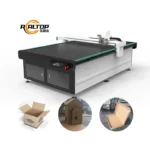
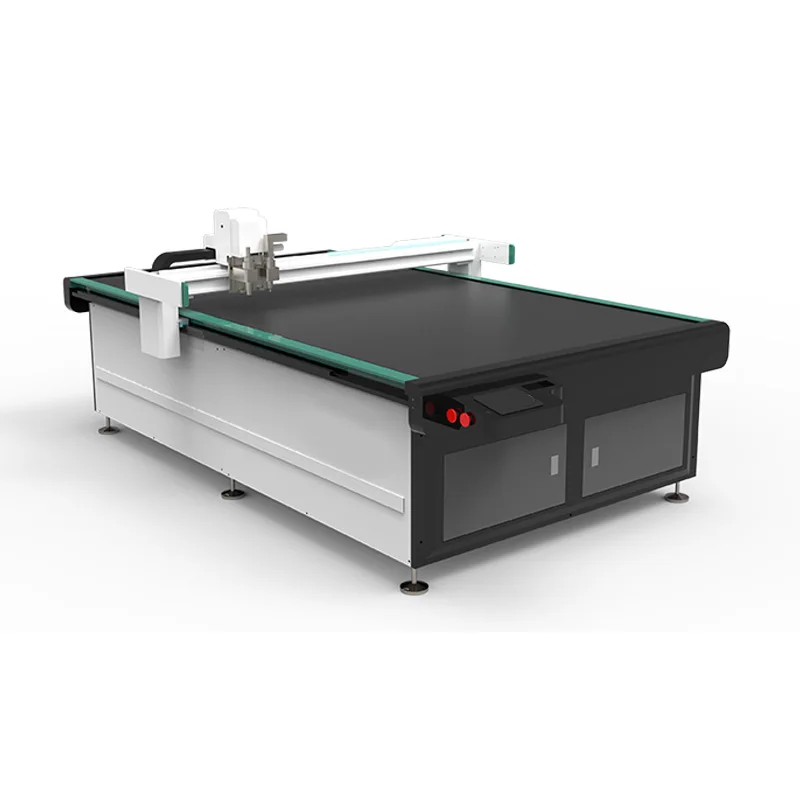
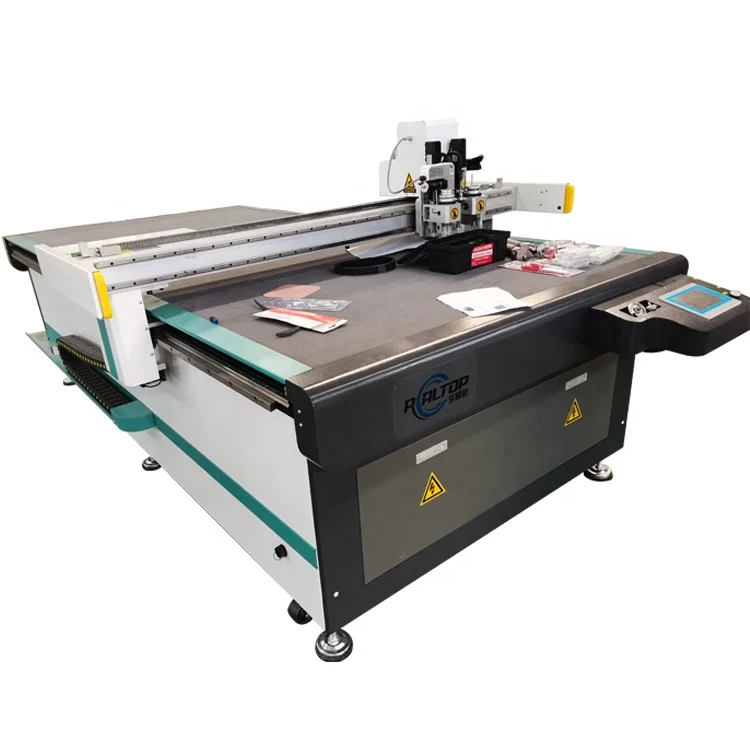
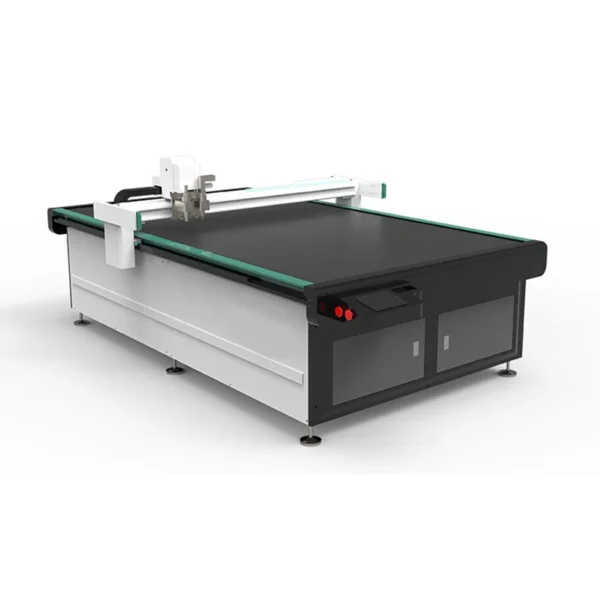
Configurable Tool Head & Vacuum Zoning — the RT-D2516/RT-S2516 is specified around your actual board density and smallest die-cut dimension, not just a 1600×2500mm footprint.
Technical Specifications
| Parameter | Value |
|---|---|
| Model | RT-D2516/RT-S2516 |
| Product Type | CNC Digital Cutting Machine for Cardboard and Packaging |
| Working Area | 1600 × 2500 mm |
| Machine Dimensions (L × W × H) | 3450 × 2300 × 1250 mm |
| Rated Power | 9 kW |
| Voltage | 380V ± 10% |
| Frequency | 50Hz / 60Hz (basis to be confirmed) |
| Table Type | Flat working table with auto-feeding conveyor |
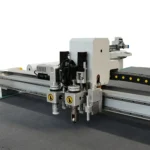
| Tool Head | Swiss imported oscillating knife — full cut, half cut, cursor location |
| Translational Velocity | 800 – 1200 mm/s |
| Cutting Speed | 200 – 800 mm/s (basis to be confirmed per material and thickness) |
| Repeated Accuracy | ≤ 0.1 mm |
| Servo Motor | Japanese Yaskawa digital servo |
| Linear Guide | Taiwan Hiwin rail |
| Transmission | Synchronous belt and imported ball screw |
| Conveyor Belt | Germany imported |
| Vacuum Pump | 7.5 kW |
| Safety Device | Infrared sensors |
| Instruction System | HP-GL compatible format |
| Software Compatibility | HP-GL (DXF, AI, PLT — basis to be confirmed) |
| CCD Camera | Availability to be confirmed |
| Vacuum Zones | Zoning configuration to be confirmed per buyer part size |
| Control Language | Options to be confirmed |
Application Suitability
| Application | Material or Output |
|---|---|
| Carton and packaging sample making | Single, double and triple-wall corrugated board, greyboard, folding carton stock |
| Short-run die-free packaging production | Recycled and virgin corrugated, honeycomb board, foam board |
| Leather goods and footwear cutting | Natural leather, PU and PVC synthetic leather, split hide |
| Flexible material processing | PVC sheets, sponge composite leather, silicone, rubber, soft glass |
Why Board Density Matters More Than Working Area on a CNC Oscillating Knife Cutting Table
Spec the blade and vacuum zoning to your heaviest board grade before anything else.
I have walked into packaging shops where a brand-new flatbed cutter sat half-idle because the oscillating blade burned through recycled corrugated in a few sheets and the vacuum table could not grip small nesting pieces. The machine was rated for the right footprint but nobody had checked board density against the knife stroke or matched the vacuum zones to the smallest cutout in the run. Production speed on a CNC oscillating knife cutting table specifications sheet means little when the physical setup fights the material all shift [NEED_CITE: material density effects on oscillating knife wear rates].
Knife Stroke, Board Grade and the Edge You Actually Ship
The Swiss imported oscillating knife head on the RT-D2516/RT-S2516 supports full cutting, half cutting and cursor location, each suited to a different material behavior. Full stroke works through thicker corrugated stacks where the blade must clear the flute in one pass, while half cutting scores folding carton stock without penetrating the liner. Selecting the wrong mode on a CNC oscillating knife cutting table leaves crushed flutes on heavy board or incomplete cuts on dense composites, so the tool head choice is locked in during the sample test on your own material before the machine ships.
Vacuum Zoning Decides Whether Small Parts Stay Flat
A 7.5 kW vacuum pump moves serious air, but on a 1600 × 2500 mm flat table that volume spreads thin if the zoning does not match the nesting layout. Small carton inserts and gasket blanks lift at the trailing edge the moment the knife exits, shifting position and ruining the tolerance stack. The RT-D2516/RT-S2516 vacuum zone layout is confirmed against your typical nest pattern so that suction concentrates under the smallest piece rather than bleeding across empty table surface [NEED_CITE: vacuum hold-down principles for flatbed digital cutting].
Reading the Specs That Actually Affect Your Cut Quality
Repeated accuracy of ≤ 0.1 mm across the full working envelope depends on the Yaskawa servo and Hiwin linear rail combination working under real cutting load. When the oscillating knife meets a dense gasket or triple-wall board, lateral force pushes the carriage; the imported ball screw and synchronous belt keep position drift inside tolerance. Cutting speed of 200 – 800 mm/s is a range, not a promise — the achievable rate on your material is established during sample cutting and recorded in the test report. The HP-GL instruction system handles standard vector paths, and additional format support such as DXF, AI and PLT is confirmed against your existing design workflow before order so that file translation does not slow your first production week.
The Cost of Skipping the Sample Test
Buyers who approve a flatbed CNC knife cutter on brochure specs alone often discover the problem on day one of production: ragged edges on leather, crushed foam cores, or half-cut creases that tear instead of fold. Reworking the tool head configuration after the machine has left the factory means shipping replacement blades, recalibrating stroke depth and losing a production window. Every avoidable scrap sheet traces back to a parameter that should have been verified on the buyer’s own material before commitment [NEED_CITE: cost of post-delivery reconfiguration on CNC cutting equipment].
Why Source This Machine From Realtop
In-house design covers both knife and laser cutting technologies, so the RT-D2516/RT-S2516 can be specified purely for knife work without forcing a laser head into the build. Tool head and table configuration are locked per material and production volume, not left as a generic default. Sample cutting on the buyer’s own board, leather or composite runs before order confirmation, producing a written report on edge quality, cutting depth and achievable speed. Voltage, frequency, plug type and control language are confirmed to match the destination facility. Software file format and nesting workflow compatibility is documented before the deposit is paid, not discovered at commissioning.
Documentation & Verification
- Machine specification sheet listing confirmed tool head, vacuum zone layout and conveyor option
- Electrical schematic with voltage, frequency and plug type matched to your facility
- Sample cutting report on your board grade and leather stock before order confirmation
- Software licence and file format compatibility note covering your design and nesting workflow
- Factory test record documenting repeated accuracy across the full 1600 × 2500 mm envelope
- Spare parts list identifying oscillating blades, vacuum cups and belt segments by part number
Installation, Commissioning & Support
- 9 kW rated power plus 7.5 kW vacuum pump require a dedicated 380V circuit with confirmed frequency
- 3450 × 2300 mm machine footprint needs clear access on three sides for belt loading and maintenance
- Yaskawa servo parameters calibrated on-site against your thickest board grade at commissioning
- Oscillating knife stroke depth and half-cut pressure set per material during first-run training
- Hiwin linear rail lubrication schedule and synchronous belt tension check provided in the maintenance manual
- Infrared sensor safety zone tested and certified before operator handover
What We Need to Spec Your Machine Correctly
Send us your typical board grades with flute type and thickness range, the smallest cutout dimension in your most common nest pattern, and your daily sheet volume. Confirm the facility voltage, frequency and the control language your operators prefer. If you run printed carton stock that requires contour registration, tell us the mark style and placement so we can confirm CCD availability and camera positioning parameters before the quotation is finalized.
Frequently Asked Questions
Q: How is cutting speed determined for my specific corrugated board and thickness?
A: The 200 – 800 mm/s range depends entirely on board density, flute profile and knife stroke mode. We run your actual board stock on the RT-D2516/RT-S2516 during the sample test and record the sustainable speed with acceptable edge quality. That figure goes into your sample cutting report so you know the real throughput before committing to the order.
Q: What vacuum table zoning options prevent small packaging inserts from lifting?
A: The 7.5 kW vacuum pump is distributed across zones sized to your typical nesting layout. We review your most common cut sheet, identify the smallest part, and configure zone boundaries so suction concentrates under those pieces. The zoning layout is documented in your configuration list before production starts.
Q: Is CCD camera contour recognition available for printed carton registration marks?
A: CCD availability on the RT-D2516/RT-S2516 is confirmed during the inquiry stage. If you cut printed packaging, share the mark style, size and placement so we can verify that the camera tracks your contours at production speed and include the result in the sample cutting report.
Q: Which file formats does the software accept beyond HP-GL?
A: The instruction system is HP-GL compatible as standard. Support for DXF, AI, PLT and nesting optimization software is confirmed against your existing design workflow before order. We document the confirmed formats in a software compatibility note so there are no surprises at commissioning.
Q: What voltage, frequency and control language options can I choose?
A: The RT-D2516/RT-S2516 runs on 380V ± 10% with frequency and plug type confirmed for your market. Control system language options are agreed during the specification stage and recorded on the electrical schematic. This ensures the machine matches your facility and operators from the first day of production.


商品评价
Clear filtersThere are no reviews yet.