








Fast Shipping
Carrier information

20k products
Payment methods

24/7 Support
Unlimited help desk

2-day Delivery
Track or off orders
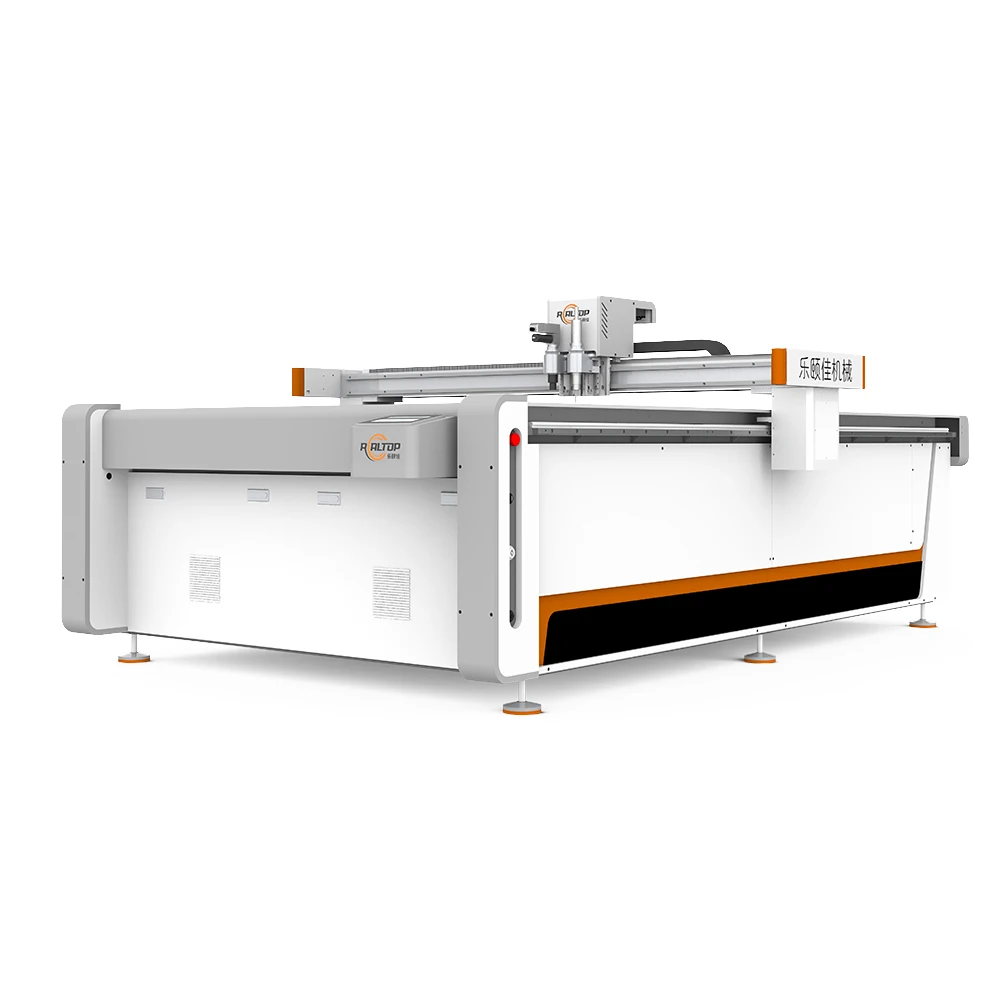
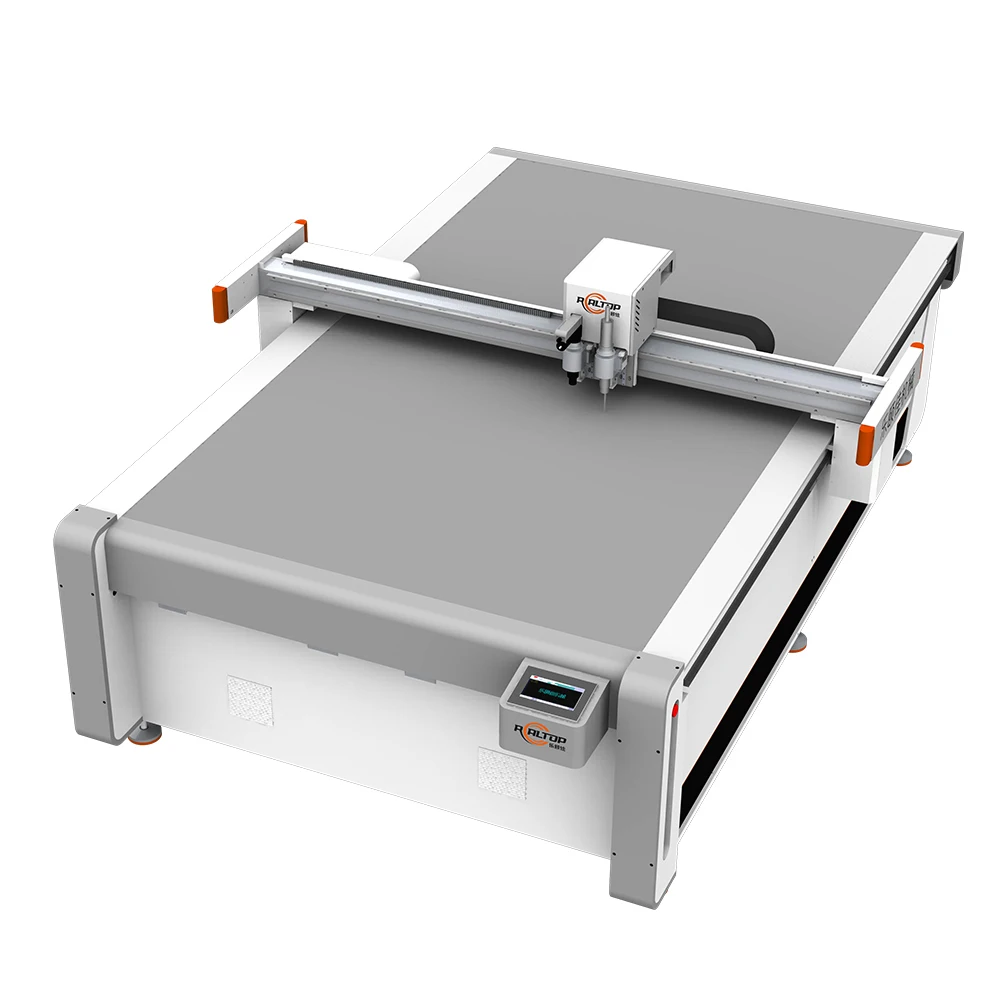
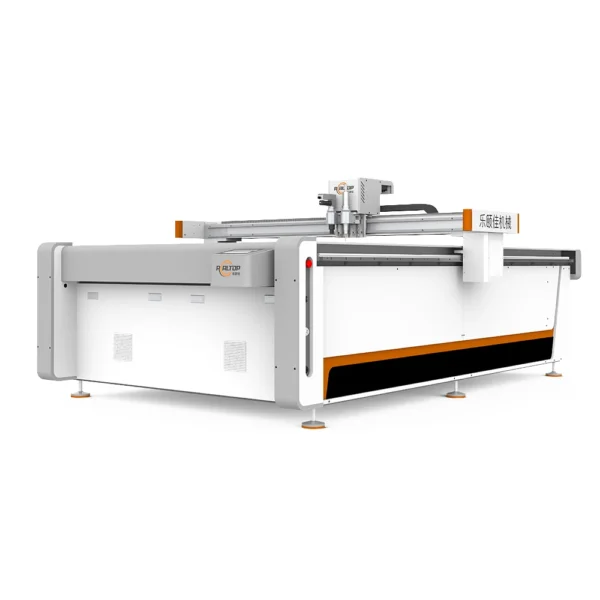
Tool head configured per substrate — the 1625 table ships with oscillating knife, creasing wheel, kiss cutting, and V-groove tool handles selected against the buyer’s corrugated flute profile and board density before production begins.
Technical Specifications
| Parameter | Value |
|---|---|
| Model | 1625 |
| Product Type | CNC Oscillating Knife Cutting Machine |
| Working Area | 1600×2500 mm |
| Tool Head Options | Oscillating knife, Driven rotary knife, Creasing wheel, Kiss cutting tool, Pneumatic knife, Milling tool, V-groove knife |
| Cutting Speed | 0–1500 mm/s |
| Cutting Thickness | ≤ 40mm (basis not stated in source — confirm material type / density / flute profile) |
| Cutting Accuracy | ±0.1 mm |
| Vacuum Table | Aluminum bellows vacuum table |
| Vacuum Pump Power | 9 kW |
| Servo Motors | Panasonic, Delta, or Dorna options |
| Control System | PLC control panel |
| Voltage | 110V, 220V, 380V |
| Language Options | English, Russian, Italian, Chinese; custom languages available |
| Software & File Formats | PLT, DXF, AI, PDF; dedicated packaging box structure design software included |
| Safety Devices | Infrared sensor and emergency stop |
| Machine Size | 3300×2100×1350 mm |
| Standards | CE |
Application Suitability
| Application | Material or Output |
|---|---|
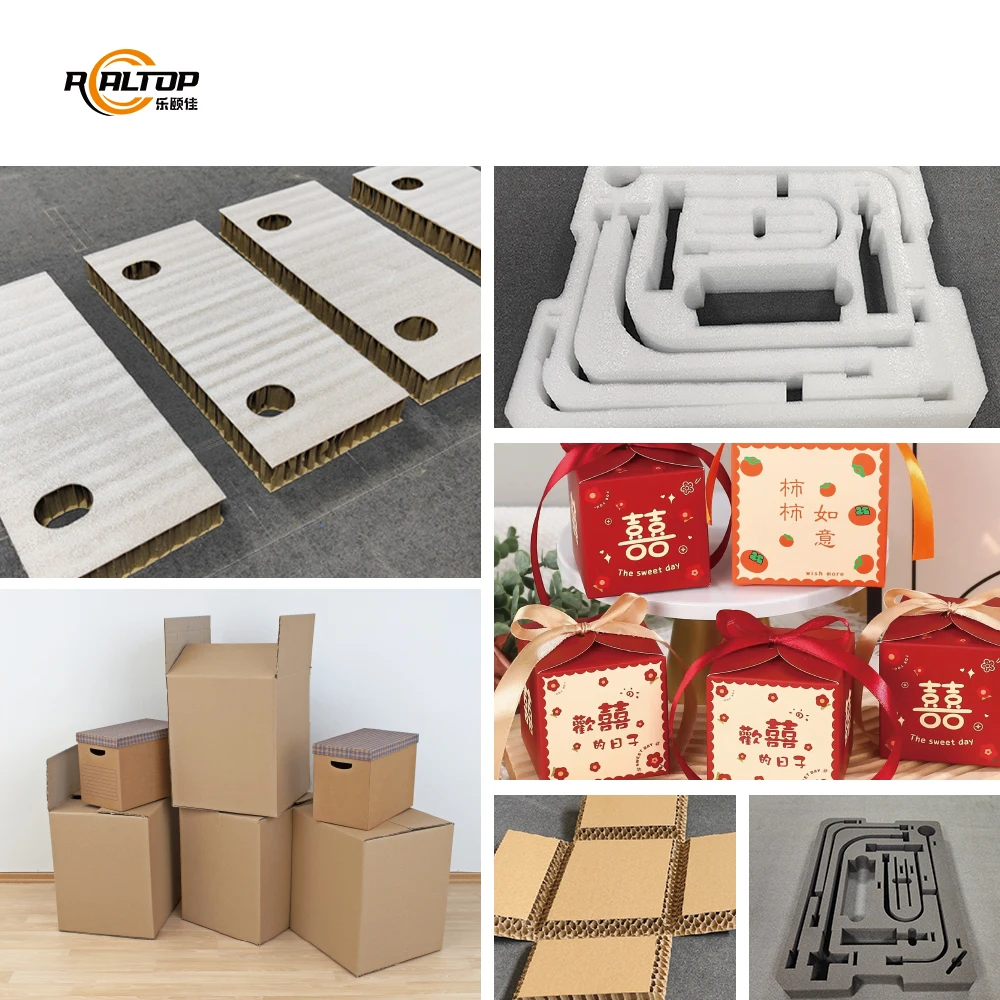
| Carton and corrugated box prototyping | E-flute, B-flute, BC-flute corrugated board without die-cut moulds |
| Short-run and custom packaging production | Greyboard, cardstock, art paper with rapid file-based job changeover |
| Foam insert fabrication | EVA, EPE, PU foam for protective packaging cushions and dividers |
| Gasket and composite packaging cutting | PTFE, rubber, non-woven fabric, and synthetic leather seals |
| Packaging sample making | Multi-layer board stock with creasing and kiss-cutting in a single pass |
Why "Cutting Thickness ≤ 40mm" Is Not the Whole Story
The real question is which flute profile, board density, and tool head combination sits behind that number.
When a packaging house orders a CNC oscillating knife cutting machine specifications sheet showing 40mm capacity, the figure often comes from a soft, low-density foam test. Run the same machine on BC-flute corrugated at full thickness and the oscillating knife may deflect, leaving ragged edges or incomplete cuts through the bottom liner [NEED_CITE: cutting force requirements across corrugated flute profiles]. I have seen this mismatch cost a sample room an entire week of parameter tuning on-site after delivery. The 1625 is specified with the buyer’s actual board stock in mind — E-flute behaves differently from BC-flute, and greyboard at 2mm density cuts nothing like EVA foam at the same thickness. Matching the tool head and oscillation frequency to the substrate before the machine ships avoids the costly on-site debugging cycle.
Seven Tool Heads, One Tool Post — Matching the Cut to the Board
Packaging sample rooms rarely run a single material all day. A morning job on 3mm E-flute carton gives way to afternoon greyboard mock-ups, then foam inserts before the shift ends. The 1625 accommodates seven interchangeable tool handles — oscillating knife, driven rotary knife, creasing wheel, kiss cutting tool, pneumatic knife, milling tool, and V-groove knife — each suited to a specific substrate and cut type. Rather than forcing one blade through every job, the operator swaps the tool handle to match the material. This means crease lines on carton stock stay clean without crushing the flute structure, and V-groove cuts on foam board produce folded corners that hold their shape [NEED_CITE: tool head selection for corrugated and foam packaging substrates].
Vacuum Hold-Down Across a 1600×2500 Bed
Small packaging parts — think cosmetic box inserts or gasket profiles — tend to lift off the bed when the knife exits a cut, especially at the upper end of the 1500 mm/s speed range. The aluminum bellows vacuum table on the 1625 generates consistent suction across the full working area, keeping thin cardstock and corrugated sheets flat against the surface. The 9 kW vacuum pump provides sufficient negative pressure for porous materials like corrugated board, where air leaks through the flute channels. For non-porous substrates such as PET or synthetic leather, the seal improves further, and the hold-down force concentrates on the cutting zone. Proper zoning of the vacuum table prevents small nesting parts from drifting during high-speed contour cuts.
Reading the Specifications Beyond the Headline Numbers
Cutting accuracy of ±0.1 mm matters most when crease lines must register precisely against printed graphics on carton stock. If the crease wanders even half a millimetre, the folded box will show misaligned panels. The PLC control panel manages the servo-driven motion — available with Panasonic, Delta, or Dorna motors — to maintain that tolerance across the full 1600×2500 mm travel. On the software side, the dedicated packaging box structure design package imports PLT, DXF, AI, and PDF files directly. This eliminates the intermediate conversion step that often corrupts curve geometry in complex die-line files. Voltage configurability across 110V, 220V, and 380V ensures the machine matches the buyer’s facility supply without requiring a step-up or step-down transformer on the shop floor [NEED_CITE: industrial voltage standards across packaging export markets].
The Cost of a Misspecified Tool Head
Ordering a CNC oscillating knife cutting machine specifications package that lists only a single oscillating knife tool head leaves the buyer exposed when jobs shift to kiss-cutting vinyl labels or creasing heavy greyboard. The oscillating knife excels at through-cutting corrugated, but crushes foam if the oscillation frequency is too high for the material density. A creasing wheel set at the wrong pressure will score the top liner without compressing the flute enough for a clean fold, producing cracked creases on assembled boxes [NEED_CITE: crease quality defects in digital packaging sample making]. These defects do not show up in the factory acceptance test because the test runs on the manufacturer’s chosen sample material, not the buyer’s daily production stock. Specifying the full tool head set and testing on the buyer’s own board before shipment eliminates these surprises.
Why Source This Machine Through Our Production Line
The design team and factory floor operate under one roof in Jinan, so tool head configuration changes requested during the quotation stage feed directly into the build schedule without third-party coordination. Each 1625 table undergoes a factory test using the buyer’s supplied corrugated or foam samples before crating, producing a cutting report that documents edge quality, crease depth, and dimensional accuracy. The software licence ships with the machine, and file format compatibility is verified against the buyer’s existing design workflow during the pre-order stage. Voltage, control language, and plug type are confirmed on the electrical schematic before production begins, not assumed from a standard build. Spare parts lists and maintenance schedules are specific to the configured tool head set and servo motor brand chosen by the buyer.
Documentation & Verification
- Factory test record cutting buyer’s own corrugated flute profile and foam density samples
- Electrical schematic confirming voltage, plug type, and circuit breaker rating for target facility
- Tool head and vacuum table configuration list matched to specified material range
- Software licence and file format compatibility note for PLT, DXF, AI, PDF import
- CE declaration covering the oscillating knife and PLC control assembly
- Operation and maintenance manual in selected control language with spare parts catalogue
Installation, Commissioning & Support
- Floor space requirement of 3300×2100 mm plus operator clearance on three sides
- Dedicated circuit matching confirmed 110V, 220V, or 380V supply with 9 kW vacuum pump draw
- Machine ships partially assembled; bed levelling and servo calibration completed on-site
- First-run parameter tuning on buyer’s corrugated and foam stock during commissioning visit
- Operator training covering tool head changeover, vacuum zoning, and software nesting workflow
- Spare oscillating knife blades, creasing wheel inserts, and vacuum seals included at delivery
What to Include with Your Inquiry
Send the specific corrugated flute types, board thicknesses, and foam densities you run most often, along with typical sheet dimensions and daily sample volume. Confirm your facility voltage and frequency, preferred control language, and whether your existing die-line files use DXF, AI, or PDF format. If you want sample cuts on your own material before committing, ship a few sheets to the factory for a test run and full cutting report.
Frequently Asked Questions
Q: How is the cutting thickness capacity verified for my corrugated material?
A: The ≤40mm rating depends on material density and flute profile. We cut samples of your actual E-flute, B-flute, or BC-flute board at the factory and document edge quality, cut-through completeness, and tool head deflection in a sample report before you commit to the order.
Q: Which tool head combination should I specify for mixed packaging jobs?
A: For corrugated through-cutting, the oscillating knife is standard. Add the creasing wheel for fold lines on carton stock and the V-groove knife for foam board corners. We recommend the combination based on the material list you provide at the inquiry stage.
Q: How does vacuum table zoning work for small packaging parts?
A: The aluminum bellows table generates suction across the full bed. For small nested parts that tend to lift, we configure zone isolation so vacuum concentrates on the active cutting area. The 9 kW pump maintains pressure even on porous corrugated board.
Q: Will my existing packaging design files import without conversion?
A: The included software reads PLT, DXF, AI, and PDF files directly. We verify compatibility with your specific design files during the pre-order stage and confirm that curve geometry and layer structures transfer correctly before the machine ships.
Q: Can I send material samples for a test cut before ordering?
A: Yes. Ship your corrugated board, greyboard, or foam stock to the factory. We run the 1625 with the recommended tool head configuration and provide a full sample cutting report covering dimensional accuracy, edge finish, and crease quality for your review.


商品评价
Clear filtersThere are no reviews yet.