


Fast Shipping
Carrier information

20k products
Payment methods

24/7 Support
Unlimited help desk

2-day Delivery
Track or off orders
Custom tooling matched to material — we specify the oscillating knife profile and vacuum zoning against your actual fabric, leather or composite sheet before an order is confirmed.
Technical Specifications
| Parameter | Value |
|---|---|
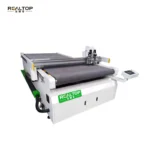
| Model | RT-D2516/RT-S2516 |
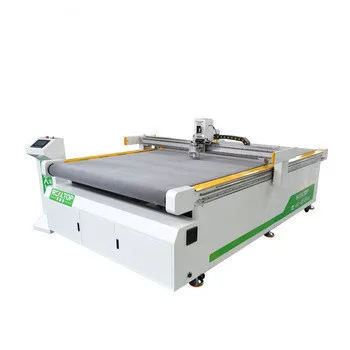
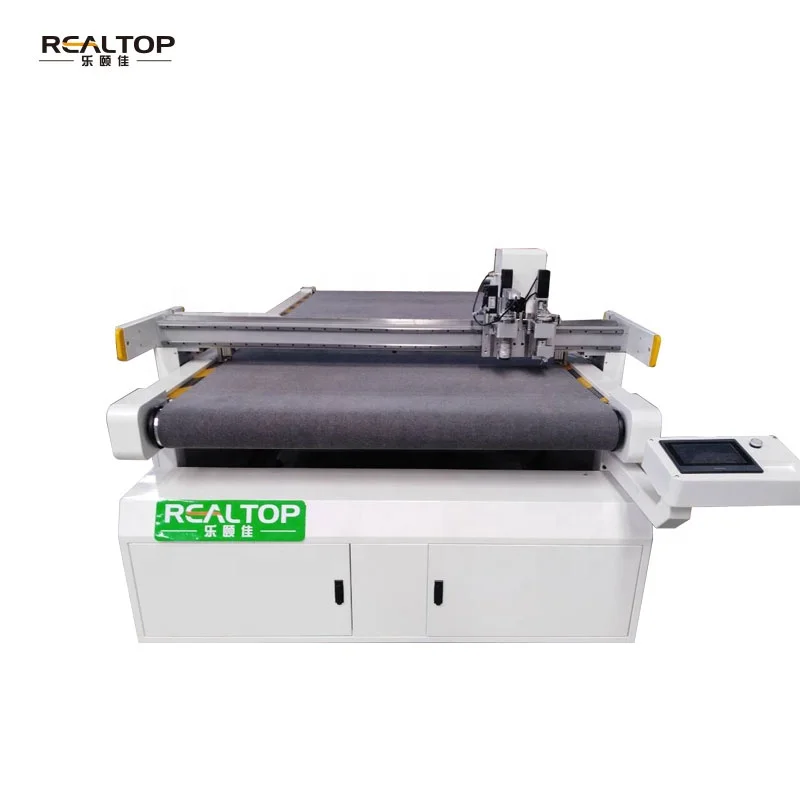
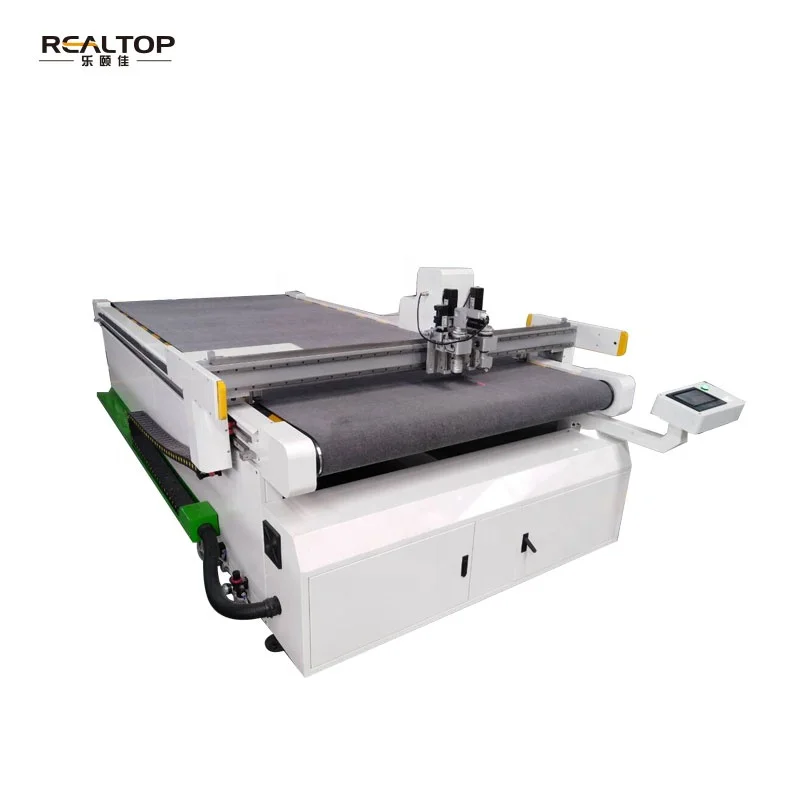
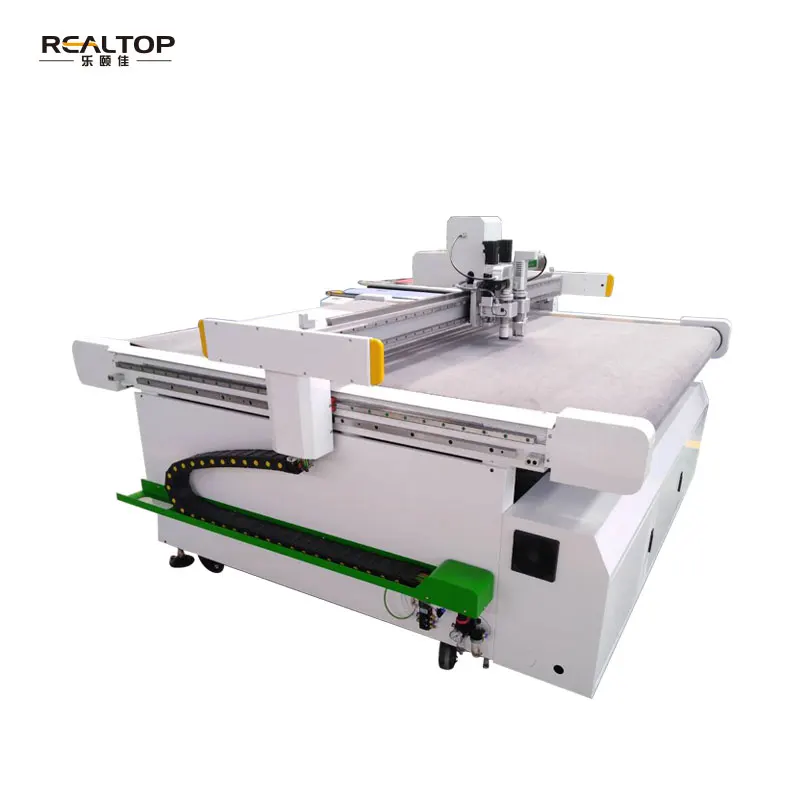
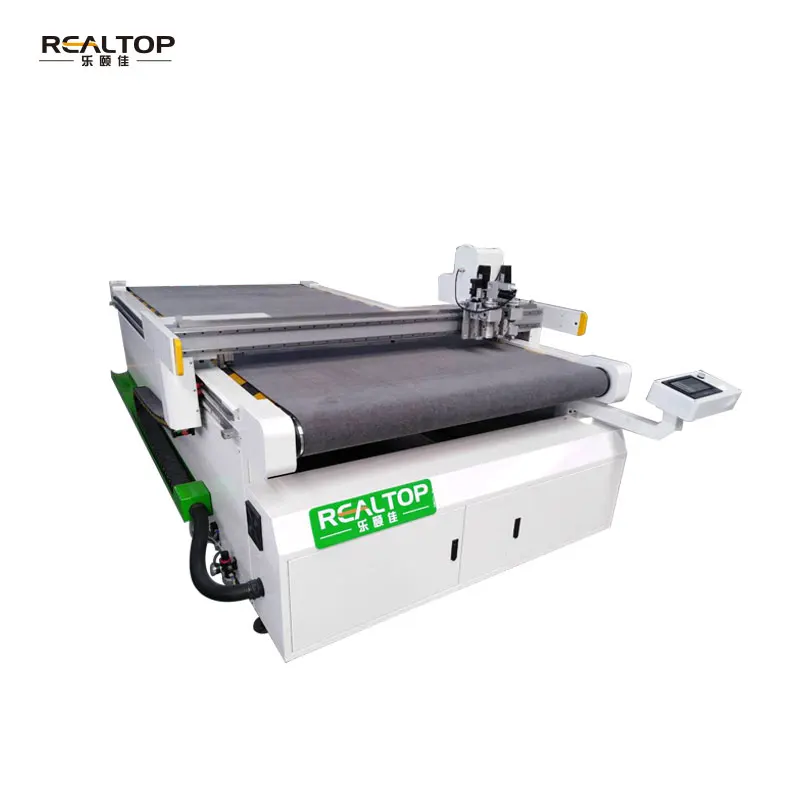
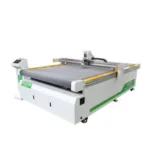
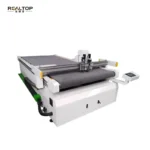
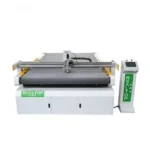
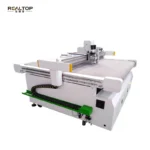
| Product Type | CNC Oscillating Knife Cutting Machine |
| Working Area | 1600 × 2500 mm |
| Overall Dimensions (L×W×H) | 3450 × 2300 × 1250 mm |
| Rated Power | 9 kW |
| Voltage & Frequency | 380V ±10% |
| Control System | CNC (HP-GL compatible format) |
| Table Type | Flat working table with vacuum hold-down |
| Tool Head Configuration | Multifunctional head — Swiss imported knife with vibration full cutting, half cutting, and cursor location |
| Translational Velocity | 800–1200 mm/s |
| Cutting Speed | 200–800 mm/s (basis not stated in source — subject to material, thickness and layer count) |
| Repeated Accuracy | ≤0.1 mm |
| Transmission System | Digital servo motor, linear guide, synchronous belt, ball screw |
| Servo Motor | Japanese Yaskawa |
| Linear Guide | Taiwan Hiwin rail |
| Conveyor Belt | Germany imported |
| Vacuum Pump | 7.5 kW |
| Safety Device | Infrared sensors |
| Feeding System | Auto feeding |
Application Suitability
| Application | Material or Output |
|---|---|
| Garment and suit batch cutting | Multi-layer woven and knitted fabric, lining, interlining |
| Leather goods and footwear production | Natural hide, synthetic leather, PU and PVC sheets |
| Automotive interior and gasket fabrication | Sponge composite leather, foam, rubber, soft glass, silicon |
| Flexible composite material processing | Laminated technical textiles, coated fabrics, flexible insulation |
Why "200–800 mm/s" Means Nothing Without Your Material
Cutting speed only matters when paired with the specific material type, thickness, and layer count you run every day.
A textile buyer once quoted a machine based solely on the working area and the headline translational velocity. When the line started cutting multi-layer sponge composite leather for automotive seats, the blade deflected at higher speeds, edges turned ragged, and the fabric shifted mid-cut because the vacuum could not hold the top layers flat. The machine was technically within specification, but the specification was never matched to the production job. [NEED_CITE: material thickness and layer count impact on oscillating knife cutting parameters]
Oscillating Knife Behavior Across Flexible Materials
The Swiss imported oscillating knife on the RT-D2516/RT-S2516 delivers vibration full cutting and half cutting from the same multifunctional head. For woven garment fabric stacked in multiple plies, the high-frequency vibration reduces lateral drag on the blade so the knife travels through the stack without pulling or fraying the edges. On denser materials like natural leather or rubber gasket stock, the same vibration profile helps the blade penetrate cleanly without crushing the surface layer. Cursor location capability supports manual reference checks when cutting irregular hide shapes where the edge contour varies from piece to piece.
Drive Train and Positioning Accuracy
The combination of a Japanese Yaskawa digital servo, Taiwan Hiwin linear guides, and a ball screw transmission delivers a repeated accuracy of ≤0.1 mm across the full 1600 × 2500 mm working area. In garment production, this means pattern pieces cut at opposite ends of the table will match within a fraction of a millimeter — critical when those pieces go straight to assembly without manual trimming. The synchronous belt component in the drive system handles the rapid directional changes that oscillating knife cutting demands, where the head reverses direction constantly around tight contours. [NEED_CITE: servo drive and linear guide influence on contour accuracy in CNC knife cutting]
Reading the Specs Against Your Production Reality
The 7.5 kW vacuum pump paired with the flat vacuum table provides the hold-down force needed to keep multi-layer fabric stacks flat during cutting. For small pattern pieces — collar stays, pocket facings, gasket inserts — vacuum zoning becomes the deciding factor: if the table cannot isolate suction to a small zone, the fabric lifts at the edges as the knife exits the cut. The auto feeding system with a Germany imported conveyor belt supports continuous workflow for high-volume garment runs, but the actual throughput depends entirely on how many layers your specific material allows and how densely your nesting software packs the pattern. The HP-GL compatible control system means the machine accepts file formats common in garment CAD, but buyers should confirm that their existing nesting software exports cleanly before committing to an order.
The Cost of Skipping the Material Test
Buyers who skip sample cutting on their actual material often discover problems after the machine is installed. A gasket producer ordered a system rated for rubber and silicone but found that their specific composite — a silicone layer bonded to a glass fiber mesh — wore through blades far faster than the standard estimate, forcing unplanned downtime for knife changes. Another buyer found that their smallest gasket profiles lifted off the table during the final cut pass because the vacuum zones were sized for larger automotive panels. Both issues would have surfaced in a pre-order sample cutting report. [NEED_CITE: consequences of cutting composite materials without pre-order tooling validation]
Why Source This Machine Here
In-house design and production covers both knife and laser cutting technologies, so a buyer working with mixed materials can match the cutting method to each material rather than forcing one process to handle everything. Tool head and table configuration are specified per material and production volume — the RT-D2516/RT-S2516 can be set up for high-ply garment fabric or single-layer leather hide depending on what you actually run. CCD camera positioning is available for printed contour work where the cut path must follow a printed registration mark rather than a digital file. Software compatibility is confirmed before the order is placed, not after delivery. Voltage, plug type, and control language are locked in during the specification stage, with an electrical schematic provided for your facility team to verify. Sample cutting on your own material runs before commitment, producing a report that documents cut quality, edge condition, and blade wear on your specific stock.
Documentation & Verification
- Machine specification sheet with tool head and vacuum configuration matched to your material
- Electrical schematic and voltage confirmation for your facility before production
- Sample cutting report on your fabric, leather, or composite material
- Factory test record documenting accuracy and cut quality before dispatch
- Operation and maintenance manual with spare parts list specific to your configuration
- Software licence and file format compatibility note for your nesting workflow
Installation, Commissioning & Support
- Flat foundation required to support the 3450 × 2300 mm footprint and dynamic cutting loads
- Dedicated 380V ±10% circuit with capacity for the combined 9 kW machine and 7.5 kW vacuum pump draw
- Machine ships with auto feeding conveyor assembled; verify doorway clearance for the 2300 mm width
- First-run calibration of the Yaskawa servo and Hiwin guides against your material stack height
- Operator training covers multifunctional head knife change, vacuum zone setup, and HP-GL file loading
- Swiss oscillating knife blades and synchronous belts stocked as primary consumable spare parts
What We Need to Size Your Configuration
To recommend the right tool head, vacuum zoning, and feeding setup for the RT-D2516/RT-S2516, send us the material types and thicknesses you cut most often, the number of layers in a typical stack, and your daily volume target. Let us know your facility voltage and frequency, the control language your operators need, and whether your current nesting software exports HP-GL or another format. If you can ship a roll or sheet of your actual production material, we will run a sample cut and return the test pieces with a full report before you commit to an order.
Frequently Asked Questions
Q: How is cutting speed verified for my specific material and layer count?
A: We run a sample cut on your actual material before any order is confirmed. The test documents cutting speed, edge quality, and blade wear at different speeds and layer counts, so you can see real performance data rather than a generic range. The sample report becomes part of your order documentation.
Q: Which tool head configuration suits my material?
A: The RT-D2516/RT-S2516 ships with a multifunctional head supporting Swiss oscillating knife full cutting, half cutting, and cursor location. For your specific material — whether multi-layer fabric, dense leather, or sponge composite — we confirm the knife profile and oscillation frequency during the sample cutting stage before finalizing the configuration.
Q: Is the vacuum table zoning adequate for small parts in my production mix?
A: Small pattern pieces require isolated vacuum zones to prevent fabric lift during the final cut pass. We review your smallest part dimensions against the table zoning layout before quoting. If your production mix includes very small inserts or gaskets, we specify a zone configuration that maintains hold-down on those profiles.
Q: What voltage and control language options are confirmed before shipment?
A: Standard configuration is 380V ±10%, but we confirm your facility voltage and frequency before production begins. An electrical schematic is sent to your team for verification. Control panel language is set to your operator requirement and documented in the specification sheet.
Q: Can I send my own material for sample cutting before placing the order?
A: Yes. We require a sample of your actual production material — fabric roll, leather hide, or composite sheet — to run a cutting test. The resulting sample pieces and test report are sent back to you so you can evaluate edge quality, dimensional accuracy, and material behavior before committing to a purchase.


商品评价
Clear filtersThere are no reviews yet.