



Fast Shipping
Carrier information

20k products
Payment methods

24/7 Support
Unlimited help desk

2-day Delivery
Track or off orders
Tool Head Specification — Swiss imported vibrating knife matched to board weight and flute type before order, verified with sample cutting on buyer’s own cardboard stock.
Technical Specifications
| Parameter | Value |
|---|---|
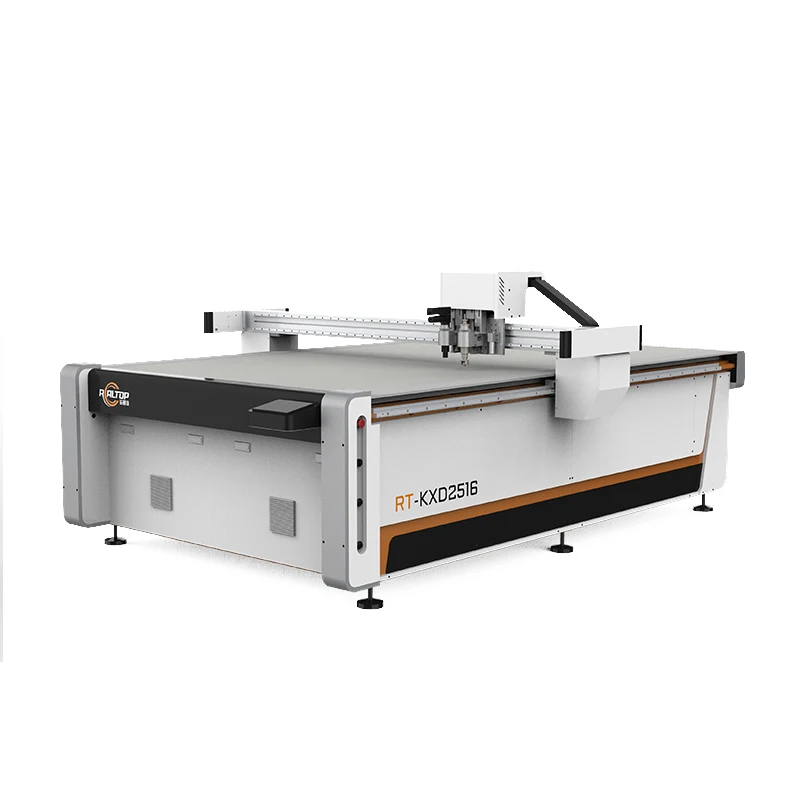
| Model | RT-D2516/RT-S2516 |
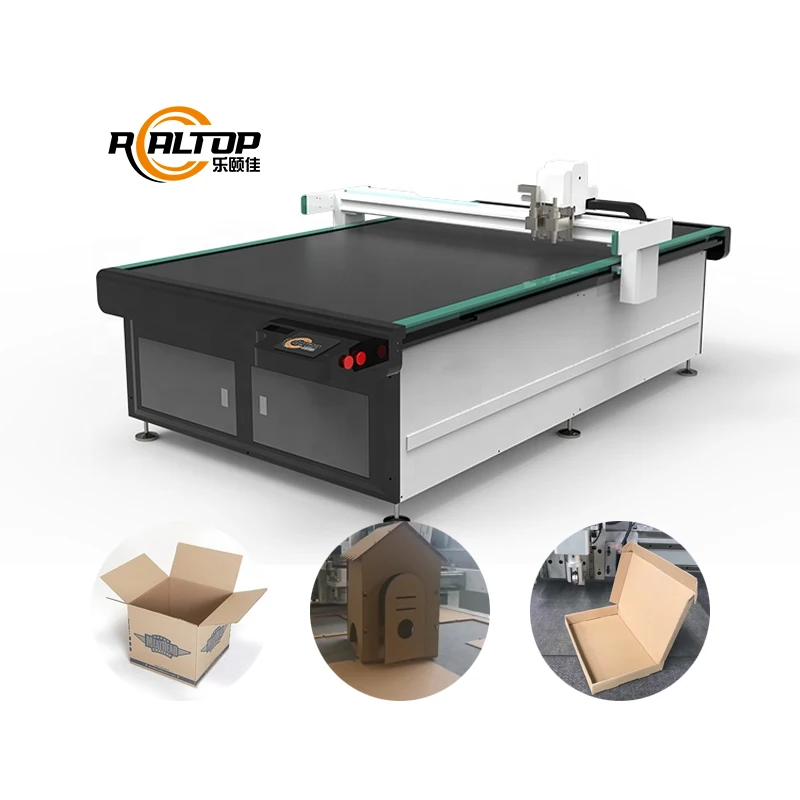
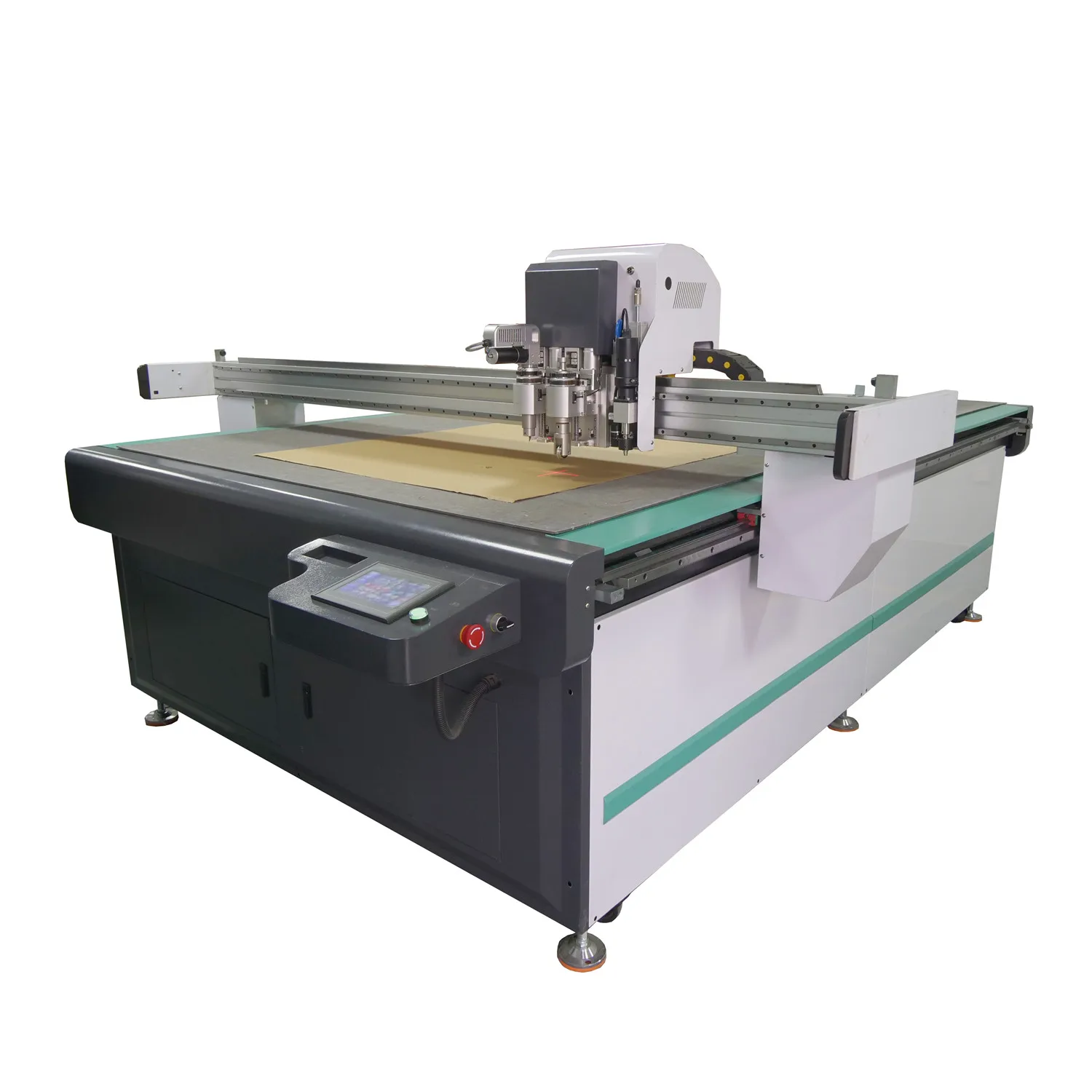
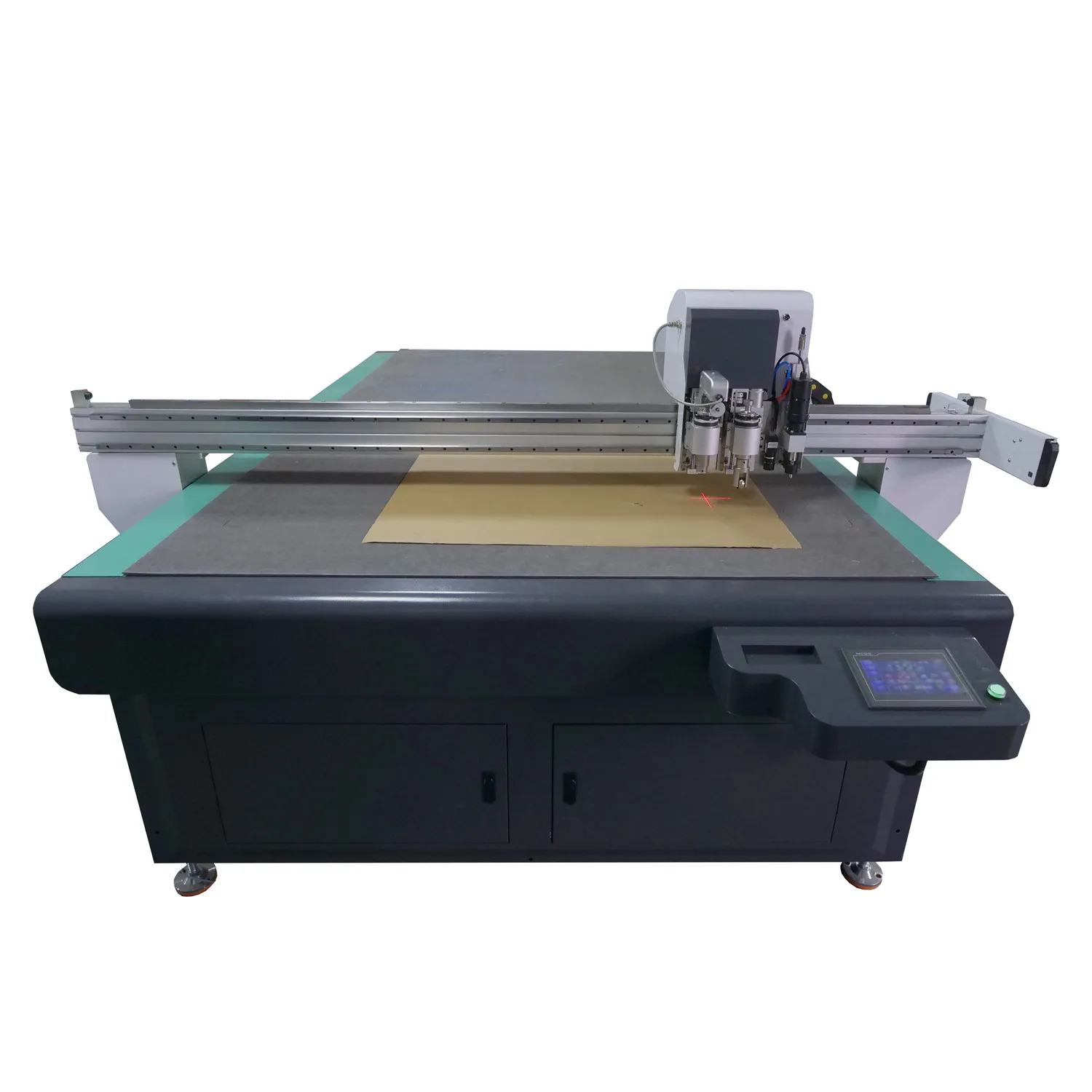
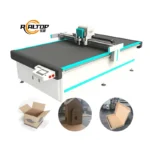
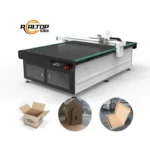
| Product Type | CNC Oscillating Knife Cutting Machine for Packaging |
| Working Area | 1600×2500 mm |
| Overall Dimensions | 3450×2300×1250 mm |
| Rated Power | 9 kW |
| Voltage | 380V ±10% |
| Vacuum Pump | 7.5 kW |
| Table Type | Flat working table with aluminum honeycomb surface |
| Multifunctional Head | Vibration full cutting, vibration half cutting, cursor location |
| Translational Velocity | 800–2000 mm/s |
| Cutting Speed | 200–800 mm/s (varies with material type and thickness) |
| Cutting Thickness | ≤100 mm (varies with material) |
| Repeated Accuracy | ≤0.1 mm |
| Transmission System | Digital servo motor, linear guide, synchronous belt, ball screw |
| Servo Motor | Delta servo motor |
| Guide Rail | Taiwan Hiwin rail |
| Safety Device | Infrared sensors |
| Feeding System | Auto feeding with Germany imported conveyor belt |
| Instruction System | HP-GL compatible format |
| Software Language | English, Russian, Italian, Chinese, others customizable |
Application Suitability
| Application | Material or Output |
|---|---|
| Packaging carton and box sample making | Corrugated cardboard, single-face board, grey board up to 100 mm |
| Express and e-commerce box production | Single-wall and double-wall corrugated, kraft liner board |
| Snack food and gift box packaging | Coated carton stock, folding box board, micro-flute |
| Sticker and label cutting | Adhesive-backed board, vinyl, self-adhesive paper |
| Large electrical appliance carton packaging | Heavy-duty corrugated, triple-wall board |
What "Cutting Speed Up to 800 mm/s" Really Means on Corrugated Board
Actual cutting speed depends entirely on board flute profile, moisture content, and the knife blade geometry specified for that material.
When buyers see a speed range of 200–800 mm/s on a spec sheet, they often assume the upper limit applies to their material. In practice, cutting A-flute corrugated at 800 mm/s with a blade meant for thin card stock produces crushed flutes and ragged edges along the crease lines. I have walked into workshops where the machine was running well below its rated speed simply because the wrong blade angle was fitted on the oscillating head. The speed you get in production is determined by matching the CNC oscillating knife cutting machine specifications to the actual board weight and flute type you run daily [NEED_CITE: material-specific cutting speed dependencies for corrugated board grades].
Vibrating Knife Selection Across Cardboard Weights
The multifunctional head on the RT-D2516/RT-S2516 carries a Swiss imported knife system that handles vibration full cutting, vibration half cutting, and cursor location in a single setup. Full cutting suits through-cut operations on sticker stock and thin carton board, while half cutting scores the surface layer of corrugated without penetrating the bottom liner. The oscillating frequency and blade angle must shift when moving from 250 gsm folding box board to double-wall corrugated, and this CNC oscillating knife cutting machine specifications sheet lists that head changeover as part of the configuration step before production begins.
Vacuum Zoning and Its Effect on Small Carton Parts
The aluminum alloy honeycomb table works with a 7.5 kW vacuum pump and zoned follow-cutting suction to hold material flat across the 1600×2500 mm working area. When cutting small carton components — think cosmetic box inserts or pharmaceutical dividers — a single-zone vacuum leaves edges lifting under the knife head, producing inaccurate folds and wasted board. Zoned suction activates only beneath the cutting path, keeping even lightweight single-face corrugated pinned to the table surface at full translational velocity [NEED_CITE: vacuum adsorption zoning requirements for CNC flatbed cutting tables].
How Drive Components Translate to Crease Accuracy
The Delta servo motor paired with Taiwan Hiwin linear guides and ball screw transmission delivers ≤0.1 mm repeated accuracy across the full table travel. On packaging sample making, this matters most at the intersection of cut lines and crease lines — where a 0.3 mm drift means the box blank will not fold square. The synchronous belt handles the high-speed traverse between cuts, while the ball screw governs the precision passes where crease wheels press score lines into heavier board stocks.
The Cost of Skipping Material Trials Before Order
Specifying a CNC oscillating knife cutting machine on working area alone is one of the most common mistakes I see in packaging equipment procurement. A buyer orders a 1600×2500 mm table for corrugated carton work, but the tool head arrives configured for thin sticker stock. The knife cannot penetrate triple-wall board cleanly, the creasing wheel leaves insufficient score depth, and the vacuum zoning does not cover the small partition parts they need for gift box assemblies. Two weeks of production are lost while replacement blades and reconfiguration are arranged [NEED_CITE: tool head mismatch consequences in CNC knife cutting operations].
Why Sample Cutting and Configuration Review Matter Here
In-house design and production covers both knife and laser cutting methods, meaning the cutting approach is matched to the material rather than forced into one technology. Tool head and table configuration are specified per board weight and production volume before the order is finalized. CCD camera positioning is available for printed contour work on sticker and label stock. Software compatibility with the buyer’s existing file format is confirmed during the pre-order stage. Sample cutting runs on the buyer’s own cardboard stock demonstrate edge quality, crease depth, and achievable speed before commitment.
Documentation & Verification
- Factory test record run on buyer’s own cardboard grade and flute type
- Tool head and blade configuration list matched to material thickness range
- Electrical schematic with 380V ±10% voltage confirmation for target market
- Software licence file with HP-GL format compatibility statement
- Machine specification sheet including overall dimensions and power rating
- Spare parts list covering replacement blades, creasing wheels, and conveyor belt segments
Installation, Commissioning & Support
- 380V ±10% three-phase supply with dedicated 9 kW circuit and 7.5 kW vacuum pump circuit required before delivery
- Machine footprint of 3450×2300 mm requires level concrete floor with clearance for auto-feeding conveyor entry
- Delta servo parameters calibrated on-site against buyer’s specific corrugated and carton board grades
- Taiwan Hiwin guide rails inspected and lubrication schedule set during first-week commissioning
- Software language configured to operator preference — English, Russian, Italian, Chinese, or other options
- Replacement oscillating knife blades and creasing wheels stocked per agreed spare parts list
Preparing Your Inquiry
To get an accurate configuration, provide the cardboard grades and flute types you run, along with typical sheet dimensions and the smallest part size in your box designs. Confirm your workshop voltage and frequency, and whether your design team works in DXF, AI, or another format that needs to import into the nesting software.
Frequently Asked Questions
Q: How do I match the tool head to my cardboard thickness and flute type?
A: The vibrating knife blade angle, oscillation frequency, and creasing wheel width all change depending on whether you run micro-flute, single-wall, or double-wall corrugated. Provide samples of your heaviest and lightest board so the tool head configuration list can be built around your actual material range before the machine is assembled.
Q: What is the real cutting speed on my specific board material?
A: The 200–800 mm/s range reflects different material densities and thicknesses. Thin sticker stock cuts near the upper end, while heavy triple-wall corrugated runs slower to maintain clean edges. A sample cutting test on your board establishes the practical speed you can expect in daily production.
Q: How does vacuum table zoning prevent small parts from lifting?
A: The zoned follow-cutting suction activates only in the area surrounding the active knife path. This keeps lightweight carton inserts and narrow partition strips pinned flat without requiring full-table vacuum, which can draw air through gaps and lose holding force on small pieces.
Q: Which file formats does the nesting software accept?
A: The system supports HP-GL compatible format natively. Before order, we confirm whether your existing DXF, AI, or PDF design files import correctly and whether crease lines and cut lines separate automatically in the nesting layout workflow.
Q: Can voltage and control language be customized before shipment?
A: The standard 380V ±10 configuration suits most three-phase industrial supplies, but voltage requirements must be confirmed before production begins. Control panel language options include English, Russian, Italian, Chinese, and additional languages arranged during the specification stage.


商品评价
Clear filtersThere are no reviews yet.