


Fast Shipping
Carrier information

20k products
Payment methods

24/7 Support
Unlimited help desk

2-day Delivery
Track or off orders
Tool Head Matched to Material — We specify the oscillating, drag, or pneumatic knife based on your composite layup and thickness rather than shipping a default configuration and hoping it works.
Technical Specifications
| Parameter | Value |
|---|---|
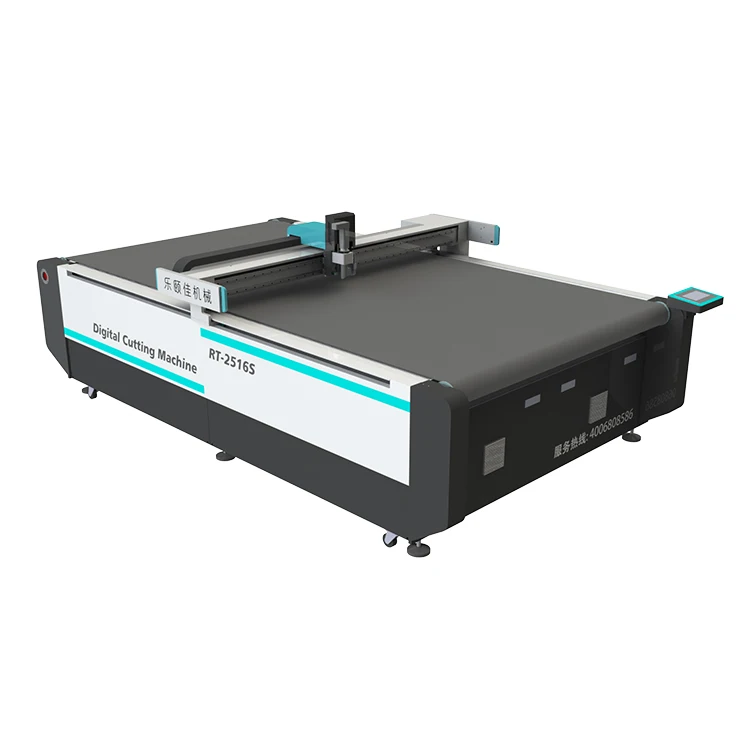
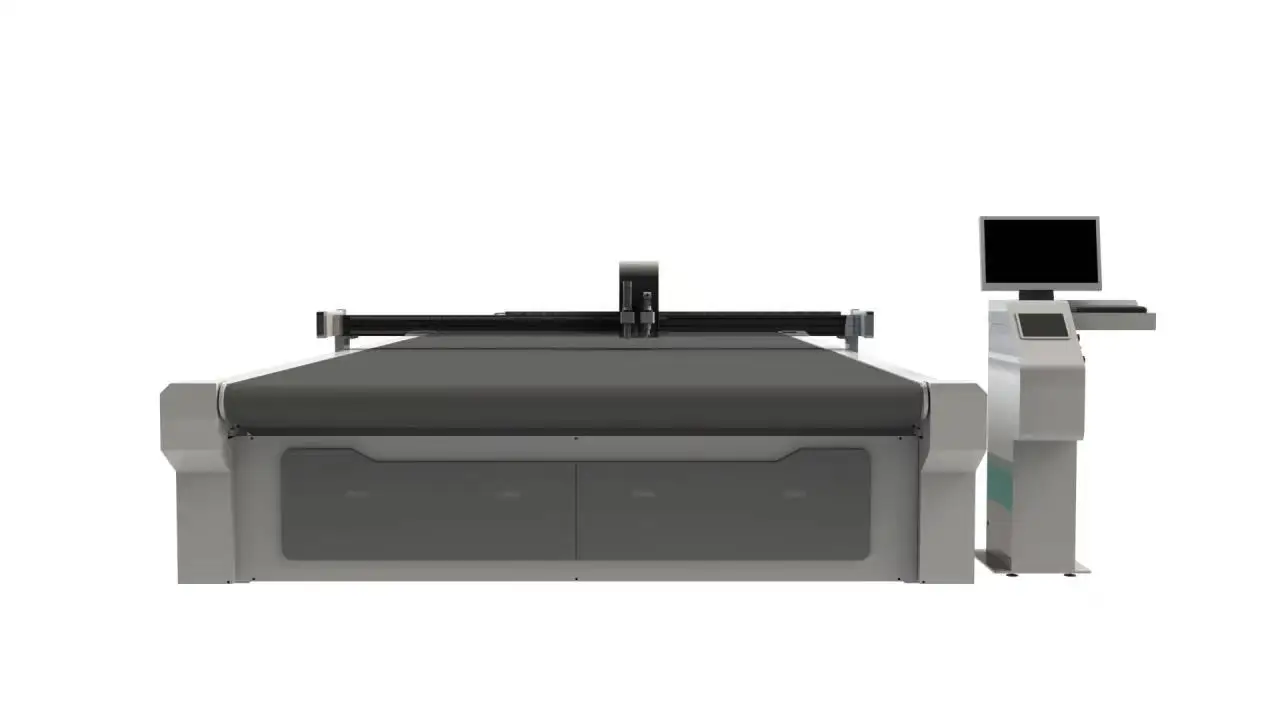
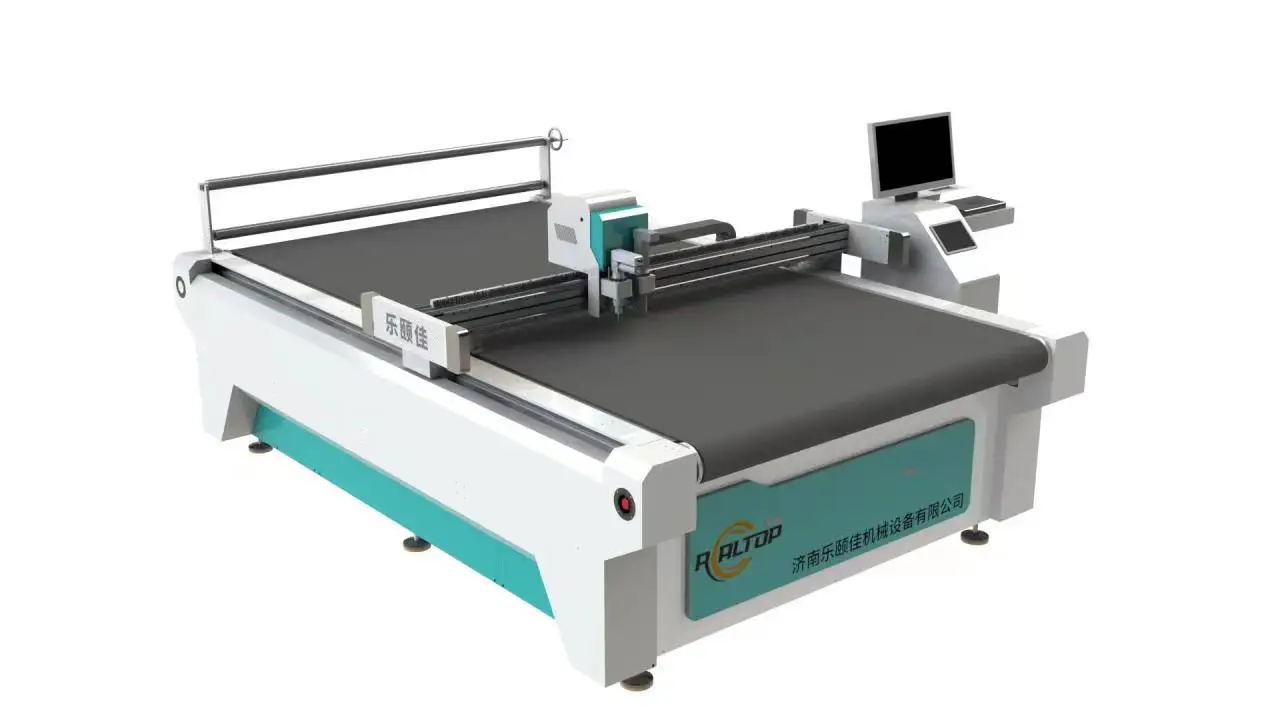
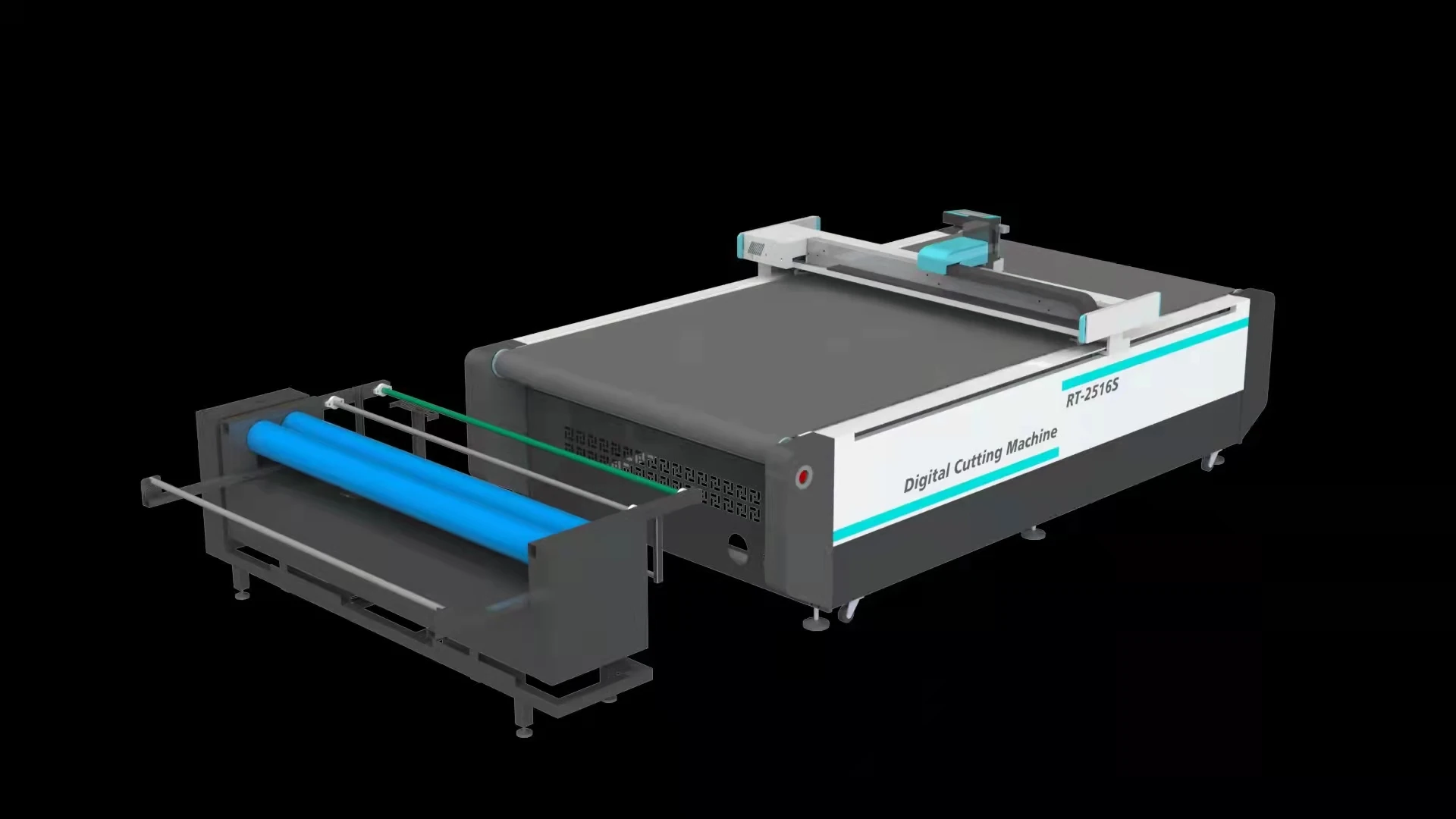
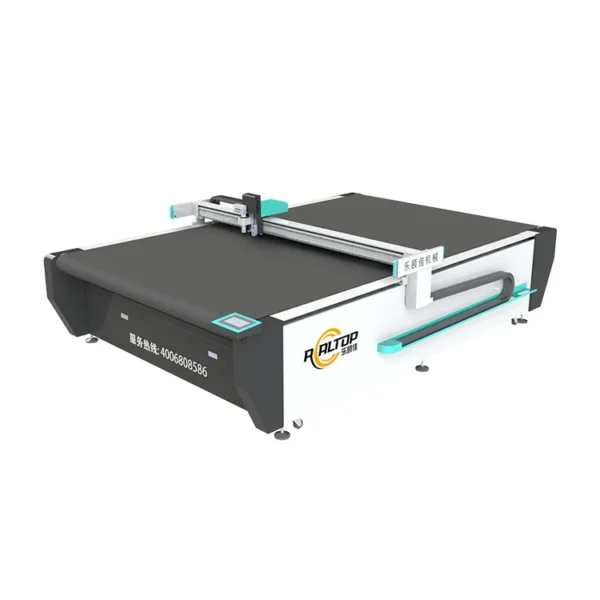
| Model | RT-D2516/RT-S2516 |
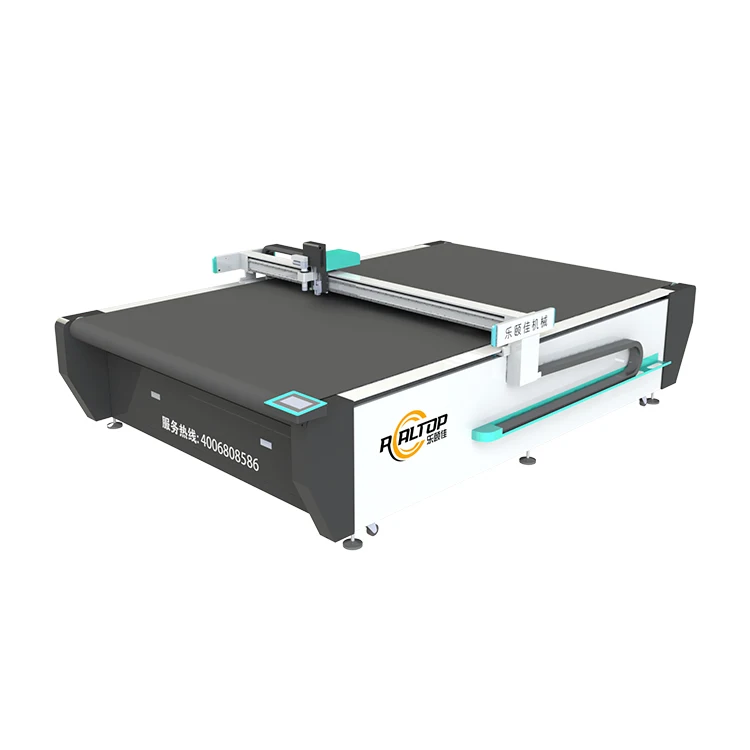
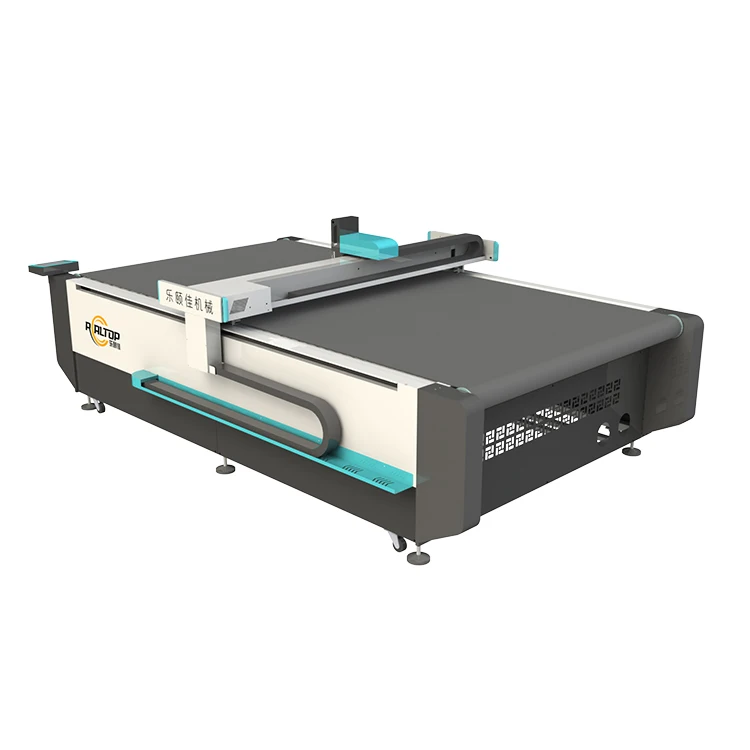
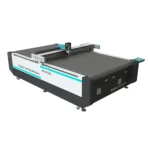
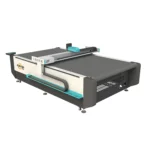
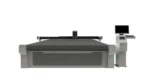
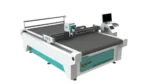
| Product Type | CNC Oscillating Knife Cutting Machine |
| Working Area | 1600 × 2500 mm |
| Overall Dimensions | 3450 × 2300 × 1250 mm |
| Rated Power | 9 kW |
| Voltage | 380V ± 10% |
| Working Table | Magnesium-aluminum alloy vacuum adsorption, PVDF powder sprayed, anodized and hard oxidized |
| Tool Head Types | Swiss imported knife (vibration full/half cutting, cursor location); options: oscillating, pneumatic, high-power vibrating, circular, V-cutting, drag, creasing wheel, dotted line, punching, brush |
| Cutting Thickness | 20–80 mm depending on material (basis not stated in source — confirm material type and density) |
| Translational Velocity | 800–1200 mm/s |
| Repeated Accuracy | ≤ 0.1 mm |
| Transmission System | Digital servo motor, linear guide, synchronous belt, imported ball screw |
| Servo Motor | Delta (optional Panasonic), IP67 waterproof |
| Instruction System | HP-GL compatible format |
| Vacuum Pump | 7.5 kW, aviation aluminum shell, fire-proof, corrosion-resistant, built-in silencer sponge (~35% noise reduction) |
| Safety Devices | Infrared induction blocking, beam anti-collision sensors, emergency stop, intelligent infrared sensor stop |
| Positioning Options | Small CCD camera mark point, panoramic camera recognition, projection positioning |
| Other Configuration | Germany imported conveyor belt, auto feeding, Taiwan Hiwin rail |
| Language Options | English, Russian, Italian, Chinese; special languages customizable |
| Assembly State | Fully assembled |
| Standards | CE declaration (where applicable) |
Application Suitability
| Application | Material or Output |
|---|---|
| Carbon fiber and fiberglass layup trimming | Woven and prepreg composite sheets, layered reinforcement fabrics |
| Automotive interior panel cutting | PU foam, EVA, XPE, non-woven fabric, leather and synthetic covers |
| Gasket and sealing pad fabrication | PTFE, ETFE, rubber, PVC, PP, PE sheets |
| Footwear and luggage component cutting | Shoe material, luggage material, textile, sponge |
| Packaging and carton sample making | Corrugated cardboard, plastic box stock, sticker film |
| Soft furnishing and carpet production | Carpet, cloth, non-woven fabric, PU foam |
Why the "Cutting Thickness" Number Misleads Buyers in Composites
The 20–80 mm range on a CNC Oscillating Knife Cutting Machine specification sheet only holds when the tool head, vacuum zoning, and feed rate are all matched to your specific composite structure.
I have stood in workshops where a machine rated for 80 mm on soft foam was bought to cut carbon fiber prepreg at 25 mm. The buyer read one number and ignored the rest. The oscillating knife that handles foam cleanly will chew through carbon fiber weave, fraying edges and destroying the blade within a single shift. A high-power vibrating knife or a Swiss imported blade set to half-cutting mode would have held up, but nobody checked before the container shipped [NEED_CITE: tool head selection criteria for composite materials]. The thickness figure alone tells you nothing without knowing what the material is made of and what tool is doing the work.
Blade Selection Determines Whether the Edge Seals or Frays
A standard oscillating knife vibrates at a frequency suited to soft, homogenous materials like EVA foam or sponge. When that same blade hits a glass-fiber-reinforced PVC sheet, the fibers resist the oscillation and the cut edge unravels. For composite structures, the configuration list should show a Swiss imported knife with vibration full-cutting capability, or a high-power vibrating knife that drives through layered reinforcement without pulling fibers loose. The CNC Oscillating Knife Cutting Machine specifications must state which blade is installed for which material, not just list every option as available.
Vacuum Zoning Holds the Difference Between Clean Cuts and Lifted Scraps
The magnesium-aluminum alloy vacuum table on the RT-D2516/RT-S2516 uses PVDF coating and hard oxidation to keep the surface flat across 1600 × 2500 mm. Flatness matters, but zoning matters more for small composite parts. If the vacuum zones are too large, a 50 mm gasket will lift off the table the moment the blade exits the cut. Multi-zone segmentation lets the operator activate only the area under the workpiece, keeping suction concentrated. This is the detail that separates a machine that cuts nested small parts from one that only handles full-sheet blanks [NEED_CITE: vacuum table zoning practices for small-part CNC cutting].
Reading the Specs That Actually Govern Cutting Quality
The 9 kW rated power drives the vacuum pump and servo motors together. The 7.5 kW pump with its built-in silencer sponge maintains suction without drowning the workshop in noise, which matters when operators need to hear the blade engaging dense composite stock. Repeated accuracy of ≤ 0.1 mm relies on Taiwan Hiwin linear guides and imported ball screws; worn or undersized rails let the beam deflect under cutting force, and that deflection shows up as dimensional drift across a nested sheet. The Delta or optional Panasonic IP67 servo motors hold position through dust and coolant splash typical in composite shops. Translational velocity between 800 and 1200 mm/s is a travel speed, not a cutting speed — actual feed rate depends on material density and tool head engagement, and the CNC Oscillating Knife Cutting Machine specifications should be read with that distinction in mind.
What Happens When Configuration Is Skipped
I watched a shipment arrive at a fiberglass plant in Vietnam where the default drag knife had been installed instead of the specified high-power vibrating knife. The first sheet of 15 mm glass-fiber board came off the table with a torn edge and a blade snapped at the shank. The machine was then idle for two weeks while the correct tool head was air-freighted. This is not a warranty claim — the machine worked exactly as configured. The cost of the wrong specification lands on the buyer, and it compounds when production schedules slip and downstream lamination steps are waiting for cut blanks [NEED_CITE: cost of incorrect tooling specification in composite fabrication].
Why Source This Machine Here
In-house design covers both knife and laser cutting platforms, so the recommendation between an oscillating knife table and a CO2 laser is driven by the composite material rather than limited to whichever technology one factory happens to build.
Tool head and vacuum table configuration is specified per material type and production volume before the order is placed, not guessed from a brochure.
CCD camera positioning — both small mark-point and panoramic recognition — is confirmed against the buyer’s printed registration marks before the machine leaves the factory.
Software compatibility is verified against the buyer’s existing HP-GL files and nesting workflow before commitment, avoiding post-delivery format surprises.
Sample cutting runs on the buyer’s own composite material at the required thickness are completed and documented before the production order is released.
Voltage, plug type, and control language are confirmed in writing for the destination market, with 380V ± 10% as the base and customization available.
Documentation & Verification
- Machine specification sheet listing configured tool heads and vacuum zone layout for your material
- Electrical schematic with confirmed voltage and frequency for your local supply
- Tool head and table configuration list matched to your composite type and thickness
- Sample cutting report on your own material showing edge quality and dimensional accuracy
- Factory test record documenting repeated accuracy and servo response before dispatch
- Software licence and file format compatibility note covering HP-GL and your nesting files
Installation, Commissioning & Support
- Requires a level floor capable of supporting the 3450 × 2300 mm footprint with clearance for auto-feeding conveyor
- Dedicated 380V ± 10% circuit rated for 9 kW with confirmed plug type for local standard
- Ships fully assembled; positioning and utility connection only, no structural reassembly on site
- First-run commissioning includes vacuum zone mapping and tool head calibration to your material
- Operator training covers HP-GL file loading, CCD mark-point setup, and tool change procedure
- Spare blade inventory and wear-part list provided based on your daily cutting volume
Before You Send the Inquiry
Tell us the exact composite material you are cutting — fiber type, resin system, total thickness, and whether the stock arrives as sheets or rolls. Share your largest and smallest part dimensions so we can confirm vacuum zone coverage. If your shop runs a specific nesting software or requires a control language other than English, Russian, Italian, or Chinese, state that up front so the software licence and interface are configured before build.
Frequently Asked Questions
Q: How do I know which tool head to use for my composite material?
A: The tool head depends on fiber content, resin hardness, and sheet thickness. Soft foam uses a standard oscillating knife, while carbon fiber or glass-fiber composites require a high-power vibrating knife or Swiss imported blade in full-cutting mode. We run a sample cut on your actual material to confirm blade type, oscillation frequency, and feed rate before the configuration is locked in.
Q: Will the vacuum table hold small composite parts during cutting?
A: The magnesium-aluminum alloy table is divided into independently controlled vacuum zones. For small parts such as gaskets or shoe components, only the zones directly beneath the workpiece are activated, concentrating suction and preventing lift. Zone layout is confirmed during the configuration stage based on your smallest part geometry.
Q: Can the CCD camera track printed marks on my composite at full speed?
A: Both small mark-point CCD and panoramic camera options are available. Tracking accuracy depends on mark contrast against your material surface and ambient lighting in the shop. We test recognition on your printed stock at production translational velocity to confirm reliable detection before the machine is finalized.
Q: Is the voltage and control language set for my country before shipment?
A: The base specification is 380V ± 10%, and we confirm exact voltage, frequency, and plug type for your market before production begins. Control language options include English, Russian, Italian, and Chinese, with special languages configurable on request. All electrical details are documented in the pre-shipment schematic.
Q: Will the software accept my existing nesting and design files?
A: The instruction system supports HP-GL compatible format. Before you commit, send us your typical production files so we verify import, nesting, and toolpath generation. If your workflow uses a specific CAD or nesting package, compatibility is checked and documented in the software licence note included with delivery.


商品评价
Clear filtersThere are no reviews yet.